
Sports
Neil’s books on rugby bring back nostalgic memories

By A Special Sports Correspondent
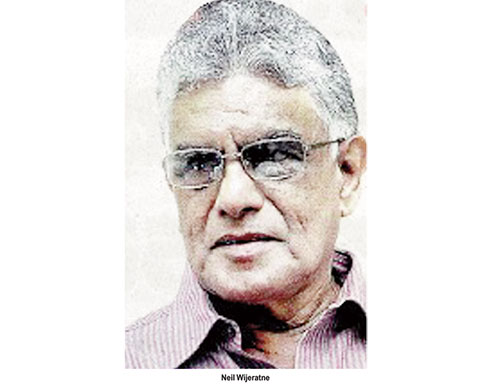
These are days where sportsmen and women can review their lives and careers. Some would say it’s a must do during these times where there are travel restrictions. We all experience such a period some time during our lives when we are made inactive. From a rugby perspective there is so much literature to read up. Innovative people can do a documentary on rugby or short film clip and post on social media and youtube. This writer remembers the two books penned on rugby by one time recorder of Sri Lanka Rugby Neil Wijeratne.
These are great days to read his two books ‘Rugby Across the Straits’ and our very own ‘Sevens Saga’-which caps the rugby sevens history of the island.
Wijeratne is still the person to go to when a writer wants information for a sports article. He is a serious historian and takes great pain in collecting his facts and figures for his compilations. He has been generous in parting with whatever statistics he has when budding writers and journalists tap him as a source.
 He was pushed to keeping sports records on pen and paper because destiny didn’t afford him the opportunity to be a sportsman. Many feel that sport was richly rewarded because this brought the writer out in Wijeratne.
Wijeratne showed his prowess in writing as a schoolboy and penned his first novel ‘Mihiduma Atharin’ in 1968. That pen kept flowing and he produced many gems in writing; his compilations coming out in English and Sinhala languages.
He is one person who saw rugby’s changing face from being an amateur sport to its professional status. Those who speak with him will vouch that his cherished memories were when players played for the love of the game and remained as amateurs.
His writings highlight those achievements by ‘amateur’ rugby players. He mentions of players like Apisai Nagata, Sari de Sylva, Nalin de Silva, Didacus de Almeida, Michael Jayasekare and Nalaka Weerakkody in a note of acknowledgement in his book Sevens Saga. He leaves out two great names that of Hisham Abdeen and Priyantha Ekanayake in that list. But who are we scribes to challenge his thoughts as a writer? May be a writer like Wijeratne sees subtle intriguing qualities and more interesting traits in these players he has mentioned because that total package makes their presence on the field so much interesting.
Wijeratne picked up those bits of information which the spectator might have missed out on and brings them out in his writings. He also never forgot about to write on lesser known sports personalities and people who contributed to sport from behind the scenes.
We Sri Lankans have often caught the attention of overseas crowds when contesting international sevens tournaments. This could be one reason why he dedicated effort and time to pen the early history of the island’s sevens rugby.
According to him it had all happened in 1931 on a February 1st in Ratnapura when the Police team took on a planters combined outfit that marked the first rugby sevens game in Sri Lanka. The writer in his book goes on to find out the exact population in Ratnapura (8497) which adds flavour to the article and brings back nostalgic memories of the past. According to Wijeratne the person credited for introducing rugby sevens to this nation is Welshman K.F Jenkins who was stationed here as a probationary Assistant Superintendent of Police.
 As rugby progressed and more clubs came into being Wijeratne simply expanded his horizons. From rugby sevens tournaments in Colombo’s Longden Place and Race Course he has captured the action in tournaments like Sabaragamuwa Sevens, Kurunegala Sevens, Ruhunu Sevens, Uva Sevens, Dimbula Sevens travelling the length and breadth of Sri Lanka. He also writes about Sri Lanka hosting its first international rugby tournament -the Cargills International Sevens-which was won by Fiji Islanders’. The team comprised all Fijian players, who played domestic rugby here, except for Chandrishan Perera, who was probably included here to keep the interest of the local crowd in the tournament till the end. The old style of playing rugby is captured by Wijeratne in his punchy style of writing English. In the article titled ‘Some days are diamond days’ dedicated to Sri Lanka’s Bowl Championship win at the 1994 Fiji Sevens he writes ‘Sri Lanka was very much famous in Fiji not because of any rugby prowess of theirs, but as a country where the Fijians are looking ahead to make lucrative playing careers. Wijeratne brings out the best of Sri Lanka rugby when the islanders are on top and dazzling and still can keep the reader glued to the page with his descriptive writing when the ‘Tuskers’ are struggling with defeat staring in the face.
Still for Wijeratne, he can’t help but find space for two legends like Abdeen and Priyantha Ekanayake in the book ‘Sevens Saga’. He writes extensively on Sri Lanka’s 1984 Bowl Championship win where Abdeen led from the front as skipper. The author underscores the leadership skills and rise to fame of Ekanayake in selected sections of the book. When one begins to think that the book is not complete without the mention of two rugby stalwarts who gave so much opportunities for rugby players one finds the names of Kishin Butani and Malik Samarawickreme and some of their contributions to sevens rugby.
During these lockdown days where rugby activity is absent Wijeratne’s books are ideal to do more than pass the time; they are educative as well.
In his characteristic way of saying it Wijeratne’s rugby books ‘offer a nostalgic pilgrimage to recapture everlasting moments in rugby seen in this island’.


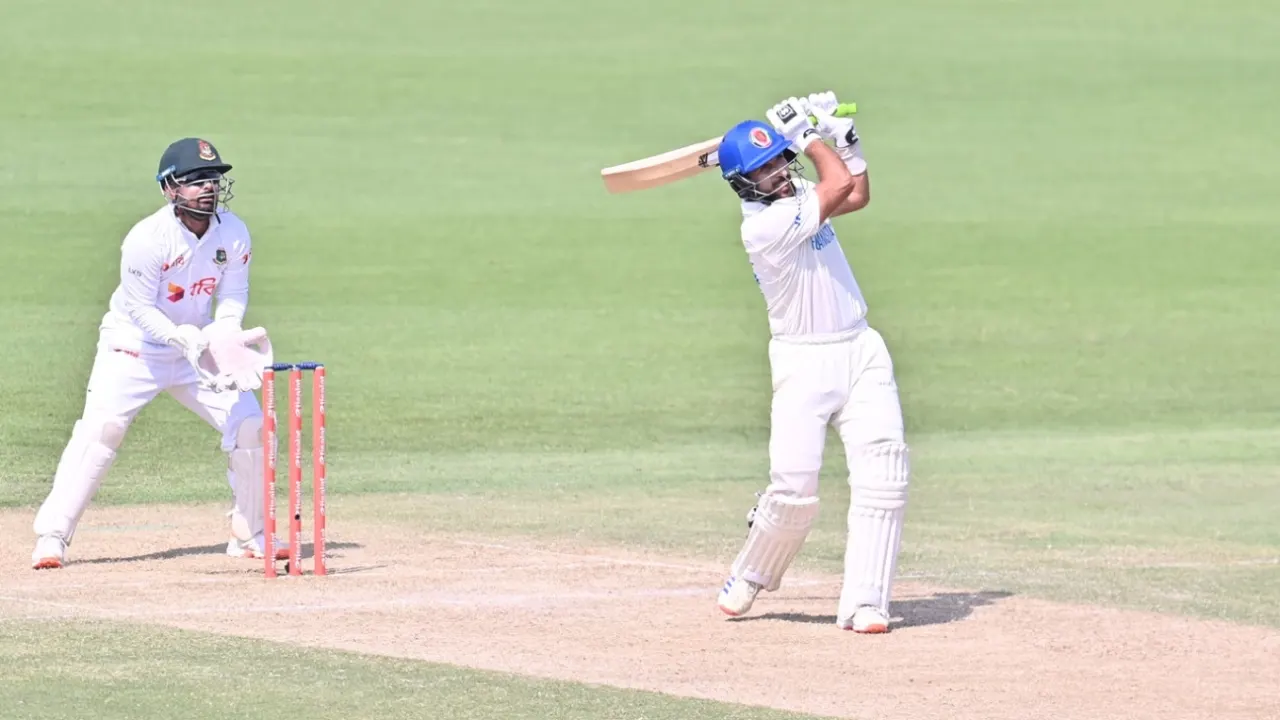
Captain Rahmat Shah played a crucial knock as he held Afghaniistan together on the second day in Abu Dhabi. He blunted Bangladesh’s threat by adding 72 runs for the unbroken fifth wicket with his deputy Ikram Alikhil.
Rahmat was unbeaten on 84 off 186 balls with eight fours and a six, while Alikhil’s 26 came off 91 balls. Ebadot Hossain was Bangladesh’s best bowler of the day.
Bangladesh wicketkeeper Litton Das got his side back into the contest shortly after the tea break. He first took a brilliant diving catch to his right, when the set Abdul Malik edged Ebadot five balls into the third session. Malik made 62 off 120 balls, with five boundaries including a six.
Next over, Litton completed a fine stumping when a Mehidy Hasan Miraz delivery turned and bounced sharply against Hashmatullah Shahidi. The former Afghanistan captain lasted just two balls as he fell for a duck.
Alikhil started with two well-timed boundaries before reining himself in for the next nine overs. Rahmat broke the boundary drought with two fours off Nayeem Hasan in the 60th over. He first pumped the offspinner through midwicket before finding the gap through mid-off for the second four.
Afghanistan then held off the Bangladesh bowling for the next 17 overs without a single boundary. Finally in the 77th over, Rahmat struck Mehidy for two fours in a row, both superb shots through extra cover, as he brought up Afghanistan’s 200.
The day began with the Afghanistan pace bowlers removing the two remaining Bangladesh wickets. It took them 8.3 overs, with Mohammad Saleem picking up his fourth wicket, having Taijul Islam caught behind and Yamin Ahmadzai removing Ebadot with a slower delivery.
Saleem finished with 4 for 82, having taken 6 for 140 against India in Afghanistan’s previous Test in June. Ahmadzai took three and Ismat Alam two wickets. This was the first time a fast bowling attack took nine wickets in a Test innings in Abu Dhabi.
After bowling out Bangladesh for 346, Afghanistan went to lunch on 34 for 1. Sediqullah Atal edged Hasan Mahmud to first slip. Atal struck three fours in his knock but also survived a caught-behind appeal in the third over. Replays showed that he had inside-edged it but Bangladesh did not use the review.
After lunch, Afghanistan batted positively. Shahidullah swept Mehidy while Mahmud conceded two fours early. Malik played the ball confidently, but Bangladesh kept things tight from both ends. It created a wicket when Shahidullah top-edged a hook against Ebadot in the 21st over. Mahmud took a good tumbling catch running in from fine-leg, as Shahidullah fell for 20 off 44 balls.
Rahmat though immediately stamped his authority with a crunchy cover drive in the same over. He hit Taijul for a straight six shortly afterwards, with Malik repeating the dose to the same bowler after a few more overs. Malik also cover-drove Nayeem before reaching his maiden Test half-century in the 34th over.
Scores:
Afghanistan 211 for 4 in 80.5 overs (Abdul Malik 62, Rahmat Shah 84*, Ikram Alkhi 32*; Ebadot Hossain 2-50) trail Bangladesh 346 in 92.3 overs (Shadman Islam 67, Tanzid Hasan 83, Litton Das 53; Mohammad Saleem 4-82, Yamim Ahmadzai 3-79, Ismat Alam 2-20) by 135 runs
[Cricinfo]

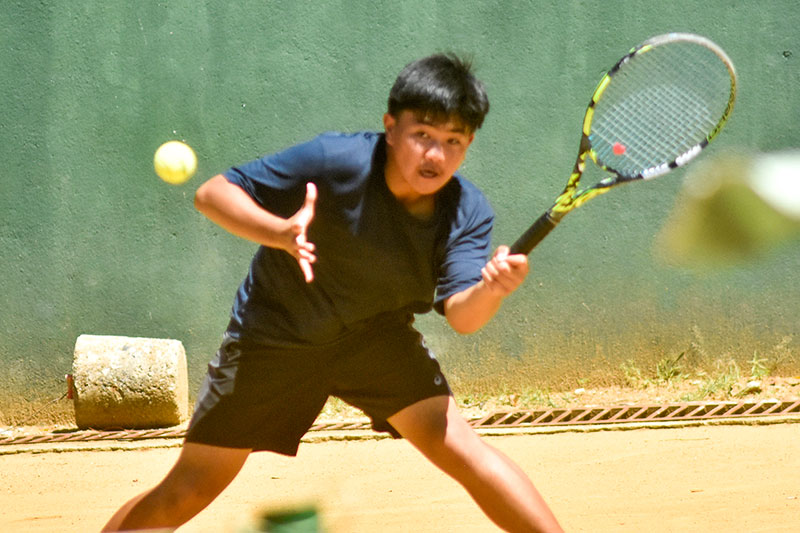
Risindi Hewawasam of Sri Lanka and Anthony Castigador of the Philippines won the girls’ and boys’ singles titles at the ATF 16 & Under Colombo 2026 – Week 1 tournament concluded at the Sri Lanka Tennis Association courts on Friday.
Castigador produced a dominant performance in the boys’ singles final, defeating India’s Gurshaan Chahal 6-2, 6-2 to secure the title. The Filipino maintained his advantage throughout the match, winning in straight sets to cap an impressive campaign.
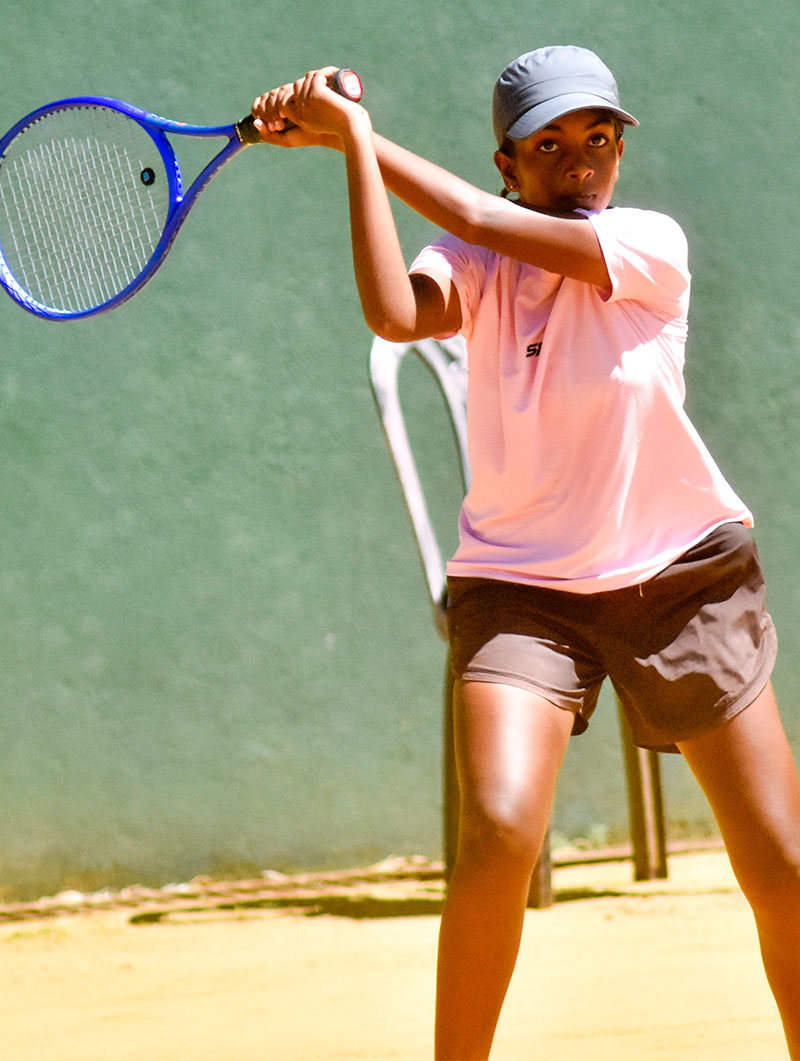
Risindi Hewawasam (Pix by Kamal Wanniarachchi)
In the girls’ singles final, Risindi delivered an equally dominant display to beat compatriot Kiara Jayamanne 6-1, 6-1. (RF)
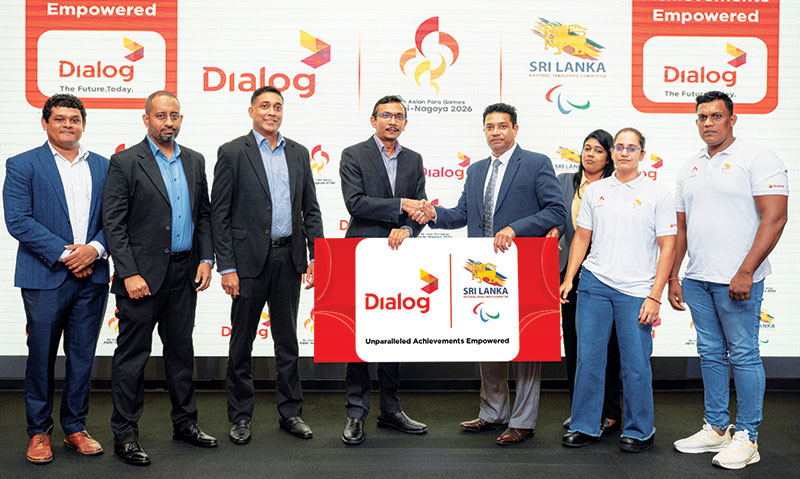
Dialog Axiata PLC is supporting Sri Lanka’s national contingent at the 2026 Asian Para Games in Achi Nagoya Japan, continuing its long standing commitment to supporting Sri Lankan athletes and helping them compete at the highest levels of international sport.
As the team sponsor, Dialog is backing a group of 21 athletes whose journeys have been shaped by determination, discipline and a strong desire to represent their country on the international stage. For Dialog, however, the value of this team goes well beyond the medal tally.
Each athlete has taken a different path into elite sport. Their physical abilities may differ, as do their individual stories, challenges, and ambitions. What they share is the commitment and determination required to train, compete, and continue pushing themselves to achieve their goals.
Dialog’s support reflects its wider commitment to creating opportunities for Sri Lankans to pursue their ambitions and represent the country with pride. For 26 years, Dialog has supported Paralympic sport in Sri Lanka, helping athletes compete at national and international level. Its continued support for the Asian Para Games contingent is part of that long-standing commitment to creating opportunities for athletes and recognizing sporting talent.
Among them is javelin thrower Samitha Dulan, a silver medalist at the 2022 Hangzhou Asian Para Games. Palitha Bandara, another experienced member of the athletics team, has also won medals at both the 2018 Jakarta and 2022 Hangzhou Games.
Nuwan Indika arrives with an impressive record after winning gold in the 100 meters and silver in the long jump at Hangzhou, while Pradeep Somasiri returns as an Asian Para Games champion after winning gold in the 1,500 metres.
Dhananjana Wickramasingha will also be looking to build on her silver medal winning performance in the women’s long jump at Hangzhou, while Madhuranga Subasinghe, who won bronze in the 400 metres, is also back in the squad.
Sri Lanka’s medal winning experience extends beyond athletics. Swimmer Naveed Rasheen won bronze in the 400 metre freestyle at Hangzhou, while Nadin Basnayake claimed silver in the women’s event.
The squad also includes Buddika Indrapala, who won bronze at the 2018 Asian Para Games.
Together, the contingent includes nine athletes who have previously won medals at the Asian Para Games, bringing valuable experience to the 2026 campaign.

Rahmat, Malik fifties lead Afghanistan’s strong reply

Showers above 75 mm are likely at some places in the Western, Sabaragamuwa, Central, Uva and North-Western provinces and in Galle, Matara, Anuradhapura and Mannar districts.

Iranian ships stranded, Lanka fears US sanctions

Sri Lanka CERT warns of overseas university admission scams

Navi Pillay’s Lankan affairs in focus as she wins 2026 Nobel Peace Prize

Lanka welcomes Indian SC remarks on Katchatheevu dispute

‘Dates have the highest sugar content to fight Coronavirus’

Sunday Island 27 December – Headlines

#SundayIsland 17th December – Headlines

Sunday Island – 28th March

Sunday Island Headlines – 21 March

Sunday Island – 21st February – Headlines
-

 News6 days ago
Geneva takes up Sallay’s case and govt. ignores opportunity to answer accusations
-

 Features5 days ago
Preventing grievances from becoming communal
-

 Features3 days ago
The Sri Lankan who made Scottish history
-

 Sports3 days ago
Nissanka absence opens door for Sri Lanka’s young guns
-

 News4 days ago
Gnansara Thera to be assigned to prison printing section: Officials
-

 Features6 days ago
Sri Lanka Cricket Bill: Governance reform is not yet a cricket strategy
-

 News2 days ago
NDB fraud Rs 60mn more than reported
-

 Features3 days ago
Future of Sri Lanka’s state university system: Should it be shut down and reopened?