
Sports
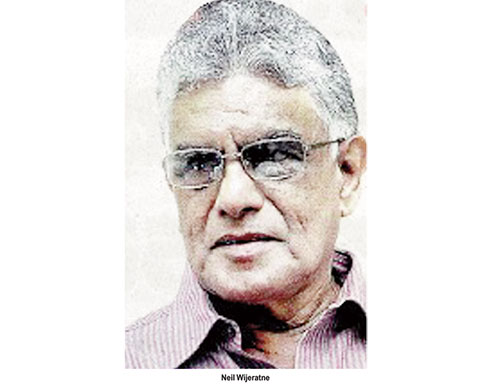
Neil’s books on rugby bring back nostalgic memories

By A Special Sports Correspondent
These are days where sportsmen and women can review their lives and careers. Some would say it’s a must do during these times where there are travel restrictions. We all experience such a period some time during our lives when we are made inactive. From a rugby perspective there is so much literature to read up. Innovative people can do a documentary on rugby or short film clip and post on social media and youtube. This writer remembers the two books penned on rugby by one time recorder of Sri Lanka Rugby Neil Wijeratne.
These are great days to read his two books ‘Rugby Across the Straits’ and our very own ‘Sevens Saga’-which caps the rugby sevens history of the island.
Wijeratne is still the person to go to when a writer wants information for a sports article. He is a serious historian and takes great pain in collecting his facts and figures for his compilations. He has been generous in parting with whatever statistics he has when budding writers and journalists tap him as a source.
 He was pushed to keeping sports records on pen and paper because destiny didn’t afford him the opportunity to be a sportsman. Many feel that sport was richly rewarded because this brought the writer out in Wijeratne.
Wijeratne showed his prowess in writing as a schoolboy and penned his first novel ‘Mihiduma Atharin’ in 1968. That pen kept flowing and he produced many gems in writing; his compilations coming out in English and Sinhala languages.
He is one person who saw rugby’s changing face from being an amateur sport to its professional status. Those who speak with him will vouch that his cherished memories were when players played for the love of the game and remained as amateurs.
His writings highlight those achievements by ‘amateur’ rugby players. He mentions of players like Apisai Nagata, Sari de Sylva, Nalin de Silva, Didacus de Almeida, Michael Jayasekare and Nalaka Weerakkody in a note of acknowledgement in his book Sevens Saga. He leaves out two great names that of Hisham Abdeen and Priyantha Ekanayake in that list. But who are we scribes to challenge his thoughts as a writer? May be a writer like Wijeratne sees subtle intriguing qualities and more interesting traits in these players he has mentioned because that total package makes their presence on the field so much interesting.
Wijeratne picked up those bits of information which the spectator might have missed out on and brings them out in his writings. He also never forgot about to write on lesser known sports personalities and people who contributed to sport from behind the scenes.
We Sri Lankans have often caught the attention of overseas crowds when contesting international sevens tournaments. This could be one reason why he dedicated effort and time to pen the early history of the island’s sevens rugby.
According to him it had all happened in 1931 on a February 1st in Ratnapura when the Police team took on a planters combined outfit that marked the first rugby sevens game in Sri Lanka. The writer in his book goes on to find out the exact population in Ratnapura (8497) which adds flavour to the article and brings back nostalgic memories of the past. According to Wijeratne the person credited for introducing rugby sevens to this nation is Welshman K.F Jenkins who was stationed here as a probationary Assistant Superintendent of Police.
 As rugby progressed and more clubs came into being Wijeratne simply expanded his horizons. From rugby sevens tournaments in Colombo’s Longden Place and Race Course he has captured the action in tournaments like Sabaragamuwa Sevens, Kurunegala Sevens, Ruhunu Sevens, Uva Sevens, Dimbula Sevens travelling the length and breadth of Sri Lanka. He also writes about Sri Lanka hosting its first international rugby tournament -the Cargills International Sevens-which was won by Fiji Islanders’. The team comprised all Fijian players, who played domestic rugby here, except for Chandrishan Perera, who was probably included here to keep the interest of the local crowd in the tournament till the end. The old style of playing rugby is captured by Wijeratne in his punchy style of writing English. In the article titled ‘Some days are diamond days’ dedicated to Sri Lanka’s Bowl Championship win at the 1994 Fiji Sevens he writes ‘Sri Lanka was very much famous in Fiji not because of any rugby prowess of theirs, but as a country where the Fijians are looking ahead to make lucrative playing careers. Wijeratne brings out the best of Sri Lanka rugby when the islanders are on top and dazzling and still can keep the reader glued to the page with his descriptive writing when the ‘Tuskers’ are struggling with defeat staring in the face.
Still for Wijeratne, he can’t help but find space for two legends like Abdeen and Priyantha Ekanayake in the book ‘Sevens Saga’. He writes extensively on Sri Lanka’s 1984 Bowl Championship win where Abdeen led from the front as skipper. The author underscores the leadership skills and rise to fame of Ekanayake in selected sections of the book. When one begins to think that the book is not complete without the mention of two rugby stalwarts who gave so much opportunities for rugby players one finds the names of Kishin Butani and Malik Samarawickreme and some of their contributions to sevens rugby.
During these lockdown days where rugby activity is absent Wijeratne’s books are ideal to do more than pass the time; they are educative as well.
In his characteristic way of saying it Wijeratne’s rugby books ‘offer a nostalgic pilgrimage to recapture everlasting moments in rugby seen in this island’.


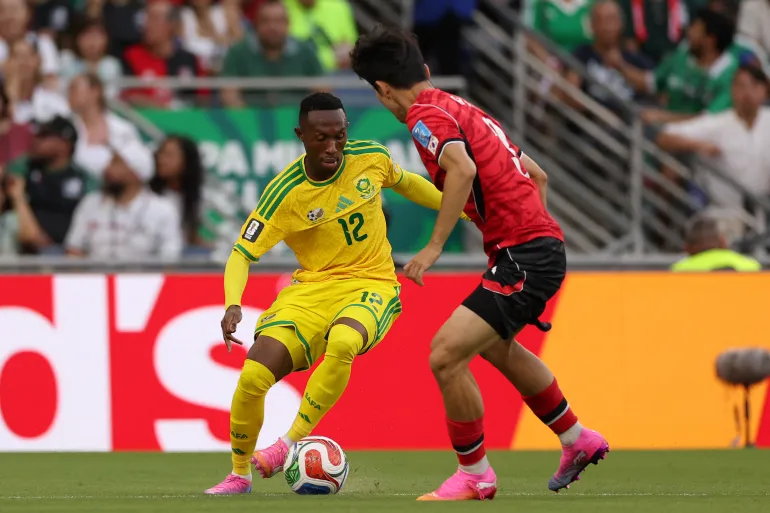
South Africa beat South Korea 1-0 to reach the World Cup knockout rounds for the first time in their history, an astonishing turnaround after a dismal opening defeat.
Bafana Bafana, playing at the tournament for the first time since South Africa hosted it in 2010, were widely written off after their 2-0 loss to Group A winners Mexico.
But they battled to a draw against the Chez Republic and came out on top of what was effectively a shootout with South Korea for second place in Monterrey, thanks to Thapelo Maseko’s second-half strike.
South Korea coach Myung-Bo Hong made a shock call by leaving captain Son Heungmin – considered by many to be Asia’s greatest-ever player – out of the starting lineup.
The Asian team started strongly, with stand-in captain Kim Minjae’s powerful header blocked on the goal line by Aubrey Modiba, before Lee Kangin flashed wide.
South Africa quickly settled, playing with hunger and adventure, but their finishing was wasteful.
They seemed certain to take the lead in the 30th minute when the ball fell to Evidence Makgopa after South Korean goalkeeper Kim Seunggyu parried Thalente Mbatha’s shot. But Makgopa could only tamely poke the ball straight at the goalkeeper from close range.
Son came on at the start of the second half, one of three changes made by coach Hong as he sought to change the script.
Early in the second period, Maseko squandered another good position, while South Korea forward Oh Hyeongyu tested goalkeeper Ronwen Williams at the other end.
As news filtered through from Mexico City that the host nation were leading against the Czech Republic, there was an added sense of urgency.
South Africa seized their moment, with Tshepang Moremi crossing to Maseko, who this time kept his cool, firing home inside the near post in the 63rd minute.
South Korea pushed hard in the closing stages but ran out of time, meaning South Africa will face cohosts Canada in Los Angeles on June 28 .
Mexico topped the group with nine points after winning all three of their matches.
[Aljazeera]

Morocco twice overcame the shock of conceding to Haiti to win a World Cup thriller 4-2 in Atlanta, but missed out on the top spot in Group C to Brazil.
Haiti bowed out with their first World Cup goals in 52 years, as a Yassine Bounou own goal and Wilson Isidor’s stunning strike twice gave them the lead on Wednesday.
Achraf Hakimi and Ismael Saibari, with his third goal in as many games at the World Cup, levelled before half-time.
Soufiane Rahimi was nearly brought to tears when the 30-year-old’s deflected effort found the top corner to give Morocco the lead, before Gessime Yassine rounded off the scoring.

But Morocco missed out on the top spot in the group to Brazil on goal difference, meaning they will head to Monterrey for a likely meeting against the Netherlands or Japan on Monday.
Despite bowing out without a point, Haiti’s performances at their first World Cup since 1974 have done a nation gripped by poverty proud.
Les Grenadiers were already eliminated after losing to Scotland and Brazil , but the thousands of Haitian expats in the stands in Atlanta were undeterred as every attack was met with deafening cheers.
Morocco boss Mohamed Ouahbi made four changes to the side that had impressed in holding Brazil and beating Scotland in their opening two games, and the Atlas Lions started sloppily.
Haiti’s long wait for a goal on the global stage was ended after just 10 minutes, when Jean-Kevin Duverne got to the byline, and Lenny Joseph flicked the resulting cross into the net via a deflection off Bounou.
Hakimi has continued to captain Morocco despite learning mid-tournament that he is to face a trial on rape charges in France.
The reigning African footballer of the year stormed forward from right-back at every opportunity and was in the right place to equalise on 39 minutes.
In his final game for Haiti, 38-year-old goalkeeper Johny Placide could only parry Bilal El Khannouss’s strike, and Hakimi had a simple task to force the ball over the line.
Within four minutes, though, Haiti had restored their lead in far more spectacular fashion.
Sunderland striker Isidor pounced on a loose ball and let fly from outside the area with a shot that arrowed into the top corner.
Hakimi and Ouahbi were visibly angered by conceding for a second time, but the 2022 World Cup semifinalists responded before half-time.
Saibari stroked home his third goal of the tournament with a cool finish from Hakimi’s low cross.
Brahim Diaz nearly gave Morocco a half-time lead when his curling effort shaved the post to end a thrilling first half.
With Brazil cruising to victory over Scotland in Miami, Morocco knew that only a comprehensive victory would secure them the top spot in Group C.
Ouahbi began turning his attention to the last 32, as Bayern Munich-bound Saibari and Real Madrid’s Diaz were replaced with more than 20 minutes remaining.
But two of his substitutes came on to win the game for Morocco.
Rahimi’s powerful strike from a corner flew into the top corner via a deflection off a desperate Haiti defender.
He then turned provider by robbing possession on the Haiti byline and crossing for Yassine to roll into an empty net.
(Aljazeera)

Brazil advanced to the knockout stages of the World Cup in style after Vinicius Junior netted twice in a 3-0 win over Scotland in their final Group C match, while Neymar also made his first appearance in a Brazil shirt in three years.
The victory on Wednesday came at a full house in Miami Stadium, where 64,478 fans watched Carlo Ancelotti’s side top the group with seven points, while Morocco finished second with a 4-2 win over Haiti.
Vinicius has scored in every game so far, and the 25-year-old has four goals in the tournament to find himself in elite company, level with Kylian Mbappe and Erling Haaland, and sitting just one goal behind Lionel Messi.
Scotland boss Stephen Clark said he expected Brazil to attack from the outset, and the South Americans needed seven minutes to go 1-0 up when Scott McKenna failed to clear the ball, allowing Rayan to nick it and find Vinicius unmarked.
As goalkeeper Angus Gunn scrambled to stop him, the Real Madrid forward simply took one touch to move the ball past him and tap it into an empty net as the fans in yellow erupted.
Brazil nearly made it 2-0 just before the first hydration break, when Vinicius nicked the ball off Jack Hendry to score, but Scotland earned a reprieve after a VAR check, and the goal was overturned by the referee for a foul by the Brazilian.
That remained the theme in the first half, with Brazil being more combative to win the ball back, while Scotland failed to capitalise on set-pieces – the only time they had opportunities to score – as they finished the half with no shots on target.
Brazil’s second goal was a dagger to Scotland’s hearts on the stroke of half-time, when, once again, they won the ball high up the pitch and Bruno Guimaraes crossed the ball to the far post, where a grateful Vinicius headed home his second.
In the second half, Brazil pressed for a third goal, and it came with another scything move through the midfield as Guimaraes grabbed his second assist, dancing into the box before setting up Matheus Cunha for his third goal of the tournament.
But the biggest cheer of the night was reserved for Neymar, as Ancelotti brought the 34-year-old on for his first appearance in a Brazil shirt since October 2023.
(Aljazeera)

Venezuela earthquakes: At least 164 dead, 971 injured as toll rises

Representatives from the Ceylon Chamber of Commerce meet PM

Progress of Housing Project for Malayagam Community families funded by India reviewed

South Africa stun South Korea to reach World Cup knockouts for the first time

Tremors of 7.5, 7.2 kill 32, injure hundreds in Venezuela

Former Minister Wijeyadasa Rajapakshe’s son arrested by CIABOC

‘Dates have the highest sugar content to fight Coronavirus’

Sunday Island 27 December – Headlines

#SundayIsland 17th December – Headlines

Sunday Island – 28th March

Sunday Island Headlines – 21 March

Sunday Island – 21st February – Headlines
-

 News7 days ago
Creditor receives USD 2.5 mn as Lankan public bears loss from theft of Treasury funds
-

 News6 days ago
Creditor not yet paid
-
 News6 days ago
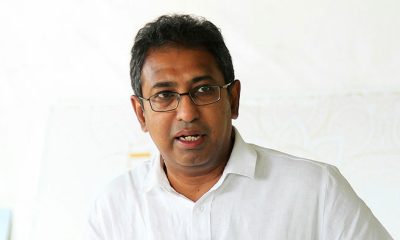
Consumers bearing 22% tax burden despite 18% VAT claim: Dr. Harsha de Silva
-

 Features5 days ago
Nanda Pethiyagoda Wanasundara as three generations of family saw her
-

 Features4 days ago
Sri Lanka developing independent hydrographic capabilities
-

 Opinion7 days ago
SriLankan Airbus struck by lightning
-

 Editorial5 days ago
Fuel crisis: Beyond price debate
-

 Latest News4 days ago
Sooryavanshi thumps fastest List A fifty as India A win tri-series