
News
Naming RTI Chairperson President’s prerogative

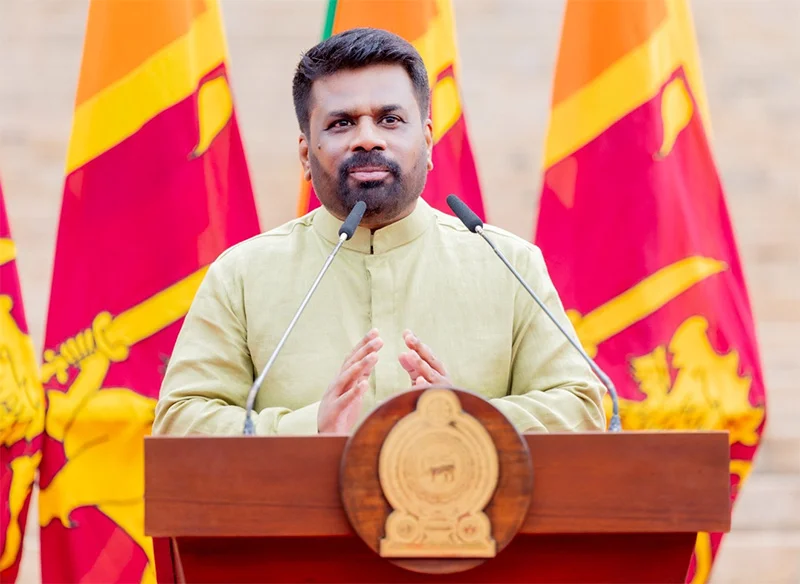
‘AKD can choose new member or select one of the four serving Commissioners’
Of the five-member Right to Information (RTI) Commission, one slot remains vacant, in spite of mounting pressure on the government to fill the vacancy and to appoint a Chairperson.
Former Speaker Karu Jayasuriya, who spearheaded a high profile campaign to establish the RTI Commission under the RTI Act No. 12 of 2016, in his capacity as the leader of the National Movement for Social Justice (NMSJ), three months ago, has also stressed the need to fill those vacancies.
At the time of the last parliamentary elections, conducted in late November 2024, the RTI Commission comprised Justice (retd.) Upali Abeyrathne (Chairperson), Justice (retd.) Rohini Walgama, Attorney-at-Law Kishali Pinto-Jayawardena, Attorney-at-Law Jagath Liyana Arachchi, and academic Mohamed Nahiya.
Justice Walgama and Justice Abeyrathne resigned on 31 Dec., 2024 and 04 March 2025, respectively.
The quorum for the operation of the Commission is three. Therefore, the Commission was able to proceed regardless of the resignation of Justices Walgama and Abeyrathne. However, President Anura Kumara Dissanayake recently filled the vacancy created by Justice Walgama’s resignation. He appointed Justice (retd.) D.M. Samarakoon, on recommendations made by the Constitutional Council. The President could have named either Justice Samarakoon or any other remaining member of the Commission as the Chairperson but he chose not to do so, sources said.
Controversy surrounds the inordinate delay in filling the vacancy and the appointment of a Chairperson against the backdrop of the RTI Commission seeking an explanation from the Presidential Secretariat regarding its failure to provide information pertaining to President Anura Kumara Dissanayake’s personal staff, the positions they hold, their monthly salaries and allowances, and the number and types of vehicles assigned to them.
The RTI Commission consists of a Chairperson and four members appointed by the President on the recommendation of the Constitutional Council. In terms of the RTI Act, the Constitutional Council is required to include in the list of nominees to the President one person each nominated by the a) Bar Association of Sri Lanka, b) media organisations and c) other civil society organisations.
Responding to queries, sources said that obviously there was a delay on the part of the Constitutional Council in filling the remaining vacancy. Although the applications closed on April 1, 2025, interviews were yet to be held, other sources said, adding that though the Constitutional Council was to fill the vacancy, created by former Chairperson Justice Abeyrathne’s resignation, it couldn’t recommend a Chairperson to the President.
“The President can either name the new appointee as the Chairperson or chose one of the four current members for the top post,” a well informed source said.
Sources contested the BASL’s recent appeal to the Constitutional Council to recommend a suitable person as the Chairperson of the RTI Commission. The BASL should know that Constitutional Council could only recommend members to the RTI Commission and it was the President’s prerogative to choose one of them as the Chairperson, sources said.
By Shamindra Ferdinando




Latest News
A strong Technical and Vocational Education and Training (TVET) system equips individuals with practical, relevant, and future-oriented skills helping to innovate responsibly towards a greener and sustainable future – PM

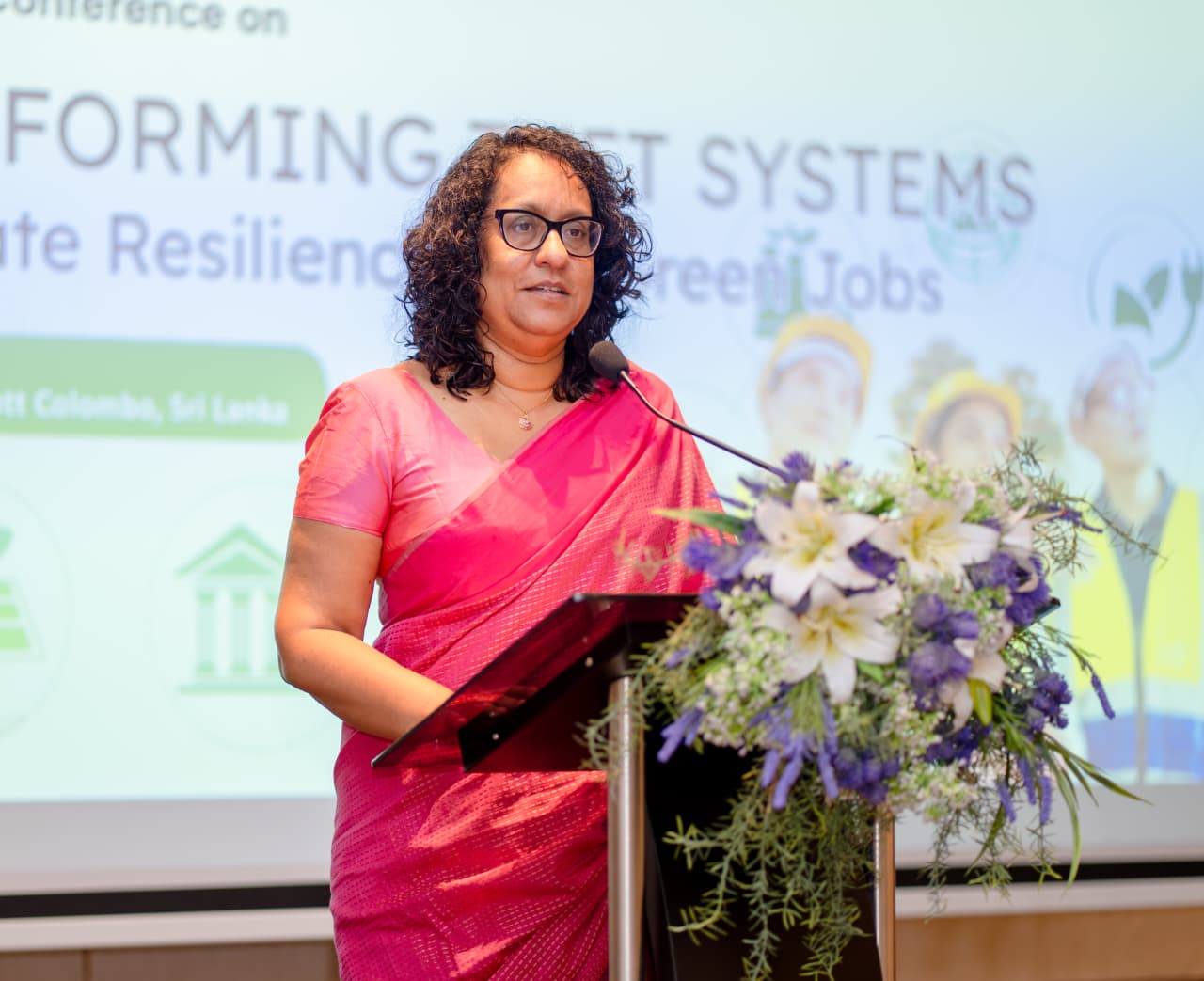
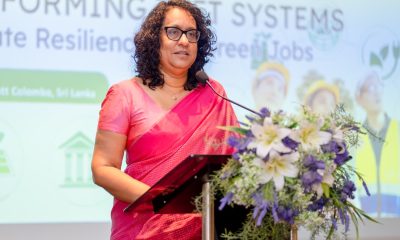
The Prime Minister, Minister of Education, Higher Education and Vocational Education Dr. Harini Amarasuriya participated as the Chief Guest in the international conference on ’Transforming TVET Systems for climate resilience and green jobs’ organized by Colombo Plan Staff College, Philippines together with the Ministry of Education, Higher Education and Vocational Education Sri Lanka on 24 th of March at Courtyard by Marriott Colombo, Sri Lanka.
The Conference serves as the flagship event of the five-day Regional Programme on “Transforming TVET for a Digital, Green, and Inclusive Economy” (23-27 March 2026), which continues throughout the week, bringing together representatives from CPSC member countries including Bhutan, Fiji, Malaysia, Maldives, Myanmar, Nepal, Philippines, Thailand, Pakistan, and Sri Lanka, fostering high-level dialogue and knowledge sharing on climate-resilient and green skills development.
The Conference features technical and plenary sessions on climate-responsive TVET systems, green skills development, national policy frameworks, and emerging technologies shaping industry transformation.
Addressing at the event, the Prime Minister emphasized the role of Technical and Vocational Education and Training (TVET) that equips individuals with practical, relevant, and future-oriented skills in addressing climate change and shaping a sustainable future.
The Prime Minister reaffirmed that this transformation remains a national priority for Sri Lanka. She stressed that education must go beyond knowledge dissemination to empower individuals with opportunities, dignity, and the capacity to contribute meaningfully to society.
She further emphasized the need to integrate environmental sustainability into education and training systems by embedding green skills in curricula, investing in modern training facilities, promoting innovation, and fostering collaboration between training institutions and emerging green industries.
Highlighting the importance of ensuring equity the Prime Minister further stated, that opportunities arising from the green transition must be accessible to all, including youth, young women, people with special needs, and marginalized communities.
Reaffirming Sri Lanka’s commitment to working closely with regional and international partnerships, the Prime Minister emphasized the importance of transforming them to actual benefits and partnerships.
The occasion was attended by the Secretary to the Ministry of Education, Higher Education and Vocational Education Nalaka Kaluwewa, Additional Secretary (Vocational Training) Ms. Samanthi Senanayake Director General Colombo Plan Staff College Prof. Dr. Suresh K. Dhameja , TVET administrators, institutional leaders, policymakers, instructors, industry representatives, and international delegates from across the region and seniors officials and officials from Ministries.
(Prime Minister’s Media division)
News
PM reviews progress of the committee appointed for the establishment of a National Nursing University
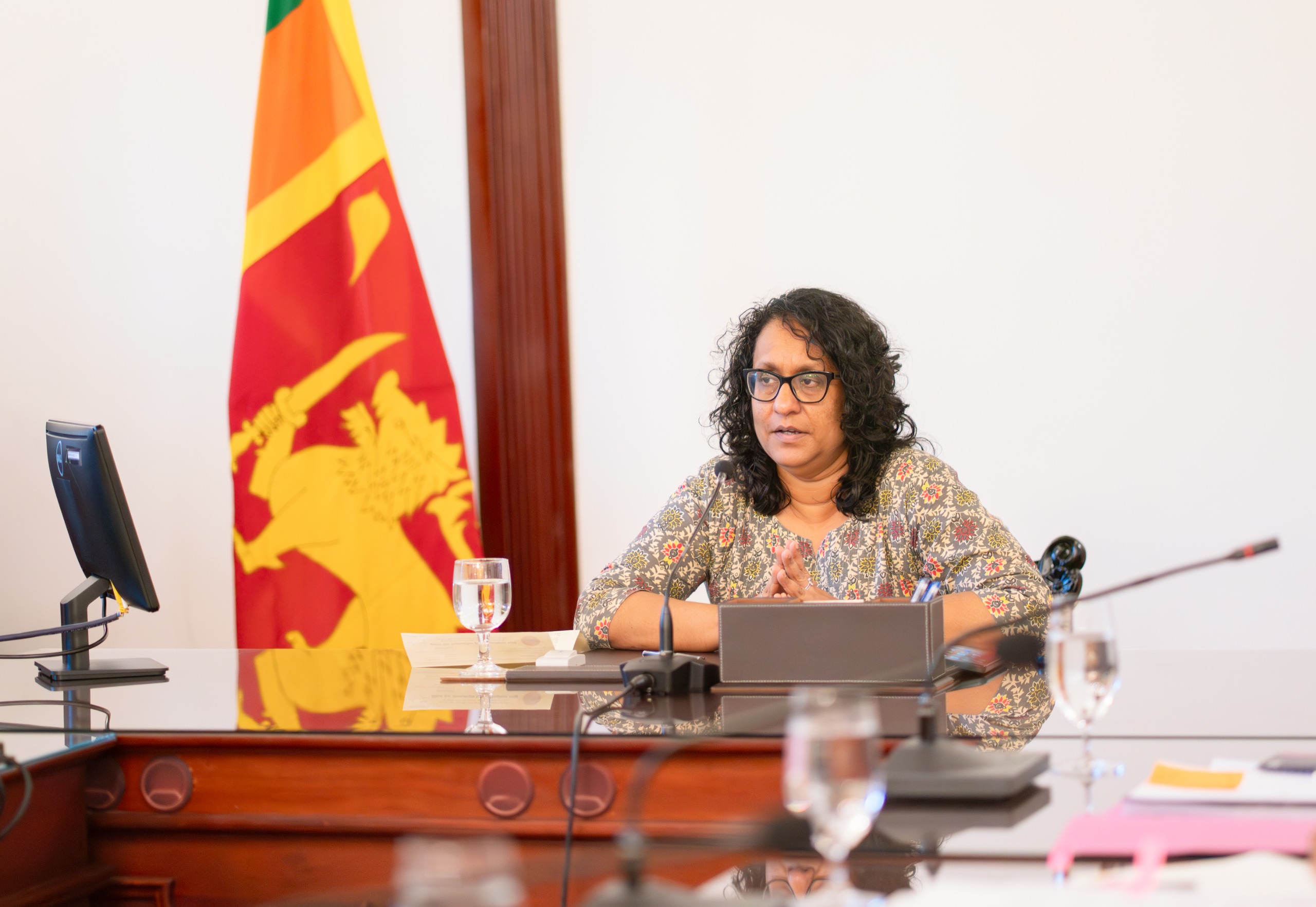
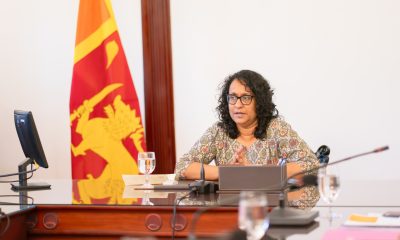
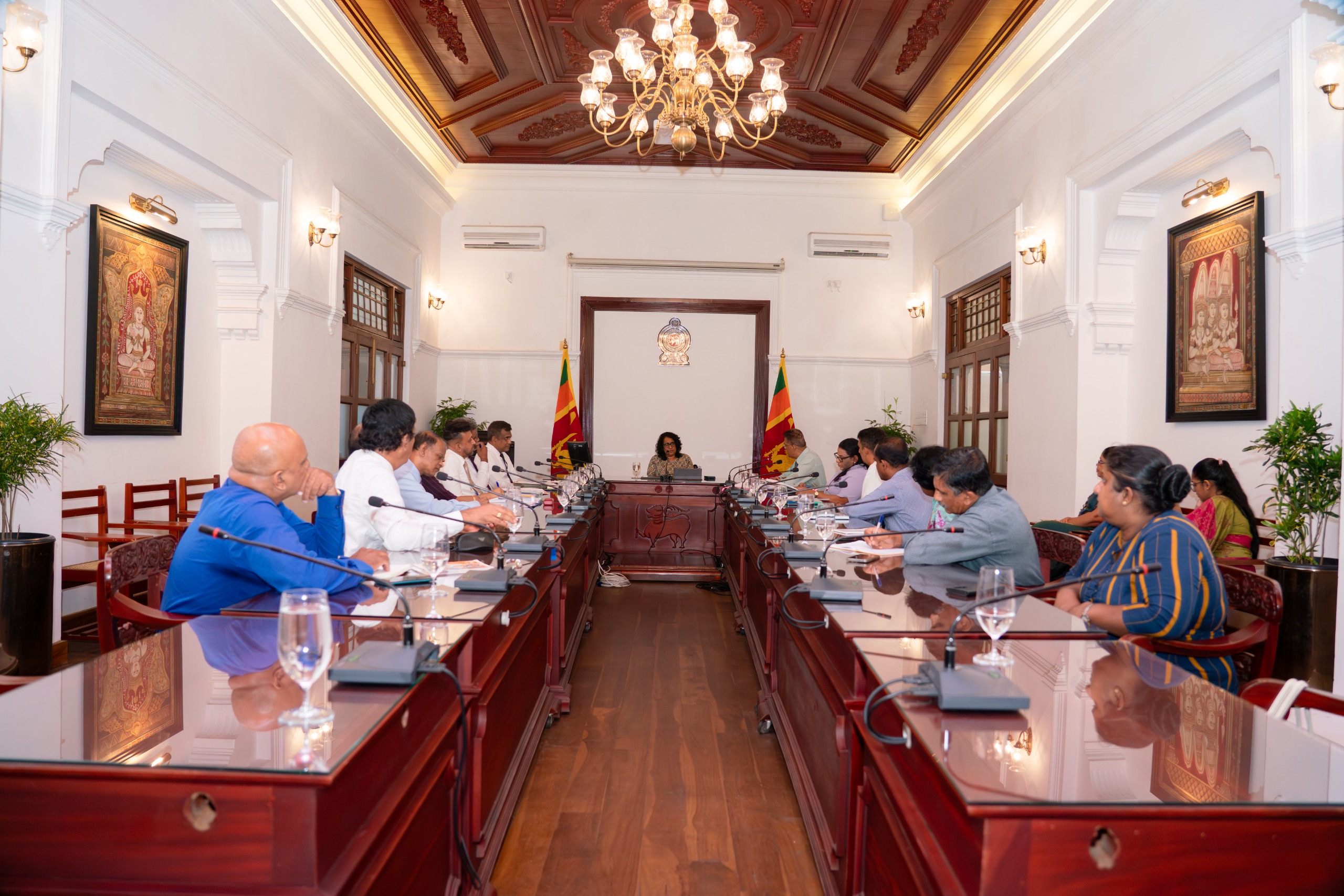
A discussion to review the current progress of the special committee appointed under the government’s policy proposals to establish a National Nursing University aimed at elevating the nursing profession in Sri Lanka to degree level was held on 23rd of March at the Prime Minister’s Office under the patronage of Prime Minister Dr. Harini Amarasuriya.
During the meeting, the Prime Minister inquired into the progress made by the committee in relation to the establishment of the Nursing University and paid attention to the issues and views presented by the committee members.
Emphasizing that establishing a university is a long-term and complex process, the Prime Minister pointed out the importance of advancing this project in line with higher education standards, without hasty decisions, while also taking into account the existing conflicts and challenges within the university system.
The meeting was attended by the Vice Chairman of the University Grants Commission, Professor K. L. Wasantha Kumara, representatives of the All Ceylon Nurses’ Association, and officials from the Ministry of Health and Mass Media.
(Prime Minister’s Media Division)
Latest News
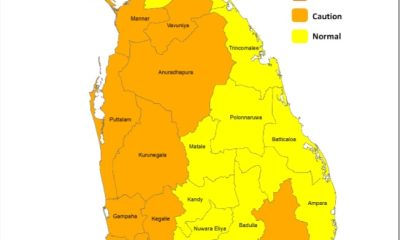
Heat Index at ‘Caution level’ in the Western, Sabaragamuwa, Southern and North-western provinces and in Anuradhapura, Mannar, Vavuniya and Monaragala districts
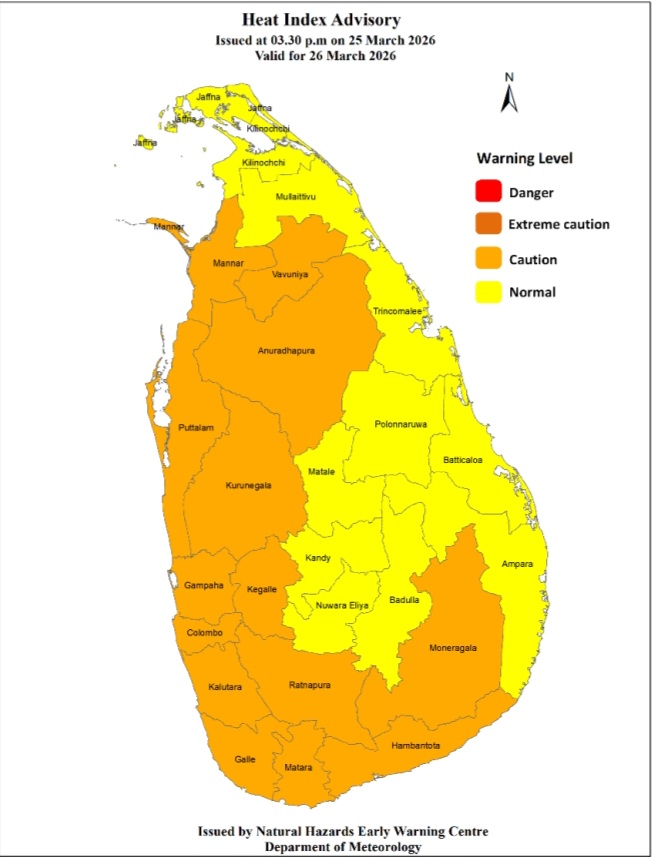
Warm Weather Advisory
Issued by the Natural Hazards Early Warning Centre of the Department of Meteorology
at 3.30 p.m. on 25 March 2026, valid for 26 March 2026.
The Heat index, the temperature felt on human body is likely to increase up to ‘Caution level’ at some places in the Western, Sabaragamuwa, Southern and North-western provinces and in
Anuradhapura, Mannar, Vavuniya and Monaragala districts.
The Heat Index Forecast is calculated by using relative humidity and maximum temperature and this is the condition that is felt on your body. This is not the forecast of maximum temperature. It is generated by the Department of Meteorology for the next day period and prepared by using global numerical weather prediction model data.

Effect of the heat index on human body is mentioned in the above table and it is prepared on the advice of the Ministry of Health and Indigenous Medical Services.
ACTION REQUIRED
Job sites: Stay hydrated and takes breaks in the shade as often as possible.
Indoors: Check up on the elderly and the sick.
Vehicles: Never leave children unattended.
Outdoors: Limit strenuous outdoor activities, find shade and stay hydrated.
Dress: Wear lightweight and white or light-colored clothing.
Note:
In addition, please refer to advisories issued by the Disaster Preparedness & Response Division, Ministry
of Health in this regard as well. For further clarifications please contact 011-7446491.

A strong Technical and Vocational Education and Training (TVET) system equips individuals with practical, relevant, and future-oriented skills helping to innovate responsibly towards a greener and sustainable future – PM

PM reviews progress of the committee appointed for the establishment of a National Nursing University

UN votes to recognise enslavement of Africans as ‘gravest crime against humanity’

Meta and YouTube found liable in landmark social media addiction trial

Showers expected in the Western and Sabaragamuwa provinces and in Galle and Matara districts after 2.00 pm.

Heat Index at ‘Caution level’ in the Western, Sabaragamuwa, Southern and North-western provinces and in Anuradhapura, Mannar, Vavuniya and Monaragala districts

‘Dates have the highest sugar content to fight Coronavirus’

Sunday Island 27 December – Headlines

#SundayIsland 17th December – Headlines

Sunday Island – 28th March

Sunday Island Headlines – 21 March

Sunday Island – 21st February – Headlines
-

 News2 days ago
Senior citizens above 70 years to receive March allowances on Thursday (26)
-

 Features4 days ago
Trincomalee oil tank farm: An engineering marvel
-

 News7 days ago
CIABOC tells court Kapila gave Rs 60 mn to MR and Rs. 20 mn to Priyankara
-
 Features7 days ago
Science and diplomacy in a changing world
-

 Features4 days ago
The scientist who was finally heard
-
 News2 days ago
Japanese boost to Sri J’pura Hospital, an outright gift from Tokyo during JRJ rule
-

 News2 days ago
CEB Engineers warn public to be prepared for power cuts after New Year
-

 News6 days ago
Colombo, Oslo steps up efforts to strengthen bilateral cooperation in key environmental priority areas