
Business
MullenLowe Group Sri Lanka appoints top aviation professional Lakshika Gunatilake to head LowePublic

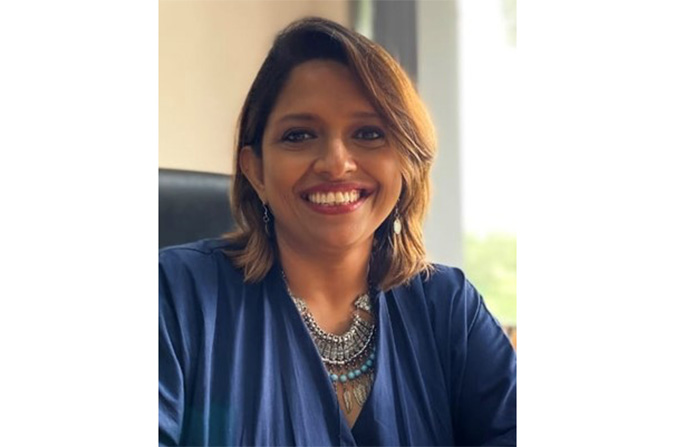
The MullenLowe Group Sri Lanka (MLG), the largest multidisciplinary brand communications group has appointed Lakshika Gunatilake, as the head of its Public Relations arm – LowePublic. Ms. Gunatilake joins the group after serving at Sri Lankan Airlines for the past 23 years. Her last position prior to taking up the role with MLG being – SriLankan Airline’s Digital Communications and Social Media Manager where she oversaw the deployment and strategizing of Digital Marketing and Social Media Communication and Social PR programs across local and international markets.
Gunatilake brings a wealth of experience having served in a range of dynamic roles in the airline such as, but not limited to, Advertising, Procurement, and Passenger Operations. She has been tasked to oversee the rapid growth and expansion of LowePublic over the next 3 years and bring it on par with all of the group’s other 9 business verticals.
The above appointment at MullenLowe is strategic in nature as the group capitalises on significant shifts in its business to meet the transitionary phase of the industry in which tech is rapidly evolving to influence choice, and build reputation for brands and companies.
Commenting on the appointment, Thayalan Bartlett Executive Chairman of The MullenLowe Group Sri Lanka said, we are delighted to welcome Lakshika at a defining moment of the industry and our own business. We believe that her vast experience dealing with overseas markets in a challenging industry such as aviation will be immensely useful as we sharpen our offering across a wide spectrum of clients. Our focus and thrust as a group has largely been on digital and tech in the last 24 months. With Lakshika on board we look forward to accelerating this transformation for LowePublic.
The MullenLowe Group (MLG) is Sri Lanka’s largest marketing communications group. The company, which until recently was owned by the US-based Interpublic Group (IPG), transitioned to local ownership and is a full member affiliate of MullenLowe Worlwide and part of a network of 95 global offices across 65 markets. MullenLowe Worldwide employs 6400+ people around the world, with the Sri Lanka office staffing 100 employees, and serving clients with diverse business interests in the Sri Lankan market. The Sri Lanka office is well represented across categories covering FMCG, Banking & Finance, Insurance, Leisure, Mobile & Broadband, Fintech, Enterprise Solutions, Milk based foods, Beauty & Personal and Home Care, Carbonated, Energy and Fresh Drinks, Packaged Foods & Biscuits and Sanitary Pads to name a few. This extensive portfolio comes together to dominate 80% of the top 10 and 50% of the top 20 advertised categories in the country. The group is supported by 9 independent strategic business verticals – MullenLowe, LoweLintas, LoweTech, LoweDigital, LoweMedia, LowePublic, LoweActive, LoweGo and Fever. By the sheer representation of diverse industries through these independent verticals, the Group draws on a vast amount of cross category knowledge making it the most influential brand communications group operating in the country.

HNB Life PLC has delivered a robust performance in the first quarter of 2026, recording a 54% year-on-year increase in Gross Written Premium (GWP) to Rs. 7.01 billion, up from Rs. 4.55 billion in Q1 2025. Net Written Premium rose by a matching 54% to Rs. 6.69 billion, reflecting strong new business generation and policy persistency.
Total net income grew 39% to Rs. 8.69 billion, supported by solid underwriting and steady investment income, including Rs. 2.05 billion from interest and dividends. The company’s balance sheet remains resilient, with total assets reaching Rs. 71.38 billion and the Life Insurance Fund expanding to Rs. 52.55 billion.
Profit after tax stood at Rs. 0.21 billion, though profitability was tempered by a low-interest rate environment and fair value fluctuations in the equity portfolio. No surplus transfer from the Life Insurance Fund has been made yet, as this typically follows year-end valuation.
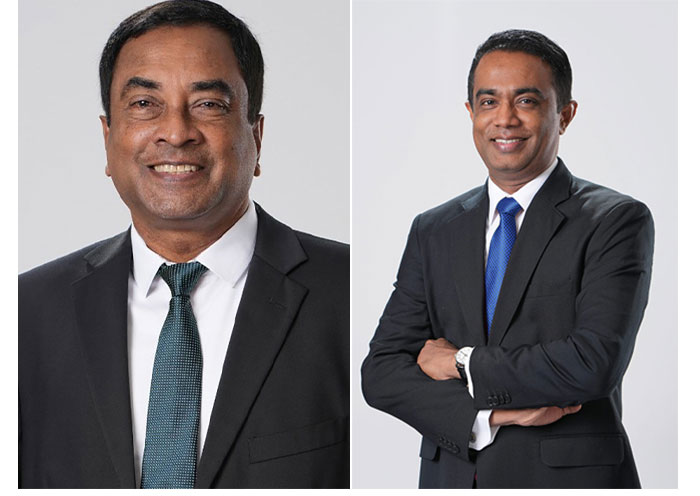
Chairman Stuart Chapman attributed the momentum to the company’s recent rebranding and its strategic alignment with the Hatton National Bank Group. CEO Lasitha Wimalaratne emphasized disciplined execution, digital enablement, and enhanced distribution as key drivers.
HNB Life, rated ‘A’ (lka) by Fitch, marks 25 years as one of Sri Lanka’s fastest-growing life insurers, operating 79 branches nationwide. The company remains well-positioned for sustainable long-term growth.
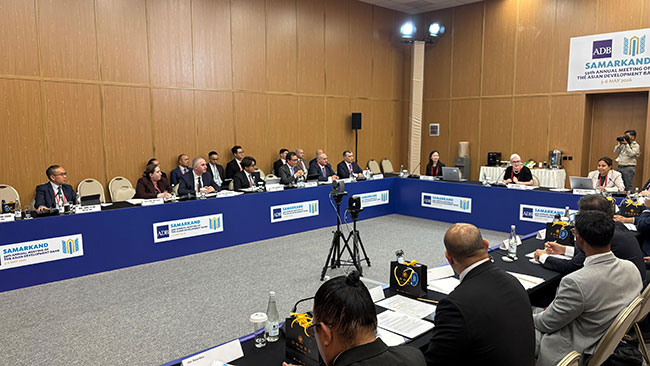
The atmosphere in Samarkand, Uzbekistan, during the 59th Annual Meeting of the Asian Development Bank (ADB) was nothing short of electric. Walking through the Silk Road Samarkand complex – a venue steeped in the history of ancient global trade – one could easily feel the weight of past legacies. “More pressing, however, was the palpable urgency of the future, as the halls of the Congress Center resonated with strategic discussions on ‘Asia’s Second Growth Leap.'” The global narrative was unmistakable: the talk of post-crisis recovery was no longer relevant. For Sri Lanka, the echoing message from Samarkand was both a warning and an invitation: the transition from an aid-recipient mindset to a competitive global partner is no longer a choice. It is our only survival mechanism.
While delegates from across the region shared aggressive blueprints for economic acceleration, the absence of Sri Lankan policymakers was a stark reality. Other Asian nations did not speak of mere “potential”; they spoke of velocity.
In Samarkand, the ancient gateway of the Silk Road, the irony was impossible to ignore. As regional leaders debated the deployment of an Interconnected Pan-Asia Grid to revolutionise energy integration, discussed how deep capital markets must drive development, and outlined strategies to scale up investments from critical minerals to advanced manufacturing value chains, a troubling realisation set in. The world is moving at lightning speed on digital highways for inclusive growth, yet Sri Lanka remains haunted by the ghost of political and bureaucratic “dilly-dallying.”
The true “Samarkand Spirit” demands an immediate, radical shift in our national mindset. Sri Lanka must aggressively shed its “crisis” label. The high-level discourse in Uzbekistan focused entirely on how emerging economies can stop begging for economic concessions and start delivering regional solutions.
Whether the focus was on maximising opportunities within the Regional Comprehensive Economic Partnership (RCEP) or financing large-scale offshore wind projects, the core directive for our nation remained constant: Sri Lanka must stop looking for a hand-out and start building an economic bridge.
The ADB has laid out the catalytic pathway for the Asia-Pacific’s second growth phase. The infrastructure, the capital, and the frameworks are ready. The burning question for Sri Lanka’s policymakers is simple: Are we ready to execute, or are we content with stagnation?
Leaving Uzbekistan, the takeaway for our leadership is vivid and uncompromising. Decisive action is the sole currency of the new Asian century.
To bridge the gap between the historic Silk Road and the strategic Indian Ocean, Sri Lanka must:
Accelerate Digitisation: Swiftly overhaul bureaucratic frameworks to create a seamless, trusted digital economy.
Integrate Energy Grid Connectivity: Boldly plug into the regional grid networks discussed at the summit to resolve long-term energy insecurity.
Plug into Global Supply Chains: Pivot aggressively toward high-value manufacturing and regional trade agreements.
The 59th ADB Annual Meeting proved that the international community is ready to partner with a competitive, forward-thinking Sri Lanka. We possess the geographic location and the inherent talent. Now, post-Samarkand, we have the definitive roadmap.
The “Second Leap” of the Asia-Pacific region is already in motion. The ultimate test for Sri Lanka’s policymakers is whether they will lead the country into this dynamic new era or leave us observing fruitlessly from the sidelines.
By Sanath Nanayakkare

Here is the point that carries more weight than the headline PMI figures released by the Central Bank of Sri Lanka. While much of April’s contraction in manufacturing (42.6) and services (46.7) was dismissed as seasonal — the Sinhala and Tamil New Year holidays, fewer working days, fading festive demand — the rupture in new business flows tells a different, more troubling tale.
April 2026 marked the first month since April 2023 that services sector new business contracted. Not a slowdown. Not a plateau. An outright decline. Nor was it narrow in scope. The deterioration cut across transportation of goods, insurance, wholesale and retail trade, and accommodation, food and beverage service activities.
The Island Financial Review asked an independent analyst for his take. Here is what he said.
“These are not fringe sub-sectors; they are the arteries of Sri Lanka’s domestic economy. Why does this matter beyond the seasonal logic? Because new business is a leading indicator. What falls today in new orders will show up tomorrow in production, employment and stock purchases. April’s drop in new business — the first in three full years — suggests that May’s anticipated recovery may be shallower than hoped, and that a return above the neutral 50 PMI threshold before June is unlikely unless geopolitical tensions ease sharply.”
“Compounding the concern, the decline in new business was not an isolated Sri Lankan phenomenon. It arrived alongside two external shocks: rising energy prices, which hammered transport and personal services, and the ongoing Middle East conflict, which lengthened supplier delivery times and added logistical friction.”
“To be sure, expectations over the next three months remain positive. Firms hope for a stabilisation following the end of the war. But the first decline in new business in three years is a quiet alarm. Seasonal patterns explain April’s production dip. They do not explain why customers stopped placing new orders. For Sri Lanka’s policymakers and business leaders, that is the story to watch in May,” he said.
By Sanath Nanayakkare

Fighter jet crews parachute safely after collision at US air show

WHO declares Ebola outbreak in DR Congo an international emergency

Trump warns ‘clock is ticking’ for Iran as peace progress stalls

Axar, Ashutosh, Starc keep Delhi Capitals’ playoffs hopes alive

Venkatesh, Rasikh take Royal Challengers Bengaluru into IPL 2026 playoffs

Showers will occur at times in the Western, Sabaragamuwa, Central, North-western and Northern provinces and in Anuradhapura, Galle and Matara districts

‘Dates have the highest sugar content to fight Coronavirus’

Sunday Island 27 December – Headlines

#SundayIsland 17th December – Headlines

Sunday Island – 28th March

Sunday Island Headlines – 21 March

Sunday Island – 21st February – Headlines
-
 News5 days ago
Ex-SriLankan CEO’s death: Controversy surrounds execution of bail bond
-
 Features1 day ago
Sri Lankan Airlines Airbus Scandal and the Death of Kapila Chandrasena and my Brother Rajeewa
-
Features6 days ago
High Stakes in Pursuing corruption cases
-
 Features6 days ago
When University systems fail:Supreme Court’s landmark intervention in sexual harassment case
-
 News2 days ago
Lanka’s eligibility to draw next IMF tranche of USD 700 mn hinges on ‘restoration of cost-recovery pricing for electricity and fuel’
-
 Midweek Review5 days ago
A victory that can never be forgotten
-

 News1 day ago
Kapila Chandrasena case: GN phone records under court scrutiny
-

 Features3 days ago
Mysterious Death of United Nations Secretary General Hammarskjöld