
Features
MR gets SLFP presidential ticket, Anura sidelined; Mangala attempts PM compromise


The Central Committee of the SLFP met in the President’s House on July 28, 2005 to select its nominee for the Presidential election to be held in December 2005. It was unanimously decided that the leader of the Opposition Mahinda Rajapaksa should be the SLFP’s, and by extension the PA’s, nominee. It was a bitter blow to CBK and especially Anura who had considered himself “primus inter pares” and the mentor of Mahinda ignoring the warnings of his mother and sisters. Even more galling was that Mangala Samaraweera, their favourite ring master, had become a staunch supporter of MR. He managed to wriggle out of this dilemma by proposing that Anura should become the Prime Minister when MR was elected President.
This was a face saving device which not many, except perhaps Anura, took seriously as our main task was to defeat the UNP candidate who was likely to be Ranil. As it turned out it was Mangala’s decision to manage MR’s campaign which was decisive in this battle. This was made clear when soon after this meeting we trooped across to Temple Trees to announce our decision to the media. Anura and Ratnasiri Wickremanayake were missing at this meeting in which Maithripala Sirisena, Nimal Siripala, Mangala, Kadirgamar and I occupied the head table and faced the press.
Since there was a long interval between the announcement and the election which was scheduled for December that year I continued with preparations for the 2006 Budget though the UNP voiced an objection saying that it should await the results of the Presidential election. Mangala was the chief negotiator for the MR camp and he came to us with various budgetary proposals to improve the chances of his candidate. The main demand was that we should further increase the subsidy on fertilizer which was then sold for Rs.500 a cwt. He wanted it reduced to Rs. 300 in the forthcoming Budget. All the studies by researchers showed that our farmers were overusing fertilizer or selling it at a profit to the commercial crop sector. It was not significantly increasing paddy yields while draining funds from the Treasury.
One of the difficulties with subsidies is the inability to get the price right. Over subsidizing leads to artificially inflated demand without a parallel increase in production. Therefore I was in two minds about increasing the subsidy. [This was proved right later when Gotabaya pledged that fertiliser will be given free. He later dampened the farmers hopes by banning chemical fertilizers and recommending the use of organic fertiliser. This was the beginning of the end of his tenure because the farmers violently resisted this “march of folly” and vowed to dismiss him and his Minister of Agriculture, Mahindananda Aluthgamage.
The JVP returns
The JVP group left the CBK government after objecting to 1) PTOMS. They were against any deal with the LTTE, tsunami or no tsunami. We were particularly distressed to see the departure of the four JVP Ministers- AKD, Herath, Lalkantha and Wijesinghe, who had handled their portfolios with competence. AKD in particular was quite active in his Agriculture Ministry. I went out of my way to help him.
PB Jayasundara and I arranged for him to address the Chamber of Commerce. The hall was full to capacity and AKD outlined a strategy to revitalize the rural vector with the assistance of the business community. It was the lirst time in its long history that the Chamber was addressed in Sinhala. In order to make AKD comfortable I too spoke in Sinhala making a plea for private sector cooperation. The Treasury then revised the purchasing price of milk upwards for milk producers, particularly of the hill country, in order to support AKD’s attempt it increasing domestic milk production.
In my discussions with the JVP ministers I got the feeling that there was a group in their Central Committee who for ideological reasons did not want any truck with the PA. It was this group that later became the “Peratugamis” led by Kumar Gunaratnam. But with the likelihood of the contest for the Presidency to be one between Ranil Wickremesinghe and Mahinda Rajapaksa, the JVP decided to back the latter and took the lead in promoting Mahinda’s campaign.
There were several reasons for this since up to now there was not much love lost between the JVP and MR. Of all the PA leaders MR was the least enthusiastic about the earlier PA-JVP alliance. On the other hand Anura who expected to be nominated for the Presidency was close to the JVP and was an advocate of an alliance without conditions. But with the LTTE on the ascendant and Ranil advocating a negotiated settlement, including a temporary joinder of the North and East, the JVP took a decision to back MR to the hilt.
Mangala was the chief interlocutor on MR’s behalf and with his good relations with the JVP he was able to firm up that flank before he secretly began to lure the LTTE into sabotaging Ranil’s chances. All this was done in the background of CBK and Anura offering lukewarm support to their own candidate. CBK’s strategy was to hold a series of meetings at provincial level under her patronage supporting MR without actually appearing at meetings arranged by Mahinda’s campaign staff.
But Mahinda outwitted her by not depending on CBK’s meetings and organizing his own mammoth district meetings. By this time the JVP and Jatika Hela Urumaya had taken over his campaign and had mobilized the Sinhala Buddhist vote for MR. This was not difficult since MR himself had built up his “persona” as a Sinhala Buddhist nationalist from the deep south. Perhaps the LTTE strategists thought that with MR at the helm it would be easier to mobilize the sympathies of India and the Tamil diaspora which tended to oppose an extreme Sinhala Buddhist candidate.
While the two candidates were planning their campaigns I joined CBK on a visit to Washington to discuses Tsunami relief with the IMF and the World Bank. The other members of the delegation were Mano Tittawella, Rohini Nanayakkara, and a representative of the Central Bank. Peter Harrold joined the World Bank delegation. Our visit became a high profile one when Bill Clinton came over from the White House to attend this meeting. All this was probably interpreted by the Mahinda camp as a CBK delaying tactic which drew attention away from their campaign. But even in Washington her mind was on the series of meetings she was planning in order to draw attention to the SLFP’s “political heritage” and hold MR to following party policies that she had advocated for ten years as President.
Kandy campaign
Kandy and Nuwara Eliya districts are usually problematic for the PA. The multi ethnic character of these two districts tended to favour the UNP. Due to a pact with JRJ which led to the granting of citizenship to all estate Tamils and their children left out after population shifts under the Srima-Shastri accord, Thondaman and his party became camp followers of the UNP which tended to tilt the balance in favour of the “greens”.
Mahinda was acutely conscious of this gap in his electoral strategy and had developed a bond with Lakshman Kiriella and Monty Gopallawa who were to spearhead his campaign in the hill country. But Kiriella had crossed over to the UNP and Monty was out of politics. MR was not close to Anuruddha Ratwatte or Jayaratne. For him I happened to be the best bet and he sent word to me that if elected he would make me the Prime Minister. Since he had made the same offer to several others [Just as Premadasa did in his campaign] and the PAs official position was that we were to make Anura the PM, I did not respond to his offer. However I decided to support him to the maximum and moved over to Kandy to participate in the local campaign.
Canard
But this did not prevent our opponents from spreading a canard that I was contemplating joining the UNP and working for Ranil. Both MR and I gave interviews denying this rumour. On September 20 the Daily Mirror reported MR as saying “No dispute between Amunugama and me” and “The UNP has reached bankruptcy. False propaganda is used to sling mud on me to create a dispute between Sarath Amunugama and me. Minister Amunugama discussed matters with me before leaving the country.”
At all our meetings I asked my supporters to back MR and the SLFP. The Daily News of October 11 reports the following; “Vote for Mahinda says Amunugama”- “Dr. Sarath Amunugama called upon all Sri Lankans to rally round Minister Mahinda Rajapaksa to ensure his victory at the Presidential election in view of the threat to the country’s democracy that would be leveled by a UNP rule. He refuted speculation that he was planning to leave the SLFP and he would work against Rajapaksa’s candidature. “I have no reason to leave the SLFP or to work against Rajapaksa he said” .
The brunt of MR’s campaign was borne by Mangala and the JVP. There were daily early morning meetings with the JVP to coordinate our strategy. We had a mammoth meeting in Galagedera where PA speakers and JVP representative ViJitha Herath addressed the audience in the presence of Mahinda. Since I had been appointed the SLFP organizer for Galagedera, the former organizer Samarakoon had planned to disrupt the meeting. But he was foiled because of the large numbers that turned up. His tactics of spreading rumours of an impending cross over by me were exposed. Mahinda wanted me to join him in his ritualistic visit to Asgiriya and Malwatte where he received a good reception. He left for Colombo satisfied and telling his entourage that “With Sarath there we will have no problems in Kandy”.
Anura however continued to boycott MR’s meetings – a “lapse” that was highlighted by the media. “But Mr. Anura Bandaranaike, back home after a long absence…. was not present at the Wariyapola rally and one report said he had pleaded that his helicopter could not fly because of the weather. Bandaranaike still has visions of the Prime Ministry and he is on record saying that was the decision of the SLFP Central Committee that must be honoured. “But the candidate will obviously expect his running mate to show up at the campaign, not poke him in the ribs in sundry interviews and throw his literally considerable weight in winning the election if he wishes to partake of the subsequent plums” [Sunday Island 16 October 2005].
Budget 2006
In the meanwhile we were getting ready to present the Budget for 2006. Th UNP was naturally perturbed about an “election budget” and wanted it postponed till the election was over. But we decided to go ahead because there was no precedent for postponing the next year’s Budget. Nor were we willing to forgo a good opportunity in the context of a tight contest. It was Mangala who was overlooking this aspect and also directing MR’s publicity campaign. At the same time he and his inner council were planning a sensational coup for election day which ultimately snatched victory away from Ranil and gave MR the Presidency by the narrowest of margins.
The theme of our Budget proposals was bridging the gap between the “haves” and “have nots”. At the same time I emphasized the need to coordinate state efforts with a dynamic private sector which was the path to improve on our 5.5 percent GDP growth which marked 2005. While delivering the Budget speech Mangala and MR sent notes across the table asking me to reduce the price of fertilizer from Rs. 500 a cwt to Rs. 300. It was not possible to oblige them because the figures of the budget would then have to be revised drastically. So I refused their request but “ad libbed” that I would review these prices during the course of the year if the economy grew as we anticipated.
That seemed to satisfy MR and Mangala because they praised the Budget. The previous year MR had called my Budget “the best since NM’s Budget” which appeared to be a double edged compliment since my effort, unlike NM’s, was to stimulate the private sector overlooking the usual leftist nostrums about socialism.
Election Results
The Presidential election which was called on 7th September 7, 2005 was held on November 17 that year. 9,826,908 votes were cast and Mahinda Rajapaksa won by a narrow majority:
Rajapaksa; 4,887,152 votes [50.2 percent]
Wickremesinghe; 4,706,366 votes [48.3 percent]
Rajapaksa barely cleared the 50 percent minimum which was necessary if this verdict was to be upheld. If not a run off would have resulted with Ranil winning on the second count. A statistical analysis of the results showed that there was a polarization between the votes cast for MR and those of RW on the basis of majority and minority ethnic groupings. While the Sinhala Buddhist electorates tended to give a majority to MR, electorates dominated by Muslims and estate Tamils as well as electorates which had a significant minority representation went to RW. The inevitable conclusion was that the majority of Sinhala voters did not approve of the “peace pact” assiduously sponsored by RW.
MR emerged as the representative of core Sinhala-Buddhist interests which had not been the case with CBK in 1994 and 1999. Since the LTTE had called for a boycott of the election many votes in the North and East which would have gone to Ranil were lost to him. Of the core Tamil electorates of Kilinochchi, Point Pedro and Chavakachcheri which polled 18 percent of the registered voters in the 1999 election, only 01 percent went to the polls in 2005 clearly indicating that the LTTE sponsored boycott was working.
Deal with LTTE
It was common knowledge among political commentators, and later alleged by Ranil himself, that the MR camp had struck a deal with the LTTE to prevent Tamil voters from exercising their franchise. The “brokers” of the deal were reputed to be Mangala and his protege Tiran Alles. Both were greeted with hugs by M R when they came to Temple Trees to announce their victory Ironically their negotiations with the representatives of the LTTE were based on the financial estimates for development in the North and East which had been prepared for the implementation of P-TOMS.
Another irony was that several Colombo Tamil lawyers who claimed to have access to the LTTE had assured that the northern vote would be delivered to Ranil. “Thus till it was all over the UNP strategists were expecting the Tamils to vote “en masse” for their candidate. The boycott came as rude shock to them. Ranil had lost both the hard core Sinhala Buddhist vote as well as the pro LTTE Tamil vote thereby snatching defeat again from the jaws of victory.
Cabinet
With the formal announcement of MR’s victory by the Elections Commissioner attention was shifted to Cabinet making. A few days after the announcement CBK called for a meeting in President’s House. We all assembled for dinner and the talk turned to the hostility between the newly elected President and his predecessor. I took MR to CBK’s circle and asked her to give him her blessings since we all wanted a SLFP victory which MR had delivered. CBK was quite cold to that idea and we left without much success.
All attention was focused on the Premiership. It was clear that MR’s advisors had decided that Anura should not be given that post as he had not pulled his weight during the election campaign. In fact he had not even attended the dinner party organized by CBK to felicitate the President elect. We were wondering whether Mangala would be able to convince MR to forgive and forget. On the way out after dinner Mangala asked me what portfolio I would like. I replied that my preference was for the Tourism Ministry since I had dealt with the subject as a public servant.
Early the following morning I got a call to see MR in Temple Trees. I went upstairs to find the President and Amarasiri Dodangoda in earnest conversation. He told me that he was appointing me the Minister of Public Administration and Home Affairs which was then held by Dodangoda. He told Dodan that since he was not in the best of health he would be made Minister of Justice so that he could take it easy – a diagnosis which was not to Dodan’s liking since he soon began sulking.
Later in the day the new Cabinet was sworn in with Ratnasiri Wickremanayake as Prime Minister. Mangala told me that Anura was to be the Minister of Public Administration and I, as requested by me the night before, was to become the Minister for Tourism. But Anura had come late at night to Temple Trees and asked for the Tourism portfolio as he wanted to travel overseas. Thus our portfolios were switched and the more senior position was fortuitously assigned to me. The new President retained the portfolio of Finance with PB Jayasundera as his Secretary.
I was happy to be assigned the portfolio of Public Administration as I had served there as a senior Assistant Secretary under Felix Bandaranaike. In fact a few months earlier I had delivered the Felix Bandaranaike memorial oration at the request of Mrs. Lakshmi Bandaranaike and my former boss Baku Mahadeva. It was a senior position in the Cabinet which was once held by Ratnasiri Wickremanayake before he became Prime Minister. The JVP and JHU which played an important role in the election opted not to accept portfolios but they were cultivated by the new President who could always sense trouble before it erupted.
This JVP combine had over 30 members of Parliament who could determine the fate of the MR government. Their main reason to remain in the government group was to ensure that there would be no attempt to end the war through negotiations.
(This volume is available at the Vijitha Yapa Bookshop)
(Excerpted from vol. 3 of the Sarath Amunugama autobiography)


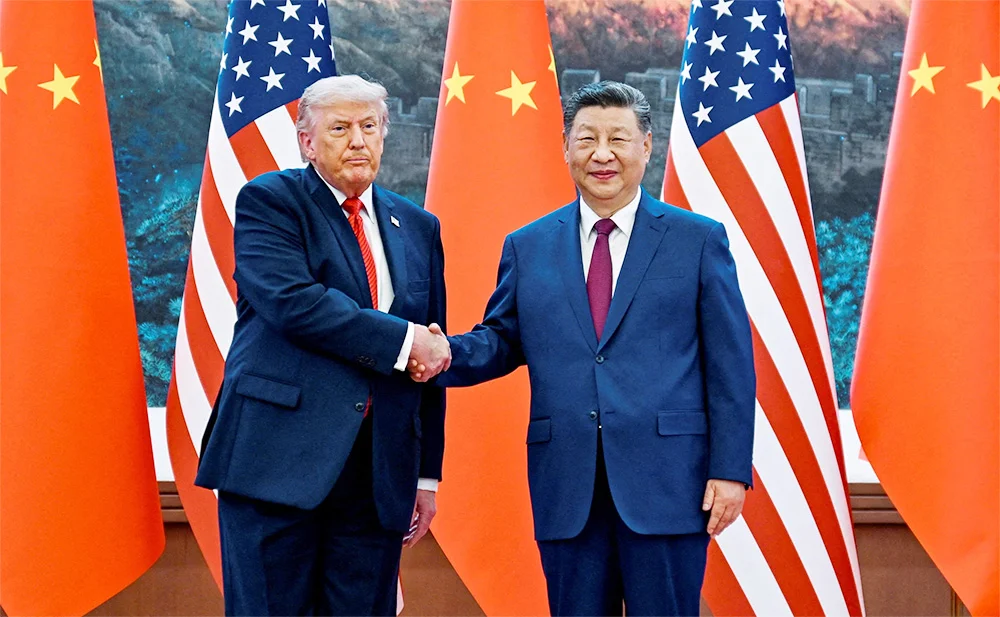
 The fact that some of the US’ topmost figures in business, such as Tesla chief Elon Musk and major US chipmaker Jensen Huang of NVIDIA fame, occupied as nearly a prominent a position as President Donald Trump at the recent ‘historic and landmark’ visit by the latter to China underscores the continuing vital importance of business in US-China ties. Business seemed to outweigh politics to a considerable degree in importance during the visit although the political dimension in US-China ties appeared to be more ‘headline grabbing’.
To be sure, the political dimension cannot be downplayed. For very good reason China could be seen as holding the power balance somewhat evenly between East and West. The international politics commentator couldn’t be seen as overstating the case if he takes the position that China could exercise substantial influence over the East currently; that is Russia and Iran, in the main. The latter powers hold the key in the Eastern hemisphere to shaping international politics in the direction of further war or of influencing it towards a measure of peace.
For example, time and again China has prevented the West from ‘having its own way’, so to speak, in the UN Security Council, for instance, in respect of the ongoing conflicts involving Russia and Iran, by way of abstaining from voting or by vetoing declarations that it sees as deleterious. That is, China has been what could be seen as a ‘moderating influence’ in international politics thus far. It has helped to keep the power balance somewhat intact between East and West.
At present a meet is ongoing between Chinese President Xi Jinping and Russian President Vladimir Putin in Beijing. This happened almost immediately after the Trump visit. Apparently, Beijing is in an effort to project itself as treating the US and Russia even-handedly while underscoring that it is no ‘special friend’ of the US or the West.
This effort at adopting a non-partisan stance on contentious questions in international politics is also seen in Beijing’s policy position on the Hormuz tangle and issues growing out of it. The Chinese authorities are quoted as saying in this regard, for instance, that China is for ‘a comprehensive and lasting ceasefire in the Middle East’.
Such a position has the effect of enhancing the perception that China is even-handed in its handling of divisive foreign policy posers. It is not openly anti-West nor is it weighing in with Iran and other Eastern actors that are opposed to the West in the West Asian theatre. A ‘comprehensive and lasting ceasefire’ implies that a solution needs to be arrived at that would be seen as fair by all quarters concerned.
On the highly sensitive Taiwan issue, President Xi was comparatively forthright during the Trump visit, but here too it was plain to see that Beijing was not intent on introducing a jarring, discordant note into the ongoing, largely cordial discussions with Washington. On the Taiwan question President Xi was quoted saying: ‘If mishandled, the two nations could collide even come into conflict.’ In other words, the US was cautioned that China’s interests need to be always borne in mind in its handling of the Taiwan issue.
The cautioning had the desired result because Trump in turn had reportedly conveyed to Taiwan that the latter’s concerns on the matter of independence had to be handled discreetly. He had told Taiwan plainly not to declare ‘independence.’
Accordingly, neither the US nor China had said or done anything that would have made either party lose face during their interaction. Apparently, both sides were sensitive to each others’ larger or national interests. And the economic interests of both powers were foremost among the latter considerations.
There is no glossing over or ignoring economic interests in the furtherance of ties between states. They are primal shaping forces of foreign policies and the fact that ‘economics drives politics’ is most apparent in US-China ties. That is, economic survival is fundamental.
Among the more memorable quotes from President Xi during the interaction, which also included US business leaders, was the following: ‘China’s doors will be open wider’ and US firms would have ‘broader prospects in the Chinese market.’
Xi went on to say that the sides had agreed to a ‘new positioning for ties’ based on ‘constructive strategic stability’. The implication here is that both sides would do well not to undermine existing, mutually beneficial economic relations in view of the wider national interests of both powers that are served by a continuation of these economic ties. That is, the way forward, in the words of the Chinese authorities, is ‘win-win cooperation.’
It is the above pronouncements by the Chinese authorities that probably led President Trump to gush that the talks were ‘very successful’ and of ‘historic and landmark’ importance. Such sentiments should only be expected of a billionaire US President, bent on economic empire-building.
One of the most important deals that were put through reportedly during the interaction was a Chinese agreement to buy some 200 Boeing jets and a ‘potential commitment to buy an additional 750 planes.’ However, details were not forthcoming on other business deals that may have been hatched.
Accordingly, from the viewpoint of the protagonists the talks went off well and the chances are that the sides would stand to gain substantially from unruffled future economic ties. However, there was no mention of whether the health of the world economy or the ongoing conflicts in West Asia were taken up for discussion.
Such neglect is regretful. Although the veritable economic power houses of the world, the US and China, are likely to thrive in the short and medium terms and their ruling strata could be expected to benefit enormously from these ongoing economic interactions the same could not be said of most of the rest of the world and its populations.
Needless to say, the ongoing oil and gas crisis, for instance, resulting from the conflict situation in West Asia, is taking a heavy toll on the majority of the world’s economies and the relevant publics. While no urgent intervention to ease the lot of the latter could be expected from the Trump administration there is much that China could do on this score.
China could use its good offices with the US to address the negative fallout on the poorer sections of the world from the present global economic crunch and urge the West to help in introducing systemic changes that could facilitate these positive outcomes. After all, China remains a socialist power.
“Everything ever said to me by any Chinese of any station during any visit was part of an intricate design”
— Henry Kissinger
That design may already be complete before this week’s , a meeting that could shape the future balance of global power.
The wind arrives quietly. By the time it is heard, history has already begun to turn. Across Asia, that wind is no longer distant. It carries with it the exhaustion of an old order and the uncertain birth of another. The question now is not whether the world will change. It is whether those who hold power possess the wisdom to guide that change toward something less violent than the century behind us.
Since 1945, the United States has carried the burden of a global order built with its Western allies. To its credit, the world avoided another direct world war between great powers. The conflicts remained contained in distant lands—proxy wars fought in the shadows of ideology, oil, and influence. From Latin America to Asia, the American century expanded not only through prosperity, but through intervention. Yet empires, even democratic ones, grow tired. Fatigue settles slowly into institutions, alliances, and public memory. The role of global policeman no longer inspires certainty in Washington as it once did.
The “rules-based order” now confronts its own contradiction: it was built to be universal, yet it often appeared selective. During my recent visit to , a young researcher asked me quietly, “Does the West itself still believe in the rules-based order?” The question lingered long after the conversation ended. The rising century demands a more inclusive architecture—one that recognises the reality of Asian power, especially China.
My three years of field research across South and Southeast Asia, documented in , revealed a transformation too significant to dismiss as temporary. China has moved beyond being merely a competitor to the United States. In trade, infrastructure, technology, cultural diplomacy, and economic influence, Beijing has established itself as what may be called the world’s “US +1.”
Great powers often search for such a partner. History shows this tendency clearly. When an empire becomes overextended—burdened by wars, alliances, sanctions, tariffs, and crises—it seeks another center of gravity to stabilize the system it can no longer manage alone. The United States today faces disorder stretching from Venezuela to Iran, from Ukraine to the unsettled Middle East. In this landscape, China emerges not simply as a rival, but as a state powerful enough to broker peace where Washington alone no longer can.
Drawing from the lessons of the Nixon–Mao era, warned that “” The United States and China are now engaged in a long-term economic, technological, political, and strategic competition. Managing that competition wisely may become the defining challenge of this century. In such a deeply polarized and unstable world, recognising China as a “US +1” partner is not surrender, but strategic realism.
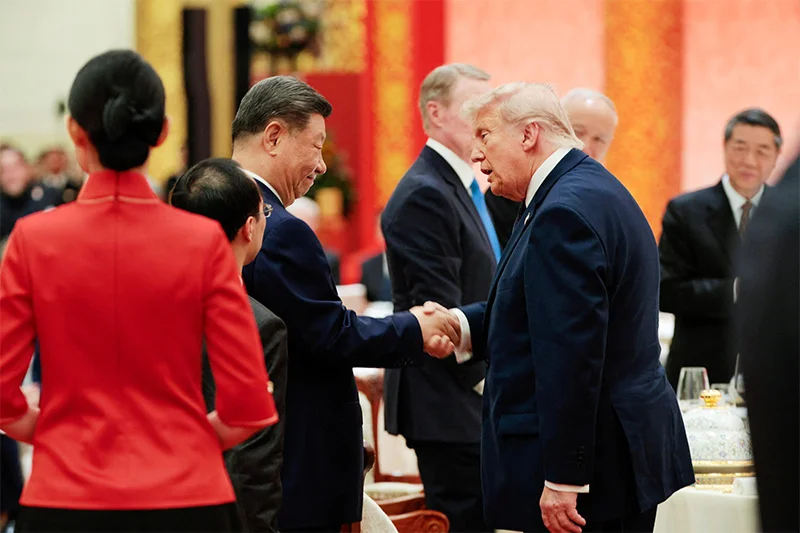
Donald Trump understood this reality before boarding his flight to meet Xi Jinping. Their meeting inside Zhongnanhai—the guarded compound where China’s leadership governs—was never merely ceremonial. It symbolized a deeper recognition already acknowledged quietly within the itself: China is the nearest peer competitor the United States has ever confronted. Before departing Washington, Trump seemed to reassess not only China’s strength, but its unavoidable position as a “” shaping the future global balance.
Yet the significance of a Trump–Xi meeting extends beyond trade wars, tariffs, or diplomatic spectacle. It presents an opportunity to confront two crises shaping the century ahead: global energy insecurity and regional instability. Washington increasingly understands the limits of direct engagement with Tehran. Decades of pressure, sanctions, and confrontation have produced exhaustion rather than resolution. In that vacuum, Beijing now possesses leverage that Washington does not.
For China, this is an opportunity to evolve from a development partner into a security actor. Xi Jinping’s (GSI) was never designed merely as rhetoric. It was intended as the next phase of Chinese influence—transforming economic dependence into strategic trust. The geopolitical spillover from the Iranian conflict now offers Beijing a historic opening to project itself as a stabilising force in the region, not against the United States, but alongside it as a “US +1” partner.
If China succeeds in helping stabilise the Gulf and secure energy corridors vital to Asia, it will reshape perceptions of Chinese power globally. Beijing would no longer be seen only as the builder of ports, railways, and industrial zones, but as a guarantor of regional balance. This transition—from infrastructure diplomacy to security diplomacy—may become one of the defining geopolitical shifts of the coming decade.
Xi Jinping does not seek open confrontation. His strategy is older, more patient, and perhaps more formidable because of its restraint. Beijing speaks not of domination, but of a “,” advanced through three instruments of influence: the Global Development Initiative (GDI), the Global Security Initiative (GSI), and the Global Civilization Initiative (GCI). These are not slogans alone. Across Asia, many governments increasingly trust China as a development partner more than any other power.
India, despite its ambitions, has not matched this scale of regional penetration. In both ASEAN and South Asia, China’s economic gravity is felt more deeply. Ports, railways, technology networks, and financial dependency have altered the geopolitical map quietly, without the spectacle of war.
In , I compared three inward-looking national strategies shaping Asia today: Trump’s MAGA, Modi’s emerging economic nationalism , and Xi’s strategy. Among them, China has demonstrated the greatest structural resilience. Faced with American tariffs and decoupling pressures, Beijing diversified its supply chains across Central Asia, Europe, and Southeast Asia. Rail corridors now connect Chinese industry to European markets through Eurasia. ASEAN has surpassed the United States as China’s largest trading partner, while the European Union follows closely behind. Exports to America have declined sharply, yet China continues to expand. Trump, once defined by confrontation, now arrives seeking a new “” with China—an acknowledgment that economic rivalry alone can no longer define the relationship between the world’s two largest powers.
Unlike Washington, which increasingly retreats from multilateral institutions, Beijing presents itself as the defender of multilateralism. Whether genuine or strategic matters less than perception. In geopolitics, perception often becomes reality.
What emerges, then, is not surrender between rivals, but interdependence between powers too large to isolate one another. The future may not belong to a bipolar Cold War, but to a reluctant coexistence. The United States now recognises that China possesses diversified markets and partnerships capable of reducing dependence on America. China, in turn, understands that its long march toward global primacy still requires strategic engagement with the United States.
This is where the true geopolitical shift begins.
Many analysts continue to frame China solely as a threat. Yet history rarely moves through absolutes. The next world order may not be built through confrontation alone, but through uneasy partnership. Artificial intelligence, technological supremacy, economic stability, and global governance now demand cooperation between Washington and Beijing, whether either side admits it publicly or not.
Trump will likely celebrate his personal relationship with Xi, presenting himself as the American leader capable of negotiating a “better deal” with China than his predecessors. But beneath the rhetoric lies something larger: the gradual acceptance of China’s indispensable role in shaping the future international order.
Even the question of war increasingly returns to Beijing. If Washington seeks an understanding with Tehran, China’s influence becomes unavoidable. Iran listens to Beijing in ways it no longer listens to the West. This alone signals how profoundly the balance of power has shifted. And Xi, careful as always, refuses to openly inherit the mantle of global leadership. He delays, softens, and obscures intention. It is part of a longer strategy: to rise without provoking the final resistance of a declining hegemon too early.
History rarely announces its turning point. Empires fade slowly, while new powers rise quietly beneath the noise of the old order. Washington still holds immense power, but Beijing increasingly holds the patience, reach, and strategic depth to shape what comes after.
The century ahead may not belong to one power alone, but to the uneasy balance between Washington and Beijing. And in that silence, a new world order is already taking shape.
By Asanga Abeyagoonasekera
Chit-Chat Nethali Withanage
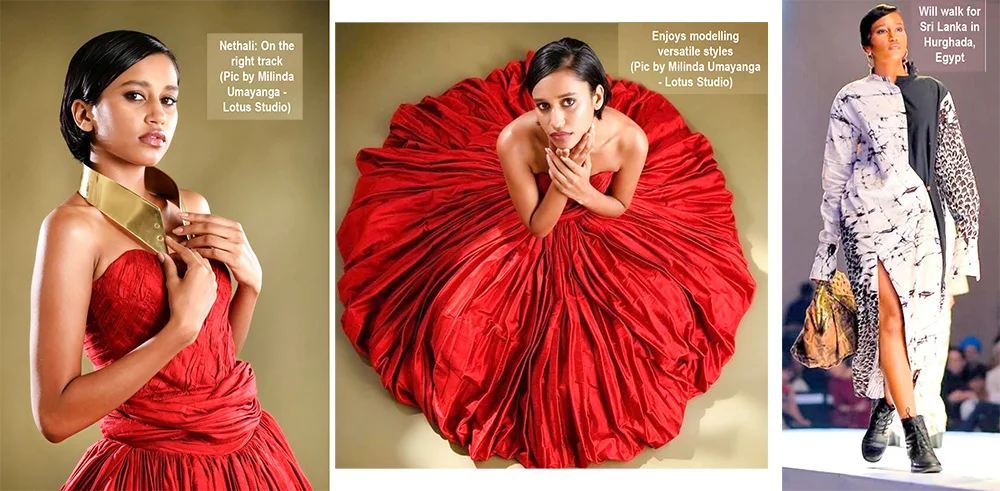
 Three months ago, 19-year-old Nethali Withanage, with Brian Kerkoven as her mentor, walked the ramp at Colombo Fashion Week. On 06 June, she’ll walk for Sri Lanka in Hurghada, Egypt, as the country’s delegate to Top Model of the World 2026._
I caught up with Nethali as she prepares to fly out, this weekend, and here’s how our chit-chat went:
1. Tell me something about yourself?
I’m someone who blends creativity with ambition. I’ve always loved expressing myself, whether it’s through fashion, styling, or the way I present myself to the world. At the same time, I’m very driven and disciplined, especially when I was working, as a student counsellor, at Campus One, at a young age, where I’ve learned how to connect with people, understand them, and communicate with confidence. I believe I’m still evolving, and that’s what excites me the most … becoming better every single day.
2. What made you decide to be a model?
Modelling felt natural to me because it combines everything I love – fashion, confidence, and storytelling without words. I realised that modelling isn’t just about appearance, it’s about presence and how you carry your energy. I wanted to be part of an industry where I could express different sides of myself, while inspiring others to feel confident in their own skin.
3. What sets you apart from other models?
I would say my ability to connect. Whether it’s with the camera, a brand, or an audience, I bring authenticity. I also have a strong background in communication and sales, which gives me an edge in understanding how to represent a brand, not just wear it. I don’t want to just model clothes, I want to bring them to life.
4. What clothing do you prefer to model?
I enjoy modelling versatile styles, but I’m especially drawn to elegant and expressive fashion pieces that tells a story. I love looks that allow me to embody confidence and femininity, whether it’s a structured outfit or something soft and flowing.
5. What is the most important aspect of modelling?
Confidence combined with professionalism. Confidence allows you to own the moment, but professionalism ensures that you respect the work, the team, and the brand you represent. Both are equally important.
6. If you could change one thing about yourself, what would it be?
I would say I’m learning to trust myself more and not overthink. I’ve realised that growth comes from embracing who you are, not constantly trying to change it. So instead of changing something, I’m focused on becoming more confident in my own voice.
7. School?
I did my O/Ls at Seventh Day Adventist High School Kandana, and, while at school, I was actively involved in creative activities. I enjoyed participating in English Day events that allowed me to express myself and interact with others. Those experiences helped me build confidence, teamwork, and communication skills, which continue to shape who I am today.
8. Happiest moment?
One of my happiest moments is realising how far I’ve come from being unsure of myself to stepping into opportunities, like modelling, and representing myself with confidence. That feeling of growth is something I truly value, and also a dream come true!
9. Your idea of perfect happiness?
Perfect happiness for me is peace of mind, being surrounded by people I love, doing what I’m passionate about, and feeling proud of who I am becoming.
10. Your ideal guy?
My ideal partner is someone who is respectful, supportive, and confident in himself. Someone who values growth, understands my ambitions, and encourages me to be the best version of myself.
11. Which living person do you most admire?
I admire strong, self-made individuals who have built their identity through hard work and resilience. People who stay true to themselves, despite challenges, inspire me, because they show that success is not just about talent, but also about strength and consistency.
12. Your most treasured possession?
My most treasured possession is my confidence. It’s something I’ve built over time, and it allows me to face challenges, take opportunities, and believe in myself, even when things are uncertain.
13. If you were marooned on a desert island, who would you like as your companion?
I would choose someone who is calm, positive, and resourceful, someone who can turn a difficult situation into an adventure. The right mindset matters more than anything.
14. Your most embarrassing moment?
I’m 19 and still haven’t faced any most embarrassing moment. But I would say I’ve had small moments where things didn’t go as planned, but I’ve learned to laugh at myself. Those moments remind me that perfection isn’t necessary; confidence is about how you recover, not how you avoid mistakes.
15. Done anything daring?
Pursuing modelling and stepping into competitions is something I consider daring. It pushed me out of my comfort zone and challenged me to grow, both personally and professionally.
16. Your ideal vacation?
My ideal vacation would be somewhere peaceful, yet beautiful, like a beach destination where I can relax, reflect, and reconnect with myself, while enjoying nature.
17. What kind of music are you into?
I choose music that matches my mood at that time, whether it’s calm and relaxing or energetic and uplifting. Music is something that helps me express emotions and stay inspired.
18. Favourite radio station?
Usually I don’t listen to radio stations but whenever I get into a car I would search for Yes FM because it has a refined balance of contemporary hits and timeless music. I appreciate how it maintains a vibrant yet sophisticated energy, keeping listeners engaged while creating a consistently uplifting atmosphere. It’s something I enjoy because it adds a sense of positivity and elegance to my day.
19. Favourite TV station?
At the moment, I don’t have a television at home, but growing up, my favourite TV station was ‘Nickelodeon’. I genuinely loved the shows and series it aired; they were fun, creative, and full of personality. It was something I always looked forward to, and those memories still bring a sense of joy and nostalgia, whenever I think about it.
20. Any major plans for the future?
My future plans are to grow in the modelling industry, work with international brands, build a strong personal brand and finish completing a Bachelor’s Degree in Business Studies. At the same time, I want to explore my creative side further, especially in fashion and business, so I can create something of my own one day.

Prime Minister Dr Harini Amarasuriya meets Foreign Secretary of the United Kingdom

Alice Capsey 74 not out blazes trail in seven-wicket England win

Kolkata Knight Riders keep their IPL campaign alive with low-scoring win

Showers will occur at times in the Western, Sabaragamuwa Northern and North-western provinces and in Anuradhapura, Galle, Matara, Kandy and Nuwara-Eliya districts

Suspects involved in sureties controversy granted bail

Steps underway to safeguard Sri Lanka’s maritime heritage

‘Dates have the highest sugar content to fight Coronavirus’

Sunday Island 27 December – Headlines

#SundayIsland 17th December – Headlines

Sunday Island – 28th March

Sunday Island Headlines – 21 March

Sunday Island – 21st February – Headlines
-
 Features4 days ago
Sri Lankan Airlines Airbus Scandal and the Death of Kapila Chandrasena and my Brother Rajeewa
-
 News5 days ago
Lanka’s eligibility to draw next IMF tranche of USD 700 mn hinges on ‘restoration of cost-recovery pricing for electricity and fuel’
-
 News4 days ago
Kapila Chandrasena case: GN phone records under court scrutiny
-
 News4 days ago
Rupee slide rekindles 2022 crisis fears as inflation risks mount
-
 Features1 day ago
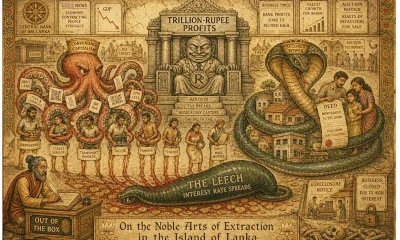
Octopus, Leech, and Snake: How Sri Lanka’s banks feast while the nation starves
-
 Business4 days ago
Expansion of PayPal services in Sri Lanka officially announced
-
 Features6 days ago
Mysterious Death of United Nations Secretary General Hammarskjöld
-

 News4 days ago
Court orders further arrests in alleged USD 42 Mn NDB fraud case