
Latest News
Manmohan Singh, Indian ex-PM and architect of economic reform, dies at 92

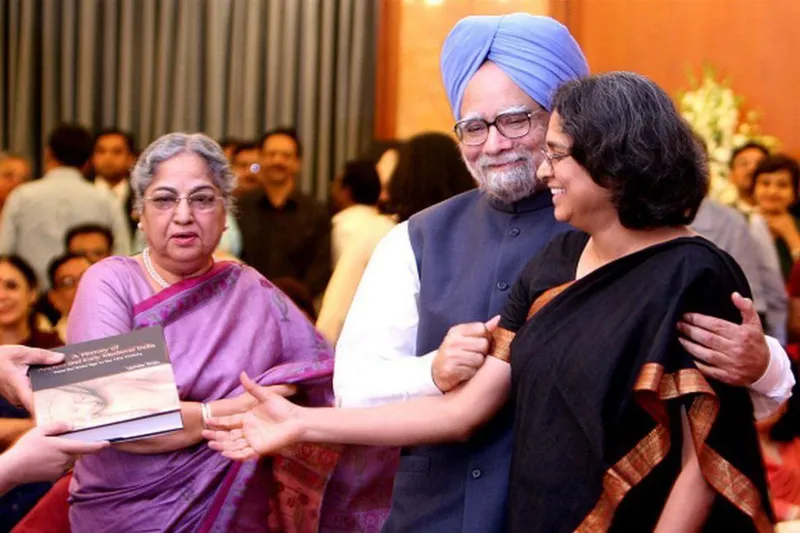
Former Indian prime minister Manmohan Singh has died at the age of 92.
Singh was one of India’s longest-serving prime ministers and he was considered the architect of key liberalising economic reforms, as premier from 2004-2014 and before that as finance minister.
He had been admitted to a hospital in the capital Delhi after his health condition deteriorated, reports say.
Among those who paid tribute to Singh on Thursday were Prime Minister Narendra Modi, who wrote on social media that “India mourns the loss of one of its most distinguished leaders”.
Modi said that Singh’s “wisdom and humility were always visible” during their interactions and that he had “made extensive efforts to improve people’s lives” during his time as prime minister.
Priyanka Gandhi, the daughter of former prime minister Rajiv Gandhi and a Congress party member, said that Singh was “genuinely egalitarian, wise, strong-willed and courageous until the end”.
Her brother Rahul, who leads Congress, said he had “lost a mentor and guide”.
Singh was the first Indian leader since Jawaharlal Nehru to be re-elected after serving a full first term, and the first Sikh to hold the country’s top post. He made a public apology in parliament for the 1984 riots in which some 3,000 Sikhs were killed.
But his second term in office was marred by a string of corruption allegations that dogged his administration. The scandals, many say, were partially responsible for his Congress party’s crushing defeat in the 2014 general election.
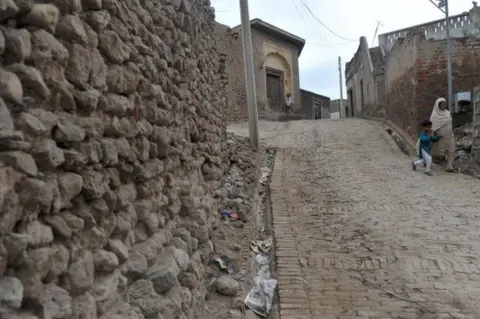
Singh was born on 26 September 1932, in a desolate village in the Punjab province of undivided India, which lacked both water and electricity.
After attending Panjab University he took a master’s degree at the University of Cambridge and then a DPhil at Oxford.
While studying at Cambridge, the lack of funds bothered Singh, his daughter, Daman Singh, wrote in a book on her parents.
“His tuition and living expenses came to about £600 a year. The Panjab University scholarship gave him about £160. For the rest he had to depend on his father. Manmohan was careful to live very stingily. Subsidised meals in the dining hall were relatively cheap at two shillings sixpence.”
Daman Singh remembered her father as “completely helpless about the house and could neither boil an egg, nor switch on the television”.
His unexpected appointment capped a long and illustrious career as an academic and civil servant – he served as an economic adviser to the government, and became the governor of India’s central bank.
In his maiden speech as finance minister he famously quoted Victor Hugo, saying that “no power on Earth can stop an idea whose time has come”.
That served as a launchpad for an ambitious and unprecedented economic reform programme: he cut taxes, devalued the rupee, privatised state-run companies and encouraged foreign investment.
The economy revived, industry picked up, inflation was checked and growth rates remained consistently high in the 1990s.
Manmohan Singh was a man acutely aware of his lack of a political base. “It is nice to be a statesman, but in order to be a statesman in a democracy you first have to win elections,” he once said.
When he tried to win election to India’s lower house in 1999, he was defeated. He sat instead in the upper house, chosen by his own Congress party.
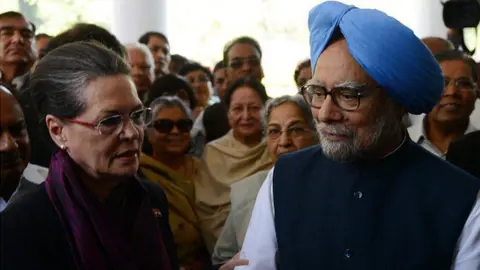
The same happened in 2004, when Singh was first appointed prime minister after Congress president Sonia Gandhi turned down the post – apparently to protect the party from damaging attacks over her Italian origins. Critics however alleged that Sonia Gandhi was the real source of power while he was prime minister, and that he was never truly in charge.
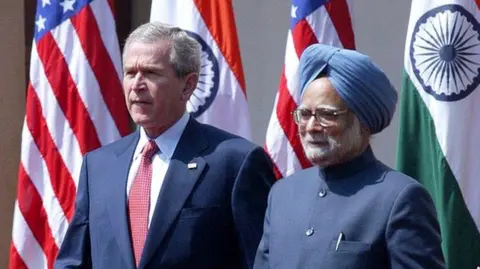
The biggest triumph during his first five-year term was to bring India out of nuclear isolation by signing a landmark deal securing access to American nuclear technology.
But the deal came at a price – the government’s Communist allies withdrew support after protesting against it, and Congress had to make up lost numbers by enlisting the support of another party amid charges of vote-buying.
A consensus builder, Singh presided over a coalition of sometimes difficult, assertive and potentially unruly regional coalition allies and supporters.
Although he earned respect for his integrity and intelligence, he also had a reputation for being soft and indecisive. Some critics claimed that the pace of reform slowed and he failed to achieve the same momentum he had while finance minister.
When Singh guided Congress to a second, decisive election victory in 2009, he vowed that the party would “rise to the occasion”.
But the gloss soon began to wear off and his second term was in the news mostly for all the wrong reasons: several scandals involving his cabinet ministers which allegedly cost the country billions of dollars, a parliament stalled by the opposition, and a huge policy paralysis that resulted in a serious economic downturn.
LK Advani, a senior leader in the rival BJP party, called Singh India’s “weakest prime minister”.
Manmohan Singh defended his record, saying his government had worked with “utmost commitment and dedication for the country and the welfare of its people”.
Singh adopted the pragmatic foreign policies pursued by his two predecessors.
He continued the peace process with Pakistan – though this process was hampered by attacks blamed on Pakistani militants, culminating in the Mumbai gun and bomb attack of November 2008.
He tried to end the border dispute with China, brokering a deal to reopen the Nathu La pass into Tibet which had been closed for more than 40 years.
Singh increased financial support for Afghanistan and became the first Indian leader to visit the country for nearly 30 years.
He also angered many opposition politicians by appearing to end relations with India’s old ally, Iran.
A studious former academic and bureaucrat, he was known for being self-effacing and always kept a low profile. His social media account was noted mostly for dull entries and had a limited number of followers.
A man of few words, his calm demeanour nevertheless won him many admirers.
Responding to questions on a coal scandal involving the illegal allocation of licences worth billions of dollars, he defended his silence on the issue by saying it was “better than thousands of answers”.
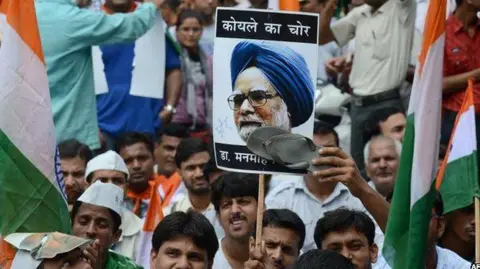
In 2015 he was summoned to appear in court to answer allegations of criminal conspiracy, breach of trust and corruption related offences. An upset Singh told reporters that he was “open for legal scrutiny” and that the “truth will prevail”.
After his time as premier, Singh remained deeply engaged with the issues of the day as a senior leader of the main opposition Congress party despite his advancing age.
In August 2020, he told the BBC in a rare interview that India needed to take three steps “immediately” to stem the economic damage of the coronavirus pandemic, which had sent the country’s economy into a recession.
The government needed to provide direct cash assistance to people, make capital available for businesses, and fix the financial sector, he said.
History will remember Singh for bringing India out of economic and nuclear isolation, although some historians may suggest he should have retired earlier.
“I honestly believe that history will be kinder to me than the contemporary media, or for that matter, the opposition parties in parliament,” he told an interviewer in 2014.
Singh is survived by his wife and three daughters.
[BBC]



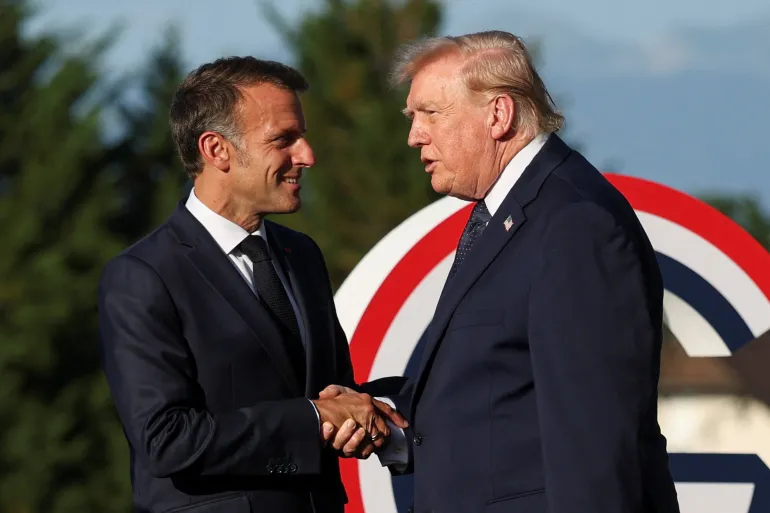
Leaders of the G7 are expected to focus on the United States deal with Iran and the Russian war on Ukraine at their meeting in France, with US President Donald Trump likely to be urged to quickly finalise the agreement to end the conflict in the Middle East.
French President Emmanuel Macron, who is hosting the summit in Evian-les-Bains near the Swiss border, said the priority was to ensure that there is a “solid, serious agreement that is finalised”.
He said Tuesday’s working lunch would focus on reopening the Strait of Hormuz, including a possible Franco-British-led maritime mission, and on identifying alternative energy routes that bypass the waterway.
Trump has said the Strait of Hormuz would be “completely open” on Friday, which is when a formal agreement will be signed in Geneva.
The agreement, which was digitally signed on Monday, is expected to open a 60-day window to allow for complex negotiations to take place, which would include Iran’s highly enriched uranium and the lifting of sanctions.
The G7 comprises the US, France, the United Kingdom, Canada, Germany, Italy, Japan and the European Union.
Leaders from the United Arab Emirates, Qatar and Egypt will also attend Tuesday’s talks but are not expected to engage in detailed discussions on Iran’s nuclear programme, diplomats told the Reuters news agency.
Trump arrived in France on Monday evening, buoyed after Washington and Tehran agreed on a preliminary deal to end the wider conflict, with a formal signing targeted for Friday.
“The Iran deal will bring a lot of success,” Trump said shortly after he arrived in Evian-les-Bains.
Before the G7 meeting, the leaders of France, Germany, Italy and the UK issued a joint statement congratulating the US, the Iranian government and the mediators on what they called a “diplomatic breakthrough”. Canada also signed the statement. The leaders said it was vital for detailed negotiations to take place and for the deal to be quickly implemented so the Strait of Hormuz could be reopened to tanker traffic.
Macron later said France and other Western partners are “ready to take action very quickly” to help reopen the strait peacefully. France and the UK have championed a mission to restore maritime security in the strait as soon as conditions allow.
European leaders have signalled that the summit would also be used to convince Trump that past US proposals to end the Russian – Ukraine war have been too favourable to Moscow.
Ukrainian President Volodymyr Zelenskyy will take part in the first session on Tuesday, which is focused on “building peace in Ukraine”, and might speak to Trump separately.
On Monday, Zelenskyy offered to meet with Russian President Vladimir Putin at the G7 summit. But earlier this month, the Ukrainian leader made a similar offer in an open letter, which Putin rejected, saying he saw “no point” in meeting unless a deal was ready.
European Commission President Ursula von der Leyen told reporters in Evian on Tuesday that Ukraine was “holding the front line and even partially regaining territory”.
“Ukraine has developed the capability to strike strategic targets deep inside Russia. And Ukraine has become a world-leading producer of cutting-edge military equipment,” von der Leyen said.
“On the other hand, Russia is feeling the strain and pressure of sanctions … Putin’s war economy has never been as weak.”
Talks between Russia and Ukraine have stalled as the two sides have continued to trade intensified attacks.
European nations want to signal that they are willing to engage in talks with Putin while tightening sanctions on Russia and boosting military support for Ukraine, emphasising that it is Moscow, not Kyiv, that is blocking progress, diplomats say.
Trump said he had good conversations on Sunday with both Zelenskyy and Putin and thought both of them were “open to do something about the war”.
[Aljazeera]
Latest News
A long-term programme should be formulated to minimize the spread of the Dengue Epidemic – PM

Prime Minister Dr. Harini Amarasuriya stated that a long-term programme should be formulated to minimize the spread of dengue epidemic and emphasized that, just as the country has successfully overcome previous challenges, the dengue challenge must also be addressed and overcome through a collective effort.
The Prime Minister made these remarks today (16) while addressing a special dengue prevention programme organized in kottawa in conjunction with Dengue Prevention Week. The programme was aimed at controlling the spread of dengue and raising public awareness on health and safety measures.
Speaking at the event, the Prime Minister further stated:
At present, the risk of dengue is increasing across the country. The Colombo District remains at high risk, and health authorities have identified Maharagama as one of the particularly vulnerable areas.
The risk has been identified especially in schools, government and private sector offices, and other public spaces. As a government, we have declared a Dengue Prevention Week and are undertaking special interventions during this period with the objective of addressing the risk of dengue faced by the public.
However, this effort should not be limited to a single week. A long term programme should be formulated to address this issue. At this critical juncture, all stakeholders must come together and act with determination.
Over the past one and a half years, we have successfully overcome numerous challenges. Similarly, we must collectively come forward to overcome this challenge as well. Dengue prevention should be regarded as a personal responsibility by every citizen. We must work towards transforming the Colombo District from a high-risk area into a lower-risk zone and progressively move towards eliminating the threat altogether.
Following the programme, Prime Minister Dr. Harini Amarasuriya also inspected the local bus stand and surrounding areas.
Addressing the occasion, Chairman of the Maharagama Municipal Council, Saman Samarakoon, expressed his appreciation to the institutions that contributed significantly to the dengue prevention initiative, including the Maharagama Municipal Council, Kottawa Police, security forces personnel, the Maharagama Divisional Secretariat, the Public Health Inspector’s Office, the National Housing Development Authority, the Land Registry Office, the National Transport Commission, Kottawa Dharmapala Vidyalaya, Kottawa Ananda Vidyalaya, and the Kottawa Traders’ Association.
The event was attended by Minister of Youth Affairs and Sports, Sunil Kumara Gamlath, Deputy Minister of Public Security and Parliamentary Affairs, Sunil Watagala, Colombo District Member of Parliament, Dewananda Suraweera, Chairman of the Maharagama Municipal Council, Saman Samarakoon, and several other invitees.

[Prime Minister’s Media Division]

Sabri Lamouchi has been sacked by Tunisia after just one game of World Cup 2026.
The 54-year-old former France international was sacked the day after Tunisia’s 5-1 trouncing by Sweden in their opening Group F football game in Monterrey, Mexico, on Sunday night.
Tunisian officials have installed Mondher Kebaier, who led the national team from 2019 to 2022 and has been in a technical director role since last year, as interim boss ahead of the second group game against Japan in the early hours of Sunday, also in Monterrey.
The 56-year-old previously guided the Eagles of Carthage to the final of the Arab Cup in 2021, losing to Algeria, before a quarterfinal exit in AFCON the following year.
Speaking before his departure, Lamouchi said his side had been punished for a string of costly mistakes and after the game admitted: “It’s a difficult loss. It’s painful. Starting the competition with this bad of a loss is indeed difficult.
“We made way too many mistakes.”
Lamouchi was already under pressure after a 5-0 defeat to Belgium in the team’s final warm-up game, while he has been forced to defend the presence of his son during their training camp in the media despite him not being an official member of the party.
Tunisia will face Japan and the Netherlands, who played out a pulsating 2-2 draw in their opening match in Dallas on Sunday, in their final two group fixtures, and Lamouchi said: “We have our pride. We need to react. We need to give a better image.”
Lamouchi, who holds dual Tunisian and French citizenship, represented clubs including Auxerre, Monaco, Parma, Inter and Marseille during his playing career before his first role in management saw him guide Ivory Coast to the 2014 World Cup, beating Japan in their first game only to exit in the group stage after a dramatic late defeat against Greece in their final game.
It was a second chapter of World Cup heartache for Lamouchi, who was cut from the final France squad for World Cup 1998 by coach Aime Jacquet, missing out on a place in history as Les Bleus claimed their first title on home soil.
He went on to manage Rennes and Nottingham Forest before short stints in Qatar, with Cardiff City and in Saudi Arabia before being appointed by Tunisia in January on a two-and-a-half-year contract following a disappointing Africa Cup of Nations campaign.
[Aljazeera]

G7 leaders meet in France with Iran and Ukraine high on agenda

A long-term programme should be formulated to minimize the spread of the Dengue Epidemic – PM

Tunisia sack boss Sabri Lamouchi after World Cup thrashing by Sweden

Tuesday at T20 World Cup: New Zealand eye first win; Ireland run into England

‘Spider-Man of Yemen’ dies falling into volcanic crater

Norwegian crown princess’s son found guilty of two counts of rape

‘Dates have the highest sugar content to fight Coronavirus’

Sunday Island 27 December – Headlines

#SundayIsland 17th December – Headlines

Sunday Island – 28th March

Sunday Island Headlines – 21 March

Sunday Island – 21st February – Headlines
-
 News4 days ago
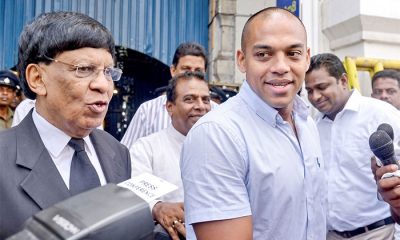
CIABOC summons Yoshitha over his participation in British Navy training programme
-
 News6 days ago
Local firms move millions of dollars overseas for phantom imports: Govt.
-
 Midweek Review6 days ago
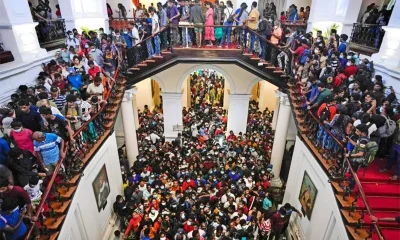
July 09: An inexcusable overall security failure and exceptional contingency plan
-

 Sports1 day ago
Tharanga set for high-profile javelin clash in Ostrava
-

 News3 days ago
Commonwealth lawyers urge Lanka to uphold rule of law
-

 News6 days ago
AI raises concerns over arrest of Sallay and rapper under PTA
-

 Features2 days ago
Politics of protected species
-

 News4 days ago
Justice Minister responds to social media claims he represented Easter Sunday ringleader