
Business
LKI – ICRC seminar discusses Contemporary Challenges Concerning AI and Autonomous Weapons Systems


The Lakshman Kadirgamar Institute of International Relations and Strategic Studies (LKI), in collaboration with the International Committee of the Red Cross (ICRC) hosted a panel discussion titled, ‘Artificial Intelligence (AI), Autonomous Weapons Systems (AWS) and Contemporary Challenges’ at the LKI Lighthouse Auditorium on 19 December 2024. It was attended by diplomats, representatives of International Organizations, senior officials of relevant Ministries and agencies, military personnel, leading researchers and university students.
Delivering the keynote address at the event, the Additional Secretary for East Asia, the Middle East, and Africa at the Ministry of Foreign Affairs, Ms. Yasoja Gunasekera, underscored the urgent need for global action to regulate Artificial Intelligence and Autonomous Weapons Systems. She emphasized that while AI has become integral to numerous sectors, its growing presence on the battlefield raises profound concerns regarding its application in weapon systems. The Additional Secretary recalled that it was under the Chairmanship of Sri Lanka in 2015, that the High Contracting Parties to the Convention on Certain Conventional Weapons (CCW) agreed to elevate the discussion of LAWS from an informal expert led discussion to a State-led dialogue, leading to the establishment of the first meeting of the Group of Governmental Experts (GGE) at the 2016 CCW Review Conference. She noted that in addition to actively engaging in the GGE, in October 2021 Sri Lanka together with a wide cross regional group of 70 states co-sponsored the first Joint Statement on LAWS at the UNGA, and supported the adoption of the ‘the Pact for the Future’ adopted by the UNGA in September 2024. Sri Lanka strongly supports the negotiation of a legally binding instrument to prohibit and regulate LAWS and supports the UN Secretary General and the President of the ICRC’s joint appeal to establish new rules on AWS by 2026.
Earlier welcoming the gathering, Ambassador Ravinatha Aryasinha, Executive Director of the LKI, said the event was intended to salute the role played by the ICRC which commemorated the 75th anniversary of the operation of the Geneva Conventions, without which the world might have been a different place. He recalled the ICRC’s contributions to Sri Lanka since establishing a presence in 1989, particularly during the armed conflict –escorting food and civilian convoys to the North and the East, facilitating immunization drives, passing messages between the parties in conflict and enabling the return of the wounded and the dead on both sides, and post conflict assistance in mine clearance, disaster response, and in the search for missing persons. Across time the ICRC had also played an important role in training the Security Forces on IHL compliance and engaged in prison visitations and supported the improvement of prison conditions. He observed that the theme of the discussion chosen on disarmament, besides being one where the ICRC and Sri Lanka closely collaborated globally, is the focus of several ongoing research endeavours of the LKI in recent times, along with ICT and its contemporary challenges.
Delivering the opening remarks, Severine Chappaz, Head of Delegation of the ICRC in Sri Lanka focused on the continued relevance of IHL. Stressing that the main responsibility to apply IHL in good faith lies with States to mitigate human suffering, she underlined the importance of making IHL a national and international political priority. She also emphasised on aspects of IHL that are particularly relevant to Sri Lanka, including the post-conflict application of IHL, which applies specifically to the issue of missing persons, their right to be searched for, the right of their families to know the fate and whereabouts of their missing loved ones and the obligation to prevent people from going missing. She also referred to the significance of national integration of IHL where the National IHL committee of Sri Lanka plays a key role, training the armed forces in IHL, and the dissemination of IHL through academic and religious circles. In her remarks, Sri Lanka’s international engagement in the promotion and development of IHL, notably in the field of disarmament regulations, was also recognised.
Prof. Andrei Kozik, Regional Legal Advisor – ICRC, highlighted the novel humanitarian and legal challenges posed by technological developments including AI and AWS. Delving into the subject, he drew attention to the unique characteristics of AWS that heighten risks for civilians and raise challenges for IHL compliance. In his presentation, Prof. Kozik also clarified the ICRC’s position on AWS, stating that the ICRC calls for new rules that prohibit the use of ‘unpredictable’ and ‘anti-personnel’ autonomous weapons systems. It was noted that in this context, ‘unpredictability’ refers to the discriminatory nature of AWS weapons while ‘anti-personnel’ refers to autonomous weapons designed or used to target humans directly. The ICRC’s report titled ‘International Humanitarian Law and the challenges of contemporary armed conflicts’ was referenced as a source to obtain an overview of some of the challenges for IHL posed by contemporary armed conflicts. The report broadly underscores the humanitarian consequences that could result from the potential loss of human control over the use of force in armed conflict.
Ms. Yanithra Kumaraguru, Sri Lankan Coordinator for the Global Campaign ‘Stop Killer Robots,’ underscored the critical role of ethics in shaping both the legal frameworks and the development of autonomous weapons, especially in areas where current laws may not provide clear guidance. She highlighted several key ethical concerns, including the challenge of ensuring that autonomous weapons comply with international humanitarian law principles and also questioned whether machines could reliably make life-and-death decisions without human biases, stressing the risks of errors that could lead to violations of human dignity. She further discussed the ‘moral accountability gap’, an ethical concern that extends beyond legal frameworks and asked whether responsibility for actions taken by autonomous weapons lies with designers, operators, or no one at all emphasizing the dehumanizing consequences of delegating such critical decisions to machines. Stressing the fact that some advocates for autonomous weapons argue that these technologies could lead to greater precision and fewer civilian casualties, Ms. Kumaraguru countered that technological limitations, the unpredictable nature of conflict and the human realities of conflict make such claims overly idealistic.
Colonel Nalin Herath, Director, Media and Spokesman of the Ministry of Defence and Head of the Institute of National Security Studies (INSS), while acknowledging the ethical challenges posed highlighted the transformative impact of AI on modern warfare emphasizing its potential for operational efficiency, noted how such weapons are reshaping combat strategies and in distinguishing civilians from military targets. He raised concern about the growing access of non-state actors to advanced technologies, which heightens unpredictability in conflicts and cautioned against the dangers posed by AI in terms of misinformation and disinformation. Stressing the absence of a global consensus on regulating AI in warfare, he called for caution and cooperation to ensure ethical use of AI and to prevent its misuse.
Prof. Ajith De Alwis, the Chief Innovation Officer of the National Innovation Agency (NIA) and Past President – Pugwash Sri Lanka, addressed the dual-use nature of science, technology, and innovation, particularly in the context of autonomous weapons systems and AI. He noted that since the Wright brothers’ revolutionary invention of flight in 1903 which within a decade was quickly adapted for bombing, historically technology had been weaponized. He pointed to the futility of questioning whether blame can be apportioned to autonomous weapons used in wars, what is more crucial is that states create the conditions to prevent wars from taking place in the first place. He emphasised the need for better prioritizing of the use of AWS, rather than banning per se, and advocated for leveraging AI and autonomous systems for humanity’s benefit rather than their weaponization. Pointing to the climate issue where time was running out and the emission trajectories being put into wrong trajectories by all the conflicts going on, he asked that researchers must be persuaded to become more socially responsible, as the scientists who walked out of the ‘Manhattan Project’ which pursued the creation of the atomic bomb. He also advocated strengthening a UN led global mechanism supporting whistle blowing and asked that we push ourselves to value humanity more – touching on the Pugwash principles.
Ambassador Aryasinha who moderated the panel discussion, reflecting on the challenges faced as Sri Lanka’s Permanent Representative in Geneva in presiding over the CCW during Sri Lanka’ Presidency of the CCW in 2015/2016 which secured a consensus to commence the discussion of LAWS at the level of States Parties nearly a decade ago, regretted that movement had been slow and that many relevant States needed for effective regulation of AWS, opposed or remained ambivalent in supporting such regulation.


A five star 100-room Maldivian resort hotel property controlled by Browns Investments PLC has been disposed for USD 57.5 million, Browns Investment said in a stock exchange filing on Friday. The company had previously disclosed in September that the deal was in the pipeline pending completion of precedent conditions.
The property. Barcelo’ Whale Lagoon Maldives, belonged to Browns Ari Resort (Private) Ltd., a subsidiary of Browns investments, was purchased by ASB Hotel Properties Maldives Private Ltd.
“The transaction was completed following the satisfaction of the conditions precedent set out in the Sale and Purchase Agreement, for a total consideration of USD 57,500,000,” the filing said. The price was considered “significant” but was not the highest in the Maldives where high end hotel properties command top dollar.
Browns Investments (BIL) has a significant presence in the Maldives, developing multiple properties, notably through partnerships with Spain’s Barceló Hotel Group for projects like Barceló Whale Lagoon (now sold), Barceló Nasandhura (city hotel/apartments), and the Bodufaru Beach Resort (a major integrated project with three hotels) in North Male Lagoon, with BIL aiming to be a major Sri Lankan hotel operator in the Maldives with large room capacity.
BIL’s key Maldives projects are:
Bodufaru Beach Resort: A large-scale development in North Male Atoll with three five-star hotels, a significant undertaking with Barceló Hotel Group and Syno Hydro Corporation.
Nasandhura Palace Hotel (Barceló Nasandhura): A luxury city hotel and apartment complex in Male, managed by Barceló.
Strategy & Partners:
Browns Investments partners with Barceló Hotel Group, a Spanish hotel chain, for management and investment in their Maldivian properties.
The company aims to become the largest Sri Lankan hotel investor and operator in the Maldives, significantly expanding its room keys in the region, as described on the Browns Investment website.
Browns Investments is actively developing and managing luxury hotel properties in the Maldives, focusing on large integrated resorts and city hotels, leveraging international partnerships to grow its presence in the high-end tourism market, according to the company.
Business
Marketing Alumni Association of USJ Outlines Strategic Vision to Strengthen the Future of Marketing in Sri Lanka

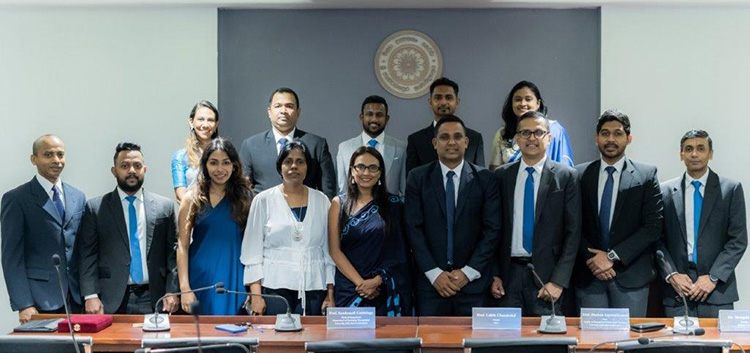
The Marketing Alumni Association (MAA) of the University of Sri Jayewardenepura (USJ) set out its strategic direction for the year ahead at its Annual General Meeting (AGM) held on 10 December 2025. The event brought together academic representatives from the Department of Marketing Management and a strong contingent of alumni, providing a platform to review the association’s progress and reaffirm its commitment to advancing the marketing profession in Sri Lanka.
As the official body representing graduates of the Department of Marketing Management of the University of Sri Jayewardenepura, the MAA has, over the past 25 years, supported a network of more than 1,500 marketing professionals who now hold influential roles in leading private and public sector organizations. The association remains committed to elevating the standing of the Japura Marketing degree by strengthening industry partnerships, supporting academic excellence, and fostering a high-performing alumni community.
A key focus of the AGM was the appointment of Oshadee Withanawasam as President of the MAA for the upcoming term (2025-2027). In his inaugural address, Mr. Withanawasam emphasized the importance of strategic leadership, industry relevance, and collaborative growth in positioning USJ and its alumni at the forefront of marketing innovation in Sri Lanka.
Over the past year, the MAA has intensified its engagement efforts through a series of high-impact initiatives. The Kings and Queens Dinner Dance 2025, which brought together over 200 members, strengthened camaraderie within the alumni network. On the academic front, the association’s flagship ‘Fine Touch’ guest lecture series, conducted in partnership with the Department of Marketing Management, USJ, continued to offer undergraduates valuable exposure to industry best practices and emerging trends.
A significant milestone for the association was the launch of its first structured mentoring program for undergraduates of the department. This initiative marks a notable advancement in bridging academic training with practical corporate experience, equipping students with the competencies required to excel in a competitive business environment.
The MAA also continued to deliver meaningful social impact through its ‘Bring a Smile’ initiative, which has supported rural schoolchildren for three consecutive years (2023–2025) by providing essential stationery supplies. Further strengthening its commitment to education, the association introduced a scholarship scheme in 2024 to support deserving undergraduates pursuing their higher education in marketing.
During the AGM, outgoing President Dr. Darshana Jayasinghe and the Head of the Department of Marketing Management of USJ, Prof. Sandamali Galdolage, commended the association’s continued progress and reiterated their support for its long-term vision.
The following office bearers were appointed for the new term: Oshadee Withanawasam (President), Amitha Amarasinghe (Deputy President), Nipuni Karunarathna (Vice President), Vimukthi Kaushalya (Secretary), Thisaru Menake (Assistant Secretary), Nuwan Indika (Treasurer), and Thilanka Kalpage (Assistant Treasurer). Committee Members for the term include Prof. Ashoka Malkanthie, Chandra Kodithuwakku, Manuri Jayasinghe, Champika Vincent, Naleendra Yasassri Perera, Kaushan Agalawatte, Chandranath Gamage, and Pamudi Ketawalage.
Dr. Darshana Jayasinghe and Lalith Sumanasiri will serve as Advisors, while Prof. Sandamali Galdolage, Manojee Dabare, and Prof. Lalith Chandralal will continue as Trustees of the MAA.
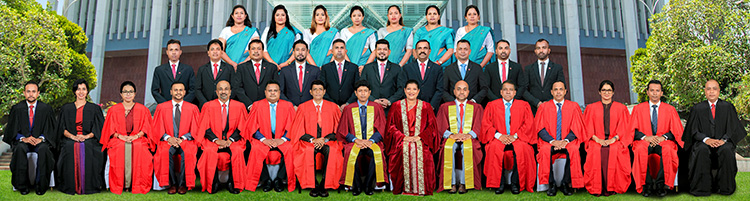
A graduation ceremony for 18 Certified Sales Training Consultants, qualified to mentor aspiring marketing professionals and enhance standards in the country’s sales sector, was held recently at the Bandaranaike International Conference Hall.
The graduates represent the first phase of a programme aimed at producing 50 Certified Sales Training Consultants nationwide. The training and certification were conducted by the Asian College of Sales and Marketing (ACSM).
According to ACSM Director and Learning Consultant Sugath Munasinghe, the need for professionally certified sales training consultants to raise the quality and effectiveness of the sales sector has been identified for some time. He added that ACSM, as a higher education institute, will continue to provide structured training and certification to meet this demand.

Showers will occur in the Eastern, Uva and Central provinces and in Polonnaruwa and Hambantota districts.

Steps are being taken to abolish the Executive Presidency and establish a Parliamentary System of Government – Prime Minister

The full speech delivered by President Anura Kumara Dissanayake in Parliament (2025-12-19)

Lawyers slam NPP Mayor for claiming judicial powers

Electricity consumers oppose going to WB to cover CEB losses from Ditwah, instead of using funds in its kitty

PM rejects Hakeem’s call for involving ex-Presidents for disaster fundraising

‘Dates have the highest sugar content to fight Coronavirus’

Sunday Island 27 December – Headlines

#SundayIsland 17th December – Headlines

Sunday Island – 28th March

Sunday Island Headlines – 21 March

Sunday Island – 21st February – Headlines
-

 Midweek Review4 days ago
How massive Akuregoda defence complex was built with proceeds from sale of Galle Face land to Shangri-La
-

 News3 days ago
Pakistan hands over 200 tonnes of humanitarian aid to Lanka
-
 News3 days ago
Pope fires broadside: ‘The Holy See won’t be a silent bystander to the grave disparities, injustices, and fundamental human rights violations’
-

 Latest News7 days ago
Landslide early warnings in force in the Districts of Badulla, Kandy, Kegalle, Kurunegala, Matale, Nuwara Eliya and Ratnapura
-
 News4 days ago
Burnt elephant dies after delayed rescue; activists demand arrests
-

 Editorial4 days ago
Colombo Port facing strategic neglect
-

 News2 days ago
Army engineers set up new Nayaru emergency bridge
-

 News4 days ago
Sri Lanka, Romania discuss illegal recruitment, etc.