
Business
LKI – ICRC seminar discusses Contemporary Challenges Concerning AI and Autonomous Weapons Systems


The Lakshman Kadirgamar Institute of International Relations and Strategic Studies (LKI), in collaboration with the International Committee of the Red Cross (ICRC) hosted a panel discussion titled, ‘Artificial Intelligence (AI), Autonomous Weapons Systems (AWS) and Contemporary Challenges’ at the LKI Lighthouse Auditorium on 19 December 2024. It was attended by diplomats, representatives of International Organizations, senior officials of relevant Ministries and agencies, military personnel, leading researchers and university students.
Delivering the keynote address at the event, the Additional Secretary for East Asia, the Middle East, and Africa at the Ministry of Foreign Affairs, Ms. Yasoja Gunasekera, underscored the urgent need for global action to regulate Artificial Intelligence and Autonomous Weapons Systems. She emphasized that while AI has become integral to numerous sectors, its growing presence on the battlefield raises profound concerns regarding its application in weapon systems. The Additional Secretary recalled that it was under the Chairmanship of Sri Lanka in 2015, that the High Contracting Parties to the Convention on Certain Conventional Weapons (CCW) agreed to elevate the discussion of LAWS from an informal expert led discussion to a State-led dialogue, leading to the establishment of the first meeting of the Group of Governmental Experts (GGE) at the 2016 CCW Review Conference. She noted that in addition to actively engaging in the GGE, in October 2021 Sri Lanka together with a wide cross regional group of 70 states co-sponsored the first Joint Statement on LAWS at the UNGA, and supported the adoption of the ‘the Pact for the Future’ adopted by the UNGA in September 2024. Sri Lanka strongly supports the negotiation of a legally binding instrument to prohibit and regulate LAWS and supports the UN Secretary General and the President of the ICRC’s joint appeal to establish new rules on AWS by 2026.
Earlier welcoming the gathering, Ambassador Ravinatha Aryasinha, Executive Director of the LKI, said the event was intended to salute the role played by the ICRC which commemorated the 75th anniversary of the operation of the Geneva Conventions, without which the world might have been a different place. He recalled the ICRC’s contributions to Sri Lanka since establishing a presence in 1989, particularly during the armed conflict –escorting food and civilian convoys to the North and the East, facilitating immunization drives, passing messages between the parties in conflict and enabling the return of the wounded and the dead on both sides, and post conflict assistance in mine clearance, disaster response, and in the search for missing persons. Across time the ICRC had also played an important role in training the Security Forces on IHL compliance and engaged in prison visitations and supported the improvement of prison conditions. He observed that the theme of the discussion chosen on disarmament, besides being one where the ICRC and Sri Lanka closely collaborated globally, is the focus of several ongoing research endeavours of the LKI in recent times, along with ICT and its contemporary challenges.
Delivering the opening remarks, Severine Chappaz, Head of Delegation of the ICRC in Sri Lanka focused on the continued relevance of IHL. Stressing that the main responsibility to apply IHL in good faith lies with States to mitigate human suffering, she underlined the importance of making IHL a national and international political priority. She also emphasised on aspects of IHL that are particularly relevant to Sri Lanka, including the post-conflict application of IHL, which applies specifically to the issue of missing persons, their right to be searched for, the right of their families to know the fate and whereabouts of their missing loved ones and the obligation to prevent people from going missing. She also referred to the significance of national integration of IHL where the National IHL committee of Sri Lanka plays a key role, training the armed forces in IHL, and the dissemination of IHL through academic and religious circles. In her remarks, Sri Lanka’s international engagement in the promotion and development of IHL, notably in the field of disarmament regulations, was also recognised.
Prof. Andrei Kozik, Regional Legal Advisor – ICRC, highlighted the novel humanitarian and legal challenges posed by technological developments including AI and AWS. Delving into the subject, he drew attention to the unique characteristics of AWS that heighten risks for civilians and raise challenges for IHL compliance. In his presentation, Prof. Kozik also clarified the ICRC’s position on AWS, stating that the ICRC calls for new rules that prohibit the use of ‘unpredictable’ and ‘anti-personnel’ autonomous weapons systems. It was noted that in this context, ‘unpredictability’ refers to the discriminatory nature of AWS weapons while ‘anti-personnel’ refers to autonomous weapons designed or used to target humans directly. The ICRC’s report titled ‘International Humanitarian Law and the challenges of contemporary armed conflicts’ was referenced as a source to obtain an overview of some of the challenges for IHL posed by contemporary armed conflicts. The report broadly underscores the humanitarian consequences that could result from the potential loss of human control over the use of force in armed conflict.
Ms. Yanithra Kumaraguru, Sri Lankan Coordinator for the Global Campaign ‘Stop Killer Robots,’ underscored the critical role of ethics in shaping both the legal frameworks and the development of autonomous weapons, especially in areas where current laws may not provide clear guidance. She highlighted several key ethical concerns, including the challenge of ensuring that autonomous weapons comply with international humanitarian law principles and also questioned whether machines could reliably make life-and-death decisions without human biases, stressing the risks of errors that could lead to violations of human dignity. She further discussed the ‘moral accountability gap’, an ethical concern that extends beyond legal frameworks and asked whether responsibility for actions taken by autonomous weapons lies with designers, operators, or no one at all emphasizing the dehumanizing consequences of delegating such critical decisions to machines. Stressing the fact that some advocates for autonomous weapons argue that these technologies could lead to greater precision and fewer civilian casualties, Ms. Kumaraguru countered that technological limitations, the unpredictable nature of conflict and the human realities of conflict make such claims overly idealistic.
Colonel Nalin Herath, Director, Media and Spokesman of the Ministry of Defence and Head of the Institute of National Security Studies (INSS), while acknowledging the ethical challenges posed highlighted the transformative impact of AI on modern warfare emphasizing its potential for operational efficiency, noted how such weapons are reshaping combat strategies and in distinguishing civilians from military targets. He raised concern about the growing access of non-state actors to advanced technologies, which heightens unpredictability in conflicts and cautioned against the dangers posed by AI in terms of misinformation and disinformation. Stressing the absence of a global consensus on regulating AI in warfare, he called for caution and cooperation to ensure ethical use of AI and to prevent its misuse.
Prof. Ajith De Alwis, the Chief Innovation Officer of the National Innovation Agency (NIA) and Past President – Pugwash Sri Lanka, addressed the dual-use nature of science, technology, and innovation, particularly in the context of autonomous weapons systems and AI. He noted that since the Wright brothers’ revolutionary invention of flight in 1903 which within a decade was quickly adapted for bombing, historically technology had been weaponized. He pointed to the futility of questioning whether blame can be apportioned to autonomous weapons used in wars, what is more crucial is that states create the conditions to prevent wars from taking place in the first place. He emphasised the need for better prioritizing of the use of AWS, rather than banning per se, and advocated for leveraging AI and autonomous systems for humanity’s benefit rather than their weaponization. Pointing to the climate issue where time was running out and the emission trajectories being put into wrong trajectories by all the conflicts going on, he asked that researchers must be persuaded to become more socially responsible, as the scientists who walked out of the ‘Manhattan Project’ which pursued the creation of the atomic bomb. He also advocated strengthening a UN led global mechanism supporting whistle blowing and asked that we push ourselves to value humanity more – touching on the Pugwash principles.
Ambassador Aryasinha who moderated the panel discussion, reflecting on the challenges faced as Sri Lanka’s Permanent Representative in Geneva in presiding over the CCW during Sri Lanka’ Presidency of the CCW in 2015/2016 which secured a consensus to commence the discussion of LAWS at the level of States Parties nearly a decade ago, regretted that movement had been slow and that many relevant States needed for effective regulation of AWS, opposed or remained ambivalent in supporting such regulation.



‘Market participants appear to be focusing more on underlying vulnerabilities’
Sri Lanka’s banking system continues to show resilience despite mounting domestic and global economic pressures, but developments across financial markets tell a more cautious story, with foreign investors retreating, market volatility rising, and the rupee remaining under pressure despite a major IMF-related inflow.
According to the Central Bank’s latest Financial Sector Performance report, banks and finance companies entered 2026 with strong credit growth, healthy capital buffers, and improving asset quality. Yet the same report points to growing strains in equity, bond, and foreign exchange markets, suggesting investors remain unconvinced that the country’s recovery is firmly on track.
The contrast between financial institutions and financial markets has become increasingly pronounced.
Licensed banks expanded credit by 24.4% year-on-year during the first quarter, while finance companies recorded even stronger growth of 52.4%. Despite this, foreign investors continued to reduce exposure to Sri Lankan assets. Net foreign outflows from the Colombo Stock Exchange reached US$103.4 million during the first five months of the year, extending a trend that has persisted since 2024.
Reflecting this caution, the All Share Price Index fell 1.4% by end-May, while the benchmark S&P SL20 Index managed only a marginal gain of 0.03%. The Central Bank attributed the subdued performance to heightened sensitivity to global risk sentiment, rising domestic inflation expectations, and external shocks, including geopolitical tensions in the Middle East.
An independent analyst told The Island Financial Review that despite Sri Lanka receiving a fresh US$695 million IMF disbursement in late May, the rupee has continued to face volatility and depreciation pressures.
“Market participants appear to be focusing less on short-term inflows and more on underlying vulnerabilities, including a widening trade deficit, higher energy import costs, geopolitical uncertainties, and concerns about the sustainability of external sector gains,” he said.
The analyst noted that the Central Bank itself acknowledged continued volatility in the foreign exchange market amid increasing external pressures. Meanwhile, government securities have also come under strain, with yields rising from March and increasing further after the Central Bank raised policy interest rates in May.
“Such developments indicate that markets are demanding higher returns to compensate for perceived risks, even as macroeconomic indicators show signs of improvement,” he said.
The contrast is particularly striking when viewed against the banking sector’s performance. Non-performing loans continued to decline, with the Stage 3 loan ratio falling to 9.4% from 12.7% a year earlier. Liquidity and capital levels remain comfortably above regulatory requirements, while lending activity has strengthened, pushing the credit-to-deposit ratio above 70% for the first time in three years.
However, the analyst argued that risks may now be migrating elsewhere within the financial system and broader economy. He pointed to the credit-to-GDP gap moving further into positive territory, a development often viewed as an early warning signal of excessive credit expansion and future vulnerabilities. The Central Bank has already tightened lending standards for vehicle financing and gold-backed loans, two segments that have recorded rapid growth.
“While banks remain profitable and well-capitalised, market signals suggest investors are increasingly focused on inflation risks, exchange-rate instability, geopolitical tensions, and the prospect of tighter financial conditions. The banks appear comfortable. Investors, however, are not yet fully convinced,” he said.
By Sanath Nanayakkare
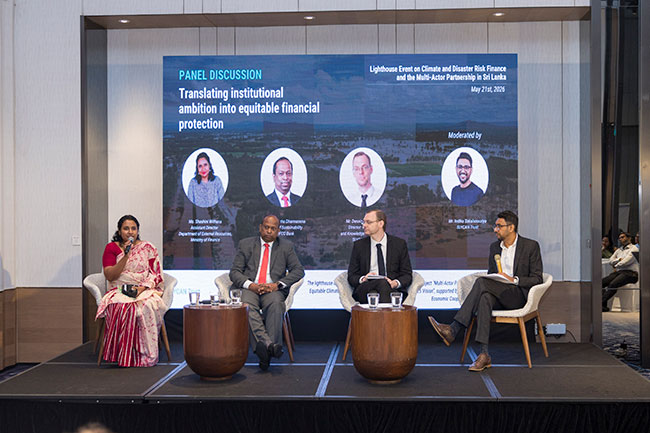
Sri Lanka must strengthen its financial and social protection systems to better withstand climate-related disasters, according to experts and stakeholders who gathered at a climate risk finance event organized by SLYCAN Trust in Colombo.
The Lighthouse Event on Climate and Disaster Risk Finance and the Multi-Actor Partnership (MAP), held on 21 May, brought together representatives from government, the financial sector, development agencies, academia, civil society, and international experts to discuss ways of improving the country’s preparedness and resilience against growing climate threats.
Participants emphasized the urgent need for financial protection mechanisms that can support vulnerable communities, small businesses, workers, and public institutions before and after disasters such as floods, droughts, landslides, cyclones, and extreme weather events. Recent impacts from Cyclone Ditwah were cited as a reminder of the financial strain climate shocks can place on households, businesses, and government agencies.
The event also marked six years of the Multi-Actor Partnership on Climate and Disaster Risk Finance in Sri Lanka, a platform established by SLYCAN Trust under a global programme supported by Germany’s Federal Ministry for Economic Cooperation and Development (BMZ).
Dennis Mombauer, Director of Research and Knowledge Management at SLYCAN Trust, highlighted the importance of improving risk and finance literacy, building trust, strengthening institutional capacity, and addressing gaps in data and coordination. He stressed the need for financial instruments that can protect people not only after disasters occur but also in anticipation of future risks.
CARE Germany’s Programme and Contract Manager for International Programmes, Hanna Bartels, underscored the importance of collaboration among governments, financial institutions, businesses, civil society, and communities. She noted that similar initiatives are being pursued in several countries worldwide.
Discussions also focused on sector-specific vulnerabilities, including heat stress in the apparel industry, climate-related disruptions in tourism, and the need for stronger insurance and financial support mechanisms for farmers and rural communities.
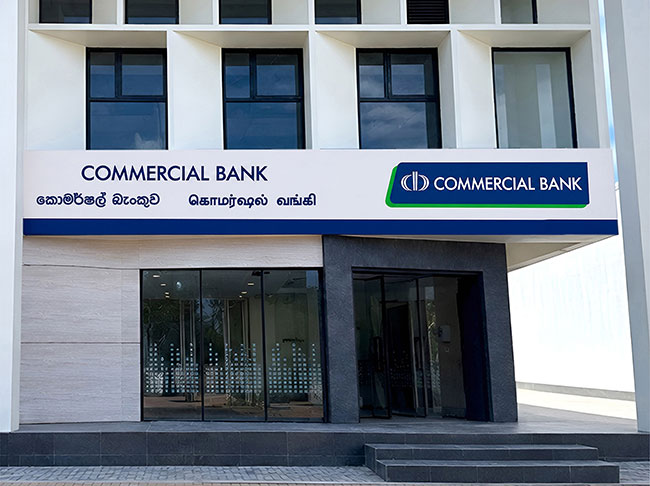
Commercial Bank of Ceylon PLC’s new branch in Port City Colombo is poised to bring world-class banking services to Sri Lanka’s emerging international financial hub.
Located at Building 04 in Area 02 of the Port City Business Centre – Commercial Hub, Commercial Bank’s Port City Colombo branch will function as a fully-fledged banking operation, strengthening the Bank’s presence in one of Sri Lanka’s most strategically significant emerging economic zones. Designed to serve the evolving financial requirements of corporates, investors, businesses, professionals and retail customers within the Port City Colombo ecosystem, the branch offers access to Commercial Bank’s comprehensive portfolio of financial solutions. These include current and savings accounts, fixed deposits, personal and business lending, housing and leasing facilities, credit and debit card services, inward and outward remittances, foreign currency accounts and transactions, trade finance solutions, import and export services, corporate banking, treasury and foreign exchange services, cash management solutions and digital banking facilities.
By combining full-service branch banking with digital capabilities and uninterrupted self-service access, the new branch reflects Commercial Bank’s commitment to delivering future-ready, accessible and internationally aligned financial services in support of Port City Colombo’s growth as a dynamic hub for commerce, investment and innovation.

Showers in the Western, Sabaragamuwa and North-western provinces and in Galle, Matara, Kandy and Nuwara-Eliya districts

Diesel replacement costs up to Rs. 4.5 bn in April

Sallay on hunger strike: Counsel warns CID

Opp. questions why Rs 10 bn meant for Ditwah victims held in Treasury account

‘Samurdhi Bank operates without dedicated audit framework’

Constitutional inconsistencies relating to franchise

‘Dates have the highest sugar content to fight Coronavirus’

Sunday Island 27 December – Headlines

#SundayIsland 17th December – Headlines

Sunday Island – 28th March

Sunday Island Headlines – 21 March

Sunday Island – 21st February – Headlines
-

 News6 days ago
Lankan duo emerge winners in Latin dance championship held in Blackpool, UK
-
 Latest News4 days ago
Kusal Mendis, Pathum Nissanka, bowlers put Sri Lanka 1-0 up
-
 News4 days ago
New US tariffs proposed on 60 countries, including Sri Lanka
-

 Features3 days ago
Power crept into the Sangha and is now tearing it apart
-

 News6 days ago
Sri Lankan teen killed in Chennai clash; three arrested
-

 Features3 days ago
Kondachchi wind farm and battery storage project to boost energy security, says Power Ministry Secretary
-

 Features3 days ago
Saudi Arabia sets new benchmark in Hajj management as 1.7 million pilgrims complete sacred journey
-

 News2 days ago
Asst. Manager, security officer arrested over Rs 30 mn snatch at Horana PB branch