
News
Lanka must make polluters pay: CEJ Chief calls for plastic levy implementation without delay


Sri Lanka’s long-delayed effort to curb plastic pollution must now move from talk to tangible action, says Hemantha Withanage, Executive Director of the Centre for Environmental Justice (CEJ), warning that awareness campaigns and voluntary measures have failed to address the country’s growing plastic crisis.
Withanage, who has been involved in national plastic policy discussions since the 1990s, told The Island that imposing a price or environmental levy on plastic bags and packaging is the only way to hold producers and consumers accountable.
He added: “People say awareness alone is enough. But while we’ve been talking since 1990, global plastic production has jumped from 105 million tonnes to 460 million tonnes. Clearly, awareness hasn’t worked,” he said.
Withanage urged the government to implement the Extended Producer Responsibility (EPR) framework — a system that forces companies profiting from plastics to contribute financially to collection, recycling, and waste management.
“Multinational corporations like Coca-Cola and Unilever, supported by chambers of commerce, are trying to water down EPR by calling it consumer responsibility. This is unacceptable,” he said. “For over 20 years, we’ve been stuck in endless discussions because of political and corporate resistance.”
He added that even past attempts to introduce EPR laws and product tracking systems, such as QR codes for plastic bottles, were blocked by industry influence.
According to CEJ data, Sri Lanka generates nearly 10,000 metric tonnes of solid waste daily, of which only about 3,500 tonnes are collected. Of the 249,037 tonnes of plastic waste produced annually, about 97,000 tonnes are collected, 77,000 tonnes managed, and only 27,000 tonnes recycled.
“With such low collection and recycling rates, we are literally drowning in plastic,” Withanage warned. “The government’s own estimates show the waste management cost per tonne exceeded Rs. 1,800 back in 2013 — it’s far higher today.”
He said the global environmental cost of plastic pollution now stands at USD 3.7 trillion annually, roughly 10 times its production value.
Sri Lanka has previously tried — and failed — to impose levies on plastic bags. In 2008, then Environment Minister Champika Ranawaka introduced the Environmental Conservation Levy Act, but the initiative was halted after the Supreme Court ruled that prices could not be fixed under the Consumer Affairs Authority Act.
However, in March 2024, the Colombo High Court, following a CEJ petition, ruled that the government could introduce a levy or surcharge on plastic bags, provided the revenue is used for waste management, public awareness, and promoting alternatives.
“Despite agreeing to this in court, the Consumer Affairs Authority revoked the relevant Gazette in May. This is why CEJ has gone back to court for contempt,” Withanage said. “We need political courage, not bureaucratic excuses.”
Withanage estimates that even a one-rupee charge per bag could raise Rs. 15 million daily, assuming a 25% drop in plastic bag use.
“If we can cut the 20 million plastic bags used daily to 15 million and channel that money into waste management, it would make a real difference,” he said.
He added that Mozambique’s EPR system saves USD 551 million annually and supports 98,000 jobs, demonstrating the economic benefits of well-managed plastic policies.
Withanage criticised repeated beach cleanups and short-term awareness drives, often sponsored by the same companies producing plastic waste.
“Every year we see the same photos — officials, students, and corporate staff collecting plastic for a day. But a week later, the plastic is back. These are publicity stunts, not solutions,” he said.
He warned that alternatives such as starch-based bioplastics remain economically uncompetitive, while fabric-based products often contain plastic microfibres.
“This isn’t just CEJ’s battle — it’s everyone’s,” Withanage said. “The government, private sector, supermarkets, and the public must all play their part. Whether capitalist or socialist, we owe our children a clean and safe future.”
He stressed that pricing plastics is not merely an environmental measure but an act of justice.
“If we can’t fix this in our lifetime, at least let’s set the stage so the next generation can. We’ve talked long enough. It’s time to make polluters pay,” he added.
By Ifham Nizam


Noritake Company Limited of Japan has donated Rs. 20 million to the Government’s disaster relief programme.
The cheque was presented to Prime Minister Dr. Harini Amarasuriya by the Managing Director of Noritake Lanka Porcelain (Pvt) Ltd, Mr. Kenji Obara, at the Parliament Complex on 18 December.
Minister of Public Administration, Provincial Councils and Local Government Chandana Abeyratne, Director and General Manager of Noritake Lanka Porcelain (Pvt) Ltd, Ms. Sujatha Egodagedara, and Assistant General Manager Captain M. M. Athula Rohan Senarath also participated in the event.
[Prime Minister’s Media Division].
Latest News
GovPay Concludes 2025 with Rs. 2 Billion in digital transactions, marking a major milestone in Sri Lanka’s digital transformation


GovPay, Sri Lanka’s Government Digital Payment Platform concluded the year 2025 by surpassing Rs. 2 billion in total digital transaction value, marking a major milestone in the country’s digital transformation journey. Notably, GovPay doubled its collections from Rs. 1 billion to Rs. 2 billion in just 45 days, reflecting rapid adoption, growing public trust, and strong institutional uptake across the public sector.
Since its official launch on 07 February 2025, GovPay has processed over 69,000 digital transactions, enabling payments for 3,372 government services across 215 government institutions. This accelerated growth underscores the increasing reliance on secure, convenient, and transparent digital payment mechanisms by both citizens and government institutions.
Implemented under the strategic leadership of the Ministry of Digital Economy, the Information Communication Technology Agency of Sri Lanka (ICTA) in collaboration with LankaPay, GovPay has emerged as a key pillar of Sri Lanka’s national digital public infrastructure. The platform plays a critical role in advancing financial inclusion, improving service efficiency, and strengthening transparency in public service delivery.
A key milestone in 2025 was the launch of the Online Traffic Fine Payment System through GovPay on 10 April 2025. Since its introduction, the system has facilitated over 50,000 digital traffic fine payments, generating more than Rs. 66 million in revenue. The service is currently operational across the Western, Southern, Northern, North Western, and North Central Provinces, including the Southern, Katunayake, and Central Expressways. While the island wide rollout planned for December 2025 was postponed due to adverse weather conditions and disaster-related challenges, ICTA, in coordination with the Sri Lanka Police and with the support of LankaPay, has agreed to complete the nationwide rollout in January 2026, with a landmark launch in the Central Province.
GovPay has continued to expand its reach across local authorities, including Divisional Secretariats, Municipal Councils, Urban Councils, and Pradeshiya Sabhas, significantly enhancing access to government services in citizens’ day-to-day activities. The platform has enabled digital transactions for all local authorities in the Northern Province and all Divisional Secretariats in the Southern Province, with a national target to digitize all local authorities by 2026.
Institutions such as Kotelawala Defence University, Sri Lanka Police, the Department of Technical Education and Training, the University of Moratuwa, and the Sri Lanka Atomic Energy Board emerged as some of the highest contributors to GovPay in 2025. Strong adoption by the education sector in particular highlights the readiness of younger generations to embrace digital transformation and demonstrates the platform’s scalability and reliability.
Beyond routine government services, GovPay also supported national disaster response efforts. Since 30 November 2025, the platform facilitated digital donations to the Rebuild Sri Lanka Disaster Relief Fund, collecting almost Rs. 14 million across 909 transactions, including contributions from Sri Lankans living abroad, ensuring transparency and ease of contribution during a national emergency.
As GovPay continues to grow, ICTA is working on revamping www.govpay.lk with enhanced features to support institutional onboarding, service management, and reporting capabilities. With Rs. 2 billion in digital collections achieved within its first year of operation and the last Rs. 1 billion reached in just 45 days, GovPay stands as a strong testament to the impact of coordinated digital transformation, reinforcing Sri Lanka’s vision of achieving a USD 15 billion digital economy by 2030.

A discussion on the restoration of religious, cultural and archaeological sites affected by Cyclone Ditwah was held on Thursday (18) afternoon at the Presidential Secretariat under the patronage of the Minister of Buddhasasana, Religious and Cultural Affairs, Dr. Hiniduma Sunil Senevi, with the participation of the Most Venerable Mahanayaka Theras of the three Chapters and other religious leaders.
Addressing the meeting, the Minister stated that more than one thousand religious, cultural and archaeological sites across the country had sustained damage due to the disaster. He assured that prompt measures would be taken to commence restoration work and reinstate these sites to their original condition without delay.
The Minister further stated that all restoration work is expected to be carried out while preserving the historical and cultural authenticity of the sites, under the guidance of the Most Venerable Maha Sangha and other religious leaders, with the active participation of all relevant stakeholders.
The Secretary to the Ministry of Buddhasasana, Religious and Cultural Affairs, Prince Senadheera, noted that arrangements are currently underway to mobilize the required human resources and financial assistance for the restoration process. He also stated that steps have been initiated to recruit the necessary technical officers on a contractual basis to conduct technical assessments of the affected sites. In addition, plans are in place to involve officials of the Ministry as well as officers of its affiliated institutions in carrying out these restoration activities.
The Secretary to the Ministry further stated that generous financial contributions from donors are currently being received to the fund established under the Ministry of Buddhasasana, Religious and Cultural Affairs for the reconstruction of damaged religious places of worship.
The meeting also considered continuing the gathering as an interfaith committee to oversee the restoration activities. Accordingly, it was agreed that the progress of construction work would be regularly reported to the committee and that the committee would be entrusted with mobilizing support for the fund in a transparent manner, including assistance from foreign donors, international organizations, Buddhist organizations and other religious institutions.
It was noted that the Central Cultural Fund has identified eight sites that were severely damaged by the disaster and are difficult to restore through conventional construction methods, requiring the specialized expertise of archaeologists, mural conservation specialists, and architects. The cost of restoring these sites has been estimated at over Rs. 500 million.
It was further decided that the committee would meet once a month to review and discuss the progress of these restoration activities.
Religious leaders commended the Government’s intervention in providing relief to those affected by the disaster and in restoring livelihoods, expressing appreciation for the effective management of the response. They also praised the Government’s prompt action in initiating restoration work at damaged religious sites.
The event was attended by several eminent religious leaders, including the Registrar of the Asgiri Maha Viharaya, Venerable Dr. Medagama Dhammananda Nayaka Thero; the Registrar General of the Amarapura Siri Saddhammawansa Maha Nikaya, Venerable Balapitiye Siri Seevali Nayaka Thero; the General Secretary of the Sri Lanka Ramanna Maha Nikaya, Venerable Attangane Sasanarathana Nayaka Thero; the Chief Secretary of the All-Ceylon Shasanarakshaka Board, Venerable Professor Mugunuwela Anuruddha Nayaka Thero; and the Tri-Nikaya Maha Sangha, led by the Chairman of the National Bhikkhu Front, Venerable Wakamulle Uditha Thero.
Also in attendance were Hindu religious leaders, including Venerable Swami Aksharatmananda, representatives of the Catholic Church and the National Christian Council, including Father Alec Roy Samantha Fernando, All-Ceylon Muslim religious leaders, including the General Secretary of the Jamiatul Ulama Organization, Ash-Sheikh Arkam Nooramith, Deputy Minister of Religious and Cultural Affairs, Mohamed Muneer , as well as senior officials of the Ministry of Buddhasasana, Religious and Cultural Affairs and relevant line institutions.

US to host Qatari, Turkish and Egyptian officials for Gaza ceasefire talks

Noritake Company Limited donates Rs. 20 million to the Government’s disaster relief programme

Subhan, Minhas star as Pakistan set up U-19 final with India

Malhotra, George fifties set up India vs Pakistan final

Sri Lanka replace Asalanka with Shanaka as captain ahead of T20 World Cup

GovPay Concludes 2025 with Rs. 2 Billion in digital transactions, marking a major milestone in Sri Lanka’s digital transformation

‘Dates have the highest sugar content to fight Coronavirus’

Sunday Island 27 December – Headlines

#SundayIsland 17th December – Headlines

Sunday Island – 28th March

Sunday Island Headlines – 21 March

Sunday Island – 21st February – Headlines
-

 Features6 days ago
Why Sri Lanka Still Has No Doppler Radar – and Who Should Be Held Accountable
-

 Midweek Review3 days ago
How massive Akuregoda defence complex was built with proceeds from sale of Galle Face land to Shangri-La
-

 News2 days ago
Pakistan hands over 200 tonnes of humanitarian aid to Lanka
-
 News2 days ago
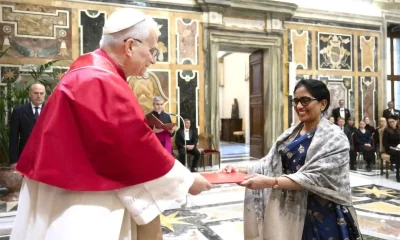
Pope fires broadside: ‘The Holy See won’t be a silent bystander to the grave disparities, injustices, and fundamental human rights violations’
-

 Latest News6 days ago
Landslide early warnings in force in the Districts of Badulla, Kandy, Kegalle, Kurunegala, Matale, Nuwara Eliya and Ratnapura
-
 News3 days ago
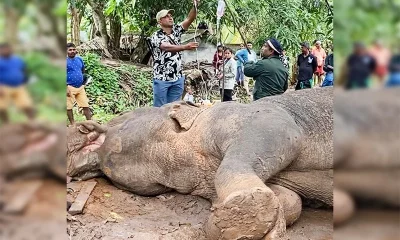
Burnt elephant dies after delayed rescue; activists demand arrests
-
 Features6 days ago
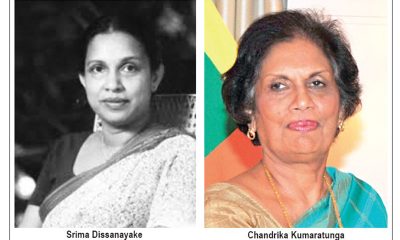
Srima Dissanayake runs for president and I get sidelined in the UNP
-

 News7 days ago
Govt. okays postgraduate medical training for Maldivian medical officers and dental surgeons