
Sports
Kumar Sangakkara: ‘T10 a format that might be pushed forward’ to get cricket into Olympics

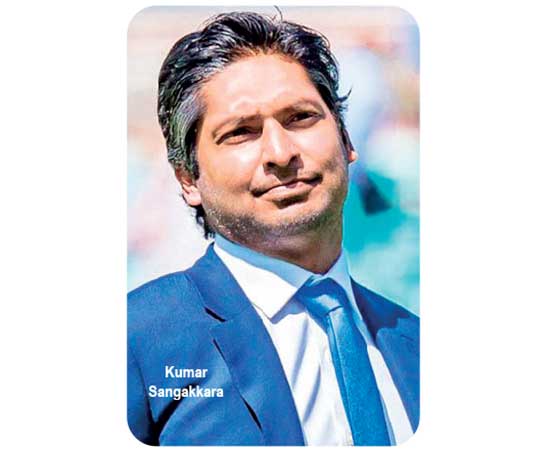
T10 could help forge cricket’s path to inclusion in the Olympics, Kumar Sangakkara, the MCC President, said. Speaking ahead of this month’s T10 League, where he will work with Team Abu Dhabi as a mentor, Sangakkara said that while it was impossible to say whether cricket might be included in the Olympics as soon as 2028, it was a case of “the sooner the better”.
“T20 has had a big push to be included in the Olympics,” Sangakkara said during a media interaction. “Would it be T20? Would they like a more condensed version in terms of T10?
“There is a lot of work to be done to get cricket into the Olympics per se. All the home boards have to buy in, the ICC has to have a good, solid push. It has to be a format that fits that sweet spot of timing and time limits and really entertains and engages the Olympic viewer because you’re not just talking about the traditional cricket spectator but also opening up completely new fan markets.
“It’s been many years since a push for cricket in the Olympics has started. It was in the Commonwealth Games for a couple of editions and I think this [T10] will be another format that might be pushed forward to see whether it’s T20, or T10, whatever works to get cricket into the Olympics.”
Last October, the ICC asked members to report on the potential financial benefits of cricket being played at the Olympics.
Eoin Morgan and, more recently, Chris Gayle – who will represent Team Abu Dhabi at this year’s T10 League – have thrown their support behind the T10 format as cricket’s vehicle for Olympic inclusion, citing its brevity and appeal to US audiences.
As the T10 League prepares for its fourth season, in Abu Dhabi from January 28 to February 6, Sangakkara could see the format taking off to the extent that existing global T20 franchises – and even sides in the new Hundred competition – have their own T10 teams as well.
The fourth edition of the T10 League is set to begin on January 28 Abu Dhabi T10
“The T10 format has great potential to do just that,” he said. “Especially with the advent of the US [T20] league, it could be that it could travel beyond the UAE to the US as well.
“And if those markets all open up I think the time [will come] when IPL franchises, BBL franchises even the Hundred from London that is launching this year, might be looking at T10 as a prospective format in their portfolio. There are a lot of people, investors, potential franchise owners and cricket boards looking at this T10 format.
“Whichever country that decides to go next in terms of formulating a tournament really need to learn its lessons from tournaments such as the ones in the UAE, understand how it’s been done well and what can be done better, how to really structure a format that has longevity, that has very good and long-term benefits in terms of developing players in terms of spreading the game but ultimately also financially.”
Sangakkara said that not only had cricket evolved to the point that several formats could co-exist, but he agreed that the shorter formats were clearly becoming part of the long-form game.
If evidence was needed, take Rishabh Pant’s ability to change gears during his 118-ball 97 in a century stand with Cheteshwar Pujara, who scored a more traditional 77 from 205 deliveries in the drawn third Test in Sydney between India and Australia.
“If you take the change in terms of scoring rates over the years and the different shots you’re seeing, the reverse sweeps the paddles, the more attacking mindsets, all are a result of the shorter versions really influencing Test cricket,” Sangakkara said.
“You’ll see that trend continue and it’s great for Test cricket because it’s much more exciting to watch. Even on an entire last day batting to survive you had batsmen like Pant really upping the ante. It’s great to watch batsmen like that bat with the traditional types of a Pujara, it’s great to see how beautifully two different players with two different mindsets and techniques can co-exist in one team.”
Sangakkara said the shorter forms of the game could also evolve and become even more exciting.
“Another bumper in T20 cricket would be extremely exciting,” he said. “I’ve seen the debates as to whether the bouncer will completely go out of cricket in terms of cricketers’ safety. We have to see whether the one bouncer does go away, but a second one that really keeps the batsmen guessing would be a great addition and more exciting.
“If you take American Football, you have an offense and a defense, you could have the same with your bowling attack and two separate teams vying for the bowling innings and the batting innings. There are advancements in terms of rules and team combinations that you can play.”
While staging the T10 League during a pandemic would, as with other tournaments, face “many challenges” – quarantine, travel restrictions, bubble fatigue, lack of crowds and a potential hit to sponsorship – Sangakkara said it could also provide “a little bright spot” for those seeking escapism and entertainment amid lockdown.
The upcoming edition of the T10 League was due to be staged last November but was moved due to the IPL being pushed into that time and moved to the UAE amid the global impact of Covid-19. (cricinfo)

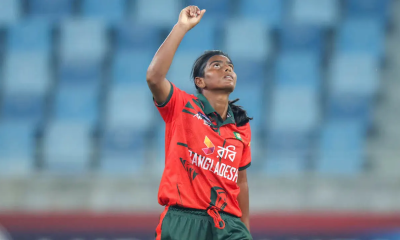





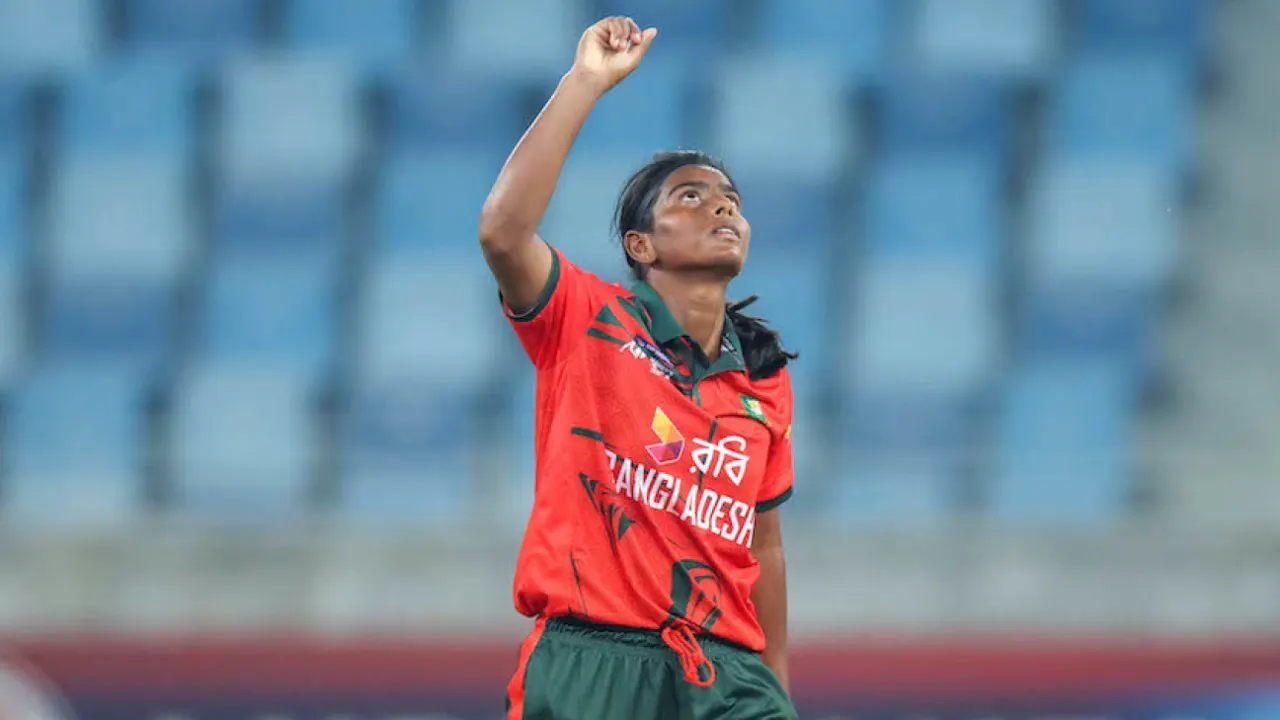
A superb bowling performance led by Marufa Akter and the spin attack helped Bangladesh overcome Indonesia in their Asia Cup opener in Dubai.
Indonesia, on their Asia Cup debut, put up a spirited performance especially with the ball to restrict Bangladesh to 129 for 8. Sobhana Mostary , playing her 100th international match, top-scored with 40, while Shorna Akter injected late momentum with 31 off 18 balls. Indonesia in return were bowled out for 58, with left-arm spinner Nahida Akter finishing with figures of 3 for 15.
Indonesia make early inroads
Indonesia’s Ni Made Putri Suwandewi found swing almost immediately but Bangladesh’s openers handled the movement well to make a positive start, scoring four boundaries in the first two overs. But that did not last long as Suwandewi struck in her second over, having Juairiya Ferdous mistime an inswinging delivery towards cover point, where Ni Ariani came forward and held a sharp low catch to give Indonesia their first wicket in Asia Cup.
Mostary and Dilara Akter then found run-scoring increasingly difficult. Bangladesh managed only one boundary between the third over and the end of the powerplay, reaching 30 for 1.
Indonesia’s spinners maintained the pressure thereafter, conceding only a few boundaries and repeatedly forcing Bangladesh’s batters to manufacture their shots. The partnership between Mostary andDilara struggled to gather momentum and was eventually broken when Ariani had Dilara caught for 27 off 31 balls. Bangladesh reached 58 for 2 at the halfway stage.
Shorna shines, Indonesia sparkle
Bangladesh’s first six came only in the 13th over thanks to Mostary. But her attempt to accelerate was checked soon after as 16-year old legspinner Sofia Velic, on her international debut, dismissed captain Nigar Sultana. Mostary was then left with the responsibility of guiding Bangladesh towards a competitive total, but Indonesia continued to restrict the scoring. Ni Luh Dewi struck twice in the 17th over to remove Mostary for 40 and Ritu Moni, leaving Bangladesh in further trouble.
Shorna briefly changed the momentum, hitting a six and a four, but Indonesia’s bowling ensured Bangladesh could not fully capitalise. Indonesia too dropped as many as three catches but the reprieves did not make much of an impact.
Ariani produced a dramatic finish to the innings, picking up two wickets as Bangladesh slipped from 105 for 3 to 129 for 8. They lost five wickets for 21 runs in just 17 balls, with Shorna, who had looked Bangladesh’s most fluent batter late in the innings, stranded at the non-striker’s end for much of the final over.
Bangladesh bowlers rule
Marufa began with a probing over, getting the ball to swing both ways and keeping Indonesia’s openers cautious. She broke through in her second over, having Rahmawati Pangestuti edge a full delivery to mid-on. she struck again in her next over, trapping Maria Corazon lbw with a full ball that swung sharply into her pads and beat her attempted flick. Indonesia had lost both openers early but they had made a slightly better start than Bangladesh managed during their own powerplay.
But the game shifted after the powerplay as Bangladesh’s spinners tightened the screws. Senior legspinner Fahima Khatun ended Ni Putu Ayu Nanda Sakarini’s difficult stay at the crease in the ninth over, trapping the Indonesia captain in front for just 2 off 15 balls. Sanjida Akter Meghla followed up with another wicket in the next over, trapping Dewi lbw after she missed a length ball that came into her pads.
Nahida struck in the 12th over but it was in the 14th over that Indonesia’s innings completely fell apart. Nahida first dismissed Suwandewi for 3 after a mistimed pull. Sofia Velic was then run out for 1 following a quick throw from deep fine leg, before Nahida finished the over by bowling Ariani for 2. Indonesia had slipped to eight down, and two more run-outs completed their innings as Bangladesh sealed a convincing 71-run victory.
Scores:
Bangladesh Women 129 for 8 in 20 overs (Dilara Akter 27, Sobhana Mostary 40, Nigar Sultana 10, Shorna Akter 31*; Ni Made Putri Suwandevi 1-13, Ni Ariani 3-28, Ni Luh Dewi 2-21) beat Indonesia Women 58 in 17.3 overs (Maria Corazon 12; Marufa Akter 2-06, Sanjida Akter Meghia 1-11, Nahida nahida 3-15, Fahima Khatun 1-09) by 71 runs
[Cricinfo]

by Rex Clementine
The Cricket Transformation Committee met the press yesterday and offered a firm assurance that the new constitution for Sri Lanka Cricket will be in place before November, with all democratic avenues available for concerned parties to challenge it in court.
According to committee head Eran Wickramaratne, the draft constitution has already been forwarded to the Ministry of Sports and subsequently to the relevant legal authorities to iron out any flaws.
Once the draft reaches Cabinet, it will be gazetted, with provisions allowing interested parties to challenge the legality of the new constitution in court.
SLC elections have been bitterly contested over the years and, at times, have resembled a political battlefield rather than a process to elect cricket administrators. There have been instances where members of prominent clubs were suspended for voting against the wishes of their clubs, while armed gunmen have even entered the Board premises at Maitland Place to intimidate voters. Such incidents eventually forced authorities to shift cricket elections to a neutral venue.
The influence wielded by paper clubs and certain district cricket associations during elections has also come under the microscope. The new constitution is expected to address many of these long-standing concerns and Wickramaratne gave a categorical assurance that ballot rigging will not be tolerated this time around.
“There will be no room for rigged elections. That’s for sure. There is a democratic process and people will be allowed to challenge the new constitution within those frameworks,” Wickramaratne said.
Another major talking point at the media briefing was the inaugural Champions Trophy. It was revealed that although the International Cricket Council has indicated that the tournament could be taken away from Sri Lanka as an elected body is not currently running the administration, officials remain hopeful that the country will retain the hosting rights.
There have been suggestions that India could host the tournament should Sri Lanka lose it. Even in such an eventuality, Sri Lanka would not miss out on participation, with the top six teams qualifying for the event and Sri Lanka currently placed sixth in the ODI rankings.
“I am made to understand that the decision will be taken at the next ICC meeting, which will be held in November. By then, we should have cleared many hurdles and the new constitution would have been passed by Parliament and dates should be fixed for the election,” Wickramaratne told the press.
“We have kept the ICC informed about what has been happening on a regular basis and we are hopeful that we will be able to host the Champions Trophy,” he added.
Former captain Kumar Sangakkara, who is also a member of the committee, was present at the briefing and was asked about creating more opportunities for budding Test cricketers.
Sangakkara stressed that Test cricket needed to be protected in the years ahead, but pointed out that supporters too had a role to play by demonstrating their appetite for the game’s traditional format.
He added that concerns over the future of Test cricket had been raised even at ICC level and that measures were being explored to safeguard the longer format of the game.
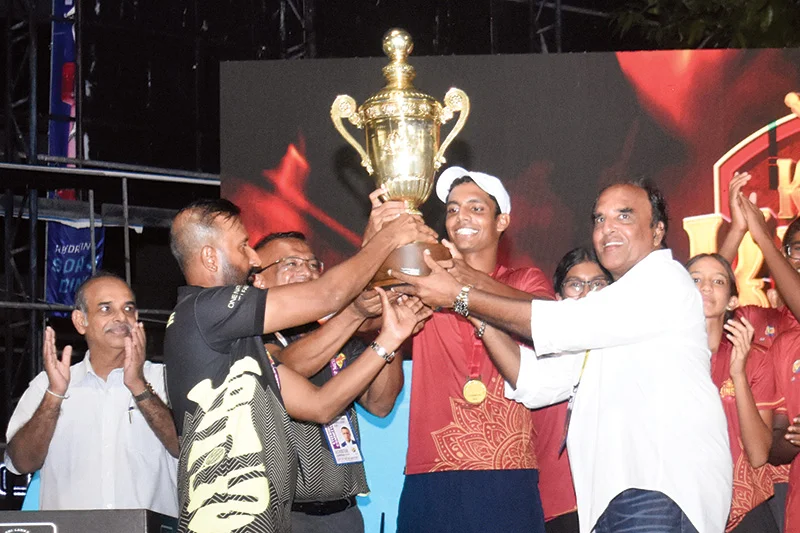
Kandy Kings emerged champions of the Sri Lanka Tennis Premier League 2026, defeating Jaffna Flamingos in an exciting final at the Sri Lanka Tennis Association courts.
The four-day tournament, held from August 27 to 30, was title sponsored by CL Synergy Power and powered by Wilson.
Kandy Kings secured the championship with a 35-26 points victory over Jaffna Flamingos in the final, with several closely contested matches deciding the outcome of the inaugural league-style competition.
Savini Jayasuriya gave Kandy Kings an early advantage when she defeated Janali Manamperi 7-5 in the opening singles encounter.
Jaffna Flamingos, however, hit back in the second singles match through Pakistan’s No. 1 national player Muzammil Murtaza, who overcame Sri Lanka’s No. 1 national player Thehan Wijemanna 6-4 in one of the most anticipated matches of the final.
Kandy Kings regained momentum in the girls’ Under-15 contest as Navya Banagala defeated Samaira Fernando 6-4.
The Kandy team further strengthened their position in the mixed doubles, where Mineth Nawarathne and Tuvini de Alwis overcame the Jaffna pairing of Aravind Fernando and Janali Manamperi.
The championship was eventually sealed in the deciding doubles encounter, with Sri Lanka’s top-ranked player Thehan Wijemanna joining Mineth Nawarathne to beat Aravind Fernando and Muzammil Murtaza 6-3, helping Kandy Kings complete a memorable triumph.
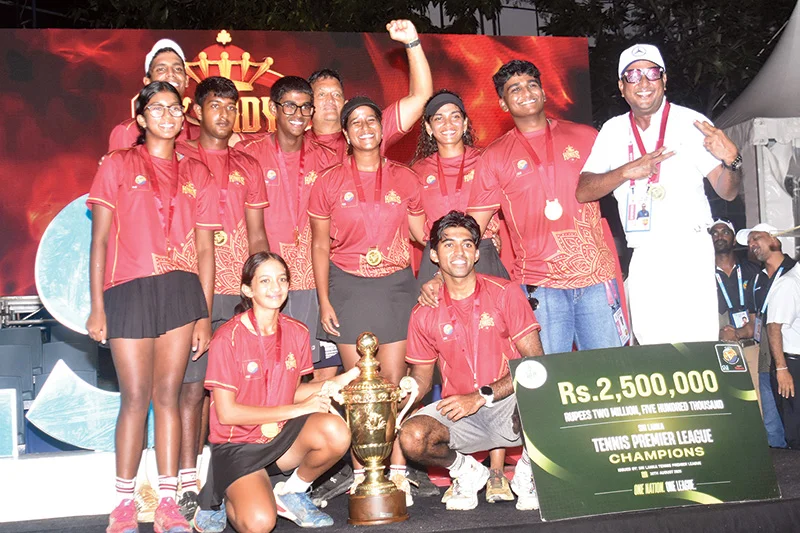
Several outstanding performers were recognised at the conclusion of the tournament. Yuhansa Peiris of Weligama Warriors was named the Most Valuable Women’s Player, while Jaffna Flamingos’ Muzammil Murtaza received the award for Most Valuable Men’s Player.
Navya Banagala of Kandy Kings was adjudged the Most Valuable Girls’ Player, while Damsath Peiris of Jaffna Flamingos won the Most Valuable Boys’ Player award.
Jaffna Flamingos’ Janali Manamperi was also presented with the Wilson Fair Play Award.
Kandy Kings finished the tournament as champions, while Jaffna Flamingos had to settle for the runners-up position after an impressive campaign that took them to the final.

Nahida, Marufa help Bangladesh brush aside Indonesia

Showers will occur in the Western, Sabaragamuwa, Southern and Uva provinces and in Kandy and Nuwara-Eliya districts

Sun directly overhead Kalpitiya, Talawa, Sinharagama, Galkadawala, Nachchaduwa, Padikaramaduwa, Gomarankalla and Verugal about 12.10 noon today (01)

SJB asks what Speaker intended to do about allegations against CJ

Navy Chief attends strategic-level discussions in Delhi

ICRS: Sustained and collective efforts critical to address issue of missing persons

‘Dates have the highest sugar content to fight Coronavirus’

Sunday Island 27 December – Headlines

#SundayIsland 17th December – Headlines

Sunday Island – 28th March

Sunday Island Headlines – 21 March

Sunday Island – 21st February – Headlines
-

 News4 days ago
Eight politicians in drug kingpin probe
-

 Features2 days ago
“Wrap Me Up in My Blazer”— A Gentlemanly Bradby Reminiscence
-

 Business4 days ago
Sri Lanka opens up: A new season of direct connectivity
-

 Features4 days ago
Redefining ageing in Sri Lanka
-
 Features6 days ago
Insights from Chieftains of Uva: Genealogy of two Kandyan Families – Part II
-

 Latest News5 days ago
Nepal-Tibet floods: What happened, what caused them and who is missing?
-

 Editorial6 days ago
Warning of power cuts: El Niño and corruption
-

 Features6 days ago
Export diversification: Missing the wood for the trees – Part I