
Sports
MS Dhoni retirement leaves a void in world cricket

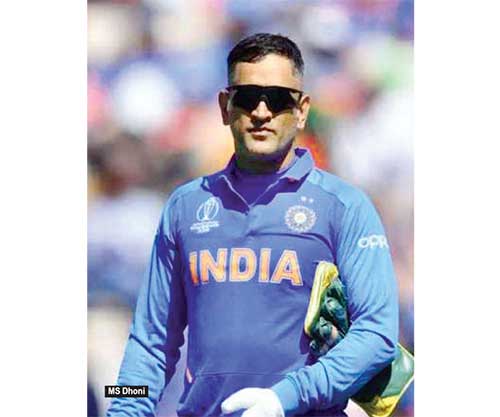
The uncertainties leading up to the retirement of Mahendra Singh Dhoni will be forgotten soon enough, and what will remain are the certainties and the pride of performance over the years.
Should he have retired earlier? Or at least should he have cleared the air earlier?
It does not matter. Dhoni was under no compulsion to make it easier for everybody else, especially those whose job it is to tie up careers neatly and move on to the next big thing.
It is likely that Dhoni might continue to play in the IPL. It is a tournament he enjoys, playing for a team he loves whose fans return the love many times over.
A man who has played 90 Tests, 350 one-dayers and 98 T20s will, naturally, be missed.
This in addition to being the country’s most successful captain, taking India to the No 1 ranking and leading them to a World Cup win after 28 years (2011), the World T20 (2007) which set up the IPL revolution and the Champions Trophy (2013).
In white ball cricket he is one of the all-time greats, his 84 undefeated innings pushing his average above 50 in one-day internationals. Only Ricky Ponting has led his team, Australia, to more wins. Dhoni has led in and won more matches than any other captain in T20 internationals.
He led India in the most number of Tests, 60, and was only recently overtaken by Virat Kohli as the most successful.
Dhoni’s reign had a profound impact on Indian cricket, and not just in terms of statistics.
He rose from what was then a backwater of Indian cricket – the eastern city of Ranchi – and continued the work begun by a predecessor, Sourav Ganguly, who turned to the non-traditional cricketing centres and discovered players of international standard.
Dhoni’s elevation as captain continued a process begun with the aristocrats – the maharajahs and nawabs – who led in the early years, the middle-class players (often bankers) who followed and then the small-town talent who spread the game; this in some ways reflecting the evolution of Indian society itself.
He was eight years old when Sachin Tendulkar made his Test debut, and within months of his taking over Tendulkar was saying, “I am delighted with the way Dhoni has conducted himself. He is a balanced guy with a sharp brain.”
Dhoni was easily accepted by the seniors in the side, a tribute both to his potential and fairness.
He learnt from his predecessors. From Rahul Dravid under whom he played 19 Tests and Anil Kumble under whom he played 10. These two men from the southern state of Karnataka brought to the job a rare intelligence, tactical nous and man management skills. “I want a team,” Dhoni once said, “that can stand before an advancing truck.” And he worked at building just such a team.
As a player, the amazing thing about Dhoni was what might look inadequate in another player, a gimmick even, worked well for him.
Ex-India keeper Syed Kirmani said initially he lacked “copybook basics” as a wicketkeeper and criticised his habit of standing on his heels to receive the ball rather than on his toes. The corkscrew on-drive or “helicopter” shot was uniquely Dhoni’s. It was seldom imitated because it was inimitable.
Retirement is a difficult thing, both for the player and his team.
In the first Test following Sunil Gavaskar’s retirement, India were bowled out for 75 by the West Indies and went on to lose by five wickets. It was another 19 Tests before India had a century opening partnership. That’s one side of the coin.
Here’s the other: after Tendulkar was caught at slip in his final Test innings, the new batsman Virat Kohli struck the next ball for four.
The symbolism was inescapable. The king is dead, long live the king.
Dhoni, as he prepares to leave the international scene, can take comfort in the fact that his successors are already in place.
He leaves Indian cricket in a good place – back as the best team in the world with a captain who is as hot (if one might be pardoned that expression) as he himself was cool, but just as successful; and new wicketkeepers ready to take over.
He will be missed for his remarkable self-control, his ability to change the tempo of a match either through sustained hitting or dour defence, and his manner of encouraging the bowlers, especially the spinners, from behind the wicket.
In the latter half of his career, he appeared at times to have eyes in the back of his head with his ability to run out batsman behind him without looking at the stumps.
He also patented a way of avoiding the recoil with his practised manner of either taking the edge from the bat or the throw from the field without wasting time having to take his hands back with the ball. It is a significant contribution to the art of wicketkeeping. Anything that saves time.
In 15 years, Dhoni played 538 internationals, scored over 17,000 runs, averaged 45 with a strike rate of nearly 80, held 634 catches and effected 195 stumpings.
Only five players in the history of the game have played more internationals; only one of them was a wicketkeeper, and none of them led in as many matches as Dhoni did.
His will be tough boots to fill. But Dhoni’s legacy goes beyond figures and reflects the arc of India’s societal transformation.
It will include the self-confidence he brought to large hitherto ignored sections of the population, and emphasise the old-fashioned dignity and respect he brought to the game and its players.
(BBC)



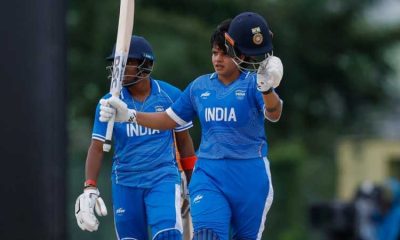
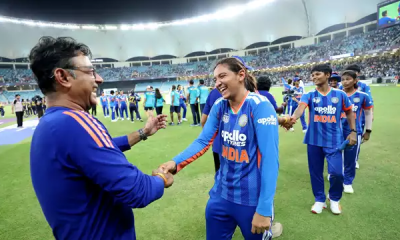


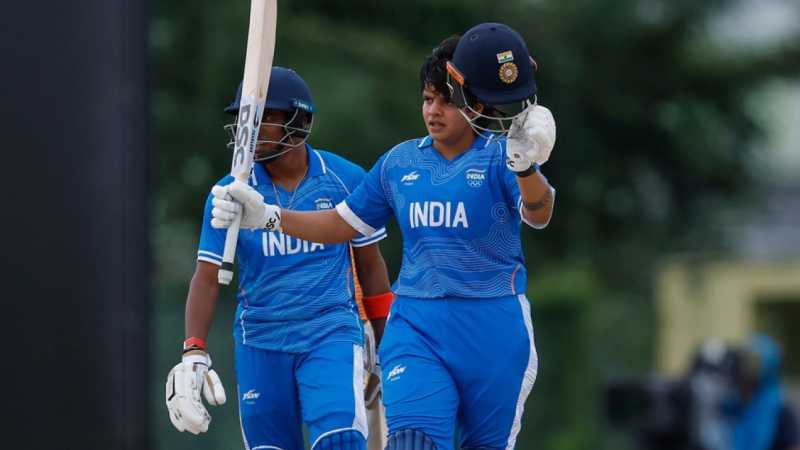
It’s a rematch of the 2023 Asian Games final as India meet Sri Lanka with gold on the line once again. Both sides have comfortably made the final. India brushed aside Japan and Bangladesh in the quarter-finals and semi-finals respectively, while Sri Lanka did the same against Malaysia and Pakistan.
There is plenty of familiarity too, with the sides having met less than ten days ago in the Women’s Asia Cup final. India cruised to a 72 run victory that day and will again start as favourites to defend their Asian Games gold.
If Sri Lanka are to find a weakness in this India batting line-up, it may lie in the middle order. Harmanpreet Kaur scored 40 in the semi-final but has struggled for fluency of late, while G Kamalini and Bharti Fulmali have returned underwhelming numbers despite getting opportunities higher up the order. Getting to them, though, means finding a way past Smriti Mandhana and Shafali Verma, both of whom have form and recent centuries on their side, while Richa Ghosh remains capable of changing an innings quickly down the order.
Chamari Athapaththu remains Sri Lanka’s biggest match-winner, but she has received more support from the top order recently, with Hasini Perera contributing a 26-ball 42 against Pakistan, Kavisha Dilhari a 27-ball 44* against Malaysia and Harshitha Samarawickrama quick cameos in both games. How Sri Lanka handle India’s spinners could be central to the final, particularly with Deepti Sharma and Shree Charani among the wickets, and before that there is Nandani Sharma’s new-ball threat to negotiate.
Sri Lanka know what happens when India are allowed to dictate a game. Their best chance in Nagoya may come from putting India under pressure early on, and whether that’s with bat or ball will depend on which way the coin falls at the toss.
Should the game be a washout, like the men’s final in 2023 was, the higher-seeded team (India) will take the gold medal.
The two teams have met 32 times in T20Is, with India winning 26 games, Sri Lanka winning five, and one match having no result. Sri Lanka have lost their last seven T20Is against India and won only once in their last 11 meetings.
The two most destructive batters on either side could have an outsize influence on the final. Athapaththu has smacked 63 and 83 not out in her two outings at these Asian Games while also returning figures of 2 for 3 and 1 for 30. Shafali had scores of 64 and 68 in her last two outings before the Asian Games, and has followed those up with unbeaten scores of 40, in a chase of 57 against Japan, and 100 against Bangladesh. Given the dimensions of the ground in Nisshin, either could quickly take the final away from the opposition.
Both teams have fully fit squads, and fielded their first-choice XIs in the semi-finals.
India (probable): Smriti Mandhana, Shafali Verma, G Kamalini, Harmanpreet Kaur (capt), Richa Ghosh (wk), Bharti Fulmali, Deepti Sharma, Shreyanka Patil, Kranti Gaud, N Shree Charani, Nandani Sharma.
Sri Lanka (probable): Imesha Dulani, Chamari Athapaththu (capt), Hasini Perera, Kavisha Dilhari, Harshitha Samarawickrama, Hansima Karunaratne, Kaushini Nuthyangana (wk), Rashmika Sewwandi, Mithali Ayodhya, Chamudi Praboda, Sugandika Kumari.
(Cricinfo)
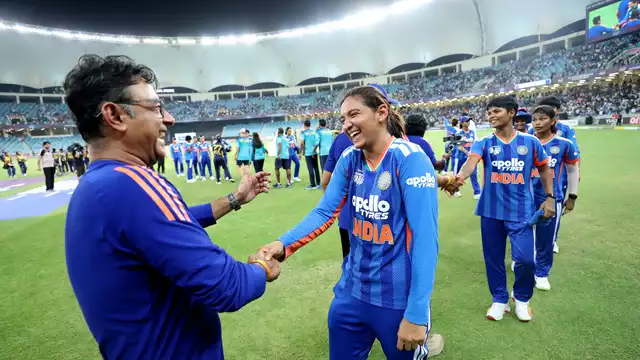
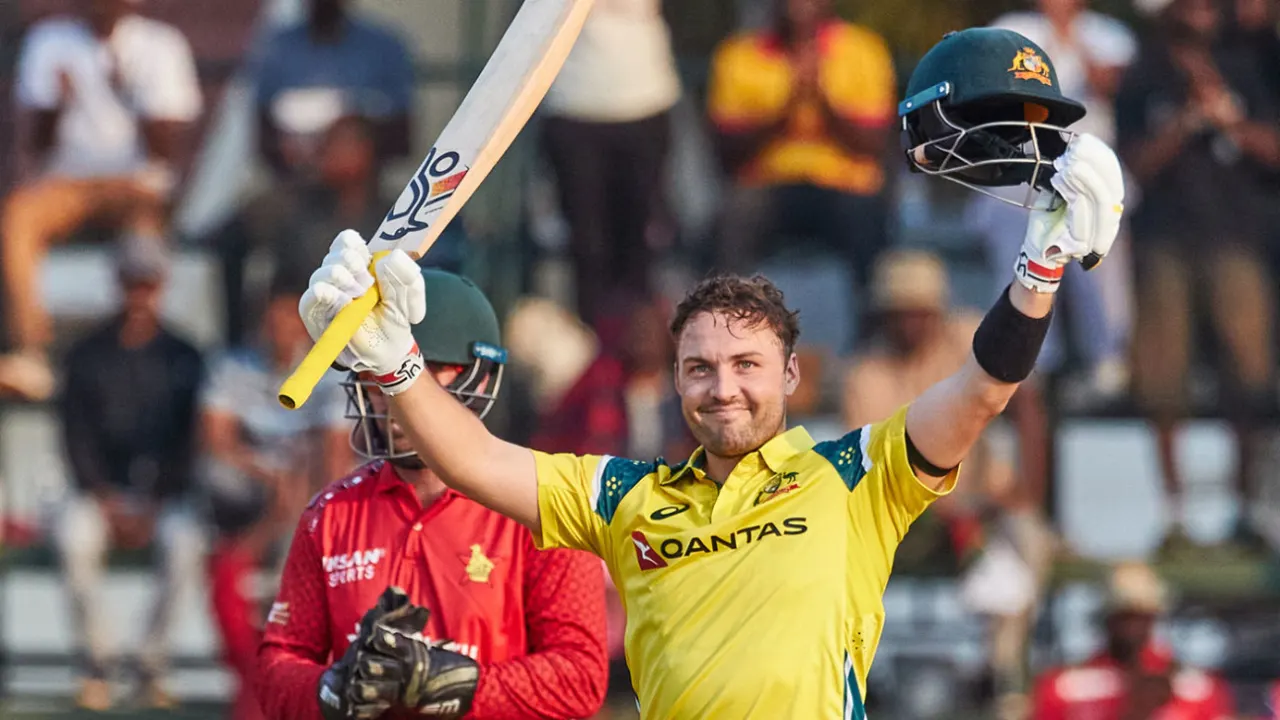
Australia concluded their first Zimbabwe tour after 12 years with a clean sweep of the hosts, who were unable to deliver a consolation win to a festive Harare crowd, as Nathan Ellis held his nerve alongside No. 11 Spencer Johnson in a match-winning tenth-wicket stand of 27. Zimbabwe do not have any internationals at home for the rest of the 2026 and, after posting their second-highest total batting first against Australia, saw the match slip from their grasp in the dramatic closing stages.
Pressure changed sides throughout the last quarter of the contest. Australia were cruising on 162 for 3 in the 26th over, when Brad Evans removed Alex Carey for the third of his four wickets and set the cat among the pigeons as wickets fell regularly. Josh Inglis was holding the chase together with his second ODI hundred but when he fell 45 were still needed. Then Ellis, who had earlier taken 3 for 50, put together a superbly-measured 36 not out to secure a thrilling win.
Their chase was built largely on the efforts of Inglis, who was the third Australian to reach a hundred in the series, after Matt Renshaw in the opening match and Travis Head in game two. In contrast, Zimbabwe did not have a century-marker, though Sikandar Raza and Craig Ervine scored two fifties each, including in this match and were the leading run scorers across the three matches.
Zimbabwe also had two of the three top bowlers and will know that it was in moments, not personnel terms, that they lost to Australia. In this match, there were four major ones. The first came when Innocent Kaia, batting well on 55, had to retire hurt with what looked like a hamstring injury to interrupt an 80-run fourth wicket stand with Ervine and stall Zimbabwe. The second was when Ervine, on 59, tried to accelerate with 10 overs left to go and holed out to long-on to spark a collapse of 4 for 22 which left Zimbabwe short of the 300 that was in their sights.
Then, in the field, Inglis, on 48, cut Ernest Masuku in the air to backward point and Wessly Madhevere leapt to his right but could not hold on. The drop proved costly even though Madhevere took a stunner to dismiss Carey. Madhevere’s biggest mistake was still to come. In the penultimate over when Ellis launched Masuku to deep midwicket, Madhevere got under the ball and spilled the chance.
With nine runs needed off the last six balls, Raza then gave Madhevere the ball, even though Graeme Cremer had an over in hand having caused problems in his first ODI in 2018. The first ball went for six and left Madhevere inconsolable at the end.
Inglis was in early after Evans struck twice in his first two overs. He had Head caught at deep backward square when he flicked off his pads and then found Mitchell Marsh’s inside edge to leave Australia were 25 for 2 in the fourth over. Inglis announced himself with a swivel pull that went for four and was brutal through the point area. He greeted Cremer’s return by sending his first ball – a full toss – through mid-on for four. But Cremer came back well and bowled Cooper Connolly with a classic leg break to announce his return in some style.
Inglis and Carey put on 85 for the fourth-wicket to keep Australia in control and Inglis’ big challenge came when Australia started to wobble. They were on 203 for 5 after 35 overs, 69 runs away from victory, and in the space of two overs Raza had Ollie Peake out lbw and Cremer got Xavier Bartlett with a googly. Then, Blessing Muzarabani was brought back to keep Australia under pressure and bounced Ellis, who fended him skywards but the chance fell out of Brendan Taylor’s reach. Muzarabani finished the series wicketless.
Inglis reached his century with a strong sweep against Cremer off his 94th ball and victory was still 55 runs away. When Raza bowled Inglis in the 42nd over, Zimbabwe were ahead in the contest but the management of their attack towards the end will raise questions. Muzarabani was bowled out after 44 overs and Evans with two overs to go. Cremer, despite his experience, was overlooked for his final over.
That won’t be the only area Zimbabwe will leave with questions. Their batting line-up underwhelmed in parts, especially after they chose to put runs on the board in the final match. They started off reasonably well and were on 34 without loss after six overs before their opening pair gave way.
Ben Curran’s poor returns in white-ball cricket continued when he gloved Johnson down leg and was caught behind for 7. His partner Brian Bennett didn’t fare much better. After showing promise with classy flicks off the pads and crunching pulls off short balls, Bennett skied a Ellis delivery to Head at midwicket to depart for 30. Bennett has not crossed 40 in his last eight ODI innings, despite getting several starts. Zimbabwe were 57 for 2 at the end of the powerplay.
Taylor took his time to get to a 16-ball nine before he was bowled by an Adam Zampa flipper and his form will also be a concern. Kaia, whose first runs had come off a thick inside edge, offered a chance on 27 when he was out of his crease early as Renshaw fired in a delivery down leg. Inglis fumbled and recovered but could not stump Kaia, who put the early jitters aside to play some classy strokes. He drove Renshaw through mid-on and pulled Johnson flat and hard to bisect the fielders in the deep. His fifty came just after the innings’ halfway mark, off 59 balls, and marked the first time he had crossed the milestone in 12 innings, since January 2023.
Kaia and Ervine got Zimbabwe into a good position and when Kaia retired on 148 for 3, it was up to Raza and Ervine to accelerate. They brought up the Zimbabwean 200 with 10 overs to go but the final flourish never came. Ervine was eager to up the ante but could not clear Renshaw at long-on and Madhevere sent an Ellis slower ball to cover to give Australia two wickets in two overs.
Evans showed glimpses of his finishing skills with back to back fours off Johnson but then top-edged a short ball to give Johnson a second wicket and Cremer was out lbw to a pinpoint Ellis yorker. Raza reached fifty soon after that and farmed strike for the final five overs to end unbeaten on 81 which gave Zimbabwe a competitive total, but agonisingly not quite enough.
Scores:
Australia 272 for 9 in 49.5 overs (Josh Inglis 103; Brad Evans 4-47, Graeme Cremer 2-53, Sikandar Raza 2-42) beat Zimbabwe 271 for 8 in 50 overs (Innocent Kaia 55 retired hurt,Craig Ervine 59, Sikandar Raza 81*; Spencer Johnson 2-50, Nathan Ellis 3-50, Adam Zampa 2-53) by one wicket
[Cricinfo]

“ViYASA” National Business Facilitation Centre (NBFC) to be opened tomorrow (22)

Court of Appeal Judge M. Sri Mevan Anthony Edirimannasuriya Corea appointed as Acting President of the Court of Appeal

President instructs expediting further measures concerning Sivarasa Anojan, sentenced to death in Saudi Arabia

It’s Shafali vs Athapaththu as Sri Lanka seek to stop India juggernaut

Trophy row unlikely to repeat in Japan

Powerful explosions at Syrian army site near Aleppo injure at least four

‘Dates have the highest sugar content to fight Coronavirus’

Sunday Island 27 December – Headlines

#SundayIsland 17th December – Headlines

Sunday Island – 28th March

Sunday Island Headlines – 21 March

Sunday Island – 21st February – Headlines
-

 News5 days ago
US embassy won’t comment on IGP’s probe into joint drug raid
-

 News4 days ago
Bid for Basil’s extradition nears final stage: Police
-

 News3 days ago
Shanakiyan urges urgent action over reported death sentence for Lankan in Saudi Arabia
-

 Features7 days ago
The emptying university: why are academics leaving?
-

 Business5 days ago
All-new Bolero MaXX unveiled in Sri Lanka
-
 Opinion7 days ago
Who committed genocide and created mass graves in Sri Lanka?
-

 News2 days ago
Namal Rajapaksa Buddhist gambit fails, bail denied
-

 Opinion5 days ago
A journalist who wrote across the divide