
Features
King Donald and the executive presidency


“…Cicero’s tongue will have to be torn out, Copernicus’s eyes gouged out, and Shakespeare stoned. That is my system.” Dostoyevsky (The Possessed)
In 1787, Louis XVI summoned the Paris Parliament to approve a loan for his financially struggling government. The Parliament refused its consent on the grounds that only the nation, represented by the Estates General, could authorise new taxes or loans. Louis ordered the edict approving the loan be transcribed in the Parliament’s register. The Duke of Orleans objected saying this would be illegal. “The king replied that everything he did was legal” (The Revolutionary Temper: Paris, 1748-1789 – Robert Darnton).
In 2013, Mahinda Rajapaksa impeached a chief justice for refusing to give a pass to an anti-constitutional piece of legislation. In 2020, Gotabaya Rajapaksa said that his verbal orders should be considered as circulars. But even critics of presidentialism regarded monarchical presidents as a Rajapaksa, Lankan or a Third World malaise. That the United States, with its long established institutional, legal, and procedural guardrails, was an exception to this rule was regarded by one and all as an incontrovertible fact.
In 2025 those comforting delusions are crumbling as Donald Trump rides roughshod over vital American institutions from the Harvard University to the supreme court, insisting that his will overrides every other law, tradition, and consideration. Executive presidency’s vulnerability to authoritarianism can no longer be explained away as a Rajapaksa, Sri Lankan or third-world problem. It’s a weakness deeply embedded in the blood, bones, and sinews of the system itself which places a single individual (elected or not) at the apex and centre of power.
The first pushback against JR Jayewardene’s 1971 proposal for an executive presidential system came not from the SLFP or the left, but from within the UNP. Dudley Senanayake, a man less blinded by ambition and less wedded to power than most Lankan leaders before or since, pointed out, in remarkably prescient language, the unsuitability of an executive presidency for Ceylon in 1971: “The presidential system has worked in the United States where it was the result of a special historic situation. it worked in France for the same reasons. But for Ceylon, it would be disastrous. It would create a tradition of Caesarism. It would concentrate power in a leader and undermine the parliament and the structure of the political parties” (Daily Mirror – 8.10.1971 – quoted in JR Jayewardene of Sri Lanka – KM de Silva and Howard Wriggins).
Mr. Senanayake was dead right about Ceylon/Sri Lanka, but wrong in his sanguinity about the United States. In 2025, Donald Trump celebrated his administration decision to terminate federal approval for New York’s pricing programme by writing on his social platform Truth Social, “CONGESTION PRICING IS DEAD. Manhattan and all of New York is SAVED. LONG LIVE THE KING.” When a fallible individual is placed at the head of the state and government, the danger of that individual seeing himself/herself as an uncrowned monarch is innate to the system itself (not to mention human mentality). The potential may remain dormant for a long time, but non realisation doesn’t mean non-existence.
As the United States and the world are finding out with King Donald I.
Democratic Penguins Republic
A monarchy is as good, bad or mad as the monarch. This is true of the executive presidency as well. When Maithripala Sirisena unleashed confusion and mayhem on the country with his anti-constitutional coup of 26 October 2018, satirical website News Curry responded with a tweet – “Sales of Marijuana, Cocaine and Ecstasy stall as drug users demand something stronger. Please give us whatever…President Sirisena is smoking,’ said several druggies.” Gotabaya Rajapaksa was so non compos mentis, he turned governance into a theatre of absurdity to which nothing insane was alien.
Now Donald Trump is following suit, busting the myth of American exceptionalism with one insane measure after another.
In the course of his tariff rampage, President Trump slammed 10% taxes on some strange places. Like Jan Mayen island, a small volcanic landmass with no people and lots of polar bears; and the Heard Island and the McDonald Island, both volcanic and both inhabited only by penguins. A You Tube video which went viral captures the absurdity of Trump-economics. Nettled by the unfair tariffs, the hitherto peaceful and retiring penguins of the McDonald Island form an army to wage war on the US. “…an orange hand reached out in shame – and now the world shall learn our name… They taxed our fish they asked for more – we answer tariff with total war” (https://www.youtube.com/watch?v=HJ8qGOe2K0o).
It is relatively easier to remove a prime minister who crosses the line too often and/or too much. But impeaching a president is a near-impossibility. As Dr Colvin R de Silva warned, “The procedure provided for the removal of a President by Parliament is so cumbersome and prolix…we can be ruled by a mad President for quite a time” (https://www.cpalanka.org/wp-content/uploads/2023/09/Reforming-Presidentialism-27.pdf). Sri Lanka had to suffer under Gotabaya Rajapaksa until he pushed the country into bankruptcy. Donald Trump may do the same – or worse – to the US in the three and a half years remaining to him.
Executive presidency creates a network of patronage which, like monarchy, is centred around an individual. The president becomes the ultimate source of reward and punishment. The Rajapaksas, for instance, used presidential powers to heap largess on acolytes and persecute opponents, often breaking laws and violating norms. Donald Trump too is creating a “brazenly transactional ecosystem…which rewards flattery and lockstep loyalty,” Antonia Hitchens writes. “Recently, a group of prominent Republicans and members of the first Trump Administration signed an open letter comparing the President to a ‘royal despot.’ The insult, however, may not have landed with Trump, who, on February 19th, posted ‘LONG LIVE THE KING,’ referring to himself. But praise for a king often comes, at least in part, from a sense of fear over the power he wields. ‘We are all afraid,’ Lisa Murkowski, the Republican senator from Alaska, said last week… ‘I’ll tell you, I’m often-times very anxious myself about using my voice, because retaliation is real’ (https://www.newyorker.com/magazine/2025/04/28/how-trump-worship-took-hold-in-washington).
JR Jayewardene introduced the presidential system as part of an overall plan with three main objectives, wrote his biographers, KM de Silva and Howard Wriggins: “political reconstruction and democratic revival; economic regeneration; and a constructive accommodation of minority interest, especially those of the estranged Tamil community” (JR Jayewardene of Sri Lanka). These three objectives fell by the wayside early in the Jayewardene presidency. Democratic backsliding reached its nadir with the postponement of the general election through a manifestly unfree and unfair referendum in 1982. The economy fell victim to political upheavals; growth had plummeted by the end of the Jayewardene presidency. Instead of accommodating minority interests, the depredations against minorities reached a new high, and a small scale insurgency grew into a fully-fledged war. (Incidentally, the opening up of the economy took place before the presidential system was introduced while the Indo-Lanka Accord was the result of Indian pressure. Neither of these positive developments resulted from the presidential system.)
During its lifespan of nearly 47 years, Lankan presidency has undermined democracy, created instability, and institutionalised corruption and unforgivable inefficiency. Not to mention political chaos and institutional disintegration as presidents cling to the invisible crown and would-be-presidents jostle to wrest it.
The Forever Ring
In 2010, Sumanadasa Abeygunawardane, the man hailed as ‘royal astrologer’ predicted that the Rajapaksas would rule the country for the next 50 years: “President Mahinda Rajapaksa and the Rajapaksas will rule this country for a long time…. The Rajapaksas will become beloved leaders of this country…. The next chapter in Sri Lanka is reserved for the Rajapaksas” (Silumina – 7.6.2009). Three months later, Mahinda Rajapaksa brought in the 18th Amendment removing presidential term limits, paving the way for him to contest the presidency again and again.
In 2025, Donald Trump’s online store is selling merchandise emblazoned Trump 2028. These include T-shirts in navy and red priced at $38 reading Trump 2028 (Rewrite the Rules). The Rules mentioned here doubtless refer to the 22nd Amendment which limits American presidents to two (consecutive or non-consecutive terms). Changing this ‘Rule’ requires a two-thirds majority in the Senate and the Congress and three-fourth majorities in all state legislature – an impossibly tall order.
Yet, President Trump is considering a third term, as he stated in an interview with NBC; asked whether he was joking he said, “No, I’m not joking.” Questioned about the impossibility of amending the 22nd Amendment, Steve Bannon’s answer was, “There are methods of doing it” (https://www.reuters.com/world/us/trump-says-he-is-not-joking-about-third-presidential-term-2025-03-30/). Mr. Trump’s 2020 attempt to gain a second term unconstitutionally led to an armed insurgency against the Congress and the Senate. What chaos results from any attempt to bypass or ignore the 22nd Amendment remains to be seen.
In JRR Tolkien’s The Lord of the Rings, the main protagonist is the hobbit Frodo Baggins to whom the One Ring is entrusted. When he first looks carefully at the Ring, it “appeared plain and smooth, without mark or device he could see. The gold looked very fair and pure, and Frodo thought how rich and beautiful its colour, how perfect its roundness. It was an admirable thing and altogether precious. When he took it out he had intended to fling it from him into the very hottest part of the fire. But he found now that he could not do so…” The Ring had begun to possess his mind, addling it with desire.
Like Maithripala Sirisena. On 21 November 2014, having walked out of the Rajapaksa government and accepted the mantle of common presidential candidate, he addressed a media conference telling the nation what he would do if he elected. The first item on his agenda was the abolition of the executive presidency which he eviscerated as a political and moral calamity, and a crucible of injustice. “We came to a clear decision with the UNP to abolish the executive presidency,” he stated. “I ask the people to give me power to abolish the executive presidency in 100 days.”
There’s no reason to think he wasn’t sincere, at that moment. When the 19th Amendment was being discussed in 2015, he wanted to limit his presidential term to four years. The same man soon developed a taste for the presidential One Ring, tried to extend his first term from five to six years, and pushed the country into a mire of chaos simply to win Rajapaksa backing for a second term.
The JVP has opposed the executive presidency from the beginning. Anura Kumara Dissanayake and the NPP promised to abolish it, if elected. Yet, there’s not even a whiff of a coming constitutional transformation. What is indubitable is that Anura Kumara Dissanayake is enjoying being the president, acting the president. He doesn’t look as if he wants to destroy this One Ring by throwing it into the Crack of Doom.
During the presidential election campaign, the NPP/JVP carried out a superlative advertising blitz to market its candidate to a still undecided electorate. Presidential systems focus on individuals rather than parties, organisations or movements. This focus carries with it the danger of birthing personality cults. Signs of such a cult around President Dissanayake are already visible. He has become the government’s main attraction, its problem-solver-in-chief; a saviour in-the-making.
Until he became the president, Mr Dissanayake remained first among equals within the JVP. Now, thanks to the power and the glamour of the presidency, he is elevated way beyond that position of rough equality. He is the Ring-bearer and he seems to enjoying that primacy to the fullest.
The keeper of the One Ring never gives it up, Gandalf the mage warns Frodo; he only plays with that idea. So every previous promise to abolish the executive presidency was broken. Will Anura Kumara Dissanayake go where none of his predecessors did, and fulfil his pledge to end the presidency? Or will he do a Mahinda Rajapaksa, a Maithripala Sirisena, or a Ranil Wickremesinghe and stake the future of the country (and his own party) for another presidential term?
by Tisaranee Gunasekara


 ‘Adapt, shrink or die’ – thus runs the warning issued by the Trump administration to UN humanitarian agencies with brute insensitivity in the wake of its recent decision to drastically reduce to $2bn its humanitarian aid to the UN system. This is a substantial climb down from the $17bn the US usually provided to the UN for its humanitarian operations.
Considering that the US has hitherto been the UN’s biggest aid provider, it need hardly be said that the US decision would pose a daunting challenge to the UN’s humanitarian operations around the world. This would indeed mean that, among other things, people living in poverty and stifling material hardships, in particularly the Southern hemisphere, could dramatically increase. Coming on top of the US decision to bring to an end USAID operations, the poor of the world could be said to have been left to their devices as a consequence of these morally insensitive policy rethinks of the Trump administration.
Earlier, the UN had warned that it would be compelled to reduce its aid programs in the face of ‘the deepest funding cuts ever.’ In fact the UN is on record as requesting the world for $23bn for its 2026 aid operations.
If this UN appeal happens to go unheeded, the possibilities are that the UN would not be in a position to uphold the status it has hitherto held as the world’s foremost humanitarian aid provider. It would not be incorrect to state that a substantial part of the rationale for the UN’s existence could come in for questioning if its humanitarian identity is thus eroded.
Inherent in these developments is a challenge for those sections of the international community that wish to stand up and be counted as humanists and the ‘Conscience of the World.’ A responsibility is cast on them to not only keep the UN system going but to also ensure its increased efficiency as a humanitarian aid provider to particularly the poorest of the poor.
It is unfortunate that the US is increasingly opting for a position of international isolation. Such a policy position was adopted by it in the decades leading to World War Two and the consequences for the world as a result for this policy posture were most disquieting. For instance, it opened the door to the flourishing of dictatorial regimes in the West, such as that led by Adolph Hitler in Germany, which nearly paved the way for the subjugation of a good part of Europe by the Nazis.
If the US had not intervened militarily in the war on the side of the Allies, the West would have faced the distressing prospect of coming under the sway of the Nazis and as a result earned indefinite political and military repression. By entering World War Two the US helped to ward off these bleak outcomes and indeed helped the major democracies of Western Europe to hold their own and thrive against fascism and dictatorial rule.
Republican administrations in the US in particular have not proved the greatest defenders of democratic rule the world over, but by helping to keep the international power balance in favour of democracy and fundamental human rights they could keep under a tight leash fascism and linked anti-democratic forces even in contemporary times. Russia’s invasion and continued occupation of parts of Ukraine reminds us starkly that the democracy versus fascism battle is far from over.
Right now, the US needs to remain on the side of the rest of the West very firmly, lest fascism enjoys another unfettered lease of life through the absence of countervailing and substantial military and political power.
However, by reducing its financial support for the UN and backing away from sustaining its humanitarian programs the world over the US could be laying the ground work for an aggravation of poverty in the South in particular and its accompaniments, such as, political repression, runaway social discontent and anarchy.
What should not go unnoticed by the US is the fact that peace and social stability in the South and the flourishing of the same conditions in the global North are symbiotically linked, although not so apparent at first blush. For instance, if illegal migration from the South to the US is a major problem for the US today, it is because poor countries are not receiving development assistance from the UN system to the required degree. Such deprivation on the part of the South leads to aggravating social discontent in the latter and consequences such as illegal migratory movements from South to North.
Accordingly, it will be in the North’s best interests to ensure that the South is not deprived of sustained development assistance since the latter is an essential condition for social contentment and stable governance, which factors in turn would guard against the emergence of phenomena such as illegal migration.
Meanwhile, democratic sections of the rest of the world in particular need to consider it a matter of conscience to ensure the sustenance and flourishing of the UN system. To be sure, the UN system is considerably flawed but at present it could be called the most equitable and fair among international development organizations and the most far-flung one. Without it world poverty would have proved unmanageable along with the ills that come along with it.
Dehumanizing poverty is an indictment on humanity. It stands to reason that the world community should rally round the UN and ensure its survival lest the abomination which is poverty flourishes. In this undertaking the world needs to stand united. Ambiguities on this score could be self-defeating for the world community.
For example, all groupings of countries that could demonstrate economic muscle need to figure prominently in this initiative. One such grouping is BRICS. Inasmuch as the US and the West should shrug aside Realpolitik considerations in this enterprise, the same goes for organizations such as BRICS.
The arrival at the above international consensus would be greatly facilitated by stepped up dialogue among states on the continued importance of the UN system. Fresh efforts to speed-up UN reform would prove major catalysts in bringing about these positive changes as well. Also requiring to be shunned is the blind pursuit of narrow national interests.

 Hi! Great to be back after my Christmas break.
Thought of starting this week with egg white.
Yes, eggs are brimming with nutrients beneficial for your overall health and wellness, but did you know that eggs, especially the whites, are excellent for your complexion?
OK, if you have no idea about how to use egg whites for your face, read on.
Egg White, Lemon, Honey:
Separate the yolk from the egg white and add about a teaspoon of freshly squeezed lemon juice and about one and a half teaspoons of organic honey. Whisk all the ingredients together until they are mixed well.
Apply this mixture to your face and allow it to rest for about 15 minutes before cleansing your face with a gentle face wash.
Don’t forget to apply your favourite moisturiser, after using this face mask, to help seal in all the goodness.
Egg White, Avocado:
In a clean mixing bowl, start by mashing the avocado, until it turns into a soft, lump-free paste, and then add the whites of one egg, a teaspoon of yoghurt and mix everything together until it looks like a creamy paste.
Apply this mixture all over your face and neck area, and leave it on for about 20 to 30 minutes before washing it off with cold water and a gentle face wash.
Egg White, Cucumber, Yoghurt:
In a bowl, add one egg white, one teaspoon each of yoghurt, fresh cucumber juice and organic honey. Mix all the ingredients together until it forms a thick paste.
Apply this paste all over your face and neck area and leave it on for at least 20 minutes and then gently rinse off this face mask with lukewarm water and immediately follow it up with a gentle and nourishing moisturiser.
Egg White, Aloe Vera, Castor Oil:
To the egg white, add about a teaspoon each of aloe vera gel and castor oil and then mix all the ingredients together and apply it all over your face and neck area in a thin, even layer.
Leave it on for about 20 minutes and wash it off with a gentle face wash and some cold water. Follow it up with your favourite moisturiser.
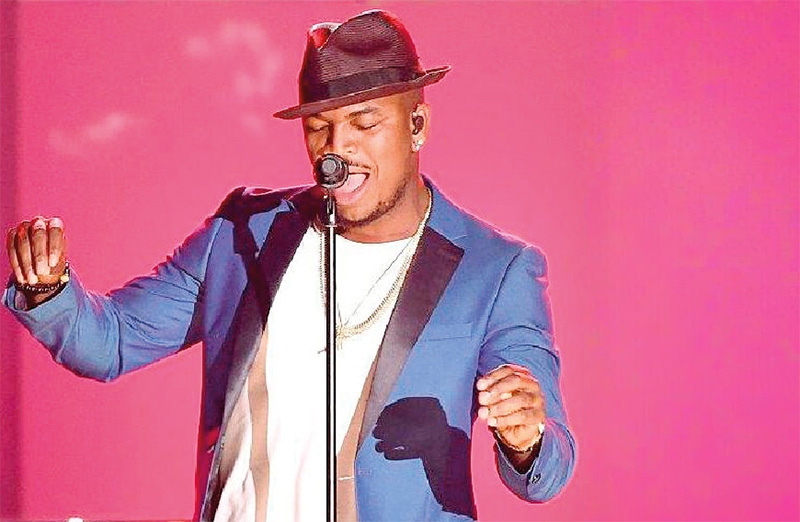
 Superlatives galore were used, especially on social media, to highlight R&B singer Ne-Yo’s trip to Sri Lanka: Global superstar Ne-Yo to perform live in Colombo this December; Ne-Yo concert puts Sri Lanka back on the global entertainment map; A global music sensation is coming to Sri Lanka … and there were lots more!
At an official press conference, held at a five-star venue, in Colombo, it was indicated that the gathering marked a defining moment for Sri Lanka’s entertainment industry as international R&B powerhouse and three-time Grammy Award winner Ne-Yo prepares to take the stage in Colombo this December.
What’s more, the occasion was graced by the presence of Sunil Kumara Gamage, Minister of Sports & Youth Affairs of Sri Lanka, and Professor Ruwan Ranasinghe, Deputy Minister of Tourism, alongside distinguished dignitaries, sponsors, and members of the media.
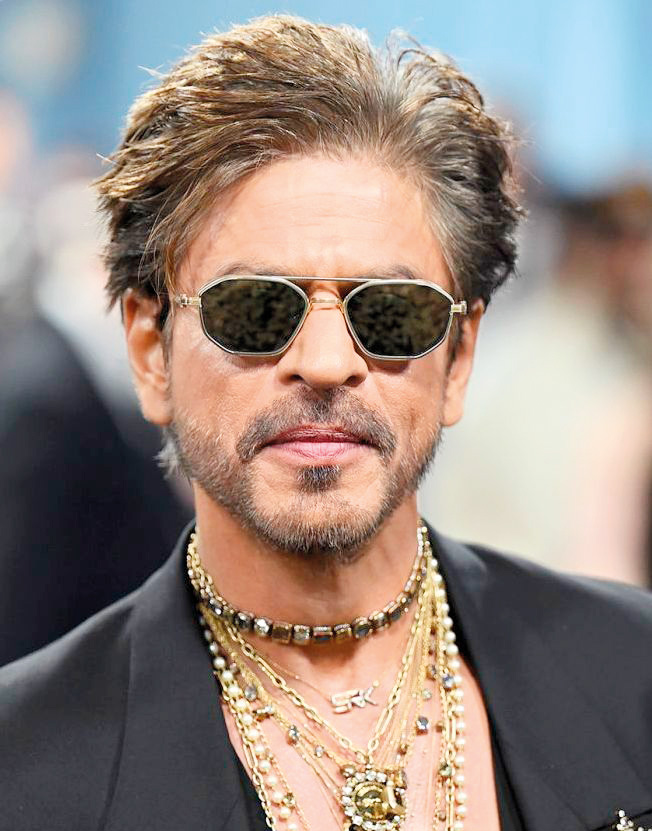
Shah Rukh Khan: Disappointed his fans in Sri Lanka
According to reports, the concert had received the official endorsement of the Sri Lanka Tourism Promotion Bureau, recognising it as a flagship initiative in developing the country’s concert economy by attracting fans, and media, from all over South Asia.
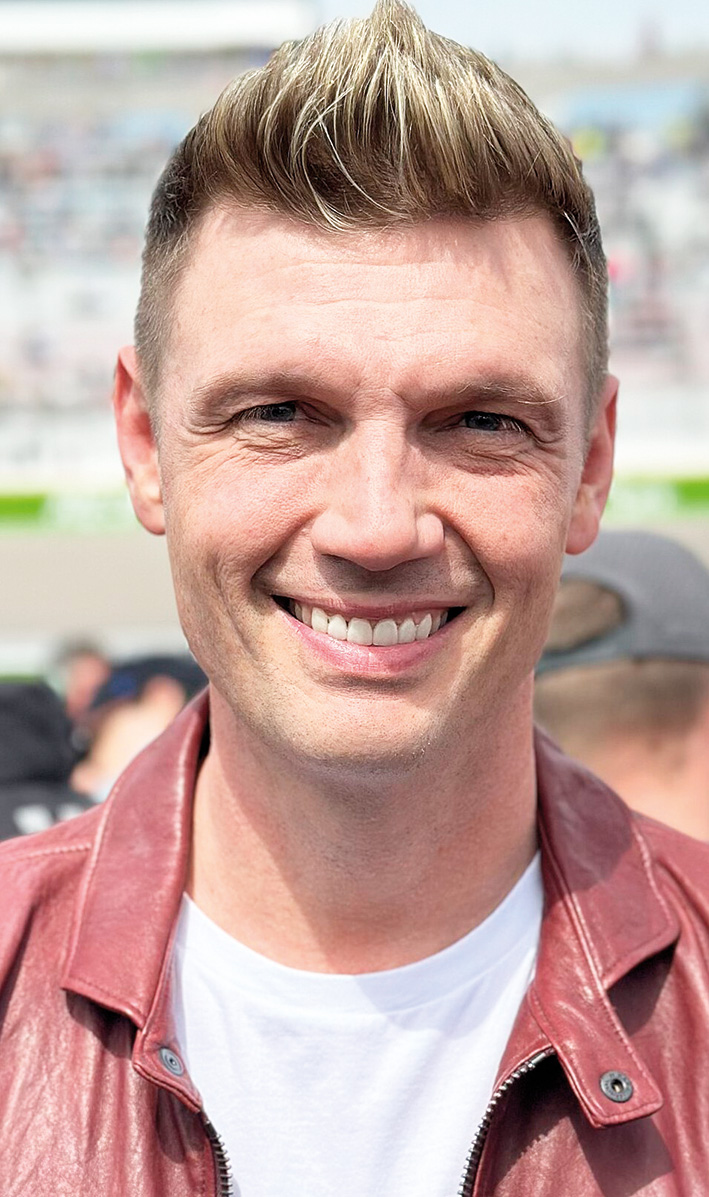
Nick Carter: His concert, too, was cancelled due to “Unforeseen circumstances
However, I had that strange feeling that this concert would not become a reality, keeping in mind what happened to Nick Carter’s Colombo concert – cancelled at the very last moment.
Carter issued a video message announcing he had to return to the USA due to “unforeseen circumstances” and a “family emergency”.
Though “unforeseen circumstances” was the official reason provided by Carter and the local organisers, there was speculation that low ticket sales may also have been a factor in the cancellation.
Well, “Unforeseen Circumstances” has cropped up again!
In a brief statement, via social media, the organisers of the Ne-Yo concert said the decision was taken due to “unforeseen circumstances and factors beyond their control.”
Ne-Yo, too, subsequently made an announcement, citing “Unforeseen circumstances.”
The public has a right to know what these “unforeseen circumstances” are, and who is to be blamed – the organisers or Ne-Yo!
Ne-Yo’s management certainly need to come out with the truth.
However, those who are aware of some of the happenings in the setup here put it down to poor ticket sales, mentioning that the tickets for the concert, and a meet-and-greet event, were exorbitantly high, considering that Ne-Yo is not a current mega star.
We also had a cancellation coming our way from Shah Rukh Khan, who was scheduled to visit Sri Lanka for the City of Dreams resort launch, and then this was received: “Unfortunately due to unforeseen personal reasons beyond his control, Mr. Khan is no longer able to attend.”
Referring to this kind of mess up, a leading showbiz personality said that it will only make people reluctant to buy their tickets, online.
“Tickets will go mostly at the gate and it will be very bad for the industry,” he added.

Zohran Mamdani sworn in as New York City mayor

In pictures: New Year welcomed around the world

Foreign warships commended for their assistance during weather disaster in Sri Lanka

Machu Picchu train crash leaves one dead and dozens injured

I invite you to step into 2026 with renewed energy, hope, and determination – PM

Fairly heavy showers about 75 mm are likely at some places in the Central and Uva provinces and in Batticaloa and Ampara districts

‘Dates have the highest sugar content to fight Coronavirus’

Sunday Island 27 December – Headlines

#SundayIsland 17th December – Headlines

Sunday Island – 28th March

Sunday Island Headlines – 21 March

Sunday Island – 21st February – Headlines
-
 News7 days ago
Street vendors banned from Kandy City
-

 Sports4 days ago
Gurusinha’s Boxing Day hundred celebrated in Melbourne
-

 News7 days ago
Lankan aircrew fly daring UN Medevac in hostile conditions in Africa
-
 News2 days ago
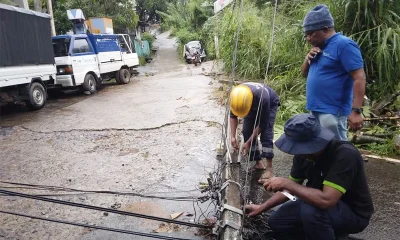
Leading the Nation’s Connectivity Recovery Amid Unprecedented Challenges
-

 Sports5 days ago
Time to close the Dickwella chapter
-

 Features3 days ago
It’s all over for Maxi Rozairo
-

 Features7 days ago
Rethinking post-disaster urban planning: Lessons from Peradeniya
-

 Opinion7 days ago
Are we reading the sky wrong?