
Editorial
Kekilles in overdrive


Saturday 24th September, 2022
Government politicians are behaving as if the media had done something far worse than the economic crimes they and their leaders have perpetrated against the nation. They are tearing into the media outfits that expose the untold suffering their government has inflicted on the public by bankrupting the country. In Parliament, on Thursday, some government worthies were beside themselves with rage over a story that a poor girl had recently brought some coconut kernel to school for lunch, and teachers had provided her with a decent midday meal. They claimed that the media reports at issue were false, and the principal of the school concerned had said no such thing was ever brought to her notice.
Sri Lankans usually do not believe anything that the media says about governments until it is officially denied. They know that the very opposite of what the powers that be make out to be the truth is true.
State employees are scared of politicians in power and do not dare antagonise the latter, as is public knowledge. The aforementioned school is situated in Minuwangoda, which is Minister Prasanna Ranatunga’s constituency. A few months ago, the Colombo High Court sentenced Minister Ranatunga to two years rigorous imprisonment suspended for five years, and fined him Rs. 25 million, in a case where he had been accused of threatening a businessman and demanding money. (He has appealed against the judgement.) The SLPP parliamentary group has an MP, who summoned a female school principal, abused her in raw filth and made her kneel before him when he was a Chief Minister; he was infuriated because she had refused to carry out an illegal order. Subsequently, the victim gave in to political pressure, and the culprits got off scot-free. One may also recall that during the Mahinda Rajapaksa government, a Cabinet minister tied a public official to a tree as ‘punishment’ for being late for a meeting. The victim chose to grin and bear it. This is a country where a culture of impunity prevails; journalists are harassed or even vapourised for telling the truth; political dissent is violently suppressed; the long arm of the law has become a mere appendage of the government in power, and Justitia unashamedly cosies up to ruling party politicians. So, it is only natural that neither teachers nor the Education Department officials have vouched for the veracity of the news reports about the poor girl who had coconut kernel for lunch.
Having ruined the economy and turned the country into a hellhole, the government is in the same predicament as the proverbial cat which eased itself on a rock; it is making a determined yet futile effort to cover up the mess. The ruling party politicians have gone into overdrive to deny reports of their corrupt deals, rampant malnutrition and other such issues. They have even sought to challenge the reports issued by some UN agencies on poverty, food insecurity, hunger and malnutrition. They have insisted in Parliament that the situation here is not as bad as it is made out to be, but everybody knows that their cock-and-bull narratives are based on stories cooked up by a bunch of stooges in the garb of bureaucrats. Now, they have launched a witch-hunt against whistleblowers. The Health Ministry has initiated an inquiry against President of the Public Health Officers’ Association Upul Rohana, who has revealed that a consignment of Thriposha (a supplementary food item given free of charge to lactating mothers and undernourished children) was found to be contaminated with aflatoxin.
The SLPP politicians have overtaken King Kekille, who according to folk stories, always punished the innocent and spared the wrongdoers whenever he heard cases. He once had a goldsmith punished for a structural fault in a newly-built wall around his palace. On being questioned by the king, the bricklayer concerned said he had been distracted by an attractive woman who had been going past the work site several times a day. The woman, summoned to the royal court, said she had been compelled to make many trips to the goldsmith, who had delayed the delivery of her order. So, the king decided to punish the goldworker.The current rulers must be King Kekille’s descendants.


Monday 22nd June, 2026
The JVP-NPP government, like all its predecessors, has got obfuscation down to a fine art. It muddies the water whenever issues concerning fuel prices are raised in Parliament or elsewhere. Its leaders give evasive answers to questions about fuel cost calculations in a way that makes one wonder if they stretch the truth and pluck figures out of the air to support their arguments. Curiously, their claims go unchallenged. The Opposition is apparently at sea; it lacks focus. A wag says it seems to have been affected by Attention Deficit Hyperactivity Disorder.
An Opposition MP has at long last realised the need to challenge the government’s claims about its fuel pricing methodology and pump prices. SLPP National Organiser and MP Namal Rajapaksa has called upon the government to disclose how fuel prices are worked out and make public a full cost breakdown so that consumers will know whether its claim of a fuel subsidy is true or false. This is something the Opposition should have done much earlier. MP Rajapaksa has also asked the government to reduce fuel prices in keeping with world oil price decreases following the signing of an interim peace agreement between the US and Iran.
Interestingly, MP Rajapaksa’s contention is at variance with the position of some Opposition parties which are protesting against a government claim that funding will not be available for “the current fuel subsidy” after June. What one gathers from the aforementioned protests is that a section of the Opposition believes that fuel is actually subsidised and the subsidy must be retained. Given these contradictory claims about the so-called fuel subsidy, what needs to be done is to pressure the government to provide fuel cost breakdowns so that they can be examined independently. Figures given by government politicians apparently do not add up where fuel prices are concerned.
Last month, President Anura Kumara Dissanayake publicly stated that a litre of diesel cost as much as Rs 720 though it was sold at Rs. 392 at that time. (The current diesel price is Rs. 407 a litre.) The President also claimed the government provided a subsidy of Rs. 100 per litre on diesel. Prime Minister Dr. Harini Amarasuriya has recently repeated the President’s claim in a bid to support her argument that it is not possible to reduce local fuel prices immediately in keeping with global oil prices drops. Going by the President’s claim, the Ceylon Petroleum Corporation (CPC) and the private fuel companies suffer huge losses.
The government has chosen to remain silent on taxes and a special loss recovery levy of Rs. 50 on a litre of fuel. There have been attempts to have this levy converted into a cess so that the Treasury can recover it from the private fuel companies as well, but they have been in vain, according to some Opposition politicians. This issue must be raised in Parliament. Will the Opposition officially seek an explanation from the government?
It is believed that the government imposes an unconscionably high price mark-up on fuel to recover losses caused by the extensive use of diesel for producing extra power to compensate for the Norochcholai generation loss caused by substandard coal procured fraudulently. The CPC has admitted that it purchased diesel shipments at prices ranging from USD 281 to USD 303 per barrel at the height of the Iran war to prevent supply disruptions. Perhaps, it would not have been so desperate if there had been no coal procurement racket and the Norochcholai coal-fired power plant had operated at full capacity, producing 900 MW.
It is nothing but fair to demand that the CPC and the Finance Ministry provide accurate cost breakdowns whenever fuel prices are revised so that the public can see whether official figures add up or fuel prices are increased arbitrarily. The incumbent government, which came to power promising to usher in good governance, should uphold transparency in the process of determining fuel prices.
Successive governments have used the cost reflective fuel pricing formula, claiming that it helps determine fuel prices in a rational and fair manner. If so, the question is why they have not cared to make it legally enforceable and ensure transparency and accountability.

Global oil prices are falling thanks to the US-Iran peace deal. No sooner had US President Donald Trump and Iranian President Dr. Masoud Pezeshkian signed a framework for peace than some Opposition politicians in Sri Lanka began demanding fuel price reductions. The JVP-NPP government, which allegedly increased the prices of fuel stocks procured before the eruption of the West Asia conflict, has ignored the demand for fuel price decreases.
The JVP vehemently protested whenever fuel prices were increased during the previous governments, calling for measures, such as the abolition of petroleum taxes to bring fuel prices down. Its leaders even argued that there was no need for a government if local fuel prices were to be increased whenever global oil prices increased. Slashing fuel prices was one of the key election promises of the JVP/NPP. Now, the JVP-NPP government is under pressure to make good on its pledge.
There is much more to the fuel issue than high prices, and what is needed is a dispassionate appraisal of the situation. It is the prices of WTI and Brent benchmark futures that have decreased, and it will take some time for the oil prices to drop at the pump in many countries. Although the Hormuz Strait has been reopened, it will be weeks before international navigation through that chokepoint normalises, stabilising global oil and fertiliser markets.
There is no gainsaying that Sri Lankan consumers deserve relief and fuel prices should be reduced, but prudence demands that politicians stop playing politics with crucial economic issues, and cooperate to resolve them. The focus of the government and the Opposition must be on formulating a strategy to reduce the country’s dependence on fossil fuel, which accounts for about 20% of national import expenditure. Curtailing the national fuel bill is half the battle in easing the country’s chronic balance of payment pressures and shoring up foreign currency reserves. Populist slogans and politically-driven ad hoc remedies will not help resolve the fuel crisis.
A country that does not strategise to achieve energy security cannot achieve economic development; it remains vulnerable to shocks, both internal and external, as evident from Sri Lanka’s experience in 2022, when a foreign currency crisis almost crippled the power and energy sectors, triggering political upheavals. The possibility of the country experiencing a similar situation either under the current dispensation or under a future government cannot be ruled out. It was a close call when the Iran war escalated, with global oil prices soaring, a few weeks ago. The current Opposition ought not to make the mistake of deriving perverse pleasure from the incumbent government’s predicament, making Machiavellian promises and calling for relief measures that are not feasible. The fuel crisis is likely to worsen under a future government, perhaps to the extent of making its leaders head for the hills. Hence, it will be in the best interests of the government, the Opposition and the public for a national action plan to be formulated, with the participation of all stakeholders, to ease the country’s dependence on fuel imports.
What Sri Lanka desperately needs to reduce its fossil fuel dependence significantly is a diversified approach combining renewables, biofuel, electrification and energy efficiency. Some progress has been made in expanding solar and wind power, but much more remains to be done. Renewable energy, which provides a reliable hedge against volatile global fuel prices, should constitute the core of any long-term strategy. Once installed, solar panels and wind turbines produce electricity without requiring imported fuel, but renewable energy technologies involve substantial initial investment and this has stood in the way of the expansion of renewable energy production. The government must secure financing without creating unsustainable debt burdens. International climate funds, concessional loans, and public-private partnerships may help bridge this financing gap, according to renewable energy experts. There are other factors that need to be addressed urgently to ensure energy sustainability. They include grid modernisation and the installation of energy storage systems, promoting energy efficiency in households, industries and public institutions, electrifying transport through promotion of electric vehicles and public transport systems.
It is hoped that the government and the Opposition will stop fighting over fuel prices and address the serious issues that threaten the country’s energy security and economic stability.

Saturday 20th June, 2026
The Commission to Investigate Allegations of Bribery or Corruption (CIABOC) has netted another senior state official. It arrested the General Manager (GM) of Lanka Salt Ltd., Rathnayaka Mudiyanselage Gunaratne yesterday for allegedly having caused a loss of approximately Rs. 14.3 million to the state and provided an undue advantage to a supplier by procuring Laklunu packaging for the Hambantota Salt Company through a re-order process in breach of procurement procedures.
Such action against state officials is certainly welcome, and all those who have enriched themselves through illegal means and/or caused losses to the state must be brought to justice. After all, that is the raison d’etre of the CIABOC.
On Thursday, the Central Crime Investigation Bureau (CCIB) arrested Sugeeshwara Bandara, who served as former President Gotabaya Rajapaksa’s private secretary. The arrest was made in connection with an ongoing investigation into allegations that Bandara drew two salaries from state institutions and thereby misappropriated public funds. Investigations have reportedly revealed that Bandara, while being Rajapaksa’s private secretary, held the position of Project Director at the Presidential Secretariat during the same period. The CCIB made Bandara’s arrest as dramatic as possible, perhaps to send a political message to other Opposition activists. Produced before court, Bandara was remanded.
Investigations should be conducted into alleged offences and credible evidence ascertained before suspects are arrested. Sri Lanka police often do it the other way around; they begin investigations and evidence gathering only after arresting and even detaining suspects. This deplorable practice is not of recent origin. The police acted in a similar manner during previous governments, which were bent on suppressing democratic dissent. The incumbent government came to power, promising a radical departure from that rotten political culture, but there has been no change.
The high-octane performance of the CIABOC and the police is curiously absent in situations where suspects happen to be cronies of the powers that be. How the CIABOC handled former Energy Minister Kumara Jayakody’s corruption case may serve as an example. The police stand accused of trotting out lame excuses for not arresting three JVP stalwarts involved in a forgery case. If they had been Opposition politicians, the CCIB itself would have swooped on them.
According to charges against Jayakody, while serving as the Manager of the Procurement and Import Division of the Ceylon Fertiliser Company, he committed an offence of corruption in 2016. He allegedly caused a loss of Rs. 8,859,708 to the state by influencing a procurement process for the benefit of a private company.
The CIABOC, which goes hell for leather to arrest suspects like Lanka Salt GM Gunaratne baulked at arresting Jayakody and hauling him up before court. Jayakody obtained bail immediately after being indicted.
Is it that all are equal before the law but JVP/NPP members are ‘more equal’ than others? The Opposition insists that no action has been taken regarding its complaints against Jayakody over a fraudulent coal procurement that has caused staggering losses amounting to billions of rupees to the state and led to an increase in diesel imports to operate oil-fired power plants and compensate for the generation loss at Norochcholai. One may recall that former Ministers Nalin Fernando and Mahindananda Aluthgamage have been sentenced to rigorous imprisonment over losses suffered by the state due to irregularities in the procurement of carrom boards and checkers board in the run-up to the 2015 presidential election. Former North Central Province Chief Minister S. M. Ranjith and his secretary have been jailed for a fraud involving a fuel allowance.
It is our fervent hope that the CIABOC will become independent enough to treat members of the government and the Opposition equally.

Largest ever cocaine bust in Australia after police raid underground bunker

Mohamed Salah scores as Egypt beat New Zealand for first World Cup win

Lamine Yamal scores first World Cup goal as Spain thrash Saudi Arabia

Shahidi sanctioned for running on the pitch during Chennai ODI

Kapp’s 81* seals South Africa’s come-from-behind win against India

Belgium see red in goalless World Cup draw with Iran in Los Angeles

‘Dates have the highest sugar content to fight Coronavirus’

Sunday Island 27 December – Headlines

#SundayIsland 17th December – Headlines

Sunday Island – 28th March

Sunday Island Headlines – 21 March

Sunday Island – 21st February – Headlines
-

 News7 days ago
Beijing Capital Airlines to resume flights to Colombo signalling boost to tourism
-
 Features6 days ago
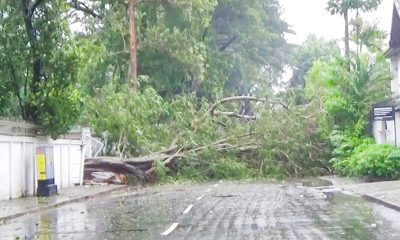
Killing of Colombo’s ancient trees — a warning on UN’s World Desertification Day – 17 June
-

 News4 days ago
Creditor receives USD 2.5 mn as Lankan public bears loss from theft of Treasury funds
-

 News3 days ago
Creditor not yet paid
-
 News3 days ago
Consumers bearing 22% tax burden despite 18% VAT claim: Dr. Harsha de Silva
-
 Opinion5 days ago
Beyond diagnosis: A strategic design for 7% growth by 2029 (Part I)
-

 Opinion7 days ago
Fifty years after Soweto uprising
-
 News6 days ago
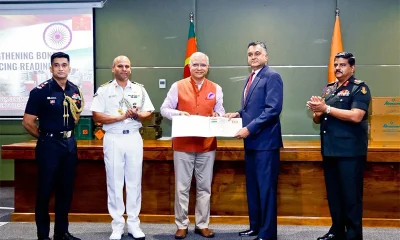
India provides military stores worth USD 5.5 mn to SL