
Business
John Keells Unveils its 687 room luxury hotel, Cinnamon Life at City of Dreams Sri Lanka

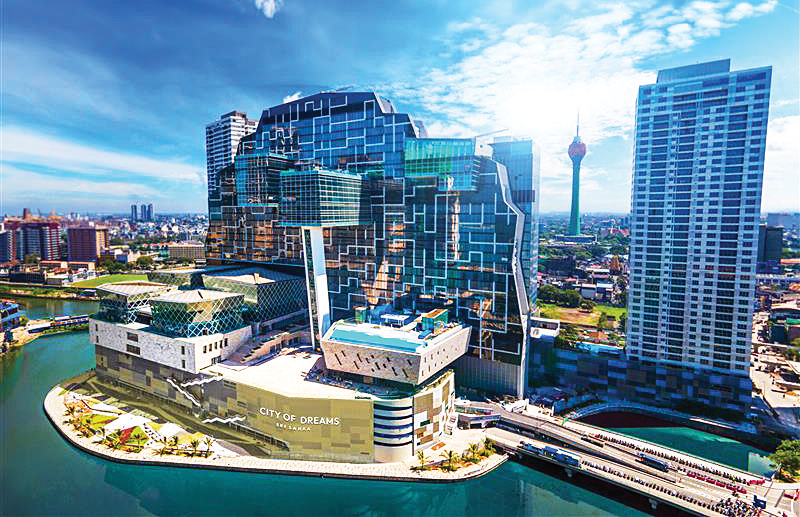
The John Keells Group is set to open doors to Cinnamon Life at City of Dreams Sri Lanka, on 15th October 15, 2024. Developed at an investment of over USD 1.2 billion by the John Keells Group, this is the largest and most ambitious private investment in the country which will redefine our tourism landscape, catering to a diverse clientele creating South Asia’s most dynamic destination for business, leisure, and entertainment.
“Cinnamon Life at City of Dreams Sri Lanka will encompass 687 luxurious rooms, and offers multiple entertainment venues, including ballrooms, high-tech event, and conference facilities, with the capacity to host over 5,000 guests in multiple locations across its various unique spaces. This makes it the largest event venue in Colombo, setting a new standard for gatherings, hosting international conferences and large-scale events, positioning Colombo as a premier destination for global MICE travel.
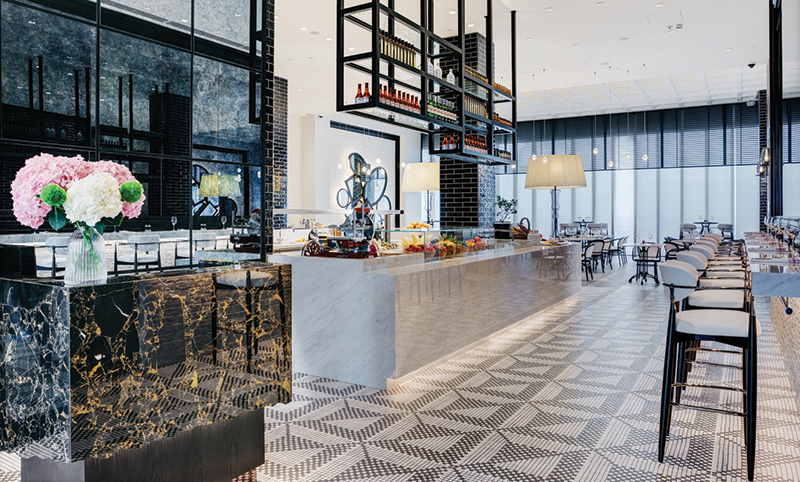
“With a dedicated team of over 1,500 professionals, including 250 chefs, Cinnamon Life promises an extraordinary culinary journey. Guests can enjoy diverse dining options, from a chic French bistro to an American grill, and the most extensive selection of wines at the exclusive wine bar, complemented by a sophisticated two-tier Champagne and cocktail bar. Over the coming few months, Cinnamon Life will continue to elevate its culinary landscape with the opening of more dining experiences. In addition, the resort’s diverse spaces and picturesque settings, make it an ideal location for destination weddings and events right in the City, offering a unique blend of modern elegance and local charm for those seeking unforgettable experiences and celebrations.
“While Cinnamon Life at City of Dreams Sri Lanka opens on October 15, 2024, the shopping mall and entertainment areas, including the gaming facility, and the 113-key ultra-luxury ‘Nuwa’ hotel are scheduled to open in mid-2025, marking the final phase of this landmark project.
Krishan Balendra, Chairperson of the John Keells Group, described the project as transformational for the Group and the country. “‘City of Dreams Sri Lanka’ is an iconic project that was conceived over a decade ago; a one-of-a-kind venture that will undoubtedly convert Colombo into a preferred destination for leisure and entertainment in the region, offering best in-class lifestyle, shopping and entertainment spaces. The Group is confident that the convergence of all elements in the launch of ‘City of Dreams Sri Lanka’ will unlock its full potential as a transformative development in South Asia and be a catalyst in creating tourism demand, foreign exchange earnings for Sri Lanka and generating employment. The ‘City of Dreams Sri Lanka’ project, once all components are in full operations, is expected to generate over 20,000 direct and indirect employment and community engagement opportunities. This landmark development is part of the Group’s broader strategy to position Sri Lanka as a leader in the regional and global marketplace. By pioneering large-scale projects such as Cinnamon Life at City of Dreams Sri Lanka, John Keells reinforces its commitment to fostering sustainable economic growth.1}
Strategically located in the heart of Colombo’s evolving urban core, Cinnamon Life at City of Dreams Sri Lanka houses a living gallery of over 1,000 commissioned, museum-grade artworks crafted by renowned Sri Lankan artists. This collection not only reflects the diversity and depth of Sri Lankan art but serves as a testament to celebrating and preserving artistic heritage in a contemporary setting.
More than just a place to stay, Cinnamon Life at City of Dreams, Sri Lanka, aspires to become Colombo’s pulse, offering a dynamic space for entertainment, art, music, fashion, and culinary exploration. It is set to be a destination where both locals and visitors can experience the finest the city has to offer, with exceptional service as guests are welcomed from the 15th of October onward. (JKH news release)



The Securities and Exchange Commission of Sri Lanka (SEC) successfully hosted a series of high-level meetings of the International Organization of Securities Commissions (IOSCO), bringing together leading securities regulators and enforcement officials from around the world to discuss emerging regulatory challenges, strengthen international cooperation, and enhance collective efforts to combat cross-border securities market misconduct.
The meetings, held at the Hilton Colombo from 13 to 16 October 2026, included sessions of the IOSCO Enforcement and Cooperation Committee and its Screening Group (Committee 4/SG), as well as meetings of the Monitoring Group and the Steering Committee. The event attracted approximately 50 senior representatives from securities regulators and exchanges across several jurisdictions, including Australia, Japan, the United States, the United Kingdom, France, Italy, Canada, New Zealand, India, Germany, Belgium, Singapore, China and Spain, reflecting the global significance of the discussions and the growing importance of international regulatory collaboration.
Welcoming delegates to Sri Lanka, Senior Professor D.B.P.H. Dissabandara, Chairman of the SEC, emphasized the critical role of international cooperation in safeguarding market integrity and investor confidence in an increasingly interconnected financial landscape.
“No regulator can effectively address cross-border misconduct in isolation. The speed with which information, transactions and illicit activities can move across borders requires an equally coordinated and timely regulatory response. Strong international cooperation, effective information sharing and mutual trust among regulators are essential to maintaining fair, transparent and resilient capital markets,” he stated.
The discussions focused on a range of enforcement and cooperation matters, including mechanisms for enhancing cross-border information exchange, strengthening investigative collaboration among regulators, addressing increasingly sophisticated forms of securities fraud and market abuse, and promoting the effective implementation of international standards and best practices. Participants also exchanged experiences and insights on emerging enforcement challenges arising from technological developments, digitalization of financial services, and increasingly interconnected global markets.
IOSCO is recognized as the leading international body that brings together the world’s securities regulators and serves as the global standard setter for securities regulation. Through its policy work and cooperative initiatives, IOSCO plays a central role in promoting investor protection, ensuring that markets are fair, efficient and transparent, reducing systemic risk, and strengthening confidence in capital markets worldwide.
Sri Lanka has maintained a strong and active relationship with IOSCO for more than three decades. The SEC became an Ordinary Member of IOSCO in 1993 and has been a signatory to the IOSCO Multilateral Memorandum of Understanding (MMoU) since 2004. The MMoU is the internationally recognised benchmark for cooperation and information sharing among securities regulators and serves as a critical tool in facilitating cross-border investigations and enforcement actions.

Pan Asia Bank recently entered into a one-year Memorandum of Understanding (MOU) with Ideal Motors (Pvt) Ltd, creating a new financing avenue for customers purchasing vehicles from the authorised Mahindra dealer. The strategic partnership will enable customers of Ideal Motors to access leasing facilities from Pan Asia Bank, making vehicle financing more convenient while supporting their mobility and business requirements. The agreement also provides an opportunity for the Bank to expand its leasing portfolio and strengthen its presence in Sri Lanka’s vehicle financing market.
Ideal Motors is the authorised dealer for the Mahindra vehicle range in Sri Lanka, including the Mahindra Bolero CPU Truck and Scorpio Jeep/Pickup. The vehicles cater to a range of requirements, from commercial and business applications to personal mobility, making accessible financing an important part of the purchasing decision.
The Bank’s vehicle leasing facilities are designed to simplify the financing process, with convenient repayment options and professional support to help customers select a solution suited to their requirements. For customers, the arrangement brings vehicle selection and financing closer together, reducing the need to navigate the two processes separately.
“Our partnership with Ideal Motors enables us to bring financing closer to customers at the point of vehicle purchase. We remain focused on providing convenient and flexible leasing solutions that support both personal mobility and the needs of businesses,” said Naleen Edirisinghe, Director/CEO of Pan Asia Bank.
Pan Asia Bank and Ideal Motors will work closely during the one-year partnership to maximise business opportunities and deliver a seamless financing experience to customers. The collaboration is expected to strengthen both organisations’ ability to respond to demand for commercial and personal vehicles while creating greater value for customers.
Yohan Ebell, Head of Retail Credit, Pan Asia Bank, said: “Through this partnership, we aim to make vehicle financing simpler and more accessible, with leasing solutions designed to meet the varied requirements of Ideal Motors’ customers.”
The collaboration also reflects Pan Asia Bank’s commitment to building partnerships that make financial services more accessible and responsive to the needs of individuals and businesses.
Pan Asia Bank has established a growing presence in vehicle financing, offering leasing solutions designed around customer convenience and flexibility. Its leasing proposition is supported by a nationwide branch network and a customer-focused approach, enabling customers to obtain guidance on financing options while completing their vehicle purchase.

Heritance Hotels and Resorts has secured four distinguished titles at the World Travel Awards 2026, with three national awards recognising its Sri Lankan properties and an international title for Heritance Aarah in the Maldives.
The three Sri Lankan titles recognise Heritance Tea Factory as Sri Lanka’s Leading Heritage Hotel 2026, Heritance Ahungalla as Sri Lanka’s Leading Luxury Hotel 2026, and Heritance Kandalama as Sri Lanka’s Leading Wedding Hotel 2026. Heritance Aarah was named the Indian Ocean’s Leading All-Inclusive Resort 2026.
Internationally recognised within the global travel and tourism industry, the World Travel Awards celebrate excellence across hotels, resorts, and destinations. Recognition at this level affirms the quality, distinctiveness, and consistency of the experiences delivered by Heritance Hotels and Resorts.

Ranawaka accuses govt. of using JVP cadres and police to suppress political opponents

Six killed as speeding bulker crashes into vehicles, shop in Akurana

Prof. Peiris, summoned by CIABOC, appeals for Ven. Gnanasara’s release

Tusker Agbo found safe and in good health

Good intentions, wrong choices for Kirsten

Global regulators convene in Colombo for key IOSCO enforcement and cooperation discussions

‘Dates have the highest sugar content to fight Coronavirus’

Sunday Island 27 December – Headlines

#SundayIsland 17th December – Headlines

Sunday Island – 28th March

Sunday Island Headlines – 21 March

Sunday Island – 21st February – Headlines
-

 Latest News7 days ago
Nissanka’s return headlines Sri Lanka’s Test squad against Pakistan
-

 News6 days ago
Sri Lanka, India caught in US-Iran ship crisis
-

 Features2 days ago
Kotahena:A Small Enclave, An Extraordinary Legacy
-

 Latest News7 days ago
Imran Khan’s PTI braces to fight federal takeover of Khyber Pakhtunkhwa
-

 Latest News6 days ago
Missiles intercepted near Riyadh after Saudi coalition hits Yemen fuel depot
-

 News3 days ago
Asgiri Mahanayake calls for immediate release of Gnanasara Thera
-

 Latest News6 days ago
Kusal Mendis’ unbeaten 87 hands Sri Lanka consolation win
-

 Latest News7 days ago
Former Zimbabwe player and umpire Sarah Dambanevana dies aged 36