
Latest News
IPL 2025: Chennai Super Kings suffer fifth loss on the trot as Kolkata Knight Riders register monster win

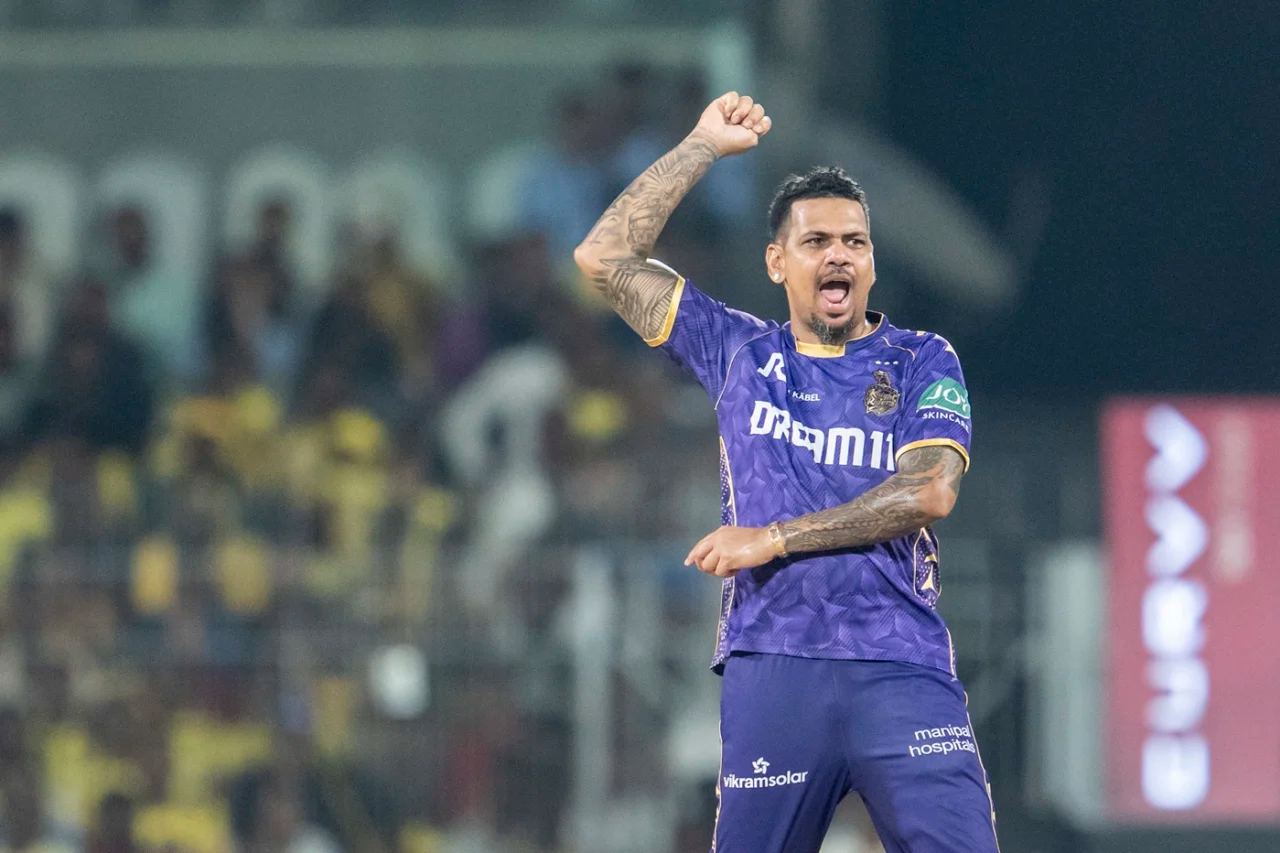
So that’s what happens when Kolkata Knight Riders (KKR) get the kind of pitch their spinners like. Sunil Narine, Varun Chakravarthy and Moeen Ali (12-1-55-6) went into Chepauk and burgled wickets away from the five-time IPL champions until they were a pale, weak shadow of themselves. Chennai Super Kings (CSK) crumbled to 103 for 9, their lowest IPL total at home, suffered a fifth successive defeat, which had never happened before in their entire history, and are marooned in ninth place on the points table. Welcome back to captaincy, MS Dhoni.
The major characteristic of a black-soil pitch is that it is slow and it grips. It felt like home, which is ironic because home hasn’t felt like home for them this season. KKR would prefer to play most of their matches in conditions like this but their efforts to procure them at the Eden Gardens hasn’t gone well. Ajinkya Rahane doesn’t even want to talk about it now. He did, however, spearhead a phenomenal bowling performance. He brought Moeen into the XI and set him loose on CSK’s two left-hand openers. Devon Conway couldn’t overcome the handicap. The KKR offspinner pocketed a wicket maiden. In the next over, Rachin Ravindra was gone. CSK were bleeding by the end of the powerplay, their 31 for 2 only slightly better than the season low of 30 for 3 that they themselves had set, against Royal Challengers Bengaluru.
Exposing this CSK team’s middle order is the only thing their oppositions need to do to win against them. Rahul Tripathi was brought in as Ruturaj Gaikwad’s replacement but he couldn’t figure out whether he wanted to hit out or play through and that indecision was reflected in his final score – 16 off 22. Vijay Shankar could have been dismissed for a duck, or for 20, had KKR held onto their catches. Even with those two lives he couldn’t push on to make a big score. Shivam Dube walked out with CSK at 59 for 3. He had faced only 13 balls and that was still enough time for the score to slip to 75 for 8, at which point his team was in danger of recording their lowest total in IPL history.
For the 16th time in his IPL career, Narine bowled his four overs without conceding a boundary. No one, having got through their full quota, has done it more times. He also knocked off Tripathi, who didn’t know which way the ball would turn, and Ravindra Jadeja and MS Dhoni, who didn’t know which way the ball would spin. There was some doubt over the Dhonii lbw, though. UltraEdge showed what looked like faint murmurs as the ball passed the bat.
CSK were being smothered. They had to wait 63 balls between boundaries – only two teams have ever been that emphatically silenced in this tournament – and hit just three after the eighth over (one of them off a top edge). They had to bring in Deepak Hooda as Impact Player, accepting the risk of going in with a bowler short when they would have to defend this total. But even that gamble backfired. Hooda fell for a duck and one of their key players, Matheesha Pathirana, could not take part in the game.
Defending 103 is a thankless job because bowlers tend to go hard searching for wickets and in that process they leak runs. After under-performing in their batting powerplay, CSK underwhelmed with their bowling powerplay. KKR ransacked 71 runs in the first six overs. This game was no contest.
Brief scores:
Kolkata Knight Riders 107 for 2 in 10.1 overs (Sunil Narine 44, Quinton de Kock 23, Ajinkaya Rahane 20*, Rinku Singh 15*; Anshul Kamboj 1-19, Noor Ahmad 1-08) beat Chennai Super Kings 103 for 9 in 20 overs (Devon Conway 12, Rahul Tripathi 16, Vijay Shankar 29, Shivam Dube 31; Sunil Narine 3-13, Varun Chakravarthy 2-22, Harshit Rana 2-16, Moeen Ali 1-20, Vaibhav Arora 1-31) by eight wickets
[Cricinfo]

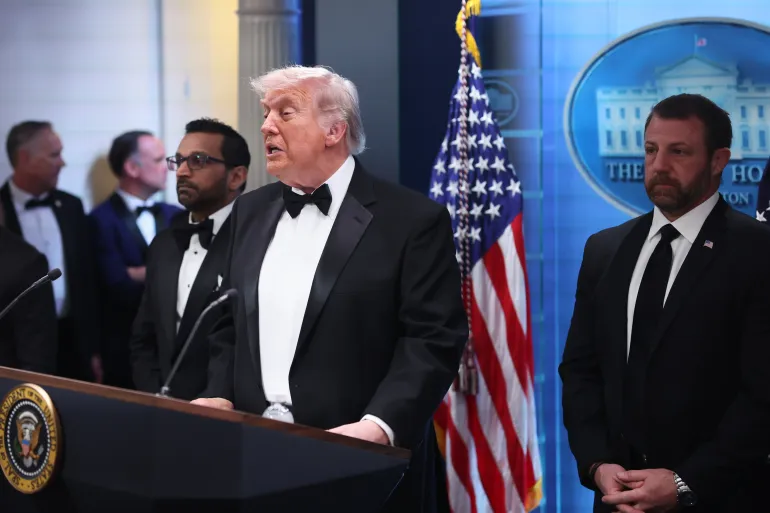
United States President Donald Trump was evacuated from the White House correspondents’ dinner in Washington, DC, after shots were fired outside the event.
Trump was rushed offstage at the Washington Hilton hotel on Saturday evening after gunfire broke out outside the ballroom where the annual media gala was taking place.
The president, First Lady Melania Trump, and Trump’s Cabinet were unharmed in the attack.
In a news conference after the incident, Trump said a man armed with multiple weapons had charged a security checkpoint and was “taken down” by the Secret Service.
Trump described the suspect as a “very sick person” and a “thug” who had attacked the US Constitution.
A Secret Service officer was shot in the attack, but he was saved by his bulletproof vest and was “doing great”, Trump said.
“As you know, this is not the first time in the past couple of years that our republic has been attacked by a would-be assassin who sought to kill,” the president said.
“In light of this evening’s events, I ask that all Americans recommit with their hearts in resolving our differences peacefully,” Trump said.
Asked by a reporter if he believed he was the target of the attack, Trump responded: “I guess”.

The Secret Service said the shooting had occurred at a “screening area” and that one individual was in custody.
“The condition of those involved is not yet known, and law enforcement is actively assessing the situation,” the agency said.
Shortly before his news conference, Trump posted images on Truth Social of the suspect face down on the ground, as well as a clip of a surveillance video showing a man running past security personnel, who then drew their guns and opened fire.
Jeanine Ferris Pirro, the US attorney for the District of Columbia, said the suspect would be charged with using a firearm during a crime or violence and assault on federal officers using a dangerous weapon.
FBI director Kash Patel said officers had begun examining the suspect’s background and urged members of the public with any relevant information to come forward.
“No piece of information is too small; no piece of information is inadequate. We will evaluate it all,” Patel said.
Multiple US media outlets identified the suspect as Cole Tomas Allen, 31, of Torrance, California.
Trump, a ferocious critic of journalists who has sued multiple media outlets, had been due to speak at the annual celebration of press freedom for the first time as president.
Footage from the dinner’s venue showed Trump and other attendees taking cover behind their table after shots rang out, as people yelled “Get down!” and “Stay down!”
Trump was then rushed from the scene as heavily armed members of his security detail swarmed the table.
Al Jazeera producer Chris Sheridan said he heard what he believed to be five gunshots outside the ballroom.
“We could smell the powder. We immediately dove to the ground. It was directly behind me,” Sheridan said.
“I couldn’t tell how many feet away, but it was definitely behind the doors to the entrance to the ballroom.”
Sheridan said that while there was “airport-level” security around the ballroom itself, anyone with a ticket to the dinner could enter the hotel and descend to the lower level where the ballroom is located.
“You could have gotten down to the lower level, the ballroom level, and been outside,” he said.

World leaders including Indian Prime Minister Narendra Modi, Japanese Prime Minister Sanae Takaichi and Mexican President Claudia Sheinbaum condemned the attack and expressed their relief that Trump was unharmed.
“Violence has no place in a democracy and must be unequivocally condemned,” Modi said in a post on X.
Trump has been targeted in multiple assassination attempts, including a near-miss shooting during his 2024 presidential campaign.
Thomas Crooks fired eight shots at Trump during a campaign event in Butler, Pennsylvania, killing one bystander and wounding the then-candidate’s right ear, before he was shot dead by the Secret Service.
“Today, we need levels of security that probably nobody has ever seen before,” Trump said at Saturday’s news conference, before pledging to reschedule the press dinner.
“We’re not going to cancel things out, because we can’t do that,” Trump said.
“We wanted to stay tonight. I will tell you, I fought like hell to stay… But it was protocol. They said, ‘Please, sir.’”
[Aljazeeera]
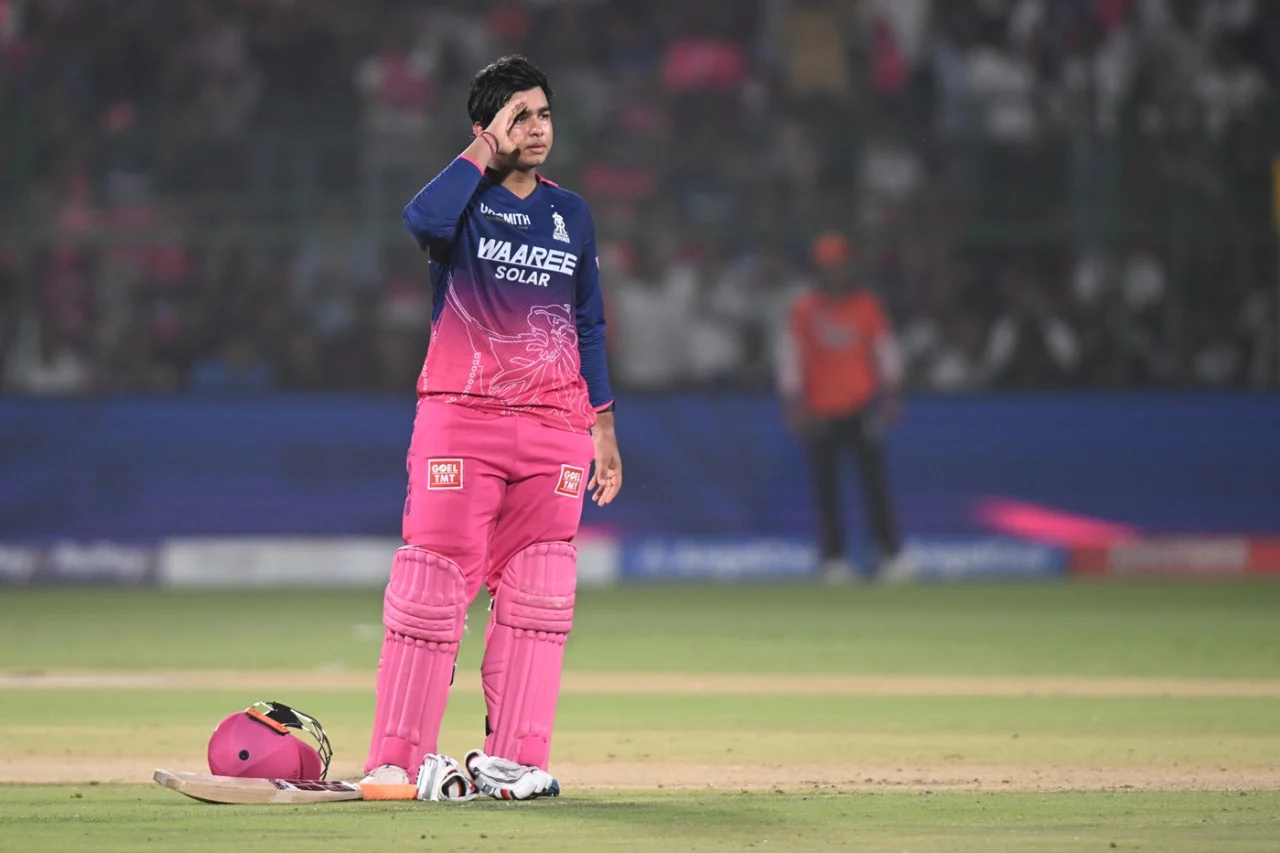
Twelve days after defeating Rajasthan Royals [RR] by nullifying Vaibhav Sooryavanshi, Sunrisers Hyderabad [SRH] defeated them in spite of an astonishing innings from the boy wonder.
Sooryavanshi scored his second IPL hundred, getting there off just 36 balls, and struck a six every third ball before his dismissal. The rest of RR’s batting, however, struggled around him. Sooryavanshi made 103 off 37 balls, and his colleagues and extras combined to score 125 off 83.
It wasn’t clear at the innings break whether 228 for 6 would be enough for RR, on a day when Punjab Kings (PBKS) had broken the T20 record by chasing down 265 with an over to spare. It wasn’t, and this was because SRH were able to fire at both ends where RR only went from one. A red-hot Jofra Archer dismissed Travis Head in the first over, but Abhishek Sharma and Ishan Kishan quickly took over, enjoying their share of luck in a match where the two teams combined to put down seven chances (there had been nine drops in the Delhi Capitals-PBKS game).
Individually, neither Abhishek nor Kishan matched Sooryavanshi for pace of scoring. Together, though, they comfortably outscored Sooryavanshi and Dhruv Jurel, who had put on RR’s biggest partnership – 112 off 62 balls for the second wicket. Abhishek and Kishan put on 132 off just 55, and when Donovan Ferreira broke their partnership, SRH needed just nine an over in the last 10. They got home with an over and a half to spare.
Praful Hinge had made an eye-catching debut in the reverse fixture, taking a match-winning four-for that began with the wicket of Sooryavanshi. On this day, Sooryavanshi had his revenge. He faced five balls of Hinge in the first over of the match, after SRH had chosen to bowl. First a dot – a play and miss. And then 6, 6, 6, 6. Hinge began short and kept getting gradually fuller, and Sooryavanshi put everything away: a pull, a whip over backward square leg, and two clean, flowing hits down the ground.
It took until the last ball of the second over for Sooryavanshi to get on strike again, and now he was facing Pat Cummins – playing his first competitive game since the Adelaide Ashes Test in December – for the first time in his life. Cummins bowled a good short ball, angling across the left-hander and climbing, but Sooryavanshi picked the length in a flash and swatted it for another six, well in front of square. He had faced six balls and hit five sixes.
Sooryavanshi was never going to keep up that rate of scoring, but he didn’t slow down by much at all. He finished the powerplay on 51 off 16, along the way getting to a 15-ball half-century for the third time this season, and getting to 1000 runs in fewer balls than anyone in T20 history. He had also enjoyed one major slice of luck, Aniket Verma putting him down off Eshan Malinga on the leg-side boundary, when he was on 32.
Sooryavanshi kept hitting boundaries at an absurd rate even when the fields spread, showing he could innovate to disrupt bowlers’ plans: a reverse-swat over backward point, for instance, forced left-arm wristspinner Shivang Kumar into a fuller, straighter follow-up that he launched over wide long-on for six.
Another attempt at innovation – he opened up and shaped to reverse-scoop – led to his wicket off a Sakib Hussain yorker in the 14th over, but he had hit his Bihar team-mate for 6, 4, 6 before that to bring up his century. It was only his second-quickest century in the IPL – his maiden hundred, against Gujarat Titans last year, had come off 35 balls.
He now has the second and third quickest centuries in the history of the IPL. He’s only 15.
While the Sooryavanshi whirlwind raged at one end, SRH’s bowlers found life significantly easier at the other. Jurel struggled for fluency early on, and despite a late flurry of boundaries only managed 51 off 35. Riyan Parag, enduring a miserable season, was out for 7 of 9, bowled by a terrific Cummins yorker with late tail.
Cummins and Eshan Malinga used the yorker brilliantly at the back end of the innings, and only Ferreira (33 off 16) managed to break free of SRH’s post-Sooryavanshi shackles.
Archer produced a chance with the first ball of SRH’s innings, his pace, bounce, constricting line, and angle from over the wicket producing a nervy jab and edge from Travis Head. Jurel, diving left, put it down.
There were two plays and misses in the next three balls (one was adjudged wide), and then a bit of width that Head carved for six. But just when Jurel may have wondered how costly his miss would be, Archer bowled another Test-match jaffa, squaring Head up, and this time the edge settled nicely in Jurel’s gloves.
The drama wasn’t done yet; the last ball of the over was a searing bouncer, and Kishan, taking his eyes off the ball while looking to fend it away, edged it for six over fine leg.
That proved to be a bit of a sign in the early exchanges. There was luck early on for Abhishek too; an edge over slip in the second over off Nandre Burger, and two missed chances – one from Shimron Hetmyer who lost the ball in its flight, one from Ravindra Jadeja who put down a sitter – in the fourth and fifth overs.
Either side of those chances, the two left-handers peppered the boundary, particularly by piercing or going over the off-side ring when the bowlers offered width. Some of this was down to mis-executed plans: Tushar Deshpande, for instance, looked to hide the ball away from their hitting arc with protection square and behind square on the off side, but he didn’t quite find the line control on the day.
The presence of two left-handers also meant RR went with the part-time offspin of Parag and Ferreira before either of their frontline spinners. By the time Ravi Bishnoi and Jadeja came on in the 11th and 12th overs, the match was nearly done, and they ended up bowling just an over each. Heinrich Klaasen (29 off 24) and Nitish Kumar Reddy (36 off 18) took SRH to the doorstep of their target before both fell late in the chase.
Brief scores:
Sunrisers Hyderabad 229 for 5 in 18.3 overs (Abhishek Sharma 57, Ishan Kishan 74, Heinrich Klassen 29, Nitish Kumar Reddy 36; Jofra Archer 2-34, Brijesh Sharma 2-44,Donovan Ferreira 1-14) beat Rajasthan Royals 228 for 6 in 20 overs (Yashasvi Jaiswal 10, Vaibhav Sooryavanshi 103, Dhruv Jurel 51, Donovan Ferreira 33, Shimron Hetmyer 11; Praful Hinge 1-49, Pat Cummins 1-27, Eshan Malinga 2-38, Sakib Hussain 1-62, Nitish Kumar Reddy 1-20) by five wickets
[Cricinfo]
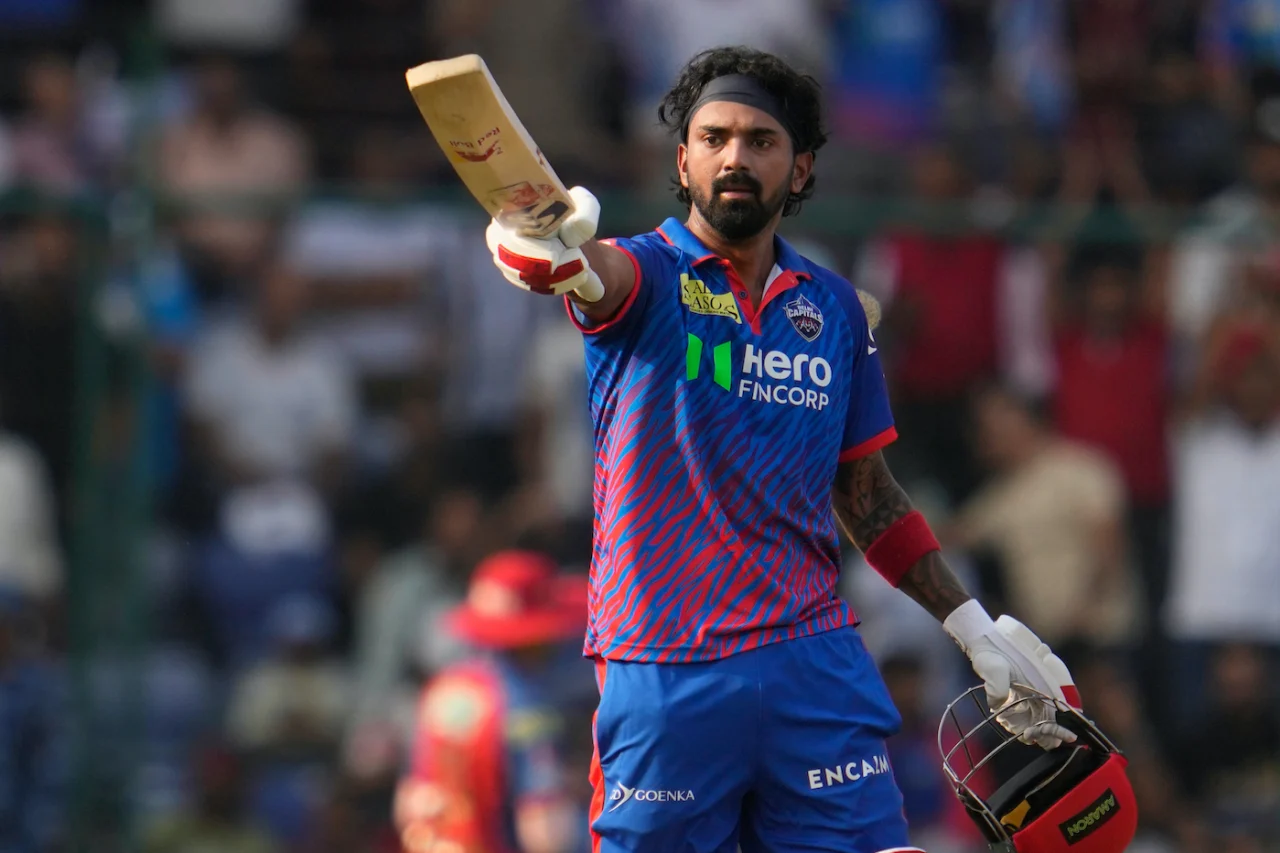
Punjab Kings (PBKS) overpowered Delhi Capitals (DC) and pulled off the highest successful T20 chase in an IPL bash where 265 met 264. They mowed down the target with six wickets and seven balls to spare. The opening blitz from Priyansh Arya and Prabhsimran Singh – they hit 116 together in the powerplay – and captain Shreyas Iyer’s chancy yet composed 71 not out off 36 balls upstaged KL Rahukl’s unbeaten 152 off 67 balls on a flat Delhi pitch.
Before the start of the chase, ESPNcricinfo’s Forecaster had PBKS’ win probability pegged at 14.83%. It zoomed up to 65.35% after Arya and Prabhsimran went on a ruthless boundary-hitting spree in the powerplay. Both openers fell in successive overs to spin, but Shreyas then took charge of the chase and increased that count to 100%.
Rahul’s knock could’ve been cut short on 12 had Shashank Singh not dropped a regulation catch at deep square leg. Shashank lost his shape and ended up knocking the ball away to the boundary. After dropping at least three chances in their previous game against Lucknow Super Giants (LSG), Shashank spilled another chance on Saturday, leaving coach Ricky Ponting upset in the dugout.
Shashank fumbled again in the fifth over of the powerplay, running to his right from sweeper cover and letting the ball roll into the boundary. By the time the powerplay ended, DC ran away to 68 for 1, their highest powerplay score this season.
Rahul was responsible for 35 of those from 16 balls, having repeatedly hit the ball over the top. Rana was also quick off the blocks, moving to 22 off 13 balls. Prabhsimran and Arya later made those powerplay scores look pedestrian.
In the past, Rahul often slowed down after the powerplay, but on Saturday, he didn’t allow the momentum to let up. He step-hit Yuzvendra Chahal for six over long-on in the seventh over and proceeded to step out of his crease and pick the legspinner away for back-to-back fours in the 11th over. By then, Rahul had already raised his half-century off 26 balls. He got another life on 51 when he popped up a return catch, but Vijaykumar Vyshak couldn’t hold onto it.
Rahul went on to bring up his fastest IPL century, off 47 balls. He reached the landmark with a drilled drive down the ground off Marco Jansen in the 15th over. He celebrated by crossing his arms in the form of an ‘X’ and had more than 28,000 fans at the Arun Jaitley Stadium celebrating with him.
At the other end, Nitish Rana looked set to bring up a hundred of his own until Xavier Bartlett had him caught by Shreyas at mid-off for 91 off 44 balls to snap a 220-run stand – the highest for DC. In the 11 balls prior to his dismissal, Rana had cracked 44 off the Australia quick, including a sequence of 6,4,4,4,4,6 in the 12th over that cost PBKS 28 runs.
Rana wasn’t as fluent against Chahal, but Rahul had made up for it at the other end. Rahul went from 100 to 150 in just 19 balls. He got there with a superbly controlled upper cut off a lifter from Arshdeep Singh on the penultimate ball of the innings.
Rahul became the first Indian to score 150 or more in the IPL and third overall behind only Chris Gayle’s 175* against Pune Warriors India (PWI) in 2013 and Brendon McCullum’s 158* against Royal Challengers Bangalore (RCB) in 2008. He batted through 20 overs and vaulted DC to their highest total. At the innings break, Rahul was so knackered that he was panting for breath through his interview on a 41-degree day in Delhi.
Prabhsimran and Delhi boy, Arya, then left the crowd breathless in the chase with their unfettered assault in the powerplay. It began with Arya pumping a fairly blameless length delivery on off from Auqib Nabi over midwidcket for six and ended with four by Prabhsimran, which propelled PBKS to 116 for 0 in six overs. It was the second-highest powerplay score in the history of the IPL, falling nine short of levelling the record set by Sunrisers Hyderabad (SRH) against DC at this very venue in 2024.
PBKS had passed fifty in the third over when Arya crunched Axar Patel for six and then Prabhsimran muscled them past hundred in the final over of the powerplay with an over full of fours against seamer Mukesh Kumar.
DC clawed back into the contest when their spinners Axar and Kuldeep Yadav dismissed PBKS’ openers in the seventh and eighth overs. Kuldeep struck again in the tenth over when he stormed through Cooper Connolly’s defences with a zippy wrong’un, leaving PBKS at 145 for 3 in the tenth over. Shreyas then managed the chase so well that PBKS ended up winning with more than an over to spare.
Shreyas got cracking when he pumped legspinner Vipraj Nigam into the sight screen in the 11th over. Nigam had come into the DC side as a concussion sub for Lungi Ngidi, who was taken to the hospital in an ambulance after suffering a blow to his head while attempting a catch off Arya at mid-off. Nigam created a chance to dismiss Shreyas on 28, but Karun Nair, who came in as a fielding sub, dropped a sitter at long-off in the 15th over. Two balls later, Nair dropped Shreyas once again, this time at long-on off Kuldeep.
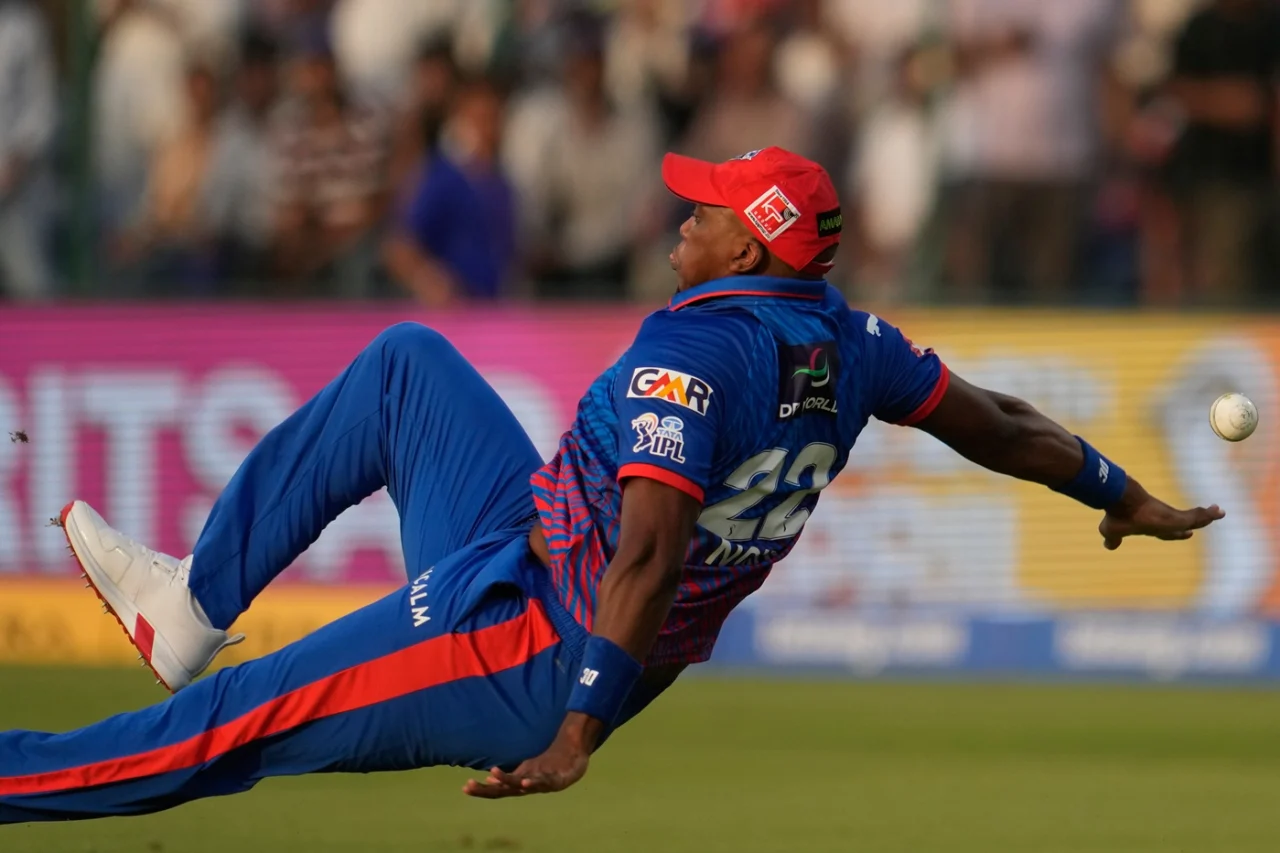
Lungi Ngidi banged his head on the ground while he looked to take a catch [Cricinfo]
Shreyas went 4,6,6 off the next three legal balls to tilt the game PBKS’ way. The second six over long-on brought Shreyas a half-century off 26 balls. He also lined up T Natarajan for a brace of sixes to rush PBKS home along with Shashank.
Brief scores:
Punjab Kings 265 for 4 in 18.5 overs (Priyansh Arya 43, Prabhsimran Singh 76, Cooper Connolly 17, Shreyas Iyer 71*, Nehal Wadhera 25, Shashank Singh 19*; Axar Patel 1-44, Kuldeep Yadav 2-46, Vipraj Nigam 1-24) beat Delhi Capitals 264 for 2 in 20 overs (Pathum Nissanka 11, KL Rahul 152*, Nitish Rana, 91; Arshdeep 1-49, Xavier Bartlett 1-69) by six wickets

Russian circumnavigation team arrive in Sri Lanka

Trump unhurt after shots fired at White House correspondents’ dinner

Sooryavanshi ton in vain as Sunrisers Hyderabad raze a 229 chase

Prabhsimran, Shreyas upstage Rahul’s 152* to mow down record T20 chase

Showers expected in the Western, Sabaragamuwa and North-western provinces and in Galle, Matara, Kandy and Nuwara-Eliya districts after 2.00 pm.

Heat Index at Caution Level in the Northern, North-central, North-western, Western, Sabaragamuwa, Southern, and Eastern provinces and in Monaragala district during the day time

‘Dates have the highest sugar content to fight Coronavirus’

Sunday Island 27 December – Headlines

#SundayIsland 17th December – Headlines

Sunday Island – 28th March

Sunday Island Headlines – 21 March

Sunday Island – 21st February – Headlines
-

 News6 days ago
Rs 13 bn NDB fraud: Int’l forensic audit ordered
-

 News4 days ago
Lanka faces crisis of conscience over fate of animals: Call for compassion, law reform, and ethical responsibility
-

 Opinion7 days ago
Shutting roof top solar panels – a crime
-
 News3 days ago
Whistleblowers ask Treasury Chief to resign over theft of USD 2.5 mn
-

 News3 days ago
No cyber hack: Fintech expert exposes shocking legacy flaws that led to $2.5 million theft
-

 News7 days ago
Church calls for Deputy Defence Minister’s removal, establishment of Independent Prosecutor’s Office
-

 News4 days ago
USD 2 mn bribe: CID ordered to arrest Shasheendra R, warrant issued against ex-SriLankan CEO’s wife
-

 Features7 days ago
The Digital Pulse: How AI is redefining health care in Sri Lanka?