
Latest News
Injury-hit New Zealand eye revenge as Afghanistan look to run it back

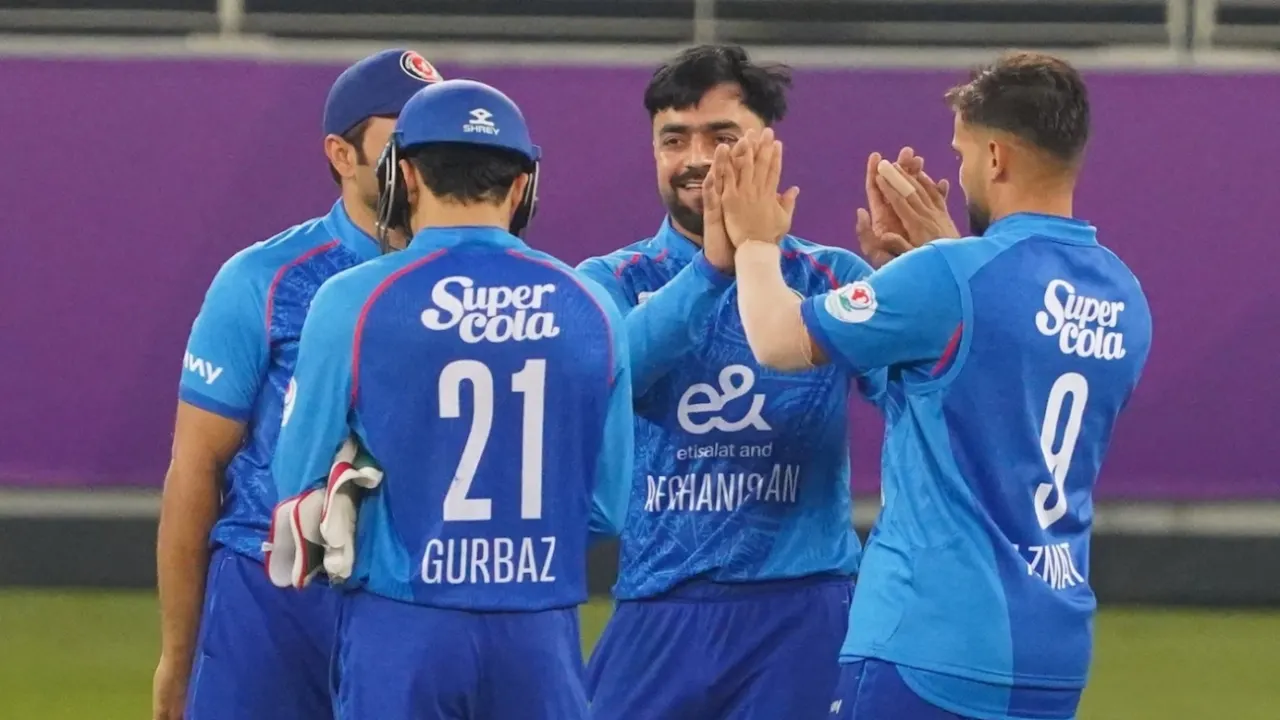
Afghanistan vs New Zealand in the early stages of a T20 World Cup. Sounds familiar? The memories of their clash in 2024 will be very pleasant or downright horrific depending on who you support. It proved a pivotal result with the teams going in vastly opposite directions after Afghanistan’s stunning 84-run hammering in Guyana.
It kick-started Afghanistan’s fairytale semi-final run, fuelling an outpouring of revelry in the streets back home. For New Zealand, it was effectively the beginning of the end as they flamed out in a rare early exit at a global tournament.
The teams have not played in any format since, creating even more anticipation for a rematch with big stakes. Group D is considered the ‘group of death’ with South Africa also in its ranks, amplifying the importance of this match for teams considered dark horses in the tournament.
New Zealand will be keen to banish the demons, but enter with plenty of question marks following a 4-1 series pummelling to India ahead of the World Cup. Of most concern, injury and illness have swept the squad and a strong start to the tournament could prove difficult.
But New Zealand should be at least familiar with the conditions, with some players having been in India for about a month. They should be match-hardened, and there will be confidence that the team can build through the tournament if they can weather this early storm.
They will need to muster one of their famed backs against the wall efforts, although there is no shortage of talent with New Zealand boasting a powerful batting order and several speedsters threatening to do damage if conditions are conducive.
Given the uncertainties over New Zealand, Afghanistan might just enter the match as favourites as they eye a strong start to a campaign they hope will go even further than their 2024 breakout.
Afghanistan will arrive confident having won six straight matches in the format before a 15-run defeat to West Indies in their series finale in Dubai last month.
They will unleash a formidable spin-heavy attack that should relish favourable conditions. While other Asian countries are hogging the spotlight, for various reasons, Afghanistan will go in under the radar but internally there should be optimism that they can inflict damage on high-profile opponents.
New Zealand Cricket has taken a pragmatic approach to the proliferation of T20 leagues by allowing players to take up casual agreements to have flexibility with their international commitments. Finn Allen has been one to take up the offer and it meant he missed most of the white-ball tour against India due to the BBL. But he has stated a strong desire to keep playing international cricket, music to the ears of New Zealand’s hierarchy. He clubbed 80 off 38 balls in his return in the fifth T20I in his first international match in 10 months. After a long layoff last year due to a foot injury, Allen ignited title-winners Perth Scorchers and he rewrote the six-hitting records during his destructive rampage. Such is the brutality, he even sometimes made opening partner Mitchell Marsh look relatively sedate by comparison. If he continues his heater – there is some doubt over his fitness for the opener – then New Zealand will get off to flyers.
Rashid Khan, obviously, is Afghanistan’s talisman and looms large over their campaign. There isn’t much more that can be said about the leggie who has taken the most wickets in T20I history with an economy of just six. The burden on his shoulders is even greater these days with the captaincy responsibilities but he should absolutely relish the likely drier surfaces. Rashid, of course, was at the heart of Afghanistan’s famous victory over New Zealand at the last T20 World Cup with a mesmerising 4 for17 from four overs and he’ll fancy something similar here.
New Zealand enter the tournament in disarray as they battle injury and illness. Batters Rachin Ravindra and Devon Conway have been struck down with illness, while Allen is nursing a shoulder injury he sustained against India. Allrounder Michael Bracewell and fast bowler Lockie Ferguson have been dealing with calf issues. There is optimism from the New Zealand camp that they will have a near full-strength squad to choose from although Ravindra appears unlikely to recover in time.
New Zealand XI (Probable): Finn Allen, Tim Seifert (wk), Rachin Ravindra/Devon Conway, Glenn Phillips, Daryl Mitchell, Mark Chapman, Michael Bracewell, Mitchell Santner (capt), Lockie Ferguson, Matt Henry Ish Sodhi
Unlike New Zealand, Afghanistan have few concerns and should field a full-strength line-up which includes their favoured spin-heavy attack.
Afghanistan XI (Probable): Rahmanullah Gurbaz (wk), Ibrahim Zadran, Sediqullah Atal, Darwish Rasooli, Mohammad Nabi, Gulbadin Naib, Azmatullah Omarzai, Rashid Khan (capt), Mujeeb Ur Rahman, Fazalhaq Farooqi, Noor Ahmad
[Cricinfo]

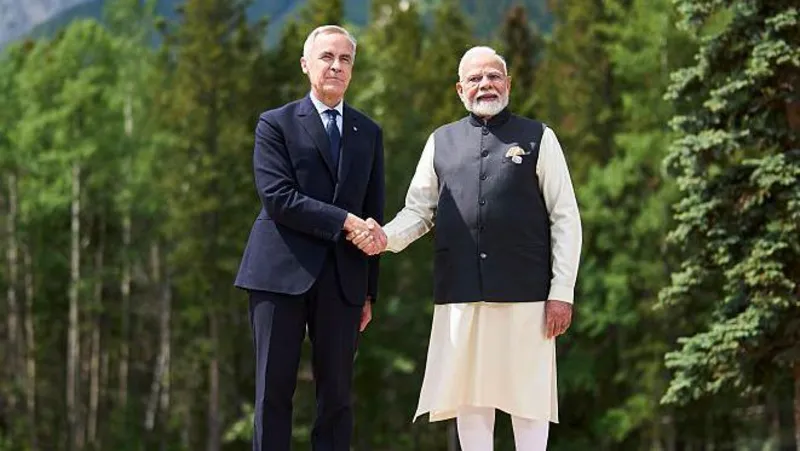
Canadian Prime Minister Mark Carney is in India for a pivotal trip aimed at repairing ties with the world’s largest democracy, as both countries seek to reduce their trade reliance on the US.
Carney began his visit in Mumbai, where he is meeting with business leaders. He will then travel to New Delhi for talks with Prime Minister Narendra Modi.
The trip marks a remarkable turnaround in relations, which had collapsed when Canada accused India of carrying out an extrajudicial killing of a Canadian Sikh separatist on Canadian soil — an allegation India strongly denied.
Both sides now appear ready to move forward.
Here’s what has changed, and what each country hopes to gain as Carney’s trip gets underway.
For Carney, this trip is strictly business, aligned with his broader goal of diversifying Canada’s trade partners to reduce economic dependence on the US.
A big focus will be making progress on a comprehensive free trade agreement with India, which has been discussed on-and-off for the last 15 years.
The latest derailment in trade talks occurred after former Prime Minister Justin Trudeau made a bombshell public accusation against India in 2023, alleging it was involved in the killing of Hardeep Singh Nijjar, a Sikh separatist, who was gunned down in British Columbia. Four men were later charged in his death, and their case is still before the courts.
India has repeatedly denied any involvement.
Now faced with US tariffs, and under Carney’s more “pragmatic” approach to foreign policy, Ottawa is repairing ties with Delhi.
Still, the allegations remain a point of contention for some members of Canada’s Sikh community, who say they continue to be targeted by India through transnational repression, and have criticised Carney for prioritising economic interests over their safety.
It is a situation that will require “delicate handling”, Vina Nadjibulla, vice-president of the Asia Pacific Foundation of Canada, told the BBC.
Asked repeatedly about these concerns, Canadian officials told reporters ahead of Carney’s trip that the two countries are engaged in “robust” discussions on national security and foreign interference.
They added that Canada does not believe the Indian government is currently linked to any violent crimes or threats on Canadian soil, and that they “probably would not be taking this trip” if that were the case.
Not everyone is convinced. Sukh Dhaliwal, an MP from Carney’s Liberal party, told Canadian media that the claim of India no longer being a threat is “disconnected from the reality”.
Canada has made several diplomatic overtures to India since Carney took office last year, beginning with inviting Modi to the G7 summit in Kananaskis, Alberta last summer.
That was followed by a series of meetings between Foreign Minister Anita Anand and her Indian counterpart, S Jaishankar, as well as a visit to Ottawa last month by India’s national security advisor, Ajit Doval.
Carney’s itinerary in India offers some insight into his priorities.
He will stop only in Mumbai, India’s financial hub, to meet with business leaders, and New Delhi, where he will sit down with Prime Minister Modi on Monday.
Unlike Trudeau, Carney will not be visiting cultural sites like the Taj Mahal. Nor will he travel to Punjab, the home state of many of India’s Sikhs, which was a stop for both Trudeau and another former prime minister, Stephen Harper.
Those stops were often seen as nods to Canada’s large Indo-Canadian and Sikh communities. Their omission signals that, this time, Canada’s focus is squarely on trade.
On the agenda will be discussions around energy, technology, artificial intelligence and defence, Carney’s office has said, as well as attracting top talent to Canada.
Carney and Modi are also likely to discuss tariff policies enacted by President Donald Trump, which have had an impact on both their economies.
Heading into the trip, Canada remains the only G7 country that has not reached a preferential trade agreement with India. Nadjibulla of the Asia Pacific Foundation of Canada said that fact “adds urgency” for Carney.
“There is a window of opportunity, and it needs to be seized,” Nadjibulla said.
It was in 2024, not too long ago, that both countries were openly trading barbs, suspending visa services and expelling diplomats.
But a lot has changed since then.
India is now more open for business, which is evident from a flurry of free trade deals that it has signed recently.
Then there is Trump, who has targeted both India and Canada with steep tariffs.
In Carney’s own words, the world is “in the midst of a rupture, not a transition” and “if you are not at the table, you are on the menu”.
For India’s Prime Minister Modi, a reset with Canada is a win-win situation.
Domestically, the visit will boost Modi’s image as a leader who refused to come under pressure from Canada.
Ottawa has already said it believes India is not currently linked to violent crimes or threats on Canadian soil.
But more broadly, it is the trade potential between the two countries that will drive the outcome of this visit.
[BBC]

Pakistan’s habitual desperate net-run-rate calculations towards the tail-end of a group stage have thrown up another classic. In what is a dead-rubber for already-eliminated hosts Sri Lanka, Pakistan have been given a faint shot at staying alive in the T20 World Cup, thanks to a surprise comeback win for England over New Zealand. New Zealand boast a vastly superior net run rate (1.390) to Pakistan’s (-0.461), so for Salman Agha’s men to progress to the semi-finals, they must win today [Saturday] by around 64 runs, or chase any Sri Lankan target in about 13.1 overs. Those, for Pakistan, are the only numbers that matter in Pallekele.
That should, in theory, change the somewhat conservative approach they have taken through the middle overs. Frankly put, Babar Azam’s place in this T20I set-up was getting hard enough to argue for in regular T20I circumstances, but within these constraints is borderline unjustifiable. He, however, is not the only player whose strike-rate ceiling is limited, with captain Salman Agha similarly struggling this tournament, and indeed over the broader span of his T20I career.
However, Pakistan are yet to show any evidence of an ability to rack up a win of that sort of scale at this tournament so far. Indeed, Pakistan have never won by that margin against a Full Member at a T20 World Cup when batting first, and only once – in 2009 – when chasing. The slower surfaces of Sri Lanka compared to the flatter pitches in India make a path to such a victory more complicated, as does a Pakistani middle order that doesn’t boast elite power hitting, and Saim Ayub’s faltering form. But it’s a chance nonetheless, and at ICC events, sometimes that’s all Pakistan ask for.
There’s little other than pride at stake for Sri Lanka, whose tournament started with such promise, only to peak and fall away after a glorious win over Australia. They have lost their last three matches, and were the first side to be knocked out in the Super Eight. Pakistan’s qualification scenarios mean little to them, and they’ll want to demonstrate they are more than foil for Pakistani glory, or a roadblock to their progression.
The story, though, is of what Pakistan can possibly achieve, and whether they can thwart New Zealand’s progress to yet another ICC tournament semi-final.
A lot of Sri Lankan players will invariably be moved on after this T20 World Cup, but one who is set to form the core of the side for the next generation is Dunith Wellalage. The 23-year old left arm spinner’s competitive attitude makes him one of a short list of Sri Lankan players to have come out of this tournament with his reputation bolstered, and he has an ever-improving skill-set to go with it. He is yet to play a T20I against Pakistan, having missed their Asia Cup clash, flying home for a family bereavement. But with a surfeit of right-hand batters in Pakistan’s top order, he could find himself deployed early on as he was against New Zealand, perhaps to nip Sahibzada Farhan in the bud at the outset.
Salman Agha should perhaps be under more scrutiny than he is, having endured an indifferent tournament with the bat and an uninspiring one as captain. The questions swirling around his fitness for the format will only intensify after he let games drift with the ball against India and England, while his attempted aggression with the bat at No. 3 continues to feel feigned rather than organic. He has scored 60 runs in five innings at this tournament, 38 in one innings against Namibia. If Pakistan exit tamely, it is hard to envision him hanging on to the armband, and perhaps even his role in the side. However, Saturday perhaps represents one final chance for him to take control of his destiny.
Sri Lanka faced plenty of criticism for their meek capitulation against New Zealand, but as the tournament closes out, wholesale changes are not likely. Kusal Mendis suffered hamstring stiffness against New Zealand and is unlikely to play, with Kamil Mishara returning as wicketkeeper-batter.
Sri Lanka (probable): Pathum Nissanka, Kamil Mishara (wk), Charith Asalanka, Pavan Rathnayake, Kamindu Mendis, Dasun Shanaka (capt), Dushan Hemantha, Dunith Wellalage, Dushmantha Chameera, Maheesh Theekshana, Dilshan Madushanka
Shaheen Afridi’s performance against England makes it likely he will keep his spot. If Pakistan are to stick to two specialist seamers on this surface, it makes it a straight shootout between Naseem Shah and Salman Mirza. What’s less certain is how the equation changes Pakistan’s batting line-up. So far, they have been reluctant to drop Babar Azam, or play Khawaja Nafay. Any caution needs to go out of the window as they battle to stay alive.
Pakistan (probable): Sahibzada Farhan, Saim Ayub, Salman Agha (capt), Babar Azam/Khawaja Nafay, Fakhar Zaman, Shadab Khan, Usman Khan (wk), Mohammad Nawaz/Faheem Ashraf, Shaheen Afridi, Salman Mirza/Naseem Shah, Usman Tariq
[Cricinfo]
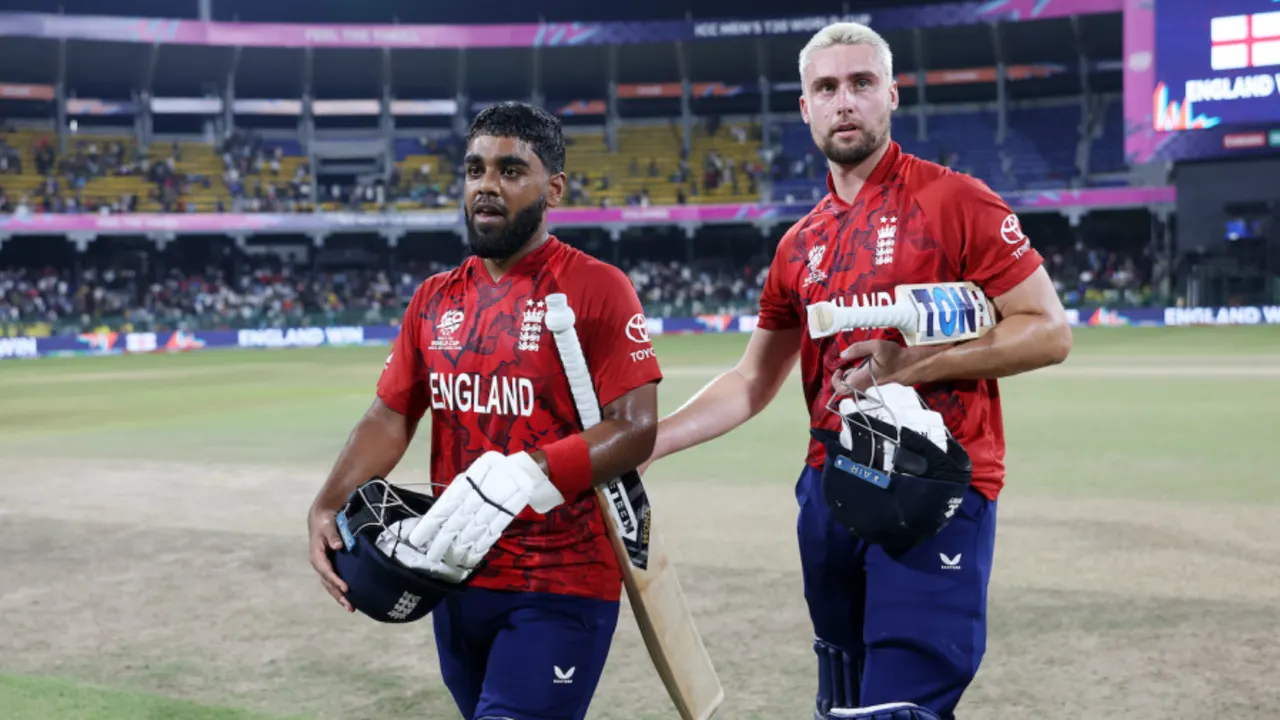
Will Jacks rode the confidence he has gleaned from a breakthrough global tournament, while Rehan Ahmed landed feet-first in the competition with a crucial display of youthful bravado, as England found the gumption to outmuscle New Zealand in a gripping, spin-dominant encounter in Colombo, to march into the semi-finals with their first real statement win of the campaign.
It was a dead rubber from England’s perspective, but it was anything but for New Zealand. They remain odds-on to reach the last four unless Pakistan can pull off a massive win over Sri Lanka in their own group finale on Saturday night. But this was their chance to progress on their own terms, and when England had slumped to 117 for 6 at the end of the 17th over, with Jos Buttler’s crisis tournament hitting a new nadir, a target of 43 from 18 seemed outlandish to say the least.
The winning boundary came via Jacks’ grille with three balls to spare, and was greeted with a shrug of the shoulders as he prepared to claim his fourth Match award of the campaign, but the decisive onslaught had come two overs earlier, in Glenn Phillips’ fourth and final burst of a compelling all-round game.
Phillips had previously chipped in with the day’s most imposing knock, 39 from 28 in New Zealand’s hard-grafting innings of 159 for 7, and if his first-ball dismissal of a rampant Harry Brook hadn’t been the decisive blow of the chase, then his stunning diving catch at deep midwicket off Jacob Bethell, to leave England 58 for 4 in the ninth over, seemed to have wrecked any remaining hopes.
But, after Tom Banton’s 33 from 24 had kept England afloat through the middle overs, Jacks and Rehan combined to rampage through the finish line. Rehan, making his tournament debut in place of Jamie Overton, crashed Phillips over long-on for six before Jacks launched him over midwicket, then closed out a 22-run over with back-to-back fours.
Rehan then greeted Mitchell Santner, hitherto so frugal for New Zealand, with an exceptional reverse-sweep for four more, and when he charged down the track to his final ball with a gung-ho swing for a second six over long-off, the requirement had been obliterated to five from the final six.
England’s latest power failure
The winning hit came off Matt Henry, in his final involvement before flying home for paternity leave, and what a hole he will leave at the top of New Zealand’s bowling card. He has spent the past few winters making mincemeat of Zak Crawley’s figures across formats, and today he scarcely needed to deviate from his tried-and-tested to leave England’s run-chase in the mire.
Phil Salt had no answer to Henry’s each-way movement from a full, zippy length: a big first-ball inducker induced the nervy poke that got him off the mark through deep third, and set up the knockout punch. A wonderful bat’s-width seamer, shaping in on off and zipping away, to snick the edge through to Seifert.
Salt had been one half of England’s proudest asset coming into this tournament. Buttler had been the other, but what is there left to say about his ghastly state of mind as a run of 15 runs in five innings culminated in a second-ball duck? In mitigation, Lockie Ferguson’s hard lines might have done for many a batter, as he found good lift from back of a length to wreck Buttler’s attempts to be proactive.
At 2 for 2 after eight balls, the chase seemed dead before it had begun. Brook, however, relishes such opportunities to throw caution to the wind, and risk utter calamity for a shot at a reboot. In his new berth at No.3, he opened with an air shot to close out Henry’s opening over, and was all at sea for the start of his second. So Brook, naturally, galloped down the pitch once more to slam his first boundary through long-off, then knelt into a simply outrageous scooped six that smashed the LED screens in the square-leg scoreboard.
It was too good to last, but in the wake of his solo century against Pakistan, it was another front-running example of the bravery that Brook has repeatedly demanded throughout this stuttering campaign. Rachin Ravindra’s mid-innings haul of 3 for 19 in four overs suggests that there’s still a cloying degree of reticence to do away with. By the back end of the same innings, Jacks and Rehan had served up evidence that his team are actually primed to answer the call.
Powerplay predictability
While England in general have struggled to get themselves going, Jofra Archer has been hiding in plain sight at the top of the bowling card: habitually hitting the high 140kphs, while easing into a rhythm that has now justified three powerplay overs in every innings since the win over Scotland, five games ago.
Today, he opened the match with a 124kph slower ball to Tim Seifert, but that was the only respite he was willing to offer in a breathlessly aggressive introduction. Seifert danced at the crease for the rest of his maiden over, but could barely lay bat on ball (fortunately so, given the successfully reviewed caught-behind that spared him a five-ball duck).
The only dent in Archer’s first two overs came when Finn Allen connected with a slower ball (the last he would bowl) and the temptation to stick to the formula was overwhelming. Not for the first time, Brook slipped into predictability with his bowling options, and Seifert was waiting to cash in for Archer’s third over: anchored on the back foot, anticipating the heat, and carving two fours and a six over midwicket. By the time Sam Curran’s slower ball had also been launched over long-on, New Zealand had marched to 54 for 0 in the powerplay, and that impact up top had been wasted.
Spin for the squeeze
Archer aside, Brook’s faith in his spinners has been unwavering, and for the rest of the innings it was amply justified. Until he took over as captain, England had never bowled more than 11 overs of spin in any T20I. Now, they have bowled 11-plus in seven different matches on Brook’s watch, including this new record, 16, breaking their previous high of 15.3 set in Pallekele earlier this month.
From Adil Rashid in the seventh to Rehan in the 20th, England did not even countenance a return to their seamers, as New Zealand’s under-functioning middle-order endured another gruelling day.
Rashid struck first, moments after being slog-swept for six over deep midwicket. His next ball was tossed up fuller, straighter, slower … and Seifert galloped past his swish for Buttler to pull off a neat stumping. And, with that early evidence that the ball was sticking and climbing off the surface, Jacks’ leaping lollipops were the obvious go-to. He may look hittable but he gives it a rip, and Allen duly pinged his fourth ball straight to deep midwicket.
Brief scores:
England 161 for 6 in 19.3 overs (Harry Brook 26, Jacob Bethell 21, Tom Banton 33, Sam Curran 24, Will Jacks 32*, Rehan Ahmed 19*; Matt Henry 1-19, Lockie Ferguson 1-14, Glenn Phillips 1-43, Rachin Ravindra 3-19) beat New Zealand 159 for 7 in 20 overs (Glenn Phillips 39, Tim Seifert 35, Finn Allen 29, Rachin Ravindra 11, Mark Chapman 15, Cole McConchie 14; Liam Dawson 1-32, Adil Rashid 2-28, Will Jacks 2-23, Rehan Ahmed 2-28) by four wickets
[Cricinfo]

“We welcome investors and tourists visiting Sri Lanka who contribute to strengthening economic and cultural ties”– PM

A ‘delicate’ balance for Canada and a ‘win-win’ for Modi as Carney visits India

Pakistan face stiff but straightforward equation for semi-final qualification

Chief Sanghanayaka of Sabaragamuwa Province felicitated

Fair weather, except for showers in the Kaluthara, Rathnapura, Galle and Matara districts after 2.00 p.m.

Sajith raises fresh concerns over toxic pollutants emanating from burning of substandard coal

‘Dates have the highest sugar content to fight Coronavirus’

Sunday Island 27 December – Headlines

#SundayIsland 17th December – Headlines

Sunday Island – 28th March

Sunday Island Headlines – 21 March

Sunday Island – 21st February – Headlines
-

 Features6 days ago
Why does the state threaten Its people with yet another anti-terror law?
-

 Features6 days ago
Reconciliation, Mood of the Nation and the NPP Government
-

 Features6 days ago
Victor Melder turns 90: Railwayman and bibliophile extraordinary
-

 Features5 days ago
LOVEABLE BUT LETHAL: When four-legged stars remind us of a silent killer
-
 Features6 days ago
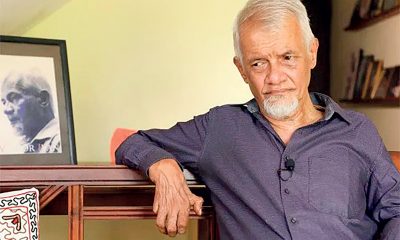
Victor, the Friend of the Foreign Press
-

 Business5 days ago
Seeing is believing – the silent scale behind SriLankan’s ground operation
-

 Business5 days ago
Bathiya & Santhush make a strategic bet on Colombo
-

 Features6 days ago
Barking up the wrong tree