
Sports
Indian cricket has become a formidable force

by Rex Clementine
In cricket we have had some teams that set the benchmark in the sport. First it was ‘The Invincibles’ of Don Bradman, who went through a tour of England where they played 32 matches and were never defeated.
Then there was Clive Lloyd’s champion outfit in 1980s. His fast bowlers instilled fear among opposition batsmen while his carefree batsmen threw caution to the wind. After several series of total domination of England, the lexicon had a new word thanks to West Indies; ‘blackwash’.
Steve Waugh’s Aussies at the start of the new millennium took the sport to a new level encouraging ambidextrous players and targeting 400 runs on day one of a Test match. They ended up winning 16 Test matches in a row, a record that will be hard to match.
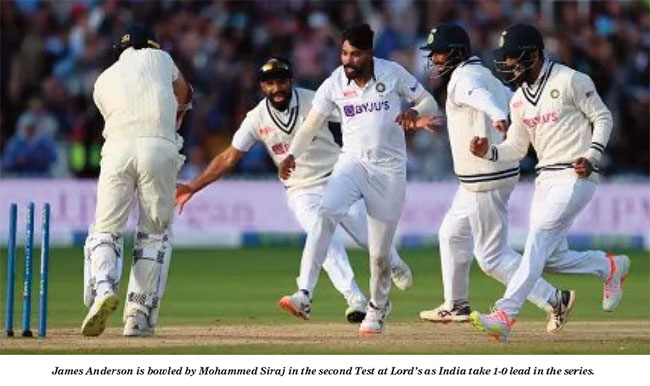
Are we seeing the sport’s next best team in India? Well, they have not won the series in England as yet but they played out of their skins at Lord’s earlier this week and you tend to get the feeling that you are seeing something special. India under Virat Kohli have been truly remarkable.
Early this year, they did something even special; winning a series in Australia; that too after being bowled out for 36 runs in Adelaide. It was a remarkable achievement to lift the spirits from such lows. Mind you they sealed the series of all places at the Gabba in the final Test. Brisbane is a venue where Australia had been unbeaten for 30 years. It was the first time an Asian team won at the Gabba after 16 attempts.
So, what have the Indians been doing right in recent times? Quite a few actually. They are fortunate to have a good leader of men in Kohli. This throw down coach that India lifted from Sri Lankas Nuwan Seneviratne better known as Bawwa to most, was Kohli’s idea.
India were to play Australia in 2018 and Kohli knew Mitchell Starc was going to create problems. So he insisted on having Bawwa on board. Bawwa is left-handed and can give you a torrid time at the nets while doing throw downs. So, torrid that apparently apart from Kusal Mendis and Niroshan Dickwella no Sri Lankan padded up to him.
Kohli is a different beast. After a couple of deliveries struck on his ribcage, Bawwa lowered the intensity only to be called up by the Indian captain who gave him an earful and wanted him to go high intensity. Small things matter. Then of course there is Kohli’s insane gym work and stuff to be the best player he can be. It is he who is calling the shots when it comes to fitness standards in India and although there is a hue and cry made in our part of the world about the two kilometer run, the Indian standard is supposed to be more intense than ours.
The options are simple. Fall in line or get lost. Over here, players who fail fitness tests go to the social media and blast the coaches. Then they find themselves recalled to the team! This Pramodaya Wickramasinghe is truly setting new standards. With friends like him, Kumar Sangakkara doesn’t need any enemies.
Going back to India, apart from Kohli, there is of course Ravi Shastri. The former Indian captain has little coaching experience. Since retiring, he has been a broadcaster for nearly three decades. The Indian board realized that coaching at this level was more managing players than helping with any technical brilliance. So they took Shastri out of the commentary box and put him in charge of the team. Shastri-Kohli combination is a match made by the cricketing gods in a bid to bring Aussies and Poms to their knees.
The IPL obviously has been a godsend to Indian cricket. Time was when India played just one seamer and included a seamer all-rounder to share the new ball and depended on spin to cover up their bowling. But what IPL has done is that young Indian quicks get a chance to spend time with world’s leading fast bowlers and coaches picking their brains. As a result, India is able to put up a formidable four-pronged pace attack. The consequence of that is someone like Ravichandran Ashwin, who has 400 Test wickets at an average of 24, is unable to get into the team.
So, there is Shastri factor, Kohli factor and the IPL factor that has contributed to India’s success. There is one more factor that has put cricket in India back on track; the intervention of Indian Supreme Court.
In the year 2015, the Indian Supreme Court appointed a retired judge to give recommendations as to how cricket in India could be improved. The court appointed someone with stature – Rajendra Lodha, the 41st Chief Justice of India. He presented to court in what is known as Lodha Committee report several recommendations.
Some of the prominent recommendations of the Lodha committee report are term limits for office bearers, limiting the number of votes at the BCCI AGM and an independent governing body for IPL. These recommendations were implemented resulting in the CEO having greater control over the matters and hence more responsibility. That has certainly been a welcome move. Indian cricket is nowadays run like a business.
In Sri Lanka too, several past administrators and former players got together and moved the Court to bring constitutional changes to our cricket. The learned judges’ observations remain to be seen.






Trinity College ran riot at Sugathadasa Stadium, tearing past Royal College 58-26 with a ten-try blitz to clinch the Dialog Schools Rugby Knockouts 2026 President’s Trophy and end a 15-year title drought.
In a final dripping with history and rivalry, Trinity struck early and never loosened their grip, turning the contest into a one-sided procession after a brief Royal resistance.
Royal’s discipline wavered from the outset and Trinity pounced. After forcing early penalties, they worked the ball through the hands with purpose before centre Kevin Weerakoon finished in the corner, setting the tone for what followed.
Royal hit back swiftly through their tried-and-tested driving maul, prop Lemitha Amerasinghe crashing over with Mohamed Simak converting to edge them ahead. But it was a fleeting lead.
Trinity’s response was clinical. A well-orchestrated lineout move released Sadeesha Weerawansa and slick handling sent Dimath Abeypitiya over in the corner, skipper Shan Althaf adding the extras. Moments later, Trinity struck again, stretching Royal’s defence before Abeypitiya dotted down for his second.
Royal stayed in touch through another muscular maul, skipper Disas Pathirana finishing at the tail, but Trinity’s backline carried a sharper edge. Abdul Malik’s deft cross-kick found Ammaar Manzil, who plucked the ball out of the air to score, before Malik himself rounded off a flowing move just before the break.
At half-time, Trinity led 27-12 and Royal were already chasing shadows.
If there was any hope of a Royal revival, Trinity extinguished it immediately after the restart. Althaf pounced on a loose ball from a clever kick to extend the lead, before finishing another well-weighted cross-kick moments later to put the result beyond doubt.
With Malik pulling the strings, Trinity’s attack cut through at will. Hamza Abdeen chased down a grubber to score and Manzil capped a sweeping move after sharp interplay with Evin Jayasena and Thisara Paris as the scoreboard ticked relentlessly.
Royal managed a late rally, Hiruka Jayadinu and Akira Yatawara crossing for consolation tries with Simak converting both, but it barely dented Trinity’s dominance.
Fittingly, it was Althaf who had the final word. Completing his hat-trick after another cross-kick was gathered and recycled, the Trinity skipper sealed a commanding victory and with it, a long-awaited return to the top.
by Carlos Van de Berg

Royal College secured a place in the semi-finals after eliminating one of the title favourites, Mahanama College, with a first innings win in the Under 19 Division I Tier ‘A’ cricket tournament quarter-final at the D.H.H. Ground, Madampella on Saturday.
Royal are now set to meet Trinity in the semi-finals.
A superb century by Rehan Peiris and impressive bowling performances from paceman Mahiru Kodituwakku and spinner Himaru Deshan paved the way for Royal to clinch the crucial first innings advantage.
In reply to Royal’s formidable first innings total of 319, Mahanama were bowled out for 244 on the third day morning. Kodituwakku, who had earlier struck vital blows during an impressive opening spell by removing three top order batsmen, claimed his fourth wicket when he dismissed Eshan Withanage in the fourth ball of the day. Mahanama had faint hopes until Withanage anchored their late order.
Spinner Himaru Deshan provided valuable support to the pace attack with three wickets, while Ramiru Perera chipped in with two scalps to help Royal establish a significant 75-run first innings lead.
With less than three sessions remaining in the match, Royal only needed to bat out time to secure their passage to the semi-finals. However, Mahanama fought back briefly by removing four Royal top order batsmen cheaply.
Rehan Peiris steadied the innings with a patient knock of 43 runs before a crucial fifth wicket partnership of 107 runs between Dushen Udawela and Thevindu Wewalwala effectively ended Mahanama’s hopes of a comeback.
Udawela produced a determined innings to top score with 89 runs off 197 balls, striking ten fours and a six, while Wewalwala remained unbeaten on 56 after facing 128 deliveries as Royal reached 253 for 6 in their second innings. It was Wewalwala’s second half century of the match.
Earlier in the match, Peiris had set the tone for Royal with an outstanding 146 in the first innings, supported by Thevindu Wewalwala’s 57 as Royal posted 319.
For Mahanama, Venura Kaveethra was the most successful bowler with figures of five wickets for 86 runs.
Scores
Royal
319 all out in 87.2 overs (Rehan Peiris 146, Thevindu Wewalwala 57, Hirun Matheesha 28, Ramiru Perera 27; Venura Kaveethra 5/86, Chamika Heenatigala 2/80) and 253 for 6 in 81 overs (Rehan Peiris 43, Dushen Udawela 89, Thevindu Wewalwala 56 n.o.; Chamika Heenatigala 2/58)
Mahanama
244 all out in 80.4 overs (Sithum Vihanga 70, Eshan Withanage 46, Sanul Weerarathne 37, Chamika Heenatigala 32; Mahiru Kodituwakku 4/49, Himaru Deshan 3/87) (RF)

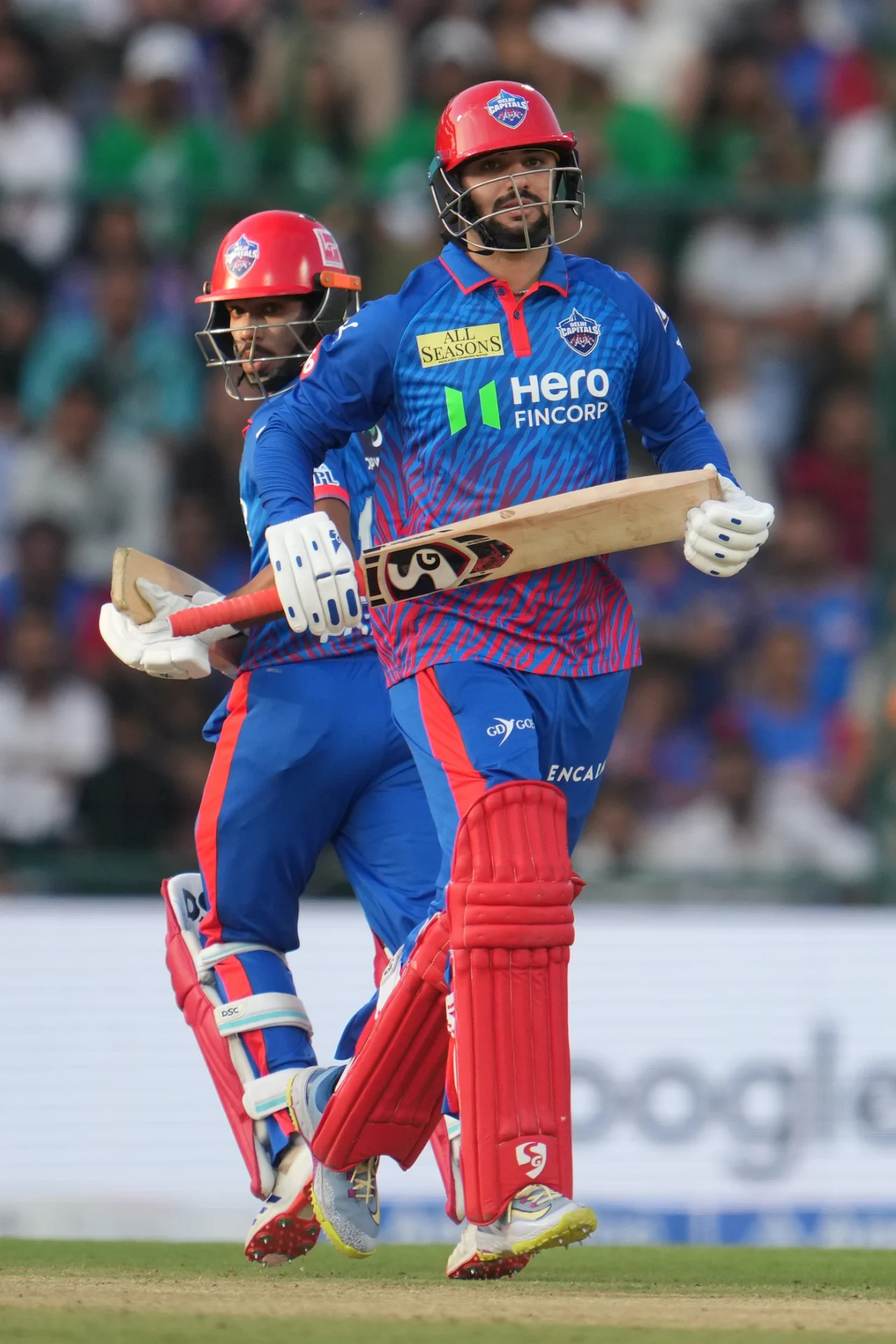
Sameer Rizvi picked up his second Player-of-the-Match award in as many games in IPL 2026, this time scoring 90 off 51 balls to help Delhi Capitals [DC] seal a tricky chase against Mumbai Indians [MI] with six wickets and 11 balls to spare. If you include his Player-of-the-Match award from DC’s last game of the 2025 season, it makes it three in a row. Only seven others have done so, and no one has gone beyond.
Before the Rizvi show, the DC bowlers restricted MI to 162 for 6 on a slow, black-soil pitch at the Arun Jaitley Stadium. With Hardik Pandya unwell, Suryakumar Yadav captained MI and top-scored with 51 off 36 balls. But most other batters struggled to play their shots. In fact, the first six of the MI innings came on the last ball of the seventh over.
DC, too, lost KL Rahul and Nitish Rana early in the chase but Pathum Nissanka’s counterattack kept them going. Nissanka made 44 off 30, after which Rizvi, coming in as DC’s Impact Player once again, ran away with the game.
Mukesh Kumar started waywardly, and Ryan Rickelton made him pay with two leg-side boundaries. From the other end, Rohit Sharma did the same against Lungi Ngidi. But Mukesh bounced back in his second over. He had Rickelton miscuing to mid-off and then caught and bowled Tilak Varma off a knuckleball.
With two right-hand batters, Rohit and Suryakumar, in the middle, Axar immediately brought himself on and sneaked in a three-run over. Rohit did hit two fours off Ngidi’s slower ones in the sixth over, the first a streaky one but the second a caress through covers, to take MI to 41 for 2, but it was a six-less powerplay for them. The last time it happened for MI was in 2023, against Chennai Super Kings in Chepauk.
Axar had a good match-up against Rohit coming into this game and he improved it further by having the batter caught at cover in the tenth over. Rohit made 35 off 26 balls. His match-up against Axar in the IPL now reads 77 balls, 67 runs, four dismissals.
Sherfane Rutherford didn’t last long and holed out to deep square leg against Vipraj Nigam, but Suryakumar kept MI going. He attacked the spinners and hit Kuldeep for two sixes. In the company of Naman Dhir, he brought up his fifty but was lbw to Ngidi off the following delivery. In Hardik’s absence, MI could score only 38 runs in the death overs.
Against Lucknow Super Giants, Rahul was out for a first-ball duck. Here he lasted three balls and made 1 before being caught down the leg side off Deepak Chahar. Rana was run out in the next over when Jasprit Bumrah, after fielding the ball off his own bowling, nailed a direct hit at the non-striker’s end.
At 7 for 2, Nissanka decided to take the attacking route. In the fourth over, he picked up back-to-back fours off Mitchell Santner, the second of which came via a reverse-hit over a leaping Rohit at cover. In the following over, he smashed two fours and a six off Shardul Thakur. Nissanka got a life on 41 when Dhir dropped him off Corbin Bosch but he fell to Santner three runs later.
After ten overs, DC were 73 for 3 – the exact score MI were at the same stage of their innings. The game was in the balance. Rizvi was batting on 25 off 23 but shifted the momentum in just one over. He flayed Bosch over mid-off, ramped him to the deep-third fence, cut him over deep point and launched him down the ground for 20 runs in all.
To ram home the advantage, he used his feet against Mayank Markande in the following over for back-to-back sixes. The first of those took him to his fifty off 31 balls. Such was his dominance that when the fifty stand for the fourth wicket came up, David Miller’s contribution in that was 1 off five balls. He was more of a bystander than a partner.
By the end of the 15th over, the result was a foregone conclusion. The only real interest left was whether Rizvi could reach his hundred. DC needed 25 to win, Rizvi needed 17. On 90, he attempted yet another big hit off Bosch but holed out to long-off.
Brief scores:
Delhi Capitals 164 for 4 in 18.1 overs (Sameer Rizvi 90, Pathum Nissanka 44, David Miller 21*; Deepak Chahar 1-20, Mitchell Santner 1-22, Corbin Bosch 1-39) beat Mumbai Indians 162 for 6 in 20 overs (Rohit Sharma 35, Suryakumar Yadav 51, Naman Dhir 28, Mitchell Santner 18*, Corbin Bosch 11*; Mukesh Kumar 2-26, Lungi Ngidi 1=34, Axar Patel 1-22, Vipraj Nigam 1-24, T Natarajan 1-24) by six wickets
[Cricinfo]

Retirement age for judges: Innovation and policy

Carnage, justice and politics

Sri Lanka sees silver lining in ties with Russia and Britain amid Middle East shocks

John Keells Foundation marks its 21st anniversary with a redesigned website and new Volunteer App

Sun overhead until 15 April; heat index to reach caution level

Dhaka releases six Lankan fishermen in goodwill gesture

‘Dates have the highest sugar content to fight Coronavirus’

Sunday Island 27 December – Headlines

#SundayIsland 17th December – Headlines

Sunday Island – 28th March

Sunday Island Headlines – 21 March

Sunday Island – 21st February – Headlines
-

 News4 days ago
2025 GCE AL: 62% qualify for Uni entrance; results of 111 suspended
-

 News6 days ago
Tariff shock from 01 April as power costs climb across the board
-

 News7 days ago
Inquiry into female employee’s complaint: Retired HC Judge’s recommendations ignored
-

 Business5 days ago
Hour of reckoning comes for SL’s power sector
-

 Editorial4 days ago
Search for Easter Sunday terror mastermind
-
 Features6 days ago
Seychelles … here we come
-

 Opinion6 days ago
Sri Lanka has policy, but where is the data?
-

 Opinion3 days ago
Hidden truth of Sri Lanka’s debt story: The untold narrative behind the report