
Sports
Indian cricket has become a formidable force

by Rex Clementine
In cricket we have had some teams that set the benchmark in the sport. First it was ‘The Invincibles’ of Don Bradman, who went through a tour of England where they played 32 matches and were never defeated.
Then there was Clive Lloyd’s champion outfit in 1980s. His fast bowlers instilled fear among opposition batsmen while his carefree batsmen threw caution to the wind. After several series of total domination of England, the lexicon had a new word thanks to West Indies; ‘blackwash’.
Steve Waugh’s Aussies at the start of the new millennium took the sport to a new level encouraging ambidextrous players and targeting 400 runs on day one of a Test match. They ended up winning 16 Test matches in a row, a record that will be hard to match.
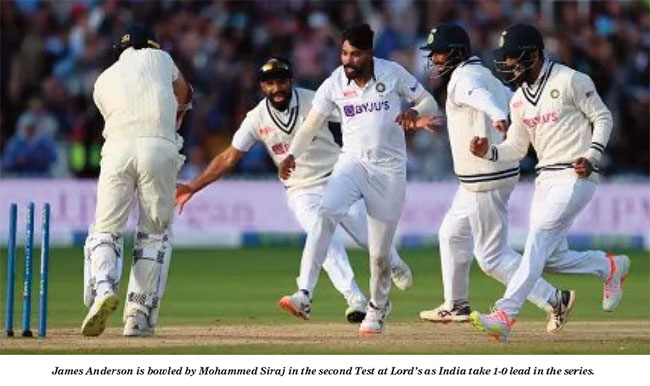
Are we seeing the sport’s next best team in India? Well, they have not won the series in England as yet but they played out of their skins at Lord’s earlier this week and you tend to get the feeling that you are seeing something special. India under Virat Kohli have been truly remarkable.
Early this year, they did something even special; winning a series in Australia; that too after being bowled out for 36 runs in Adelaide. It was a remarkable achievement to lift the spirits from such lows. Mind you they sealed the series of all places at the Gabba in the final Test. Brisbane is a venue where Australia had been unbeaten for 30 years. It was the first time an Asian team won at the Gabba after 16 attempts.
So, what have the Indians been doing right in recent times? Quite a few actually. They are fortunate to have a good leader of men in Kohli. This throw down coach that India lifted from Sri Lankas Nuwan Seneviratne better known as Bawwa to most, was Kohli’s idea.
India were to play Australia in 2018 and Kohli knew Mitchell Starc was going to create problems. So he insisted on having Bawwa on board. Bawwa is left-handed and can give you a torrid time at the nets while doing throw downs. So, torrid that apparently apart from Kusal Mendis and Niroshan Dickwella no Sri Lankan padded up to him.
Kohli is a different beast. After a couple of deliveries struck on his ribcage, Bawwa lowered the intensity only to be called up by the Indian captain who gave him an earful and wanted him to go high intensity. Small things matter. Then of course there is Kohli’s insane gym work and stuff to be the best player he can be. It is he who is calling the shots when it comes to fitness standards in India and although there is a hue and cry made in our part of the world about the two kilometer run, the Indian standard is supposed to be more intense than ours.
The options are simple. Fall in line or get lost. Over here, players who fail fitness tests go to the social media and blast the coaches. Then they find themselves recalled to the team! This Pramodaya Wickramasinghe is truly setting new standards. With friends like him, Kumar Sangakkara doesn’t need any enemies.
Going back to India, apart from Kohli, there is of course Ravi Shastri. The former Indian captain has little coaching experience. Since retiring, he has been a broadcaster for nearly three decades. The Indian board realized that coaching at this level was more managing players than helping with any technical brilliance. So they took Shastri out of the commentary box and put him in charge of the team. Shastri-Kohli combination is a match made by the cricketing gods in a bid to bring Aussies and Poms to their knees.
The IPL obviously has been a godsend to Indian cricket. Time was when India played just one seamer and included a seamer all-rounder to share the new ball and depended on spin to cover up their bowling. But what IPL has done is that young Indian quicks get a chance to spend time with world’s leading fast bowlers and coaches picking their brains. As a result, India is able to put up a formidable four-pronged pace attack. The consequence of that is someone like Ravichandran Ashwin, who has 400 Test wickets at an average of 24, is unable to get into the team.
So, there is Shastri factor, Kohli factor and the IPL factor that has contributed to India’s success. There is one more factor that has put cricket in India back on track; the intervention of Indian Supreme Court.
In the year 2015, the Indian Supreme Court appointed a retired judge to give recommendations as to how cricket in India could be improved. The court appointed someone with stature – Rajendra Lodha, the 41st Chief Justice of India. He presented to court in what is known as Lodha Committee report several recommendations.
Some of the prominent recommendations of the Lodha committee report are term limits for office bearers, limiting the number of votes at the BCCI AGM and an independent governing body for IPL. These recommendations were implemented resulting in the CEO having greater control over the matters and hence more responsibility. That has certainly been a welcome move. Indian cricket is nowadays run like a business.
In Sri Lanka too, several past administrators and former players got together and moved the Court to bring constitutional changes to our cricket. The learned judges’ observations remain to be seen.







India opener Shafali Verma has received an official reprimand and a demerit point for breaching Level 1 of the ICC Code of Conduct during the second T20I against Zimbabwe on Sunday.
Shafali, an ICC release said, breached Article 2.2 of the ICC Code of Conduct for Players and Player Support Personnel, which relates to “abuse of cricket equipment or clothing, ground equipment or fixtures and fittings during an International Match.”
It was Shafali’s first offence in a 24-month period.
The incident occurred in the 12th over of Zimbabwe’s innings when Shafali threw the ball into the ground in frustration after dropping a chance at mid-off offered by Chipo Mugeri-Tiripano off Sree Charani.
Shafali admitted the offence and accepted the sanction proposed by match referee GS Lakshmi, which meant there was no need for a formal hearing.
Level 1 breaches carry a minimum penalty of an official reprimand, a maximum penalty of 50% of a player’s match fee, and one or two demerit points.
India currently lead the three-match series 2-0 with the third game to be played on Tuesday evening. The T20Is will be followed by three ODIs in Vadodara from October 23.
(Cricinfo)

A total of 146 players will be competing for 27 available slots in the WPL 2027 mini auction on October 28 in Kochi. Of these, England batter Sophia Dunkley and Australia captain Sophie Molineux are the only two players who have listed themselves at the maximum base price of INR 50 lakh.
The auction pool has 119 Indian players, including 22 capped and 97 uncapped players, with 20 slots available for Indian players. The overseas pool has 27 players – 14 capped and 13 uncapped – including six from Associate teams, with seven slots available.
G Kamalini (released by Mumbai Indians), Kiran Navigre (released by U P Warriorz), Heather Graham and Jess Jonassen have registered at the second-highest base price of INR 40 lakh, while a total of 30 players have registered at INR 30 lakh.
Among the notable absentees are West Indies allrounder Deandra Dottin, who was released by UPW, and Australia legspinner Alana King, who was released by Delhi Capitals. Lizelle Lee, who was DC’s highest run-scorer last season, has also not listed herself after being released by the franchise.
What the teams look like going into the auction
Only two English players – Dunkley and Kira Chathli (INR 10 lakh) – have registered for the auction, with several others, including Danni Wyatt-Hodge, Alice Capsey, Dani Gibson, Lauren Filer and Linsey Smith opting to skip the WPL next year.
Cricinfo has learned that England are likely to play three T20Is in Sri Lanka in early February, which will clash with the final week of the WPL. While the ECB is likely to allow players to stay in India to complete the tournament, most players have instead chosen to prioritise their international commitments ahead of the Champions Trophy later that month.
The relatively low salaries on offer at the WPL are also understood to be a factor in many English players deciding not to register, with most internationals earning significantly more to play in the Hundred (up to £190,000 last year) than the highest permitted base price in the WPL of INR 50 lakh (£40,000 approx).
Molineux was part of the Royal Challengers Bengaluru [RCB] title-winning squad in 2024, and had bagged 12 wickets in ten games at an economy rate of 7.31. She was retained by RCB for the 2025 season but a knee injury ruled her out of the season. Dunkley, meanwhile, played for Gujarat Giants [GT] in 2023 before opting not to register for the 2024 season. She went unsold in the 2025 auction.
Among the premier internationals who have listed themselves for INR 30 lakh are Australia allrounder Grace Harris (released by RCB), Sri Lanka captain Chamari Athapaththu, South Africa left-arm spinner Nonkululeko Mlaba and South Africa allrounder Chloe Tryon.
UPW, who released nine players, will go into the auction with the biggest purse of INR 3.75 crore.
[Cricinfo]
by Rex Clementine
The curtain raiser of the tri-nation series in Pakistan went down to the wire and although Sri Lanka were into their tail, hopes of pulling off an unlikely victory remained alive as Dasun Shanaka threatened to produce something special on his return to ODI cricket.
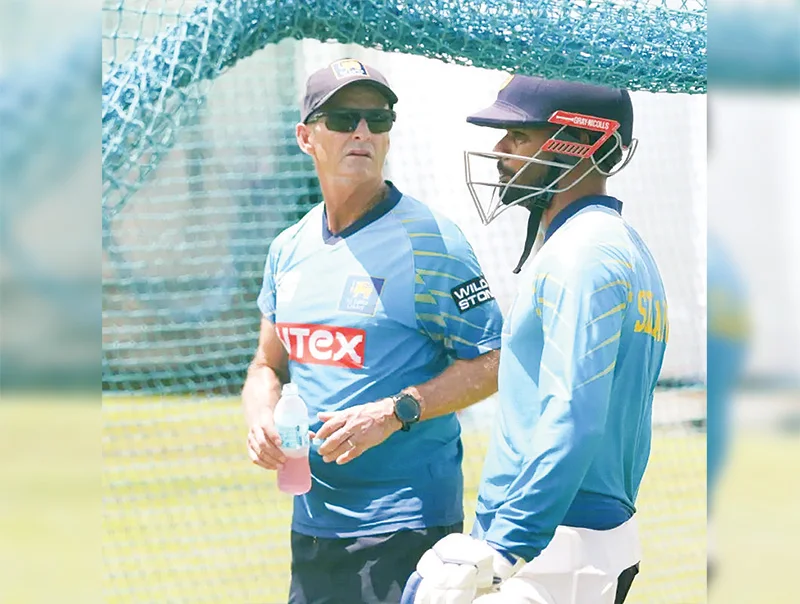
Finding the boundary with remarkable ease, Shanaka had raced to 28 off just 18 balls when he gave charge to Pakistan captain Shaheen Afridi, only to perish in his attempt to clear the ropes. As the wicket fell, Head Coach Gary Kirsten made no attempt to conceal his frustration. His disappointment was there for all to see. In simple terms, he was pleading with his senior most player to use his head.
Afridi was bowling his final over. Had Shanaka resisted the temptation to take him on and simply seen him off, Sri Lanka would have been in a far better position.
Kirsten is a good man. Beyond coaching the team, he has made a genuine effort to instil the values that earned him enormous respect from team mates and opponents alike during his playing days.
Watching his side squander one golden opportunity after another must be driving the South African up the wall. For Sri Lankan cricket fans, however, this is familiar territory. They have seen this movie far too many times and the ending rarely changes.
Kirsten is known to be meticulous in his preparation, leaving no stone unturned when it comes to homework. He would be well advised to devote some of that diligence to studying the characters in his dressing room. If he intends to learn about them the hard way, he is in for a particularly painful education.
First came the Niroshan Dickwella episode. Few would quarrel with Kirsten’s assessment that Dickwella is the finest gloveman in the country. But wicketkeeping ability was never the issue. It was the baggage and distractions that came with him. Three years ago, Sri Lankan cricket drew a line in the sand and decided enough was enough. Bringing him back was a step in the wrong direction.
The same argument applies to Dasun Shanaka. On Sunday, he returned to ODI cricket after an absence of two years and nine months. Like Dickwella, Shanaka had done precious little of significance to warrant a recall. And, as with Dickwella, his return appears to have come at the Head Coach’s insistence. He seems to be placing a lot of emphasis on experience. These are decisions Kirsten may live to regret.
Players blessed with cricketing intelligence and common sense seem to be an increasingly endangered species in our part of the world. Too many modern day cricketers are reluctant to push their boundaries, challenge themselves or venture beyond their comfort zones.
Kirsten’s efforts to reform a deeply entrenched and often incorrigible system deserve both appreciation and wholehearted support. But even the finest coach cannot make bricks without straw. He must choose his personnel wisely.
All too often in Sri Lankan cricket, coaches and selectors end up at loggerheads, each pointing the finger at the other when results go south. This time, encouragingly, there appears to be genuine cooperation. Both parties are pulling in the same direction, determined to achieve something worthwhile.
That makes it all the more important that they do their homework on the players they choose to back.
Shanaka could prove a costly gamble, just as Dickwella did. Their problems are different, of course. Shanaka is not associated with the sort of drug related controversy that engulfed Dickwella. His weakness lies elsewhere: a reluctance to accept responsibility for his own shortcomings and a tendency to look for someone else to blame.
That, too, can become an enormous distraction in a dressing room.
Kirsten has taken on the admirable challenge of changing Sri Lankan cricket’s culture. But before he can change the system, he must make sure he is backing the right people. Otherwise, the very players he hopes to reform may end up undermining the good work he has set out to do.

President pays last respects to Most Venerable Kappetiyagoda Siri Wimala Thera

Shafali receives demerit point for breaching Level 1 of ICC code of conduct

Heavy showers about 100 mm are likely at some places in the Northern, North-central, Central, Eastern, North-western and Uva provinces

Molineux, Dunkley enter WPL 2027 auction with top base price of INR 50 lakh

Ranawaka accuses govt. of using JVP cadres and police to suppress political opponents

Six killed as speeding bulker crashes into vehicles, shop in Akurana

‘Dates have the highest sugar content to fight Coronavirus’

Sunday Island 27 December – Headlines

#SundayIsland 17th December – Headlines

Sunday Island – 28th March

Sunday Island Headlines – 21 March

Sunday Island – 21st February – Headlines
-

 Features2 days ago
Kotahena:A Small Enclave, An Extraordinary Legacy
-

 News6 days ago
Sri Lanka, India caught in US-Iran ship crisis
-

 News3 days ago
Asgiri Mahanayake calls for immediate release of Gnanasara Thera
-

 Latest News7 days ago
Missiles intercepted near Riyadh after Saudi coalition hits Yemen fuel depot
-
 Latest News7 days ago
Kusal Mendis’ unbeaten 87 hands Sri Lanka consolation win
-

 News2 days ago
Record 1,600 students take Russian Classical Ballet examination in Sri Lanka
-
 News5 days ago
AC President recuses himself from hearing prison attire case pertaining to Gnanasara Thera
-

 Latest News6 days ago
Heavy showers above 100 mm are likely at some places in the Western, Sabaragamuwa, Southern, Central, and North-western provinces and in Anuradhapura district.