A Los Angeles jury has handed down an unprecedented win for a young woman who sued Meta and YouTube over her childhood addiction to social media.
Jurors found that Meta, which owns Instagram, Facebook and WhatsApp, and Google, owner of YouTube, intentionally built addictive social media platforms that harmed the 20-year old’s mental health.
The woman, known as Kaley, was awarded $6m (£4.5m) in damages, a result likely to have implications for hundreds of similar cases now winding their way through US courts.
Meta and Google said separately that they disagreed with the verdict and would both appeal. Meta said: “Teen mental health is profoundly complex and cannot be linked to a single app.
“We will continue to defend ourselves vigorously as every case is different, and we remain confident in our record of protecting teens online.”
A spokesperson for Google said: “This case misunderstands YouTube, which is a responsibly built streaming platform, not a social media site.”
Jurors found that Kaley should receive $3m in compensatory damages and an additional $3m punitive damages, because they determined Meta and Google “acted with malice, oppression, or fraud” in the way the companies operated their platforms.
Meta will be expected to shoulder 70% of Kaley’s damages award, with Google the remaining 30%.
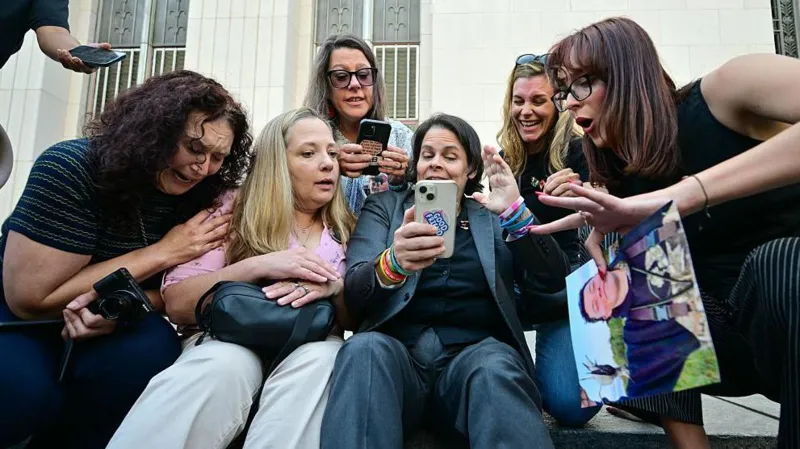
Parents of other children, who are not part of Kaley’s lawsuit but claim they also were harmed by social media, were outside the courthouse on Wednesday, as they had been many days throughout the five-week trial.
When the verdict came through, parents like Amy Neville were seen celebrating, and hugging other parents and supporters who had been waiting for a decision.
The LA verdict came a day after a jury in New Mexico found Meta liable for the way in which its platforms endangered children and exposed them to sexually explicit material and contact with sexual predators.
Mike Proulx, a research director for Forrester, said the back-to-back verdicts underline a “breaking point” between social media companies and the public.
In recent months, countries such as Australia have imposed restrictions for children to stop or limit their use of social media. The UK is currently running a pilot program to see how a ban of social media for people aged under 16 may work.
“Negative sentiment toward social media has been building for years, and now it’s finally boiled over,” Proulx said.
During his appearance before the jury in February, Mark Zuckerberg, Meta’s chairman and chief executive, relied on his company’s longstanding policy of not allowing users under the age of 13 on any of its platforms.
When presented with internal research and documents showing that Meta knew young children were, in fact, using its platforms, Zuckerberg said he “always wished” for faster progress to identify users under 13. He insisted the company had reached the “right place over time”.
While Google, as the owner of video-sharing site YouTube, was also a defendant in the case, most of the trial proceedings focused on Instagram and Meta.
Snap and TikTok were also initially defendants, but both companies reached undisclosed settlements with Kaley prior to trial.
As for Kaley’s lawyers, they argued that Meta and YouTube had built “addiction machines” and failed in their responsibility to prevent children from accessing their platforms.
Kaley said she started using Instagram aged nine and YouTube aged six, and encountered no attempts to block her because of her age.
“I stopped engaging with family because I was spending all my time on social media,” Kaley said during her testimony.
Kaley said she was 10-years-old when she started having feelings of anxiety and depression, disorders for which she would be diagnosed years later by a therapist.
She also started to obsess about her physical appearance and began using Instagram filters that would change the way she looked – making her nose smaller and her eyes bigger – almost as soon as she started using the platform as a child.
Kaley has since been diagnosed with body dysmorphia, a condition which causes people to worry excessively about their physical appearance and prevents them from seeing themselves as others do.
Her lawyers argued that features of Instagram, like infinite scroll, were designed to be addictive.
Meta’s growth goals were aimed at getting young people to use its platforms, Kaley’s lawyers said.
Using testimony from experts and former Meta executives, they argued the company wanted young users because they were more likely to stick with its platforms for longer stretches of time.
When lawyers for Kaley told Adam Mosseri, the head of Instagram, that her longest single day of use of the platform stretched to 16 hours, he denied that it was evidence of an addiction.
Instead, he called a teenager spending most hours of the day on Instagram “problematic”.
Lawyers for Kaley said Wednesday that the jury’s verdict “sends an unmistakable message that no company is above accountability when it comes to our children.”
Another case against Meta and other social media platforms over their alleged harms to children is poised to begin in June in California federal court.
[BBC]