
Opinion
In a celebrated Buddhist society, many people flout the most elementary precepts


‘The further a society drifts from truth, the more it will hate those who speak it.’ George Orwell.
Hardly a monthly poya day (full moon day) passes that there is no festival or even a noisy carnival celebrating some event in the Buddhist calendar. There is a major festival in Kelaniya with a colourful parade in Durutu (January), which attracts large crowds. There is Navam Perahera in Colombo, very colourful and attended by large crowds, on more than one night. The pandals, many kinds of exhibits and parades in several parts of the country are normal during Vesak (May). As I write, there are kathina puja all over the country, marking the rainy season, when bhikkhu are not expected to venture out of their dwellings, a practice that descends from old Magadha. The two-week-long festivities in August, including the elaborate Esala perahera, excel them all in splendour. So it goes on the whole year. All these activities give employment to a host of people (nelum pickers and sellers, drummers and dancers, cleaners and many others). In all instances, petty traders earn some money. They are all public exhibitions of religiosity by Buddhists. Radio and television are major means of practising one’s religion. Most channels start their day with some Buddhist rituals and conclude so. On poya (full moon) days, except for newscasts, programmes are devoted almost entirely to Buddhist activities. A large number of erudite bhikkhu, highly learned teachers from universities and other learned and wise men and women explain the dhamma either singly or in groups. On some channels, the whole night is spent broadcasting the recitation of sutta by bhikkhu. Persons elevated to the highest offices of state, even believers in other faiths, ritually visit places of Buddhist worship and publicly pay their respects to the leading bhikkhu. One head of state offered dane (meals) to 3,000 bhikkhu in Colombo. Throughout the year, one is overcome by the weight of the religiosity of the Buddhist public.
The first precept repeated several times a day is to refrain from taking life. The same newspapers, radio and television broadcast to us almost every morning and evening of a plurality of premeditated murders of little children, youth, women and men, some alone, some in groups. A few victims are bhikkhu, and rarer is a perpetrator a bhikkhu. People who held high office in government are alleged to have committed gruesome murders. Some are alleged to have master minded the murderous attack on Easter in 2019, in which some 270 were killed and hundreds more were injured and disabled. And all this mayhem is mostly by people who, almost every morning, promise unto themselves in public to refrain from taking life (panatipata veramani sikha padam samadiyami.).
The second precept so repeated is to refrain from taking that which is not given to them (taking by force, stealing, by cheating and by subterfuge). News media are filled with reports of the high and mighty who plundered the public purse in a multitude of ways. Some simply demanded and obtained massive sums of money from loans made by foreign governments to fund projects in the country. The projects got implemented as the bank accounts of presidents, ministers, and senior public officers swelled. Others with their families are charged in courts with having defrauded the government of large sums of money meant to buy medications and medical equipment for use in government hospitals. Many are loaded with wealth accumulated in a period far shorter than Warren Buffett would take, in a rising New York Stock Exchange. This is truly a magical land: there are large tracts in highly desirable residential areas with newly built, magnificent houses with no owners or builders. Isn’t that impossible except in this Buddhist land? Many are rumoured to have accumulated a part of the stolen wealth overseas. Grand larceny of public funds is legendary in this society. Petty larceny is as pervasive as the common cold in November. Tax evasion, which is essentially theft of money belonging to the government, is a major source of funds for high-income earners and wealthy corporations. All persons who receive undocumented incomes commonly avoid paying taxes. The public service reeks with corruption. The second precept reads, adinna dana veramani sikha padam samadiyami.
The third precept is musa vada veramani sikha padam samadiyami. Musa encompasses four activities: falsehood, foul language (parusha vaca), gossip (pisuna vaca) and idle chatter (sampappalapa). One simply has to name them to recall how prevalent such activity is in this society, openly in breach of a daily promise to oneself. Lying is almost second nature to people in this society. I am surprised whenever someone keeps an appointment or returns a small loan as promised. Gresham’s Law, soi disant, lays down that bad money drives out good money. Similarly, foul usage seems to drive out fine usage. This is true of the written form as well as the spoken. For evidence, read something written by Sarachchandra or Amarasekera and by those that came after them. Gossip thrives and spreads in this society more profusely and faster than the measles virus. In the 1970s, an economist wrote a paper studying the spread of gossip as a market phenomenon. One ‘bought’ gossip in exchange for other gossip ‘sold’ in the market. If one did not participate in the market for gossip (refused to gossip), one did not ‘earn’ any gossip and the market for gossip would dry up. That is true of sampappalapa (idle talk), as well, with a different screw. Some people talk because they have something to say; others speak because they have to say something. When most people speak ‘a few words’, they often utter sampappalapa. Both gossip and idle talk received a tremendous boost with electronic means of communication, especially when costless to the user. WhatsApp, Viber and the like expand the ‘market’ for gossip endlessly. One might injure one’s left little finger slightly in Colombo and an elaborate story will travel with the speed of light, from Walla Walla to Wollongong and from Ulaanbaatar to Tierra del Fuego, all to no purpose.
‘Kamesu micca cara’ is often taken as coterminous with sexual misconduct. What amounts to sexual misconduct varies with societies and times. Read in the context of ‘kamesu sukhallikano yogo’ in the Dhammacakkha Pavattana Sutta, resting oneself on intricately carved, polished ebony furniture, wearing silken robes, and accumulating wealth are in breach of that precept. There is the strange spectacle of bhikkhu donating millions of rupees for lay purposes. It was the practice for all requisites of bhikkhu to be provided by laymen. Now the reversal works. However defined, the fourth precept is practised more in the breach than in observance.
This society now is engulfed in intoxicants. In mid-October, nearly a ton of heroin was found floating in the southern seas. It reminded me of the tale where, when Vishnu churned the kiri muhuda, halahala, a deadly poison, surfaced. A few weeks ago, the police discovered a plant manufacturing amphetamine. Year after year, tax revenue from the production and consumption liquor pays for a large part of government expenditure. (Besides, large-scale producers of liquor refuse to pay taxes imposed on them and would rather spend a few months in prison hospital, fortuitously sick.) The production and sale of illicit liquor is a major cottage industry in the country. Many fortunes in recent times were built by those who engaged in the liquor trade. Yes, they were also major donors to restore dilapidated Buddhist monuments, build new monumental works and promote education.
The pages of this newspaper are replete with exegeses on Buddhist texts. I have been able to read some; others have flown unimpeded into the stratosphere.Their authors are, for the most part, highly educated and richly skilled. There are the works of K.N.Jayatilleka, Jotiya Dhirasekera, David Kalupahana, Y.Karunadasa, Rerukane Chandavimala and Asanga Tillakaratne, which have won high accolades from scholars. They are in a long tradition of commentators (attha katha, atuva) beginning almost with the time of Bhikkhu Mahinda’s arrival on this island. Those volumes are reported to have been set ablaze by Buddhaghosa, himself an indefatigable commentator. As both Yagirala Pannananda , almost a hundred years ago and Baddegama Vimalavansa, a half century ago, observed, Sinhala literature until the end of the 19th century was almost entirely commentarial in nature. Even a book of grammar opened with an obeisance to the Buddha (mahada ganda kili kota, sav ne geva dat hata, duhunan danum sandaha, karanemi sidat sangara)). Martin Wickremasinghe and Kumaratunga Munidasa were remarkable for breaking with this long tradition in the early 20th century.
I recounted the proliferation of writing and discussions well supplied to the public, to draw your attention to how contrary the daily behaviour of those who daily repeat these precepts is to the precepts themselves. (The other country, where I witnessed this oddity, is Myanmar, where one cannot walk any thoroughfare in Yangon without hearing some sutta broadcast from open shop fronts, any time of the day. (Myanmar is not a remarkably peaceful country.) Yet, there are no studies of the prevalence of anti-social behaviour amidst common promises in public to refrain from those evils. In addition, Buddhist places of worship, on poyadays, are filled with people observing rituals, essentially peaceful. Most young children, neatly dressed in white, attend schools that teach religion. Grown up, they commit the most heinous crimes. Surely this unlikely combination requires explanation. What is available are anthropological studies, which contain investigations into the performance of rituals (Suniyama, Pattini cult and others). We remain unwise as to why there is such a yawning gap between what is preached and what is practised.
Note:(bhikkhu is both singular and plural in the first case.)
by Usvatte-aratchi


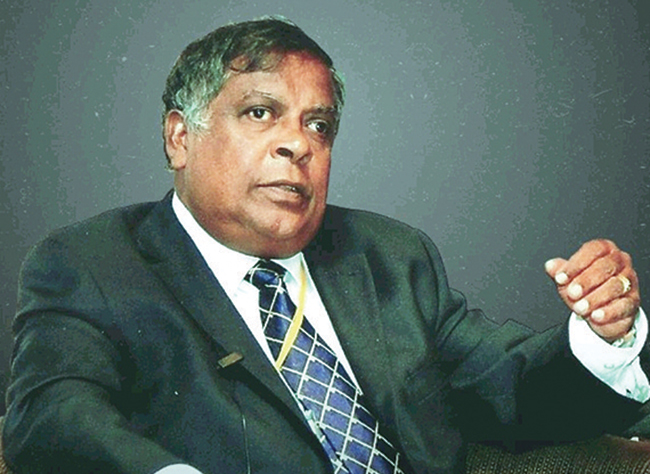
Mr. Tuli Cooray, former Deputy Director General of the Board of Investment of Sri Lanka (BOI) and former Secretary General of the Joint Apparel Association Forum (JAAF), passed away three months ago, leaving a distinguished legacy of public service and dedication to national economic development.
An alumnus of the University of Colombo, Mr. Cooray graduated with a Special Degree in Economics. He began his career as a Planning Officer at the Ministry of Plan Implementation and later served as an Assistant Director in the Ministry of Finance (Planning Division).
He subsequently joined the Greater Colombo Economic Commission (GCEC), where he rose from Manager to Senior Manager and later Director. During this period, he also served at the Treasury as an Assistant Director. With the transformation of the GCEC into the BOI, he was appointed Executive Director of the Investment Department and later elevated to the position of Deputy Director General.
In recognition of his vast experience and expertise, he was appointed Director General of the Budget Implementation and Policy Coordination Division at the Ministry of Finance and Planning. Following his retirement from government service, he continued to contribute to the national economy through his work with JAAF.
Mr. Cooray was widely respected as a seasoned professional with exceptional expertise in attracting foreign direct investment (FDI) and facilitating investor relations. His commitment, leadership, and humane qualities earned him the admiration and affection of colleagues across institutions.
He was also one of the pioneers of the BOI Past Officers’ Association, and his passing is deeply felt by its members. His demise has created a void that is difficult to fill, particularly within the BOI, where his contributions remain invaluable.
Mr. Cooray will be remembered not only for his professional excellence but also for his integrity, humility, and the lasting impact he made on those who had the privilege of working with him.
The BOI Past Officers’ Association
jagathcds@gmail.com
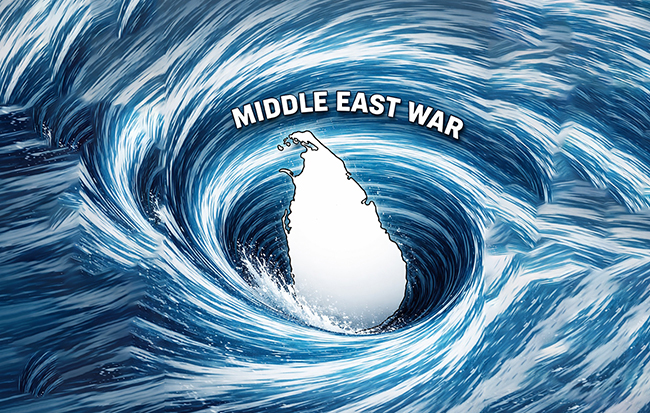
“As a small and open country, Singapore will always be vulnerable to what happens around us. As Lee Kuan Yew used to say: “when elephants fight, the grass suffers, but when elephants make love, the grass also suffers“. Therefore, we must be aware of what is happening around us, and prepare ourselves for changes and surprises.” – Prime Minister Lee Hsien Loong, during the debate on the President’s Address in Singapore Parliament on 16 May, 2018, commenting on the uncertain external environment during the first Trump Administration.
“When elephants fight, it is the grass that suffers”
is a well-known African proverb commonly used in geopolitics to describe smaller nations caught in the crossfire of conflicts between major powers. At the 1981 Commonwealth conference, when Tanzanian President Julius Nyerere quoted this Swahili proverb, the Prime Minister Lee Kuan Yew famously retorted, “When elephants make love, the grass suffers, too”. In other words, not only when big powers (such as the US, Russia, EU, China or India) clash, the surrounding “grass” (smaller nations) get “trampled” or suffer collateral damage but even when big powers collaborate or enter into friendly agreements, small nations can still be disadvantaged through unintended consequences of those deals. Since then, Singaporean leaders have often quoted this proverb to highlight the broader reality for smaller states, during great power rivalry and from their alliances. They did this to underline the need to prepare Singapore for challenges stemming from the uncertain external environment and to maintain high resilience against global crises.
Like Singapore, as a small and open country, Sri Lanka too is always vulnerable to what happens around us. Hence, we must be alert to what is happening around us, and be ready not only to face challenges but to explore opportunities.
When Elephants Fight
To begin with, President Trump’s “Operation Epic Fury”.
Did we prepare adequately for changes and surprises that could arise from the deteriorating situation in the Gulf region? For example, the impact the conflict has on the safety and welfare of Sri Lankans living in West Asia or on our petroleum and LNG imports. The situation in the Gulf remains fluid with potential for further escalation, with the possibility of a long-term conflict.
The region, which is the GCC, Iraq, Iran, Israel, Jordan, Syria and Azerbaijan (I believe exports to Azerbaijan are through Iran), accounts for slightly over $1 billion of our exports. The region is one of the most important markets for tea (US$546 million out of US$1,408 million in 2024. According to some estimates, this could even be higher). As we export mostly low-grown teas to these countries, the impact of the conflict on low-grown tea producers, who are mainly smallholders, would be extremely strong. Then there are other sectors like fruits and vegetables where the impact would be immediate, unless of course exporters manage to divert these perishable products to other markets. If the conflict continues for a few more weeks or months, managing these challenges will be a difficult task for the nation, not simply for the government. It is also necessary to remember the Russia – Ukraine war, now on to its fifth year, and its impact on Sri Lanka’s economy.
Mother of all bad timing
What is more unfortunate is that the Gulf conflict is occurring on top of an already intensifying global trade war. One observer called it the “mother of all bad timing”. The combination is deadly.
Early last year, when President Trump announced his intention to weaponise tariffs and use them as bargaining tools for his geopolitical goals, most observers anticipated that he would mainly use tariffs to limit imports from the countries with which the United States had large trade deficits: China, Mexico, Vietnam, the European Union, Japan and Canada. The main elephants, who export to the United States. But when reciprocal tariffs were declared on 2nd April, some of the highest reciprocal tariffs were on Saint Pierre and Miquelon (50%), a French territory off Canada with a population of 6000 people, and Lesotho (50%), one of the poorest countries in Southern Africa. Sri Lanka was hit with a 44% reciprocal tariff. In dollar terms, Sri Lanka’s goods trade deficit with the United States was very small (US$ 2.9 billion in 2025) when compared to those of China (US$ 295 billion in 2024) or Vietnam (US$ 123 billion in 2024).
Though the adverse impact of US additional ad valorem duty has substantially reduced due to the recent US Supreme Court decision on reciprocal tariffs, the turbulence in the US market would continue for the foreseeable future. The United States of America is the largest market for Sri Lanka and accounts for nearly 25% of our exports. Yet, Sri Lanka’s exports to the United States had remained almost stagnant (around the US $ 3 billion range) during the last ten years, due to the dilution of the competitive advantage of some of our main export products in that market. The continued instability in our largest market, where Sri Lanka is not very competitive, doesn’t bode well for Sri Lanka’s economy.
When Elephants Make Love
In rapidly shifting geopolitical environments, countries use proactive anticipatory diplomacy to minimise the adverse implications from possible disruptions and conflicts. Recently concluded Free Trade Agreement (FTA) negotiations between India and the EU (January 2026) and India and the UK (May 2025) are very good examples for such proactive diplomacy. These negotiations were formally launched in June 2007 and were on the back burner for many years. These were expedited as strategic responses to growing U.S. protectionism. Implementation of these agreements would commence during this year.
When negotiations for a free trade agreement between India and the European Union (which included the United Kingdom) were formally launched, anticipating far-reaching consequences of such an agreement on other developing countries, the Commonwealth Secretariat requested the University of Sussex to undertake a study on a possible implication of such an agreement on other low-income developing countries. The authors of that study had considered the impact of an EU–India Free Trade Agreement on the trade of excluded countries and had underlined, “The SAARC countries are, by a long way, the most vulnerable to negative impacts from the FTA. Their exports are more similar to India’s…. Bangladesh is most exposed in the EU market, followed by Pakistan and Sri Lanka.”
So, now these agreements are finalised; what will be the implications of these FTAs between India and the UK and the EU on Sri Lanka? According to available information, the FTA will be a game-changer for the Indian apparel exporters, as it would provide a nearly ten per cent tariff advantage to them. That would level the playing field for India, vis-à-vis their regional competitors. As a result, apparel exports from India to the UK and the EU are projected to increase significantly by 2030. As the sizes of the EU’s and the UK’s apparel markets are not going to expand proportionately, these growths need to come from the market shares of other main exporters like Sri Lanka.
So, “also, when elephants make love, the grass suffers.”
Impact on Sri Lanka
As a small, export dependent country with limited product and market diversification, Sri Lanka will always be vulnerable to what happens in our main markets. Therefore, we must be aware of what is happening in those markets, and prepare ourselves to face the challenges proactively. Today, amid intense geopolitical conflicts, tensions and tariff shifts, countries adopt high agility and strategic planning. If we look at what our neighbours have been doing in London, Brussels and Tokyo, we can learn some lessons on how to navigate through these turbulences.
(The writer is a retired public servant and can be reached at senadhiragomi@gmail.com)
by Gomi Senadhira
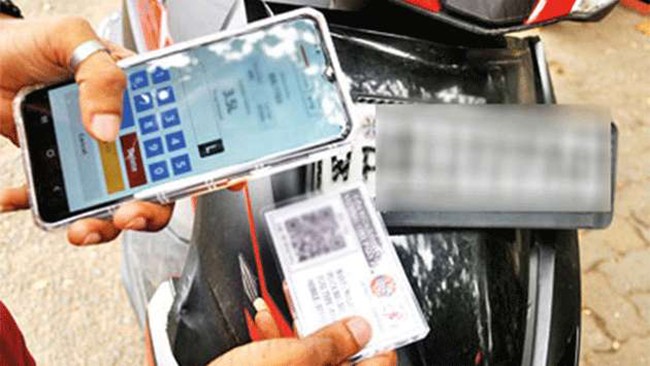
The introduction of the QR code–based fuel quota system can be seen as a timely and necessary measure, implemented as part of broader austerity efforts to manage limited fuel resources. In the face of ongoing global fuel instability and economic challenges, such a system is aimed at ensuring equitable distribution and preventing excessive consumption. While it is undeniable that this policy may disrupt the daily routines of certain segments of the population, it is important for citizens to recognize the larger national interest at stake and cooperate with these temporary measures until stability returns to the global fuel market.
At the same time, this initiative presents an important opportunity for the Government to address long-standing gaps in regulatory enforcement. In particular, the implementation of the QR code system could have been strategically linked to the issuance of valid revenue licenses for vehicles. Restricting QR code access only to vehicles that are properly registered and have paid their revenue dues would have helped strengthen compliance and improve state revenue collection.
Available data from the relevant authorities indicate that a significant number of vehicles—especially three-wheelers and motorcycles—continue to operate without valid revenue licences. This represents a substantial loss of income to the State and highlights a weakness in enforcement mechanisms. By integrating the fuel quota system with revenue license verification, the government could have effectively encouraged vehicle owners to regularise their documentation while simultaneously improving fiscal discipline.
In summary, while the QR code fuel system is a commendable step toward managing scarce resources, aligning it with existing regulatory requirements would have amplified its benefits. Such an approach would not only support fuel conservation but also enhance government revenue and promote greater accountability among vehicle owners.
Sariputhra
Colombo 05

National Namal Uyana Declared a ‘National Heritage of Sri Lanka’

Philippine transport strikers say Marcos Jr failing to control oil prices

One ant for $220: the new frontier of wildlife trafficking

Three Lebanese journalists killed in Israeli strike, say broadcasters

Showers will occur at a few places in the Sabaragamuwa province and in Colombo, Kaluthara, Galle, and Matara districts after 2.00 pm

War-linked power crunch pushes Lanka to four-day week

‘Dates have the highest sugar content to fight Coronavirus’

Sunday Island 27 December – Headlines

#SundayIsland 17th December – Headlines

Sunday Island – 28th March

Sunday Island Headlines – 21 March

Sunday Island – 21st February – Headlines
-

 News5 days ago
Senior citizens above 70 years to receive March allowances on Thursday (26)
-

 Features2 days ago
A World Order in Crisis: War, Power, and Resistance
-

 Features7 days ago
Trincomalee oil tank farm: An engineering marvel
-

 News3 days ago
Energy Minister indicted on corruption charges ahead of no-faith motion against him
-

 News4 days ago
US dodges question on AKD’s claim SL denied permission for military aircraft to land
-

 Features7 days ago
The scientist who was finally heard
-

 Business4 days ago
Dialog Unveils Dialog Play Mini with Netflix and Apple TV
-

 Sports3 days ago
SLC to hold EGM in April