
News
National Namal Uyana Declared a ‘National Heritage of Sri Lanka’

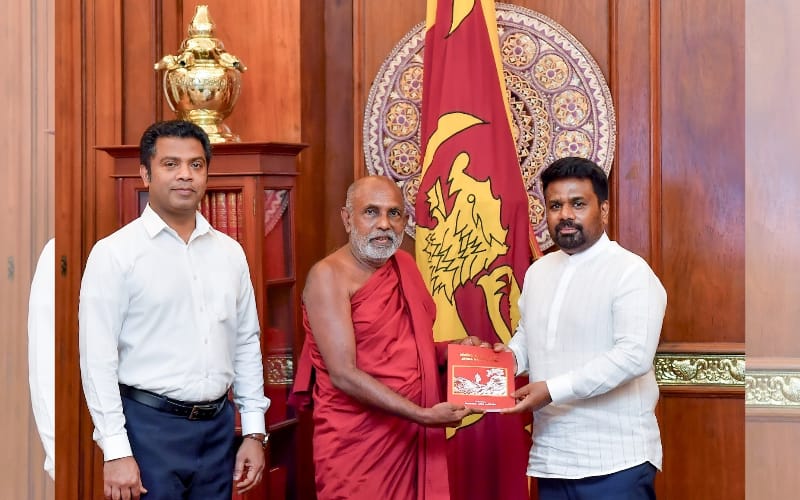
The declaration of the National Namal Uyana as a “National Heritage of Sri Lanka” with the aim of identifying, conserving and bequeathing the country’s national heritage to future generations under the Ministry of Buddhasasana, Religious and Cultural Affairs and the commemoration of the 35th anniversary of its establishment was held under the patronage of President Anura Kumara Dissanayake at the Presidential Secretariat, on Thursday (26).
The National Namal Uyana, spanning 602 hectares within the Palagala Divisional Secretariat Division of the Anuradhapura District, is a unique site of significant national, religious, environmental and geographical value. At the request of its founder, Venerable Wanawasi Rahula Thero and with the intervention of the Ministry of Buddhasasana, Religious and Cultural Affairs, the site was formally declared a National Heritage of Sri Lanka. To mark this occasion, the commemorative plaque was unveiled by the President via virtual technology.
Speaking on the occasion, President Anura Kumara Dissanayake stated that the responsibility of safeguarding this unique environmental heritage and bequeathing it to future generations rests with all.
The President also expressed his sincere appreciation for the dedication shown by Venerable Wanawasi Rahula Thero over the years in protecting and developing the National Namal Uyana.
On the occasion of the 35th anniversary of the National Namal Uyana, the first-day cover issued by the Postal Department of Sri Lanka, along with the ‘National Namal Uyana Shashthreeya Sangrahaya’, was presented to the President by Venerable Wanawasi Rahula Thero.
Delivering a special address on the occasion, Venerable Wanawasi Rahula Thero, founder of the National Namal Uyana, stated that this event would go down in history as one of the most outstanding environmental services undertaken by the present Government.
The thero also expressed his deep appreciation for the President’s decision to hold the programme at the Presidential Secretariat, rather than at the National Namal Uyana premises as originally planned for tomorrow (27), in view of the prevailing situation in the country.
He further highlighted that the people of the country has been widely embraced President Anura Kumara Dissanayake’s vision and commitment for national development and emphasised the need for unity among all citizens in addressing the challenges currently facing the country and for collectively seeking effective solutions.
On this occasion, Venerable Wanawasi Rahula Thero, founder of the National Namal Uyana, also shared further remarks.
On 28 March 1991, I began my work at the National Namal Uyana, a beautiful forested area, dedicating myself with great commitment despite facing a very difficult life. During this time, local monks and members of the public levelled various accusations against me and subjected me to public criticism. Numerous articles were written against me in the press. Yet, I did not waver in my efforts.
However, during the tenure of President Chandrika Kumaratunga, I was fortunate to receive the assistance of Berty Premalal Dissanayake, through whose efforts electricity was made available. Subsequently, I have also received support from all Presidents who have held office after President Kumaratunga. I have not made any personal requests, yet opportunities have consistently been accessible to me, owing to my unwavering commitment to act with integrity.
During your tenure, the roads in the area surrounding the National Namal Uyana have been well developed and I extend my appreciation to all involved in this achievement. I also express my sincere gratitude to Minister Dr. Nalinda Jayathissa and Deputy Minister Gamagedara Dissanayake, who worked with dedication to ensure that the National Namal Uyana was formally declared a National Heritage of Sri Lanka. Similarly, I acknowledge the efforts of officials, including Roshan Gamage, who managed these activities efficiently. I also deeply appreciate the extensive support provided by both electronic and print media in promoting this initiative.
The National Namal Uyana is not my personal property; I have only acted as its guardian. For this reason, I planned for it to be entrusted to the Central Cultural Fund after my tenure and I am confident that this process is being managed effectively. I also envisaged connecting this site with Gangarama and having officials at the level of the Secretary to the President, the Secretary to the Ministry of Wildlife Conservation and the Secretary to the Ministry of Buddhasasana oversee its continued development. Without such measures, the site could have been at risk of deterioration during my absence.
I have done my part for this country. I owe nothing to the nation. My foremost responsibility is to ensure the protection and preservation of this site. As someone born in the nearby village of Anuradhapura District, I am deeply honoured and delighted that, today, this has been officially declared a National Heritage under your auspices.
Additionally, there are two schools and two hospitals in the Palagala Divisional Secretariat Division. On behalf of the local communities, I respectfully request that one of these schools and one of these hospitals be upgraded into fully equipped facilities to better serve the people.
This occasion was attended by a distinguished group of officials, including Minister of Health and Mass Media, Dr Nalinda Jayathissa, Deputy Minister of Buddhasasana, Religious and Cultural Affairs, Gamagedara Dissanayake, Secretary to the President Dr. Nandika Sanath Kumanayake, Secretary to the Ministry of Buddhasasana, Religious and Cultural Affairs, Prince Senadheera, Secretary to the Ministry of Environment, K.R. Uduwawala, Senior Additional Secretary to the President, Roshan Gamage, Director General of Archaeology, E.A. Senerath Wikramasinghe, Director General of the Central Cultural Fund, Dr. Nilan Cooray and Postmaster General S.R.W.M.R.P. Sathkumara among others

Latest News
Complete all projects funded under the LKR. 500 bllion allocation for Ditwah within this year – President
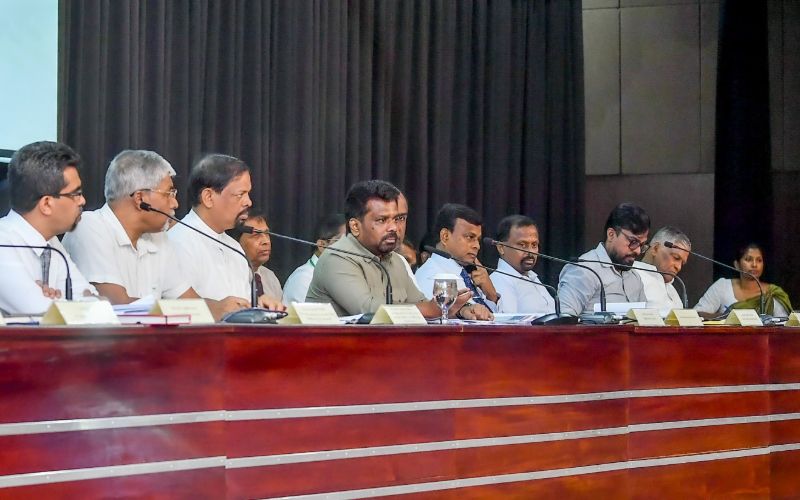
President Anura Kumara Dissanayake emphasised that both the political authority and public officials have a responsibility to ensure that the LKR. 500 billion allocated by the Government in response to Cyclone Ditwah is utilised effectively and efficiently for the recovery and development of the affected communities and areas. The President further stressed the need to complete all related projects before the end of this year.
The President also pointed out that the Government has already taken steps to transform the culture in which the law was selectively enforced based on power, wealth and political connections and to establish a new culture where all citizens are equally subject to the law. The President noted that certain groups are attempting to portray the creation of a law-abiding society as a major crisis, but stressed that, in building a civilised nation, it is essential to create a society in which everyone is accountable under the law.
President Anura Kumara Dissanayake made these remarks while attending the Special District Coordination Committee Meeting for Matale held on Tuesday (12) morning at the Veera Keppetipola Hall in Matale.
The President further emphasised that the law should not be regarded as an obstacle preventing public officials from properly discharging their duties. He called upon all officials to remain fully committed to rebuilding the lives of the people by working within the legal framework and ensuring that public funds are utilised in a planned, efficient and productive manner.
During the meeting, the President also conducted an extensive review of the progress of compensation payments for the loss of lives and property caused by Cyclone Ditwah, as well as the measures taken to restore housing and normalcy to affected communities.
Officials stated that the compensation allowances of LKR 25,000 and LKR 50,000 granted to families affected by Cyclone Ditwah have now been fully disbursed within the Matale District. They further noted that the student assistance allowances of LKR 15,000 and LKR 10,000 have also been fully paid.
Officials also informed the meeting that the disaster had caused complete damage to 254 houses and partial damage to 3,829 houses within the district. Compensation payments have already been completed for all houses eligible to receive assistance without a formal assessment, while assessment procedures for the remaining houses are currently underway.
Extensive discussions were also held regarding alternative solutions to issues arising from various circumstances, including the lack of land ownership, the location of properties within high-risk zones and occupation of protected reserve areas. The meeting further discussed possible amendments to the existing criteria in order to expedite these processes.
The President also reviewed the progress relating to compensation payments for lives lost due to the disaster, compensation for families relocated from high-risk areas, the provision of housing rent allowances, the issuance of National Building Research Institute (NBRI) reports, as well as the progress of housing construction and land acquisition activities.
The President emphasised the necessity of relocating all families currently residing in high-risk areas affected by Cyclone Ditwah. Highlighting the importance of formulating the necessary legal provisions in this regard, the President instructed officials to treat the resettlement of these families in safer locations as a priority matter and to expedite the process.
The President also inquired into the measures being taken to care for children who lost their parents due to the cyclone and to safeguard their future. The President instructed officials to prepare individual support programmes for each affected child and refer them to the Ministry of Women and Child Affairs.
Issues affecting the school system within the district were also discussed during the meeting. The President highlighted the importance of releasing the relevant lands and constructing school buildings in line with the plan being implemented under the Ministry of Education for the relocation and restoration of the school system.
In addition, the President reviewed the progress of the road development programme in the Matale District relating to roads damaged by Cyclone Ditwah.
Officials stated that 16, A and B grade roads and two bridges in the Matale District were damaged by the cyclone. They further noted that reconstruction work on all 16 roads and one of the bridges has now been completed, while discussions were held regarding the expedited reconstruction of the remaining Moragahakanda Bridge as a permanent structure.
The President also inquired into the progress of construction work on the Riverston Road, which is of significant importance to the tourism industry, as well as the Galewela–Matale road project, which has remained a long-standing issue. He instructed officials to expedite the completion of both projects.
The meeting also reviewed the progress of restoration work relating to roads, bridges, culverts and water projects under local government authorities in the Matale District that were damaged by the disaster.
In addition, discussions were held regarding the compensation process under the Ministry of Industry for businesses in the service sector, the tourism sector and the mining sector that suffered losses due to the disaster, as well as the challenges that have arisen in implementing the compensation programme.
The President also reviewed the measures taken to restore the agriculture and livestock sectors. He noted that the Government has placed special emphasis on promoting rural agriculture, with a focus on developing a production-driven economy.
Discussions were also held on the Matale Urban Development Plan implemented under the 2026 Budget allocations, as well as the project to relocate the Dambulla Hospital. The President stressed the importance of ensuring that these initiatives are implemented within the stipulated timeframe and that their benefits are effectively delivered to the public.
The meeting was attended by the Chairman of the Matale District Coordinating Committee and Deputy Minister of Buddhasasana, Religious and Cultural Affairs, Gamagedara Dissanayake, Co-Chairman and Governor of the Central Province, Professor Sarath Abayakon, Members of Parliament Sunil Biyanwila and Dinesh Hemantha and the Chief Secretary of the Central Province, Ajith Premasinghe, along with local government representatives. Also present were the Commissioner General of Essential Services and Chief of Staff to the President, Prabath Chandrakeerthi, Secretary to the Ministry of Defence, Air Vice Marshal Sampath Thuyacontha (Retired), Matale District Secretary, L.P. Madanayaka, senior officials from relevant departments, representatives of the security forces and other state officials.
(PMD)
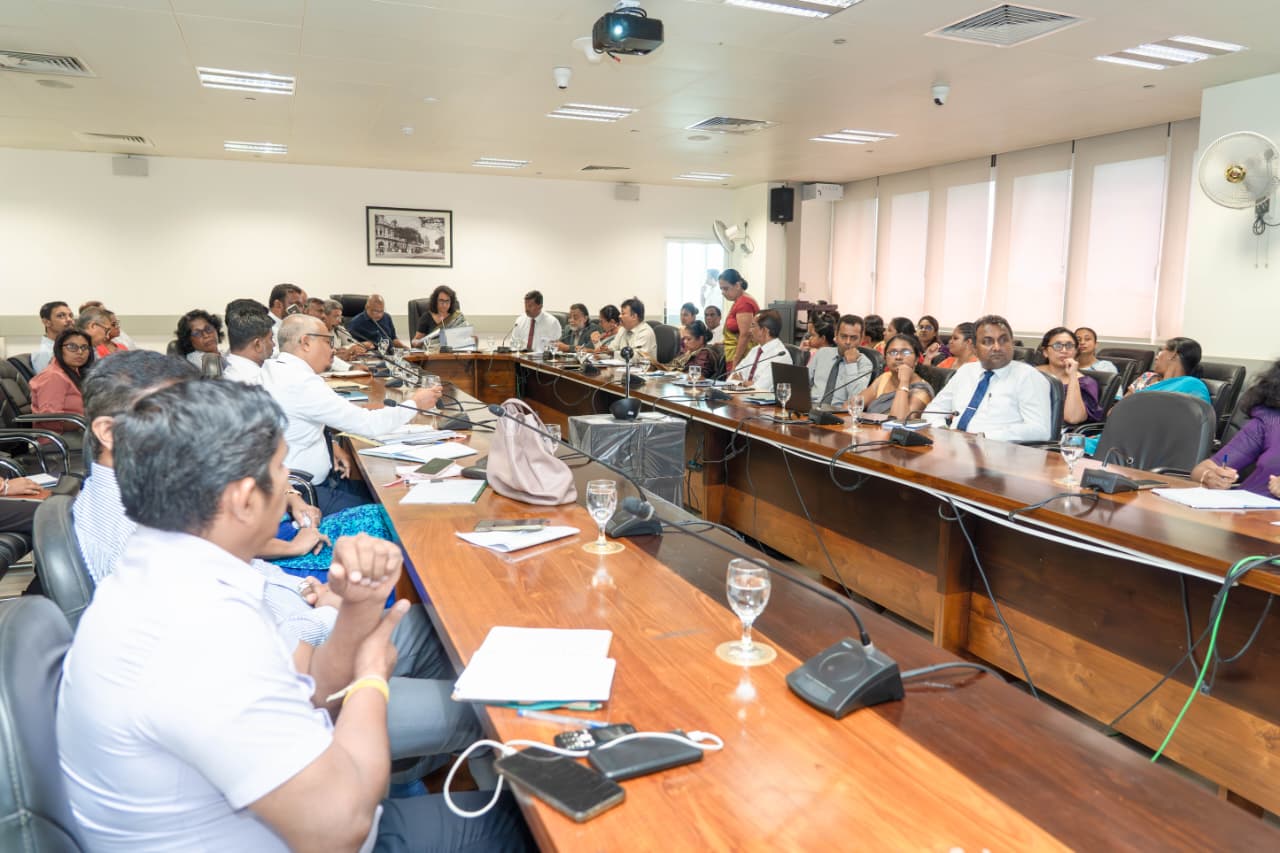
Prime Minister Dr. Harini Amarasuriya instructed officials to implement development projects by taking into account the practical needs of the people.
The Prime Minister made these remarks at the Colombo District Planning Committee meeting held on Tuesday (12) at the Colombo District Secretariat to review the progress of development projects in the Colombo District.
During the meeting, discussions focused on a number of development projects scheduled to be implemented in 2026 and 2027, with special attention given to rural road development, alleviation of poverty, and infrastructure development.
Under the Decentralized Budget Programme, more than Rs. 195 million has been allocated for 2026, and Members of Parliament representing the district have submitted their proposals accordingly. To date, 240 project proposals have been received through Divisional Secretaries, and approval has already been granted for 126 projects valued at Rs. 127 million.
An allocation of Rs. 100 million has been made to ensure the safety of the roads in the Colombo District, with priority given to installing safety barriers and traffic signboards in hazardous locations. In addition, officials stated that plans have been prepared targeting 2027 to construct rural bridges with an allocation of Rs. 100 million and to develop 50 kilometres of roads.
A sum of Rs. 1,036 million has been allocated for the “Praja Shakthi” programme aimed at alleviation of poverty, and the Prime Minister instructed officials to complete all related projects by 30 November 2026. Further, discussions were also held regarding the development of school playgrounds with the support of the Ministry of Sports, as well as the implementation of special projects under the Ministry of Buddhasasana and Environment.
The meeting was attended by the Minister of Justice Harshana Nanayakkara, Deputy Speaker Dr. Rizvie Salih, Colombo District Coordinating Committee Chair and Member of Parliament Lakshman Nipuna Arachchi, Members of Parliament Samanmalee Gunasinghe and Asitha Niroshana, Colombo District Secretary Ginige Prasanna Janaka Kumara, along with public representatives and government officials representing the Colombo District.
[Prime Minister’s Media Division]

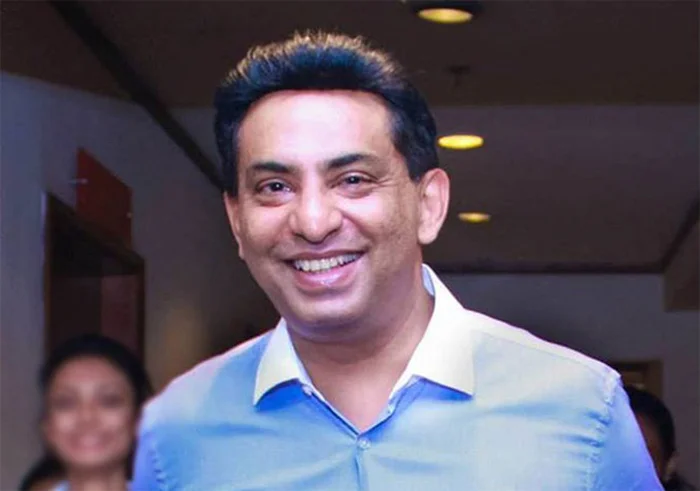
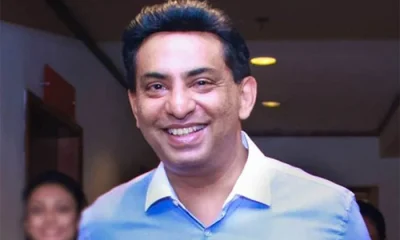
Prof. Prathibha Mahanamahewa has emphasised the need to examine the circumstances under which the court staff executed the bail bond, and the release process, in respect of the late Kapila Chandrasena, former Chief Executive Officer of SriLankan Airlines.
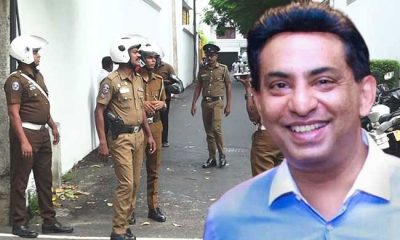
Chandrasena’s body was found in a house at Pedris Road, Colombo 03.
In case of any doubt regarding bail condition/s or any other matter (insufficient surety, identity issues, suspicious documents and unclear order), the Registrar had to get in touch with the relevant Magistrate, Mahanamahewa said.
Mahanamahewa was responding to The Island query regarding the acceptance of two Muslims as sureties. Had they followed the time-tested procedure, court registry/registrar staff would never have accepted sureties as blood relatives of Chandrasena, Mahanamahewa said, alleging a major defect in the execution of the bail bond.
They were arrested by police and remanded by the Colombo Magistrate’s court, till 13 May, pending further investigations.
Colombo Chief Magistrate Asanga S. Bodharagama, on 5 May, granted to Chandrasena cash bail of Rs. 500,000 and three surety bails of Rs. 10 million each. But soon after Chandrasena received bail, the court was told that two of the Rs. 10 million sureties had been produced, after payment of Rs. 15,000 each, were made to those two individuals to act as guarantors.
The bail application had been submitted by Rienzie Arsecularatne, PC, appearing on behalf of Kapila Chandrasena, when the case was earlier taken up, on 28 April.
Police also arrested an elderly person who arranged for the two persons who hadn’t even seen Chandrasena, even once, to offer themselves as sureties.
As soon as the police revealed the fraudulent manner Chandrasena obtained bail, Chief Magistrate Bodharagama issued an order to arrest and produce him before the court. This order was issued consequent to a request made by the Commission to Investigate Allegations of Bribery or Corruption (CIABOC), on the grounds that the defendant had violated bail conditions. The CIABOC wanted Chandrasena held pending the conclusion of the case.
Sources familiar with the execution of bail bond said that the moment the suspects had submitted their National Identity Cards and letters from Grama Sevakas, the court registry/registrar staff should have rejected them. In a such high-profile case, the failure on the part of the lawyers, representing Chandrasena, to check the gsureties’ relationship with Chandrasena, was another glaring shortcoming, sources said, pointing out that after having submitted bail application on 28 April, the defence team should have come prepared to put forward genuine guarantors.
The Island contacted the Bar Association of Sri Lanka for comment on the manner in which the court staff had handled bail for Chandrasena, but there was no response.
Sri Lanka’s former Ambassador to Moscow, accredited to Kiev, Udayanga Weeratunga, said that a thorough investigation should be conducted to ascertain facts about the execution of the bail bond. Asked whether he had been in touch with Chandrasena, Weeratunga said that he spent his first day at Welikada with Chandrasena and Ranjan Ramanayake in one cell. “That happened on 14 February, 2020. I was arrested when I returned to the country, from the UAE, and produced before the then Magistrate Ranga Dissanayake, the incumbent Director General of CIABOC,” Weeratunga said.
Weeratunga said that a couple of months after the change of government in 2024, the US State Department imposed a travel ban on him and Chandrasena and their families over what the US termed as significant corruption.
Weeratunga said that altogether the US designated 14 persons and, of them, two were Sri Lankan, who happened to be him and Chandrasena, accused of corruption in respect of acquisition of MiG 27s from Ukraine and the Airbus deal, during President Mahinda Rajapaksa’s tenure as the President.
SLPP sources said that Chandrasena’s demise shouldn’t prevent proper investigation on his affidavit that claimed pressure brought on him to name Mahinda Rajapaksa as a recipient of the Airbus bribe.
By Shamindra Ferdinando

Complete all projects funded under the LKR. 500 bllion allocation for Ditwah within this year – President

Development projects should be carried out in line with the practical needs of the people – PM

Ayesha Zafar’s rapid ton crushes Zimbabwe

Donald Trump lands in China for high-stakes meeting with Xi Jinping

Gujarat Titans go No.1 after Rabada and Holder rout Sunrisers Hyderabad

Showers will occur in the Western, Sabaragamuwa, Central, North-western and Northern provinces and in Anuradhapura, Trincomalee, Galle and Matara districts

‘Dates have the highest sugar content to fight Coronavirus’

Sunday Island 27 December – Headlines

#SundayIsland 17th December – Headlines

Sunday Island – 28th March

Sunday Island Headlines – 21 March

Sunday Island – 21st February – Headlines
-
 News7 days ago
MIT expert warns of catastrophic consequences of USD 2.5 mn Treasury heist
-
 News4 days ago
Lanka Port City officials to meet investors in Dubai
-
 News23 hours ago
Ex-SriLankan CEO’s death: Controversy surrounds execution of bail bond
-

 Editorial7 days ago
Clean Sri Lanka and dirty politics
-
 News5 days ago
SLPP expresses concern over death of former SriLankan CEO
-

 Editorial6 days ago
The Vijay factor
-
 News5 days ago
Police inform Fort Magistrate’s Court of finding ex-CEO of SriLankan dead under suspicious circumstances
-
Features2 days ago
High Stakes in Pursuing corruption cases