
Foreign News
Human rights court orders reparations for forced sterilization case in Peru


The Inter-American Court of Human Rights (IACHR) has ordered Peru to pay reparations to the family of Celia Ramos, a mother of three whose death resulted from a campaign of forced sterilizations during the 1990s.
Thursday’s landmark ruling stated that the 34-year-old Ramos was coerced into sterilization against her will, causing an allergic reaction that led to her death.
The court ordered Peru to pay her family $340,000 as part of the ruling.
It noted that the Peruvian government had “failed to fulfill its obligation to initiate and conduct a thorough investigation” into Ramos’s case, heightening the strain on her family.
“Ms Ramos Durand’s family members — especially her three daughters, who were children at the time of the events — suffered profound harm as a consequence of the sterilization and death of Celia Edith Ramos Durand and the impunity surrounding the case,” the IACHR wrote in its decision.
Peru’s campaign of forced sterilization took place under the late President Alberto Fujimori, whose tenure included widespread human rights abuses that continue to cast a shadow over the country.
The scheme largely targeted poor and Indigenous women who were often tricked or coerced into sterilisation procedures.
This week’s ruling is the first time the human rights court has weighed in on the issue, which has been the subject of years of legal contestation in Peru.
“After almost 30 years of searching for justice, the Inter-American Court of Human Rights recognised the responsibility of the Peruvian state in the forced sterilization and death of Celia Ramos,” the Peruvian feminist organisation DEMUS said in a social media post, celebrating the ruling.
“This ruling marks a fundamental step in reparations for Celia, her family and the thousands of victims of forced sterilizations in Peru.”
As many as 314,000 women and 24,000 men were sterilized against their will in Peru under Fujimori’s government, which sought to forcibly lower the birth rate as a means of addressing poverty.
The procedures were particularly invasive for the women involved, and some suffered long-term complications, including death.
Family members often received little information about the circumstances that led to loved ones dying after the unnecessary operations. Some survivors did not realise what had happened to them until years later, when they discovered they were unable to have children.
In Ramos’s case, the 34-year-old mother had gone to a state health clinic for medical assistance on July 3, 1997, but was instead forced to undergo tubal ligation.
Ramos, however, suffered a severe allergic reaction during the procedure. She was placed in a recovery room, but the clinic was not able to treat her adequately.
In its decision, the IACHR explained that the clinic “lacked the necessary equipment and medications for adequate risk assessment or to handle emergencies”.
Ramos was ultimately transferred to an intensive care unit in the city of Piura, where she died 19 days later, on July 22, 1997.
The state did not carry out an autopsy and declined to share details with her family.
The compensation outlined in this week’s ruling includes reimbursement for the costs of medical procedures conducted to save Ramos’s life and the estimated loss of income from her death.
In October 2024, the Committee on the Elimination of Discrimination against Women at the United Nations ruled that Peru’s sterilization programme amounted to sex-based violence and discrimination against poor, rural and Indigenous women.
The committee’s statement cited a lack of adequate medical facilities and a lack of informed consent, just as the IACHR did in its decision this week.
“The victims described a consistent pattern of being coerced, pressured, or deceived into undergoing sterilizations at clinics lacking proper infrastructure or trained personnel,” committee member Leticia Bonifaz said.
“The procedures were carried out without informed consent from these victims, with some of them, especially those from remote areas, unable to read and speak Spanish, or fully understand the nature of the procedure.”
Scholars have concluded that Fujimori’s sterilization campaign was driven, in part, by racist views among government officials who saw rural, Indigenous communities as an obstacle to economic modernisation.
[Aljazeera]


Marcia Lucas, the Oscar-winning editor of the original Star Wars film, has died aged 80.
Lucas, who was married to Star Wars creator George Lucas during the making of the first three films, was regarded as a pivotal creative force behind the space saga’s early success, imbuing the original series with emotional depth and narrative clarity.
She died from metastatic cancer at her home in Rancho Mirage, California, on Wednesday surrounded by loved ones, according to her family.
“Marcia was a force,” her family said in a statement to US media on Friday. “A true trailblazer for women in film and one of the most influential editors in cinematic history; she helped redefine what film editing could be.”
Lucas won the Academy Award for Best Film Editing for 1977’s Star Wars – later renamed A New Hope – alongside editors Richard Chew and Paul Hirsch.
Although her contributions largely took place behind the scenes, her role in shaping the film’s emotional heart and narrative structure has been widely recognised in the decades since its release.
George Lucas credited her with helping make sense of the vast amount of footage filmed for the climactic Death Star battle sequence.
“It was extremely complex and we had 40,000 feet of dialogue footage of pilots saying this and that,” he told Rolling Stone shortly after the film’s release
“Nobody really has ever tried to interweave an actual plot story into a dogfight, and we were trying to do that.”
Born Marcia Griffin in Modesto, California, in 1945, she began her career as a film librarian before becoming one of Hollywood’s most respected editors.
After marrying George Lucas in 1969, she worked on several of his early films, including THX 1138 and American Graffiti – earning an Oscar nomination for the latter.
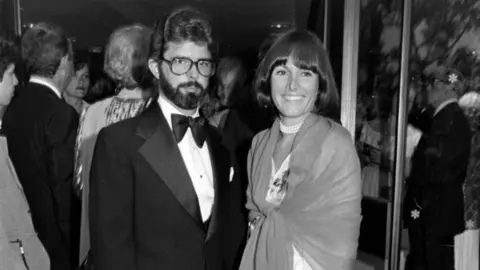
She also collaborated with director Martin Scorsese on a string of his acclaimed 1970s films including Alice Doesn’t Live Here Anymore, Taxi Driver and New York, New York.
Lucas later returned to the Star Wars franchise, working on The Empire Strikes Back in 1980 and Return of the Jedi in 1983.
She and George Lucas adopted a daughter, Amanda, in 1981. The couple divorced in 1983 after 14 years of marriage.
She later married Tom Rodrigues, a production manager at Skywalker Ranch, with whom she had a second daughter, Amy.
Her family said in its statement: “Her influence on film is indelible, but those who knew her best will remember the way she made life feel more vivid, more beautiful, more fun and more full of love.
“Her work was known for its emotional intelligence, rhythm and humanity – a rare ability to find the truth of a scene and bring heart, momentum and clarity to the screen.”
“I love film editing,” Lucas once told a reporter, according to Lucasfilm.
“I have an innate ability to take good material and make it better, and to take bad material and make it fair.”
Paying tribute on Saturday, Lucasfilm said it was “deeply saddened” to learn of her death, adding it “joins the global filmmaking community in mourning the loss of Marcia Lucas”.
Meanwhile, Mark Hamill, who portrayed Star Wars protagonist Luke Skywalker, wrote that he and his wife Marilou were “deeply saddened by the loss of our lifelong friend”.
He added: “Not just a gifted, innovative artist, she also happened to be a genuinely nice person. Smart, funny and just plain fun to be around. Thankfully, her memory lives on and we will never stop missing her.”
[BBC]
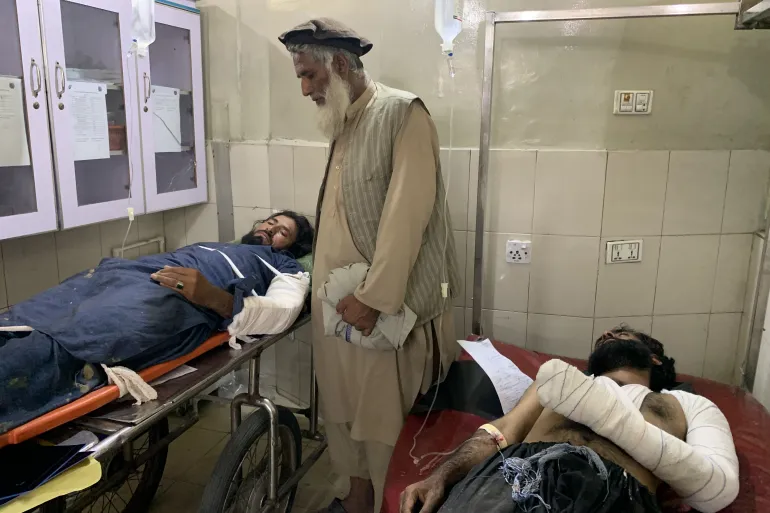
At least 18 people, including women and children, were killed when a cargo truck carrying recently returned Afghan refugees from Pakistan overturned on a major highway in eastern Afghanistan, authorities said.
Taliban government spokesperson Zabihullah Mujahid said the crash took place in the Qarghayi district of Laghman province on Saturday.
The vehicle, heavily loaded with displaced families and their household belongings, veered off the road at approximately 5:30am local time (01:00 GMT) near the Surkhakan intersection in Qarghayi district.
The provincial Director of Public Health Aminullah Sharif said the accident occurred when the truck fell into a ditch after the driver fell asleep.
Authorities said at least 10 children were among the dead.
Abdul Malik Niazay, a spokesperson for the Laghman provincial governor, said more than 30 other passengers were injured, some critically. The families had been temporarily staying in eastern Kunar province and were en route to the capital, Kabul.
Emergency services quickly transferred the wounded to medical facilities in neighbouring Nangarhar province, where several remain in intensive care.
The central government expressed formal condolences to the families of the victims. The Taliban’s Mujahid said in a post on X, “we pray for the speedy recovery of the injured”, adding that he was “deeply saddened” by the tragedy which took place at the end of the Muslim holiday of Eid al-Adha.
Meanwhile, the National Disaster Management Authority announced 730,000 afghanis ($10,000) in emergency financial assistance for the affected families.
[Aljazeera]
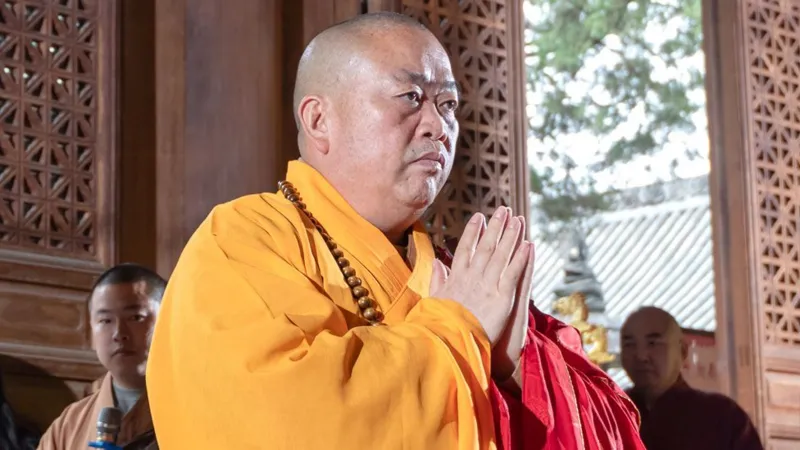
The former head of China’s famous Shaolin Temple – known as the birthplace of kung fu – has been sentenced to 24 years in jail for crimes including embezzlement and bribery.
Shi Yongxin had misappropriated temple assets worth more than 282m yuan ($42m; £31m) from 2003 to 2025, a court in the central Henan province said.
It said Shi had also used his official position to illegally obtain millions from temple construction projects, as well as offering huge bribes to Chinese officials.
Shi – whose birth name is Liu Yingcheng – had earlier admitted his guilt, China’s state Xinhua news agency reported. On Friday, he said he would not appeal against the verdict.
The 1,500-year-old Shaolin Temple – located on a mountain range – attracts thousands of disciples from China and elsewhere every year.
Shi took office there as abbot in 1999, soon earning the nickname “CEO monk” for transforming the institution into a global brand.
Under his leadership, the temple started opening schools outside China and formed a travelling troupe of monks who performed Shaolin kung fu shows – the temple’s signature style of martial arts.
Last year he was defrocked, China’s Buddhist association said.
Shi was investigated for embezzlement and fathering several children in 2015, but was later cleared of the charges.
In an interview with BBC Chinese that year, he said: “If there were a problem, it would have surfaced long ago.”
The name “Shaolin Temple” has gained prominence in pop culture over the years, including being the title of a 1982 film starring Jet Li.
The temple is referenced in songs by American hip-hop group Wu-Tang Clan and inspired a spin-off of the video game Mortal Kombat.
[BBC]

Oscar-winning Star Wars editor Marcia Lucas dies aged 80

Hundreds arrested in France after wild Champions League celebrations

‘Disappointing’ – Sangakkara on Sam Curran turning out for Surrey with IPL still on

Truck carrying Afghan returnees from Pakistan flips on highway, killing 18

PSG beat Arsenal to win back-to-back Champions League titles after shootout

What Hegseth’s comments at Shangri-La Dialogue say about US foreign policy

‘Dates have the highest sugar content to fight Coronavirus’

Sunday Island 27 December – Headlines

#SundayIsland 17th December – Headlines

Sunday Island – 28th March

Sunday Island Headlines – 21 March

Sunday Island – 21st February – Headlines
-

 News2 days ago
IMF urges Lanka not to meddle with exchange rate
-
 News7 days ago
Police probe underway to ascertain links between criminals deported from UAE and local politicians
-

 News6 days ago
Easter Sunday carnage: Court told Maulana’s statement cannot be accepted without cross-examination
-
 News6 days ago
UK passport holder hiding here wants to have deportation order rescinded to leave without blemish
-
 Opinion6 days ago
Undermining the democratic political framework
-

 Features3 days ago
The Division Bell Mystery
-
 Midweek Review5 days ago
Israeli-US aggression won’t go unanswered -Iranian Ambassador
-

 News7 days ago
Dickoya double murder suspect arrested