
Features
History of Leprosy in Sri Lanka: Saga of three millennia

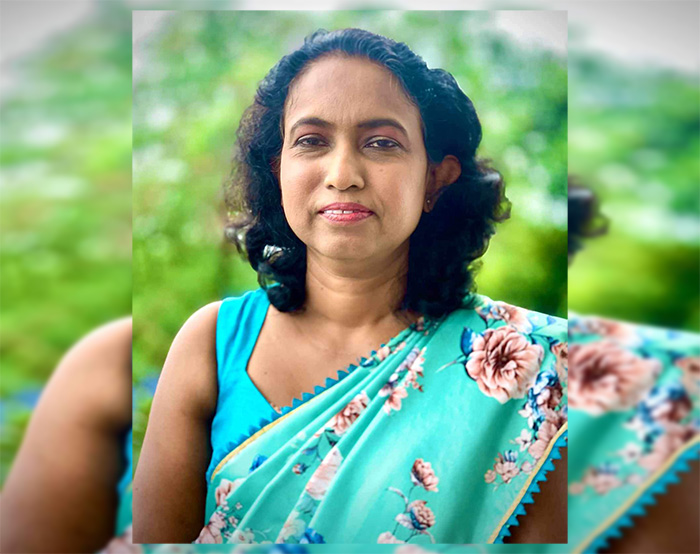
By Ifham Nizam
Nearly 1500 new patients with leprosy are diagnosed each year. Almost 50 percent of them are residents of four districts, Colombo, Kalutara, Gampaha and Batticaloa. Some areas in the northern, Uva and Central provinces have very few cases and may be considered areas that have “eliminated” leprosy in the true sense, says a senior medical officer.
Dr. Indira Kahawita, Consultant Dermatologist, Anti Leprosy Campaign, Sri Lanka, told The Island that 10 percent of the patients are children below 14 years of age.
“This is an indication of ongoing transmission within the country. About seven percent of the patients have permanent nerve damage at the time of diagnosis. This means there is a delay in diagnosis,” Dr. Kahawita stressed.
Excerpts of the interview with Dr. Kahawita:
* Does leprosy have a long history in Sri Lanka?
Yes, the history of leprosy is as long as the history of the country itself. There is evidence from the ancient medical books, as well as from the chronicles on history. But one need to remember that the disease wasn’t called leprosy then.
In some of my descriptions I have used the terms leper and asylum. These words are used only in the historical context. In the modern world these words are considered discriminatory and are not used.
* Then how is it possible to come to conclusions?
Firstly, some ancient books on medicine, written in the Anuradhapura era, describe symptoms and signs of skin diseases, similar to leprosy. The most notable among them are; Sarartha Sangrahaya” by the Surgeon King Buddhadasa in the 5th century, “Yogarnavaya”, written by Bhikku Buddhaputhra in the 12th century, and “Bhesajja Manjusawa”, written by “Paspiruvan mula/head of five piriven” Bhikku in the 13th century. All these books describe several presentations of “kushtha” that are identical to leprosy. The same is true for the well known Ayurvedic books, “Charaka Sanhithawa” and “Susrutha Sanhithawa”.
After going through these texts very carefully, one can deduct that the word “kushtha” was an all-encompassing term similar to the word ‘rash’ in today’s context, and that leprosy was definitely one of them. Both the Sushrutha and Charaka Sanhitha give almost identical descriptions of “kushtha poorwa roopa”or symptoms of “kushtha”. The absence of sensation, absence of sweating, paraesthesia, goose bumps, unusual pain in the wound (neuropathic pain), ulcers that occur easily and last longer and numbness of organs have been described as symptoms of “kushtha”. Several types of “kushtha” described in the books written in Sri Lanka are identical to the individual features of leprosy.
Secondly, the “Mahawansa” narrates how king Buddhadasa cured a leper of his deranged mental condition when he used abusive language at the king in the marketplace. The statue “Kushtaraja Gala” in Weligama, is now established as an Avalokitheswara bodhisatva. Bodhisatva worship was used for relief from illness and it is believed that lepers of the South worshipped this statue seeking relief.
* What about the legend of the “lion” and Suppa Devi and the
beginning of the Sinhala race?
If one were to think of a medically plausible explanation for the lion, the most suitable would be a well-built young man with lepromatous leprosy who had who had fled to the jungles due to his disease. In fact, the changes in the face in lepromatous leprosy are termed “leonine facies” – face of a lion.
If this is the case, the fact that their offspring were later received at the Royal Court confirms that discrimination against those affected was minimal at that time.
* Was leprosy a dreaded disease in the ancient past?
It is difficult to say that persons affected were not discriminated at all. But the story of Sinhabahu and the fact that the leper who abused king Buddhadasa was able to do so in the market place suggest that those affected were allowed to live freely within the society. The Thripitaka contains the “Suppabuddha Kutti suttha” narrating the story of a person affected who sat in the audience with the others to listen to the preachings of the Buddha who gained enlightenment as the Buddha preached aiming him specifically. Even the bioarcheological work in the Indus valley have shown evidence that there was an empathetic attitude towards those affected.
* What was the status of leprosy in the colonial period?
Even though there are no written records from the Portuguese period, many documents from the Dutch period give details about the status of leprosy. The disease was prevalent in the areas under the Dutch rule and the rulers had started to segregate those affected in order to prevent further transmission. Initially, they were banished to Tutucorin, in India. Later the Dutch East India company allocated funds to build the leper asylum in Hendala. Leprosy was a major health problem in the Dutch era and the officials had been prompt in tackling the situation.
The highlights of the British period are the lepers ordinance no 4 of 1901, the building of the leprosy hospital in Manthivu, off Batticaloa, and the introduction of the early treatments for leprosy. The Lepers Ordinance imposes compulsory segregation of those confirmed to have leprosy. Since all those diagnosed could not be housed within the leprosy hospitals, home quarantine was also practiced.
* What is the status of leprosy hospitals now?
The hospital at Hendala houses patients who were admitted several decades ago. They are there as they have lost family ties due to long separation. In its prime the hospital had boasted of around 700 patients, the best possible medical care and nursing support of religious sisters from many sects. The eminent doctors had done immense service to leprosy care in the country and some have even been honoured by the British empire.
The hospital at Manthivu was opened in 1921 due to the logistic difficulties in transporting patients from the East to Handala. It was decided to close the hospital and transfer 38 patients to Hendala due to safety concerns during the civil unrest in 1996. Two patients who had refused to be moved still remain there.
A leprosy colony, meant for able bodied patients to undergo inpatient care while being economically independent, functioned at Uragasmanhandiya, in the Galle district, for a short period, from 1952 to 1963.
* Why were patients segregated?
There was no effective treatment at that time. In fact, in the Dutch period, it wasn’t even known that leprosy was caused by a bacterium. But it was accepted that spread of the disease could be contained by removing those affected from the community. Initially, segregation was voluntary but after 1901 all patients diagnosed were under segregation, irrespective of their status.
* Does it mean that there was no treatment whatsoever during those days?
The initial treatment options were oils extracted from certain plants as external applications. During the late 19th century, two oils; gurjun oil extracted from the plant Dipterocarpus turbinatus and chaulmoogra oil extracted from the plant Hydnocarpus wightianus were used as massage oils.Chaulmoogra oil became the mainstay of therapy in the 1920s, when better techniques of preparation made it possible for the oil to be used as an oral drug and an injection. But the injections were painful and the response to treatment was around 50%.
With the introduction of a group of drugs called sulphones in the 1930s the treatment took a new turn. By the 1950s dapsone, a better and newer sulphone, was used as monotherapy (single drug therapy) for long periods. Since the organism has the tendency to alter itself to escape the effects of one antibiotic resistance to dapsone was soon identified.
* When was effective treatment for leprosy available in Sri Lanka?
In 1982 the World Health Organization (WHO) introduced a combination of antibiotics called the Multi Drug Therapy (MDT). Sri Lanka started using the MDT island-wide in 1983 and approximately 100 000 patients have been treated with MDT over the past 40 years. There are two types of treatment, paucibacillary (PB) given for six months for those with less severe disease and multibacillary (MB) given for 12 months for those with the more extensive form of the disease. The treatment is provided free of charge by the WHO and is available at government hospitals island-wide. The treatment can be used safely even in pregnant and lactating mothers and children.
*There were popular awareness programmes in the past. Were they effective?
The most effective awareness programme was conducted in the late 1980s with messages about the signs and symptoms of leprosy and that leprosy is curable over all available media. The two teledramas, “Ella langa walawwa” and “Ira Paya” were very effective in taking the message about leprosy to the masses. With improved awareness, the number of patients identified almost trebled in 1990. Many patients presented for treatment by themselves. Since 2000, approximately 1500 to 2000 new patients have been diagnosed each year. There was a drop in the detection of new cases after the COVID-19 pandemic, the Anti-Leprosy Campaign has started a social marketing programme over mainstream and social media called “LIFE Sri Lanka” in 2022.
* Has Sri Lanka eliminated leprosy?
When the WHO introduced the goal of “Eliminating leprosy as a public health problem” in the 1990s the parameter used was “less than one patient with leprosy per 10,000 population”. This highly technical point was not understood even by some healthcare workers. So, the message that was accepted by the public was that “Sri Lanka has eliminated leprosy, or leprosy is no longer present in Sri Lanka”. This misconception may have led to the missing of the diagnosis in many patients. If we look at the statistics for leprosy in Sri Lanka for the past 60 years, we can see that the numbers detected in the country have been within the WHO’s parameters even in the 1960s.
* What is the status of leprosy in Sri Lanka now?
Approximately 1500 new patients with leprosy are diagnosed each year. Almost 50% of them are residents of four districts, Colombo, Kalutara, Gampaha and Batticaloa. Some areas in the northern, Uva and Central provinces have very few cases and may be considered areas that have “eliminated” leprosy in the true sense
10% of the patients are children below 14 years of age. This is an indication of ongoing transmission within the country. About 7% of the patients have permanent nerve damage at the time of diagnosis. This means there is a delay in diagnosis.
*What measures have the authorities taken to control leprosy in Sri Lanka?
The Anti Leprosy Campaign (ALC), the organization in charge of leprosy control, is using a multi-pronged approach to improve awareness about leprosy, both among healthcare workers and the public. The ALC has mapped the country into risk areas according to the WHO’s most recent recommendations and is now in the process of using GIS technology to identify areas with high disease burden and to target those areas for awareness and case detection.
Our aim is to use strategies specifically suited for each area of the country so that all possible cases are diagnosed and started on treatment early. Since treatment of cases and minimizing the reservoir of infection is the only effective method of disease control for leprosy, we are hopeful that the improved strategies will take the country towards zero leprosy or true elimination of the disease.


 When the National People’s Power won elections in 2024, there was much hope that the country’s education sector could be made better. Besides the promise of good governance and system change that the NPP offered, this hope was fuelled in part by the appointment of an academic who was at the forefront of the struggle to strengthen free public education and actively involved in the campaign for 6% of GDP for education, as the Minister of Education.
Reforms in the education sector are underway including, a key encouraging move to mainstream vocational education as part of the school curriculum. There has been a marginal increase in budgetary allocations for education. New infrastructure facilities are to be introduced at some universities. The freeze on recruitment is slowly being lifted. However, there is much to be desired in the government’s performance for the past one year. Basic democratic values like rule of law, transparency and consultation, let alone far-reaching systemic changes, such as allocation of more funds for education, combating the neoliberal push towards privatisation and eradication of resource inequalities within the public university system, are not given due importance in the current approach to educational and institutional reforms. This edition of Kuppi Talk focuses on the general educational reforms and the institutional reforms required in the public university system.
General Educational Reforms
Any reform process – whether it is in education or any other area – needs to be shaped by public opinion. A country’s education sector should take into serious consideration the views of students, parents, teachers, educational administrators, associated unions, and the wider public in formulating the reforms. Especially after Aragalaya/Porattam, the country saw a significant political shift. Disillusionment with the traditional political elite mired in corruption, nepotism, racism and self-serving agendas, brought the NPP to power. In such a context, the expectation that any reforms should connect with the people, especially communities that have been systematically excluded from processes of policymaking and governance, is high.
Sadly, the general educational reforms, which are being implemented this year, emerged without much discussion on what recent political changes meant to the people and the education sector. Many felt that the new government should not have been hasty in introducing these reforms in 2026. The present state of affairs calls for self-introspection. As members affiliated to the National Institute of Education (NIE), we must acknowledge that we should have collectively insisted on more time for consultation, deliberations and review.
The government’s conflicts with the teachers’ unions over the extension of school hours, the History teachers’ opposition to the removal of History from the list of compulsory exam subjects for Grades 10 and 11, the discontent with regard to the increase in the number of subjects (now presented as modules) for Grade 6 classes could have been avoided, had there been adequate time spent on consultations.
Given the opposition to the current set of reforms, the government should keep engaging all concerned actors on changes that could be brought about in the coming years. Instead of adopting an intransigent position or ignoring mistakes made, the government and we, the members affiliated to NIE, need to keep the reform process alive, remain open to critique, and treat the latest policy framework, the exams and evaluation methods, and even the modules, as live documents that can be made better, based on constructive feedback and public opinion.
Philosophy and Content
As Ramya Kumar observed in the last edition of Kuppi Talk, there are many refreshing ideas included in the educational philosophy that appears in the latest version of the policy document on educational reforms. But, sadly, it was not possible for curriculum writers to reflect on how this policy could inform the actual content as many of the modules had been sent for printing even before the policy was released to the public. An extensive public discussion of the proposed educational vision would have helped those involved in designing the curriculum to prioritise subjects and disciplines that need to be given importance in a country that went through a protracted civil war and continue to face deep ethno-religious divisions.
While I appreciate the statement made by the Minister of Education, in Parliament, that the histories of minority communities will be included in the new curriculum, a wider public discussion might have pushed the government and NIE to allocate more time for subjects like the Second National Language and include History or a Social Science subject under the list of compulsory subjects. Now that a detailed policy document is in the public domain, there should be a serious conversation about how best the progressive aspects of its philosophy could be made to inform the actual content of the curriculum, its implementation and pedagogy in the future.
University Reforms
Another reform process where the government seems to be going headfirst is the amendments to the Universities Act. While laws need to be revisited and changes be made where required, the existent law should govern the way things are done until a new law comes into place. Recently, a circular was issued by the University Grants Commission (UGC) to halt the process of appointing Heads of Departments and Deans until the proposed amendments to the University Act come into effect. Such an intervention by the UGC is totalitarian and undermines the academic and institutional culture within the public university system and goes against the principle of rule of law.
There have been longstanding demands with regard to institutional reforms such as a transparent process in appointing council members to the public university system, reforms in the schemes of recruitment and selection processes for Vice Chancellor and academics, and the withdrawal of the circular banning teachers of law from practising, to name a few.
The need for a system where the evaluation of applicants for the post of Vice Chancellor cannot be manipulated by the Council members is strongly felt today, given the way some candidates have reportedly been marked up/down in an unfair manner for subjective criteria (e.g., leadership, integrity) in recent selection processes. Likewise, academic recruitment sometimes penalises scholars with inter-disciplinary backgrounds and compartmentalises knowledge within hermetically sealed boundaries. Rigid disciplinary specificities and ambiguities around terms such as ‘subject’ and ‘field’ in the recruitment scheme have been used to reject applicants with outstanding publications by those within the system who saw them as a threat to their positions. The government should work towards reforms in these areas, too, but through adequate deliberations and dialogue.
From Mindless Efficiency to Patient Deliberations
Given the seeming lack of interest on the part of the government to listen to public opinion, in 2026, academics, trade unions and students should be more active in their struggle for transparency and consultations. This struggle has to happen alongside our ongoing struggles for higher allocations for education, better infrastructure, increased recruitment and better work environment. Part of this struggle involves holding the NPP government, UGC, NIE, our universities and schools accountable.
The new year requires us to think about social justice and accountability in education in new ways, also in the light of the Ditwah catastrophe. The decision to cancel the third-term exams, delegating the authority to decide when to re-open affected schools to local educational bodies and Principals and not change the school hours in view of the difficulties caused by Ditwah are commendable moves. But there is much more that we have to do both in addressing the practical needs of the people affected by Ditwah and understanding the implications of this crisis to our framing of education as social justice.
To what extent is our educational policymaking aware of the special concerns of students, teachers and schools affected by Ditwah and other similar catastrophes? Do the authorities know enough about what these students, teachers and institutions expect via educational and institutional reforms? What steps have we taken to find out their priorities and their understanding of educational reforms at this critical juncture? What steps did we take in the past to consult communities that are prone to climate disasters? We should not shy away from decelerating the reform process, if that is what the present moment of climate crisis exacerbated by historical inequalities of class, gender, ethnicity and region in areas like Malaiyaham requires, especially in a situation where deliberations have been found lacking.
This piece calls for slowing-down as a counter practice, a decelerating move against mindless efficiency and speed demanded by neoliberal donor agencies during reform processes at the risk of public opinion, especially of those on the margins. Such framing can help us see openness, patience, accountability, humility and the will to self-introspect and self-correct as our guides in envisioning and implementing educational reforms in the new year and beyond.
(Mahendran Thiruvarangan is a Senior Lecturer attached to the Department of Linguistics & English at the University of Jaffna)
Kuppi is a politics and pedagogy happening on the margins of the lecture hall that parodies, subverts, and simultaneously reaffirms social hierarchies
by Mahendran Thiruvarangan

Looking back at the past year, the anxiety among influential sections of the population that the NPP government would destabilise the country has been dispelled. There was concern that the new government with its strong JVP leadership might not be respectful of private property in the Marxist tradition. These fears have not materialised. The government has made a smooth transition, with no upheavals and no breakdown of governance. This continuity deserves recognition. In general, smooth political transitions following decisive electoral change may be identified as early indicators of democratic consolidation rather than disruption.
Democratic legitimacy is strengthened when new governments respect inherited institutions rather than seek to dismantle them wholesale. On this score, the government’s first year has been positive. However, the challenges that the government faces are many. The government’s failure to appoint an Auditor General, coupled with its determination to push through nominees of its own choosing without accommodating objections from the opposition and civil society, reflects a deeper problem. The government’s position is that the Constitutional Council is making biased decisions when it rejects the president’s nominations to the position of Auditor General.
Many if not most of the government’s appointments to high positions of state have been drawn from a narrow base of ruling party members and associates. The government’s core entity, the JVP, has had a traditional voter base of no more than 5 percent. Limiting selection of top officials to its members or associates is a recipe for not getting the best. It leaves out a wide swathe of competent persons which is counterproductive to the national interest. Reliance on a narrow pool of party affiliated individuals for senior state appointments limits access to talent and expertise, though the government may have its own reasons.
The recent furor arising out of the Grade 6 children’s textbook having a weblink to a gay dating site appears to be an act of sabotage. Prime Minister (and Education Minister Harini Amarasuriya) has been unfairly and unreasonably targeted for attack by her political opponents. Governments that professionalise the civil service rather than politicise them have been more successful in sustaining reform in the longer term in keeping with the national interest. In Sri Lanka, officers of the state are not allowed to contest elections while in service (Establishment Code) which indicates that they cannot be linked to any party as they have to serve all.
Skilled Leadership
The government is also being subjected to criticism by the Opposition for promising much in its election manifesto and failing to deliver on those promises. In this regard, the NPP has been no different to the other political parties that contested those elections making extravagant promises. The problem is that the economic collapse of 2022 set the country back several years in terms of income and living standards. The economy regressed to the levels of 2018, which was not due to actions of the NPP. Even the most skilled leadership today cannot simply erase those lost years. The economy rebounded to around five percent growth in the past year, but this recovery now faces new problems following Cyclone Ditwah, which wiped out an estimated ten percent of national income.
In the aftermath of the cyclone, the country’s cause for shame lies with the political parties. Rather than coming together to support relief and recovery, many focused on assigning blame and scoring political points, as in the attacks on the prime minister, undermining public confidence in the state apparatus at a moment when trust was essential. Despite the politically motivated attacks by some, the government needs to stick to the path of inclusiveness in its approach to governance. The sustainability of policy change depends not only on electoral victory but on inclusive processes that are more likely to endure than those imposed by majorities.
Bipartisanship recognises that national rebuilding and reconciliation requires cooperation across political divides. It requires consultation with the opposition and with civil society. Opposition leader Sajith Premadasa has been generally reasonable and constructive in his approach. A broader view of bipartisanship is that it needs to extend beyond the mainstream opposition to include ethnic and religious minorities. The government’s commitment to equal rights and non-discrimination has had a positive impact. Visible racism has declined, and minorities report feeling physically safer than in the past. These gains should not be underestimated. However, deeper threats to ethnic harmony remain.
The government needs to do more to make national reconciliation practical and rooted in change on the ground rather than symbolic. Political power sharing is central to this task. Minority communities, particularly in the north and east, continue to feel excluded from national development. While they welcome visits and dialogue with national leaders, frustration grows when development promises remain confined to foundation stones and ceremonies. The construction of Buddhist temples in areas with no Buddhist population, justified on claims of historical precedent, is perceived as threatening rather than reconciliatory.
Wider Polity
The constitutionally mandated devolution framework provided by the Thirteenth Amendment remains the most viable mechanism for addressing minority grievances within a united country. It was mediated by India as a third party to the agreement. The long delayed provincial council elections need to be held without further postponement. Provincial council elections have not been held for seven years. This prolonged suspension undermines both democratic practice and minority confidence. International experience, whether in India and Switzerland, shows that decentralisation is most effective when regional institutions are electorally accountable and operational rather than dormant.
It is not sufficient to treat individuals as equal citizens in the abstract. Democratic equality also requires recognising communities as collective actors with legitimate interests. Power sharing allows communities to make decisions in areas where they form majorities, reducing alienation and strengthening national cohesion. The government’s first year in office saw it acknowledge many of these problems, but acknowledgment has not yet translated into action. Issues relating to missing persons, prolonged detention, land encroachment and the absence of provincial elections remain unresolved. Even in areas where reform has been attempted, such as the repeal of the Prevention of Terrorism Act, the proposed replacement legislation falls short of international human rights standards.
The New Year must be one in which these foundational issues are addressed decisively. If not, problems will fester, get worse and distract the government from engaging fully in the development process. Devolution through the Thirteenth Amendment and credible reconciliation mechanisms must move from rhetoric to implementation. It is reported that a resolution to appoint a select committee of parliament to look into and report on an electoral system under which the provincial council elections will be held will be taken up this week. Similarly, existing institutions such as the Office of Missing Persons and the Office of Reparations need to be empowered to function effectively, while a truth and reconciliation process must be established that commands public confidence.
Trust in institutions requires respect for constitutional processes, trust in society requires inclusive decision making, and trust across communities requires genuine power sharing and accountability. Economic recovery, disaster reconstruction, institutional integrity and ethnic reconciliation are not separate tasks but interlinked tests of democratic governance. The government needs to move beyond reliance on its core supporters and govern in a manner that draws in the wider polity. Its success here will determine not only the sustainability of its reforms but also the country’s prospects for long term stability and unity.
by Jehan Perera
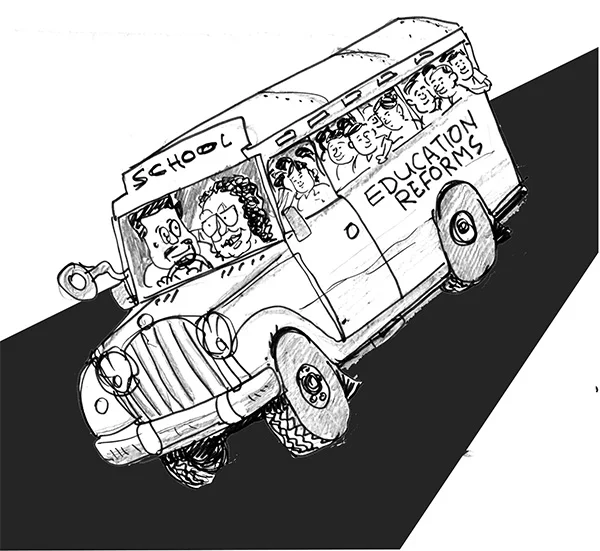
While agreeing wholeheartedly with most of the sentiments expressed by Dr Geewananda Gunawardhana in his piece “Pharmaceuticals, deaths, and work ethics” (The Island, 5th January), I must take exception to what he stated regarding corruption: “Enough has been said about corruption, and fortunately, the present government is making an effort to curb it. We must give them some time as only the government has changed, not the people”
With every change of government, we have witnessed the scenario of the incoming government going after the corrupt of the previous, punishing a few politicians in the process. This is nothing new. In fact, some governments have gone after high-ranking public servants, too, punishing them on very flimsy grounds. One of the main reasons, if not the main, of the unexpected massive victory at the polls of this government was the promise of eradication of corruption. Whilst claiming credit for convicting some errant politicians, even for cases that commenced before they came to power, how has the NPP government fared? If one considers corruption to be purely financial, then they have done well, so far. Well, even with previous governments they did not commence plundering the wealth of the nation in the first year!
I would argue that dishonesty, even refusal to take responsibility is corruption. Plucking out of retirement and giving plum jobs to those who canvassed key groups, in my opinion, is even worse corruption than some financial malpractices. There is no need to go into the details of Ranwala affairs as much has been written about but the way the government responded does not reassure anyone expecting and hoping for the NPP government to be corruption free.
One of the first important actions of the government was the election of Ranwala as the speaker. When his claimed doctorate was queried and he stepped down to find the certificate, why didn’t AKD give him a time limit to find it? When he could not substantiate obtaining a PhD, even after a year, why didn’t AKD insist that he resigns the parliamentary seat? Had such actions been taken then the NPP can claim credit that the party does not tolerate dishonesty. What an example are we setting for the youth?
Recent road traffic accident involving Ranwala brough to focus this lapse too, in addition to the laughable way the RTA was handled. The police officers investigating could not breathalyse him as they had run out of ‘balloons’ for the breathalyser! His blood and urine alcohol levels were done only after a safe period had elapsed. Not surprisingly, the results were normal! Honestly, does the government believe that anyone with an iota of intelligence would accept the explanation that these were lapses on the part of the police but not due to political interference?
The release of over 300 ‘red-tagged’ containers continues to remain a mystery. The deputy minister of shipping announced loudly that the ministry would take full responsibility but subsequently it turned out that customs is not under the purview of the ministry of shipping. Report on the affair is yet to see the light of day, the only thing that happened being the senior officer in customs that defended the government’s action being appointed the chief! Are these the actions of a government that came to power on the promise of eradication of corruption?
The new year dawned with another headache for the government that promised ‘system change.’ The most important educational reforms in our political history were those introduced by Dr CWW Kannangara which included free education and the establishment of central schools, etc. He did so after a comprehensive study lasting over six years, but the NPP government has been in a rush! Against the advice of many educationists that reforms should be brought after consultation, the government decided it could rush it on its own. It refuses to take responsibility when things go wrong. Heavens, things have started going wrong even before it started! Grade Six English Language module textbook gives a link to make e-buddies. When I clicked that link what I got was a site that stated: “Buddy, Bad Boys Club, Meet Gay Men for fun”!
Australia has already banned social media to children under 15 years and a recent survey showed that nearly two thirds of parents in the UK also favour such a ban but our minister of education wants children as young as ten years to join social media and have e-buddies!
Coming back to the aforesaid website, instead of an internal investigation to find out what went wrong, the Secretary to the Ministry of Education went to the CID. Of course, who is there in the CID? Shani of Ranjan Ramanayake tape fame! He will surely ‘fix’ someone for ‘sabotaging’ educational reforms! Can we say that the NPP government is less corrupt and any better than its predecessors?
by Dr Upul Wijayawardhana

Venezuelan security forces detain journalists as armed police patrol streets

Selfies and smiles: South Korea seeks ‘new phase’ in ties with China

M/s South Asian Technologies awarded contract to supply vehicle number plates

A new act for National Lotteries Board to be introduced
Motor Vehicles (Driving License Levy) Regulations No. 3 of 2022 to be amended
Mrs. P. K. L. S. Panduwawala appointed to the post of Surveyor General

‘Dates have the highest sugar content to fight Coronavirus’

Sunday Island 27 December – Headlines

#SundayIsland 17th December – Headlines

Sunday Island – 28th March

Sunday Island Headlines – 21 March

Sunday Island – 21st February – Headlines
-
 News23 hours ago
Broad support emerges for Faiszer’s sweeping proposals on long- delayed divorce and personal law reforms
-
 News2 days ago
Private airline crew member nabbed with contraband gold
-

 News24 hours ago
Interception of SL fishing craft by Seychelles: Trawler owners demand international investigation
-

 News4 days ago
Health Minister sends letter of demand for one billion rupees in damages
-

 Opinion6 days ago
Remembering Douglas Devananda on New Year’s Day 2026
-
 Features2 days ago
Pharmaceuticals, deaths, and work ethics
-
 News7 days ago
Leading the Nation’s Connectivity Recovery Amid Unprecedented Challenges
-
 News23 hours ago
US raid on Venezuela violation of UN Charter and intl. law: Govt.