
News
Herath: COPE dissolution must not hinder probe into economic crisis

by Shamindra Ferdinando
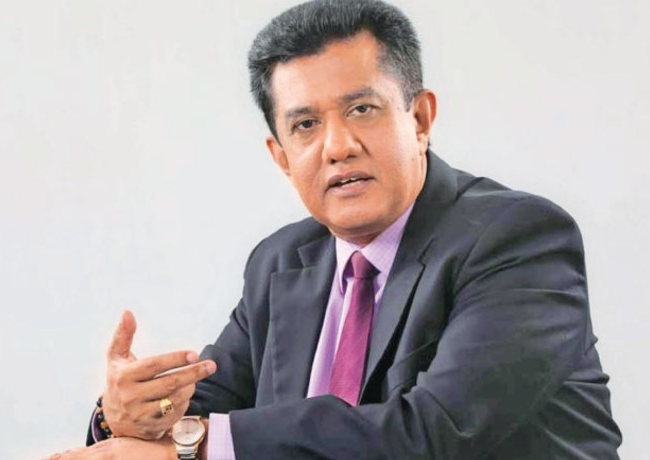
Former Chairman of the Committee on Public Enterprises (COPE) Prof. Charitha Herath yesterday (07) said that though the prorogation of the Parliament led to the dissolution of the watchdog committee it shouldn’t hinder a planned inquiry to identify those responsible for the current economic chaos.
Prof. Herath said that the COPE was about to initiate the probe when the prorogation of the Parliament took place. President Ranil Wickremesinghe prorogued the House at midnight on July 28, just a week after the Parliament overwhelmingly elected him to complete the remainder of President Gotabaya Rajapaksa’s five-year term, won at the Nov 2019 presidential poll.
In a brief interview with The Island, Prof. Herath said as a result of the prorogation, he no longer functioned as the COPE Chairman. All committees, except the High Post Committee, chaired by Speaker Mahinda Yapa Abeywardena, Sectoral Oversight Committees and Select Committees of Parliament, stand dissolved, lawmaker Herath said, urging the powers that be to ensure the continuation of the inquiry.
The proposed inquiry would be largely based on a report received by the Parliament from Auditor General W.P.C. Wickremeratne several weeks ago, Prof. Herath said.
Prof. Herath said that the parliamentary watchdog, he headed, had planned daily sittings over a period of two weeks to inquire into the entire gamut of issues that finally led to the declaration made by incumbent Governor of the Central Bank, Dr. Nandalal Weerasinghe, on 19 May, that the country was no longer in a position to service its foreign debt. This was a week after UNP leader Ranil Wickremesinghe accepted the premiership, Prof. Herath said, while stressing the responsibility on the part of the Parliament to conduct a no holds barred investigation into the whole affair.
According to the first-time entrant to the Parliament, the inquiry was to be launched on July 19, but couldn’t due to the political upheaval, caused by the forced resignation of President Gotabaya Rajapaksa.
Among those asked to appear before the parliamentary committee were the Governor of the Central Bank, Dr. Nandalal Weerasinghe, and his predecessors, Prof. W.D. Lakshman (Dec 2019-Sept 2021) and Ajith Nivard Cabraal (Sept 2021-March 2022), former Secretary to the President Dr. P.B. Jayasundera (Nov 2019-Dec 2021), Finance Secretary Mahinda Sirisiwardana and his predecessors, S.R. Attygalle and Dr. S.R. Samarasinghe, who now functions as an advisor to President Ranil Wickremesinghe.The COPE also planned to summon former members of the Monetary Board, Sanjiva Jayawardena, PC, and Dr. Ranee Jayamaha and others. Governor, CBSL and Secretary to the Treasury are ex-officio members of the Monetary Board.
Asked whether he would like to be re-appointed as COPE Chairman, Prof. Herath said that as his outfit inquired into the issues at hand pertaining to overall financial crisis that caused massive protest campaign, leading to President Gotabaya Rajapaksa’s ouster without fear or favour those interested in serving the watchdog again should be accommodated. Prof. Herath said that he was ready to give the required leadership to it, especially against the backdrop of President Wickremesinghe’s assurance to the Parliament, regarding a high profile anti-corruption campaign.
Herath quoted President Wickremesinghe as having told the Parliament that: “It is essential to completely eliminate bribery, corruption and fraud from our society. I will implement a national policy to combat bribery and corruption. New rules and regulations and orders in this regard are being prepared by the Ministry of Justice. A consensus will be reached with the International Monetary Fund regarding combating corruption.”
Prof. Herath emphasized that regardless of consensus on political matters, the current crisis couldn’t be addressed unless tangible measures were taken to discipline the public sector and also thwart corrupt practices involving the public and private sectors.
Prof. Herath said that those who could provide information, relating to the inquiry, would be given an opportunity to do so.When The Island pointed out he may not be even considered for re-appointment as COPE Chief due to him joining the rebel group, that backed Dullas Alahapperuma, at the presidential contest, Prof. Herath stressed that he was confident his political stand shouldn’t be a disqualification. Should it be the case, would there be any purpose in even talking about an all-party arrangement to address issues at hand.Prof. Herath said that the country couldn’t move forward without establishing who brought on this catastrophe in our country.
Declaring old political strategies would be irrelevant in the current context, Prof. Herath said that no one could challenge the process adopted in the election of President Wickremesinghe as the 8th President.
Lawmaker Herath told a recent media briefing, chaired by SLPP Chairman Prof. G.L. Peiris, at the Madiwela residence of SLPP MP Wasantha Yapa Bandara, that not only legality of a process but legitimacy, too, was of pivotal importance.
Prof. Peiris emphasized that unless political actions that had been constitutionally correct, received legitimacy, those responsible would always be at a conflict with the public. There couldn’t be a better example than the referendum ordered by the then President J.R.J, in 1982, meant to extend the life of his government by six years, Prof. Herath said.
“No one could find fault with J.R.J for exercising his powers in terms of the Constitution. Therefore, there was no issue with regard to the referendum that allowed the first Executive President to extend the life of the Parliament. The action, in spite of being controversial, is in line with the Constitution. But, J.R.J’s action never received legitimacy. It never will,” Prof. Herath said.
The catastrophic consequences of J.R.J’s actions should be examined, taking into consideration the eruption of separatist Tamil terrorism in the early 80s and the launch of the second JVP-led insurgency, in the wake of the proscription of that party on political grounds, the MP argued.
Prof. Herath urged all political parties, particularly those in power, to secure the legitimacy by taking into consideration concerns raised by various stakeholders. Responding to another query, Prof. Herath recalled how the then COPE Chairman, DEW Gunasekera, was deprived of an opportunity to hand over his report on the Treasury bond scams by the hasty dissolution of Parliament by President Sirisena, in late June 2015. “We shouldn’t repeat past mistakes. People have suffered enough. Therefore, let there be a clear stand on creating an administration responsible and acceptable to all.”



Regulation, development and control of indigenous medical sector in Sri Lanka comprised of Ayurvedha, Sidhdha, Unani, Local Therapies are carried out under the provisions of Ayurvedha Act No. 31 of 1961.
Although amendments were made to the act from time to time as per the requirements, the necessity of further amending the Ayurvedha Act has been identified to enable efficiently maintaining all activities of local medical field productively, further formalizing the regulation of the sector, taking actions to providing licenses applicable to export of local medicines, and achieving the progress and sustainable development goals in the local medical sector.
Based on the said factors, the Cabinet of Ministers granted approval to the resolution furnished by the Minister of Health and Mass Media to direct the Legal Draftsman to formulate a draft bill to amend the Ayurvedha Act No. 31 of 1961.

The Cabinet of Ministers approved the resolution furnished by the Minister of Public Administration, Provincial Councils and Local Governments to provide the policy approval of the current Cabinet of Ministers to conclude the drafting of the amendments of the Sri Lanka Development Administration Institute Act No. 9 of 1982
The Cabinet of Ministers approved the resolution furnished by the Minister of Youth Affairs and Sports to establish the proposed National Higher Performance Centre for atletes.

Amendment of the Ayurvedha Act No. 31 of 1961

Cabinet nod to amend the Sri Lanka Development Administration Institute Act No. 9 of 1982
Establishment of the National Higher Performance Centre
State patronage for the cremation ceremony of the late deputy prelate (Anu Nayaka Thero) of the Sri Laka Ramangya Maha Nikaya, Gatambe Rajopawanramadhipatha, Siri Chandawimala Wanshalankara, Chandrakeerthi Sri Amarawansha, Sadhdharmawageeshwara, Shasanashobhanna Most Venerable Keppetiyagoda Siriwimalabhidhana Thero
Implementation of Suraksha Student Insurance Program for the Year 2026/2027

Environmental laws will be enforced equally against everyone

‘Dates have the highest sugar content to fight Coronavirus’

Sunday Island 27 December – Headlines

#SundayIsland 17th December – Headlines

Sunday Island – 28th March

Sunday Island Headlines – 21 March

Sunday Island – 21st February – Headlines
-

 Features3 days ago
Kotahena:A Small Enclave, An Extraordinary Legacy
-

 News7 days ago
Sri Lanka, India caught in US-Iran ship crisis
-
 News4 days ago
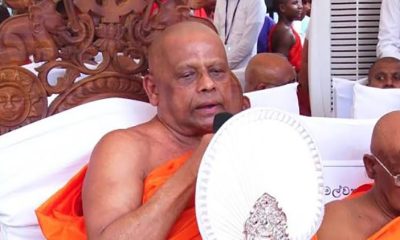
Asgiri Mahanayake calls for immediate release of Gnanasara Thera
-

 Latest News7 days ago
Missiles intercepted near Riyadh after Saudi coalition hits Yemen fuel depot
-
 Latest News7 days ago
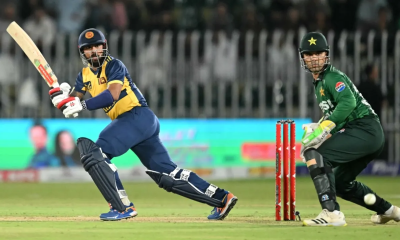
Kusal Mendis’ unbeaten 87 hands Sri Lanka consolation win
-

 News2 days ago
Record 1,600 students take Russian Classical Ballet examination in Sri Lanka
-
 News6 days ago
AC President recuses himself from hearing prison attire case pertaining to Gnanasara Thera
-
 News5 days ago
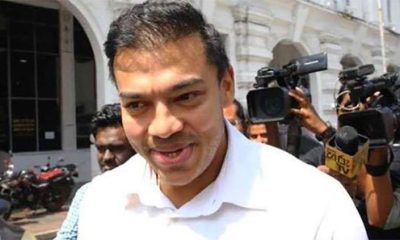
Naval officer testifies Yoshitha received Rs. 5.15 mn in salaries during SLN service