
Features
Handwriting ability and brain development


The Dispilio tablet is a wooden artefact bearing linear marks, unearthed in 1993 during George Hourmouziadis’s excavations of the Neolithic site of Dispilio in Greece. A single radiocarbon date from the artefact has yielded a radiocarbon age of 6270±38 radiocarbon years, which when calibrated corresponds to the calendar age range of 5324–5079 cal BC (at 95.4% probability).
The oldest confirmed writing is the Kish tablet, a Sumerian pictographic tablet from Mesopotamia (modern Iraq) around 3500 BCE, a precursor to cuneiform, though some argue for Egyptian inscriptions (Abydos, ~3400-3200 BCE) as equally early, while Proto-Elamite tablets (~3200-2900 BCE) are also among the earliest known systems alongside Mesopotamian writing, marking the shift from proto-writing to true writing systems–Wikipedia
Just the other day, a casual conversation I had with a CEO of a research institution revealed something startling. One of the recent intern recruits to the institution had been asked to take notes at a meeting so that he could later write a short report on it – a basic learning experience for the guy who was an undergraduate. After the meeting, when the CEO asked him for his notes, he replied that he “wrote” them on his smart phone. It was found that he hadn’t done even that to any acceptable degree. The CEO went on to tell me that many of the new Gen-Z generation does not “write”. They just punch keys on their ‘smart phones’ instead!
Adding to this concern was a recent short article that appeared in The Island newspaper titled “How to teach kids to write by hand, and why it still makes sense to do so”. The article quotes a German Emeritus Professor Friedrich Schonweiss who says that even in this technological age, children need to learn to write with pen and paper.
Having been a medical teacher for nearly 45 years and seeing long-term deteriorating trends in handwriting skills (indecipherable answer scripts), I could understand what might be happening. Two things must have played a role in this outcome. (i) attention is no longer paid by teachers during ‘early childhood learning’ about handwriting ability – i.e., forming letters of the alphabet; (ii) even preschoolers now have smartphones and use their hands mostly for scrolling and tapping keys. I remember during our ‘ancient’ days when much of our first year in school was spent on perfecting our script on Sinhala and English ‘copybooks’ where we were trained how to perfectly write every letter in the alphabet, guided by lines in red and blue. Writing by hand with pencil/pen and paper then, was the only option.
How does not writing by hand affect brain development?
With my immersion in learning and teaching neurophysiology and ‘higher functions’ of the brain to medical students for over four decades, I am perhaps, reasonably competent to say something about it. The relationship between the Hand and the Brain is as complex as it is critically important. From early evolution when fins developed in aquatic animals, to the universal form of 5 ‘fingers’ (pentadactyly) in most animals, the hand had been most uniquely developed in humans.
It can be said that the development of the human hand and human intelligence are evolutionarily complementary. It was the development of the ‘opposing thumb’ in apes and primates that transformed the hand to be able to grasp objects. This led to development of primitive tools by primates. The Human (Homo Sapiens Sapiens) has perfected the anatomy and neurophysiology of the hand, and consequently, making it the most intelligent animal on the planet. The dexterity of the small muscles of the hand, the suppleness of the wrist and finger-joints have made humans able to grasp a ‘writing object’ (a sharp stone, to the graphite stick of our childhood and the pen today) and making writing an integral part of human brain development that preceded human civilisational development.
The book “Hand and the Brain” by Göran Lundborg presents the human hand from an overall perspective – from the first appearance of hand-like structures in the fins of big fishes living millions of years ago to today´s and the future’s mind-controlled artificial hands.
Much focus is given in the book to the extremely well-developed sensation of the hand, its importance and its linkage to ‘brain plasticity’ mechanisms. How can active hands rapidly expand their representational area in the brain? How can the sense of touch substitute for other deficient senses, such as in Braille reading where hand sensation substitutes for missing vision? Why are some of us (about 10% of any population) left-handed? What role did the hand and the brain play during evolution in tool construction and development of language and cognitive functions? The hand has a high symbolic value in religion, literature and art and our hands have a key role in gestures and body language.
The hand and the brain are functionally intimately linked together, and hand sensibility is very much a central nervous experience. The human hand possesses unique features; it is a sense organ transmitting information from the surrounding world to the brain. It is also the most important tool for the brain’s ability to execute different tasks. Much of this is due to the well-developed sensory and motor functions in the hand that make possible strong power grips as well as delicate fine motor functions. The hands are also, together with the face, the body parts that most often are exposed to the surrounding world. Hereby the hand can be seen as a symbol for identity reflecting our state of mind and personality.
Without getting into too much technicality, let me ask, what will the impending loss of hand-writing skills in humans through disuse do to the brain-hand coordination and thus, brain development and function? Will we have at some time in the future, if the current trends persist, a significant loss of fine hand-use skills required of surgeons – especially transplant and vascular surgeons, ophthalmologists, otolaryngologists? OK. I hear someone say that AI and robots will make surgeons superfluous. Perhaps – with robotic surgery becoming increasingly advanced and sophisticated.
But will we have virtuoso pianists and violinists of today’s calibre in the future? What about the brilliant landscape and portrait painters? Can we foresee a robotic orchestra playing Beethoven, Mozart or Bach and feel content about it? What about sculptors – even goldsmiths? All these persons need immaculate hand and finger control and coordination that comes from training from infancy and childhood by developing their use of hands and fine movements. The obviously systematic way that this happens is through the development of hand-writing skills. The brain needs to develop its neural networks that ensure that its sensory and motor centres are sensitive enough to conduct extremely fine movements of our hands and fingers.
Furthermore, retaining handwriting skills is considered crucial for cognitive development, memory, and academic success, as it engages different areas of the brain than typing on a keyboard or scrolling on a smartphone. The slower time taken for writing, helps retention of information that you are writing and hence, improves learning. We are being persuaded not to read books on print and encouraged to scroll pages on a soft copy instead.
Our literacy and literal sense, fine motor skills, and critical thinking would be enhanced by writing word-by-word and thereby forcing sequential thought and deeper processing. It is not just transcription that I am talking about here but making time that is vital for learning and self-expression. Your ‘feel’ for words is enhanced by writing them word-for-word. This is no longer a ‘worthwhile exercise for today’s students – even for academics and creative writers. All they need to do now is to type out a few keywords and a ready-made essay on any topic in the world is presented to you in seconds by AI-aided writer-apps. Therefore the ‘feel’ for words is being gradually lost and parts of our evolutionarily evolved motor and sensory hand-use abilities and cerebral Hand-Brin networks are slowly undergoing disuse atrophy.
A few points to ponder:
= In children, handwriting is crucial for developing essential fine motor skills, letter recognition, and early reading circuits in the brain.
= The act of ‘handwriting’ provides unique cognitive benefits that are not fully replicated by typing, particularly for learning, memory, and fine motor development.
= Reduced use of handwriting can lead to the weakening of these specific neural pathways over time.
= Brain imaging studies show that handwriting activates more widespread areas of the brain compared to typing. This includes regions responsible for movement, vision, sensory processing, and memory.
= The complex, fine motor movements involved in shaping letters require focused attention and motor control, which enhances neural connections.
= Taking notes by hand generally leads to better memory retention and conceptual understanding than typing. The physical act forces a slower, more deliberate processing of information, which aids in encoding knowledge in the brain.
= Engaging in cognitively demanding activities like handwriting throughout life can help build a cognitive reserve, potentially delaying the onset or reducing the impact of age-related cognitive decline and neurodegenerative diseases.
= A decline in handwriting skills is often an early symptom of underlying neurological conditions such as Parkinson’s disease or Alzheimer’s disease, rather than the cause of the disease itself.
= Changes in handwriting can be an objective marker that helps medical professionals detect neurodegenerative disorders early on.
= If a healthy person’s handwriting skills decrease due to lack of practice (e.g., relying solely on typing), those specific neural circuits may weaken, but it does not mean their entire brain is “deteriorating”.
= Consistently engaging in handwriting can serve as a beneficial form of cognitive exercise. Maintaining a balance between digital literacy and traditional handwriting is recommended to reap the full range of cognitive benefits.
The ‘writing is on the wall’ (pun intended). The long-term evolutionary consequences of the disuse of writing by hand could be insidious. What it could do to human creativity and ingenuity cannot be predicted? Perhaps, with automation, AI and robotics taking over so many of tasks that humans did using their hands and their interconnected brain centres, the dystopian ‘Brave New World’ of Aldous Huxley will be upon us before we realise it.
by Susirith Mendis ✍️
(susmend2610@gmail.com)

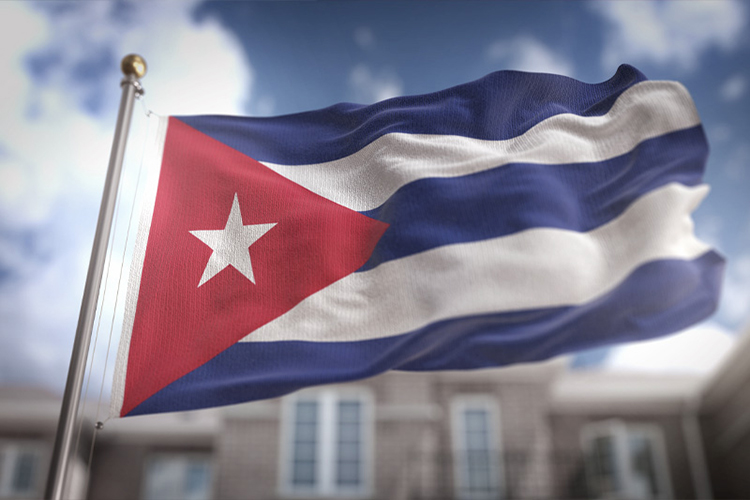
Cuba’s deepening crisis represents more than the failure of an economic model-it signals a turning point in Global South politics. While attention remains fixed on the Middle East, consequential shifts are unfolding across Latin America, shaped in significant part by a more assertive U.S. policy posture that has intensified long-standing pressures on the region.
The island is facing a severe economic and energy crisis, driven by structural weaknesses and the cumulative weight of external constraints. Decades of U.S. economic embargoes-tightened in recent years-have pushed an already fragile system toward breaking point. Fuel shortages, power outages, and rising social strain reveal a system under acute stress, reflecting a wider shift in hemispheric dynamics. Cuba, long seen as an emblem of resistance to Western dominance, now confronts the practical limits of that posture.
For decades, countries such as Cuba, Venezuela, and Bolivia were romanticized across the Global South as symbols of sovereignty and defiance. Figures like Fidel Castro, Che Guevara, and Hugo Chávez occupied an outsized place in this imagination. Yet ideology and symbolism often obscured more complex realities. Cuba became a Soviet outpost during the Cold War, culminating in the Cuban Missile Crisis-the closest the world came to nuclear confrontation in that era.
Economically, Cuba and Venezuela might have achieved more sustained development had they pursued more pragmatic engagement with the United States, as many in the region did.
Today, that question is no longer theoretical. The collapse of Venezuelan support, particularly in the energy sector, combined with sustained U.S. pressure, has left Cuba increasingly isolated. Early signs suggest Havana may now explore limited accommodation with Washington. Even tentative steps would mark a profound departure from decades of entrenched positioning.
If this trajectory continues, it may signal the decline of an older form of Global South politics-once anchored in ideological defiance, now yielding to the imperatives of realism. The Non-Aligned Movement and the Group of 77, once central to the moral and rhetorical architecture of the post-colonial world, are likely to see their influence further diluted in this evolving environment. An earlier era of ideological posturing is giving way to more pragmatic navigation of power and opportunity.
Yet realism does not eliminate the need for dignity. States must recognize their limitations, but major powers must also understand that humiliation can seed future instability. The experiences of Iraq, Afghanistan, and Libya illustrate how coercive or poorly managed transitions often create new crises. Similarly, the post-Cold War order-widely perceived in Moscow as dismissive of its security and status-helped shape grievances that continue to influence global geopolitics.
An instructive counterpoint is the evolution of relations between the United States and Vietnam. Despite a deeply traumatic war, the two countries today engage as pragmatic partners. This transformation underscores that even the most adversarial histories can give way to stable and mutually beneficial relationships-provided transitions are managed with foresight and respect
How transitions are managed can be as important as the transitions themselves.
Amid this evolving landscape, India has a distinct opportunity. It is one of the few countries with credibility across the Global South and sustained engagement with the United States. This positions it to act as a bridge-engaging countries like Cuba while supporting gradual, dignified economic and political adjustment.
India’s own experience-balancing strategic autonomy with pragmatic partnerships-offers a relevant template. Platforms such as the Non-Aligned Movement and BRICS will need to adapt, or be complemented by more flexible coalitions aligned with contemporary realities.
Diasporas also shape outcomes. In the United States, Cuban, Venezuelan, and Iranian communities influence domestic debates and, at times, foreign policy. India, too, must navigate the growing influence of its diaspora in key Western capitals-an asset if managed carefully, but a potential complication if not.
The manner of transition remains critical. Cuba and Venezuela must adapt with legitimacy intact. An emerging order perceived as purely coercive or dismissive will generate resistance, undermining both regional stability and broader strategic objectives. Successful transitions require early, careful engagement, guided by respect and strategic foresight.
The stakes are significant. Cuba, Venezuela, and others remain symbols of a historical narrative, but the world is moving toward a multipolar order shaped by realism, strategy, and negotiated respect. India has both the credibility and the opportunity to help guide this transition-toward a Global South that is pragmatic, resilient, and capable of asserting itself without confrontation.
The Global South is not disappearing; it is being redefined. The question is whether India and its partners will move early enough to shape that process-ensuring the emerging order reflects inclusion, pragmatism, and respect, rather than humiliation.
(Milinda Moragoda is a former cabinet minister and diplomat and Founder of the Pathfinder Foundation, a strategic affairs think tank, can be contacted via via milinda@email.com, was published 2026.03.26 NDTV Opinion section https://shorturl.ad/wZVvt)
By Milinda Moragoda
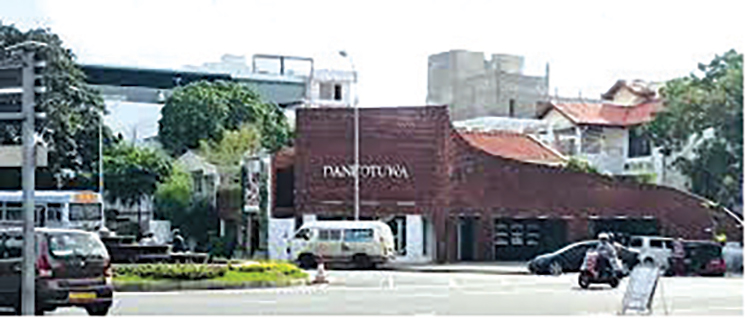
My Stint at Dankotuwa Porcelain – Episode 2
The last episode described some of the interesting experiences during my first stint as non-executive Chairman of Dankotuwa Porcelain, including the privatisation. However, there was one incident I forgot to describe at that time, and I will relate it in this article.
Political interference continues
Political interference at the local level continued unabated. A particular senior minister would walk into the factory without warning at any hour of the day. The security guards were too frightened to stop him. He would speak on behalf of the workers and demand salary increases.
The company was doing well at the time, and our employees’ salaries and benefits were already well above the ceramic industry average. The management felt there was nothing more that could reasonably be given, and we stood firm. No more special increases. The union at the time was the Jathika Sevaka Sangamaya, which was affiliated with the UNP.
One day, the General Secretary of the parent union requested an urgent meeting, which we arranged immediately in Colombo. Since the factory union arrived late, our HR Manager used the opportunity to explain to the parent union official the full details of salaries, the monthly cost-of-living allowance, which increased regularly, and the other benefits provided by the company.
We were operating 26 buses to transport workers from different areas in two districts. Breakfast and lunch were subsidised, and the meals were of good quality. When the union official heard all this, he was shocked. When the factory union leaders finally arrived, he scolded them severely and told them their demands were unreasonable. They left the meeting very embarrassed.
Briefing the minister while pirith was being chanted
Despite this, the agitation continued. I realised that some militant elements had entered the union committee and were determined to create trouble and unsettle the company. Their agenda was different.
I decided I needed political support to resolve the situation and arranged to brief the Minister of Industries. He said he was very busy but suggested that I meet him at an all-night pirith ceremony which had been organised to bless the new building the Ministry was moving into.
When the Minister, Hon. Ranil Wickremesinghe, arrived, he sat on a mat in the middle of the hall, with everyone else seated along the walls. I made myself visible to him, and when he saw me, he signalled me to come forward and sit beside him. I was quite embarrassed, because even senior officials were not seated near him.
I explained the entire situation to him, which took nearly 45 minutes while the pirith chanting was underway. The monks did not look very pleased because the Minister was listening to me rather than the chanting.
When I finished, I quietly asked him whether I could leave. He smiled and said,
“It depends on you. If you want to gain more merit, you may stay. If not, you may leave.”
I took the opportunity and slipped away quietly.
The Politician-inspired Work Stoppage
The demands for salary increases continued, even though the workers already received annual increments, a monthly cost-of-living allowance, a monthly incentive, and an annual bonus. Meals and transport were subsidised.
The senior minister of the area, who was also the President of the Jathika Sevaka Sangamaya, asked the Dankotuwa Porcelain branch union to go on strike. The workers stopped work and left the factory, but remained within the administrative perimeter. They were confident that the Government would intervene and force the management to give in.
At that time, I was also the Executive Chairman of the Employees’ Trust Fund Board, and therefore had access to both the Prime Minister and the President. I met the Prime Minister and showed him the faxes we had received from concerned customers, as well as the details of the salaries and benefits our workers were receiving. He was surprised and told me firmly not to give in.
One night, the Board was invited to the Minister’s house for discussions to settle the issue. I took the other directors with me. The Managing Director joined us halfway. We were slightly nervous about travelling at night, but the journey passed without incident.
We arrived around 8 p.m., but we were called in only at midnight. I felt this delay was deliberate, as the Minister had arranged several political meetings before ours. The discussions were tough. Even when the Minister suggested a small increase of Rs. 50, my fellow directors did not agree. ‘Not one rupee, ’ one Director said. We left without reaching a settlement. As we walked out, the Minister made a veiled threat, but we ignored it.
Keeping the factory running during the work stoppage
Meanwhile, the factory had to continue operating. The main glost kiln could not be stopped suddenly. It had to be cooled gradually over about 14 days. If not, the sudden temperature change would permanently damage the kiln, resulting in a significant loss.
Managers and supervisors themselves had to do manual work to load and unload the kiln. There was also a threat that the strikers would cut off water and electricity to the managers’ quarters within the administrative area. We were also worried that the lorries parked there might be set on fire. Our Managing Director, Mr Jagath Pieris, had to drive the lorries himself into a safer area inside the factory perimeter. He later told me that it was the first time in his life he had driven a lorry.
We then briefed the President, who instructed the Prime Minister to refer the matter for compulsory arbitration immediately. I also requested that the Prime Minister send police from outside the area, as the local police appeared to be under political pressure.
At six o’clock the next morning, I was informed that three busloads of police from other stations had arrived, cleared the premises, and taken control of the factory. Our managers continued to run the operations.
This changed the situation completely. The strikers realised that their political support had weakened. At the same time, the compulsory arbitration order was issued. The newspapers reported that the strike had to be called off, and that those who refused to return to work would be considered to have vacated their posts. The SLBC morning news also carried the same announcement.
The union had no choice. They decided to march to the Minister’s house. The Minister then advised them to return to work.
He later came to the factory and told the union leaders to ask the workers to resume duty because the compulsory arbitration order had to be honoured. They refused, saying it was he who had asked them to strike, and that he himself should address the workers. He did so and then left quickly.
Before leaving, he shouted at the Managing Director,
“Tell your Directors that if my people are harassed, I will not hesitate to bomb the place.”
Discipline restored
Even after the Minister left, the union leaders continued speaking to the workers using the factory microphone. Our HR Manager courageously went forward, took the microphone, and said that they had no right to use it.
He also announced that the workers would not be allowed back until all the placards, caricatures, and effigies placed along the Dankotuwa–Pannala road were removed. Apparently, there were some very well-made effigies of me, along with placards containing language that was not fit to print. I asked for photographs, but my staff refused to show them to me.
That incident effectively ended the union’s power. Management power and discipline were restored, but we continued to treat the employees fairly and provide benefits whenever possible. The union leaders themselves were later reprimanded by their parent union, which had not approved the strike. They even had to bear the cost of the arbitration proceedings personally.
The union leader later came to see me privately. He showed me the loans he had taken to cover the expenses and asked for my help. He promised never to start a strike again. More than 30 years have passed, and he still keeps in touch with me.
After this incident, the company enjoyed industrial peace for many years.
The surprising arbitration award
When the arbitration decision finally came, we were surprised. The award stated that the management’s generosity had actually backfired. Because the company had given regular salary increases and good benefits year after year, the workers had developed higher expectations. Therefore, those expectations had to be recognised.
The arbitrator’s award was much smaller than the union demanded, and we decided not to appeal. It was a small price to pay for the stability we achieved.
The lesson – generosity can create expectations
The lesson from this experience is very clear. Many managers feel happy to give higher wages and better benefits when the company is doing well. However, the happiness level comes down to normal soon. Psychologists call it the ‘Hedonic Treadmill’. Satisfaction with a new benefit soon becomes a norm, and expectations increase. Business conditions do not remain the same forever. When difficult times come, and the company can no longer be generous, workers feel something has been taken away from them and blame management.
When Dankotuwa later faced strong international competition, some workers blamed the management for not getting enough orders. We explained the global situation, and although the younger union members understood and realised that they were on the same side as management in reducing waste and improving productivity, the older leaders still believed they had to fight management to win demands, irrespective of the international situation.
Interestingly, towards the end of my tenure, some young union leaders were even monitoring the Saudi Aramco contract price, because our energy cost formula depended on it. That showed a new level of maturity with the new generation.
A lesson I should have learned earlier
I must admit that I had seen this situation before, but I had not fully understood or internalised the lesson.
Many years earlier, I visited a tea estate owned by a very generous man. He provided his workers with facilities far better than those given in neighbouring estates, and he was very proud of his benevolent management style.
I was there with a retired Deputy Commissioner of a Government Department, a much wiser man. After listening to the owner and his boasts of how well he treats his labour, he quietly said to me,
“Giving much more than the basics will one day boomerang on him.”
Sometime later, I returned to the same estate and saw many vehicles parked there. Officials from a regional union office had come to form a union. One speaker addressing the workers said loudly,
“It is true that the owner gives many benefits, but he makes a big profit too. Therefore, we must demand more, because he can afford it.”
I was shocked by that attitude. Soon afterwards, the union presented a list of demands, and the owner was deeply disappointed. His generous style gradually disappeared. He learned his lesson.
A warning to another company
After the Dankotuwa arbitration award, I was invited to speak to the managers of a factory in the Pannala area. I learned that they were about to introduce several new benefits to workers. I told them our story and advised them to be careful.
The moral is simple. Generosity is good, but it must be balanced with long-term thinking. Several management and motivation theories also warn that once higher pay and benefits become the norm, people quickly adjust their lifestyles to that level. When the benefits stop increasing, dissatisfaction begins.
The next episode will also describe further experiences at Dankotuwa Porcelain, including my return.
Sunil G. Wijesinha, Consultant on Productivity and Japanese Management Techniques, Former Chairman / Director of several listed and unlisted companies
Recipient of the APO Regional Award for Promoting Productivity in the Asia-Pacific Region, Recipient of the Order of the Rising Sun, Gold and Silver Rays – Government of Japan
Email: bizex.seminarsandconsulting@gmail.com
by Sunil G. Wijesinha
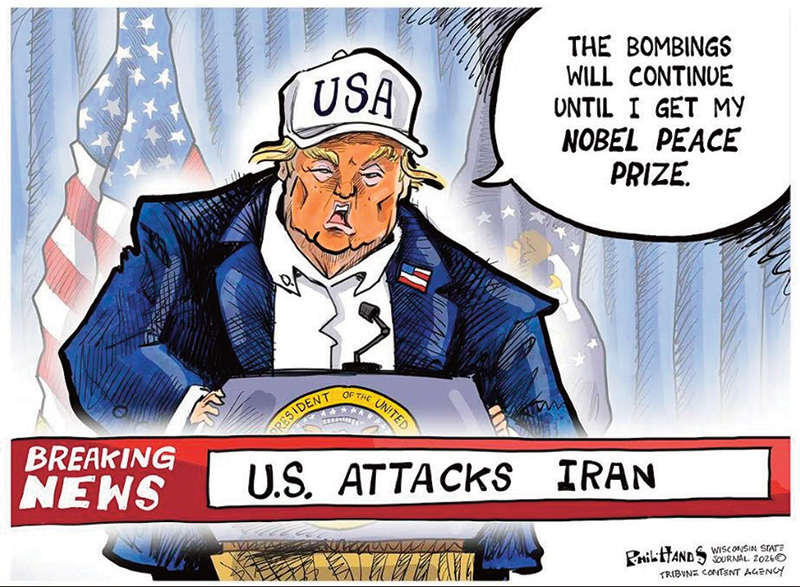
Iran war escalates despite Trump’s claims about negotiations for peace
Donald Trump is now pretending to negotiate a peace on the war against Iran he declared on February 28. A war for no reasons, with no provocation from Iran. A war Israel Prime Minister Netanyahu had been planning against Iran for decades.
Trump posted a threatening message on Truth Social in the wee hours on Sunday, March 22, that, unless Iran opens the strait of Hormuz within 48 hours, he will obliterate the nation.
Donald J. Trump @ real Donald Trump
“If Iran doesn’t FULLY OPEN, WITHOUT THREAT, the strait of Hormuz within 48 HOURS, from this exact point in time, the United States of America will hit and obliterate their various POWER PLANTS, STARTING WITH THE BIGGEST ONE FIRST. Thank you for your attention to this matter. President Donald Trump”.
Then, on Sunday evening, Trump said he had received a very valuable gift, worth a ton of money from Iran, which made him realize that he was not talking to the “right people”. The present, a couple of oil tankers. produced a change of Trump’s heart regarding the war. Presents, technically bribes, like the $400 million flying palace he received from Qatar, are the only direct line to Trump’s heart.
So, less than 24 hours after his “obliteration” threat, Truth Social carried the following post:
Donald Trump @real Donald Trump
“I AM PLEASED TO REPORT THAT THE UNITED STATES OF AMERICA AND THE COUNTRY OF IRAN, HAVE HAD, OVER THE LAST TWO DAYS, VERY GOOD AND PRODUCTIVE CONVERSATIONS ASSURING A COMPLETE RESOLUTION OF OUR HOSTILITIES IN THE MIDDLE EAST. BASED ON THE TENOR AND TONE OF THESE IN-DEPTH, DETAILED AND CONSTRUCTIVE CONVERSATIONS, WHICH WILL CONTINUE THROUGHOUT THE WEEK, I HAVE INSTRUCTED THE DEPARTMENT OF WAR TO POSTPONE ANY AND ALL MILITARY STRIKES AGAINST IRANIAN POWER PLANTS AND ENERGY INFRASTRUCTURE FOR A FIVE-DAY PERIOD, SUBJECT TO THE SUCCESS OF THE ONGOING MEETINGS AND DISCUSSIONS. THANK YOU FOR YOUR ATTENTION TO THIS MATTER. PRESIDENT DONALD TRUMP.
At a press conference, Trump said that he’s giving Iran five days to negotiate a deal that will benefit everyone. When asked what he would do if no deal was worked out in five days, he said he would have no option but to annihilate Iran. So Iran would be annihilated in five days, (now increased to ten), as the 15-point conditions US by submitted by Trump during these “negotiations” were totally unacceptable to Iran. And vice versa. But in the highly unlikely event that agreement was reached, Trump was asked who would run the strait of Hormuz, his response: Me, maybe me, with an Ayatollah whom they hadn’t killed, as yet.
As expected, Trump’s post about peace negotiations caused a tumble in the price of a barrel of oil from $100+ to $84 within hours, with the corresponding optimism in the stock market. But the continuing hostilities after Trump’s peace message during the week pushed the price of a barrel of oil back to $100+. There was a flurry of trading of nearly $500 million in the hours between these two contradictory posts – and someone (I wonder who) made a killing on the stock market with obvious insider knowledge.
There has been complete silence from Iran to Donald’s empty threat. Iran’s Foreign Ministry confirmed that no such negotiations had taken place between Teheran and Washington. Iran refused to take Trump’s threats seriously and its collective middle finger towards the White House was clearly visible over the oceans.
Prime Minister of Canada, Marc Carney, has taught smaller nations being intimidated by Trump that the only way to handle him is to call his bluff. To paraphrase Shakespeare, to ignore Trump’s meaningless bluster, “told by an idiot, full of sound and fury, signifying nothing”.
Until 2016, the USA was considered the leader of the free world, not because it had the largest economy, not because they had the most powerful military in history, but because the post WW2 US treated other nations, especially its NATO allies, with respect. And all the nations which had dealings with the USA, appreciated that, and competed against each other to deliver the best deal to the USA.
Trump had recently been insulting Canada, its closest ally of over 300 years and largest economic partner with $800 billion of annual trade, sharing the longest border in the world. Canadians and Americans had fought side by side in World War II, and Canadians were the first to join the Americans in their war against Afghanistan after 9/11. Trump, to whom loyalty and friendship is a one-way street, had been stating that Canada was dependent on the USA, and should really be its 51st state, with Carney as its Governor. He made this belittling statement at a meeting with Carney at the Oval Office.
I do not intend to repeat the qualifications of Prime Minister Carney, which I have extolled before. Suffice to say he holds the highest degrees in Economics from Harvard and Oxford, and served as the Governor of the Central Banks of both Canada and the United Kingdom, the only non-Brit to hold that post in history. An added qualification: he has never been a politician, had never held elected office.
Carney showed no indignation at Trump’s “offer”. He most politely told Trump that the people he represents will never agree to such a proposal, that Canada will never be for sale.
Carney had been expecting this increase in taxes for months, and had already successfully negotiated alternative trade deals for Canadian products with other nations, members of NATO, Japan and Australia. And more importantly, he had shown smaller nations, which had hitherto been intimidated by the power of the USA, how to deal with Trump. Instead of individually toadying to Trump’s America, smaller nations could work together instead of competing against each other. This policy may cause temporary economic hardship, but would have the luxury of maintaining their self-respect.
Trump realized that his economic policies, especially on tariffs and his wars were dragging the US economy to a recession. His approval ratings, with the crucial midterm elections just a few months away, were at 36%, the lowest levels in presidential history. Even his Republican base was turning against many of his policies, especially the latest illegal war against Iran. An “excursion”, as he called it, draining the economy with no objective in sight, had already caused the loss of 13 American lives. His public comment that there will be more losses of thousands of lives as the war progresses, especially if he carries out his plan of putting boots on the ground in Iran, infuriated Americans of all stripes. And the “most unkindest cut of all”: his pet Supreme Court ruled against him, with a 6/3 majority, that the power to levy taxes and tariffs lay, according to Article 1 Section 8 of the constitution, exclusively with Congress. All tariffs levied by Trump without even consultation with Congress, from April 2, 2025 (“Liberation Day”) to date were unconstitutional and had to be refunded to the importers and consumers.
J. A. Baker, in The Peregrine, said that “the hardest thing of all is to see what is really there.” Perhaps, as incredible as it may seem, Trump has seen the light, he may have seen what is really there, the chaos he has wrought, with inflation at third-world levels, gas and grocery prices out of control, the wait-time at most airports longer than the actual flight time, his illegal immigration policies resulting in arrest, imprisonment and even killing two American peaceful protesters without due process, has infuriated the American people. His ratings are in the pits and the United States has become the Most Hated Nation in the Free World. America First is now America Alone, embraced only by past adversaries, who are taking full advantage of his narcissistic stupidity.
Time will tell if the impossible has happened, that Trump has realized that he has lost the confidence of his base, and would be forced to abandon his dictatorial ambitions, if only to survive.
Iran’s Fars News Agency claimed that there have been no direct, or even indirect communications between Tehran and Washington. Fars also said “Trump backed down on targeting Iran’s power plants after Iran warned it would target power plants across West Asia in response”. Iran’s Tasnim News Agency confirmed that no negotiations are under way with the United States.
Now we are in a quandary. Who are we to believe? A leader of a theocratic, corrupt, authoritarian regime (I mean Iran, of course) or, well, the leader of our own theocratic, corrupt, authoritarian regime? My money is on Trump, if only because, when asked with whom in Iran he was negotiating, his answer was “a tip-top person”. Also, why did he post the “annihilation” message on Truth Social on Sunday, referred to above, if negotiations were in progress. He also is supposed to have accepted a valuable gift from Iran while Iran was under heavy bombing.
Every word Trump has uttered after declaring an illegal war against Iran has been a lie. Now he’s trying to pass the buck to Secretary of War, Pete Hegseth and Joint Chief of Staff, “Raizin” Cane, for “persuading” him to wage war against Iran. A war entirely of his own making, perhaps with a little push from Netanyahu, the war criminal who has been responsible for all the violence in the Middle East during the past few years, who has been dreaming of a war against Iran for decades,
There is no real hope that this war will end in the near future. Remember that the last illegal war to promote US and Israeli interests against Iraq took eight years for the greatest army the world has ever seen to retreat, with the loss of 4,600 lives and trillions in losses of infrastructure. Somehow, even though Iraq had nothing to do with 9/11, Americans, in their grief and anger at the worst terrorist attack on their shores, needed someone on whom they could wreak revenge. They gave Bush their full support at the start, although they were killing the wrong terrorist and causing chaos in the wrong country.
Trump does not have that luxury. Americans in a large majority, Republicans, Democrats and Independents, are all against this unnecessary Iran war with neither reason nor anything but a tragic end, with the loss of millions of lives and devastation of property.
Trump will see evidence of his disapproval of the people with the largest protests in the nation’s history. Officially titled as The No Kings Protests, with thousands of scheduled events across all 50 states, in major cities as well as in rural suburban areas. It is estimated that more than 3,000 local events have been planned, bringing together millions of people in one of the largest days of political organization in the nation’s history. These protests will show not only Americans disapproval of another unnecessary war with no end in sight, but with the economy reaching recession levels, with inflation out of control and gas and consumer goods rising daily. Americans are also incensed at the administration’s Draconian immigration policies, with Americans arrested and imprisoned without due process, even two American peaceful protesters murdered by Immigration and Customs Enforcement (ICE) for no reason whatsoever.
Hopefully, Saturday’s No Kings nationwide protests will at last turn the tide, but violence by Trump’s white supremacist base may be inevitable, before the United States resumes its destined path to democracy.
By Vijaya Chandrasoma

Cuba and the end of an era

From rescue to rewilding, Kalo’s journey continues

Mahindra Ideal Motors celebrates gala ‘Excellence Awards’ honouring outstanding performance and innovation

Tribute to a distinguished BOI leader

LESSONS FROM MY CAREER: SYNTHESISING MANAGEMENT THEORY WITH PRACTICE – PART 34

Pakistan’s 86th National Day celebrated in Sri Lanka

‘Dates have the highest sugar content to fight Coronavirus’

Sunday Island 27 December – Headlines

#SundayIsland 17th December – Headlines

Sunday Island – 28th March

Sunday Island Headlines – 21 March

Sunday Island – 21st February – Headlines
-

 News4 days ago
Senior citizens above 70 years to receive March allowances on Thursday (26)
-

 Features24 hours ago
A World Order in Crisis: War, Power, and Resistance
-

 Features6 days ago
Trincomalee oil tank farm: An engineering marvel
-

 News2 days ago
Energy Minister indicted on corruption charges ahead of no-faith motion against him
-

 News3 days ago
US dodges question on AKD’s claim SL denied permission for military aircraft to land
-

 Features6 days ago
The scientist who was finally heard
-

 Business3 days ago
Dialog Unveils Dialog Play Mini with Netflix and Apple TV
-

 Sports2 days ago
SLC to hold EGM in April