
Business
Govt. urged to bring foreign digital companies operating in Sri Lanka under a local regulatory system

- International digital companies in Sri Lanka are exempt from paying taxes
- They take millions of dollars out of the country every year
- Local enterprises that offer same services subject to taxes
- Central Bank of Sri Lanka is aware of this inequality
- Levying from non-domiciled businesses no longer a choice but a necessity
- Indian policymakers have won this battle and so can we
by Sanath Nanayakkare
FITIS, the voice of Sri Lankan Information and Communication Technologies industries urges the government to bring foreign digital companies operating in Sri Lanka, under a local regulatory system where they are liable for taxes and other regulations like their local counterparts.
“Apart from the lack of fairplay for local companies, these foreign digital operators take millions of dollars out of the country every year. In a situation where Sri Lanka is strapped for dollars to buy essentials like medicine, fuel and food and banks are unable to issue dollars to students sitting for foreign exams can we any longer afford this foreign exchange outflow for locally consumed services?,” FITIS asks.
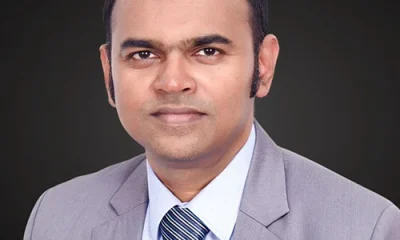
The Digital Chapter of the Federation of Information Technology Industry Sri Lanka (FITIS) states that the recent imposition of taxes by the government is understandable in the current circumstances, at this critical point of nation building. However, there are other factors that need to be looked at and changed if we are to progress with the digital economy connected to digital platforms, they say.Channa de Silva, President of the FITIS Digital Chapter says, “Digitalisation is a way forward that can rationalise all our economic activities as well as being a leveller that democratises opportunity. However, if we don’t treat every player in the field the same way, it can create inequality, monopolies and result in heavy losses to the economy.”
The following are some comments made by Channa de Silva.
“A viable and healthy ecosystem for startups and entrepreneurs to exist requires rules and regulations that ensure fairplay, especially when they compete with global giants who enter local markets. Therefore, a level playing field for everyone is an urgent need in this particular sector, and one way to ensure that is to bring foreign digital companies operating in our markets under a local regulatory system where they are liable for taxes and other regulations. For example, well known foreign digital operators handling ride-sharing and transport of goods in Sri Lanka, use our road networks, fuel subsidies and state infrastructure to further their businesses, yet they have an unfair advantage over their tax paying local counterparts.”
“Foreign players have enjoyed this tax free haven for many years, which is a good case study of a lack of fairplay for equivalent local operators in the industry. These operators, by refusing to register as local entities, do not follow any of the laws of Sri Lanka and avoid paying local taxes. They are operating under the misapprehension of not being liable to pay taxes in areas they operate, outside their country of origin. However, this is a stand that has been challenged by countries like India who have won the battle to be treated on an equal footing.”
“The fact that India has been fighting the issue of taxing foreign digital services for a long time is well documented in the media. They were the first to introduce a digital tax called the ‘Equalisation Levy,’ back in 2016, which was payable by Indian residents for online advertisement services purchased from non-resident companies. Later, the Equalisation Levy was extended to include a 2% levy on all online sale of goods or services into India by non-resident e-commerce operators.”
“The Reserve Bank of India (RBI) had ordered foreign payment companies to locally store data on all transactions taking place within India from October 15, 2018. Thus, global payment companies need to pay around 15% tax on their income from India, as they set up servers locally to comply with the RBI directive on data storage. The central government of India went further, by bringing a 2% digital service tax levy on all trade and services of foreign e-commerce companies through their Finance Bill of 2020-21. With that even companies like Amazon, Walmart-owned Flipkart and others having an annual turnover of ₹2 crore or more operating in India became liable for tax. The expanded equalisation levy became applicable from April 2021 to a range of digital services, including non-resident e-commerce operators involved in the online sale of goods and provision of services.”
“The G20 summit and the Organisation for Economic Co-operation and Development meeting held in October 2021, made a new foray into global taxation rules. Accordingly, a decision was made to ensure that foreign multinational firms will pay a minimum 15% of their total revenue in countries they operate in, which means companies like Microsoft, Google, Amazon, etc, would pay a tax of 15% for their operations in India.”
“Subsequent to this, India and the US agreed that the Equalisation Levy currently in existence for US based companies, will count as a credit against future taxes. The credits will be accounted for from April 1, 2022, until either March 31, 2024, or whenever the global taxes law comes into force. In the meantime, India continues to levy the 2% equalisation tax as credits.”
FITIS is of the view that it is more than time for Sri Lanka to take a leaf from India’s regulatory policy book. Channa de Silva says, “It is vital for a country like ours, which is almost exclusively reliant on foreign investment in order to progress, to recognize the importance and impact of the economic bolster provided by local companies. A right step in this direction would be to concede that as of now, there is no level playing field between International digital companies and local companies, businesses and startups. International digital players in Sri Lanka are exempt from paying taxes, whereas local enterprises that offer the same services are subject to taxes — more than before in the current economic crisis.”
“The Central Bank of Sri Lanka, was aware of the inequality because they highlighted it in their 2019 report that says ‘gig platforms, which are operating worldwide despite being based in a particular country, are difficult to be controlled by the host country’s regulatory environment and taxation system in the absence of local business registration. In contrast, local platforms are under regulatory scrutiny and are liable for local taxes. Such differences in the applicability of regulation will not ensure a level playing field for local operators.”
“Taking steps to bring in regulations to tax non-domiciled businesses is no longer a choice but a necessity. Apart from guaranteeing a level playing field and equal opportunity for local digital players, this will save us much needed dollars that are necessary to sustain the people of this country,” Channa de Silva says.


Trade preferences are often spoken of as though tariff cuts alone can remake an industry. They cannot. Preferences matter only when firms are able to use them. That is what makes the United Kingdom’s revised Developing Countries Trading Scheme (DCTS), effective from January 1, 2026, important for Sri Lanka’s apparel sector. It offers more than continued market access. It offers a more usable route into one of Sri Lanka’s key export markets. For large exporters, that is beneficial. For small and medium-sized firms, it could be pivotal.
The real significance lies in the rules of origin. Earlier preference regimes imposed conditions that often constrained smaller exporters, especially those without vertically integrated operations. The revised DCTS eases those constraints by allowing greater sourcing flexibility. For Sri Lankan apparel SMEs, that matters more than the headline concession. Smaller exporters rarely struggle because they cannot manufacture. More often, they struggle because they cannot source inputs competitively, price with enough agility, or meet delivery timelines reliably enough to retain buyer confidence. The DCTS begins to ease those commercial pressures.
That is the theory. The more important question is what it means in practice.
Joe Jayawardena, an exporter to the UK speaking from the perspective of a UK-linked buying and manufacturing business sourcing from Sri Lanka and other apparel-producing countries, put it plainly: the DCTS is a duty concession for developing countries. But its real value lies in how it changes the commercial conversation. If exporters can source from a wider pool of inputs without losing preferential access, they gain more room to negotiate on price, lead time, and fabric choice. In apparel, that is not a marginal gain. It can determine whether a supplier is shortlisted or ignored.
That matters particularly for Sri Lankan SMEs because they operate with structural disadvantages. They typically have less working capital, narrower supplier networks, and weaker bargaining power than larger manufacturers. They cannot absorb long delays. They cannot tie up cash in excessive inventory. And they rarely enjoy the upstream integration that allows major firms to manage both cost and compliance. When rules are rigid, smaller firms feel the pressure first. When rules become more flexible, they stand to benefit disproportionately.
That is why the DCTS should be viewed not merely as a customs adjustment, but as a competitiveness instrument.
Yet preferential access on paper does not automatically become export orders. Here, the exporters’ comments point to a harder truth. Jayawardena’s sharper criticism was not of the scheme itself, but of Sri Lanka’s failure, so far, to exploit it properly. The opportunity exists, he argued, but the connectivity does not. Better access means little if buyers are not being brought closer to suppliers, if exporters remain insufficiently visible in the market, and if the state treats market access as a passive entitlement rather than something to be actively commercialised.
That critique deserves attention. Sri Lanka has too often assumed that preferential access will somehow speak for itself. It does not. Trade schemes reward countries that organise around them. That means stronger participation in trade fairs, more direct buyer outreach, easier commercial engagement, and a more deliberate effort to market Sri Lanka’s value proposition. It also means helping SMEs turn regulatory change into business decisions. Which products are best placed under the new rules? How should firms restructure sourcing? What level of documentation is enough to avoid customs disputes? How should mixed shipments be managed? These are practical questions, and SMEs need practical answers.
Amindra Wimalasena, another exporter to the UK, pointed to the second half of the problem. Better market access alone will not allow firms to scale if they lack the means to modernise. His point was straightforward: with the right support for automation, and financing mechanisms designed around how the industry actually operates, output could rise materially without a proportional increase in labour. Productivity gains are possible, but only if investment reaches the factory floor rather than being trapped by wider financial constraints.
This is where the DCTS debate becomes more strategic. The scheme creates external opportunity. But Sri Lanka’s SME exporters still face internal constraints, especially in finance, systems, and market connection. Many smaller firms do not need another seminar on trade policy. They need inventory-backed lending, grace periods for machinery investment, stronger production planning, and better access to buyers. Without that, the gains from DCTS will flow mainly to firms already large enough to move quickly.
That would be a missed opportunity.
Sri Lanka’s apparel sector has long been anchored by a small number of established players. But the next phase of growth will require a broader base. SMEs can provide that, particularly in segments where flexibility, specialisation, and shorter production runs matter. Britain’s revised scheme could support exactly this part of the industry, if used properly. Greater sourcing freedom allows smaller firms to become more responsive. It lets them choose inputs on commercial merit rather than regulatory necessity. It can improve pricing, shorten lead times, and make them more attractive to UK buyers seeking agile sourcing partners.
But that outcome will not happen on its own. It requires an ecosystem response. Government and industry bodies need to treat DCTS as a commercial opening, not just a policy achievement. Support for SMEs must become more operational, not merely informational. And policymakers should link DCTS directly to productivity finance, so that smaller exporters can invest in efficiency and automation rather than simply admire improved market access from a distance.
The broader lesson is simple. Trade preferences create potential only when domestic institutions convert that potential into capability. The UK has widened the opening. Sri Lanka must now decide whether to merely welcome the gesture or make full commercial use of it.
For SME apparel exporters, the stakes are considerable. If the DCTS is properly leveraged, it could improve competitiveness, widen buyer access, and bring smaller firms closer to the centre of Sri Lanka’s export economy. If it is not, Sri Lanka risks repeating a familiar pattern: favourable terms, but limited results.
Britain has opened a door. Sri Lanka’s SMEs now need the systems, capital, and market access to walk through it.

The Colombo Stock Exchange (CSE) and NSE IFSC LIMITED (NSEIX), an international multi-asset exchange and wholly owned subsidiary of the National Stock Exchange of India Limited, signed a Memorandum of Understanding (MoU) recently to strengthen capital market cooperation between Sri Lanka and India. Bringing together the senior leadership of both exchanges to formalise a strategic partnership, the occasion underscored the shared commitment of both institutions to building a more integrated regional financial ecosystem that benefits companies and investors in both exchanges.
Under this arrangement, both institutions will work towards introducing dual listings and cross listings, which will enable companies to list the same shares on both exchanges simultaneously, or to establish a presence on both markets through separate listings. Dual listings and cross listings offer listed companies a greater opportunity to increase liquidity through a broader and more diverse investor base and significantly enhance visibility among institutional and retail investors in both Sri Lanka and India. For companies in particular, access to India’s vast and deep capital markets could prove transformative in terms of growth financing and brand recognition.
Beyond listings, both the CSE and NSEIX have committed to working together to develop new financial products tailored to the needs of cross-border investors, reflecting the evolving sophistication of both markets.
The MoU also aims to enable bidirectional trading opportunities, giving investors in Sri Lanka and India access to each other’s markets. Furthermore, the Exchanges have agreed to undertake joint research initiatives, training programs, capacity building exercises, and outreach efforts for the mutual benefit of both institutions and the wider investment communities they serve.
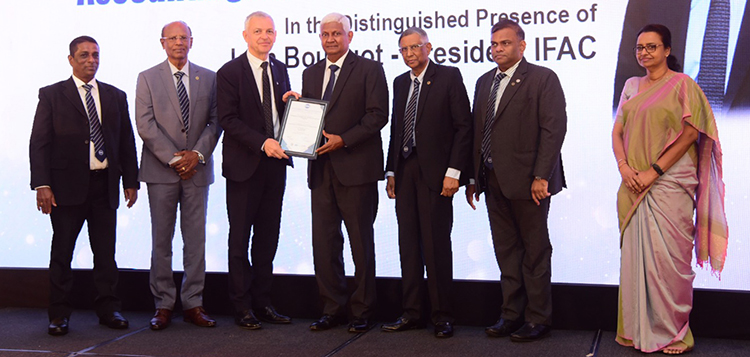
Receives ‘Distinguished Recognition in the Profession of Management Accounting’ award for excellence in management accounting and financial stewardshipThe Executive Chairman of Ceylinco Life Insurance Ltd., R. Renganathan, has been conferred the prestigious ‘Distinguished Recognition in the Profession of Management Accounting’ award by the Institute of Certified Management Accountants (CMA) of Sri Lanka, in recognition of his outstanding contribution to financial discipline, governance, and sustainable value creation.
The accolade was presented at the inauguration of a workshop on Integrated Reporting and Sustainability Accounting Standards, underscoring the growing importance of integrated reporting frameworks and Environmental, Social and Governance (ESG) principles in modern corporate management.
A Chartered Accountant by profession, Renganathan has been instrumental in shaping Ceylinco Life’s financial and governance framework since joining the company at its inception. Having led the organisation from the commencement of its life insurance operations in 1988, following the privatisation of the industry, he has consistently championed the principles of transparency, accountability, and long-term value creation, aligning the company with evolving global best practices in reporting and sustainability.
Under his stewardship, Ceylinco Life has strengthened its position as the market leader in Sri Lanka’s life insurance sector, a distinction it has retained for 22 consecutive years. His financial acumen and strategic foresight have contributed to the growth of the company’s Life Fund to over Rs. 200 billion, while innovative product development has enabled the organisation to extend life insurance protection to over one million breadwinners across the country.
The recognition also reflects Renganathan’s broader contribution as a thought leader in financial stewardship and sustainability, to elevating standards within the insurance industry, particularly in embedding strong governance practices and ethical conduct, while driving resilience and sustainable growth.
Ceylinco Life’s continued alignment with integrated reporting principles and sustainability standards reinforces its position as a responsible corporate leader committed to transparency, stakeholder value, and long-term financial stability. The honour bestowed on its Executive Chairman further underscores the company’s commitment to financial stewardship and its role in advancing best practices in corporate reporting and governance in Sri Lanka.

Iran executes two convicted members of banned opposition group

Afghanistan earthquake kills eight members of same family

Breakdown of the teams and groups of the FIFA World Cup in Canada, Mexico and the US after the final playoffs

365 US service members injured since start of Iran war – Pentagon

World Cup 2026: Italy’s football chief resigns after qualifying failure

Iran says it downed two US jets as search for one pilot continues

‘Dates have the highest sugar content to fight Coronavirus’

Sunday Island 27 December – Headlines

#SundayIsland 17th December – Headlines

Sunday Island – 28th March

Sunday Island Headlines – 21 March

Sunday Island – 21st February – Headlines
-

 News3 days ago
2025 GCE AL: 62% qualify for Uni entrance; results of 111 suspended
-
 News5 days ago
Tariff shock from 01 April as power costs climb across the board
-

 News6 days ago
Inquiry into female employee’s complaint: Retired HC Judge’s recommendations ignored
-

 Features7 days ago
When seabed goes dark: The Persian Gulf, cable sabotage, and race for space-based monopoly
-
 Features6 days ago
New arithmetic of conflict: How the drone revolution is inverting economics of war
-

 Editorial3 days ago
Search for Easter Sunday terror mastermind
-
 Business4 days ago
Hour of reckoning comes for SL’s power sector
-

 Sports6 days ago
Sri Lanka’s 1996 World Cup heroes to play exhibition match in Kuala Lumpur