
Editorial
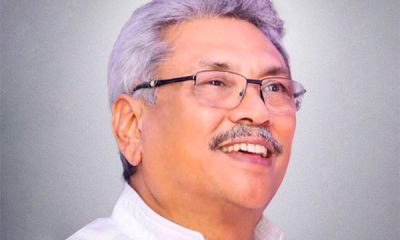
Gota’s return

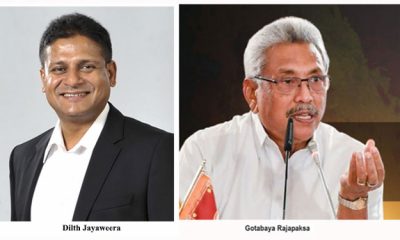
There were reports on Friday morning as this is being written that former President Gotabaya Rajapaksa may be back in Sri Lanka over the weekend. No reasonable person will want to deny him his birthright of living here whatever the circumstances under which he ‘fled’ the country as has been stated ad infinitum since his departure. When he was forced to leave the country, caving into the massive ‘GotaGo’ demand, he did not find it easy to find a safe haven of refuge. It has been reported, though not confirmed, that he first explored the possibility of returning to the USA, whose citizenship he renounced, to run for president in Nov. 2019. Rajapaksa then as a dual citizen of Sri Lanka and the U.S. constrained by the then law from running for president while being a foreign citizen. Hence his renunciation of his U.S. citizenship.
When he was forced to depart, he first flew to the Maldives by military aircraft and within hours by a commercial flight to Singapore from where he resigned the presidency. The Singapore government which extended his original two week stay permit by two more weeks said on the public domain that GR was on a private visit and had not sought asylum. He had not been accorded facilities (perhaps other than security) or hospitality, an official statement from the Government of Singapore said. From the city state he flew to Thailand on a private charter and was confined to his hotel for reasons of security.
It has also been reported that he was exploring the possibility of returning to the United States where he had lived earlier following his premature retirement from the Sri Lanka Army holding the rank of lieutenant colonel. He returned to Sri Lanka following his brother’s election as president in 2005 and served as defence secretary until Mahinda Rajapaksa’s defeat in 2015, overseeing the end of the long war against the LTTE in 2009. He renounced his U.S. citizenship to run for president in 2019. Given his foreshortened tenure, he is reported to have explored the possibility of resuming U.S. residency. This, a former local employee of the U.S. Embassy in Colombo, now resident in the U.S. has said in a recent article, may not be easy for GR.
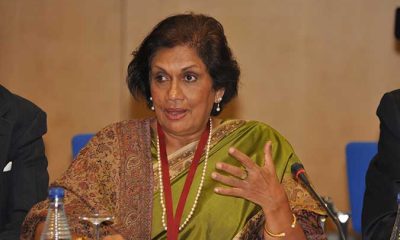
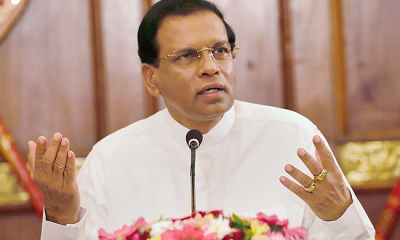
Although the former president renounced his U.S. citizenship, his wife retains her citizenship and his son and family live in that country. There may be reasons for allowing GR to return to the U.S. on grounds of family reunion. Also, as has been publicly pointed out, former presidents of Sri Lanka and their widows have several legal entitlements enjoyed by many of GR’s predecessors and their widows. He too would enjoy such entitlements. These include pensions, security, vehicles, residences and possibly staff. Mrs. Hema Premadasa, President Ranil Wickremesinghe noted in Parliament recently, is enjoying these benefits. So is former President Chandrika Kumaratunga who has accused President Mahinda Rajapaksa of attempting to, or actually doing her down. Former President Maithripala Sirisena, since his departure from office, continued to live in two government bungalows joined together as a presidential residence during his tenure but vacated those premises following a court order.
Although the actual date has not been set as this is being written, the former president is very likely be back in Sri Lanka in the short term. This has been discussed and facilitation requested by the SLPP. President Wickremesinghe, not long ago, expressed an opinion that the time was not right for Gota’s return. There is no doubt that the former president’s security, particularly, must be ensured. That is an obligation of the state. Like Presidents Jayewardene and Premadasa before him, GR chose to live in his private home at Mirihana rather than in President’s House for most of his tenure. Readers would remember that the Aragalaya gained momentum following an attack on this house, going beyond non-violent protest as was the case earlier. Although Rajapaksa as defence secretary lived in a government bungalow equipped with a giant tank in which sharks swam, he chose to continue living in his modest home as president. Once he is back, this may not be a suitable place for him to live on grounds of security considerations. His army pension too would be modest.
We do not know whether former Presidents Mahinda Rajapaksa and Maithripala Sirisena who continue in active politics as MPs, draw their presidential pensions in addition to their parliamentary emoluments. These, of course, would be entitlements. What we do know is there is massive adverse public opinion in the country about how our legislators look after themselves as incumbents and former incumbents. An MP, for example, is entitled to a life pension after a mere five years service in the legislature. Their widows/spouses continue to receive this benefit after their demise. Unlike the Widows and Orphans Pension in the public service, these benefits that parliamentarians enjoy are non-contributory. A magnificent gesture by two former Central Bank Governors, Mr. Sunil Mendis and Dr. Indrajit Coomaraswamy declining their pension entitlements was recently reported. But such gestures are all too rare in this country. In fact it was a self-serving maneuver in the Central Bank that created the entitlement that has been declined. It will be good to know whether former Governor Arjuna Mahendran, accused of culpability for the bond scams during the Yahapalanaya regime, is being paid a pension under the new rules despite his refusal to come back and face due process.









Tuesday 2nd June, 2026
A pickup truck ploughed into a crowd near a Vesak dansala at the Meegoda junction on Sunday night, killing six people. More than 12 others were seriously injured. The driver of the vehicle was arrested while fleeing the scene of the accident, and the police said he was under the influence of alcohol. Produced before the Homagama Magistrate, he was remanded until 16 June.
Sunday’s tragedy at Meegoda has triggered an outpouring of public anger at the hit-and-run driver. There have been calls for stringent legal action against him. Some social media activists have gone to the extent of demanding that he be hanged straightway. Their consternation is understandable. If he had been sober, cautious and considerate, he would have been able to prevent the tragedy. It is hoped that all motorists will take lessons from Sunday’s accident and exercise caution when navigating crowded areas, especially during festivals.
Nothing can be cited in extenuation of the offence of driving under the influence of alcohol and killing people. However, there is a broader issue that must not go unaddressed if tragic accidents are to be prevented.
Most dansel are held by the roadside with no special arrangements to ensure the safety of those who visit them, much less facilitate the flow of vehicular traffic. They are characterised by utter chaos. Vehicles are parked haphazardly near them blocking roads, and people flock there from all directions with no heed for passing vehicles. Traffic laws apparently fall silent near dansel.
Dansel are not alone in causing havoc on roads. In this country, no public event is apparently considered complete unless they obstruct roads, worsen traffic congestion and cause maximum possible inconvenience to road users. Political rallies are mostly held at busy intersections, much to the inconvenience and resentment of motorists, who suffer in silence for want of a better alternative. The same is true of religious ceremonies and open-air musical shows. They make busy roads impassable, with the police prioritising everything else over ensuring the movement of vehicular traffic.
Most roads become veritable velodromes, come the Sinhala and Tamil New Year. Bicycle races are held on them, and contestants and their supporters become a law unto themselves. Police, who readily grant permission for such events, do precious little to rein in unruly ‘cheer squads’ on motorcycles, speeding, waving flags menacingly and threatening or even setting upon motorists who fail to get out of their path. They act just like the OMGs (Outlaw Motorcycle Gangs) with impunity. This practice must end. Races must not be held on busy roads.
The Kalutara North police deserve praise for having arrested more than 50 motorcyclists for riding in a reckless manner during the last couple of days. Such riders are a public nuisance, and must be severely dealt with, according to the law. The good work of the Kalutara North police is however the exception that proves the rule. Motorcycles with unauthorised modifications, such as illegal deafening exhausts are ubiquitous on the road, especially during festive seasons. Complaints abound that nocturnal motorcycle drag races frequently disturb Colombo’s suburbs, but the police do not seem to care.
Dansel cannot be held without prior registration and a health evaluation by the Public Health Inspectors to ensure food safety. They are reportedly monitored to check whether they adhere to health guidelines. These measures are welcome, and the health authorities should be thanked for their intervention to guarantee food hygiene. Similarly, it must be made mandatory for the police to ensure that every dansala is located at a safe distance from traffic lanes of busy roads and cordoned off to prevent accidents. Safety must take precedence over free food.

Monday 1st June, 2026
The latest round of fuel price hikes in Sri Lanka came on Saturday night as global oil trading closed, with the price of crude posting its biggest one-month decline (20%) in six years and with international media reporting that the oil price drop had delivered some relief to consumers at the pump in many countries, such as Pakistan, Malaysia, Spain and Portugal. At this rate, Sri Lanka’s fuel prices may continue to soar even if US President Donald Trump behaves and the US and Iran agree to end the West Asia conflict early, paving the way for the reopening of the Hormuz chokepoint for international navigation.
However, it should be noted that global oil market volatility is not yet over. ExxonMobil’s Senior Vice President Neil Chapman has reportedly warned that energy prices may “explode upwards in the coming weeks, with crude oil prices rising to USD160 or more per barrel as dwindling reserve inventories finally bottom out”. This is an unnerving proposition. One dreads to think what the Ceylon Petroleum Corporation (CPC) and the government will do in such an eventuality.
President Anura Kumara Dissanayake recently claimed that fuel was sold below cost in this country; a litre of diesel cost the CPC as much as Rs. 720 but was priced at only Rs. 392. He also said the subsidies on diesel and petrol amounted to Rs. 100 and Rs. 20 per litre, respectively. It was obvious that the President was priming the public for another round of fuel price hikes, which were announced on Saturday night while the people were out viewing Vesak decorations. The CPC has reminded them of how painful the samsaric journey is.
The government insists that fuel prices must be cost reflective in keeping with IMF bailout conditions, but it has chosen to remain silent on whether it uses the same pricing formula as the previous governments for fuel price revisions. Government politicians and the CPC make contradictory claims on this issue. The public has a right to ascertain whether the fuel prices are cost reflective, as claimed by the Finance Ministry, or way above actual costs. Governments in this country have earned notoriety for price gouging, just like black marketeers. So, the CPC or the Finance Ministry ought to make public how the fuel price revisions are determined. This is something the Opposition ought to pressure the government to do.
It is being argued in some quarters that the government increases fuel prices to recover staggering losses arising from the use of diesel to keep the oil-fired power plants working to compensate for the Norochcholai generation loss caused by the fraudulent procurement of low-grade coal. This argument is tenable, given the colossal amounts of diesel being burnt to generate electricity. Opposition trade unionists have claimed that more than 800,000 litres of diesel are used daily to make up for the generation drop at Norochcholai.
Another ship has arrived, carrying substandard coal, and more diesel will have to be burnt to compensate for power generation losses it is bound to cause, the Opposition has warned. Following a revelation made by HSBC Group’s CEO, Georges Elhedery, in a fireside chat with Bloomberg TV that Sri Lanka had imported oil at USD 286 per barrel, the CPC admitted that it had bought three shipments of diesel between the last week of March and the second week of April at prices of between USD 288 and USD 281 per barrel. Was the CPC so desperate because it had to procure extra shipments of diesel to keep the oil-fired power plants running to prevent power cuts?
The JVP/NPP has had to increase fuel prices, which they promised to slash while out of power. It said it was capable of causing the country’s forex woes to disappear in no time, as its rise to power would trigger a huge inflow of dollars. The current Opposition is making similar claims. We have no shortage of ‘promising’ politicians.

The International Monetary Fund (IMF) has told Sri Lanka some home truths, the most disconcerting one being that economic recovery is beginning to lose momentum. It has attributed this situation to post-disaster disruptions, the West Asia conflict and rising global oil prices. These three factors are causing high inflationary risks, the IMF has said, warning that economic growth in 2026 could drop to 3% from 5% in 2025. Not that these facts were unknown to the government, the Opposition and the public, but dispassionate statements made by the IMF are credible and more impactful.
The parlous state of Sri Lanka’s economy is also due to several other factors, such as a sharp drop in tourism receipts, vehicle imports that helped revive the automobile sector and boost state revenue but took a heavy toll on foreign reserves, a huge increase in diesel consumption by oil-fired power plants to compensate for a generation loss caused by a coal procurement racket at Norochcholai, and staggering disaster recovery costs.
Problems like external pressures on the economy, caused by foreign conflicts, etc., are obviously beyond Sri Lanka’s control, but other causative factors could have been tackled much better. Vehicle imports should have been regulated properly, with a balance being maintained between revenue generation and the stability of foreign currency reserves.
The JVP-NPP government is apparently driven by a desire to brag that it has ‘filled the state coffers” and done much better than its predecessor on the economic front. It should have restricted vehicle imports and nonessentials much earlier at the first signs of trouble to ease mounting pressure on the rupee. Procrastination is the thief of forex. Measures taken to address the rupee and foreign currency crises must complement each other to help achieve the broader goal of economic stability and growth.
After weeks of dilly-dallying, the JVP-NPP government has taken some action to curtail the foreign exchange outflow. However, its efforts to reduce the national oil bill are far from satisfactory. Expenditure on fuel imports is the largest item in Sri Lanka’s import basket, comprising around 20% of the total import bill on average annually over the past 10 years, according to the Central Bank data. So, reducing the oil bill is half the battle in strengthening the country’s foreign currency reserves. The government should intensify its focus on increasing power generation from renewable sources and encouraging rooftop solar projects across the country while developing the public transport sector to reduce fuel consumption significantly.
The IMF can only assist in achieving economic stability, and sustained growth has to be achieved through a far-reaching reform drive. The biggest challenge before the JVP-NPP government is not holding the Opposition at bay but preparing the country for the task of straightening up the economy, instead of making more promises and promoting the “hand-out culture” in the name of social welfare. Most of all, corruption must be eliminated and austerity measures adopted in keeping with the promises of the JVP/NPP.
The IMF has reportedly indicated support for temporary fiscal easing in 2026 to accommodate relief measures linked to external shocks and reconstruction spending following Cyclone Ditwah, but the government is expected to return to stricter fiscal targets from 2027 onward. This kind of reprieve is popularly called an interval in hell. The Opposition had better take cognisance of the harsh economic reality and stop promising the public the stars and the moon in a bid to recover lost ground. It does not seem to have an alternative strategy to stabilise the economy and spur growth. If it knows how to do so, let it be urged to reveal its plan for the benefit of the country. Mere rhetoric won’t do.
While out of power, the JVP/NPP, too, pretended to have a panacea for all economic ills of the country and won elections. It is now struggling to make good on its election promises, most of which remain unfulfilled. The Opposition ought to stop trying to dupe the public into believing that more relief can be granted while the economy is in the current state.

Protesters call on Kenyan government to halt femicide crisis

US Defense Department bars journalists from its press office

Rainy conditions are expected to increase in the southwestern parts of the island from this evening (02 June)

IMF turning a blind eye to NPP corruption: Opp.

Shavendra tells Beijing meet Sri Lanka should not become an arena for geopolitical rivalry among major powers

Govt. leaders speak to Basil more than I do – Namal

‘Dates have the highest sugar content to fight Coronavirus’

Sunday Island 27 December – Headlines

#SundayIsland 17th December – Headlines

Sunday Island – 28th March

Sunday Island Headlines – 21 March

Sunday Island – 21st February – Headlines
-
 News3 days ago
IMF urges Lanka not to meddle with exchange rate
-
 Business4 days ago
Sri Lanka’s construction industry losing ground while no one watches
-
 News3 days ago
State of emergency extended
-
 Midweek Review6 days ago
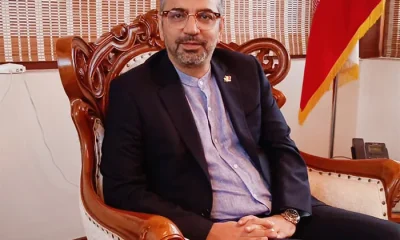
Israeli-US aggression won’t go unanswered -Iranian Ambassador
-
 Features4 days ago
The Division Bell Mystery
-
 News1 day ago
UNP challenges NPP move to amend Vihara – Devalagam Act
-
 News3 days ago
Fort Magistrate to announce whether to summon Arsecularatne PC to testify at Kapila’s inquest
-
 News5 days ago
RTI query of Ditwah funds: Presidential Secretariat mum on key questions