
News
Global Tamil Forum calls for strong resolution on Lanka

The Global Tamil Forum (GTF) has called for a strong resolution on Sri Lanka at the UN Human Rights Council (UNHRC) in Geneva.Issuing a statement, the GTF said that for the Tamil people who have suffered enormously during the war, and indeed for the victims of human rights violations from all communities who are denied accountability and justice in Sri Lanka, the UNHRC has consistently provided much needed hope.
The role played by the Office of the High Commissioner for Human Rights (OHCHR) is crucial in this regard. GTF expresses its sincere appreciation to Michelle Bachelet for her exemplary service as the High Commissioner till last month and welcomes the new High Commissioner Volker Turk in this important role.
It is clear from the High Commissioner’s report that the unprecedented economic crisis in Sri Lanka has its roots firmly in its long history of unaccountable governance associated with the ethnic conflict and war. The report argues that ‘deepening militarisation and lack of transparency and accountability in governance have embedded impunity for serious human rights violations and created an environment for corruption and the abuse of power.’ For the first time related to Sri Lanka, the UN review recommends ‘investigation of economic crimes that impact on human rights and the tracing and recovery of stolen assets.’
The High Commissioner’s report also recognises the opportunity provided by the economic crisis, to charter a new path spurred by broad-based demand by all communities for deeper reforms and accountability. And the report recommends ‘a more fundamental constitutional reform through broad-based consultative process to strengthen democratic checks and balances and devolution of political authority, which is integral to reconciliation and the full enjoyment of human rights by all members of its population.’
However, the report is highly critical of the hard-line approach taken by the Ranil Wickremesinghe government – including continued usage of the Prevention of Terrorism Act (PTA) to detain student leaders and to continue to detain long-term Tamil and Muslim prisoners, despite years of promises to repeal, and rescinding on the recent commitment to a de facto moratorium on its use. And the report calls to immediately end the reliance on draconian security laws to crack down on peaceful protests, reverse the drift towards militarisation and to show renewed commitment to deliver on security sector reform and ending impunity.
The OHCHR report notes that in 2022, Defence was allocated 373.1 billion rupees (then US$1.86 billion), which accounted for 15 percent of total government expenditure, and this was more than double that allocated for Health. Such high defence expenditure in a country under major financial crisis and that too for defence activities disproportionately concentrated in the North-East where their actions only prevent return to normalcy, defies logic.
GTF would like to emphasise that the genesis (from 2009) and the continuing driver of the UNHRC process have been about addressing accountability for war time atrocities committed during the war and promoting reconciliation among all communities. It is in this aspect the High Commissioner’s report is more scathing. The Easter Bombing (2019) is now part of a long list of emblematic cases where truth seeking has been intentionally made impossible.
The OHCHR report unambiguously states, ‘The Sri Lankan state, through successive governments, has consistently failed to pursue an effective Transitional Justice process to hold perpetrators to account and to uphold victims’ rights to truth, justice, and reparation. Rather, they have created political obstacles to accountability and actively promoted and incorporated some military officials credibly implicated in war crimes in the highest levels of government.’
The report identifies that even the tokenistic initiatives from the government, such as the Office on Missing Persons (OMP), has lost the confidence and trust of the relatives of victims, following a series of problematic appointments to the Chairperson and Commissioners. In effect, the OMP has not been able to trace a single disappeared person or clarified the fate of the disappeared in meaningful ways and it is focussed on expeditiously closing the files and issuing families with ‘Certificates of Absence’.
The High Commissioner’s report calls Sri Lanka to ‘re-launch a comprehensive, victim-centred strategy on Transitional Justice and accountability, to establish credible truth seeking mechanism and ad hoc special court’. This statement is unambiguous in that as per the view of the OHCHR, after 13 years of solemn promises and commitments to its citizens and to the international community, the accountability project within Sri Lanka has reached the dead end.
In reality, Sri Lanka went through many distinct phases in its dealing with war related accountability issues – outright denials initially; followed by half-hearted actions and perceived cooperation through internal investigations and co-sponsorships of UNHRC resolutions; and finally playing for time hoping that the issue will disappear. But it is to the credit of the international community, the core group of countries, the NGOs and the United Nations system that their focus never wavered. In fact, there has been progressive ramping of up of initiatives – Secretary General’s Panel of Experts on Accountability in Sri Lanka (2011); Secretary-General’s Internal Review Panel on United Nations Action in Sri Lanka (2012); OHCHR Investigation on Sri Lanka (2015) and the OHCHR Accountability Project as per the Resolution 46/1, Paragraph 6 (2021).
The High Commissioner’s report states that the OHCHR Accountability Project is fully staffed and operational since May and is focussed on four tracks – “Collecting, consolidating, analysing and preserving information and evidence”; “Developing possible strategies for further accountability processes”; “Advocating for victims and survivors” and “Supporting relevant judicial and other proceedings”. It is pleasing to note that the OHCHR has received requests from national authorities for information and evidence related to eight individuals, as well as a number of alleged violations, and we strongly support High Commissioner’s call for ‘renewing the mandate and reinforcing the capacity of OHCHR for its specialised accountability project’.
It is important to note that that the time has arrived to explore further options for advancing accountability in Sri Lanka. The High Commissioner’s report refers to communications submitted in October and November 2021 to the Prosecutor of the International Criminal Court requesting that the Prosecutor exercise jurisdiction over alleged crimes occurred partially on the territory of States Parties (to the Rome Statute).
The report calls on ‘states to cooperate in accountability efforts, including available avenues of extraterritorial and universal jurisdiction to investigate and prosecute crimes under international law’ and ‘to explore further measures including targeted sanctions, restrictive measures and travel bans in relation to those who are credibly implicated in serious crimes.’
It is in this context the international community needs to view the announcement by the Sri Lankan Foreign Minister Ali Sabri that the Ranil Wickremesinghe government would not agree to any external mechanism and looking for internal truth seeking arrangements within the framework of Sri Lankan constitution. After 13 years of dithering and deceiving, and co-sponsoring resolutions (30/1, 34/1) which called for establishing hybrid court with international participation, that too by a government when Ranil Wickremesinghe was the Prime Minister, Sri Lanka now wants to go back to square one and start all over again. The absurdity of this proposition will not be lost on any keen observer of Sri Lanka.
We also thank India for comments during the Interactive Dialogue on Sri Lanka: Indian delegation notes with concern the lack of measurable progress by Government of Sri Lanka on their commitments of a political solution to the ethnic issue — through full implementation of the 13th Amendment of the Constitution, delegation of powers to Provincial Councils and holding of Provincial Council elections at the earliest. The HRC process should facilitate devolution of political authority to the North and East provinces building up on the 13th Amendment and finding a lasting political solution to ensure non-recurrence of the violent past.
GTF is of the view that Sri Lanka is at crossroads. The nascent transformation Sri Lanka presently undergoing is significant and there is a developing environment where an unaccountable government will be under increased scrutiny. In addition to wartime accountability, legal, financial, and other governance accountabilities are also under intense focus. Unfortunately, many of the recent actions by the Ranil Wickremasinghe government are not conducive to promote this healthy development. Irrespective of that, this emerging trend needs to be conscientiously promoted by the international community, which is possible only by adopting a well-targeted UNHRC resolution. The new resolution needs to build on the key aspects of the March 2021 UNHRC resolution (A/HRC/RES/46/1) and mirror the comprehensive set of recommendations listed in the High Commissioner’s reports of February and September 2022. GTF is of the view that the reports mandated in the proposed resolution should be transmitted to all relevant United Nations Bodies and the Secretary-General for appropriate action.
The GTF also fully endorsed the request by Human Rights Watch and 3 other NGOs calling the HRC to adopt a Resolution that: Strengthens the mandate for monitoring and reporting, by establishing an expert mechanism to monitor and report (both to the Human Rights Council and the General Assembly) on the current rights situation in Sri Lanka and make concrete recommendations to ensure the protection and realization of rights. It is also the responsibility of the Member States including the Core Group of Sri Lanka to adequately fund the increased scope and capacity of the Sri Lanka Accountability Project throughout the new period envisaged in the Resolution.







Govt. tells fuel distributors to maintain stocks to ensure uninterrupted supplies
by Saman Indrajith and Norman Palihawadane
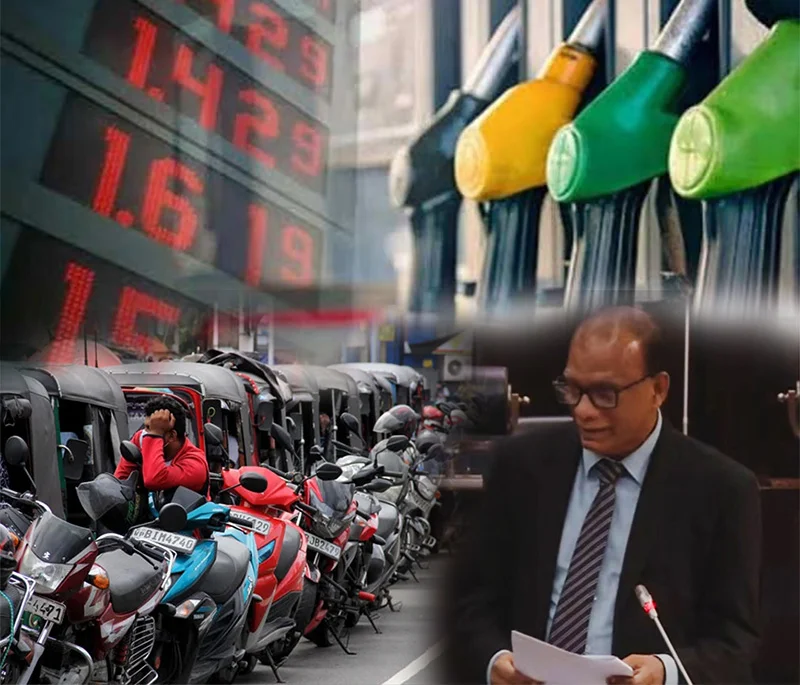
The government had instructed private fuel distributors to maintain minimum stocks and ensure uninterrupted supplies to the market, Energy Minister Anura Karunathilaka told Parliament yesterday (06).
Karunathilaka said the Ministry of Energy Secretary had notified the relevant companies of the requirement, following a reduction in supplies by some private distributors, amid higher international fuel prices.
The Minister said private companies had informed the government that they were facing losses because international prices had risen while fuel was being sold, locally, at prevailing prices. As a result, some companies had reduced the volumes released to the market.
The reduced supplies had increased the burden on the Ceylon Petroleum Corporation (CPC), whose share of the diesel market had risen from about 54% to 82%, the Minister said.
“The CPC currently holds an 82% share of the market,” he said, adding that it had increased its supplies, compared with February, to compensate for the reduction by private distributors.
Karunathilaka said the government could not, under the existing agreements with private companies, specify the quantities they should supply to individual filling stations. However, it could require them to maintain minimum stocks in the country.
The Minister said the Energy Ministry had already instructed companies that had failed to maintain the required stocks to take steps to prevent supply disruptions.
The Minister attributed the queues reported at some filling stations to reduced supplies from private distributors, as well as normal variations in fuel distribution. He also said demand for CPC fuel had increased because private companies generally did not provide fuel to dealers on credit, while the CPC offered a three-day credit facility.
“We expect that, as the Ceylon Petroleum Corporation takes on this additional burden, the problem will ease to some extent by Wednesday or Thursday,” Karunathilaka said.
He said instructions had also been issued to increase supplies to CPC filling stations. A special discussion on the issue is scheduled for today (07), with officials of the Energy Ministry and CPC expected to participate,
along with President Anura Kumara Dissanayake.
Meanwhile, Petroleum Dealers’ Association officials have called for an early solution to the supply issue. Association Chairman D.V. Shantha Silva said queues had been reported at many filling stations, mainly those operated by private distributors.
He said the situation was not due to an overall shortage of fuel, but was linked to reduced orders by Lanka IOC, Sinopec and R.M. Parks amid concerns over losses incurred on fuel sales.
The Ceylon Petroleum Private Tanker Owners Association has urged motorists to refrain from panic buying, saying there was no nationwide disruption to fuel supplies.
The government earlier increased fuel prices and introduced a per-litre diesel subsidy following concerns raised by distributors over rising international prices.
by Norman Palihawadane
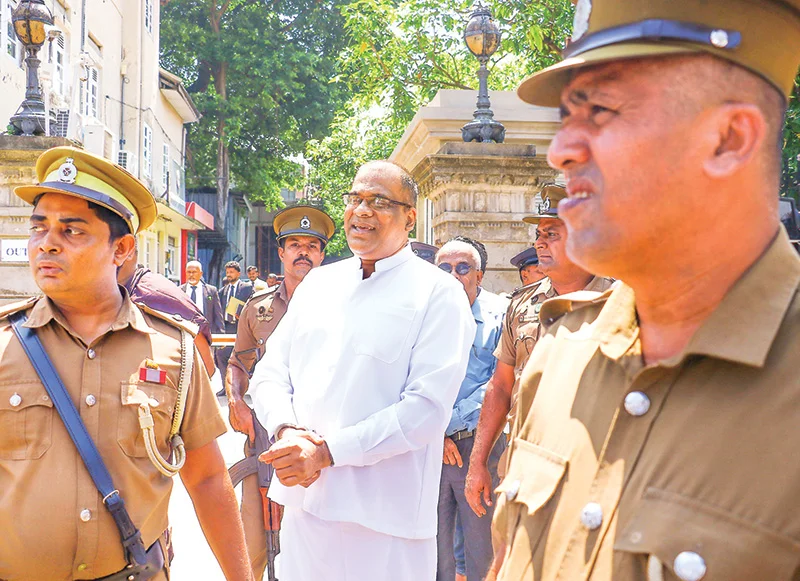
Bodu Bala Sena General Secretary Ven. Galagodaatte Gnanasara Thera, who has been ordered by the court to serve the remainder of his prison sentence, is to be assigned to the prison ‘printing work party’, prison officials said yesterday.
The monk was produced before the Colombo High Court yesterday by prison officials in connection with a warrant issued by the court.
He appeared before the court in civilian attire.
Prison sources said arrangements were being finalised for his detention and that he would subsequently be assigned to the printing work party.
The Thera initially objected when prison officials instructed him to change from his robes into the attire worn by convicted prisoners.
He later agreed to wear the prescribed prison clothes, sources said.
The Supreme Court, in September, annulled the presidential pardon granted to Gnanasara Thera in 2019. He had been serving a six-year prison sentence imposed following his conviction for contempt of court but had served only about nine months when then President Maithripala Sirisena granted him a presidential pardon in May 2019.
Following the Supreme Court ruling, the Thera was required to serve the remainder of his sentence. He was subsequently reported missing, prompting the Court of Appeal to issue an open warrant for his arrest.
The Court of Appeal on Monday ordered the authorities to enforce the remainder of his prison sentence.
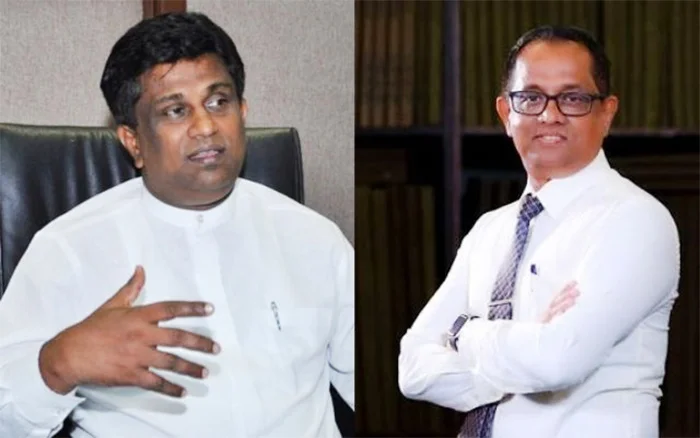
Speaker Dr. Jagath Wickramaratne yesterday ruled that a privilege complaint submitted by SJB Kalutara District MP Ajith P. Perera did not constitute a prima facie breach of parliamentary privilege.
The ruling was made in response to a notice of privilege submitted by Perera on October 02.
Perera alleged that his parliamentary privileges had been breached over the failure to take formal action or reach a final decision on a written request submitted on August 03 by 18 Opposition MPs seeking the appointment of a Special Select Committee to investigate delays in the judicial system and prison overcrowding.
He had also requested that the matter be referred to the Committee on Ethics and Privileges for investigation and recommendations.
In his ruling, Speaker Wickramaratne said the Speaker, as the Presiding Authority and guardian of the powers, rights and privileges of Parliament, could not be subjected to a privilege complaint or disciplinary inquiry by a committee subordinate to the Chair in respect of actions taken in an official capacity.
He said that, under the Standing Orders, the Speaker was required to independently determine whether a prima facie case of breach of privilege existed.
Referring a complaint against the Speaker to a committee functioning under the Speaker’s authority would, therefore, create a procedural contradiction, he said.
Accordingly, the Speaker ruled that Perera’s notice did not constitute a prima facie breach of parliamentary privilege and disallowed the request to refer the matter to the Committee on Ethics and Privileges.

Ronaldo apologizes for Portugal walkout; says Jesus broke promise

Showers in the Western, Sabaragamuwa, Central, Uva, North-western and Southern provinces and in Anuradhapura and Mannar districts

Fuel crunch looms

Gnansara Thera to be assigned to prison printing section: Officials

Speaker rejects Ajith Perera’s privilege complaint

OIC of FCID summoned before Maligakanda Magistrate

‘Dates have the highest sugar content to fight Coronavirus’

Sunday Island 27 December – Headlines

#SundayIsland 17th December – Headlines

Sunday Island – 28th March

Sunday Island Headlines – 21 March

Sunday Island – 21st February – Headlines
-

 News6 days ago
US-assisted ‘Ice’ detection: NPC to examine IGP’s move to transfer drug-busting team
-

 Editorial5 days ago
Colombo Port drug bust: The plot thickens
-

 Editorial6 days ago
Drug busting, transfers and trust deficit
-

 Features3 days ago
The first woman in the foreign service or Ceylon Overseas Service it was then called
-

 Editorial4 days ago
Fuelling discontent and protest
-
 News6 days ago
Sri Lankan facing death penalty in Saudi Arabia: Mano G appeals to Crown Prince
-

 Latest News4 days ago
Tharindu Rathnayake, bowlers secure Asian Games Bronze for Sri Lanka
-
 News5 days ago
ADB-backed virtual net metering project faces policy contradiction