
News
GTF assures it won’t undertake political negotiations at any level


The Global Tamil Forum (GTF) and (Sangha for Better Sri Lanka (SBSL), in a joint statement issued from the UK on Wednesday (20), assured that they weren’t engaged in a negotiation process with the government or other leaders of the country for a political solution.
They said it would be the responsibility of the elected Tamil leaders who should undertake political negotiations at the appropriate time.
The statement was issued by its spokesperson Suren Surendiran in the wake of continuing criticism of the GTF-SBSL initiative. A group of representatives during Dec 7-15 period met political party leaders, including President Ranil Wickremesinghe, SLPP leader Mahinda Rajapaksa and Opposition Leader Sajith Premadasa and key political leaders representing Sri Lankan Tamils, Upcountry Tamils and Tamil speaking Muslim communities, and past Presidents and former Speaker of Parliament involved in reconciliation efforts.
However, some political parties and other groups declined to meet the delegation. They alleged the GTF was engaged in a project to safeguard the interests of the Sri Lankan government. “We have noted some of the criticisms aimed at this initiative from some Tamil groups in Sri Lanka and in the Diaspora. Our humble view is that these views are grossly misplaced. However, we are very much encouraged by them expressing their views,” the GTF spokesperson said.
Declaring that this was continuation of a dialogue GTF and SBSL had at Nagarkot, Nepal in April 2023, where both parties arrived at the ‘Himalaya Declaration’ to facilitate ‘our engagement and advocacy efforts among different communities in Sri Lanka”. Surendiran stated: “We have noted some of the criticisms aimed at this initiative from some Tamil groups in Sri Lanka and in the Diaspora. Our humble view is that these views are grossly misplaced. However, we are very much encouraged by them expressing their views.”
The group declared that they wanted to promote what was called a national conversation involving leaders of political parties with substantial support base among the majority community or leaders with limited parliamentary seats in the minority communities. The group appealed to those who declined to meet them because of their skepticism of the joint initiative to judge them by their actions.
They had met the diplomatic community based in Colombo including those representing India, US, UK, Switzerland, Japan, Australia, South Africa, France, Canada, ICRC, UN. “This is an initiative exclusively between two groups, SBSL and GTF with no involvement of any external political stakeholders or countries.”
“We recognise that 75 years of mistrust cannot be reversed in 7 days. But we firmly believe considering the extreme political and economic challenges the country was, and is, undergoing and the new awakening these conditions have led to, present fresh opportunities to reconcile and the National Conversation to start in earnest.”
The Declaration at its core is a framework agreement between SBSL and GTF that articulates – a shared vision for a better Sri Lanka for all its peoples. We believe this is a guiding document that a vast amount of people from all communities can identify with, hence, serve as a useful starting point for a national conversation on peace building.
“Ultimately it is the national conversation among people and communities in Sri Lanka, and the political processes available to them that can lead to political outcomes in the Country. Our joint initiative is limited to facilitating such a process (led by senior Buddhist monks and GTF) and creating a trusting environment where the political outcomes are likely to satisfy the aspirations of all citizens and communities.”
The Himalaya Declaration promoted pluralistic character and equal citizenship in the country; called for devolution of power to all the provinces (without referring to unitary state), including full implementation of the existing constitutional provisions; and stresses the importance of accountability measures and complying with international obligations.
“We are very much encouraged this initiative and the declaration articulating for pluralism, power devolution and accountability have received the approval and blessings from almost all important stakeholders in the Country, including from the chief prelates of the Buddhist chapters. These are truly remarkable outcomes that could potentially transform the Country for the better.”
“The declaration isn’t set in stone. The “National Conversation”, which we believe have kick started in earnest, will be shaped by the people who participate in them – GTF, along with senior Buddhist monks and other religious clergy will be one of many parties to this Conversation.”
“It is important that all views are heard and listened to by each other and all parties contribute and shape the National Conversation which has now truly begun. Both, the senior Buddhist monks and GTF are clear that only promoting National Conversation to facilitate a good and durable outcome, rather than prescribing a particular solution or outcome.”
Referring to the accountability process, the GTF statement declared that the GTF would continue to articulate to keep Sri Lanka under international scrutiny for its past and present human rights and international and local laws violations.







Executive Director of People’s Action for Free and Fair Elections (PAFFREL) Rohana Hettiarachchi yesterday (28) said that there were three major concerns regarding the Anti-Corruption (Amendment) Bill 2026. Acknowledging the recent Supreme Court determination, in respect of the above-mentioned Bill, that three of the provisions were not consistent with the Constitution, requiring a special majority in Parliament, with one clause requiring approval by the people at a Referendum, Hettiarachchi said nonetheless PAFFREL had decided to bring their concerns to the notice of President Anura Kumara Dissanayake.
Responding to The Island queries, Hettiarachchci said that PAFFREL sent a letter, dated 24 Sept., to President Dissanayake, regarding the issue at hand.
Petitions against the Bill was heard before a three-judge Bench of the Supreme Court, comprising Justices Shiran Gooneratne, Mahinda Samayawardena and Sampath Wijeratne.
PAFFREL and Transparency International Sri Lanka (TISL) were among the petitioners who challenged the proposed amendments to the Anti-Corruption Act No. 9 of 2023. “We did so in public interest,” Hettiarachchchi said, adding that three major concerns were (i) the breadth of the proposed redaction power and the proposed criminalisation of certain uses of publicly accessible redacted asset declarations, particularly in relation to freedom of expression, and the public’s right to meaningfully receive and impart information (ii) raising of the State or public-corporation shareholding threshold for certain asset declaration obligations from 25% to 50%, as this could exclude officers of State-linked entities in which the State holds less than 50%, in spite of such entities exercising public functions and managing public resources and (iii)role of the Director General Ranga Dissanayake.
Hettiarachchchi emphasised that though the PARREL appreciated the way CIABOC DG handled his responsibilities, centreing of power on one person was not acceptable.
Hettiarachchi urged President Dissanayake and the 159-member government parliamentary group to pay attention to concerns raised by those who moved court against the controversial Bill and address their concerns though the Parliament received the SC determination.
An International Monetary Fund mission that visited Colombo recently warned that the proposed amendments could weaken the country’s anti-corruption framework.
The mission, led by Evan Papageorgiou, was in the country from 10 to 23 September for discussions on the seventh review of the Extended Fund Facility and the 2026 Article IV consultation. (SF)
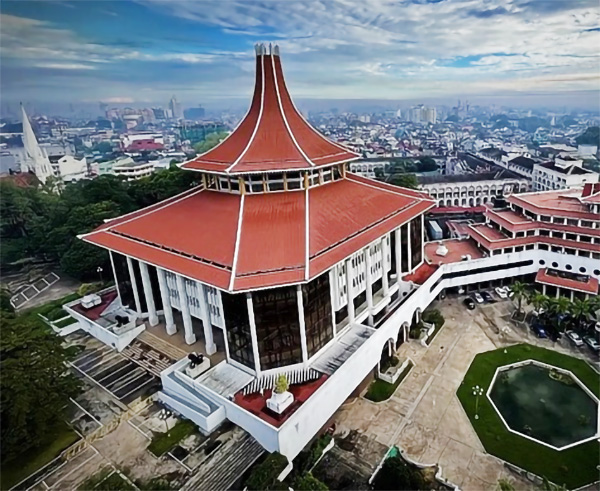
The Supreme Court yesterday (28) dismissed two petitions filed by retired Flight Lieutenant Shantha Jayathilake against Deputy Inspector General of Police of the Criminal Investigation Department (CID) Shani Abeysekara and Secretary to the Ministry of Public Security Ravi Seneviratne, and Rev. Father Cyril Gamini, alleging them of committing contempt of court.
They were the first cases dealt by the Supreme Court after the enactment of the 22nd Amendment to the Constitution.
The recipient of gallantry medal alleged that contempt of court had been committed through an affidavit previously submitted to the Supreme Court by Shani Abeysekara and Ravi Seneviratne.
The other petition alleged that contempt of court had been committed through the contents of a complaint submitted to the Criminal Investigation Department by Rev. Father Cyril Gamini.
The Supreme Court ordered that both petitions be dismissed without being taken up for hearing.
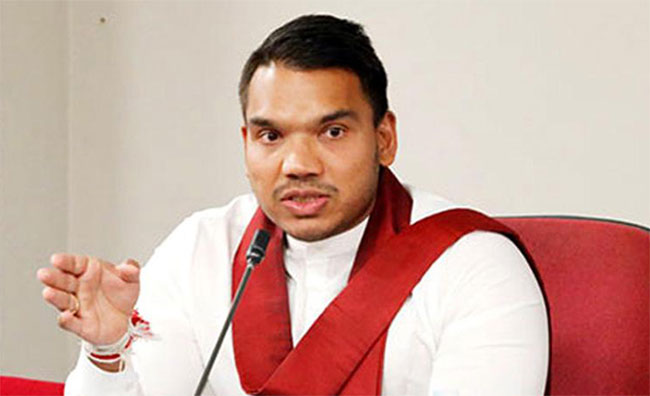
The Commission to Investigate Allegations of Bribery or Corruption (CIABOC) yesterday (28) named former Minister and leader of the SLPP parliamentary group Namal Rajapaksa as the fourth suspect in the Krrish case before the Colombo Chief Magistrate’s Court.
The MP was named as the fourth suspect in the wake of the arrest and remanding of former Executive Officer and Director of the Krrish Group, Janaki Siriwardena, regarding the payment of Rs. 70 mn to Namal Rajapaksa to facilitate the land transaction. Police arrested Ms. Siriwardena on 24 September and she was remanded till 6 Oct. pending investigations.
The investigation focuses on 4.3 acre land development in the Fort area that began in the 2013-2014 period. Investigations were launched in 2016 by the Yahapalana government, following a complaint lodged by Wasantha Samarasinghe, now a Minister in the current Cabinet.
The Indian company in this controversy is Krrish Transworks Colombo (Pvt.) Ltd .
The CIABOC named Namal Rajapaksa as a suspect in the Krrish case while he was remanded over two cases in respect of Airbus bribery probe. (SF)

Showers above 50 mm expected in Uva, Eastern and Central provinces and in Polonnaruwa and Mullaittivu districts after 2.00 p.m.

PAFFREL raises concerns over Anti-Corruption (Amendment) Bill

First cases taken up by SC after enactment of 22A dismissed

Now NR named 4th suspect in Krrish case

Sri Lanka Red Cross Society honoured with Friend of Singapore Red Cross Award

Eastern University and the making of a culture of peace

‘Dates have the highest sugar content to fight Coronavirus’

Sunday Island 27 December – Headlines

#SundayIsland 17th December – Headlines

Sunday Island – 28th March

Sunday Island Headlines – 21 March

Sunday Island – 21st February – Headlines
-

 News6 days ago
Mastermind Naufer Moulavi among 15 found guilty
-
 Midweek Review6 days ago
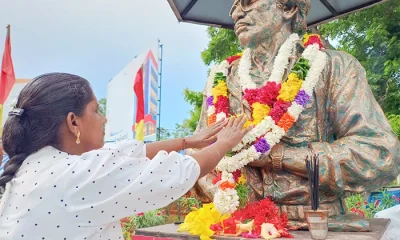
Thileepan’s fast unto death: An authentic narrative that many missed
-
 Latest News5 days ago
Showers above 100 mm are likely at some places in the Western, Sabaragamuwa, Central and North-western provinces and in Galle and Matara Districts
-

 Editorial6 days ago
Big Bad Bills
-
Editorial5 days ago
Crimes punished and unpunished
-

 Features4 days ago
Beyond traditional jobs: Why Sri Lanka needs to facilitate the gig economy
-

 News6 days ago
No referendum needed for passage of 22 A: SC
-

 News6 days ago
One clause in Anti-Corruption (Amendment) Bill requires referendu: SC