
Life style
Gehan makes Sri Lanka proud with ‘The Billionaire’


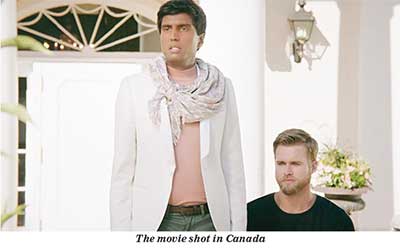
The gifted and versatile actor Gehan Cooray makes Sri Lanka proud with his Hollywood movie “Billionaire” . This movie was awarded at the prestigious Burbank International film recently.
This film was Gehan Cooray’s very own adaptation of George Bernard Show’s play ‘The Millionairess’ Gehan’s milestone in producing, writing the screen play and his portrayal in the title role were great achievements.
Based in Los Angeles, Gehan Cooray is also an actor, independent filmmaker and a classical singer. The film ‘The Billionaire’ was officially submitted to the Academy of Motion Picture Arts and Sciences, and to the Hollywood Foreign Press Association in late 2020, after becoming eligible for both Oscar and Golden Globe awards nominations.
by Zanita Careem
How did you get involved in the movie The Billionaire”
At the tender age of three , my mother introduced me to Classic Hollywood films like ‘My Fair Lady’, ‘The Sound of Music’ and ‘Mary Poppins’, which left an indelible impression on my mind. Throughout my childhood, I was struck by how movies could offer the viewer a form of audio-visual escapism that was practically unrivalled. However, since there was no English film industry in Sri Lanka, I grew up performing on the stage, and didn’t seriously consider becoming a filmmaker until I attended the University of Southern California, in Los Angeles.
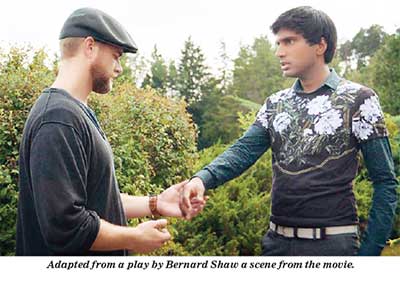 USC of course has the best cinematic arts school in the world, producing such Hollywood luminaries as George Lucas. Although I majored in Theatre and Psychology, I took as many cinema classes as I possibly could, and discovered a knack for filmmaking through class projects and such. It was several years after graduating from university, however, that a chance meeting with the famous director Jon Favreau in Hollywood set me on my current trajectory. Seeing my USC sweatshirt, he asked me if I was a filmmaker. My instinct at the time was to say “I’m an Actor and a Singer, but not really a filmmaker” – and yet, I subsequently said to myself….”If Mr. Favreau thinks I look like I could be making films, on top of being a performer, why not give it a go, since I’ve had such an excellent foundation at USC anyway?”
I started with a few short films, which got into some big film festivals in Los Angeles and Palm Springs. Having received that kind of recognition for my work, my mother felt it was time for me to take the plunge and make a feature length film – which is what led to “THE BILLION AIRE”. I wanted to make a film that hearkened back to the elegance and sophistication of the Old Hollywood films I grew up watching.
How long did you take to make research and make the film?
It took several years. It was definitely a marathon, not a sprint, and it sometimes felt like I would never reach the finish line, honestly, but by the Grace of God, I finally did, overcoming all kinds of obstacles that seemed insurmountable to the point of despair at the time – but my Patience and Perseverance won out.
What were the key challenges in making ‘The Billionaire’
I had a number of people try to take advantage of me and bleed me dry in the most unscrupulous of ways, and so I would say the key challenge was finding the right collaborators whom I could really trust, and who had the film’s best interests in mind, versus their own best interests. This is always a challenge when you are producing a film as an independent filmmaker.
On a more artistic note, editing the film also proved to be a challenge. The first cut of the film was 2 hours 40 minutes. It took me a long time to find an editor who could help me bring the film under two hours, without sacrificing the main essence and thrust of the story. It was someone at Warner Bros. Studios who referred me to such an editor, who understood what I was trying to accomplish with the film, and respected my vision, without merely slicing and dicing the footage.
Working and producing the movie in Hollywood, tell us your first time experience
The difference between making a short film and making a feature film is like the difference between crawling and running a marathon, and so the short films I had so successfully made prior to THE BILLIONAIRE did not prepare me for what was to come. What helped me from beginning to end, however, was the strength of my artistic convictions – I was not just trying to make a movie, as so many do, but create a work of art that had literary, dramatic and musical merit. The whole process might have been somewhat intimidating, had I not had believed so completely in what I was doing.
Is digital technology and opportunity or a threat?
 Digital technology is certainly an opportunity for so many young creative people, but it can also be a threat because anyone can make anything and upload it online – regardless of their level of education or their artistic abilities. Hence, there is such an overabundance of content available online digitally, that finding a work of quality these days can be akin to finding a needle in a haystack. I am still adamant about releasing my film in cinemas first, before taking the digital route, because there is a level of quality control and discernment in cinemas that sadly can’t be found in the digital sphere.
What inspired you to produce and star in ‘The Billionaire’?
I wanted to produce and star in a feature film that portrayed South Asians like myself in an empowered manner, first and foremost. Too often, we see South Asians portrayed in a somewhat subservient manner in Western cinema. My Godmother in Colombo, Nishanthi Perera Pieris, had told me about George Bernard Shaw’s play “The Millionairess”, which was quite progressive in the 1930s, depicting an empowered and thoroughly independent female character. I realized that, by changing the gender and turning the 1930s millionairess into a 21st century billionaire of South Asian descent, I could represent my race in a truly formidable manner. Also, since I grew up watching “My Fair Lady”, which was also adapted from a George Bernard Shaw play, I felt an immense affinity to the kind of language that Shaw utilizes. It was a secondary goal of mine to showcase to the world that a South Asian actor like me could speak the Queen’s English as resplendently and majestically as any Caucasian actor.
What projects do you have coming up?
I am working on adapting an operetta to the big screen, as well as another play which is a more dramatic version of an old fairytale. I wouldn’t be able to produce either project as an independent filmmaker however. I would need to partner with a studio. On a more independent level, I am envisioning a project that might be shot in Sri Lanka, with a big Hollywood actor or actress starring in the film alongside me. Hopefully all of the above comes to fruition.
I have recorded my first album, which will be released in 2021. It was produced by Grammy Award winning musician Hussain Jiffrey, and features Operatic Arias, French and Italian Classical Melodies, as well as Old English Songs from the late 19th century and early 20th century Broadway Musicals. I can’t wait to share this with the world.
Why the movie stresses on Asexuality.
The movie stresses on Asexuality because I myself identify as an Asexual gentleman. This is something which most people are completely unaware of, because so much emphasis is placed on Heterosexuality and Homosexuality. I wanted audiences to become aware of the fact that not everyone likes, needs, or wants sex. I for one, most certainly do not. In THE BILLIONAIRE, for example, the title character whom I portray is attracted to men romantically, but not sexually, which means that none of his relationships are ever consummated – not even after marriage. Since this reflects my own disposition, I felt it was important to showcase to the world at large that two people can fall in love and even get married, but remain essentially pure and chaste. This is a beautiful and sublime thing.
In George Bernard Shaw’s original play ‘The Millionairess’, the title character’s pride and self-worth seemed to derive almost entirely from her wealth and status. I thought this was a rather flimsy characterization, especially in the 21st century, when the Class system is considered somewhat archaic, and so I thought it would be dramatically and psychologically fascinating if my character – THE BILLIONAIRE – drew HIS pride and self-worth as much from his chastity and purity, as he did from his status and wealth. An Asexual person is quasi-angelic, in the sense that such an individual has no desire for a sexual connection with anyone, and I felt this was a much stronger reason for my character to be so proud – above and beyond being rich and upper class.
A lot of people in the LGBTQ community have role models in the media to look up to these days, but Asexual individuals do not have those same role models as yet, unfortunately, and I thought it was high time we changed that.



In a country where creative pursuits are often treated as indulgences rather than vocations, Saman Halloluwa’s journey stands apart — carved patiently through brushstrokes, framed through a camera lens, and articulated through the written word. Painter, wildlife and nature photographer, and independent environmental journalist, Halloluwa inhabits a rare space where art, ecology and social responsibility converge.
His relationship with art began not in galleries or exhibitions, but in a classroom. From his school days, drawing was not simply a subject but an instinct — a language through which he learned to observe, interpret and respond to the world around him. Under the guidance of two dedicated mentors, Ariyaratne Guru Mahathaya and Gunathilaka Guru Mahathaya, he honed both skill and discipline. Those early lessons laid the foundation for a lifelong engagement with visual storytelling.

“His work navigates between traditional Sinhala artistic sensibilities, abstract compositions and expansive landscapes.”
 That commitment eventually materialised in two solo art exhibitions. The first, held in 2012, marked his formal entry into Sri Lanka’s art scene. The second, staged in Colombo in 2024, was a more mature statement — both in content and confidence. Featuring nearly fifty paintings, the exhibition drew an encouraging public response and reaffirmed his place as an artist with a distinct visual voice.
His work navigates between traditional Sinhala artistic sensibilities, abstract compositions and expansive landscapes. There is restraint in his use of form and colour, and an underlying dialogue between memory and space. Yet, despite positive reception, Halloluwa speaks candidly about the structural challenges faced by artists in Sri Lanka. Recognition remains limited; fair valuation even rarer.
“This is not merely an artistic issue,” he observes. “It is a social and economic problem.”
In Sri Lanka, art is often viewed through the lens of affordability rather than artistic merit. Many approach a painting by first calculating the contents of their wallet, not the value of the idea or labour behind it. In contrast, he notes, art in Europe and many other regions is treated as cultural capital — an investment in identity, history and thought. Until this mindset shifts, local artists will continue to struggle for sustainability.
The decisive push toward wildlife photography came from Professor Pujitha Wickramasinghe, a close friend who recognised both Halloluwa’s observational skills and his affinity with nature. From there, the journey deepened under the mentorship of senior wildlife photographer Ravindra Siriwardena.
Both mentors, he insists, deserve acknowledgment not merely as teachers but as ethical compasses. In a field increasingly driven by competition and spectacle, such grounding is invaluable.
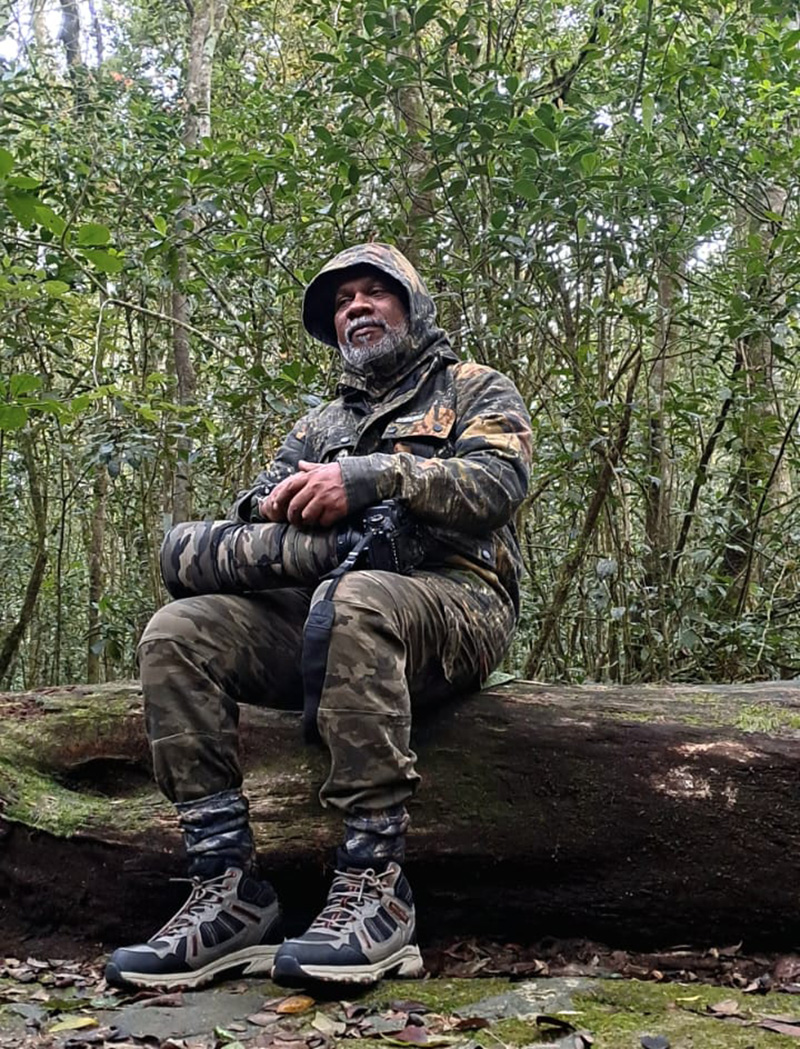
Saman Halloluwa
Wildlife photography, Halloluwa argues, is among the most demanding visual disciplines. It cannot be improvised or rushed. “This is an art that demands restraint,” he says.
Among all subjects, elephants hold a special place in his work. Photographing elephants is not merely about proximity or scale, but about understanding behaviour. Observing social patterns, movement, mood and interaction transforms elephant photography into a constantly evolving challenge. It is precisely this complexity that draws him repeatedly to them.
Halloluwa is cautiously optimistic about the current surge of interest in wildlife photography among Sri Lankan youth. Opportunities have expanded, with local and international competitions, exhibitions and platforms becoming more accessible. However, he issues a clear warning: passion alone is not enough
Sri Lanka, he believes, is uniquely positioned in the global nature photography landscape. Few countries offer such concentrated biodiversity within a compact geographical area. This privilege, however, carries responsibility. Nature photography should not merely aestheticise wildlife, but foster respect, aware ness and conservation.
Parallel to his visual work runs another equally significant pursuit — environmental journalism. For the past seven to eight years, Halloluwa has worked as an independent environmental journalist, giving voice to ecological issues often sidelined in mainstream discourse. His entry into the field was guided by Thusara Gunaratne, whose encouragement he acknowledges with gratitude.
An old boy of D.S. Senanayake College, Colombo, Halloluwa holds a Diploma in Writing and Journalism from the University of Sri Jayewardenepura and has completed journalism studies at the Sri Lanka Press Institute. He is currently pursuing an Advanced Certificate in Wildlife Management and Conservation at the Open University of Sri Lanka — a testament to his belief that learning must remain continuous, especially in a rapidly changing ecological landscape.
Outside his professional life, he enjoys cricket, rugby and badminton. Yet even leisure intersects with responsibility. He is a founding member and former president of the D.S. Senanayake College Old Boys’ Wildlife Forum, an active member of Wild Tuskers Sri Lanka, and a contributor to several independent environmental and wildlife volunteer organisations. In an era dominated by speed, spectacle and short attention spans, Saman Halloluwa’s journey unfolds differently. It is deliberate, reflective and rooted in values. Through art, he captures memory and form. Through photography, he frames life beyond human control. Through journalism, he asks uncomfortable but necessary questions.
“What I do, what I love” is not fashion here.
It is conviction — patiently lived, quietly asserted, and urgently needed in a country still learning how to value its artists, its environment and its truth.
By Ifham Nizam ✍️

Ramani Fernando Sunsilk Hair and Beauty Academy
Ramani Fernando Sunsilk Hair and Beauty Academy marked their graduation of their latest cohort of aspiring hair professionals in a ceremony held at Kingsbury Hotel.

Senaka de Silva, creative force behind Ramani’s shows
For over two decades, the Ramani Fernando Sunsilk Hair and Beauty Academy has stood as a beacon of excellence in beauty education in Sri Lanka. Founded by industry icon Ramani Fernando, the Academy has built a reputation for producing highly skilled professionals who go on to make their mark in salons, both locally and internationally. As the newly minted graduates step out into the world, they carry forward not just certificates, but also the promise of creative authority and personal empowerment.
The chief guest for the occasion was Rosy Senanayake, a long-standing supporter of the Academy’s mission. Addressing the graduates her message echoed her enduring belief that the beauty industry is not merely about aesthetic but about. confidence, self-worth and future leaders.
Over months of rigorous training, these young professionals honed their skills in cutting colouring, styling and contemporary artistry readying themselves to set trends rather than follow them.
Each graduate walked the stage with confidence, their dedication signalling a promising future for Sri Lanka’s beauty and fashion industry! With this new generation of stylists preparing to raise the standard of professional hairstyling.
Ramani Fernando, addressing the audience reflected on the academy’s mission to cultivate not only skills but vision and confidence in every student.
She urged the graduates to embrace continuous learning to take risks with creativity .The world of beauty is ever evolving, stay curious, stay bold and never underestimate the power of your talent, she added emphasising the importance of confidence, discipline and passion in carving a successful career in shaping the future of style.
These graduates are stepping into a world of endless possibilities. They are future of the country, who will carry a forward legacy of creativity. Behind every successful graduate at Sun silk Hair Academy stands a team dedicated to excellence. While Ramani Fernando serves as a visionary Principal and it is Lucky Lenagala, her trusted person who ensures that the academy runs seemingly.
From overseeing training sessions to guiding students, through hands on practice, Lucky plays a pivotal role in shaping the next generation of hairstylists.
Kumara de Silva, who has been the official compere Ramani’s, Hair graduation ceremony, from inception has brought energy, poise and professionalism. The Sunsilk Hair Academy is a celebration of talent and mentor ship for the graduates stepping confidentially into the next chapter of their careers, ready to make their mark on Sri Lanka beauty landscape

A moment of pride Ramani with chief guest Rosy Senanayake

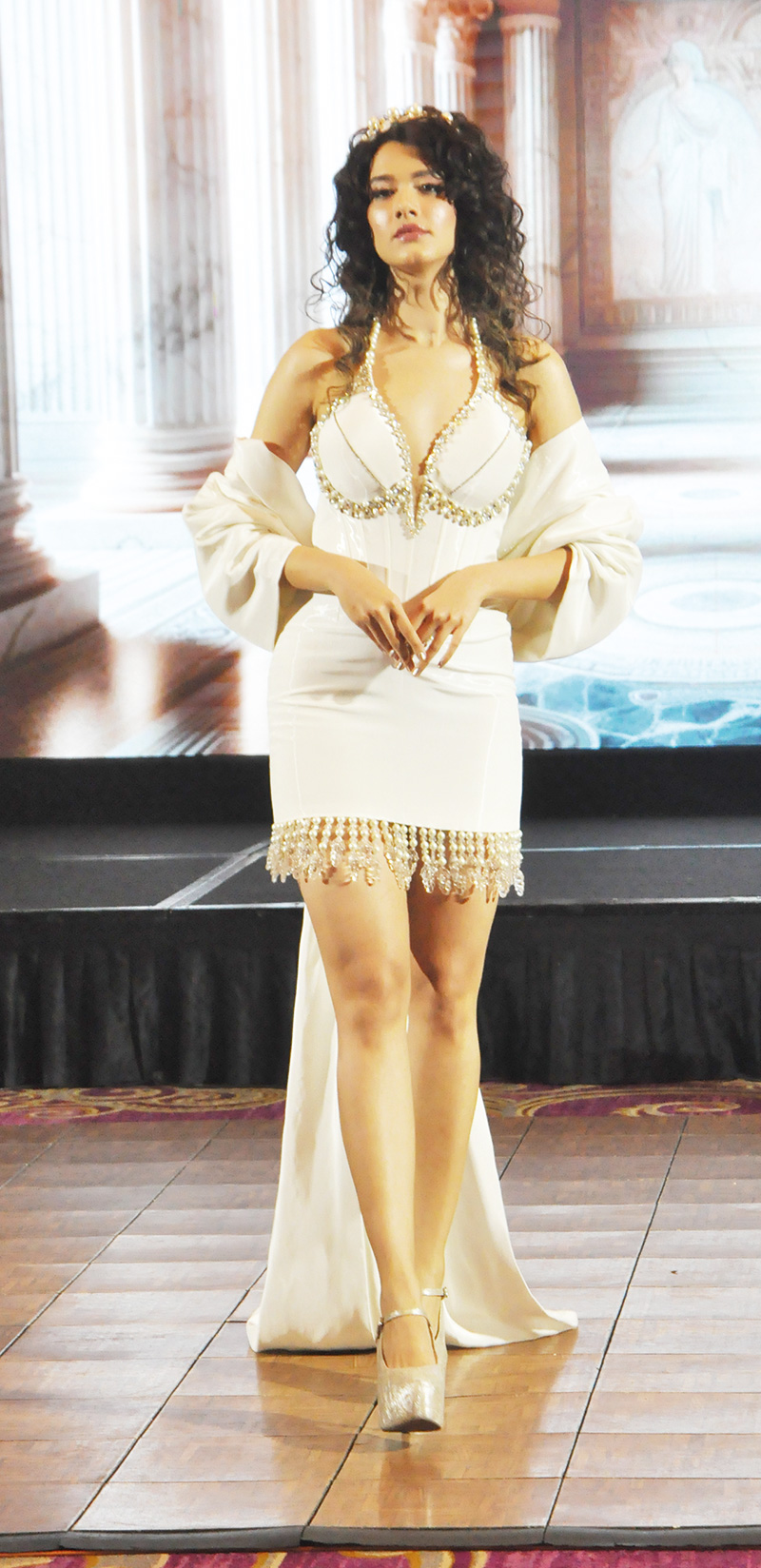
Statement in style

Gliding in romance and sophistication
Pix by Thushara Attapathu
By Zanita Careem ✍️

During this season, Romesh Atapattu’s Capello Salon buzzes with a unique energy – a blend of festive excitement and elegance. Clients arrive with visions of holiday parties, office soirees, seeking looks that capture both glamour and individuality. The salon itself mirrors this celebrity mood. Warm lights, tasteful festive décor create an atmosphere where beauty and confidence flourish.
Romesh Atapattu himself curates the festive décor, infusing the space with his signature sense of style. His personal eye ensures that the décor complements the salon’s modern interiors.
As Colombo slips effortlessly into its most glamorous time of year, the Christmas season brings with it more than twinkling lights and celebrity soirees – it signals a transformation season at salons across the city. Capello salons are no exception.
At the heart of this festive beauty movement is Romesh Atapattu of Capello salons, a name synonymous with refined hair artistry, modern elegance and personalised style.
Christmas is about confidence and celebration. Romesh believes ‘People want to look their best without losing who they are”. Our role is to enhance, not overpower. This philosophy is evident in the salon’s seasonal approach.
Beyond trends, what sets Atapattu apart is the attention to individuality. Each consultation is treated as a creative collaboration – face shape, lifestyle, hair texture and personal style all play a role in creating the best for Romesh.
Stepping into Romesh’s salon during the Christmas season is an experience in itself. The space hums with festive energy while maintaining an atmosphere of calm sophistication.
The décor embraces the Christmas spirit with understated elegance. Tastefully adorned décor, beautiful Xmas tree, soft gold and ivory tones, and gentle hints of red are woven seamlessly into the salon’s contemporary design.
His staff, known for their warmth and professionalism also plays a key role in shaping the salon’s atmosphere—friendly, stylish and always welcoming. The Capello staff combine skill and creativity to deliver results that have a lasting impression.
Beyond trends, what sets Romesh Atapattu apart is the attention to individuality. Each consultation is treated as a creative collaboration – face shape, lifestyle, hair texture and personal style all play a role.
He is a professional who blends technical mastery with a deeply personal approach to style. His dedicated team of skilled professionals, operate with quiet confidence ensuring styles that create an atmosphere of trust, turning every appointment into a personalised and memorable experience.
(ZC) ✍️
Pic by Rohan Herath

Zohran Mamdani sworn in as New York City mayor

In pictures: New Year welcomed around the world

Foreign warships commended for their assistance during weather disaster in Sri Lanka

Machu Picchu train crash leaves one dead and dozens injured

I invite you to step into 2026 with renewed energy, hope, and determination – PM

Fairly heavy showers about 75 mm are likely at some places in the Central and Uva provinces and in Batticaloa and Ampara districts

‘Dates have the highest sugar content to fight Coronavirus’

Sunday Island 27 December – Headlines

#SundayIsland 17th December – Headlines

Sunday Island – 28th March

Sunday Island Headlines – 21 March

Sunday Island – 21st February – Headlines
-
 News7 days ago
Street vendors banned from Kandy City
-

 Sports4 days ago
Gurusinha’s Boxing Day hundred celebrated in Melbourne
-
 News2 days ago
Leading the Nation’s Connectivity Recovery Amid Unprecedented Challenges
-

 News7 days ago
Lankan aircrew fly daring UN Medevac in hostile conditions in Africa
-

 Sports5 days ago
Time to close the Dickwella chapter
-

 Features3 days ago
It’s all over for Maxi Rozairo
-

 Features7 days ago
Rethinking post-disaster urban planning: Lessons from Peradeniya
-

 Opinion7 days ago
Are we reading the sky wrong?