
Sports
Gamini – My friend


Today marks the 80th birth anniversary of visionary SLC President Gamini Dissanayake
by Nuski Mohamed
Gamini Dissanayae was my mentor and friend. My first interaction with him was in 1969 at the Institute of Chartered Accountants of Sri Lanka, when he was a lecturer in Company Law. Since then, we had been in close touch in terms of politics, cricket and corporate management.
In 1981 when Gamini was elected the President of the Board of Control for Cricket in Sri Lanka, I was the Treasurer. That was the year we famously became a Full Member of the International Cricket Council. Gamini’s leadership and the role he played towards Sri Lanka obtaining Full Membership is only too well known and need not be elaborated upon.
The following year, I was elected as Secretary of the Cricket Board and worked alongside Gamini until 1989 for a continuous period of seven years and was in constant contact with him. Gamini had a personality and a mind of his own, thought creatively and acted fearlessly. His leadership was unmatched. His decision making was precise in order to achieve timely and optimum results. One of those decisive moments was in 1982 when he took action with the blessings of the ExCo to ban the cricketers who went on the Rebel tour to South Africa for a period of 25 years without any hesitation whatsoever. It was an eye opener for younger generations.
Following the conclusion of the ICC meeting in 1985, over a coffee in the Long Room at the Lord’s Cricket Grounds, Gamini asked me whether I could take over the Chairmanship of the Sri Lanka Land Reclamation and Development Corporation almost overnight. It took me by surprise, since I knew that the responsibility of heading a State Corporation was demanding besides being a full time job. I was then with the Private Sector since the early 1970’s post qualified.
Although I was on a few Director Boards of State Corporations, the task of taking over a Corporation appeared to be a challenge. However, knowing Gamini’s thinking that he will not take ‘No” for an answer, I requested a few days’ time, to ponder over same.
But that was not to be and on our return to Sri Lanka two days later, he summoned me to the Ministry of Lands and issued me with the letter to take charge of the Corporation immediately. He had obviously made up his mind long before though it was not communicated to me. On hind sight it was a pleasure working with a personality of Gamini’s stature including the experience and knowledge I gained. We always had mutual respect for each other in our work ethics. I enjoyed every bit of our working relationship.
In the early to mid 1980s, the bid for the 1987 World Cup was a tussle between Australia/ New Zealand on the one hand and India/ Pakistan representing the Asian region. Australia had been very helpful to Sri Lanka in terms of exchange of tours which at that time was rare due to our not so strong cricket strength with the exit of key players on account of the rebel tour. Domestically too in coming tours were hampered as a result of the LTTE terrorist activity. Besides, the fact that Australia supported us positively during the crucial vote at ICC without exercising the veto following the visit of ACB Chairman Fred Bennet to Sri Lanka was foremost in Gamini’s mind.
In the midst of the ICC meeting Gamini mentioned to me that Sri Lanka should show some gratitude and thereby initiated a dialogue with the Aussie delegation which included David Richards, to explain to them the circumstances that will compel Sri Lanka to extend support to the bid from the Asian Region. This was well received and appreciated by the Australian delegates. Regional politics did eventually play a dominant role with the Prime Minister of India Rajiv Gandhi speaking to his Sri Lankan counterpart President J.R.Jayewardene and SLC had very little choice.
Gamini’s concluding speech on behalf of the Asian Region Countries on the concept that the World Cup should be rotated as a part of promoting the game globally received overwhelming applause and support from the ICC membership.
Lt. Gen Safdar Butt, President of the Pakistan Cricket Board was a great friend of Gamini. Lt.Gen Safdar was very commandeering and had a personality of his own. During the Pakistan tour of Sri Lanka in 1986 there was a fair amount of upheaval between the Sri Lankan umpires and the captain of the Pakistan team Imran Khan.
The current Prime Minister of Pakistan threatened to abandon the tour and take his team back home. That would have also jeopardized the Asia Cup in 1986 which was to immediately follow the Pakistan tour. Gamini using his personal friendship immediately phoned his counterpart Lt. General Safdar Butt who promptly took a flight and arrived in Sri Lanka at Gamini’s request to settle the dispute. Sanity prevailed and the tour continued with a change of Umpires for the final Test at the P. Sara Oval. A major catastrophe was thus averted.
Gamini never mixed cricket with politics. It was during our regime that the long felt need of a headquarters for the Cricket Board was identified and the project commenced at the SSC grounds. Gamini was able to negotiate terms with President J. R. Jayawardene who was also the President of SSC to construct the headquarters and the award was given to the State Engineering Corporation. We had no funds, but Gamini used his offices and found sponsors with the Sri Lanka Cricket Foundation, Gamini’s creation also chipping in.
During completion stage Turnor Wickremasinghe, Engineer in charge of the project at SSC told me that he would use light green and black paint to the front of the building and that he has consulted the Architects etc. They also opined it would blend well with the green grass in the background. As Secretary of the Board the State Engineering Corporation Consultants were in touch with me on a daily basis on all routine matters during construction and I gave the green light to go ahead.
A couple of weeks later, I happened to travel to the SLC with Gamini for a board meeting and he was fuming when he saw the external walls in a light green shade and questioned me as to whose bright idea it was to use green colour on the walls. I must say he was very polite and I admitted that I had given the go ahead since it came from the Architects. He requested me to get them to substitute the green colour immediately with white at whatever cost since the public perception would be that we used green as he was the President of the Board as it was his party colour. It remains white to date.
During the early 1980s, Gamini appointed me as the Treasurer of the Lanka Jathika Estate Workers Union with the blessings of HE the President when he took over the reigns of the Union as the President. He set out his program of work in such a manner always conscious of the fact that LJEWU being a Trade Union its paramount commitment should be towards the welfare of the members that is the plantation workers employed mostly in the tea, rubber and coconut plantations who were suffering untold hardships.
Gamini was particularly grieved to note that the worker’s relationship with the Estate Management left much to be desired. He realized a new dialogue was a pre requisite and it was time the Management recognised this new challenge. He succeeded in bringing about this change through persuasive powers which included seeking government intervention from time to strike deals for the estate workers beyond wage hikes. That was the hallmark of Gamini as a Trade Union leader.
Dame Betty Boothroyd, former Speaker of the House of Commons of the UK once said “From the numerous occasions that I have interacted with Gamini, it is clear that he has a huge vision for Sri Lanka and its people. While one could consider him an idealist, the very fact that he delivered in terms of the gigantic Mahaweli Project illustrates that he is also an extraordinary performer. It is a testimony to Gamini’s pragmatism and determination.
Finally, back to the Cricket Board Presidency, it is my view that he carried out his responsibilities with consummate ease and tact. He was well aware of the divide and the club rivalries in cricket, yet he always endeavored to make the Cricket Board a place that is accessible to all both players and administrators alike, so long as it was in the best interest of cricket. I am so proud and privileged to have been closely associated with Gamini, the personality who took Sri Lanka Cricket to such great heights during his regime.
Sports Editors’ note:
Mr. Nuski Mohamed was the right hand man of late Gamini Dissanayake having functioned as Secretary and Treasurer of the Board of Control for Cricket in 1980s. He served the cricket board up until 2015. He is still actively involved in cricket dedicating time to club cricket.


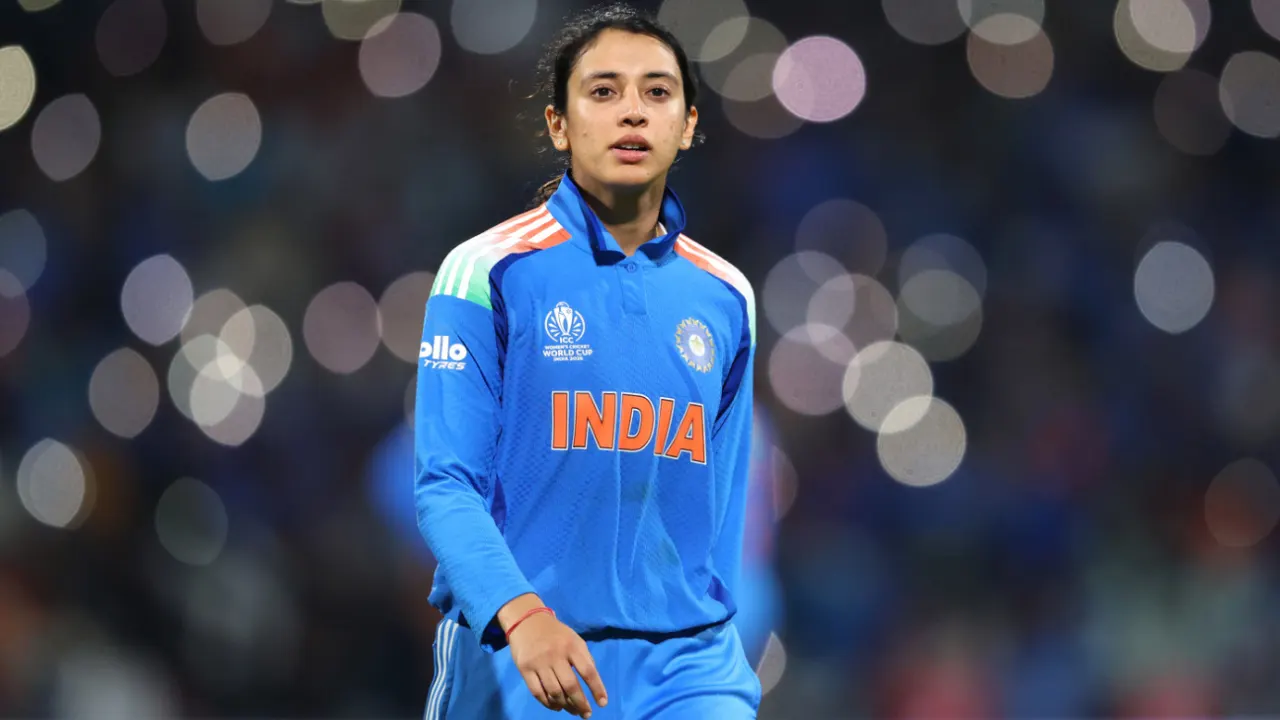
Smriti Mandhana has been named India’s all-format women’s captain on the same day Harmanpreet Kaur stepped down from the role after nearly a decade since she first took over.
Mandhana – vice-captain to Harmanpreet for much of this period – has previously led India in four ODIs and 18 T20Is, apart from captaining Maharashtra in domestic cricket and Royal Challengers Bengaluru in the Women’s Premier League.
Mandhana’s first assignment will be the limited-overs series against Zimbabwe beginning with the three T20Is in Raipur from October 16. On Tuesday, Mandhana was part of the selection meeting chaired by Amita Sharma to pick the squad for the tour.
Terming the appointment a “special honour”, Mandhana also acknowledged the contributions of her predecessor in her welcome note.
“I would also like to acknowledge Harmanpreet and the contribution she has made as captain over the years,” she was quoted as saying by the BCCI. “She has led the team with great commitment and has been an important part of our journey.
“I understand the responsibility that comes with this role and look forward to working with the team, learning along the way and giving my best to take Indian cricket forward.”
Mandhana’s appointment comes on the back of a review meeting held on Monday in Guwahati. Chaired by secretary Devajit Saikia, the meeting was also attended by Mandhana, Harmanpreet and head coach Amol Muzumdar to chart a roadmap forward, with an eye on next year’s inaugural Women’s Champions Trophy in February as well as the T20 World Cup and Los Angeles Olympics in 2028.
Mandhana, India’s best all-format batter, has been knocking on the doors for a while. Earlier this year, she led RCB to their second WPL title, in which she also top-scored in the final.
In September, she overtook Mithali Raj to become the leading run-scorer in women’s international across formats. Her 18 international hundreds are also the most in women’s cricket. She is also the first Indian woman to score centuries in all formats.
[Cricinfo]
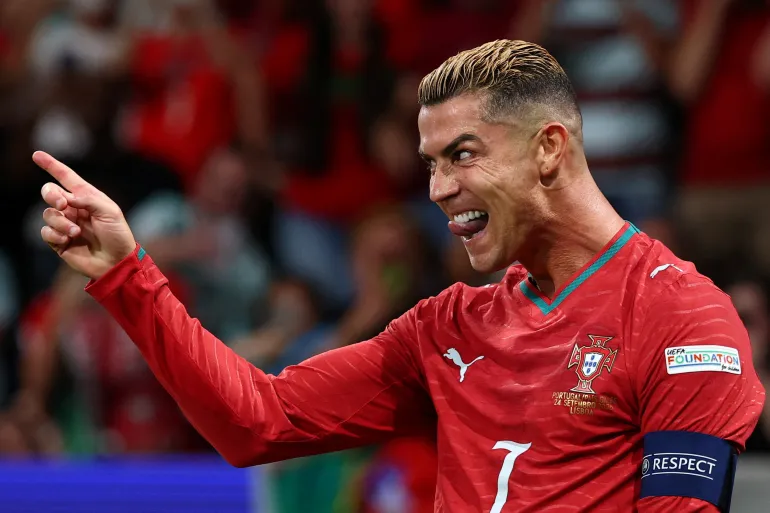
Cristiano Ronaldo has accused Portugal coach Jorge Jesus of twice breaking his word, saying a failed agreement to publicly explain his omission against Norway drove him out of the camp, but insisting he remained available after any punishment.
In a lengthy statement, the 41-year-old gave his account of the dispute that prompted his departure from Copenhagen before Portugal’s Nations League match versus Denmark last week.
Ronaldo said Jesus had agreed a plan under which the forward would miss the Norway and Denmark matches to manage his fitness. However, on the day of the Norway game, the coach told him he would play for 30 minutes.
“Everyone knows the rest. I warmed up from halftime onwards, watched the minutes tick by and wasn’t called on,” Ronaldo said.
“The manager had broken his word to me.”
Portugal’s captain and all-time leading scorer said a subsequent meeting with Jesus, attended by his club side Al Nassr’s sporting director Simao Coutinho, produced an agreement for the coach to clarify events at his next news conference.
According to Ronaldo, an eight-point document was prepared saying he had never demanded playing time, had respected Jesus’s decisions and that the coach asking him to warm up without bringing him on had been a mistake.
Ronaldo said the agreed notes did not require Jesus to apologise to him but said the coach’s public remarks bore no resemblance to their private discussion.
“It was the second time he had broken his word to me,” Ronaldo said. “I decided to leave the training camp without waiting for any further broken promises.”
The statement provided Ronaldo’s account, but on Sunday, after Portugal’s win over Norway, Jesus denied he had made any agreement with the player, nevertheless leaving the door open for his return.
The Portuguese Football Federation (FPF) did not immediately respond to a request for comment about Ronaldo’s statement.
Ronaldo apologised for failing to greet supporters after the Norway match and for leaving his teammates, accepting that his captaincy made his conduct more serious.
“The consequences of my actions must be assessed and punished by the Portuguese Football Federation,” he said.
Despite the rupture, Ronaldo said he was not limiting his international ambitions to a farewell appearance.
“If I’m physically fit, playing for my club – scoring goals, I hope – after serving whatever suspension is imposed on me, I’ll be available, as I’ve always been until now, to compete and win for our national team,” he added.
(Aljazeera)
by Reemus Fernando
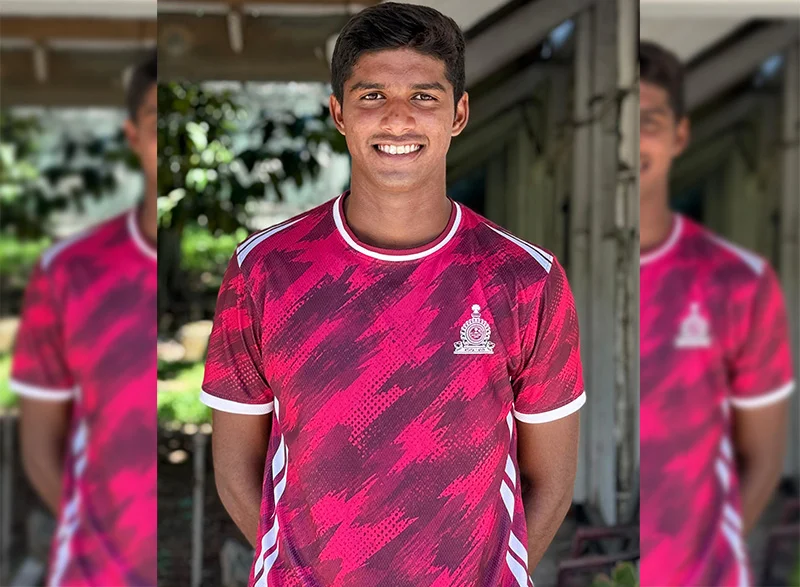
Nalanda College, Colombo continued their unbeaten run to come closer to securing a berth in the knockout stage as they beat Gurukula College by nine wickets in the Under 19 Division I Tier A Limited Overs Tournament match played at Campbell Place on Tuesday.
With Rusandu Silva continuing his impressive run in the tournament, Nalanda did well to restrict the team from Kelaniya to just 113 runs (in 35.4 overs).
After two outings Rusandu had six wickets against his name coming to this match.Rusandu and Methuka Perera claimed three wickets each. Lithum Wijekumara also impressed with two wickets, while Santhul Wijeyarathne took one.
Adeepa Pinsara was the only batsman to make a contribution of note as he top-scored with 35 off 49 balls, including four fours and two sixes, while Javindu Madusanka made 20.
In their chase Nalanda made light work of the modest target, reaching 114 for one, scoring at a rate of over a run a ball.
Nadul Jayalath cracked an unbeaten 62 from just 52 balls. His innings contained four fours and five sixes. He received valuable support from Lithum Wijekumara, who scored 35 off 42 deliveries with six boundaries.
Ranmith Senarath completed the successful chase with an unbeaten 10 off seven balls, including two fours.
Nalanda lost only one wicket as the opening pair added 89 for the first wicket. Jayalath and Senarath then finished the contest comfortably, securing a convincing nine-wicket victory with many overs to spare.
It was Nalanda’s third successive victory in the Tier A tourney after having beaten Thurstan (155) by seven wickets and St. Servatius’ Matara (187) by four wickets in the first two matches.
As of now, they are the leading team in Group G where they have only St. Joseph’s Darley Road to meet before the knockout stage.
With just two teams advancing to the next stage from each Group Nalanda are almost assured of their place.

Former first lady Shiranthi Rajapaksa arrested by CIABOC

U.S. Navy ship USS Tulsa arrives in Colombo for replenishment visit

Smriti Mandhana appointed India captain across formats

Ronaldo apologizes for Portugal walkout; says Jesus broke promise

Showers in the Western, Sabaragamuwa, Central, Uva, North-western and Southern provinces and in Anuradhapura and Mannar districts

Fuel crunch looms

‘Dates have the highest sugar content to fight Coronavirus’

Sunday Island 27 December – Headlines

#SundayIsland 17th December – Headlines

Sunday Island – 28th March

Sunday Island Headlines – 21 March

Sunday Island – 21st February – Headlines
-

 News7 days ago
US-assisted ‘Ice’ detection: NPC to examine IGP’s move to transfer drug-busting team
-

 Editorial6 days ago
Colombo Port drug bust: The plot thickens
-

 Editorial7 days ago
Drug busting, transfers and trust deficit
-

 Features4 days ago
The first woman in the foreign service or Ceylon Overseas Service it was then called
-
 News7 days ago
Sri Lankan facing death penalty in Saudi Arabia: Mano G appeals to Crown Prince
-

 Editorial5 days ago
Fuelling discontent and protest
-

 News3 days ago
Geneva takes up Sallay’s case and govt. ignores opportunity to answer accusations
-

 Latest News4 days ago
Tharindu Rathnayake, bowlers secure Asian Games Bronze for Sri Lanka