
News
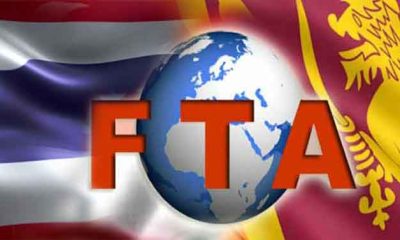
FTA with Thailand: Need for SL to diversify trade portfolio stressed

By Rathindra Kuruwita
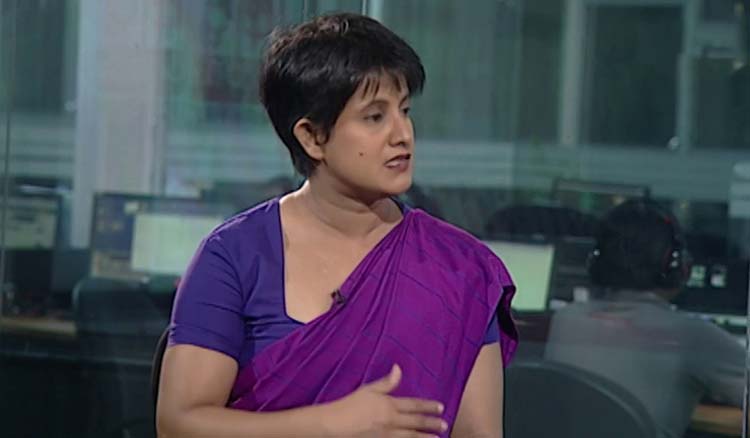
Over 50 percent of Sri Lankan exports to Thailand are gems, and Sri Lanka doesn’t face any trade barriers when exporting precious stones, Subhashini Abeysinghe, says Research Director at Verité Research.
Commenting on the recent free trade agreement between the two nations, she said in a recent television interview that Thailand imported around 300 billion U.S Dollars worth of goods each year, and Sri Lanka’s exports there amounted to about 100 million dollars.
“Thailand is one of the top sources for manufacturing and exporting jewellery. On the other hand, while Sri Lanka has a lot of gems, we are not a country that exports jewellery. We face no trade barrier in exporting gems to Thailand because they are an essential part of manufacturing jewellery,” she said.
Abeysinghe said the purpose of a free trade agreement (FTA) was to remove barriers to trade. She said that 30 percent of the types of goods Thailand already exports were not subjected to any tariffs.
“This means about 3,000 goods Thailand imports are already not taxed. These goods amount to 56 percent of total imports to Thailand. So, we already have duty-free access to over 150 billion dollars in the market, but we export miniscule amounts,” she said.
Abeysinghe said Sri Lanka had not been able to attract FDIs in manufacturing export-oriented products. Sri Lankan policymakers believed that the country would be able to attract such FDIs, if investors saw that Sri Lanka could export goods to many destinations without tariffs.
There was speculation that once the FTA with Thailand was signed, Sri Lanka would be able to attract Thai tourists, especially Buddhist tourists, she said, adding that Sri Lanka had the potential to develop Buddhist tourism.
“However, Thai tourists already have access to on-arrival visa facilities. Given that, I am not sure whether we can attract Thai tourists through an FTA. We can make things easier for tourists by changing the laws and regulations in the country. We don’t need an FTA for that,” she said.
Abeysinghe said Sri Lanka had an FTA with Singapore, a country that already had very low trade barriers. However, Thailand had trade barriers. For example, Sri Lankan garments face a 25 percent tariff when they enter the Thai market, she said.
She said in all trade agreements there was a “negative list,” a list of items that were not subjected to tariffs. Here, both Sri Lanka and Thailand have not relaxed duty on about 15 percent of imports.
“When we look at the FTA with Thailand, both sides have relaxed about 50 percent of the items that are traded. This is also divided into two categories, i.e., goods that are already not subjected to trade barriers and newly relaxed items. As we said earlier, already 30 percent of our exports are not subjected to barriers in Thailand. So, Thailand has only relaxed trade barriers on 20 percent of our exports. On the other hand, only 18 percent of Thai exports are bereft of trade barriers in Sri Lanka now. Here, we must contrast this agreement with the FTAs with India and Pakistan. We speak only about customs duties in the FTAs with India and Pakistan. However, with regard to FTAs with both Singapore and Thailand, we speak about all import duties,” Abysinghe said.
There is a 20 percent customs duty when one imports goods to Sri Lanka. Moreover, there is also a 10 percent Ports and Airports Levy (PAL) and sometimes a 40 percent cess. Thus, the total tax is about 70 percent, she said.
“So, we have agreed to remove all 70 percent, not only customs duties,” she said.
When one looked at the FTA with Thailand, one could say Sri Lanka can export 5,000 items without any barriers, Abeysinghe said, adding that people tended to confuse product coverage and trade coverage.
“There are a lot of items here, but Sri Lanka produced very little. When we look at our export profile, 100 goods account for 80 percent of our exports. We have to see how many of these 100 items have been allowed into Thailand. When we look at the FTA, Thais have lifted barriers only on about 25 percent of those goods,” she said.
Abeysinghe said Thailand produced a large array of goods, and about 49 percent of their trade was covered by the FTA. The problem here was that, compared to Thailand, Sri Lanka did not produce diverse products at a competitive rate, she said.
“This is our Achilles’ heel. I am not sure whether the signing of an FTA will be a solution for this,” he said.
Abeysinghe said Sri Lanka was still heavily dependent on Western markets for its exports and relied on a few items like garments, tea, coconut and rubber.
“The fact that we have not been able to shift to Asian markets and most of our major exports are agricultural goods is a problem. ASEAN countries, on the other hand, are linked to global supply chains. Unlike them, electronics, machinery and components make up less than five percent of our exports. Thais import a lot of such goods. But they hardly import any garments. There is a big mismatch here,” she said.








Latest News
Cabinet approves relief meaures to persons affected due to the War situation in the Middle East


Approval has been granted at the Cabinet Meeting held on 30-03-2026 to provide relief by granting up to rupees 20/- per litre of 92 Octane Petrol, and up to rupees 100/- per litre of Auto Diesel utilized for public transport to minimize the impact on the day today life of the people and the entire economy as a result of escalation of fuel prices due to the war situation in the Middle East region.
Apart from that, the Cabinet of Ministers approved the resolution furnished by the President in his capacity as the Minister of Finance, Planning and Economic Development to grant the following relief for low – income generators, electricity consumers, farmers, fisheries community, and small tea planters who have been exposed to the direct impact of the energy price hike:
(i) Provision of an additional special allowance for April 2026 to low-income generating categories registered under the ‘Aswesuma’ Programme, irrespective of family size: • Providing rupees 7,500/- to a family in the extremely poor category
Providing rupees 5,000/- to a family in the poor category
Providing rupees 2,500/- to a family in the transitional category
(ii) Instead of transferring the additional cost borne for engaging thermal power plants for generating electricity due to the fuel price hike and prevailing dry weather circumstances to the electricity consumers, the additional cost is to be borne by the Government for a period of 03 months so that a relief can be provided to the electricity consumers utilizing below 90 units.
(iii) Increasing the fertilizer subsidiary of rupees 25,000/- per hectare given at present up to rupees 30,000/- per hectare for the Yala season and increasing the fertilizer subsidiary of rupees 15,000/- per hectare given for additional crops that are cultivated in the paddy fields up to rupees 18,000/- per hectare for the Yala season.
(iv) Provide a 50 kg sack of Urea required for the Yala season at a fixed price of Rupees 10,200/- for farmers through Agrarian Services Centres.
(v) Provide a subsidiary of Rupees 50/- per liter for up to 25 liters per day per single-day fishing vessel, for a maximum of 25 days per month, for a period of three (3) months.
(vi) Provide a one-time payment of Rupees 150,000/- per multi-day fishing vessel engaged in fishing activities during the next three (3) months.
(vii) Provide an additional one-time fertilizer allowance of Rs. 5,000 per 50 kg bag of fertilizer to small tea cultivators, in addition to the existing Rs. 4,000 fertilizer subsidy provided by the Sri Lanka Tea Board.

Under the Finance Act No. 35 of 2018 a tax has been imposed on the telecommunication towers and accordingly an annual tax amount of Rs. 200,000/- is levied from mobile network operators who possess telecommunication towers. However, it has been proposed in the Budget for 2026 that the said tax shall not be levied for a period of five (5) years in respect of telecommunication towers newly erected on or after 2026-01-01.
Accordingly, the Legal Draftsman has formulated a draft bill to amend the Finance Act No. 35 of 2018 including the provisions for taking necessary action, and the Attorney General has granted the clearance in the regard.
Hence, the Cabinet of Ministers approved the resolution furnished by the President in his capacity as the Minister of Finance, Planning and Economic Development to publish the said draft bill in the Government Gazette Notification and thereafter submit the same to the Parliament for its concurrence.

The cabinet of Ministers has approved the resolution furnished by the President in his capacity as the Minister of Finance, Planning, and Economic Development to publish the Value Added Tax (Amendment) Bill in the Government Gazette and thereafter submit it for the concurrence of the Parliament.

Cabinet approves relief meaures to persons affected due to the War situation in the Middle East

Amendments to the Finance Act No. 35 of 2018 to be Gazetted

Value Added Tax (Amendment) Bill to be Gazetted

H.M.J.M.Herath appointed Commissioner General of Registration of Persons

Water Resources Board Act, No. 29 of 1964, to be amended

Securing public sector employment opportunities for Athletes demonstrating National-Level sporting excellence

‘Dates have the highest sugar content to fight Coronavirus’

Sunday Island 27 December – Headlines

#SundayIsland 17th December – Headlines

Sunday Island – 28th March

Sunday Island Headlines – 21 March

Sunday Island – 21st February – Headlines
-

 Features3 days ago
Ranjith Siyambalapitiya turns custodian of a rare living collection
-

 News6 days ago
2025 GCE AL: 62% qualify for Uni entrance; results of 111 suspended
-

 News3 days ago
Global ‘Walk for Peace’ to be held in Lanka
-

 Business7 days ago
Hour of reckoning comes for SL’s power sector
-

 Editorial6 days ago
Search for Easter Sunday terror mastermind
-

 Opinion5 days ago
Hidden truth of Sri Lanka’s debt story: The untold narrative behind the report
-
Editorial7 days ago
Ideological confusion and identity crisis
-

 Opinion6 days ago
Is there hope for Palestine?