
Features
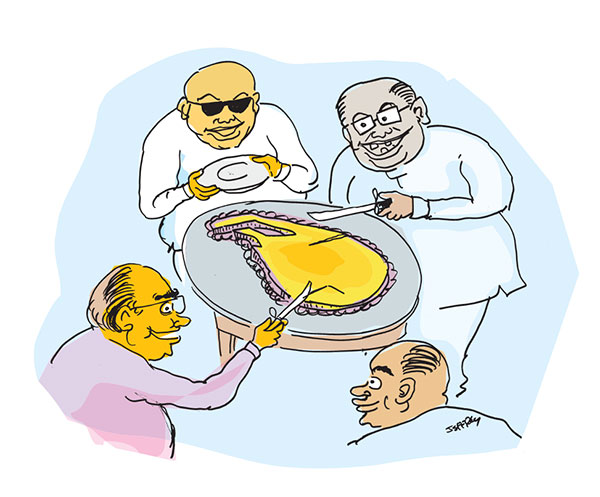
From kingpin to beggar on horseback!

By I. P. C. MENDIS
For “homo sapiens”, destiny is undoubtedly very much in charge and control in any aspect of life from the cradle to the grave, and very much so in the history of a country. In the context of the grave crisis we are facing today in Sri Lanka, it would indeed be opportune to reminisce into our journey down the slippery slope, particularly during the post-independence era. Many a conscience would certainly have gone pita-pat hearing our own icon, Sunil Perera, the veteran band leader, lamenting just before his unfortunate demise – “When I was attending school this was a Third World country, now when I am in the throes of death, it is still a Third World country” ! Did we have a Statesman worthy of that name in the mould of Lee Kwan Yew of Singapore or Mahathir Mohamed of Malaysia, who even attempted to put the country before party politics or self? The answer is an emphatic “NO’. If they did, a National Plan would have topped the priority list. Instead, we have had plans of varied hues baptized as Mid-Term Plans, Short-Term Plans, Crash Programmes, Integrated Programmes, etc., no doubt faithfully funded often by foreign aid. And that, too, has been faithfully and systematically squandered in various ways not excluding personal advancement.
We had the much-respected Hon. D.S. Senanayake who, despite lack of certificates to brandish, was able and well -equipped to lead a qualified team comprising practically all races. DSS is remembered undisputedly as the Father of the Nation for his contribution to the development of the country, agriculture in particular, holding together inter-racial amity. Notwithstanding the lack of paper qualifications, he could walk with kings without losing common touch. He was nattily attired in a tail coat and tie for the occasion, mingling with the British aristocracy. Even he did not see the merit in a national plan for organized continuity. However, our stock was held high internationally, and one of the hallmarks was the international acclaim for the then Finance Minister, JRJ’s plea at the San Francisco Conference after World War II, on behalf of Japan quoting the Buddha – “Hatred does not cease by hatred but by Love alone”. Japan to this day has it in its memory.
DSS’s son, Dudley Senanayake , who was recognised as the epitome of democracy having succeeded his father as Prime Minister , found to his dismay not very long to his first term, that a rather tumultuous environment, created by the Marxist movement via a hartal, was not his kettle of fish and decided to throw in the towel in the Westminster tradition with Sir John Kotelawela assuming control. Sir John started off with a bang and flair with welcome ceremonies, tamashas topping the precedence list, culminating in his being crowned as the King of Delft Island in the North. While D.S. Senanayake used to ride his horse (more for exercise) down Galle Face way sometimes in the mornings, Sir John too had similar inclinations and the “Laird of Kandawela” was often observed down Ratmalana way in majestic trot clad in jodphurs. He was known to be quite at home in the trappings of a Knight in shining armour given the opportunity. His breakfast table was open for a visitor who had any penchant for egg-hoppers and was famous for “off the cuff” remarks which were often eagerly used or mis-used by the Press to boost up their sales. It was during his tenure that a Non-Aligned conference was held in Bandung, Indonesia, and his pro-American stance did raise eye-brows earning him the sobriquet “Bandung Booruwa” here in Sri Lanka. His speech may have surprised even his own Advisers in terms of reports that trickled in. However, it did concern Jawaharlal Nehru who was provoked to inquire from him why he (Sir John) had not consulted him, in reply to which he had shot back – “Why should I – You do not consult me before you speak?” Indeed, he had the honour of receiving Queen Elizabeth II and Prince Phillp at the then Parliamentary premises (now Presidential Secretariat) at Galle Face. The Royal guests were ceremoniously led up the stairway outside in what was described as a very windy day. Sir John, who was quite at home with Royalty or commoner, had his favourite – veteran Lake House photographer Rienie Wijeratne – close by. Sir John had forgotten himself for a split second observing the majestic apparel being embarrassingly disturbed by the strong gust of wind and was reported to have whispered to photographer Rienzie W. – “Ganing yako ganing!”
He enjoyed seeing himself caricatured by Observer Cartoonist Aubrey Collette and one which had him depicted as a damsel before a mirror had been enlarged and hung in his office room at Transworks House when he was a Minister. That was the colourful Sir John Kotelawela – the author (clandestine) of “The Premier Stakes’ written when DSS had bequeathed the Premiership to son Dudley. He gracefully bowed out to Her Majesty’s country-side resort “Brogueswood” the purchase facilitated by his one-time arch rival, SWRDB in the release of scarce foreign exchange.
The Age of the Common Man
Then came the Pancha Maha Bala Vegaya, led by SWRDB – an Oxford product of no mean repute, who with all its perfectly good intentions ( as paved in the path to heaven ) was ham-strung by political, racial and trade union problems not totally unexpected from quarters that had hitherto been neglected and/or restrained in many ways. As a prelude, they gate-crashed into Parliament and occupied the Speaker’s chair. If that was not enough, vested interests within the camp which had been waiting long on the wings to capitalise on the victory became restless, conspiring against SWRDB who, to make a long story short, fell vicitim, paying with his life after only three years in office. He did make an attempt to draw up a national plan which died a natural death thereafter.
1959/60.
The era that followed with W. Dahanayake as the PM was a disaster. Parliamentary elections followed after a few months and Dudley Senanayake formed a minority government in March 1960 which was defeated in Parliament. The SLFP-led coalition won the July 1960 general election and Mrs Bandaranaike was sworn in as Prime Minister from the Senate and launched many people-friendly nationalist projects. The election campaign was bitterly fought and some of the slogans and propaganda were centred on Mrs Bandaranaike mostly targeting her inexperience (nothing more than a housewife) and lack of qualifications, while some of the foul-mouthed did not spare her from personal remarks (also insulting to women in general) unprintable in its content. She nevertheless proved herself to be a woman of steel leading the coalition to victory. Strangely, in next to no time she forged herself into the spotlight as the world’s first woman Prime Minister, fitting herself well and truly as an effective leader hobnobbing with some of the world’s greatest, particularly in the Non-Aligned Movement, earning respect. She carried herself well and proved to be a no-nonsense leader, much respected and feared no less. She maintained cordial relations with practically every national leader, particularly Indira Gandhi, so much so that she was picked to mediate on one of the Indo-China burning issues. She was able to solve to a great extent the Indian plantation labour issue. She mooted the idea of declaring the Indian Ocean a Zone of Peace.
The Non-Aligned conference held in Colombo was a feather in her cap. She had no personal agendas and while any other in her position would have accepted with both hands an invitation to attend the Commonwealth Prime Ministers’ Conference in London soon after taking office, she opted to stay back arranging for her Minister of Justice to represent her – a long shot from the great effort another VVIP of a different regime was said to have been made to cadge an invitation to attend the wedding of the Prince of Wales and Princess Diana. Mid-way in her term, she decided to coalesce with the Left but .some of her rightist members did not see eye to eye with the decision which ensured the defeat of the government on the Press Bill and subsequent disintegration of the coalition and the rise of a coalition of convenience in a seven-party outfit led by Dudley Seanayake, prominent among them being the TULF and the MEP which ruled for the full term.
Mrs B’s Second Term
Mrs Bandaranaike won the general elections in 1970 fortifying herself with a coalition winning a 2/3rd majority which helped her to declare Sri Lanka a Republic. In doing so, the two years spent on that effort was sought to be compensated by a similar addition to the five-year term in the new Constitution. Many an important activity was undertaken, but progress was hampered with the JVP uprising in 1971. This together with the LTTE problems aggravated the situation faced and if that was not enough bickering within the coalition camp began to surface and the coalition broke up in around 1976 resulting in the UNP-led by J.R. Jayawardene obtaining a 5/6th majority .
Executive Presidency
JRJ ensured the birth of a new Republican Constitution and the transformation into an Executive Presidency in which he was deemed to be the first Executive President. Many changes in the economic sphere were introduced, including liberalization of the economy. Development work was expanded, the most important being the accelerated Mahaweli development opening the floodgates for corruption not excluding duty –free facilities of one kind or another. In fact, reports had it that once JRJ had opined that commissions obtained were not bribes . The Mahaweli programme carried out mostly through aid programmes did bring many benefits but the liberalisation policy undermined local agricultural and industrial programmes. The shift in policy was so pro- American that it infuriated Indira Gandhi , which coupled with adverse personal remarks targeting Indira Gandi and son Rajiv, drove India to support in a very big way the LTTE which is well known. JRJ was succeeded by R. Premadasa who can be applauded for his foresight in embarking on the apparel industry which is now a foreign exchange winner. He was generally believed to have had some prejudice against professionals and his style of governance somehow infuriated the likes of Lalith Athulathmudali and Gamini Dissanayake who engineered an Impeachment motion. Premadasa bought time through a prorogation of Parliament and finally a settlement had been reached . He ruled till his unfortunate demise on 1st May 1993. His exit saw the rise of Chandrka Bandaranaike Kumaratunge mentioned earlier.
LTTE Enters the Fray
Prabhakaran entering the fray made successive governments to devote their time, energy , manpower/financial resources , at tremendous cost of development. Successive governments while confronting the LTTE and its cohorts, both foreign and local, had to keep the homefires burning while countering strong adverse political and international onslaughts aimed at discrediting the government and even acts of sabotage by word and deed. (“Alimankade / Pamankada, Kilinochchi/ Madawachchi, Baron’ s Cap, etc.). The ups and downs suffered need not be reiterated except to emphasise the genesis of borrowing and the easy way of further borrowing to settle the earlier borrowings. On the side of stupidity comes , inter alia, the surrender of a military platoon on a governmental fiat, only to be massacred in cold blood by the LTTE, the supply of arms to the LTTE to fight the IPKF, the so-called peace treaty with the LTTE which saw a fake surrender of arms and the “free–for –all” much later in Bond scams which had the blessings of the highest in the land. The Tamil diaspora was influential enough for the International community to ensure that there would be no assistance, financial or otherwise,. to Sri Lanka in the war with the LTTE. Consequently, the Rajapakse government had to resort to various other expensive methods, including borrowing at commercial interest rates to which the UNP led by Ranil Wickremesinghe responded by publicly declaring that they would not honour such obligations if and when they assume power. Measures such as the hedging deal and investments in Greek Bonds, Lotus Tower, Suryawewa Cricket stadium, Road Races, Magam Ruhuna International Conference Hall to name a few, did swell the already burdened debt trap. They added to the misery complemented with wastage and rampant corruption multiplying the woes haunting the government no less. The opportunity that came after the defeat of terrorism, was foolishly frittered away in a situation of mix-up of priorities necessitated by considerations other than national. Mahinda Rajapakse’s decision to seek re-election two years before ex,
Earlier, President Chadrika Bandaranaike’s tenure continued with the decorum hitherto displayed by her predecessors in office in all her dealings, maintaining her stature with the exception that she carried it a little too far in throwing manners to the wind being habitually unpunctual for appointments. Quite unruffled, she was reported to have kept Prince Charles kicking his heels at Temple Trees for quite a while. Indeed, she got away with it and also proved she could be quite out-spoken and frank on occasions. In fact, she appears to be quite popular with the media. She carried herself well despite certain shortcomings. By far, apart from the LTTE issue, the greatest challenge she had was the Tsunami debacle through which she sailed successfully.
Her successor Mahinda Rajapakse although not of the same mould of aristocratic origin, showed his mettle the way he handled the LTTE together with his brother Gotabaya R and the European messiahs that arrived to coax him to stop the onslaught against the LTTE. The usaual regalia was absent in receiving the latter, the location being in the rough and tumble of Embilipitya. They departed disappointed.
Yahapalan/Nawapalana
– The purpose of this Article is to reveal how the rating of the country has receded slowly but surely not only in terms of its financial obligations but also in its international standing, in regard to which the integrity, conduct, performance, management skills , results and general decorum do play their individual and collective roles. The recent history relating to the Yahapalana regime and the present outfit is fresh in the minds of the people and repetition would unnecessarily tax the time of the reader. As for Yahapalana, it is a story of manipulation, deceit, highway robbery (Bond scams, etc.,), intrigue, anti-nationalist and financial mis-management, the worst being security lapses culminating in the Easter Sunday debacle. Like Pontius Pilate,the bulk of its remains have projected itself by another name (SJB) in a bid to wash its hands off its sins and responsibility of everything they silently condoned.
The new regime (Nawapalanaya) of the SLPP combine led by President Gotabaya from which much was expected, has so far not lived up to expectations , burdened no less by the global epidemic and consequent world-wide financial and other consequences coupled with local financial constraints, demonstrations, demands and a host of insurmountable problems, some of which are of their own making. The country is virtually on the edge of a precipice notwithstanding outward show and rhetoric while opulence in some quarters in power are not invisible. Shamelessly now, they are running helter-skelter except to the IMF failing to realise that internationally even their personal and official standing, despite the protocol, are at a low ebb and not anywhere near what was in the past, particularly as a one-timeleader in the Non-Aligned Movement. Indeed, what a fall ? . It is no surprise that even a friend like China had reacted the way it did on the organic feriliser issue, now diplomatically seeking to recompense with 100,000 metric tons of rice commemorating 75-year of the Rubber/Rice Trade Agreement. The Chinese indeed are professionals – Sri Lankans pompous amateursp itifully transformed from Kingpin to beggar on Horseback !



 ‘Adapt, shrink or die’ – thus runs the warning issued by the Trump administration to UN humanitarian agencies with brute insensitivity in the wake of its recent decision to drastically reduce to $2bn its humanitarian aid to the UN system. This is a substantial climb down from the $17bn the US usually provided to the UN for its humanitarian operations.
Considering that the US has hitherto been the UN’s biggest aid provider, it need hardly be said that the US decision would pose a daunting challenge to the UN’s humanitarian operations around the world. This would indeed mean that, among other things, people living in poverty and stifling material hardships, in particularly the Southern hemisphere, could dramatically increase. Coming on top of the US decision to bring to an end USAID operations, the poor of the world could be said to have been left to their devices as a consequence of these morally insensitive policy rethinks of the Trump administration.
Earlier, the UN had warned that it would be compelled to reduce its aid programs in the face of ‘the deepest funding cuts ever.’ In fact the UN is on record as requesting the world for $23bn for its 2026 aid operations.
If this UN appeal happens to go unheeded, the possibilities are that the UN would not be in a position to uphold the status it has hitherto held as the world’s foremost humanitarian aid provider. It would not be incorrect to state that a substantial part of the rationale for the UN’s existence could come in for questioning if its humanitarian identity is thus eroded.
Inherent in these developments is a challenge for those sections of the international community that wish to stand up and be counted as humanists and the ‘Conscience of the World.’ A responsibility is cast on them to not only keep the UN system going but to also ensure its increased efficiency as a humanitarian aid provider to particularly the poorest of the poor.
It is unfortunate that the US is increasingly opting for a position of international isolation. Such a policy position was adopted by it in the decades leading to World War Two and the consequences for the world as a result for this policy posture were most disquieting. For instance, it opened the door to the flourishing of dictatorial regimes in the West, such as that led by Adolph Hitler in Germany, which nearly paved the way for the subjugation of a good part of Europe by the Nazis.
If the US had not intervened militarily in the war on the side of the Allies, the West would have faced the distressing prospect of coming under the sway of the Nazis and as a result earned indefinite political and military repression. By entering World War Two the US helped to ward off these bleak outcomes and indeed helped the major democracies of Western Europe to hold their own and thrive against fascism and dictatorial rule.
Republican administrations in the US in particular have not proved the greatest defenders of democratic rule the world over, but by helping to keep the international power balance in favour of democracy and fundamental human rights they could keep under a tight leash fascism and linked anti-democratic forces even in contemporary times. Russia’s invasion and continued occupation of parts of Ukraine reminds us starkly that the democracy versus fascism battle is far from over.
Right now, the US needs to remain on the side of the rest of the West very firmly, lest fascism enjoys another unfettered lease of life through the absence of countervailing and substantial military and political power.
However, by reducing its financial support for the UN and backing away from sustaining its humanitarian programs the world over the US could be laying the ground work for an aggravation of poverty in the South in particular and its accompaniments, such as, political repression, runaway social discontent and anarchy.
What should not go unnoticed by the US is the fact that peace and social stability in the South and the flourishing of the same conditions in the global North are symbiotically linked, although not so apparent at first blush. For instance, if illegal migration from the South to the US is a major problem for the US today, it is because poor countries are not receiving development assistance from the UN system to the required degree. Such deprivation on the part of the South leads to aggravating social discontent in the latter and consequences such as illegal migratory movements from South to North.
Accordingly, it will be in the North’s best interests to ensure that the South is not deprived of sustained development assistance since the latter is an essential condition for social contentment and stable governance, which factors in turn would guard against the emergence of phenomena such as illegal migration.
Meanwhile, democratic sections of the rest of the world in particular need to consider it a matter of conscience to ensure the sustenance and flourishing of the UN system. To be sure, the UN system is considerably flawed but at present it could be called the most equitable and fair among international development organizations and the most far-flung one. Without it world poverty would have proved unmanageable along with the ills that come along with it.
Dehumanizing poverty is an indictment on humanity. It stands to reason that the world community should rally round the UN and ensure its survival lest the abomination which is poverty flourishes. In this undertaking the world needs to stand united. Ambiguities on this score could be self-defeating for the world community.
For example, all groupings of countries that could demonstrate economic muscle need to figure prominently in this initiative. One such grouping is BRICS. Inasmuch as the US and the West should shrug aside Realpolitik considerations in this enterprise, the same goes for organizations such as BRICS.
The arrival at the above international consensus would be greatly facilitated by stepped up dialogue among states on the continued importance of the UN system. Fresh efforts to speed-up UN reform would prove major catalysts in bringing about these positive changes as well. Also requiring to be shunned is the blind pursuit of narrow national interests.

 Hi! Great to be back after my Christmas break.
Thought of starting this week with egg white.
Yes, eggs are brimming with nutrients beneficial for your overall health and wellness, but did you know that eggs, especially the whites, are excellent for your complexion?
OK, if you have no idea about how to use egg whites for your face, read on.
Egg White, Lemon, Honey:
Separate the yolk from the egg white and add about a teaspoon of freshly squeezed lemon juice and about one and a half teaspoons of organic honey. Whisk all the ingredients together until they are mixed well.
Apply this mixture to your face and allow it to rest for about 15 minutes before cleansing your face with a gentle face wash.
Don’t forget to apply your favourite moisturiser, after using this face mask, to help seal in all the goodness.
Egg White, Avocado:
In a clean mixing bowl, start by mashing the avocado, until it turns into a soft, lump-free paste, and then add the whites of one egg, a teaspoon of yoghurt and mix everything together until it looks like a creamy paste.
Apply this mixture all over your face and neck area, and leave it on for about 20 to 30 minutes before washing it off with cold water and a gentle face wash.
Egg White, Cucumber, Yoghurt:
In a bowl, add one egg white, one teaspoon each of yoghurt, fresh cucumber juice and organic honey. Mix all the ingredients together until it forms a thick paste.
Apply this paste all over your face and neck area and leave it on for at least 20 minutes and then gently rinse off this face mask with lukewarm water and immediately follow it up with a gentle and nourishing moisturiser.
Egg White, Aloe Vera, Castor Oil:
To the egg white, add about a teaspoon each of aloe vera gel and castor oil and then mix all the ingredients together and apply it all over your face and neck area in a thin, even layer.
Leave it on for about 20 minutes and wash it off with a gentle face wash and some cold water. Follow it up with your favourite moisturiser.
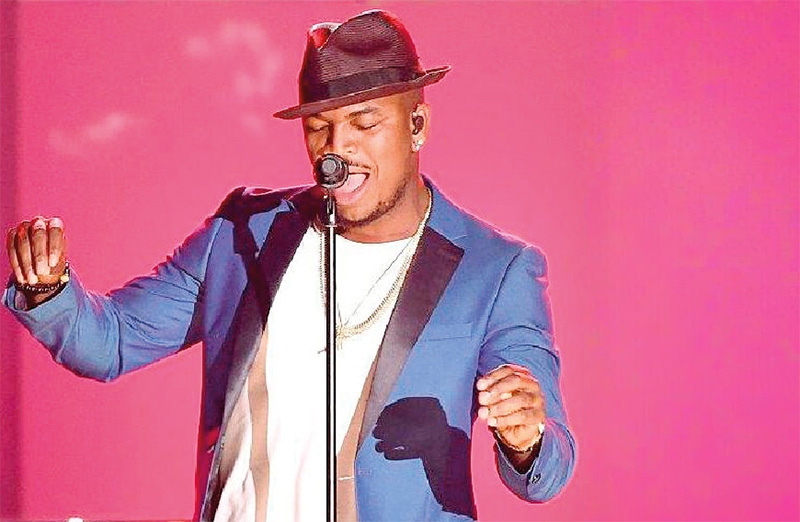
 Superlatives galore were used, especially on social media, to highlight R&B singer Ne-Yo’s trip to Sri Lanka: Global superstar Ne-Yo to perform live in Colombo this December; Ne-Yo concert puts Sri Lanka back on the global entertainment map; A global music sensation is coming to Sri Lanka … and there were lots more!
At an official press conference, held at a five-star venue, in Colombo, it was indicated that the gathering marked a defining moment for Sri Lanka’s entertainment industry as international R&B powerhouse and three-time Grammy Award winner Ne-Yo prepares to take the stage in Colombo this December.
What’s more, the occasion was graced by the presence of Sunil Kumara Gamage, Minister of Sports & Youth Affairs of Sri Lanka, and Professor Ruwan Ranasinghe, Deputy Minister of Tourism, alongside distinguished dignitaries, sponsors, and members of the media.
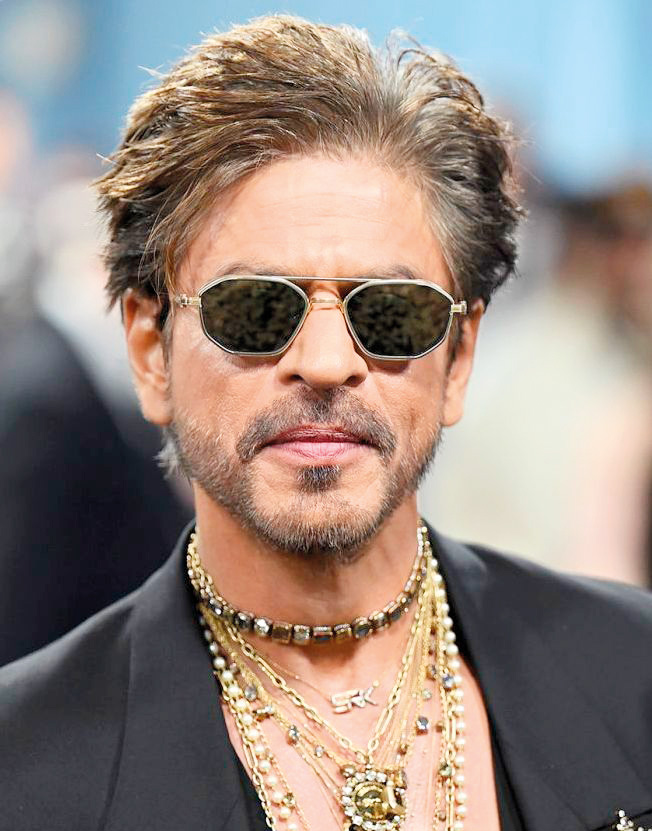
Shah Rukh Khan: Disappointed his fans in Sri Lanka
According to reports, the concert had received the official endorsement of the Sri Lanka Tourism Promotion Bureau, recognising it as a flagship initiative in developing the country’s concert economy by attracting fans, and media, from all over South Asia.
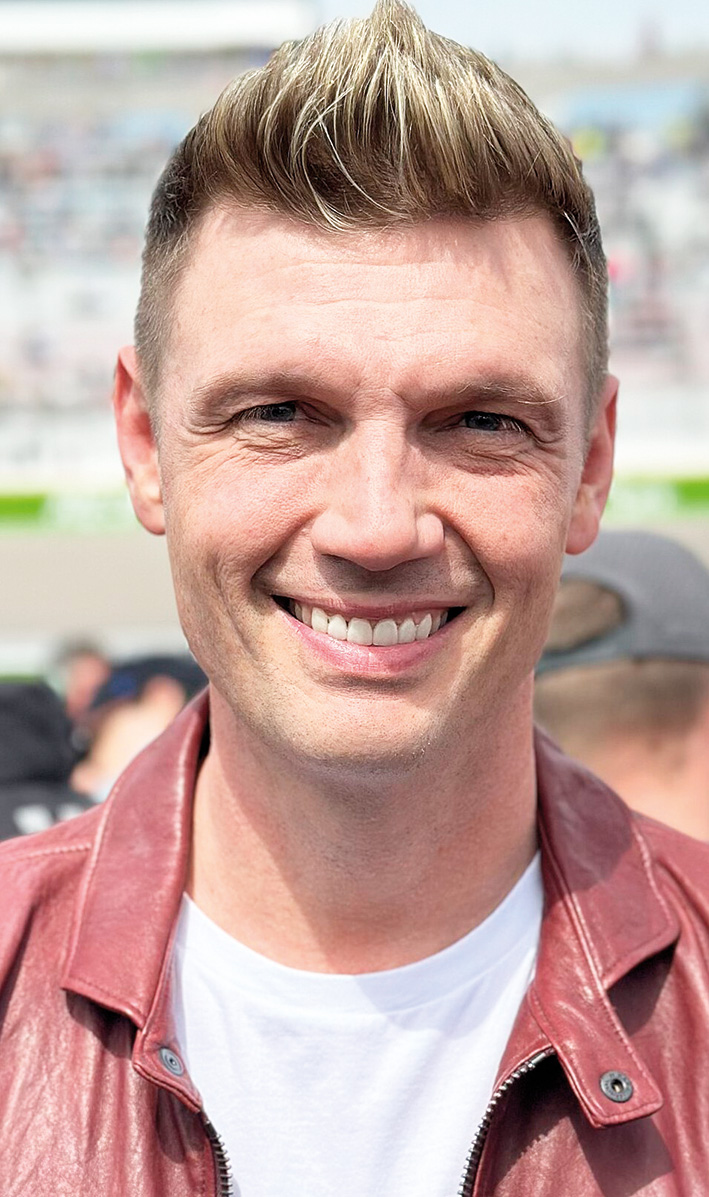
Nick Carter: His concert, too, was cancelled due to “Unforeseen circumstances
However, I had that strange feeling that this concert would not become a reality, keeping in mind what happened to Nick Carter’s Colombo concert – cancelled at the very last moment.
Carter issued a video message announcing he had to return to the USA due to “unforeseen circumstances” and a “family emergency”.
Though “unforeseen circumstances” was the official reason provided by Carter and the local organisers, there was speculation that low ticket sales may also have been a factor in the cancellation.
Well, “Unforeseen Circumstances” has cropped up again!
In a brief statement, via social media, the organisers of the Ne-Yo concert said the decision was taken due to “unforeseen circumstances and factors beyond their control.”
Ne-Yo, too, subsequently made an announcement, citing “Unforeseen circumstances.”
The public has a right to know what these “unforeseen circumstances” are, and who is to be blamed – the organisers or Ne-Yo!
Ne-Yo’s management certainly need to come out with the truth.
However, those who are aware of some of the happenings in the setup here put it down to poor ticket sales, mentioning that the tickets for the concert, and a meet-and-greet event, were exorbitantly high, considering that Ne-Yo is not a current mega star.
We also had a cancellation coming our way from Shah Rukh Khan, who was scheduled to visit Sri Lanka for the City of Dreams resort launch, and then this was received: “Unfortunately due to unforeseen personal reasons beyond his control, Mr. Khan is no longer able to attend.”
Referring to this kind of mess up, a leading showbiz personality said that it will only make people reluctant to buy their tickets, online.
“Tickets will go mostly at the gate and it will be very bad for the industry,” he added.

National Audit Office reveals NHSL lapses

NPP’s CMC budget passed after four Opp. members switch allegiance

600MW hit to national grid as two Norochcholai units go offline

Health Secy. alleges death threats, seeks police protection

India doubles financial commitment to housing projects in Sri Lanka

BASL protests against NPP/JVP-style promotions to judicial officers

‘Dates have the highest sugar content to fight Coronavirus’

Sunday Island 27 December – Headlines

#SundayIsland 17th December – Headlines

Sunday Island – 28th March

Sunday Island Headlines – 21 March

Sunday Island – 21st February – Headlines
-
 News6 days ago
Street vendors banned from Kandy City
-

 Sports3 days ago
Gurusinha’s Boxing Day hundred celebrated in Melbourne
-

 News6 days ago
Lankan aircrew fly daring UN Medevac in hostile conditions in Africa
-

 News1 day ago
Leading the Nation’s Connectivity Recovery Amid Unprecedented Challenges
-

 Sports4 days ago
Time to close the Dickwella chapter
-

 Features6 days ago
Rethinking post-disaster urban planning: Lessons from Peradeniya
-

 Opinion6 days ago
Are we reading the sky wrong?
-

 Features2 days ago
It’s all over for Maxi Rozairo