
Features
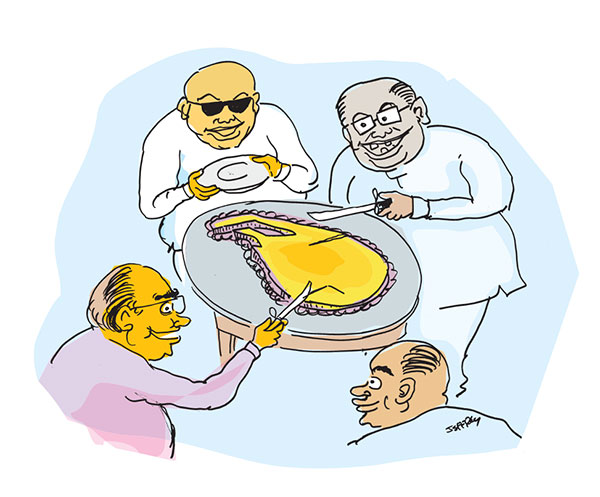
From kingpin to beggar on horseback!

By I. P. C. MENDIS
For “homo sapiens”, destiny is undoubtedly very much in charge and control in any aspect of life from the cradle to the grave, and very much so in the history of a country. In the context of the grave crisis we are facing today in Sri Lanka, it would indeed be opportune to reminisce into our journey down the slippery slope, particularly during the post-independence era. Many a conscience would certainly have gone pita-pat hearing our own icon, Sunil Perera, the veteran band leader, lamenting just before his unfortunate demise – “When I was attending school this was a Third World country, now when I am in the throes of death, it is still a Third World country” ! Did we have a Statesman worthy of that name in the mould of Lee Kwan Yew of Singapore or Mahathir Mohamed of Malaysia, who even attempted to put the country before party politics or self? The answer is an emphatic “NO’. If they did, a National Plan would have topped the priority list. Instead, we have had plans of varied hues baptized as Mid-Term Plans, Short-Term Plans, Crash Programmes, Integrated Programmes, etc., no doubt faithfully funded often by foreign aid. And that, too, has been faithfully and systematically squandered in various ways not excluding personal advancement.
We had the much-respected Hon. D.S. Senanayake who, despite lack of certificates to brandish, was able and well -equipped to lead a qualified team comprising practically all races. DSS is remembered undisputedly as the Father of the Nation for his contribution to the development of the country, agriculture in particular, holding together inter-racial amity. Notwithstanding the lack of paper qualifications, he could walk with kings without losing common touch. He was nattily attired in a tail coat and tie for the occasion, mingling with the British aristocracy. Even he did not see the merit in a national plan for organized continuity. However, our stock was held high internationally, and one of the hallmarks was the international acclaim for the then Finance Minister, JRJ’s plea at the San Francisco Conference after World War II, on behalf of Japan quoting the Buddha – “Hatred does not cease by hatred but by Love alone”. Japan to this day has it in its memory.
DSS’s son, Dudley Senanayake , who was recognised as the epitome of democracy having succeeded his father as Prime Minister , found to his dismay not very long to his first term, that a rather tumultuous environment, created by the Marxist movement via a hartal, was not his kettle of fish and decided to throw in the towel in the Westminster tradition with Sir John Kotelawela assuming control. Sir John started off with a bang and flair with welcome ceremonies, tamashas topping the precedence list, culminating in his being crowned as the King of Delft Island in the North. While D.S. Senanayake used to ride his horse (more for exercise) down Galle Face way sometimes in the mornings, Sir John too had similar inclinations and the “Laird of Kandawela” was often observed down Ratmalana way in majestic trot clad in jodphurs. He was known to be quite at home in the trappings of a Knight in shining armour given the opportunity. His breakfast table was open for a visitor who had any penchant for egg-hoppers and was famous for “off the cuff” remarks which were often eagerly used or mis-used by the Press to boost up their sales. It was during his tenure that a Non-Aligned conference was held in Bandung, Indonesia, and his pro-American stance did raise eye-brows earning him the sobriquet “Bandung Booruwa” here in Sri Lanka. His speech may have surprised even his own Advisers in terms of reports that trickled in. However, it did concern Jawaharlal Nehru who was provoked to inquire from him why he (Sir John) had not consulted him, in reply to which he had shot back – “Why should I – You do not consult me before you speak?” Indeed, he had the honour of receiving Queen Elizabeth II and Prince Phillp at the then Parliamentary premises (now Presidential Secretariat) at Galle Face. The Royal guests were ceremoniously led up the stairway outside in what was described as a very windy day. Sir John, who was quite at home with Royalty or commoner, had his favourite – veteran Lake House photographer Rienie Wijeratne – close by. Sir John had forgotten himself for a split second observing the majestic apparel being embarrassingly disturbed by the strong gust of wind and was reported to have whispered to photographer Rienzie W. – “Ganing yako ganing!”
He enjoyed seeing himself caricatured by Observer Cartoonist Aubrey Collette and one which had him depicted as a damsel before a mirror had been enlarged and hung in his office room at Transworks House when he was a Minister. That was the colourful Sir John Kotelawela – the author (clandestine) of “The Premier Stakes’ written when DSS had bequeathed the Premiership to son Dudley. He gracefully bowed out to Her Majesty’s country-side resort “Brogueswood” the purchase facilitated by his one-time arch rival, SWRDB in the release of scarce foreign exchange.
The Age of the Common Man
Then came the Pancha Maha Bala Vegaya, led by SWRDB – an Oxford product of no mean repute, who with all its perfectly good intentions ( as paved in the path to heaven ) was ham-strung by political, racial and trade union problems not totally unexpected from quarters that had hitherto been neglected and/or restrained in many ways. As a prelude, they gate-crashed into Parliament and occupied the Speaker’s chair. If that was not enough, vested interests within the camp which had been waiting long on the wings to capitalise on the victory became restless, conspiring against SWRDB who, to make a long story short, fell vicitim, paying with his life after only three years in office. He did make an attempt to draw up a national plan which died a natural death thereafter.
1959/60.
The era that followed with W. Dahanayake as the PM was a disaster. Parliamentary elections followed after a few months and Dudley Senanayake formed a minority government in March 1960 which was defeated in Parliament. The SLFP-led coalition won the July 1960 general election and Mrs Bandaranaike was sworn in as Prime Minister from the Senate and launched many people-friendly nationalist projects. The election campaign was bitterly fought and some of the slogans and propaganda were centred on Mrs Bandaranaike mostly targeting her inexperience (nothing more than a housewife) and lack of qualifications, while some of the foul-mouthed did not spare her from personal remarks (also insulting to women in general) unprintable in its content. She nevertheless proved herself to be a woman of steel leading the coalition to victory. Strangely, in next to no time she forged herself into the spotlight as the world’s first woman Prime Minister, fitting herself well and truly as an effective leader hobnobbing with some of the world’s greatest, particularly in the Non-Aligned Movement, earning respect. She carried herself well and proved to be a no-nonsense leader, much respected and feared no less. She maintained cordial relations with practically every national leader, particularly Indira Gandhi, so much so that she was picked to mediate on one of the Indo-China burning issues. She was able to solve to a great extent the Indian plantation labour issue. She mooted the idea of declaring the Indian Ocean a Zone of Peace.
The Non-Aligned conference held in Colombo was a feather in her cap. She had no personal agendas and while any other in her position would have accepted with both hands an invitation to attend the Commonwealth Prime Ministers’ Conference in London soon after taking office, she opted to stay back arranging for her Minister of Justice to represent her – a long shot from the great effort another VVIP of a different regime was said to have been made to cadge an invitation to attend the wedding of the Prince of Wales and Princess Diana. Mid-way in her term, she decided to coalesce with the Left but .some of her rightist members did not see eye to eye with the decision which ensured the defeat of the government on the Press Bill and subsequent disintegration of the coalition and the rise of a coalition of convenience in a seven-party outfit led by Dudley Seanayake, prominent among them being the TULF and the MEP which ruled for the full term.
Mrs B’s Second Term
Mrs Bandaranaike won the general elections in 1970 fortifying herself with a coalition winning a 2/3rd majority which helped her to declare Sri Lanka a Republic. In doing so, the two years spent on that effort was sought to be compensated by a similar addition to the five-year term in the new Constitution. Many an important activity was undertaken, but progress was hampered with the JVP uprising in 1971. This together with the LTTE problems aggravated the situation faced and if that was not enough bickering within the coalition camp began to surface and the coalition broke up in around 1976 resulting in the UNP-led by J.R. Jayawardene obtaining a 5/6th majority .
Executive Presidency
JRJ ensured the birth of a new Republican Constitution and the transformation into an Executive Presidency in which he was deemed to be the first Executive President. Many changes in the economic sphere were introduced, including liberalization of the economy. Development work was expanded, the most important being the accelerated Mahaweli development opening the floodgates for corruption not excluding duty –free facilities of one kind or another. In fact, reports had it that once JRJ had opined that commissions obtained were not bribes . The Mahaweli programme carried out mostly through aid programmes did bring many benefits but the liberalisation policy undermined local agricultural and industrial programmes. The shift in policy was so pro- American that it infuriated Indira Gandhi , which coupled with adverse personal remarks targeting Indira Gandi and son Rajiv, drove India to support in a very big way the LTTE which is well known. JRJ was succeeded by R. Premadasa who can be applauded for his foresight in embarking on the apparel industry which is now a foreign exchange winner. He was generally believed to have had some prejudice against professionals and his style of governance somehow infuriated the likes of Lalith Athulathmudali and Gamini Dissanayake who engineered an Impeachment motion. Premadasa bought time through a prorogation of Parliament and finally a settlement had been reached . He ruled till his unfortunate demise on 1st May 1993. His exit saw the rise of Chandrka Bandaranaike Kumaratunge mentioned earlier.
LTTE Enters the Fray
Prabhakaran entering the fray made successive governments to devote their time, energy , manpower/financial resources , at tremendous cost of development. Successive governments while confronting the LTTE and its cohorts, both foreign and local, had to keep the homefires burning while countering strong adverse political and international onslaughts aimed at discrediting the government and even acts of sabotage by word and deed. (“Alimankade / Pamankada, Kilinochchi/ Madawachchi, Baron’ s Cap, etc.). The ups and downs suffered need not be reiterated except to emphasise the genesis of borrowing and the easy way of further borrowing to settle the earlier borrowings. On the side of stupidity comes , inter alia, the surrender of a military platoon on a governmental fiat, only to be massacred in cold blood by the LTTE, the supply of arms to the LTTE to fight the IPKF, the so-called peace treaty with the LTTE which saw a fake surrender of arms and the “free–for –all” much later in Bond scams which had the blessings of the highest in the land. The Tamil diaspora was influential enough for the International community to ensure that there would be no assistance, financial or otherwise,. to Sri Lanka in the war with the LTTE. Consequently, the Rajapakse government had to resort to various other expensive methods, including borrowing at commercial interest rates to which the UNP led by Ranil Wickremesinghe responded by publicly declaring that they would not honour such obligations if and when they assume power. Measures such as the hedging deal and investments in Greek Bonds, Lotus Tower, Suryawewa Cricket stadium, Road Races, Magam Ruhuna International Conference Hall to name a few, did swell the already burdened debt trap. They added to the misery complemented with wastage and rampant corruption multiplying the woes haunting the government no less. The opportunity that came after the defeat of terrorism, was foolishly frittered away in a situation of mix-up of priorities necessitated by considerations other than national. Mahinda Rajapakse’s decision to seek re-election two years before ex,
Earlier, President Chadrika Bandaranaike’s tenure continued with the decorum hitherto displayed by her predecessors in office in all her dealings, maintaining her stature with the exception that she carried it a little too far in throwing manners to the wind being habitually unpunctual for appointments. Quite unruffled, she was reported to have kept Prince Charles kicking his heels at Temple Trees for quite a while. Indeed, she got away with it and also proved she could be quite out-spoken and frank on occasions. In fact, she appears to be quite popular with the media. She carried herself well despite certain shortcomings. By far, apart from the LTTE issue, the greatest challenge she had was the Tsunami debacle through which she sailed successfully.
Her successor Mahinda Rajapakse although not of the same mould of aristocratic origin, showed his mettle the way he handled the LTTE together with his brother Gotabaya R and the European messiahs that arrived to coax him to stop the onslaught against the LTTE. The usaual regalia was absent in receiving the latter, the location being in the rough and tumble of Embilipitya. They departed disappointed.
Yahapalan/Nawapalana
– The purpose of this Article is to reveal how the rating of the country has receded slowly but surely not only in terms of its financial obligations but also in its international standing, in regard to which the integrity, conduct, performance, management skills , results and general decorum do play their individual and collective roles. The recent history relating to the Yahapalana regime and the present outfit is fresh in the minds of the people and repetition would unnecessarily tax the time of the reader. As for Yahapalana, it is a story of manipulation, deceit, highway robbery (Bond scams, etc.,), intrigue, anti-nationalist and financial mis-management, the worst being security lapses culminating in the Easter Sunday debacle. Like Pontius Pilate,the bulk of its remains have projected itself by another name (SJB) in a bid to wash its hands off its sins and responsibility of everything they silently condoned.
The new regime (Nawapalanaya) of the SLPP combine led by President Gotabaya from which much was expected, has so far not lived up to expectations , burdened no less by the global epidemic and consequent world-wide financial and other consequences coupled with local financial constraints, demonstrations, demands and a host of insurmountable problems, some of which are of their own making. The country is virtually on the edge of a precipice notwithstanding outward show and rhetoric while opulence in some quarters in power are not invisible. Shamelessly now, they are running helter-skelter except to the IMF failing to realise that internationally even their personal and official standing, despite the protocol, are at a low ebb and not anywhere near what was in the past, particularly as a one-timeleader in the Non-Aligned Movement. Indeed, what a fall ? . It is no surprise that even a friend like China had reacted the way it did on the organic feriliser issue, now diplomatically seeking to recompense with 100,000 metric tons of rice commemorating 75-year of the Rubber/Rice Trade Agreement. The Chinese indeed are professionals – Sri Lankans pompous amateursp itifully transformed from Kingpin to beggar on Horseback !


The appointment of former minister Eran Wickremaratne to chair the Sri Lanka Cricket Transformation Committee is significant for more than the future of cricket. It signals a possible shift in the culture of governance even as it offers Sri Lankan cricket a fighting possibility to get out of the doldrums of failure. There have been glorious patches for the national cricket team since the epochal 1996 World Cup triumph. But these patches of brightness have been few and far between and virtually non-existent over the past decade. At the centre of this disaster has been the failures of governance within Sri Lanka Cricket which are not unlike the larger failures of governance within the country itself. The appointment of a new reform oriented committee therefore carries significance beyond cricket. It reflects the wider challenge facing the country which is to restore trust in public institutions for better management.
The appointment of Eran Wickremaratne brings a professional administrator with a proven track record into the cricket arena. He has several strengths that many of his immediate predecessors lacked. Before the ascent of the present government leadership to positions of power, Eran Wickremaratne was among the handful of government ministers who did not have allegations of corruption attached to their names. His reputation for financial professionalism and integrity has remained intact over many years in public life. With him in the Cricket Transformation Committee are also respected former cricketers Kumar Sangakkara, Roshan Mahanama and Sidath Wettimuny together with professionals from legal and business backgrounds. They have been tasked with introducing structural reforms and improving transparency and accountability within cricket administration.
A second reason for this appointment to be significant is that this is possibly the first occasion on which the NPP government has reached out to someone associated with the opposition to obtain assistance in an area of national importance. The commitment to bipartisanship has been a constant demand from politically non-partisan civic groups and political analysts. They have voiced the opinion that the government needs to be more inclusive in its choice of appointments to decision making authorities. The NPP government’s practice so far has largely been to limit appointments to those within the ruling party or those considered loyalists even at the cost of proven expertise. The government’s decision in this case therefore marks a potentially important departure.
National Interest
There are areas of public life where national interest should transcend party divisions and cricket, beloved of the people, is one of them. Sri Lanka cannot afford to continue treating every institution as an arena for political competition when institutions themselves are in crisis and public confidence has become fragile. It is therefore unfortunate that when the government has moved positively in the direction of drawing on expertise from outside its own ranks there should be a negative response from sections of the opposition. This is indicative of the absence of a culture of bipartisanship even on issues that concern the national interest. The SJB, of which the newly appointed cricket committee chairman was a member objected on the grounds that politicians should not hold positions in sports administration and asked him to resign from the party. There is a need to recognise the distinction between partisan political control and the temporary use of experienced administrators to carry out reform and institutional restructuring. In other countries those in politics often join academia and civil society on a temporary basis and vice versa.
More disturbing has been the insidious campaign carried out against the new cricket committee and its chairman on the grounds of religious affiliation. This is an unacceptable denial of the reality that Sri Lanka is a plural, multi ethnic and multi religious society. The interim committee reflects this diversity to a reasonable extent. The country’s long history of ethnic conflict should have taught all political actors the dangers of mobilising communal prejudice for short term political gain. Sri Lanka paid a very heavy price for decades of mistrust and division. It would be tragic if even cricket administration became another arena for communal suspicion and hostility. The present government represents an important departure from the sectarian rhetoric that was employed by previous governments. They have repeatedly pledged to protect the equal rights of all citizens and not permit discrimination or extremism in any form.
The recent international peace march in Sri Lanka led by the Venerable Bhikkhu Thich Paññākāra from Vietnam with its message of loving kindness and mindfulness to all resonated strongly with the masses of people as seen by the crowds who thronged the roadsides to obtain blessings and show respect. This message stands in contrast to the sectarian resentment manifested by those who seek to use the cricket appointments as a weapon to attack the government at the present time. The challenges before the Sri Lanka Cricket Transformation Committee parallel the larger challenges before the government in developing the national economy and respecting ethnic and religious diversity. Plugging the leaks and restoring systems will take time and effort. It cannot be done overnight and it cannot succeed without public patience and support.
New Recognition
There is also a need for realism. The appointment of Eran Wickremaratne and the new committee does not guarantee success. Reforming deeply flawed institutions is always difficult. Besides, Sri Lanka is a small country with a relatively small population compared to many other cricket playing nations. It is also a country still recovering from the economic breakdown of 2022 which pushed the majority of people into hardship and severely weakened public institutions. The country continues to face unprecedented challenges including the damage caused by Cyclone Ditwah and the wider global economic uncertainties linked to conflict in the Middle East. Under these difficult circumstances Sri Lanka has fewer resources than many larger countries to devote to both cricket and economic development.
When resources are scarce they cannot be wasted through corruption or incompetence. Drawing upon the strengths of all those who are competent for the tasks at hand regardless of party affiliation or ethnic or religious identity is necessary if improvement is to come sooner rather than later. The burden of rebuilding the country cannot rest only on the government. The crisis facing the country is too deep for any single party or government to solve alone. National recovery requires capable individuals from across society and from different sectors such as business and civil society to work together in areas where the national interest transcends party politics. There is also a responsibility on opposition political parties to support initiatives that are politically neutral and genuinely in the national interest. Not every issue needs to become a partisan battle.
Sri Lanka cricket occupies a special place in the national consciousness. At its best it once united the country and gave Sri Lankans a sense of pride and international recognition. Restoring integrity and professionalism to cricket administration can therefore become part of the larger task of national renewal. The appointment of Eran Wickremaratne and the new committee, while it does not guarantee success, is a sign that the political leadership and people of the country may be beginning to mature in their approach to governance. In recognising the need for competence, integrity and bipartisan cooperation and extending it beyond cricket into other areas of national life, Sri Lanka may find the way towards more stable and successful governance..
by Jehan Perera

Court vacation this year came with an unexpected lesson, not from a courtroom but from the streets of Dhaka — a city that moves, quite literally, on three wheels.
Above the traffic, a modern metro line glides past concrete pillars and crowded rooftops. It is efficient, clean and frequently cited as a symbol of progress in Bangladesh. For a visitor from Sri Lanka, it inevitably brings to mind our own abandoned light rail plans — a project debated, politicised and ultimately set aside.
But Dhaka’s real story is not in the air. It is on the ground.
Beneath the elevated tracks, the streets belong to three-wheelers. Known locally as CNGs, they cluster at junctions, line the edges of markets and pour into narrow roads that larger vehicles avoid. Even with a functioning rail system, these three-wheelers remain the city’s most dependable form of everyday transport.
Within hours of arriving, their importance becomes obvious. The train may take you across the city, but the journey does not end there. The last mile — often the most complicated part — belongs entirely to the three-wheeler. It is the vehicle that gets you home, to a meeting or simply through streets that no bus route properly serves.
There is a rhythm to using them. A destination is mentioned, a price is suggested and a brief negotiation follows. Then the ride begins, edging into traffic that feels permanently compressed. Drivers move with instinct, adjusting routes and squeezing through gaps with a confidence built over years.
It is not polished. But it works.
And that is where the comparison with Sri Lanka becomes less about what we lack and more about what we already have.
Back home, the three-wheeler has long been part of daily life — so familiar that it is often discussed only in terms of its problems. There are frequent complaints about fares, refusals or the absence of meters. More recently, the industry itself has become entangled in politics — from fuel subsidies to regulatory debates, from election-time promises to periodic crackdowns.
In that process, the conversation has shifted. The three-wheeler is often treated as a problem to be managed, rather than a service to be strengthened.
Yet, seen through the experience of Dhaka, Sri Lanka’s system begins to look far more settled — and, in many ways, ahead.
There is a growing structure in place. Meters, while not perfect, are widely recognised. Ride-hailing apps have added transparency and reduced uncertainty for passengers. There are clearer expectations on both sides — driver and commuter alike. Even small details, such as designated parking areas in parts of Colombo or the increasing standard of vehicles, point to an industry slowly moving towards professionalism.
Just as importantly, there is a human element that remains intact.
In Sri Lanka, a three-wheeler ride is rarely just a transaction. Drivers talk. They offer directions, comment on the day’s news, or share local knowledge. The ride becomes part of the social fabric, not just a means of getting from one point to another.
In Dhaka, the scale of the city leaves less room for that. The interaction is quicker, more direct, shaped by urgency. The service is essential, but it is under constant pressure.
What stands out, across both countries, is that the three-wheeler is not a temporary or outdated mode of transport. It is a necessity in dense, fast-growing Asian cities — one that fills gaps no rail or bus system can fully address.
Large infrastructure projects, like light rail, are important. They bring efficiency and long-term capacity. But they cannot replace the flexibility of a three-wheeler. They cannot reach into narrow streets, respond instantly to demand or provide that crucial last-mile connection.
That is why, even in a city that has invested heavily in modern rail, Dhaka still runs on three wheels.
For Sri Lanka, the lesson is not simply about what could have been built, but about what should be better managed and valued.
The three-wheeler industry does not need to be politicised at every turn. It needs steady regulation — clear fare systems, proper licensing, safety standards — alongside encouragement and recognition. It needs to be seen as part of the solution to urban transport, not as a side issue.
Because for thousands of drivers, it is a livelihood. And for millions of passengers, it is the most immediate and reliable form of mobility.
The tuk-tuk may not feature in grand policy speeches or infrastructure blueprints. It does not run on elevated tracks or attract international attention. But on the ground, where daily life unfolds, it continues to do what larger systems often struggle to do — show up, adapt and keep moving.
And after watching Dhaka’s streets — crowded, relentless, yet functioning — that small, three-wheeled vehicle feels less like something to argue over and more like something to get right.
(The writer is an Attorney-at-Law with over a decade of experience specialising in civil law, a former Board Member of the Office of Missing Persons and a former Legal Director of the Central Cultural Fund. He holds an LLM in International Business Law)
by Sampath Perera recently in Dhaka, Bangladesh

 According to reports coming my way, the entertainment scene, in Dubai, is very much opening up, and buzzing again!
After a quieter few months, May is packed with entertainment and the whole scene, they say, is shifting back into full swing.
The Seven Notes band, made up of Sri Lankans, based in Dubai, are back in the spotlight, after a short hiatus, due to the ongoing Middle East problems.
On 18th April they did Legends Night at Mercure Hotel Dubai Barsha Heights; on Thursday, 9th May, they will be at the Sports Bar of the Mercure Hotel for 70s/80s Retro Night; on 6th June, they will be at Al Jadaf Dubai to provide the music for Sandun Perera live in concert … and with more dates to follow.
These events are expected to showcase the band’s evolving sound, tighter stage coordination, and stronger audience engagement.
With each performance, the band aims to refine its identity and build a loyal following within Dubai’s vibrant nightlife and event scene.

Pasindu Umayanga: The group’s new vocalist
What makes Seven Notes standout is their versatility which has made the band a dynamic and promising act.
With a growing performance calendar, new talent integration, and international ambitions, the band is definitely entering a defining phase of its journey.
Dubai’s music industry, I’m told, thrives on diversity, energy, and audience connection, with live bands playing a crucial role in elevating events—from corporate shows to private concerts. Against this backdrop, Seven Notes is positioning itself not just as another band, but as a performance-driven musical unit focused on consistency and growth.
Adding fresh momentum to the group is Pasindu Umayanga who joins Seven Notes as their new vocalist. This move signals a strategic upgrade—not just filling a role, but strengthening the band’s front-line presence.
Looking beyond local stages, Seven Notes is preparing for an international tour, to Korea, in July.

Bassist Niluk Uswaththa: Spokesperson for Seven Notes
According to bassist Niluk Uswaththa, taking a band abroad means: Your sound must hold up against unfamiliar audiences, your performance must translate beyond language, and your discipline must be at a professional level.
“If executed well, this tour could redefine Seven Notes from a local band into an emerging international act,” added Niluk.
He went on to say that Dubai is not an easy market. It’s saturated with highly experienced, multi-genre bands that can adapt instantly to any crowd.
“To stand out consistently you need to have tight rehearsal discipline, unique sound identity (not just covers), strong stage chemistry, audience retention – not just applause.”
No doubt, Seven Notes is entering a critical growth phase—new member, multiple shows, and an international tour on the horizon. The opportunity is real, but so is the pressure.
However, there is talk that Seven Notes will soon be a recognised name in the regional music scene.

INS Sindhukesari arrives in Colombo

Minister of Health of the Russian Federation attends the Sri Lanka–Russia Medical Forum

Members of Sri Lanka Cricket Transformation Committee Officially Appointed

Three prison guards arrested following the death of an inmate

Showers or thundershowers will occur at most places of the island after 1.00 pm.

CJ urged to inquire into AKD’s remarks on May 25 court verdict

‘Dates have the highest sugar content to fight Coronavirus’

Sunday Island 27 December – Headlines

#SundayIsland 17th December – Headlines

Sunday Island – 28th March

Sunday Island Headlines – 21 March

Sunday Island – 21st February – Headlines
-
 News7 days ago
Treasury chief’s citizenship details sought from Australia
-

 News6 days ago
Rooftop Solar at Crossroads as Sri Lanka Shifts to Distributed Energy Future
-
 News5 days ago
“Three-in-one blood pressure pill can significantly reduce risk of recurrent strokes”
-

 News7 days ago
Central Province one before last in AL results
-

 Sports7 days ago
Well done AKD!
-
 News2 days ago
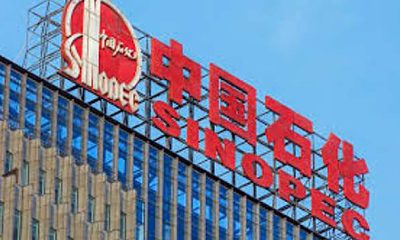
USD 3.7 bn H’tota refinery: China won’t launch project without bigger local market share
-
 News16 hours ago
CJ urged to inquire into AKD’s remarks on May 25 court verdict
-

 News5 days ago
Alarm raised over plan to share Lanka’s biometric data with blacklisted Indian firm