
News
Forced disappearances, a contentious issue warranting NPP’s attention – FSP

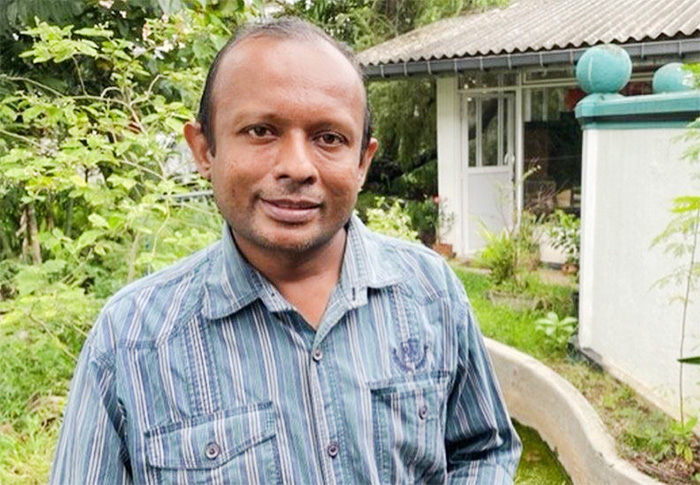
Frontline Socialist Party (FSP) spokesperson Pubudu Jayagoda said that in spite of repeated assurances given to the Geneva-based Human Rights Council and some members of the international community regarding disappearances during the conflict and after successive governments hadn’t been genuine in their efforts to address the issue.
The JVP-led National People’s Power (NPP) seemed to be no exception, Jayagoda alleged, urging the incumbent government to pay special attention to what he called disappearance issue. Jayagoda said that different governments caused thousands of disappearances during the southern insurgency and north-east conflict.
Although the issue had been taken up specially during national elections and promises made to the electorate, families of the victims as well as other concerned parties were disappointed with the way the issue was addressed.
Jayagoda said that the FSP wouldn’t under any circumstances give up its fight for Lalith Kumar Weeraraju and Kugan Muruganandan whose disappearance on Human Rights Day Dec 10, 14 years ago received public attention both here and abroad.
Pointing out that those disappearances took place two years after the end of war during Mahinda Rajapaksa’s second term, Jayagoda said that those responsible were yet to be brought to justice.
JVP dissidents officially formed FSP in early April 2012, about five months after the disappearance of Weeraraju and Muruganandan last seen on the evening of Dec 09 as they left Muragananda’s home at Avarangal, Jaffna. However, the split happened in September 2011, about three months before the Jaffna disappearances.
Jaffna Magistrate court directed the then Defence Secretary Gotabaya Rajapaksa who served as the President from Nov 2019 to July 2022 to furnish an affidavit to court on 6 February, 2026 regarding his inability to appear in Jaffna court in view of the death threats on his life.
Referring to countrywide disappearances during the conflicts and post-conflict periods, Jayagoda cited the disappearance of Weeraraju and Kugan to highlight Sri Lanka’s overall response to forced disappearances. Responding to The Island queries, Jayagoda underscored the need to examine the role of the Office of the Missing Persons (OMP) established through an Act of Parliament in line with understanding and agreement with the HRC. Had it been able to expedite the process and restore confidence among the public with regard to addressing long standing cases, Jayagoda said, appealing to the powers that be not to side-step the issue.
Jayagoda alleged that the NPP hadn’t acted on the issue as anticipated by those who voted for the party at presidential and parliamentary polls last year. The NPP couldn’t forget that the party won lion’s share of votes at both national elections in the northern and eastern provinces because Tamil speaking people believed their sincerity in addressing accountability issues.
Justice Maxwell Paranagama’s Presidential Commission Report on disappearances estimated the number of disappeared at over 25,000, Jayagoda said. Instead of taking tangible measures regarding the disclosures, observations and recommendations made by Justice Paranagama, successive governments muddied the water.
Jayagoda said that the government couldn’t delay taking action to bring closure to disappearances. Declaring that the country was in dire straits due to massive destruction caused by cyclone Ditwah recently and early recovery seemed impossible, Jayagoda emphasized that shouldn’t be an excuse for the government to turn a blind eye to other contentious issues.
Responding to another query, the ex-JVPer said that the JVP should be deeply concerned about the issue as during the 1971 and the late 80s insurgencies the party too lost so many members.
By Shamindra Ferdinando ✍️

Approval of the Cabinet of Ministers was granted to the preparation of the Appropriation Bill for the financial year of 2027 at their meeting held on 30.06.2026.
Accordingly, clearance of the Attorney General has been given to the Appropriation Bill prepared by the Legal Draftsman.
Therefore, the Cabinet of Ministers approved the resolution furnished by the President in his capacity as the Minister of Finance, Planning and Economic Development to publish the aforementioned draft bill in the government gazette notification and thereby submit the same to the Parliament for its concurrence.
Latest News
Cabinet approves aditional Rs. 2,500 million to the Paddy Marketing Board to purchase 2026 Yala harvest

The Cabinet of Ministers has approved the resolution furnished by the Minister of Agriculture, Livestock, Land and Irrigation to provide an additional Rs. 2,500 million to the Paddy Marketing Board on a reimbursable basis from the Rs. 7,500 million additional allocations granted to the Ministry to implement
the expedited paddy purchasing program for the 2026 Yala harvest.
Latest News
Cabinet nod to host the 8th Asian Regional Conference of the Commonwealth Parliamentary Association and the 3rd Joint Asian and South-East Asian Regional Conference of the Commonwealth Parliamentary Association
The 8th Asian Regional Conference of the Commonwealth Parliamentary Association (CPA) and the 3rd Joint Asian and South-East Asian Regional Conference of the CPA are planned to be held over three days in Colombo during April/May 2027.
Approximately 90 delegates including speakers, Deputy Speakers, Member of Parliamentarians, and Parliamentary officers representing member countries of the Commonwealth Parliamentary Association, in the Asian and South-East Asian regions, are expected to participate in these conferences.
The Cabinet of Ministers has approved the resolution furnished by the Prime Minister of the Parliament of Sri Lanka to host the said conferences considering the opportunities to strengthen parliamentary diplomacy and regional cooperation, as well as to enhance international recognition of the Parliament of Sri Lanka within the Commonwealth Parliamentary Association.

Draft of the Appropriation Bill for the Financial Year 2027 su mitted to the Parliament
Cabinet approves aditional Rs. 2,500 million to the Paddy Marketing Board to purchase 2026 Yala harvest
Cabinet nod to host the 8th Asian Regional Conference of the Commonwealth Parliamentary Association and the 3rd Joint Asian and South-East Asian Regional Conference of the Commonwealth Parliamentary Association

SAARC Training Workshop on Financial Modeling for Renewable Energy Projects from 5th to 7th October in Colombo
National Children’s Week from 25th September to 01st October

Nairobi and Munich to host 2029 and 2031 World Athletics Championships

‘Dates have the highest sugar content to fight Coronavirus’

Sunday Island 27 December – Headlines

#SundayIsland 17th December – Headlines

Sunday Island – 28th March

Sunday Island Headlines – 21 March

Sunday Island – 21st February – Headlines
-

 Sports5 days ago
DDS set to lose Test captaincy
-

 News5 days ago
Sri Lanka faces new grid challenge as rooftop solar surges: former CEB GM
-

 Latest News5 days ago
Shafali, Deepti power India into sixth T20 Asia Cup final
-

 Opinion7 days ago
Navigating Sri Lanka’s Israeli Dilemma
-

 Latest News4 days ago
Sri Lanka thwart Fatima Sana challenge to secure Asia Cup final spot
-
 Features6 days ago
Lost for 90 years: Rare Goby resurfaces in Jaffna
-

 News3 days ago
Gnanasara Thero absconding after SC ruling
-

 News4 days ago
Ammunition cache found in old Kandy bungalow