
News
FM says there was no outright sale of Colombo Port East Terminal to Indian company


“We should have acted more prudently on SLMC issue’
by Saman Indrajith
Responding to criticism on moves to hand over the East Terminal of the Colombo Port to India’s Adani Group, Foreign Relations Minister Dinesh Gunawardena, said that the government has not opted for the outright sale of national assets, but it should be borne in mind that many types of companies have to be considered when it comes to foreign investment.
“There are companies which provide management services and also firms that come as partner companies. We have not gone for outright sale of assets. We try to protect what we have and maintain our existing market, but we have to look 20-30 years ahead to remain globally competitive”, the Minister said in an interview with The Sunday Island.
Deals such as signing of the Hambantota port agreement by the previous regime would not happen under this government, he assured.
Asked about the controversial sacking of the president and four members of the Sri Lanka Medical Council (SLMC), the Minister said: “I think we should have acted more prudently. It is one of those institutions manned by leading members of the medical profession in the country. We, as a party, had disagreements with the SLMC, but we never approved the way the members were removed”.
Q: However, the government stands accused in some quarters of doing exactly what it vehemently opposed when in the opposition.
There are ways to look at these issues. Take the withdrawal from the UNHRC resolutions, as an example. If we had given into pressure, it could have resulted in losing almost everything, but we stood up against it. Then it was said that our stand against it would distance Sri Lanka from the international community.
Nothing of the sort happened. Take the Millennium Challenge Corporation (MCC) agreement issue as another example. We opposed it. Now, the US has announced that it would not proceed with it. Even the leader of the opposition now says he’s against it. These things will take their own time but at the end nothing detrimental will happen to our national interests. We are reviewing some projects that are stuck in the state sector. We have also suspended some projects.
There are some limitations to progress. The President has made a decision that we must end the sin of producing thermal power. The losses incurred have been a huge burden on the treasury. We have options now to move from hydro power to other renewable options to generate electricity.
Q: What is your assessment of the current political situation?
The people gave an unprecedented mandate to President Gotabaya Rajapaksa and our government because they have trust and confidence in our ability to deliver and our unwavering commitment when it comes to national security.
The composition of the opposition also changed because never in history have the people voted the UNP out of parliament. There were times when they voted out UNP governments but not the entire party. Some of those who had been in the UNP having realized the cardinal mistakes their party made left it to join other parties or to form new parties. The opposition missed the opportunity of working with the government for the sake of the country even after the President expressed his readiness to work with them.
When the new government came to power following the presidential election victory in November 2019, there were a lot of arrears to be settled and loan commitments of the former government to be honored. So we submitted to parliament a supplementary estimate for the purpose of cleaning up the mess they had created. Instead of supporting us, they plotted till the last moment to put the government in difficulty.
The President understood their intentions and decided to call for a general election as soon as he could. In that election, we received an overwhelming mandate from the people. The electoral results of the North also changed this time. The TNA campaigned as the ‘one and only representative of the Tamil people’, but the people of the North this time sent some elected members from new parties.
An entirely new situation has been created in the polity and we have a clear and strong mandate to solve any issue democratically under Prime Minister Mahinda Rajapaksa’s government. We, as a government have identified our responsibilities and obligations, to develop the country in the next five years.
Q: The confidence of the people you once commanded seems to be eroding fast in the context of surging Covid-19 pandemic situation.
The masses have reposed tremendous confidence on us. That public confidence got a boost following both local and international accolades we won by successfully managing the pandemic. Coronavirus is a problem affecting the whole world. The world will never return to the pre-Covid-19 economy again. The post-Covid situation will be different from country to country and region to region on the basis of economic survival factors.
We faced the general election under the corona threat. At that time too, the opposition said we had lost the popularity we commanded. But, at the presidential polls, the government won impressively with a two-thirds majority. Once again, there is criticism against the government. While accepting the fact that there is criticism, we must also assess from what quarter such criticisms emerge.
The Gotabaya Rajapaksa government does not have wavering policies. Our policies on foreign relations and national security are not shaky, but are on firm ground. The criticism comes from those who did not have such policies. So it is reasonable for them to make statements that the confidence of the people in us is eroding, but the truth is far from it.
Q: The MEP is one of the very old parties in the ruling coalition. What is the role of the MEP in the present context?
The MEP in its long existence as a political force has always fought for upholding national interests. We gave priority to sovereignty and territorial integrity of the country and to protect national interests. There is no change in that standpoint. Some parties now in the opposition did not accept the value of giving priority to national interests in the past but they too have been compelled to change their standpoints. We are a democratic party. We never took to arms. We, as a party, worked for the protection of all, including those who took up arms at one time and later abandoned it. We continue to stand for the promotion of an indigenous and local economy and local entrepreneurs.
Since its inception, our party we fought for the rights of the local entrepreneurs as we believe they should have a share in the national economy and that share should be increased. We also advocate the strengthening the public sector.
Q: It is claimed that cracks are appearing in the SLPP coalition as some of its partners are divided in opinion and unhappy particularly over the SLMC and the PUSCL issues.
We have a common program and a common objective. We have agreed on issues such as safeguarding national security, economic development, working for the betterment of the common man etc. For example, we will not let the national economy end up in the hands of a few. We have seen in the world how the economies of many countries similar to ours have been taken over by a few companies. Ours is a coalition government with many parties represented. They have freedom to make statements and express their opinions on various issues. It is a natural phenomenon the worldover. Many countries in the world today are governed by coalition governments. Member parties have the independence to maintain their diversity. It is democratic to maintain that diversity.
There is no issue big enough to break up this coalition. If you remember there were many disagreements when the 20th amendment was introduced, but everybody united in the end to see it through.
Q: There are concerns being raised about the provincial council election.
For any election, the existing electoral system has to be changed first. It has been accepted that the existing electoral system is a waste of public funds. There is consensus among all parties to do away with the existing electoral system. Apart from that, those in the government and the opposition mentioned in their manifestos that a new electoral system will be introduced.
When the time was up to conduct fresh provincial councils elections, the then (UNP) government brought a new bill against it. It also got the JVP and TNA to vote against holding elections. Following our opposition, the then speaker suspended parliament sittings to seek the advice of the then Attorney General, who is the incumbent Chief Justice. The Attorney General was of the view that if the government wanted to push ahead with some sections of the bill, then it would require two-thirds majority in parliament. The government of the day did not have two-thirds majority.
They waited till some MPs returned from abroad and rushed them to Parliament. The government also got the TNA and the JVP to vote with them. That was how they got the bill passed. Some of our new MPs do not know how this chaos was created. It was their creation. Now we cannot hold the elections as per the provisions of that bill. Scrapping that law does not activate the previous law. There is a need to bring about new laws which may take months.
Q: How do you see the UNHRC resolution against Sri Lanka, which was co-sponsored by then government?
While we were in the opposition, we said the resolution was detrimental to our national interests. The Yahapalana government used its vote against the country. It was against the constitution of the country. It also had an idea of contributing to the agenda to convert the country into a federal structure of governance. There are many inquiries from various countries and asking us what we have done after withdrawing from the resolution and results it produced. We have presented facts to support our decision.
Lord Naseby, the Honorary President of The All Party Parliamentary British Sri Lanka Group, said in the British House of Lords that the way the UK had acted with regard to Sri Lanka was wrong and if it continues to do so, that is also wrong. We have friendly countries; I think all countries are our friends.
Q: On foreign relations, where do we stand now?
The President, the Prime Minister and I visited India prior to the worsening of the coronavirus pandemic. The situation with regard to foreign relations is not what many have perceived to be. The Chinese Foreign Minister visited Sri Lanka followed by the Foreign Ministers of Russia. Japan and Pakistan. The US State Secretary also came here. The UK Foreign Minister spoke to us several times. All of them pledged their support to develop the country. The propaganda spread by the opposition is not the real story.
Q: There is speculation of a cabinet reshuffle in the offing.
I never worked for positions or to protect positions. We never engaged in politics with a power hungry motive. It is those who crave for power that somersault.






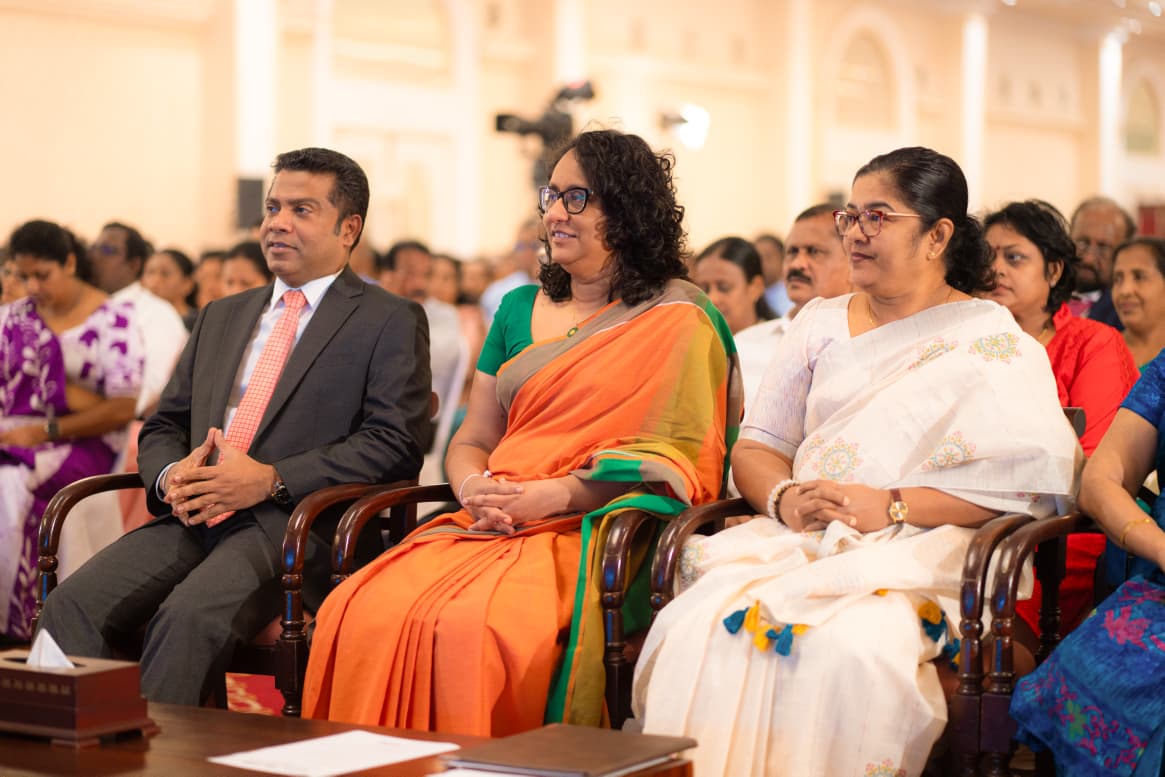
Prime Minister Dr. Harini Amarasuriya stated that the Government has commenced necessary measures to maintain preschool education under a framework, align preschool education with a unified curriculum, conduct teacher training in a systematic manner, and ensure quality standards.
The Prime Minister made these remarks on Saturday (10) at the Temple Trees, participating in the launch of the National Communication Programme for Child Health Promotion, aimed at promoting social and behavioural change (SBCC) among early childhood children. The programme is jointly organized by the Health Promotion Bureau, the Ministry of Women and Child Affairs, the Ministry of Education, Higher Education and Vocational Education, UNICEF, and the Clean Sri Lanka Programme.
Addressing at the event, Prime Minister Dr. Harini Amarasuriya stated:
“Early Childhood Development (ECD) has a major impact on a country’s human development and future progress. It is a widely accepted fact that a child’s future depends largely on early childhood development. Many aspects essential for a child’s growth occur within the first five years of life. The experiences, care, and love a child receives during this period are decisive.
The social integration, relationships, and environmental influences experienced in early childhood form the foundation for shaping an individual as an adult. Early childhood development influences life to an extent that it becomes difficult to change when it grows into adulthood.
The responses of adults to children’s actions, the way they interact with them, and the care they provide are extremely important. Therefore, early childhood development should never be viewed as the sole responsibility of parents. It is a collective responsibility of all citizens.
No child can be raised into a good citizen by parents alone. In all our lives, beyond our parents, there have been many who influenced us, showed us love, and provided care. It is due to the collective support of all these individuals that we have reached where we are today. The government views child care as a social responsibility. Supporting a child, providing care, ensuring protection, education, and health facilities are social responsibilities. In this regard, the intervention of the Clean Sri Lanka Programme to communicate these values to the public is important.
The role of the preschool teachers plays a special and vital role for children. The love, care, attentive listening, and responses children receive during this stage are decisive for their development. Teachers carry out a crucial intervention in the lives of children. An education policy on early childhood development has been formulated, with UNICEF providing technical assistance. Steps are being taken to operate preschool education under a single framework, align it with a unified curriculum, systematically conduct teacher training, and ensure quality standards.
Recognising early childhood development as a specialised area within education, the Prime Minister affirmed that the relevant interventions will be made accordingly.
Addressing the event, Minister of Women and Child Affairs, Ms. Saroja Paulraj stated that the Ministry has identified the standardisation and development of early childhood development as a primary goal for the year 2026. She noted that children who leave the warmth of their mother’s embrace and father’s shoulder and come to preschool teachers expecting the same love and care from their teachers. Conveying that warmth through words and expressions is a responsibility entrusted to teachers. The love and safe environment children receive shape their ability to love the environment and respect others.
Minister of Health and Mass Media, Nalinda Jayatissa, also addressed the gathering, stating that the goal of the government is to build a beautiful future generation capable of leading the country, free from the various hardships and challenges faced today.
He emphasised that creating a healthy population is a challenge, particularly in preventing non-communicable diseases. Children aged three to five today will become a generation aged 18 to 20 by 2040. Continuous and comprehensive programmes such as this are essential to protect that generation from non-communicable diseases. In some instances, interventions are required even during the preconception and prenatal stages.
He further highlighted that preschool and early childhood development centre teachers shoulder a tremendous responsibility in driving a major transformation in the country’s future.
The event was attended by the Governor of the Sabaragamuwa Province, Ms. Champa Janaki Rajarathne; the Governor of the Uva Province, Attorney-at-Law Kapila Jayasekara; the Governor of the North Central Province, Wasantha Jinadasa; the Governor of the North Western Province, Thissa Kumarsiri Warnasuriya; the Deputy Minister of Women and Child Affairs, Dr. Namal Sudarshana; the Member of Parliament, Dr. Najith Indika; the Representative of the United Nations Children’s Fund (UNICEF) in Sri Lanka, Ms. Emma Brigham; the Secretary to the President, Dr. Nandika Sanath Kumanayake; the Senior Additional Secretary to the President (Finance and Economic Affairs), Mr. Russell Aponsu; the Additional Secretary to the President (Clean Sri Lanka), S. P. C. Sugishwara; Secretaries to Ministries; Provincial Chief Secretaries; the Commanders of the Tri-Forces; officials of subject-related ministries; provincial council officials; preschool teachers; preschool children; and parents.


(Prime Minister’s Media Division)
News
Level I landslide early warnings issued to the Districts of Badulla, Kandy, Matale and Nuwara-Eliya extended

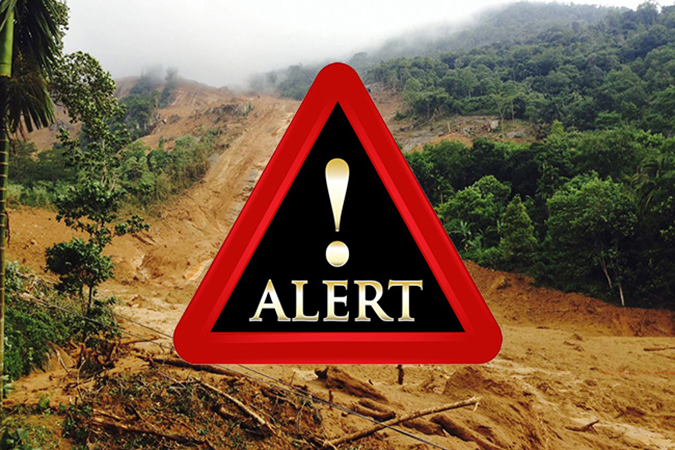
The Landslide Early Warning Centre of the National Building Research Organization (NBRO) has extended the landslide early warnings issued to the Districts of Badulla, Kandy, Matale and Nuwara-Eliya till 1600hrs today (11).
Accordingly, the LEVEL I YELLOW early warnings issued to the Divisional Secetaries Divisions and surrounding areas of Lunugala, Meegahakiwula,Welimada, Kandaketiya, Hali_Ela, Badulla, Uva Paranagama in the Badulla district, Minipe and Ududumbara in the Kandy district, Wilgamuwa, Ukuwela, Ambanganga Korale, Rattota and Laggala_Pallegam in the Matale district, and Nildandahinna, Walapane, Mathurata and Hanguranketha in the Nuwara-Eliya district will be in force until 1600hrs today (11)


Proposed education reforms have drawn sharp criticism from education professionals, teacher unions and student organisations, who warned on Thursday that the changes risk undermining child safety, widening inequality and imposing unaffordable costs on parents.
Addressing a press conference in Colombo, Dr Ayomi Irugalbandara of the Faculty of Education at the Open University of Sri Lanka said the proposed reforms appeared to be largely modelled on foreign education systems without adequate consideration of local realities.
She took particular issue with proposals to integrate social media use into the school curriculum, noting that several developed countries have moved in the opposite direction by preventing children under the age of 15 from accessing social media platforms.
“Most of these modules are not appropriate for this country,” Dr Irugalbandara said. “We warn parents that these reforms place children at risk.”
Concerns were also raised over digital content linked to the revised curriculum. Inter-University Students’ Federation Convener Madushan Chandrajith said the Grade Six Information and Communication Technology (ICT) module included QR codes that directed students to a controversial YouTube channel.
“Who will take responsibility for children accessing such content?” he asked, calling for clear accountability mechanisms for material linked through digital platforms used in schools.
Secretary of the Workers’ Struggle Centre, Duminda Nagamuwa, criticised the government’s approach to the reform process, comparing it to the fertiliser policy introduced under former President Gotabaya Rajapaksa. He alleged that the authorities were pushing ahead with education reforms despite opposition from academics, teachers and other stakeholders.
Nagamuwa also highlighted the economic burden on families, noting that Sri Lanka’s poverty rate had increased from 12.5 percent to 25 percent. He questioned how parents were expected to afford smartphones or tablet computers required for students to access QR code-linked educational content.
“The government is asking parents to bear costs they simply cannot afford,” he said.
Ceylon Teachers’ Union General Secretary Joseph Stalin said schools had already begun collecting money from parents in anticipation of the reforms, including funds to purchase smart boards.

One person dead and 300 buildings destroyed in Australia bushfires

Iran warns it will retaliate if US attacks as protesters defy crackdown

GENERAL WEATHER FORECAST FOR NEXT 36 HOURS

National Communication Programme for Child Health Promotion (SBCC) has been launched. – PM

Level I landslide early warnings issued to the Districts of Badulla, Kandy, Matale and Nuwara-Eliya extended

Rescuers race to find dozens missing in deadly Philippines landfill collapse

‘Dates have the highest sugar content to fight Coronavirus’

Sunday Island 27 December – Headlines

#SundayIsland 17th December – Headlines

Sunday Island – 28th March

Sunday Island Headlines – 21 March

Sunday Island – 21st February – Headlines
-
 News19 hours ago
Sajith: Ashoka Chakra replaces Dharmachakra in Buddhism textbook
-

 News6 days ago
Interception of SL fishing craft by Seychelles: Trawler owners demand international investigation
-

 Features19 hours ago
The Paradox of Trump Power: Contested Authoritarian at Home, Uncontested Bully Abroad
-

 Business19 hours ago
Dialog and UnionPay International Join Forces to Elevate Sri Lanka’s Digital Payment Landscape
-
 News6 days ago
Broad support emerges for Faiszer’s sweeping proposals on long- delayed divorce and personal law reforms
-

 Features19 hours ago
Subject:Whatever happened to (my) three million dollars?
-

 Opinion3 days ago
The minstrel monk and Rafiki, the old mandrill in The Lion King – II
-

 News19 hours ago
65 withdrawn cases re-filed by Govt, PM tells Parliament