
News
FM says there was no outright sale of Colombo Port East Terminal to Indian company


“We should have acted more prudently on SLMC issue’
by Saman Indrajith
Responding to criticism on moves to hand over the East Terminal of the Colombo Port to India’s Adani Group, Foreign Relations Minister Dinesh Gunawardena, said that the government has not opted for the outright sale of national assets, but it should be borne in mind that many types of companies have to be considered when it comes to foreign investment.
“There are companies which provide management services and also firms that come as partner companies. We have not gone for outright sale of assets. We try to protect what we have and maintain our existing market, but we have to look 20-30 years ahead to remain globally competitive”, the Minister said in an interview with The Sunday Island.
Deals such as signing of the Hambantota port agreement by the previous regime would not happen under this government, he assured.
Asked about the controversial sacking of the president and four members of the Sri Lanka Medical Council (SLMC), the Minister said: “I think we should have acted more prudently. It is one of those institutions manned by leading members of the medical profession in the country. We, as a party, had disagreements with the SLMC, but we never approved the way the members were removed”.
Q: However, the government stands accused in some quarters of doing exactly what it vehemently opposed when in the opposition.
There are ways to look at these issues. Take the withdrawal from the UNHRC resolutions, as an example. If we had given into pressure, it could have resulted in losing almost everything, but we stood up against it. Then it was said that our stand against it would distance Sri Lanka from the international community.
Nothing of the sort happened. Take the Millennium Challenge Corporation (MCC) agreement issue as another example. We opposed it. Now, the US has announced that it would not proceed with it. Even the leader of the opposition now says he’s against it. These things will take their own time but at the end nothing detrimental will happen to our national interests. We are reviewing some projects that are stuck in the state sector. We have also suspended some projects.
There are some limitations to progress. The President has made a decision that we must end the sin of producing thermal power. The losses incurred have been a huge burden on the treasury. We have options now to move from hydro power to other renewable options to generate electricity.
Q: What is your assessment of the current political situation?
The people gave an unprecedented mandate to President Gotabaya Rajapaksa and our government because they have trust and confidence in our ability to deliver and our unwavering commitment when it comes to national security.
The composition of the opposition also changed because never in history have the people voted the UNP out of parliament. There were times when they voted out UNP governments but not the entire party. Some of those who had been in the UNP having realized the cardinal mistakes their party made left it to join other parties or to form new parties. The opposition missed the opportunity of working with the government for the sake of the country even after the President expressed his readiness to work with them.
When the new government came to power following the presidential election victory in November 2019, there were a lot of arrears to be settled and loan commitments of the former government to be honored. So we submitted to parliament a supplementary estimate for the purpose of cleaning up the mess they had created. Instead of supporting us, they plotted till the last moment to put the government in difficulty.
The President understood their intentions and decided to call for a general election as soon as he could. In that election, we received an overwhelming mandate from the people. The electoral results of the North also changed this time. The TNA campaigned as the ‘one and only representative of the Tamil people’, but the people of the North this time sent some elected members from new parties.
An entirely new situation has been created in the polity and we have a clear and strong mandate to solve any issue democratically under Prime Minister Mahinda Rajapaksa’s government. We, as a government have identified our responsibilities and obligations, to develop the country in the next five years.
Q: The confidence of the people you once commanded seems to be eroding fast in the context of surging Covid-19 pandemic situation.
The masses have reposed tremendous confidence on us. That public confidence got a boost following both local and international accolades we won by successfully managing the pandemic. Coronavirus is a problem affecting the whole world. The world will never return to the pre-Covid-19 economy again. The post-Covid situation will be different from country to country and region to region on the basis of economic survival factors.
We faced the general election under the corona threat. At that time too, the opposition said we had lost the popularity we commanded. But, at the presidential polls, the government won impressively with a two-thirds majority. Once again, there is criticism against the government. While accepting the fact that there is criticism, we must also assess from what quarter such criticisms emerge.
The Gotabaya Rajapaksa government does not have wavering policies. Our policies on foreign relations and national security are not shaky, but are on firm ground. The criticism comes from those who did not have such policies. So it is reasonable for them to make statements that the confidence of the people in us is eroding, but the truth is far from it.
Q: The MEP is one of the very old parties in the ruling coalition. What is the role of the MEP in the present context?
The MEP in its long existence as a political force has always fought for upholding national interests. We gave priority to sovereignty and territorial integrity of the country and to protect national interests. There is no change in that standpoint. Some parties now in the opposition did not accept the value of giving priority to national interests in the past but they too have been compelled to change their standpoints. We are a democratic party. We never took to arms. We, as a party, worked for the protection of all, including those who took up arms at one time and later abandoned it. We continue to stand for the promotion of an indigenous and local economy and local entrepreneurs.
Since its inception, our party we fought for the rights of the local entrepreneurs as we believe they should have a share in the national economy and that share should be increased. We also advocate the strengthening the public sector.
Q: It is claimed that cracks are appearing in the SLPP coalition as some of its partners are divided in opinion and unhappy particularly over the SLMC and the PUSCL issues.
We have a common program and a common objective. We have agreed on issues such as safeguarding national security, economic development, working for the betterment of the common man etc. For example, we will not let the national economy end up in the hands of a few. We have seen in the world how the economies of many countries similar to ours have been taken over by a few companies. Ours is a coalition government with many parties represented. They have freedom to make statements and express their opinions on various issues. It is a natural phenomenon the worldover. Many countries in the world today are governed by coalition governments. Member parties have the independence to maintain their diversity. It is democratic to maintain that diversity.
There is no issue big enough to break up this coalition. If you remember there were many disagreements when the 20th amendment was introduced, but everybody united in the end to see it through.
Q: There are concerns being raised about the provincial council election.
For any election, the existing electoral system has to be changed first. It has been accepted that the existing electoral system is a waste of public funds. There is consensus among all parties to do away with the existing electoral system. Apart from that, those in the government and the opposition mentioned in their manifestos that a new electoral system will be introduced.
When the time was up to conduct fresh provincial councils elections, the then (UNP) government brought a new bill against it. It also got the JVP and TNA to vote against holding elections. Following our opposition, the then speaker suspended parliament sittings to seek the advice of the then Attorney General, who is the incumbent Chief Justice. The Attorney General was of the view that if the government wanted to push ahead with some sections of the bill, then it would require two-thirds majority in parliament. The government of the day did not have two-thirds majority.
They waited till some MPs returned from abroad and rushed them to Parliament. The government also got the TNA and the JVP to vote with them. That was how they got the bill passed. Some of our new MPs do not know how this chaos was created. It was their creation. Now we cannot hold the elections as per the provisions of that bill. Scrapping that law does not activate the previous law. There is a need to bring about new laws which may take months.
Q: How do you see the UNHRC resolution against Sri Lanka, which was co-sponsored by then government?
While we were in the opposition, we said the resolution was detrimental to our national interests. The Yahapalana government used its vote against the country. It was against the constitution of the country. It also had an idea of contributing to the agenda to convert the country into a federal structure of governance. There are many inquiries from various countries and asking us what we have done after withdrawing from the resolution and results it produced. We have presented facts to support our decision.
Lord Naseby, the Honorary President of The All Party Parliamentary British Sri Lanka Group, said in the British House of Lords that the way the UK had acted with regard to Sri Lanka was wrong and if it continues to do so, that is also wrong. We have friendly countries; I think all countries are our friends.
Q: On foreign relations, where do we stand now?
The President, the Prime Minister and I visited India prior to the worsening of the coronavirus pandemic. The situation with regard to foreign relations is not what many have perceived to be. The Chinese Foreign Minister visited Sri Lanka followed by the Foreign Ministers of Russia. Japan and Pakistan. The US State Secretary also came here. The UK Foreign Minister spoke to us several times. All of them pledged their support to develop the country. The propaganda spread by the opposition is not the real story.
Q: There is speculation of a cabinet reshuffle in the offing.
I never worked for positions or to protect positions. We never engaged in politics with a power hungry motive. It is those who crave for power that somersault.




News
Construction of Jet A-1 Aviation fuel pipeline and new oil tank complex at Muthurajawela begins under President’s patronage

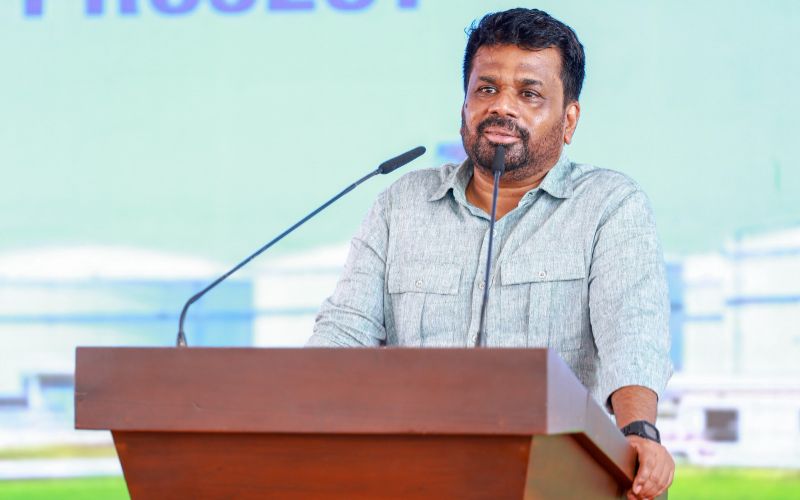
President Anura Kumara Dissanayake said that the Government’s objective is to maintain a strong state presence in the energy market while providing an efficient service to the people, adding that significant progress has been achieved towards this objective over the past two years and that a strong energy market that does not place a burden on the people is now being built in Sri Lanka.
The President made these remarks on Friday (02) morning while attending the commencement of construction of the Jet A-1 pipeline system of the Ceylon Petroleum Corporation (CPC) and two new oil storage tank systems belonging to the CPC and the Ceylon Petroleum Storage Terminal Limited (CPSTL).
The projects are being implemented in line with the Government’s national objective of developing infrastructure in the energy sector, with the aim of ensuring the security of aviation fuel supplies, reducing supply costs and providing the capacity required to meet future demand for aviation fuel.
A dedicated pipeline and associated tank complex are being constructed to connect Muthurajawela with the Bandaranaike International Airport in Katunayake, with the aim of meeting the future demand of the country’s aviation sector, ensuring the security of aviation fuel supplies and reducing transportation costs.
Construction has commenced on five new Jet A-1 fuel storage tanks with a total capacity of 92,000 cubic metres. These comprise two large Jet A-1 tanks, each with a capacity of 30,000 cubic metres; two medium-sized tanks, each with a capacity of 15,000 cubic metres; and an additional tank with a capacity of 2,000 cubic metres. The fuel supply pipeline system will be connected to the airport through a 21-kilometre-long underground pipeline with a diameter of 10 inches from the Muthurajawela tank complex. The project is scheduled for completion within 30 months.
Meanwhile, as part of ongoing efforts to strengthen and expand storage and infrastructure facilities in the petroleum industry, the Ceylon Petroleum Storage Terminal Limited (CPSTL) commenced construction today of three new storage tanks at the Muthurajawela Terminal.
Upon completion, the three-tank system, comprising two tanks with a capacity of 15,000 cubic metres each and one tank with a capacity of 10,000 cubic metres, will provide an additional total storage capacity of 40,000 cubic metres.
This will further enhance the petroleum storage capacity of the terminal and support the continued development of the country’s petroleum infrastructure. The project has a contractual period of 18 months and is scheduled for completion in April 2028.
The tanks are being constructed in compliance with relevant international standards and recognised industry best practices, ensuring enhanced safety, reliability and operational efficiency. The additional storage capacity will strengthen the country’s fuel reserves, improve operational flexibility and support the reliable and uninterrupted distribution of fuel products to meet the country’s growing energy requirements.
Minister of Ports and Civil Aviation and Minister of Energy Anura Karunathilaka said,
“We are now in an era of energy transition. The world is rapidly moving towards the use of clean energy. The use of electric vehicles is very important in this regard, and our country is also now moving in that direction.
The use of solar energy is also important. We expect to add 1,200 megawatts of solar power capacity to the national grid by 2029.
As a country, we must focus not only on controlling fuel prices but also on controlling fuel consumption. The public also has a major responsibility in this regard.
It is particularly important to change our patterns of energy consumption. Greater energy security can be achieved by avoiding periods of high energy demand, shifting towards electricity use and using fuel-efficient vehicles, particularly electric vehicles.”
Chairman of the Ceylon Petroleum Corporation D. J. Rajakaruna said,
“We faced a major challenge due to the war in the Middle East. However, with the intervention of the President, relief was provided to the people and the situation was managed very effectively.
As a result, while diesel prices in the global market increased by 91%, the increase in Sri Lanka was only around 39.5%. While petrol prices in the global market increased by 80%, the increase in Sri Lanka was only around 41%.
Despite providing fuel at lower prices in this manner, the Corporation has recorded a profit of Rs. 28 billion this year. We also recorded a profit of Rs. 36 billion last year.
This may raise the question of why fuel prices are not being reduced when there are such profits.
However, we have used those profits to commence a number of infrastructure development projects at the institution.
These include adding the capacity of 11 tanks, including the construction of six tanks that had previously been abandoned, to increase fuel storage capacity; modernising our oil-filling section, which is more than 90 years old, and establishing a gantry system similar to that at Muthurajawela; laying two new pipelines for unloading fuel from the port to Kolonnawa; constructing a new pipeline to transport Jet A-1 fuel to Katunayake; and upgrading the pipeline system and laying new pipelines, among many other projects.
We are implementing these projects using those profits. Therefore, we have returned the benefits to the people through these investments.”
The Minister of Science and Technology, Professor Chrishantha Abeysena; Deputy Minister of Energy, Arkam Ilyas; Member of Parliament Kumara Jayakody; Secretary to the Ministry of Energy and Senior Additional Secretary to the President, Russell Aponso; foreign ambassadors; government officials including officials of the Ministry of Energy and the Ceylon Petroleum Corporation; and representatives of Sinopec were among those present at the occasion.
President’s Media Division (PMD)


MONETABRIEF –The prosecution of high-profile individuals from the former Rajapaksa administrations is set to escalate this month with the clearing of legal hurdles and administrative bottlenecks, according to officials involved in the process.
Former president Gotabaya Rajapaksa’s attempt to secure an order preventing his arrest in connection with the Easter Sunday massacre was turned down by the Court of Appeal on Thursday.
An overseas travel ban has been in operation against Rajapaksa since June, but the Criminal Investigations Department made no move to question him. He instead filed a writ application seeking an order preventing his possible arrest.
President of the Court of Appeal Rohantha Abeysuriya noted that the court would not interfere with the investigative process. Any attempt by the court would amount to an obstruction of the investigation.
In an unrelated case, the same court rejected an application by opposition legislator Dilith Jayaweera seeking the quashing of a contempt charge filed against him by the Fort magistrate. The charges against Jayaweera and a few other opposition politicians are expected to be taken up in the coming week.
Jayaweera and other opposition politicians — Wimal Weerawansa, Udaya Gammanpila, Sugeeshwara Bandara, and Asanka Navaratne
— were hauled up over their remarks relating to the arrest of Suresh Sallay, the former head of the State Intelligence Service.
SLPP academic Mahinda Pathirana is also charged over his public comments about Sallay’s arrest in February under the draconian Prevention of Terrorism Act.
Former president Mahinda Rajapaksa’s son, legislator Namal Rajapaksa, is already in remand custody following his arrest in connection with three cases of bribery and money laundering relating to the 2013 Airbus deal and the Krrish property development in Colombo.
Although Namal has been granted bail in the Airbus money laundering charge, he is in custody until October 13 over the bribery charge relating to the same Airbus transaction. His arrest is under a provision of the Anti-Corruption Act that does not allow a magistrate to grant bail unless under exceptional circumstances.
Meanwhile, his mother Shiranthi Rajapaksa, who had been asked to report to the Financial Crimes Investigations Division on September 24, was a no-show and was yet to return from Singapore.
She had travelled overseas on September 16, and a family spokesman said she was handed the FCID summons at the departure lounge of Bandaranaike International Airport just before she boarded a flight to Singapore.
At the time, the family spokesman said she was due to return in three days.
“We will see greater momentum in the legacy cases in the coming weeks,” an official involved in the prosecutions said.
“We have cleared the legal hurdles to press ahead with more arrests,” he said.
“We are working on a few administrative issues which will be resolved very soon.”
The controversial prosecution of former President Ranil Wickremesinghe is dragging on without him being formally indicted since his arrest in August last year. The Fort magistrate has listed the case again for November 11, when the Attorney-General is expected to report on his decision regarding action against Wickremesinghe.
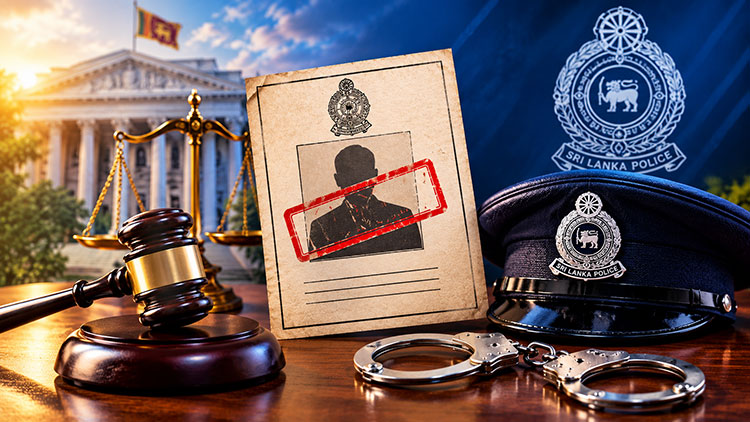
Police have reminded the public that courts have the power to take legal action against individuals who evade arrest or remain in hiding after warrants have been issued against them.
Police said that under Section 60 of the Code of Criminal Procedure Act No. 15 of 1979, a court could issue a written proclamation requiring a person evading arrest under a warrant to appear at a specified place and time.
The proclamation must allow the person at least 30 days to appear before court, Police said.
If the person fails to appear even after the proclamation has been issued, the court may take further action under Section 61 of the Act.
This includes issuing an order for the attachment of the movable or immovable property belonging to the person concerned.Police issued the reminder highlighting the legal measures available against persons who deliberately evade arrest and remain in hiding after warrants have been issued.

Debris found from plane that went missing off US coast

Construction of Jet A-1 Aviation fuel pipeline and new oil tank complex at Muthurajawela begins under President’s patronage

Landslide Early Warnings issued to the Districts of Kandy, Kegalle, Matale and Ratnapura

No handshakes and a delayed ceremony as India beat Pakistan at Asian Games

Showers or thundershowers will occur in most parts of the island after 1.00 p.m

Lanka enters new phase of prosecutions as hurdles clear

‘Dates have the highest sugar content to fight Coronavirus’

Sunday Island 27 December – Headlines

#SundayIsland 17th December – Headlines

Sunday Island – 28th March

Sunday Island Headlines – 21 March

Sunday Island – 21st February – Headlines
-

 News7 days ago
Police remove Thileepan statue in Jaffna
-

 Features7 days ago
The 22nd Amendment, constitutional recovery and illiberal slippage
-

 Features7 days ago
Of foreigners as CEOs of Lankan ventures
-

 Latest News5 days ago
Gold winner Tharanga gets brand-new Honda Vezel from SLAAJ
-

 News7 days ago
Sajith rejects Jt. Opp. protest sabotage claim; SJB TU chief demands remedial action
-

 Features5 days ago
Why Sri Lanka needs an Inclusive Civic Nationalism – urgently
-

 News4 days ago
US-assisted ‘Ice’ detection: NPC to examine IGP’s move to transfer drug-busting team
-

 Features6 days ago
Thailand’s biggest new global star …