
News
Don’t send Rohingya back without risk review, HRCSL tells Govt.

The Human Rights Commission of Sri Lanka (HRCSL) has urged authorities not to repatriate a group of Rohingya asylum seekers rescued off the Mullevaikkal coast last December, without first evaluating the risk of enforced disappearance they may face upon return to Myanmar.
In a statement, the Commission emphasised that Sri Lanka is both internationally and domestically bound to protect individuals from being returned to situations where their lives or freedom may be at risk.
“The obligation not to repatriate persons to a country where there is a credible risk of enforced disappearance is not only an international legal standard binding on Sri Lanka,” the HRCSL said. “It is also enshrined in Sri Lankan law under Section 18(1) of the International Convention for the Protection of All Persons from Enforced Disappearance Act, No. 5 of 2018.”
The HRCSL’s call follows a high-level meeting held at the Sri Lanka Air Force camp in Mullaitivu, where the Rohingya group is currently housed. The meeting, attended by HRCSL Commissioners Justice L.T.B. Dehideniya, Prof. Farzana Haniffa, and Dr. Gehan Gunatilleke, as well as representatives from the Ministry of Public Security, Department of Immigration and Emigration, and the Air Force, focused on reviewing progress on recommendations made during a previous HRCSL inspection in January 2025, the statement said.
It said that the following key matters were discussed:
a) Nature of the detention centre: The state officials present at the meeting clarified that the detention centre, located within the Sri Lanka Air Force Camp, was not a temporary centre but a permanent centre, gazetted under relevant provisions of the law. The HRCSL pointed out that there is confusion with respect to the state institution under whose authority the centre falls, and the officials clarified that the relevant authority solely responsible for the centre was the Department of Immigration and Emigration. Sri Lanka Police is responsible for providing security within the centre, and Sri Lanka Air Force officials are only responsible for regulating entry into the camp premises. The officials also reassured the HRCSL that officers of the Commission would be granted access to the centre without the requirement of prior notice.
b) Coordination of humanitarian assistance: The HRCSL emphasised the willingness of civil society organisations and aid agencies to provide assistance to the Rohingya asylum seekers. It was proposed that a dedicated focal point be appointed within the Department of Immigration and Emigration to facilitate the delivery of aid, ensuring that all assistance complies with regulatory standards. The Department confirmed that such a focal point has already been appointed and that aid could be directed to the asylum seekers by contacting the Department. It was also clarified that ICRC had been recently granted access to the asylum seekers.
c) Support for children and infants: The HRCSL noted the specific needs and vulnerabilities of children and infants at the detention centre. It was recommended that relevant state institutions, including the Provincial Department of Probation and Child Care Services and the Children’s Secretariat, be provided access to the centre without delay. The HRCSL undertook to engage these institutions to encourage them to formally request access, and the Department of Immigration and Emigration assured the Commission that such access would be granted. It was also highlighted that all detainees, especially infants and children, require access to healthy and nutritious food. The Commission urged the relevant authorities to take necessary measures to meet these dietary needs. It was also emphasised that section 5 of the International Covenant on Civil and Political Rights Act of 2007 clearly obliges all state authorities to give paramount importance to the best interests of children and that this legal obligation extends to all children within Sri Lanka’s jurisdiction, regardless of their citizenship status.
d) Protection of women and children: The Commission urged the Department of Immigration and Emigration to increase the number of female police officers stationed at the centre to enhance the protection and welfare of female detainees and children. Further discussions were held on deploying female police officers after 10:00 p.m. to improve safety for women. The Department agreed to follow up on these matters.
e) Healthcare and reproductive health services: The HRCSL stressed the importance of improving access to health services, including reproductive health services, and recommended collaboration with the Provincial Department of Health Services (Northern Province). It was also reported that the Office of the Medical Officer of Health conducts regular inspections to monitor hygiene standards and prevent disease outbreaks.
f) Principle of non-refoulement: The Commission clarified that the obligation not to repatriate any persons to their home country when there is a risk of enforced disappearance is not only an international obligation by which Sri Lanka is bound. It is also clearly found in Sri Lanka’s domestic law in section 18(1) of the International Convention for the Protection of All Persons from Enforced Disappearance Act of 2018. Therefore, the Rohingya asylum seekers cannot be repatriated without a clear evaluation of the risks of enforce disappearance they face in their home country.
g) Classification of the detained persons and access to UNHCR: The Commission clarified that the use of the term ‘illegal migrants’ in contrast to ‘asylum seekers’, and the claim that the persons detained were not ‘asylum seekers’ because they may have entered Sri Lanka illegally reflects a misunderstanding of the concept of ‘asylum seeker’. It was clarified that any person who seeks asylum in another country may be appropriately termed an ‘asylum seeker’. Moreover, the Commission urged the Department of Immigration and Emigration to respond to UNHCR’s request to access the asylum seekers and to facilitate such access expeditiously to enable UNHCR to support the processing of the asylum seekers and determine their status. The Department assured the Commission that such access has not been denied and that it would take appropriate measures in this regard.
h) Media and civil society access: The HRCSL proposed that journalists be permitted to visit the camp to inform the general public about the situation of the Rohingya asylum seekers and emphasised that such access is contemplated under the freedom of speech and expression guaranteed by article 14(1)(a) of the Sri Lankan Constitution. However, the Department of Immigration and Emigration cited a policy decision that had been taken to deny access to media personnel and civil society actors to avoid disinformation. The Commission urged the Department to reconsider its position, as the public has a right to know about the situation within the detention centre and that access to the media and civil society could in fact ensure that accurate information reaches the public. The Commission plans to take further action in this regard.

Latest News
A strong Technical and Vocational Education and Training (TVET) system equips individuals with practical, relevant, and future-oriented skills helping to innovate responsibly towards a greener and sustainable future – PM

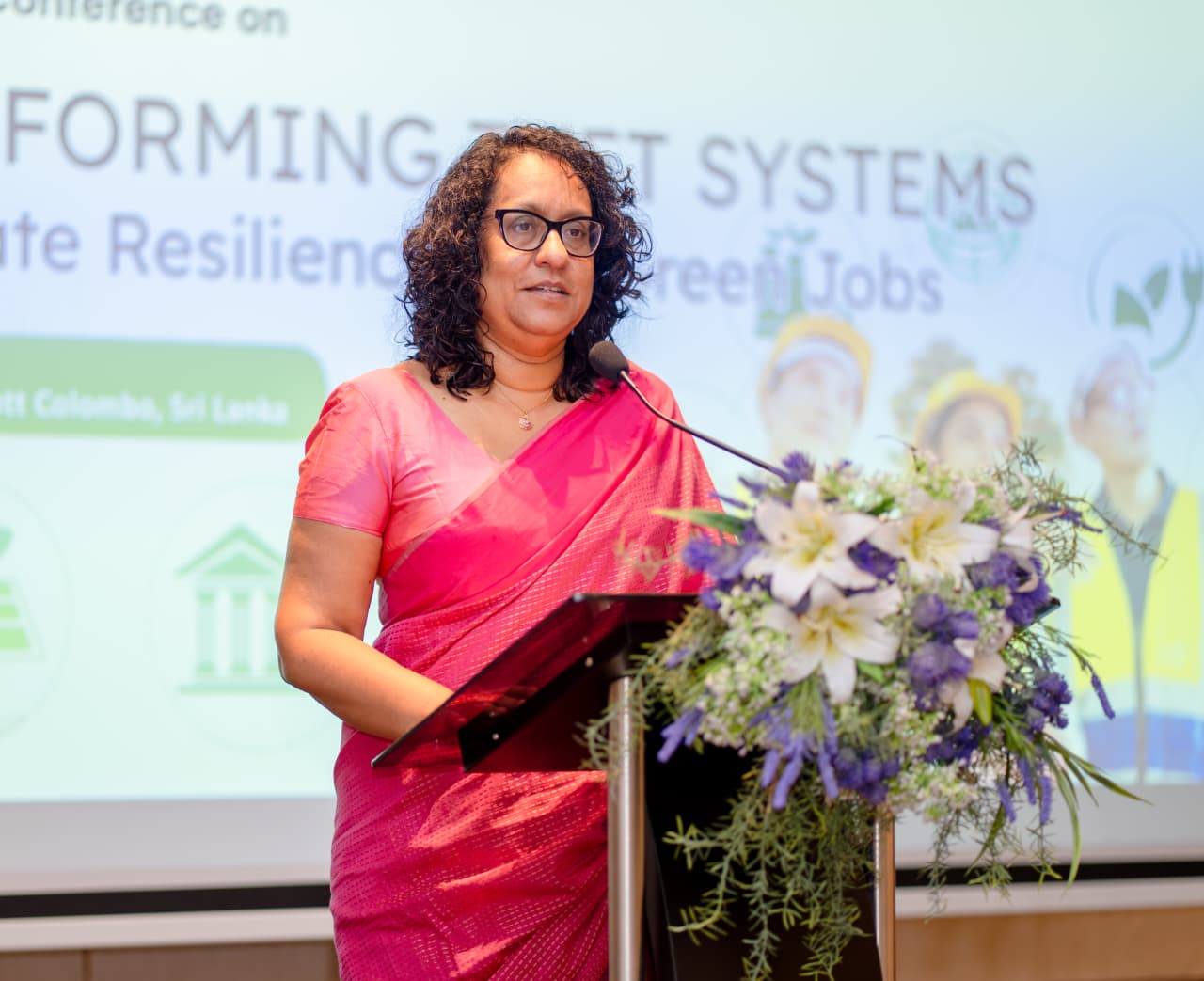
The Prime Minister, Minister of Education, Higher Education and Vocational Education Dr. Harini Amarasuriya participated as the Chief Guest in the international conference on ’Transforming TVET Systems for climate resilience and green jobs’ organized by Colombo Plan Staff College, Philippines together with the Ministry of Education, Higher Education and Vocational Education Sri Lanka on 24 th of March at Courtyard by Marriott Colombo, Sri Lanka.
The Conference serves as the flagship event of the five-day Regional Programme on “Transforming TVET for a Digital, Green, and Inclusive Economy” (23-27 March 2026), which continues throughout the week, bringing together representatives from CPSC member countries including Bhutan, Fiji, Malaysia, Maldives, Myanmar, Nepal, Philippines, Thailand, Pakistan, and Sri Lanka, fostering high-level dialogue and knowledge sharing on climate-resilient and green skills development.
The Conference features technical and plenary sessions on climate-responsive TVET systems, green skills development, national policy frameworks, and emerging technologies shaping industry transformation.
Addressing at the event, the Prime Minister emphasized the role of Technical and Vocational Education and Training (TVET) that equips individuals with practical, relevant, and future-oriented skills in addressing climate change and shaping a sustainable future.
The Prime Minister reaffirmed that this transformation remains a national priority for Sri Lanka. She stressed that education must go beyond knowledge dissemination to empower individuals with opportunities, dignity, and the capacity to contribute meaningfully to society.
She further emphasized the need to integrate environmental sustainability into education and training systems by embedding green skills in curricula, investing in modern training facilities, promoting innovation, and fostering collaboration between training institutions and emerging green industries.
Highlighting the importance of ensuring equity the Prime Minister further stated, that opportunities arising from the green transition must be accessible to all, including youth, young women, people with special needs, and marginalized communities.
Reaffirming Sri Lanka’s commitment to working closely with regional and international partnerships, the Prime Minister emphasized the importance of transforming them to actual benefits and partnerships.
The occasion was attended by the Secretary to the Ministry of Education, Higher Education and Vocational Education Nalaka Kaluwewa, Additional Secretary (Vocational Training) Ms. Samanthi Senanayake Director General Colombo Plan Staff College Prof. Dr. Suresh K. Dhameja , TVET administrators, institutional leaders, policymakers, instructors, industry representatives, and international delegates from across the region and seniors officials and officials from Ministries.
(Prime Minister’s Media division)
News
PM reviews progress of the committee appointed for the establishment of a National Nursing University
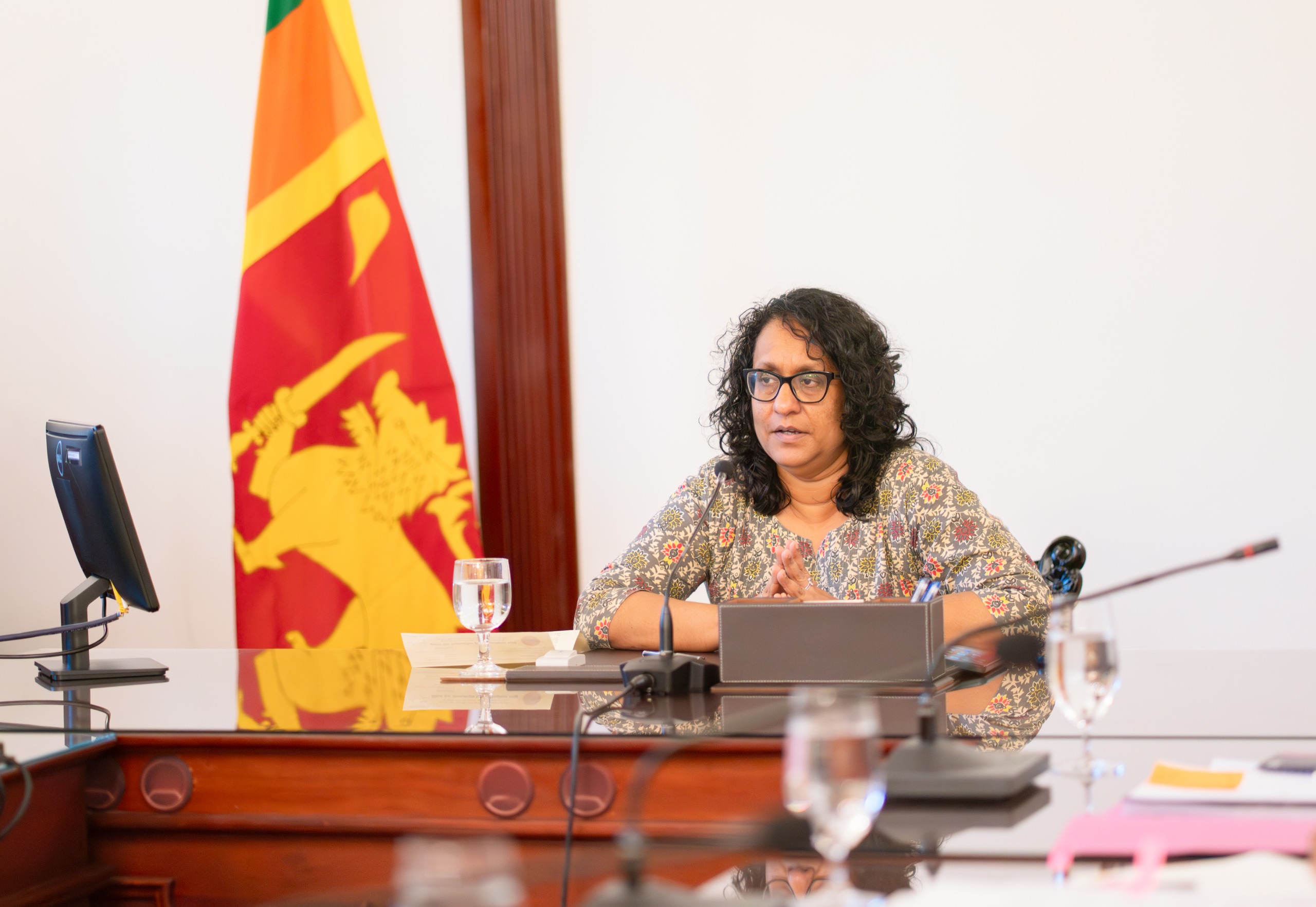
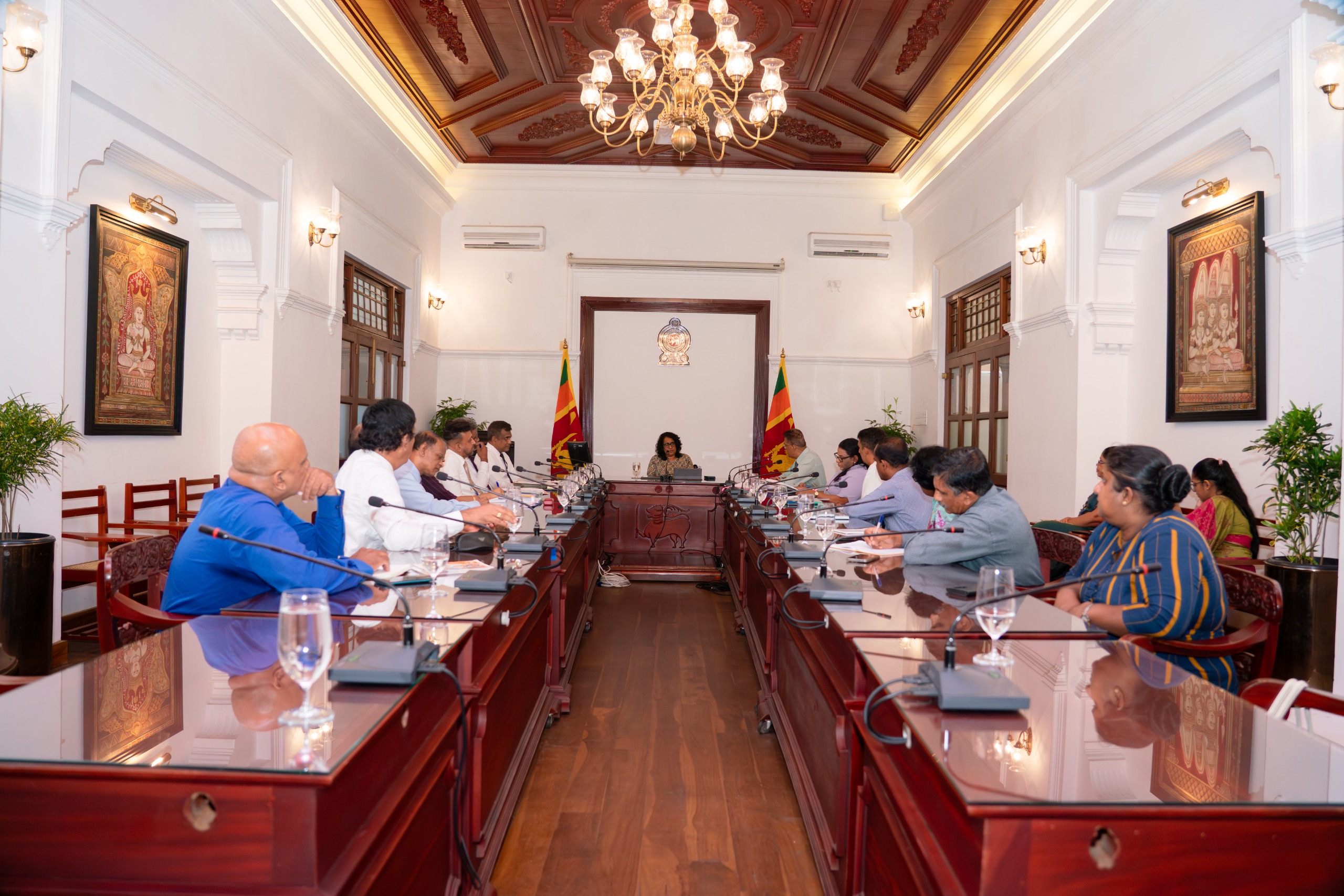
A discussion to review the current progress of the special committee appointed under the government’s policy proposals to establish a National Nursing University aimed at elevating the nursing profession in Sri Lanka to degree level was held on 23rd of March at the Prime Minister’s Office under the patronage of Prime Minister Dr. Harini Amarasuriya.
During the meeting, the Prime Minister inquired into the progress made by the committee in relation to the establishment of the Nursing University and paid attention to the issues and views presented by the committee members.
Emphasizing that establishing a university is a long-term and complex process, the Prime Minister pointed out the importance of advancing this project in line with higher education standards, without hasty decisions, while also taking into account the existing conflicts and challenges within the university system.
The meeting was attended by the Vice Chairman of the University Grants Commission, Professor K. L. Wasantha Kumara, representatives of the All Ceylon Nurses’ Association, and officials from the Ministry of Health and Mass Media.
(Prime Minister’s Media Division)
Latest News
Heat Index at ‘Caution level’ in the Western, Sabaragamuwa, Southern and North-western provinces and in Anuradhapura, Mannar, Vavuniya and Monaragala districts
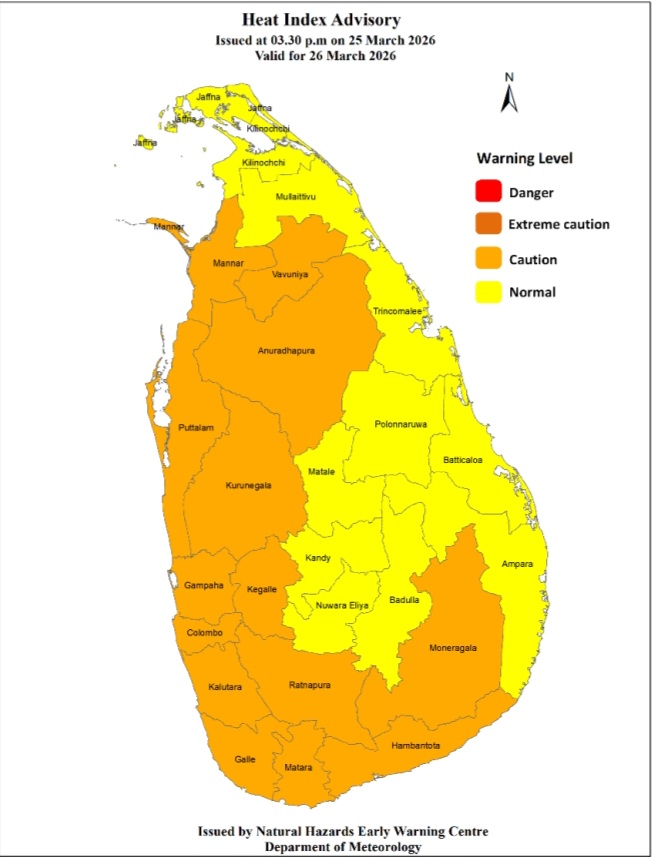
Warm Weather Advisory
Issued by the Natural Hazards Early Warning Centre of the Department of Meteorology
at 3.30 p.m. on 25 March 2026, valid for 26 March 2026.
The Heat index, the temperature felt on human body is likely to increase up to ‘Caution level’ at some places in the Western, Sabaragamuwa, Southern and North-western provinces and in
Anuradhapura, Mannar, Vavuniya and Monaragala districts.
The Heat Index Forecast is calculated by using relative humidity and maximum temperature and this is the condition that is felt on your body. This is not the forecast of maximum temperature. It is generated by the Department of Meteorology for the next day period and prepared by using global numerical weather prediction model data.

Effect of the heat index on human body is mentioned in the above table and it is prepared on the advice of the Ministry of Health and Indigenous Medical Services.
ACTION REQUIRED
Job sites: Stay hydrated and takes breaks in the shade as often as possible.
Indoors: Check up on the elderly and the sick.
Vehicles: Never leave children unattended.
Outdoors: Limit strenuous outdoor activities, find shade and stay hydrated.
Dress: Wear lightweight and white or light-colored clothing.
Note:
In addition, please refer to advisories issued by the Disaster Preparedness & Response Division, Ministry
of Health in this regard as well. For further clarifications please contact 011-7446491.

A strong Technical and Vocational Education and Training (TVET) system equips individuals with practical, relevant, and future-oriented skills helping to innovate responsibly towards a greener and sustainable future – PM

PM reviews progress of the committee appointed for the establishment of a National Nursing University

UN votes to recognise enslavement of Africans as ‘gravest crime against humanity’

Meta and YouTube found liable in landmark social media addiction trial

Showers expected in the Western and Sabaragamuwa provinces and in Galle and Matara districts after 2.00 pm.

Heat Index at ‘Caution level’ in the Western, Sabaragamuwa, Southern and North-western provinces and in Anuradhapura, Mannar, Vavuniya and Monaragala districts

‘Dates have the highest sugar content to fight Coronavirus’

Sunday Island 27 December – Headlines

#SundayIsland 17th December – Headlines

Sunday Island – 28th March

Sunday Island Headlines – 21 March

Sunday Island – 21st February – Headlines
-

 Features4 days ago
Trincomalee oil tank farm: An engineering marvel
-

 News1 day ago
Senior citizens above 70 years to receive March allowances on Thursday (26)
-

 News6 days ago
CIABOC tells court Kapila gave Rs 60 mn to MR and Rs. 20 mn to Priyankara
-
 Features7 days ago
Science and diplomacy in a changing world
-

 Features4 days ago
The scientist who was finally heard
-
 News1 day ago
Japanese boost to Sri J’pura Hospital, an outright gift from Tokyo during JRJ rule
-

 News1 day ago
CEB Engineers warn public to be prepared for power cuts after New Year
-

 News5 days ago
Colombo, Oslo steps up efforts to strengthen bilateral cooperation in key environmental priority areas