
News
Courtroom shooting: Police admit serious security lapses


By Hemanta Randunu and Norman Palihawadana
Those who planned the assassination of underworld leader Ganemulle Sanjeewa, inside Court No. 5 of the Hulftsdorp court complex, had taken advantage of the fact that the police did not conduct checks on lawyers, and the first response of the police was to secure the judges, police spokesman, Senior Superintendent of Police (SSP), Buddhika Manatunga told the media on Wednesday.
When journalists pointed out that the attack had been carried out inside the court complex, swarming with police and STF personnel, and there had been a serious lapse on the part of the police, Manatunga admitted that there had been weaknesses in the security arrangements and steps would be taken to correct them.
Journalists also pointed out that intelligence officials conducted threat assessments before suspects with serious threats are brought before courts. Thus intelligence services had also failed in their duty, they pointed out.
A Special Forces deserter, disguised as a lawyer, has been identified as the gunman responsible for the assassination of underworld leader Ganemulle Sanjeewa inside Court No. 5 of the Hulftsdorp court complex in Colombo. The police have also identified a woman, similarly disguised as a lawyer, who assisted in smuggling the firearm used in the attack.
Investigations have revealed that the gunman was a contract killer with a history of underworld assassinations. Police sources indicate that he was heavily addicted to crystal meth (ICE) and had carried out contract killings for as little as Rs. 200,000.
It has been established that the firearm used in the attack had been smuggled into the courtroom by the female accomplice, who posed as a lawyer. She had concealed the firearm inside a modified criminal procedure code handbook, in which a section had been hollowed out to hide the weapon. The book was carried inside her handbag and taken into the courtroom undetected.
After the shooting, the assassin abandoned the firearm inside the courtroom before making his escape. Police suspect that the attack had been orchestrated by a rival underworld gang operating from Dubai.
Sanjeewa Kumara Samararatne, known as Ganemulle Sanjeewa, was brought to the Aluthkade court complex from Boossa Prison at approximately 9:50 AM yesterday (19) under heavy security provided by prison officers and the Special Task Force (STF). However, as armed STF officers were not permitted inside the courtroom, they remained outside near the entrance.
Once inside, Sanjeewa was seated under prison and police supervision.
Investigations have revealed that the assassin entered the courtroom before Sanjeewa’s arrival. His female accomplice, already inside, discreetly handed over the concealed firearm.
The assassin sat among the lawyers and even asked one of them, “Would it be alright if I sit here?” before taking his seat. As court proceedings were about to begin, Sanjeewa was escorted to the dock. At that moment, the assassin stood up abruptly, approached him, retrieved the pistol, and fired five shots at point-blank range.
Lawyers and civilians inside the courtroom panicked and fled, allowing both the gunman and his female accomplice to escape in the process.
Sanjeewa was immediately rushed to the Colombo National Hospital, where he succumbed to his injuries a short while later.
Police believe the assassins chose to carry out the killing inside the courtroom because Sanjeewa was under tight security during transport, making an ambush on the way impossible. Investigations indicate that the killers had visited the Aluthkade court complex multiple times in the weeks leading up to the assassination to plan the attack. Reports suggest that additional accomplices were stationed outside the court to facilitate their escape.
The Colombo Crime Division (CCD) has launched a comprehensive investigation into the assassination, with additional support from the Peliyagoda and Nugegoda Criminal Investigation Divisions.
Police stated that they had no authority to search lawyers entering the courtroom, which enabled the disguised assassins to bring in the weapon without detection.
Ganemulle Sanjeewa was accused of committing nearly 60 murders, according to police records. In addition to his involvement in underworld activities, he faced multiple charges related to drug trafficking, extortion, and illegal arms dealing.
He was also implicated in several large-scale robberies, including the theft of Rs. 70 million, which was intended for deposit into private bank ATMs.
Police records indicate that Sanjeewa was responsible for contract killings across Ganemulla, Minuwangoda, Gampaha, Veyangoda, and Divulapitiya, with nearly 60 homicides linked to his name.
In 2023, he was arrested at Bandaranaike International Airport (BIA) while attempting to re-enter Sri Lanka using a forged passport. He had been deported from India and was taken into custody upon arrival at Katunayake.
Following his arrest, he was detained for nine months at the Gampaha and Weeragula police stations before being produced in court and remanded in custody in April 2024.
Sanjeewa had reportedly made five failed attempts to assassinate a businessman named Osman, who had opposed his drug trafficking operations in the Gampaha region. On multiple occasions, members of Sanjeewa’s gang had been arrested with weapons while attempting to attack Osman.
The investigation is being conducted under the supervision of Western Province Senior Deputy Inspector General (SDIG) Sanjeewa Dharmaratne.
Main suspect arrested
The gunman responsible for the assassination of Ganemulle Sanjeewa was arrested during a special operation conducted by the Police Special Task Force (STF) in Pallaviya, Puttalam.
The suspect was attempting to flee in a van at the time of his arrest. The individual taken into custody has been identified as Mohammed Asman, a former commando of the Sri Lanka Army.




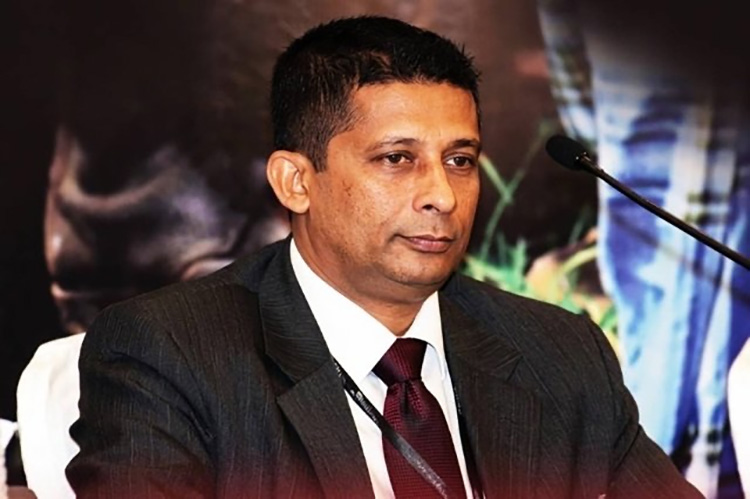
The government has chosen not to respond to questions raised by the United Nations Human Rights Council (UNHRC) regarding the detention of retired Maj. Gen. Suresh Sallay in connection with the ongoing investigations into the 2019 Easter Sunday attacks.
The Criminal Investigation Department (CID) arrested the ex-official in late February this year. The Special Rapporteur on the promotion and protection of human rights and fundamental freedoms while countering terrorism, the Working Group on Arbitrary Detention, the Special Rapporteur on the right of everyone to the enjoyment of the highest attainable standard of physical and mental health and the Special Rapporteur on the independence of judges and lawyers have jointly raised the issue on 20 July, 2026.
Drawing attention of President Anura Kumara Dissanayake to what they called alleged arbitrary detention of Sallay, former Director General of the State Intelligence Service (SIS) and former Director of Military Intelligence (DMI), under the Prevention of Terrorism Act (PTA), as well as allegations of torture and other cruel, inhuman or degrading treatment while in custody, resulting in the grave deterioration of his health, and imminent risks of retaliation through further torture and ill-treatment resulting in irreparable harm, should he be released from hospital and returned to custody, the UN sought the government explanation with a 60-day period.
The UN has stated: “This communication, and any response received from your Excellency’s Government, will be made public via the communications reporting website at the 60 days mark. Should your Excellency’s Government respond within 60 days, both the communication and the response, may be published before the 60 days mark. The communications and responses
will also be made available in the subsequent periodic report to be presented to the Human Rights Council.”
In the absence of the government’s response, the UN posted the letter, dated 20 July, 2026, addressed to President Dissanayake. The full letter can be accessed https://spcommreports.ohchr.org/TMResultsBase/DownLoadPublicCommunicationFile?gId=31125
News
Section of wartime KKS High Security Zone vacated to facilitate economic development in the area

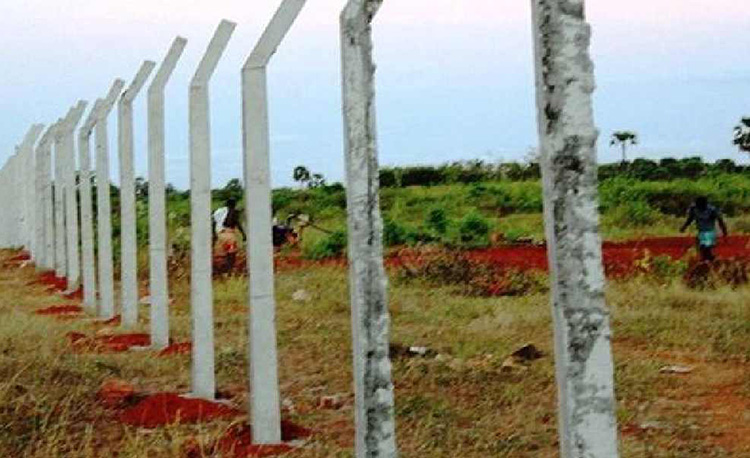
The Army, last week, vacated an area, within the wartime high security zone in the Jaffna peninsula. The Defence Ministry said that an extent of 187.56 acres of land, belonging to the Cement Corporation in Kankesanthurai, Jaffna, has been released by the military. The released land, located in Grama Niladhari Division J/233, Kankesanthurai West, within the Valikamam North (Tellippalai) Divisional Secretariat Division, had been utilised by the Sri Lanka Army since the middle of 1997.
The release of the 187.56-acre extent forms part of the initiative to make State land available for the proposed investment zone in Kankesanthurai, thereby facilitating future investment and economic development in the area.
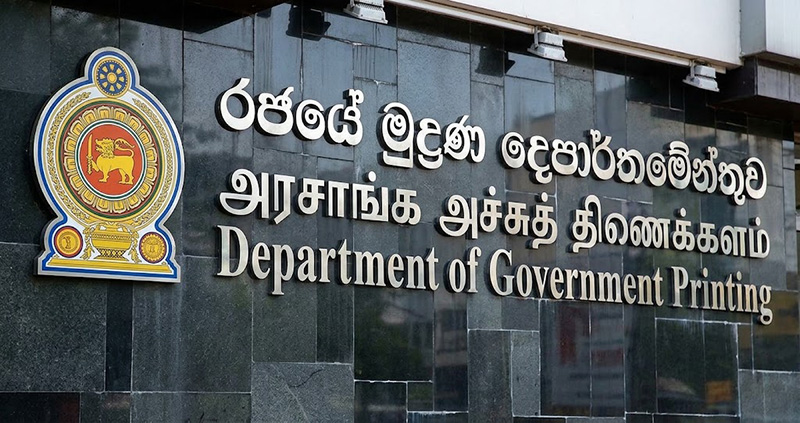
A complaint has been lodged with the Colombo Fraud Investigation Bureau against the Government Printer and the Secretary to the Ministry of Media regarding the online release of falsified documents bearing a forged Speaker’s certificate.
Attorney-at-Law Aruna Laksiri has lodged a complaint with the Colombo Fraud Investigation Bureau requesting legal action against the Government Printer of the Department of Government Printing (No. 118, Dr. Danister de Silva Mawatha, Colombo 08), Prasanna Jayaratne, and the Secretary to the Ministry of Mass Media (Asidisi Medura, 163, Kirulapone Mawatha, Polhengoda, Colombo 05), Dr. Anil Jasinghe.
The complaint alleges the commission of offences by forging and uploading falsified documents online using a forged Speaker’s certification, failure to perform statutory duties, and misappropriation of public property.
The complaint states that a copy of the English translation of the 22nd Amendment to the Constitution was downloaded and printed from the official website of the Government Printing Department (www.documents.gov.lk), which operates under the Ministry of Mass Media. On its outer cover and on page 1, the text “certified on 25th of September, 2026” is inscribed inside brackets.
The complaint pointed out that the Speaker has certified an English translation. Under Articles 23, 79, 83, and 80 of the Constitution, Parliament enacts laws and the Speaker certifies bills strictly in the Sinhala and Tamil languages; under the Constitution, therefore the Speaker cannot apply such certification to an English translation.

Showers or thundershowers will occur at several places in the most part of the island after 1.00 p.m

GS1 Lanka drives Sri Lanka’s shift to 2D barcodes

Geneva takes up Sallay’s case and govt. ignores opportunity to answer accusations

Section of wartime KKS High Security Zone vacated to facilitate economic development in the area

Lawyer lodges complaint against Govt. Printer, Media Ministry Secy.

Sri Lankan troops in joint anti-terrorist exercise in Russia

‘Dates have the highest sugar content to fight Coronavirus’

Sunday Island 27 December – Headlines

#SundayIsland 17th December – Headlines

Sunday Island – 28th March

Sunday Island Headlines – 21 March

Sunday Island – 21st February – Headlines
-

 Latest News5 days ago
Gold winner Tharanga gets brand-new Honda Vezel from SLAAJ
-

 Features5 days ago
Why Sri Lanka needs an Inclusive Civic Nationalism – urgently
-

 News4 days ago
US-assisted ‘Ice’ detection: NPC to examine IGP’s move to transfer drug-busting team
-

 Features6 days ago
Thailand’s biggest new global star …
-
 News6 days ago
First cases taken up by SC after enactment of 22A dismissed
-

 News5 days ago
Civil society activist accuses govt. of favouring Ven. Gnanasara
-

 Editorial3 days ago
Colombo Port drug bust: The plot thickens
-

 Editorial6 days ago
Aftershocks of 22A