
Business
Council for Business with Britain to strengthen the UK-SL trade corridor

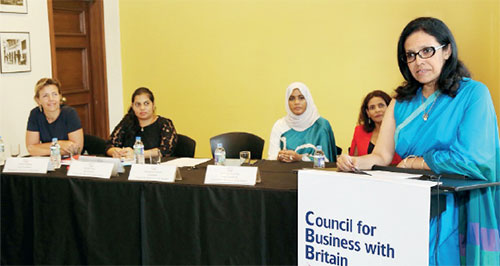
Roshanie Jayasundera Moraes addressing the membership. Also in the picture are Linda Giebing, VP, Dinithi Dias, Secretary, Ceylon Chamber of Commerce, Ameena Ziaudeen, VP and Tania Polonnowita Wettimuny, Treasurer, CBB
The 20th Annual General Meeting (AGM) of the Council for Business with Britain (CBB) of the Ceylon Chamber of Commerce was conducted on August 27.
During the course of proceedings, Roshanie Moraes, Executive Vice president, John Keells Holdings PLC became the first woman to be elected as the president of the Council for Business with Britain.
“Moving forward our efforts will primarily be focused on enhancing business and trade between the UK and Sri Lanka as part of wider government-led efforts to support post-COVID economic revival. We believe that women will also play a greater role in driving this recovery, and to that end, we will also be launching an initiative to improve female labour force participation and gender parity across Sri Lanka’s business environment,” she stated.
Exports to the UK from SL is around USD 1 b and imports from the UK, around USD 370 m. UK is one of the two largest apparel buyers from SL.
Commenting on developments during his tenure, outgoing president, Mark Prothero, CEO of HSBC, Sri Lanka & Maldives said: “As we all know, it has been an unfortunate and difficult period for Sri Lanka with two “Black Swan” events in a row in 2019 and 2020 which brought with it unprecedented challenges to our economy and particular hardship for our tourism and leisure sector.
“However, it is encouraging to see that despite these unique challenges, there are other sectors of Sri Lanka’s export economy which have rebounded sharply in a strong v-shaped recovery. This serves as one of many indicators as to the resilience of the Sri Lankan people and we can be confident that under a united president and government there is still strong opportunity for Sri Lanka to develop and prosper in the years ahead,” he said.
Having served as president during the 20th anniversary of the CBB, Prothero went on to express his gratitude to fellow Committee members – including some of the largest domestic corporates and multi-nationals – for their support and senior-level engagement in the CBB.
Over the past year, CBB organised multiple discussions and events focused on relevant and timely topics, covering financial and forex markets, responsible marketing, urban development and the significance of architecture and sustainable development. Among the other key highlights in the CBB’s calendar over the past year was the launch of the SL-UK trade and investment report and the hosting of a special event to felicitate former Sri Lankan cricketer and captain, Kumar Sangakkara on his appointment as the Chairman of the MCC.
Additionally, the council has also been actively supporting the training of English Language in partnership with the British Council for over 15 years. During this time, the CBB has funded the training of 2,300 teachers countrywide and positively impacted over 300,000 students.
Reading a statement issued on behalf of High Commissioner to Sri Lanka from the UK, Sarah Hulton, Lisa Whanstall, Deputy High Commissioner for the UK said: “I would like to thank the outgoing President Mark Prothero and the CBB committee for all their hard work and for the time they have spent sharing insights and working together with me in my first year in Sri Lanka. I also wish to congratulate incoming President Roshanie Jayasundera Moraes, together with the new office bearers and other committee members, with whom I look forward to working closely in the year ahead to support UK businesses in this challenging time. I understand that we have a first for the CBB on the gender representation front, which is also very exciting, and I am keen to explore activities and initiatives around this as well.”
The 2020/21 committee comprises of Linda Giebing, General Manager, Hilton Colombo Residences and Ameena Ziauddin – Development Director, Norfolk Foods as Vice Presidents, Tania Polonnowita Wettimuny, MD, Inter Air & Sea Logistics, as the Treasurer and Mark Prothero, CEO, HSBC Sri Lanka & Maldives as the Immediate Past President.
Newly appointed committee members include: Shirendra Lawrence, COO, MAS Holdings, Hajar Alafifi, Chairperson, Unilever Sri Lanka, Sarath Ganegoda, Director, Hayleys PLC, S Renganathan, MD, Commercial Bank, Nikhil Hirdaramani, Director, Hirdaramani Group, Arjuna Nanayakkara, Head of Shared Services, London Stock Exchange Group SL, Irfan Thassim, MD, Oceanpick, Dougie Douglas, Country Manager, Etihad Airways, Indika Abeykoon, GM, Aitken Spence Travels and Gihan Jayasinghe, MD, Finlays Group, SL.
Michael Fernandopulle, Head of Trade & Investment at the DIT, of the British High Commission, the Head of the British Council and Shaameel Mohideen, MD of Spillburg Holdings representing SMEs will be invitees to the Committee. Representatives from the BOI and the EDB to attend the meetings as invitees every quarter.
Further details regarding membership of the Council and its activities could be obtained from the Secretariat of the CBB of the Ceylon Chamber of Commerce, No. 50, Navam Mawatha, Colombo 2. E-mail: dinithi@chamber.lk or Tel.: 011-5588861, 5588800. CBB also could be contacted via www.cbbsl.com https://www.facebook.com/CBBSriLanka/ and on Twitter @CBB_SL.




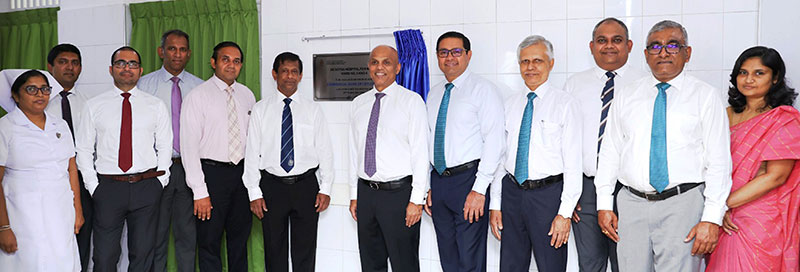
The Commercial Bank of Ceylon recently handed over Wards No. 03 and 04 of the De Soysa Hospital for Women, after the completion of a comprehensive renovation project launched in March this year to mark International Women’s Day.
Wards 03 and 04 handle a substantial share of the hospital’s patient load, and account for approximately 2,500 to 3,000 deliveries and 4,000 to 5,000 admissions annually. Their refurbishment was designed to significantly enhance patient care, safety and comfort, and directly benefit thousands of mothers and newborns.
Five Trustees of the Commercial Bank’s Corporate Social Responsibility Trust participated in the formal handing over of the refurbished wards to the hospital authorities. They were Sharhan Muhseen, the Bank’s Chairman, Raja Senanayake, Deputy Chairman, Sanath Manatunge, Managing Director/CEO, Hasrath Munasinghe, Chief Operating Officer, and Prasanna Indrajith, Chief Financial Officer.
Established in 1879, the De Soysa Hospital for Women is the first maternity hospital in Sri Lanka and the second oldest in Asia and is credited with, among others, performing the country’s first caesarean section in 1905 and establishing one of its earliest organised operating theatres in 1907.
The Commercial Bank’s Corporate Social Responsibility Trust, through which this project was implemented, has via its healthcare-related interventions supported more than 100 government hospitals with essential equipment and infrastructure, contributed to emergency medical services through the ‘Adopt an Ambulance’ initiative, and implemented targeted community health interventions such as water storage solutions for families affected by kidney disease.
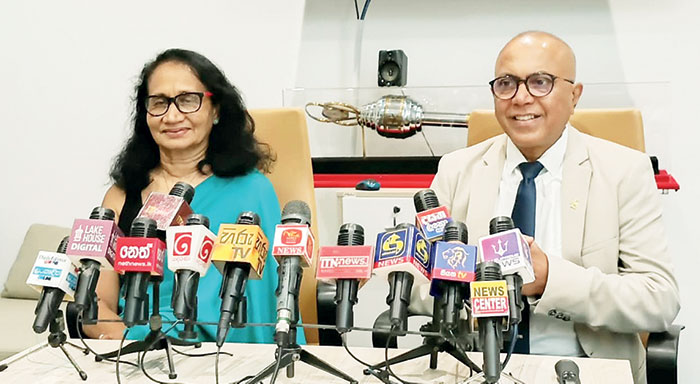
The International Institute of Health Sciences (IIHS) Multiversity is expanding its international education programmes with the aim of creating overseas employment opportunities for Sri Lankan nurses and allied health professionals while contributing to foreign exchange earnings.
Speaking to the media during a conference at IIHS Multiversity in Kerawalapitiya, Dr. Kithsiri Edirisinghe, CEO, Co-Founder and Dean of IIHS aid that the institute has established academic partnerships with overseas universities and higher education institutions, including the University of Surrey in the UK, Deakin University in Australia, Metropolia University of Applied Sciences in Finland, Asia e University in Malaysia and SUNY Canton in the United States.
Under its ‘Study in Sri Lanka, Graduate to the World’ model, students can complete foundational and diploma-level qualifications locally before progressing to international top-up degrees or overseas employment.
Dr Edirisinghe said the model could substantially reduce the cost of obtaining internationally recognised qualifications. It estimates that completing a four-year bachelor’s degree at the University of Surrey in the UK would cost about USD 145,700, including tuition and living expenses, compared with about USD 27,750 through the IIHS pathway in Sri Lanka.
Dr Edirisinghe said the institute’s focus on overseas deployment addressed both Sri Lanka’s economic needs and the growing global demand for healthcare workers.
“Our winning model is producing job-ready, registration-ready healthcare professionals who can seamlessly enter foreign healthcare systems,” he said.
IIHS, which began operations in 2002 as the American College of Health Sciences, established its institutional base in Welisara in 2008 and launched its purpose-built greenfield multiversity campus in 2023.
The institute said it has upgraded the qualifications of more than 5,000 government nurses, supported over 2,500 youth on international employment pathways and trained more than 1,000 allied health professionals. It has also carried out over 250 community health projects.
The institute has identified Germany and Japan among its target markets, with pathways planned for 2,000 nurses for Germany and a one-year preparation programme linked to around 4,000 healthcare positions in Japan.
Dr. Renuka Jayatissa, Vice-Chancellor and a specialist medical doctor, said demographic changes and the growing burden of non-communicable diseases were changing healthcare requirements in Sri Lanka.
Business
Sampath Bank launches Sri Lanka’s first community-powered book discovery platform at Colombo International Book Fair

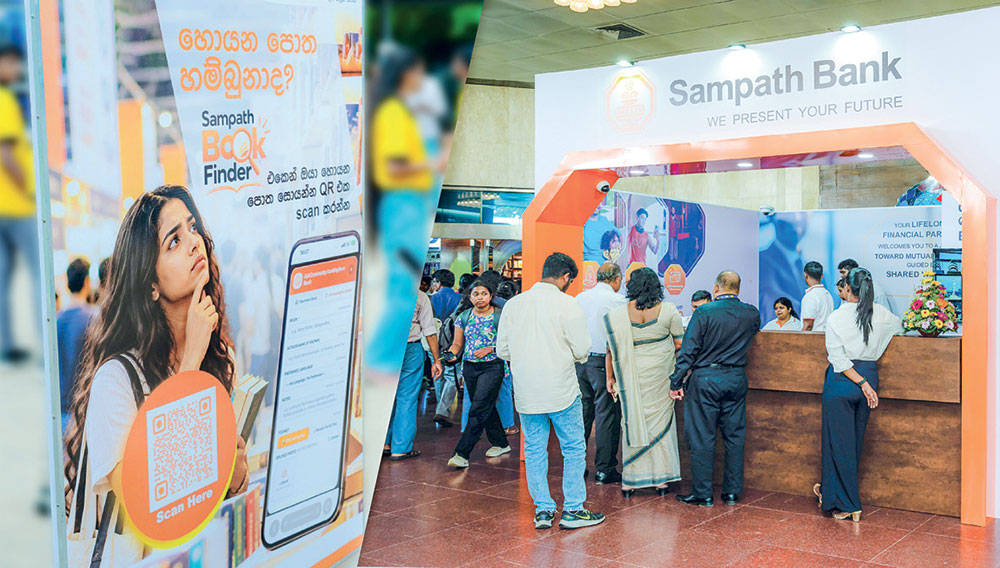
Sampath GPay customers can enjoy 25% cash back on Book Fair purchases
Sampath Bank PLC has launched Sampath Book Finder, Sri Lanka’s first community-powered book discovery platform, giving visitors to the Colombo International Book Fair a faster and more seamless way to find the books they are looking for across the fair’s 150+ stalls, while also opening up new opportunities to discover titles recommended by fellow readers.
Introduced on the opening day of the Colombo International Book Fair on 25 September, Sampath Book Finder brings together digital innovation and the collective knowledge of readers to address a familiar challenge at one of Sri Lanka’s largest literary gatherings, where the scale of the fair can make locating a particular title a time-consuming exercise. When a book proves difficult to locate, visitors can access bookfairtracker.com or scan the designated QR code and submit a request to the community, allowing readers who have already spotted the title to share its location and help others find it without having to search stall after stall.
Commenting on the initiative, Milinda Weerasinghe, Chief Marketing Officer, Sampath Bank PLC, said, “At Sampath Bank, we believe meaningful innovation begins by identifying everyday challenges and creating solutions that make a real difference. Sampath Book Finder brings this thinking to the Colombo International Book Fair by turning the collective knowledge of readers into a real-time digital solution, empowering them to find what they are looking for, discover something new and help others do the same, while making the overall experience more convenient and connected.”
The platform also turns book discovery into a shared experience, allowing visitors to recommend books they encounter by sharing the title, publisher, hall and stall number, which enables fellow readers to discover sought-after titles and recommendations while making it easier to locate them within the fair.
Sampath Bank’s longstanding association with the Colombo International Book Fair also continues in 2026, marking more than 20 years of partnership, with the Bank serving as the Official Banking Partner for this year’s fair. As part of its presence at the event, SampathCards offer 25% cashback for Sampath GPay customers on their purchases and 3 months 0% instalment plans for book purchases via Sampath credit cards, while visitors can also access banking services through the Bank’s physical presence at the fair. Customers registering to open selected Fixed Deposits at the premises will receive an additional 0.25%, adding further value and convenience for visitors.

Debris found from plane that went missing off US coast

Construction of Jet A-1 Aviation fuel pipeline and new oil tank complex at Muthurajawela begins under President’s patronage

Landslide Early Warnings issued to the Districts of Kandy, Kegalle, Matale and Ratnapura

No handshakes and a delayed ceremony as India beat Pakistan at Asian Games

Showers or thundershowers will occur in most parts of the island after 1.00 p.m

Lanka enters new phase of prosecutions as hurdles clear

‘Dates have the highest sugar content to fight Coronavirus’

Sunday Island 27 December – Headlines

#SundayIsland 17th December – Headlines

Sunday Island – 28th March

Sunday Island Headlines – 21 March

Sunday Island – 21st February – Headlines
-

 News7 days ago
Police remove Thileepan statue in Jaffna
-

 Features7 days ago
The 22nd Amendment, constitutional recovery and illiberal slippage
-

 Features7 days ago
Of foreigners as CEOs of Lankan ventures
-

 Latest News5 days ago
Gold winner Tharanga gets brand-new Honda Vezel from SLAAJ
-

 News7 days ago
Sajith rejects Jt. Opp. protest sabotage claim; SJB TU chief demands remedial action
-

 Features5 days ago
Why Sri Lanka needs an Inclusive Civic Nationalism – urgently
-

 News4 days ago
US-assisted ‘Ice’ detection: NPC to examine IGP’s move to transfer drug-busting team
-

 Features6 days ago
Thailand’s biggest new global star …