
Sat Mag
Complex and contradictory: A literary survey of the Sinhala middle-class

By Uditha Devapriya
Amorphous and ambivalent, the Sinhala middle-class remains undefined and uncharted. It is difficult to pin them down to a particular conception of them. What are their tastes, interests, habits? What do they like? What do they believe? What do they want?
The fundamental problem in trying to understand them is the lack of a proper sociological study of them. The social scientist inevitably runs into a dead-end when trying to place them in their historical context. That they have evaded his radar so far, and so successfully, shows how more relevant peasants and workers have become for his peers.
Linked on the one hand to the undercurrents of religious nationalism and on the other to a comprador economic framework, the middle-class remains an intriguing object of study. Yet such a study has, barring a few interventions, so far not been authored. The only plausible reason for this is that the trajectory of the middle-class has never engaged scholarly interest in the way that of peasants and workers has.
Partly, this has been due to the country’s colonial heritage. With the changes of the late 19th century and resultant societal rifts, the peasantry and the working class became the focus of government appointed commissions. If the middle-class figured in the latter at all, as they did with commissions concerning salaries and pensions, they did so marginally. Elites, peasants, and workers epitomised the polarities of their society far better; they were, to quote Gramsci, in “perpetual ferment”, arguably more so than the relatively stable middle-class. Hence it was these groups that played a key role in many postcolonial studies of that society.
In fact it was not until the late 1960s that the Sinhala petty bourgeoisie became relevant to social scientists. The latter’s interest in them lay mainly, though not only, in relation to the Buddhist revival of the 19th and 20th century. Here we are indebted to Kumari Jayawardena, because her classification of colonial society is by far the most comprehensive, and cohesive, of such interventions. Jayawardena depicted the Sinhala petty bourgeoisie as a dominated and dominating group: hence while playing a leading role in the Buddhist revival, they prospered as merchants within a colonial economic framework. But Jayawardena’s work, and the work of such pioneering social scientists as Newton Gunasinghe, remains exceptional.
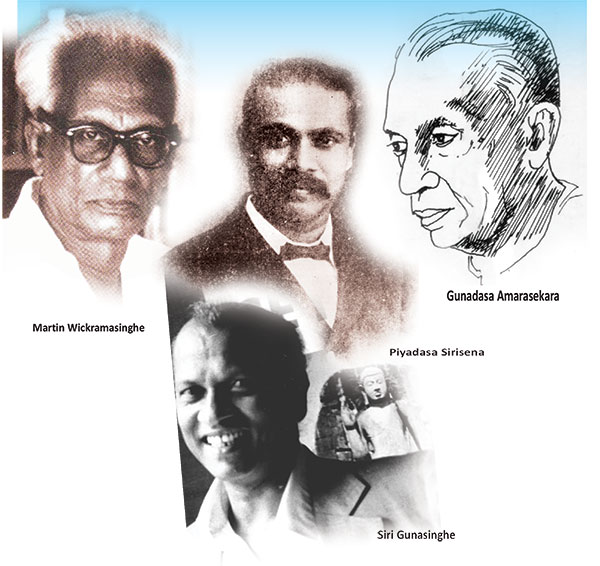
Interestingly, however, neglected as they may have been by the scholar, the Sinhala middle-class was rescued from obscurity by the Sinhala novelist. Here we should acknowledge the popular novelists of the early 20th century, most prominently Piyadasa Sirisena. It is true that their conception of culture and ethnicity was imaginary, and idealised. Yet their depiction of the petty bourgeoisie reflected the sociologist’s demarcation of them as a complex milieu; in one sense, they may even have aided the sociologist’s interest in that milieu.
For Sirisena, the Sinhala middle-class were either Sinhala nationalists or brown sahibs, the latter very often converts to Christianity and Western lifestyles. Such stereotypes, seen most clearly in Jayatissa saha Rosalin, were hardly unique to Sirisena – as Sarath Amunugama has noted, “the impact of the Sinhala novel on early twentieth century Sinhalese society has to be examined in the context of the prevailing religious literary tradition” – yet it was Sirisena’s work (as novelist and as editor of Sinhala Jatiya) which epitomised “the changes that were taking place in the Sinhalese social structure.” Hailing from the southern petty bourgeoisie, Sirisena romanticised his own milieu and demonised the Westernised and Christianised elite in ways no other novelists did. Those who have read Jayatissa saha Rosalin will concur with Amunugama’s view that, in Jayatissa, Sirisena depicted a specific type of Sinhala nationalist, tied to the cultural revival, yet not totally detached from colonial modernity.
Martin Wickramasinghe, whose views on culture and society were less ambivalent than Piyadasa Sirisena’s or W. A. Silva’s, did not make the Sinhala middle-class the focus of his best work like this. The Koggala Trilogy is not so much about the Sinhala middle-class as it is about a rural petty bourgeoisie which, through education and initiative, enter the ranks of a Westernised elite. The middle-class form the crux of the plot in Madol Doowa and Viragaya, as well as in his short stories, but even here Wickramasinghe does not offer a critique of this milieu in the way Sirisena does. Since his preoccupation was with social and cultural change, he dwelt less on the petty bourgeoisie than on their co-option by the bourgeoisie. As such, his vignettes of rural life offer us only fleeting glimpses of the middle-class.
Fleeting though they may be, however, his depictions of this middle-class stand out strongly. The most intriguing character in Yuganthaya, for instance, is neither Malin Kabilana nor his father Simon, but his friend Aravinda. Hailing from and raised in a village, Aravinda aspires to be the Kabilanas’ equal; there is a sequence in the novel where he puffs a cigar and dreams of buying a house in Cinnamon Gardens. Yet this does not make him deracinated, much less uprooted; Wickramasinghe depicts him as ambitious, but also kind-hearted, as seen by his act of prescribing medicines for free to his villagers. His father, on the other hand, has worked on time and overtime to educate the son; he expects nothing but the best for and from him. These pressures inexorably bear down on him, compelling him to side with, not Malin’s radicalism, but rather Malin’s father Simon’s conservatism.
Arguably Sri Lanka’s only living novelist of repute from the pre-1956 period, Gunadasa Amarasekara depicted a different middle-class in his later novels. Amarasekara did make the middle-class the subject of his early work; the difference lies in how he views this milieu. His shift from a romantic to a nationalist outlook, signalled early on by his rejection of free verse and contemporary literary criticism in Aliya saha Andayo, predicted a shift in his perceptions of the middle-class and its place in Sri Lanka’s political history.
As Amarasekara unequivocally notes in his preface to Gamanaka Mula, the first in a cycle of novels, Wickramasinghe’s focus in the Koggala Trilogy had been on a “deracinated upper middle-class.” This did not include the local middle-class. In his novels, Amarasekara’s aim was to chart the evolution of this national middle-class, from a marginalised group in the late 19th century to a more assertive class in the mid 20th century.
Amarasekara’s intellectual retreat from the city to the village must be viewed in the context of his articulation of Jathika Chintanaya, though this is not all that colours his views on the “national” middle-class. The Gamanaka cycle of novels, on a much more ambitious scale than Wickramasinghe’s Koggala Trilogy, portrays its milieu in much the same way that the likes of Kumari Jayawardena had: complex and contradictory, ensnared by colonialism and globalisation, yet tethered to cultural and religious nationalism. For Amarasekara, however, the contradictions this milieu vacillates between are not just ideological, but generational; in the character of Piyadasa, who emerges at the end of the long cycle Westernised, yet critical of Westernisation, we come across a counterpoint to Piyal from Wickramasinghe’s Koggala Trilogy, who enters into and embraces the colonial order. Piyadasa represents a cleaner break from the ideas of his parents, and a return to his ancestral roots, than Piyal.
The Gamanaka novels frame 1956 as progressive and inevitable. Yet as Amarasekara’s political interventions, such as Anagarika Dharmapala Marxvadida?, show, the author does not accept 1956 at its face-value. For Amarasekara, 1956 represented a break from and a link to the politics that had dominated the country until then; the Sinhala middle-class would end up as key players in what unfolded thereafter. While this might present the middle-class as a monolithic social group, which admittedly it does, Amarasekara contends that the post-1956 moment turned them all from a position of subservience to one of dominance, pushing them to the forefront of the country’s political, cultural, and intellectual life.
Deceptively simple as such a reading of post-1956 history seems, it nevertheless assigns an important role to the petty bourgeoisie, a group which, after all, continues to play a pivotal role in the country’s politics. Yet for a more cohesive critique of that class, we have to turn to other writers, particularly Amarasekara’s most trenchant critic, Siri Gunasinghe.
In Hewanella, Siri Gunasinghe offers not one, but two readings of 1956, embodied in the characters of Jinadasa and Wijepala. Gunasinghe’s achievement in his work is in presenting, not a criticism of 1956, but an assessment of the possibilities to which it opened the country and the local middle-class. Thus, while Jinadasa symbolises the reactionary facets of narrow nationalism, Wijepala is less insular; the latter eventually turns into a man of reason, while the former wallows in his backwardness. While I do not necessarily accept this division as the only possible one – since to do so would be to dichotomise 1956 between heroes and villains, something a novelist can engage in, but certainly not a sociologist or an anthropologist – it is more complex, despite its compressed narrative, than the Gamanaka novels. Indeed, its very brevity offers a critique of the latter’s ambitious longue durée.
Late colonial and postcolonial Sri Lanka represented a crucible for the Sinhala middle-class, especially for the first four of the much heralded pancha maha balavegaya: monks, ayurvedic physicians, village schoolteachers, and farmers. It remains one of the many ironies of history here that while Sinhala nationalism came to be embodied by these four milieus, other classes, including peasants and workers, were left behind, and eventually forgotten; this is something few social scientists, among them Newton Gunasinghe, have explored.
However, no study of these social processes would be complete without a survey of Sinhala literature from late colonial to postcolonial periods. From the fiercely trenchant nationalism of Piyadasa Sirisena’s Jayatissa saha Rosalin, to Martin Wickramasinghe’s assessment of the colonial bourgeoisie, to Gunadasa Amarasekara’s charting of the Sinhala petty bourgeoisie’s trajectory following the end of colonial rule, to Siri Gunasinghe’s critique of what that milieu would later become, this literature offer us a glimpse into the most complex and contradictory class in postcolonial Sri Lanka: a class not yet comprehensively delved into, barring the work of a handful of scholars. Romantic and fanciful as some of these literary endeavours may be, they nevertheless give us rare insights. These should not be neglected.
The writer can be reached at udakdev1@gmail.com

Sat Mag
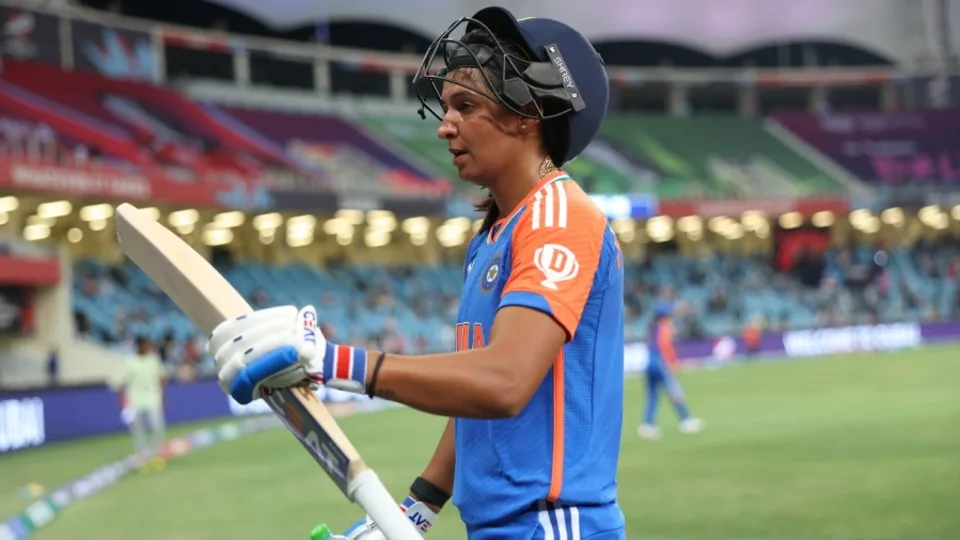
October 13 at the Women’s T20 World Cup: Injury concerns for Australia ahead of blockbuster game vs India

Australia vs India
Sharjah, 6pm local time
Australia have major injury concerns heading into the crucial clash. Just four balls into the match against Pakistan, Tayla Vlaeminck was out with a right shoulder dislocation. To make things worse, captain Alyssa Healy suffered an acute right foot injury while batting on 37 as she hobbled off the field with Australia needing 14 runs to win. Both players went for scans on Saturday.
India captain Harmanpreet Kaur who had hurt her neck in the match against Pakistan, turned up with a pain-relief patch on the right side of her neck during the Sri Lanka match. She also didn’t take the field during the chase. Fast bowler Pooja Vastrakar bowled full-tilt before the Sri Lanka game but didn’t play.
India will want a big win against Australia. If they win by more than 61 runs, they will move ahead of Australia, thereby automatically qualifying for the semi-final. In a case where India win by fewer than 60 runs, they will hope New Zealand win by a very small margin against Pakistan on Monday. For instance, if India make 150 against Australia and win by exactly 10 runs, New Zealand need to beat Pakistan by 28 runs defending 150 to go ahead of India’s NRR. If India lose to Australia by more than 17 runs while chasing a target of 151, then New Zealand’s NRR will be ahead of India, even if Pakistan beat New Zealand by just 1 run while defending 150.
Overall, India have won just eight out of 34 T20Is they’ve played against Australia. Two of those wins came in the group-stage games of previous T20 World Cups, in 2018 and 2020.
Australia squad:
Alyssa Healy (capt & wk), Darcie Brown, Ashleigh Gardner, Kim Garth, Grace Harris, Alana King, Phoebe Litchfield, Tahlia McGrath, Sophie Molineux, Beth Mooney, Ellyse Perry, Megan Schutt, Annabel Sutherland, Tayla Vlaeminck, Georgia Wareham
India squad:
Harmanpreet Kaur (capt), Smriti Mandhana (vice-capt), Yastika Bhatia (wk), Shafali Verma, Deepti Sharma, Jemimah Rodrigues, Richa Ghosh (wk), Pooja Vastrakar, Arundhati Reddy, Renuka Singh, D Hemalatha, Asha Sobhana, Radha Yadav, Shreyanka Patil, S Sajana
Tournament form guide:
Australia have three wins in three matches and are coming into this contest having comprehensively beaten Pakistan. With that win, they also all but sealed a semi-final spot thanks to their net run rate of 2.786. India have two wins in three games. In their previous match, they posted the highest total of the tournament so far – 172 for 3 and in return bundled Sri Lanka out for 90 to post their biggest win by runs at the T20 World Cup.
Players to watch:
Two of their best batters finding their form bodes well for India heading into the big game. Harmanpreet and Mandhana’s collaborative effort against Pakistan boosted India’s NRR with the semi-final race heating up. Mandhana, after a cautious start to her innings, changed gears and took on Sri Lanka’s spinners to make 50 off 38 balls. Harmanpreet, continuing from where she’d left against Pakistan, played a classic, hitting eight fours and a six on her way to a 27-ball 52. It was just what India needed to reinvigorate their T20 World Cup campaign.
[Cricinfo]


By Eng. Thushara Dissanayake
The primitive man lived in caves to get shelter from the weather. With the progression of human civilization, people wanted more sophisticated buildings to fulfill many other needs and were able to accomplish them with the help of advanced technologies. Security, privacy, storage, and living with comfort are the common requirements people expect today from residential buildings. In addition, different types of buildings are designed and constructed as public, commercial, industrial, and even cultural or religious with many advanced features and facilities to suit different requirements.
We are facing many environmental challenges today. The most severe of those is global warming which results in many negative impacts, like floods, droughts, strong winds, heatwaves, and sea level rise due to the melting of glaciers. We are experiencing many of those in addition to some local issues like environmental pollution. According to estimates buildings account for nearly 40% of all greenhouse gas emissions. In light of these issues, we have two options; we change or wait till the change comes to us. Waiting till the change come to us means that we do not care about our environment and as a result we would have to face disastrous consequences. Then how can we change in terms of building construction?
Before the green concept and green building practices come into play majority of buildings in Sri Lanka were designed and constructed just focusing on their intended functional requirements. Hence, it was much likely that the whole process of design, construction, and operation could have gone against nature unless done following specific regulations that would minimize negative environmental effects.
We can no longer proceed with the way we design our buildings which consumes a huge amount of material and non-renewable energy. We are very concerned about the food we eat and the things we consume. But we are not worrying about what is a building made of. If buildings are to become a part of our environment we have to design, build and operate them based on the same principles that govern the natural world. Eventually, it is not about the existence of the buildings, it is about us. In other words, our buildings should be a part of our natural environment.
The living building challenge is a remarkable design philosophy developed by American architect Jason F. McLennan the founder of the International Living Future Institute (ILFI). The International Living Future Institute is an environmental NGO committed to catalyzing the transformation toward communities that are socially just, culturally rich, and ecologically restorative. Accordingly, a living building must meet seven strict requirements, rather certifications, which are called the seven “petals” of the living building. They are Place, Water, Energy, Equity, Materials, Beauty, and Health & Happiness. Presently there are about 390 projects around the world that are being implemented according to Living Building certification guidelines. Let us see what these seven petals are.
Place
This is mainly about using the location wisely. Ample space is allocated to grow food. The location is easily accessible for pedestrians and those who use bicycles. The building maintains a healthy relationship with nature. The objective is to move away from commercial developments to eco-friendly developments where people can interact with nature.
Water
It is recommended to use potable water wisely, and manage stormwater and drainage. Hence, all the water needs are captured from precipitation or within the same system, where grey and black waters are purified on-site and reused.
Energy
Living buildings are energy efficient and produce renewable energy. They operate in a pollution-free manner without carbon emissions. They rely only on solar energy or any other renewable energy and hence there will be no energy bills.
Equity
What if a building can adhere to social values like equity and inclusiveness benefiting a wider community? Yes indeed, living buildings serve that end as well. The property blocks neither fresh air nor sunlight to other adjacent properties. In addition, the building does not block any natural water path and emits nothing harmful to its neighbors. On the human scale, the equity petal recognizes that developments should foster an equitable community regardless of an individual’s background, age, class, race, gender, or sexual orientation.
Materials
Materials are used without harming their sustainability. They are non-toxic and waste is minimized during the construction process. The hazardous materials traditionally used in building components like asbestos, PVC, cadmium, lead, mercury, and many others are avoided. In general, the living buildings will not consist of materials that could negatively impact human or ecological health.
Beauty
Our physical environments are not that friendly to us and sometimes seem to be inhumane. In contrast, a living building is biophilic (inspired by nature) with aesthetical designs that beautify the surrounding neighborhood. The beauty of nature is used to motivate people to protect and care for our environment by connecting people and nature.
Health & Happiness
The building has a good indoor and outdoor connection. It promotes the occupants’ physical and psychological health while causing no harm to the health issues of its neighbors. It consists of inviting stairways and is equipped with operable windows that provide ample natural daylight and ventilation. Indoor air quality is maintained at a satisfactory level and kitchen, bathrooms, and janitorial areas are provided with exhaust systems. Further, mechanisms placed in entrances prevent any materials carried inside from shoes.
The Bullitt Center building
Bullitt Center located in the middle of Seattle in the USA, is renowned as the world’s greenest commercial building and the first office building to earn Living Building certification. It is a six-story building with an area of 50,000 square feet. The area existed as a forest before the city was built. Hence, the Bullitt Center building has been designed to mimic the functions of a forest.
The energy needs of the building are purely powered by the solar system on the rooftop. Even though Seattle is relatively a cloudy city the Bullitt Center has been able to produce more energy than it needed becoming one of the “net positive” solar energy buildings in the world. The important point is that if a building is energy efficient only the area of the roof is sufficient to generate solar power to meet its energy requirement.
It is equipped with an automated window system that is able to control the inside temperature according to external weather conditions. In addition, a geothermal heat exchange system is available as the source of heating and cooling for the building. Heat pumps convey heat stored in the ground to warm the building in the winter. Similarly, heat from the building is conveyed into the ground during the summer.
The potable water needs of the building are achieved by treating rainwater. The grey water produced from the building is treated and re-used to feed rooftop gardens on the third floor. The black water doesn’t need a sewer connection as it is treated to a desirable level and sent to a nearby wetland while human biosolid is diverted to a composting system. Further, nearly two third of the rainwater collected from the roof is fed into the groundwater and the process resembles the hydrologic function of a forest.
It is encouraging to see that most of our large-scale buildings are designed and constructed incorporating green building concepts, which are mainly based on environmental sustainability. The living building challenge can be considered an extension of the green building concept. Amanda Sturgeon, the former CEO of the ILFI, has this to say in this regard. “Before we start a project trying to cram in every sustainable solution, why not take a step outside and just ask the question; what would nature do”?
By Uditha Devapriya
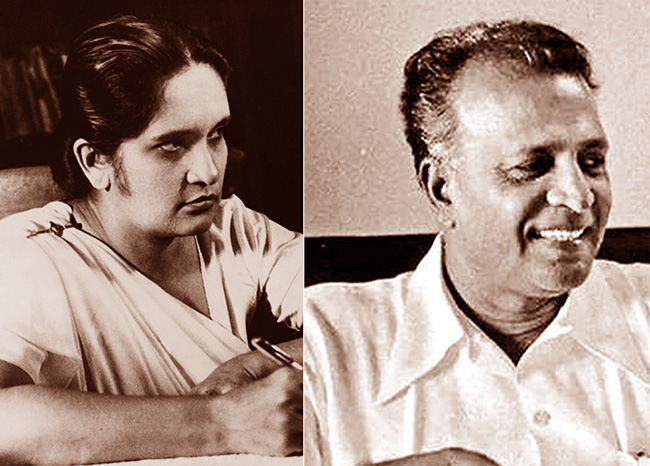
On June 7, 1964, the Central Committee of the Lanka Sama Samaja Party convened a special conference at which three resolutions were presented. The first, moved by N. M. Perera, called for a coalition with the SLFP, inclusive of any ministerial portfolios. The second, led by the likes of Colvin R. de Silva, Leslie Goonewardena, and Bernard Soysa, advocated a line of critical support for the SLFP, but without entering into a coalition. The third, supported by the likes of Edmund Samarakkody and Bala Tampoe, rejected any form of compromise with the SLFP and argued that the LSSP should remain an independent party.
The conference was held a year after three parties – the LSSP, the Communist Party, and Philip Gunawardena’s Mahajana Eksath Peramuna – had founded a United Left Front. The ULF’s formation came in the wake of a spate of strikes against the Sirimavo Bandaranaike government. The previous year, the Ceylon Transport Board had waged a 17-day strike, and the harbour unions a 60-day strike. In 1963 a group of working-class organisations, calling itself the Joint Committee of Trade Unions, began mobilising itself. It soon came up with a common programme, and presented a list of 21 radical demands.
In response to these demands, Bandaranaike eventually supported a coalition arrangement with the left. In this she was opposed, not merely by the right-wing of her party, led by C. P. de Silva, but also those in left parties opposed to such an agreement, including Bala Tampoe and Edmund Samarakkody. Until then these parties had never seen the SLFP as a force to reckon with: Leslie Goonewardena, for instance, had characterised it as “a Centre Party with a programme of moderate reforms”, while Colvin R. de Silva had described it as “capitalist”, no different to the UNP and by default as bourgeois as the latter.
The LSSP’s decision to partner with the government had a great deal to do with its changing opinions about the SLFP. This, in turn, was influenced by developments abroad. In 1944, the Fourth International, which the LSSP had affiliated itself with in 1940 following its split with the Stalinist faction, appointed Michel Pablo as its International Secretary. After the end of the war, Pablo oversaw a shift in the Fourth International’s attitude to the Soviet states in Eastern Europe. More controversially, he began advocating a strategy of cooperation with mass organisations, regardless of their working-class or radical credentials.
Pablo argued that from an objective perspective, tensions between the US and the Soviet Union would lead to a “global civil war”, in which the Soviet Union would serve as a midwife for world socialist revolution. In such a situation the Fourth International would have to take sides. Here he advocated a strategy of entryism vis-à-vis Stalinist parties: since the conflict was between Stalinist and capitalist regimes, he reasoned, it made sense to see the former as allies. Such a strategy would, in his opinion, lead to “integration” into a mass movement, enabling the latter to rise to the level of a revolutionary movement.

Though controversial, Pablo’s line is best seen in the context of his times. The resurgence of capitalism after the war, and the boom in commodity prices, had a profound impact on the course of socialist politics in the Third World. The stunted nature of the bourgeoisie in these societies had forced left parties to look for alternatives. For a while, Trotsky had been their guide: in colonial and semi-colonial societies, he had noted, only the working class could be expected to see through a revolution. This entailed the establishment of workers’ states, but only those arising from a proletarian revolution: a proposition which, logically, excluded any compromise with non-radical “alternatives” to the bourgeoisie.
To be sure, the Pabloites did not waver in their support for workers’ states. However, they questioned whether such states could arise only from a proletarian revolution. For obvious reasons, their reasoning had great relevance for Trotskyite parties in the Third World. The LSSP’s response to them showed this well: while rejecting any alliance with Stalinist parties, the LSSP sympathised with the Pabloites’ advocacy of entryism, which involved a strategic orientation towards “reformist politics.” For the world’s oldest Trotskyite party, then going through a series of convulsions, ruptures, and splits, the prospect of entering the reformist path without abandoning its radical roots proved to be welcoming.
Writing in the left-wing journal Community in 1962, Hector Abhayavardhana noted some of the key concerns that the party had tried to resolve upon its formation. Abhayavardhana traced the LSSP’s origins to three developments: international communism, the freedom struggle in India, and local imperatives. The latter had dictated the LSSP’s manifesto in 1936, which included such demands as free school books and the use of Sinhala and Tamil in the law courts. Abhayavardhana suggested, correctly, that once these imperatives changed, so would the party’s focus, though within a revolutionary framework. These changes would be contingent on two important factors: the establishment of universal franchise in 1931, and the transfer of power to the local bourgeoisie in 1948.
Paradoxical as it may seem, the LSSP had entered the arena of radical politics through the ballot box. While leading the struggle outside parliament, it waged a struggle inside it also. This dual strategy collapsed when the colonial government proscribed the party and the D. S. Senanayake government disenfranchised plantation Tamils. Suffering two defeats in a row, the LSSP was forced to think of alternatives. That meant rethinking categories such as class, and grounding them in the concrete realities of the country.
This was more or less informed by the irrelevance of classical and orthodox Marxian analysis to the situation in Sri Lanka, specifically to its rural society: with a “vast amorphous mass of village inhabitants”, Abhayavardhana observed, there was no real basis in the country for a struggle “between rich owners and the rural poor.” To complicate matters further, reforms like the franchise and free education, which had aimed at the emancipation of the poor, had in fact driven them away from “revolutionary inclinations.” The result was the flowering of a powerful rural middle-class, which the LSSP, to its discomfort, found it could not mobilise as much as it had the urban workers and plantation Tamils.
Where else could the left turn to? The obvious answer was the rural peasantry. But the rural peasantry was in itself incapable of revolution, as Hector Abhayavardhana has noted only too clearly. While opposing the UNP’s Westernised veneer, it did not necessarily oppose the UNP’s overtures to Sinhalese nationalism. As historians like K. M. de Silva have observed, the leaders of the UNP did not see their Westernised ethos as an impediment to obtaining support from the rural masses. That, in part at least, was what motivated the Senanayake government to deprive Indian estate workers of their most fundamental rights, despite the existence of pro-minority legal safeguards in the Soulbury Constitution.
To say this is not to overlook the unique character of the Sri Lankan rural peasantry and petty bourgeoisie. Orthodox Marxists, not unjustifiably, characterise the latter as socially and politically conservative, tilting more often than not to the right. In Sri Lanka, this has frequently been the case: they voted for the UNP in 1948 and 1952, and voted en masse against the SLFP in 1977. Yet during these years they also tilted to the left, if not the centre-left: it was the petty bourgeoisie, after all, which rallied around the SLFP, and supported its more important reforms, such as the nationalisation of transport services.
One must, of course, be wary of pasting the radical tag on these measures and the classes that ostensibly stood for them. But if the Trotskyite critique of the bourgeoisie – that they were incapable of reform, even less revolution – holds valid, which it does, then the left in the former colonies of the Third World had no alternative but to look elsewhere and to be, as Abhayavardhana noted, “practical men” with regard to electoral politics. The limits within which they had to work in Sri Lanka meant that, in the face of changing dynamics, especially among the country’s middle-classes, they had to change their tactics too.
Meanwhile, in 1953, the Trotskyite critique of Pabloism culminated with the publication of an Open Letter by James Cannon, of the US Socialist Workers’ Party. Cannon criticised the Pabloite line, arguing that it advocated a policy of “complete submission.” The publication of the letter led to the withdrawal of the International Committee of the Fourth International from the International Secretariat. The latter, led by Pablo, continued to influence socialist parties in the Third World, advocating temporary alliances with petty bourgeois and centrist formations in the guise of opposing capitalist governments.
For the LSSP, this was a much-needed opening. Even as late as 1954, three years after S. W. R. D. Bandaranaike formed the SLFP, the LSSP continued to characterise the latter as the alternative bourgeois party in Ceylon. Yet this did not deter it from striking up no contest pacts with Bandaranaike at the 1956 election, a strategy that went back to November 1951, when the party requested the SLFP to hold a discussion about the possibility of eliminating contests in the following year’s elections. Though it extended critical support to the MEP government in 1956, the LSSP opposed the latter once it enacted emergency measures in 1957, mobilising trade union action for a period of three years.
At the 1960 election the LSSP contested separately, with the slogan “N. M. for P.M.” Though Sinhala nationalism no longer held sway as it had in 1956, the LSSP found itself reduced to a paltry 10 seats. It was against this backdrop that it began rethinking its strategy vis-à-vis the ruling party. At the throne speech in April 1960, Perera openly declared that his party would not stabilise the SLFP. But a month later, in May, he called a special conference, where he moved a resolution for a coalition with the party. As T. Perera has noted in his biography of Edmund Samarakkody, the response to the resolution unearthed two tendencies within the oppositionist camp: the “hardliners” who opposed any compromise with the SLFP, including Samarakkody, and the “waverers”, including Leslie Goonewardena.
These tendencies expressed themselves more clearly at the 1964 conference. While the first resolution by Perera called for a complete coalition, inclusive of Ministries, and the second rejected a coalition while extending critical support, the third rejected both tactics. The outcome of the conference showed which way these tendencies had blown since they first manifested four years earlier: Perera’s resolution obtained more than 500 votes, the second 75 votes, the third 25. What the anti-coalitionists saw as the “Great Betrayal” of the LSSP began here: in a volte-face from its earlier position, the LSSP now held the SLFP as a party of a radical petty bourgeoisie, capable of reform.
History has not been kind to the LSSP’s decision. From 1970 to 1977, a period of less than a decade, these strategies enabled it, as well as the Communist Party, to obtain a number of Ministries, as partners of a petty bourgeois establishment. This arrangement collapsed the moment the SLFP turned to the right and expelled the left from its ranks in 1975, in a move which culminated with the SLFP’s own dissolution two years later.
As the likes of Samarakkody and Meryl Fernando have noted, the SLFP needed the LSSP and Communist Party, rather than the other way around. In the face of mass protests and strikes in 1962, the SLFP had been on the verge of complete collapse. The anti-coalitionists in the LSSP, having established themselves as the LSSP-R, contended later on that the LSSP could have made use of this opportunity to topple the government.
Whether or not the LSSP could have done this, one can’t really tell. However, regardless of what the LSSP chose to do, it must be pointed out that these decades saw the formation of several regimes in the Third World which posed as alternatives to Stalinism and capitalism. Moreover, the LSSP’s decision enabled it to see through certain important reforms. These included Workers’ Councils. Critics of these measures can point out, as they have, that they could have been implemented by any other regime. But they weren’t. And therein lies the rub: for all its failings, and for a brief period at least, the LSSP-CP-SLFP coalition which won elections in 1970 saw through something of a revolution in the country.
The writer is an international relations analyst, researcher, and columnist based in Sri Lanka who can be reached at udakdev1@gmail.com

Akif Javeed and Sam Harper star in Galle Gallants five wicket win

Dambull Sixers down Kandy Royals by 18 runs

World Cup final tickets near $2.3m mark on FIFA’s resale platform

Saka hat-trick helps England down France to win World Cup 2026 Bronze Final

US military says two service members killed in Iranian strike in Jordan

Showers will occur in the Western, Sabaragamuwa and North-western provinces and in Kandy, Nuwara-Eliya, Galle and Matara districts

‘Dates have the highest sugar content to fight Coronavirus’

Sunday Island 27 December – Headlines

#SundayIsland 17th December – Headlines

Sunday Island – 28th March

Sunday Island Headlines – 21 March

Sunday Island – 21st February – Headlines
-

 Latest News1 day ago
Davis cup Asia/Oceania Group IV 2026 to be held in Colombo from 20th to 25th July
-
 Features4 days ago
Dirty Money
-

 News1 day ago
Dengue outbreak gallops ahead: Infections surpasses 73,455, leaving 50 dead
-
 News1 day ago
Evidence recorded in money laundering case against Yoshitha Rajapaksa
-

 News2 days ago
Money laundering case against Yoshitha, fixed for pre-trial conference
-
 Midweek Review4 days ago
The sordid tale of theft and tragedy at Finance Ministry
-
 Latest News5 days ago
Oil prices hit 1-month high as US-Iran attacks dim Strait of Hormuz outlook
-

 Editorial2 days ago
Overwhelming fire power and stubborn resilience