
Foreign News
Colombia sees ‘real threat’ of US military action, president tells BBC

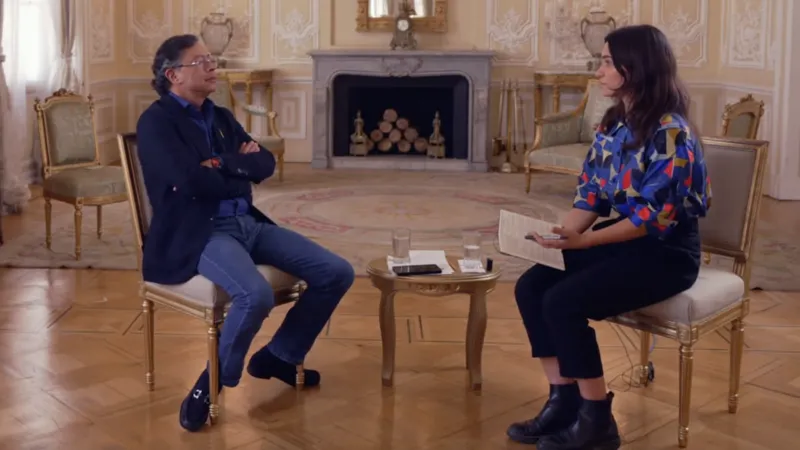
Colombia’s President Gustavo Petro has told the BBC that he believes there is now a “real threat” of US military action against Colombia.
Petro said the United States is treating other nations as part of a US “empire”. It comes after Trump threatened Colombia with military action. He said that the US risks transforming from “dominating the world” to becoming “isolated from the world.”
He also accused US Immigration and Customs Enforcement (ICE) agents of acting like “Nazi brigades”. Trump has significantly expanded ICE operations as part of what the administration says is a crackdown on crime and immigrants who illegally entered the US.
The BBC has approached the White House for comment.t
Following US strikes on Venezuela and the seizure of Nicolás Maduro, US President Donald Trump said a military operation targeting Colombia “sounds good”.
Trump has also repeatedly told Petro to “watch his ass”, remarks Petro strongly condemned.
Trump and Petro spoke by phone on Wednesday evening, after which Trump said he would meet hisColombian counterpart at the White House in the near future. Writing on his Truth Social platform late on Wednesday after the call, Trump described his conversation with Petro as a “Great Honour”. A Colombian official said at the time that the conversation had reflected a 180-degree shift in rhetoric “from both sides.”
But on Thursday, Petro’s tone suggested relations had not significantly improved.
He told the BBC the call lasted just under an hour, “most of it occupied by me,” and covered “drug trafficking Colombia” and Colombia’s view on Venezuela and “what is happening around Latin America regarding the United States.”
Petro strongly criticised recent US immigration enforcement, accusing ICE agents of operating like “Nazi brigades”.
President Trump has often blamed immigration for crime and trafficking in the US, using it to justify large-scale enforcement operations, and has accused countries like Colombia and Venezuela of not doing enough to tackle drug-trafficking.
Since returning to the White House, the US president has sent ICE agents to cities across the country. The agency enforces immigration laws and conducts investigations into undocumented immigration. It also plays a role in removing undocumented immigrants from the US.
The administration says it deported 605,000 people between 20 January and 10 December 2025. It also said 1.9 million immigrants had “voluntarily self-deported”, following an aggressive public awareness campaign encouraging people to leave the country on their own to avoid arrest or detention.
About 65,000 people were in ICE detention as of 30 November 2025, according to data obtained by the Transactional Records Access Clearinghouse’s immigration project, a compendium of government data from Syracuse University.
This week a US immigration agent shot dead a 37-year-old US citizen in the city of Minneapolis, sparking protests overnight.
Federal officials said the woman, Renee Nicole Good , had tried to run over immigration agents with her car but the city mayor, Democrat Jacob Frey, said the agent who shot her had acted recklessly and demanded agents leave the city.
Petro said ICE had “reached the point where it no longer only persecutes Latin Americans in the streets, which for us is an affront, but it also kills United States citizens.”
He added that if this continued, “instead of a United States dominating the world – an imperial dream – it is a United States isolated from the world. An empire was not built by being isolated from the world.”
Petro said the US has for “decades” treated other governments, particularly in Latin America, as an “empire” regardless of the law.
The two leaders have long been adversaries, frequently trading insults and tariff threats on social media.
Following the US’s military action in Venezuela, Petro accused Washington of seeking wars over “oil and coal,” adding that if the US had not pulled out of the Paris Agreement, where countries agreed to limit global temperature rising by reducing fossil fuel use, “there would be no wars, there would be a much more democratic and peaceful relationship with the world. And South America.”
“The Venezuelan issue is about this,” he said.
After Trump’s comments threatening military action in Colombia, demonstrations were held across the country in the name of sovereignty and democracy.
Petro told the BBC that Trump’s remarks amounted to a “real threat”, citing Colombia’s loss of territory such as Panama in the 20th century, and said “the prospect of removing [the threat] depends on the ongoing conversations.”
Asked how Colombia would defend itself in the event of a US attack, Petro said he would “prefer it to be about dialogue.” He said that “work is being done” on this.
But he added: “Colombia’s history shows how it has responded to large armies.”
“It’s not about confronting a large army with weapons we don’t have. We don’t even have anti-aircraft defenses. Instead, we rely on the masses, our mountains, and our jungles, as we always have.”
Petro confirmed he had also spoken to Delcy Rodríguez, Venezuela’s acting president and former vice president and oil minister, and invited her to Colombia.
He said Venezuela had “long been subject to interference by various intelligence agencies,” adding that while such agencies had permission to operate in Colombia, it was solely to combat drug trafficking. He denounced attempts at what he said were other “covert operations” in Colombia.
He did not directly comment when asked whether he feared the CIA could carry out covert operations similar to their actions in Venezuela in Colombia, or whether he feared his own government or inner circles may have informants.
Maduro was captured by the US army’s Delta Force, the military’s top counter-terrorism unit, after a CIA source in Venezuelan government helped the US track his location.
As the world’s largest producer of cocaine, Colombia is a major hub for the global drug trade. It also has significant oil reserves, as well as gold, silver, emeralds, platinum and coal.
The US has said it will control sales of Venezuelan oil “indefinitely” as it prepares to roll back restrictions on the country’s crude in global markets.
Speaking aboard Air Force One after the Venezuela operation, Trump described Petro as a “sick man who likes making cocaine and selling it to the United States,” adding: “He’s not going to be doing it for very long.”
Petro denied the claims, saying it has “always been proven that I’m not involved in that.”
“For 20 years I have been fighting against the drug cartels, at the cost of my family having to go into exile,” he said.
A former guerrilla, Petro has pursued a “total peace” strategy since taking office, prioritising dialogue with armed groups. Critics say the approach has been too soft, with cocaine production reaching record levels.
Asked what failed and whether he accepted responsibility, Petro said coca cultivation growth was slowing and described “two simultaneous approaches.”
“One, talking about peace with groups that are bandits. And the other, developing a military offensive against those who don’t want peace.”
He said negotiations were ongoing in southern Colombia, “where the greatest reduction in coca leaf cultivation has occurred” and “where the homicide rate in Colombia has fallen the most.” Cocaine is made from the leaves of the coca plant.
The policy of dialogue, he said, was intended to “de-escalate violence”, adding: “we’re not fools, we know who we’re negotiating with.”
(BBC)

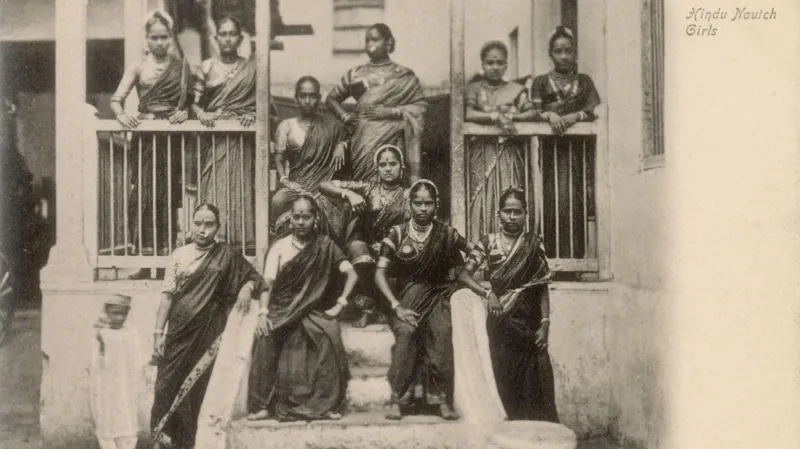
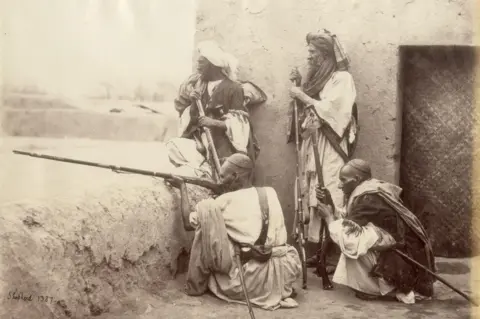
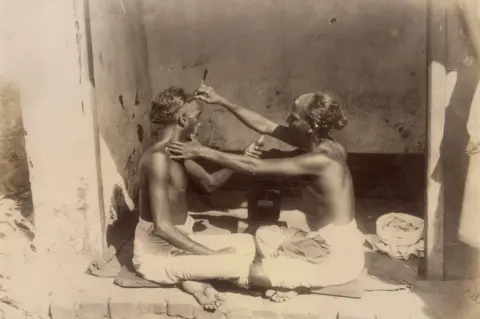
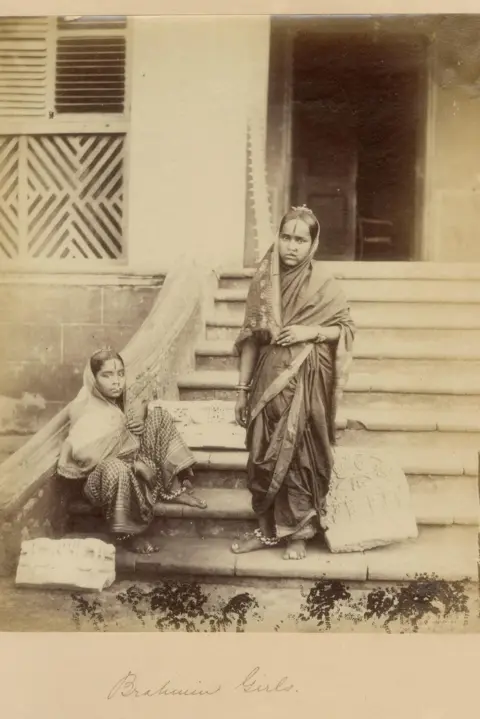
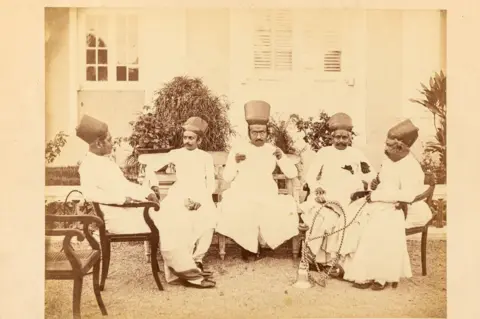
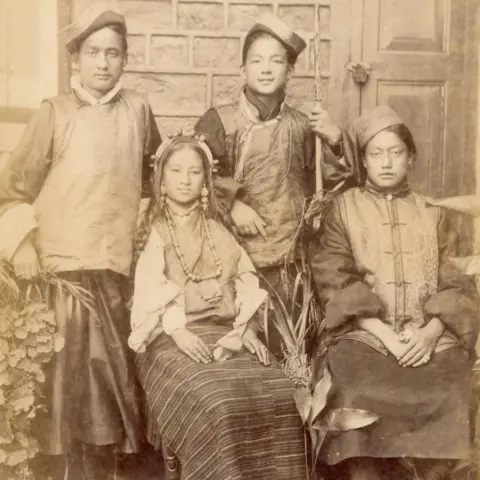
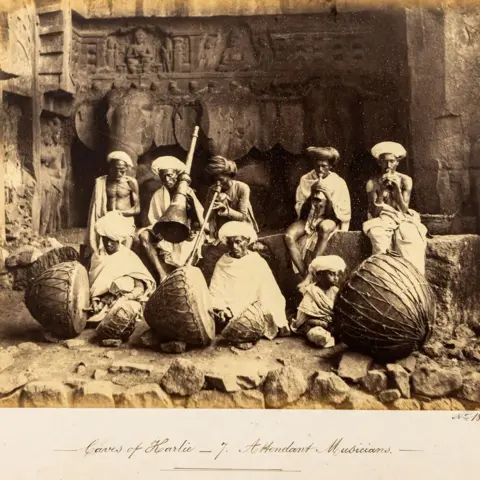
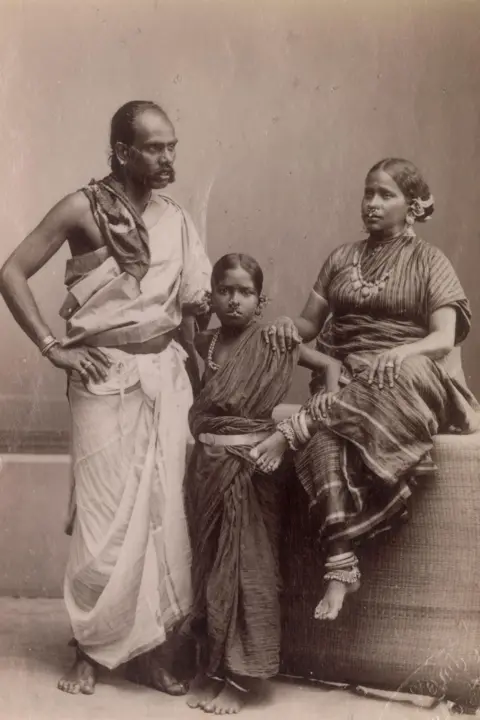
In the second half of the 19th Century, photography became one of the British Empire’s most persuasive instruments for knowing – and classifying – India.
A new exhibition – called Typecasting: Photographing the Peoples of India, 1855-1920, and organised by DAG, the Delhi-based art gallery – brings together nearly 200 rare photographs from a period when the camera was deployed to classify communities, fix identities and make India’s complex social differences legible to the colonial government.
Spanning 65 years, the exhibition maps an expansive human geography: from Lepcha and Bhutia communities in the north-east to Afridis in the north-west; from Todas in the Nilgiris to Parsi and Gujarati elites in western India.
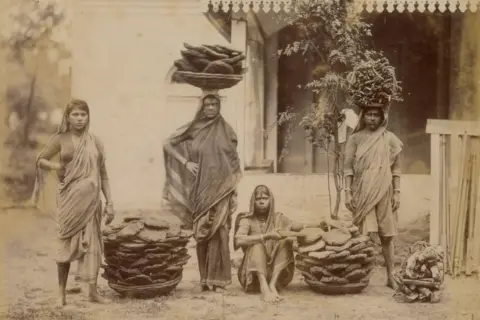
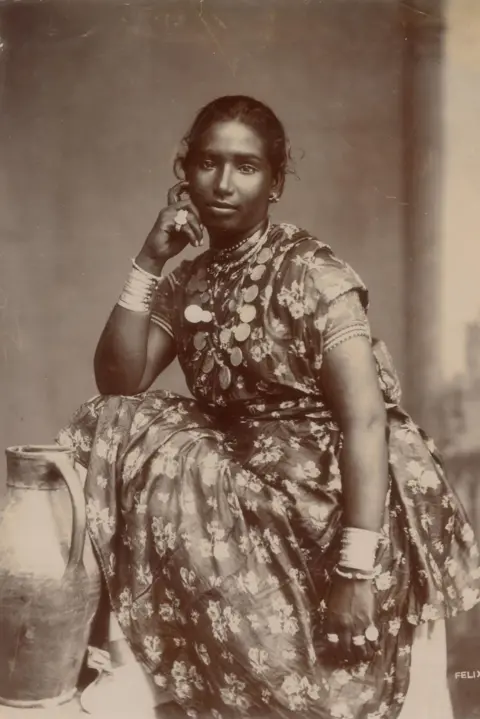
It also turns its gaze to those assigned to the lower rungs of the colonial social order – dancing girls, agricultural labourers, barbers and snake charmers.
These images did not merely document India’s diversity; they actively shaped it, translating fluid, lived realities into apparently stable and knowable “types”.
Curated by historian Sudeshna Guha, the exhibition centres on folios from The People of India, the influential eight-volume photographic survey published between 1868 and 1875. From this core, it expands outward to include albumen and silver-gelatin prints by photographers such as Samuel Bourne, Lala Deen Dayal, John Burke and the studio Shepherd & Robertson – practitioners whose images helped define the visual language of that time.
“Taken together, this material tells the history of ethnographic photography and its effect on the British administration and the Indian population, in a project which in size and depth has never before been seen in India,” says Ashish Anand, CEO of DAG.
Here’s a selection of images from the exhibition:
[BBC]
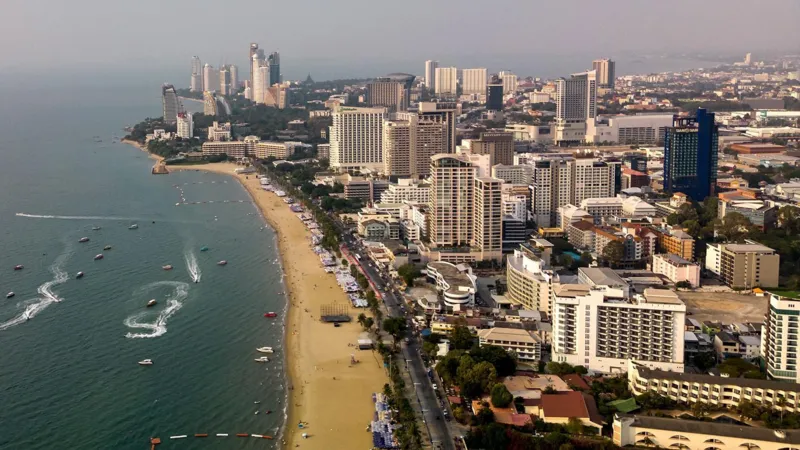
A co-founder of online fashion giant Asos died after falling from a high-rise apartment block in Thailand, police have said.
Quentin Griffiths has been named by Thai police as the man found dead on the ground in the eastern seaside city of Pattaya on 9 February.
A police investigator told the BBC Griffiths, a British passport holder, was by himself, his room was locked from the inside, and there was no trace of any break-ins at the time of the death. An autopsy did not reveal any evidence of foul play.
Griffiths co-founded Asos in 2000 and remained a significant shareholder after leaving the firm five years later.
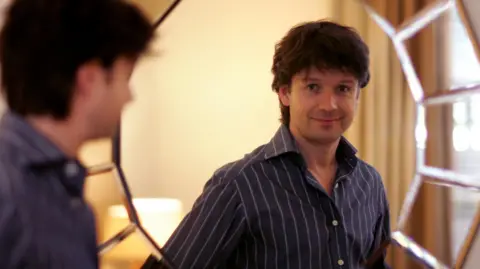
A Foreign Office spokesperson said: “We are supporting the family of a British national who has died in Thailand and are in contact with the local authorities.”
Police in Pattaya told the BBC Griffiths was found dead outside a luxury hotel where he had been staying in as a long-term resident in a suite on the 17th floor.
He was involved in two ongoing court cases that might have caused him stress, police also told the BBC.
Griffiths was separated from his second wife, a Thai national, and had reportedly been engaged in a legal dispute with her over a business they ran together, the BBC understands.
He co-founded Asos in London with Nick Robertson, Andrew Regan and Deborah Thorpe.
Its name originally stood for As Seen On Screen as it sold fashion inspired by clothing worn by TV and film stars.
It grew to become an online fashion marketplace stocking hundreds of brands as well as its own lines and at one time was valued at more than £6bn.
Its largest shareholders include Danish billionaire Anders Holch Povlsen – who owns Danish clothing giant Bestseller and Mike Ashley, owner of Frasers Group.
[BBC]
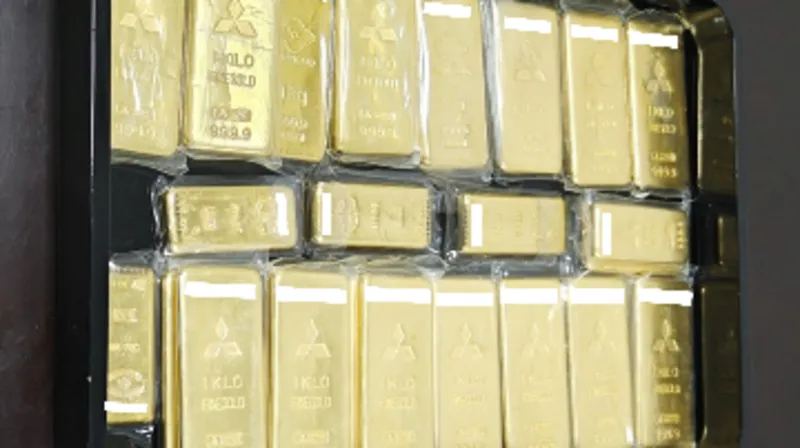
A Japanese city has received a hefty donation to help fix its ageing water system: 21kg (46lb) in gold bars.
The gold bars, worth an estimated 560 million yen ($3.6m; £2.7m), were given last November by a donor who wished to remain anonymous, Osaka Mayor Hideyuki Yokoyama told a press conference on Thursday.
Home to nearly three million people, Osaka is a commercial hub located in the Japan’s Kansai region and the country’s third-largest city.
But like many Japanese cities, Osaka’s water and sewage pipes are ageing – a growing cause for safety concern.
Osaka recorded more than 90 cases of water pipe leaks under its roads in the 2024 fiscal year, according to the city’s waterworks bureau.
“Tackling ageing water pipes requires a huge investment. So I have nothing but appreciation,” Yokoyama told reporters on Thursday, in response to a question about the huge gold donation.
Yokoyama said the amount was “staggering” and he was “lost for words”.
The same mystery donor had previously given 500,000 yen in cash for municipal waterworks, he added.
The city’s waterworks bureau said in a statement on Thursday that it was grateful for the gold donation and would put it to good use – including tackling the deterioration of water pipes.
More than 20% of Japan’s water pipes have passed their legal service life of 40 years, according to local media.
Sinkholes have also become increasingly common in Japanese cities, many of which have ageing sewage pipeline infrastructure.
Last year, a massive sinkhole in Saitama Prefecture swallowed the cab of a truck, killing its driver. The sinkhole was believed to have been caused by a ruptured sewage pipe.
That incident prompted Japanese authorities to step up efforts to replace corroded pipes across the country. But budget issues have stalled the progress of such pipe renewal works.
[BBC]

Advisory for Heavy Rain issued for the Central, Uva and Sabaragamuwa provinces and in the Ampara, Batticaloa and Polonnaruwa districts

Ranaweera’s four-for leads Sri Lanka to tense win over West Indies

How photography helped the British empire classify India

Atmospheric conditions are favorable for thundershowers over most parts of the island

Trump brings in new 10% tariff as Supreme Court rejects his global import taxes

Ravi demands full disclosure on Lanka’s usable reserves, flags forex leakages

‘Dates have the highest sugar content to fight Coronavirus’

Sunday Island 27 December – Headlines

#SundayIsland 17th December – Headlines

Sunday Island – 28th March

Sunday Island Headlines – 21 March

Sunday Island – 21st February – Headlines
-
 Life style7 days ago
Marriot new GM Suranga
-

 Business6 days ago
Ministry of Brands to launch Sri Lanka’s first off-price retail destination
-
 Features7 days ago
Monks’ march, in America and Sri Lanka
-
 Features7 days ago
The Rise of Takaichi
-
 Features7 days ago
Wetlands of Sri Lanka:
-
 News7 days ago
Thailand to recruit 10,000 Lankans under new labour pact
-
 News7 days ago
Massive Sangha confab to address alleged injustices against monks
-
 Sports2 days ago
Old and new at the SSC, just like Pakistan