
Foreign News
Colombia sees ‘real threat’ of US military action, president tells BBC


Colombia’s President Gustavo Petro has told the BBC that he believes there is now a “real threat” of US military action against Colombia.
Petro said the United States is treating other nations as part of a US “empire”. It comes after Trump threatened Colombia with military action. He said that the US risks transforming from “dominating the world” to becoming “isolated from the world.”
He also accused US Immigration and Customs Enforcement (ICE) agents of acting like “Nazi brigades”. Trump has significantly expanded ICE operations as part of what the administration says is a crackdown on crime and immigrants who illegally entered the US.
The BBC has approached the White House for comment.t
Following US strikes on Venezuela and the seizure of Nicolás Maduro, US President Donald Trump said a military operation targeting Colombia “sounds good”.
Trump has also repeatedly told Petro to “watch his ass”, remarks Petro strongly condemned.
Trump and Petro spoke by phone on Wednesday evening, after which Trump said he would meet hisColombian counterpart at the White House in the near future. Writing on his Truth Social platform late on Wednesday after the call, Trump described his conversation with Petro as a “Great Honour”. A Colombian official said at the time that the conversation had reflected a 180-degree shift in rhetoric “from both sides.”
But on Thursday, Petro’s tone suggested relations had not significantly improved.
He told the BBC the call lasted just under an hour, “most of it occupied by me,” and covered “drug trafficking Colombia” and Colombia’s view on Venezuela and “what is happening around Latin America regarding the United States.”
Petro strongly criticised recent US immigration enforcement, accusing ICE agents of operating like “Nazi brigades”.
President Trump has often blamed immigration for crime and trafficking in the US, using it to justify large-scale enforcement operations, and has accused countries like Colombia and Venezuela of not doing enough to tackle drug-trafficking.
Since returning to the White House, the US president has sent ICE agents to cities across the country. The agency enforces immigration laws and conducts investigations into undocumented immigration. It also plays a role in removing undocumented immigrants from the US.
The administration says it deported 605,000 people between 20 January and 10 December 2025. It also said 1.9 million immigrants had “voluntarily self-deported”, following an aggressive public awareness campaign encouraging people to leave the country on their own to avoid arrest or detention.
About 65,000 people were in ICE detention as of 30 November 2025, according to data obtained by the Transactional Records Access Clearinghouse’s immigration project, a compendium of government data from Syracuse University.
This week a US immigration agent shot dead a 37-year-old US citizen in the city of Minneapolis, sparking protests overnight.
Federal officials said the woman, Renee Nicole Good , had tried to run over immigration agents with her car but the city mayor, Democrat Jacob Frey, said the agent who shot her had acted recklessly and demanded agents leave the city.
Petro said ICE had “reached the point where it no longer only persecutes Latin Americans in the streets, which for us is an affront, but it also kills United States citizens.”
He added that if this continued, “instead of a United States dominating the world – an imperial dream – it is a United States isolated from the world. An empire was not built by being isolated from the world.”
Petro said the US has for “decades” treated other governments, particularly in Latin America, as an “empire” regardless of the law.
The two leaders have long been adversaries, frequently trading insults and tariff threats on social media.
Following the US’s military action in Venezuela, Petro accused Washington of seeking wars over “oil and coal,” adding that if the US had not pulled out of the Paris Agreement, where countries agreed to limit global temperature rising by reducing fossil fuel use, “there would be no wars, there would be a much more democratic and peaceful relationship with the world. And South America.”
“The Venezuelan issue is about this,” he said.
After Trump’s comments threatening military action in Colombia, demonstrations were held across the country in the name of sovereignty and democracy.
Petro told the BBC that Trump’s remarks amounted to a “real threat”, citing Colombia’s loss of territory such as Panama in the 20th century, and said “the prospect of removing [the threat] depends on the ongoing conversations.”
Asked how Colombia would defend itself in the event of a US attack, Petro said he would “prefer it to be about dialogue.” He said that “work is being done” on this.
But he added: “Colombia’s history shows how it has responded to large armies.”
“It’s not about confronting a large army with weapons we don’t have. We don’t even have anti-aircraft defenses. Instead, we rely on the masses, our mountains, and our jungles, as we always have.”
Petro confirmed he had also spoken to Delcy Rodríguez, Venezuela’s acting president and former vice president and oil minister, and invited her to Colombia.
He said Venezuela had “long been subject to interference by various intelligence agencies,” adding that while such agencies had permission to operate in Colombia, it was solely to combat drug trafficking. He denounced attempts at what he said were other “covert operations” in Colombia.
He did not directly comment when asked whether he feared the CIA could carry out covert operations similar to their actions in Venezuela in Colombia, or whether he feared his own government or inner circles may have informants.
Maduro was captured by the US army’s Delta Force, the military’s top counter-terrorism unit, after a CIA source in Venezuelan government helped the US track his location.
As the world’s largest producer of cocaine, Colombia is a major hub for the global drug trade. It also has significant oil reserves, as well as gold, silver, emeralds, platinum and coal.
The US has said it will control sales of Venezuelan oil “indefinitely” as it prepares to roll back restrictions on the country’s crude in global markets.
Speaking aboard Air Force One after the Venezuela operation, Trump described Petro as a “sick man who likes making cocaine and selling it to the United States,” adding: “He’s not going to be doing it for very long.”
Petro denied the claims, saying it has “always been proven that I’m not involved in that.”
“For 20 years I have been fighting against the drug cartels, at the cost of my family having to go into exile,” he said.
A former guerrilla, Petro has pursued a “total peace” strategy since taking office, prioritising dialogue with armed groups. Critics say the approach has been too soft, with cocaine production reaching record levels.
Asked what failed and whether he accepted responsibility, Petro said coca cultivation growth was slowing and described “two simultaneous approaches.”
“One, talking about peace with groups that are bandits. And the other, developing a military offensive against those who don’t want peace.”
He said negotiations were ongoing in southern Colombia, “where the greatest reduction in coca leaf cultivation has occurred” and “where the homicide rate in Colombia has fallen the most.” Cocaine is made from the leaves of the coca plant.
The policy of dialogue, he said, was intended to “de-escalate violence”, adding: “we’re not fools, we know who we’re negotiating with.”
(BBC)


The Philippine Coast Guard says it has recovered 41 bodies from the wreckage of a ferry that caught fire this week, bringing the total death toll to 76.
More than 130 people were on board the MV June Aster when the blaze erupted on Wednesday as it neared its destination at the tourist hotspot of Coron, after departing from Manila.
The coast guard said on Saturday the number of survivors remained 43, with many receiving treatment in hospital, but 13 people remain unaccounted for.
Recovery of bodies had been hampered due to toxic fumes and lingering heat, which meant authorities were unable to board until Friday.
Geronimo Tuvilla, an official for the Philippine Coast Guard, said the priority was identifying victims and determining the cause of the blaze.
Kristine Ablana, a tourism official in Coron, said relatives were being asked to help identify family members through personal items and DNA testing.
“Once someone is able to verify that this photo or these belongings are indeed those of their relative, they will be asked to provide a DNA sample,” she said.
Coast Guard spokesperson Commodore Noemie Cayabyab said the fire began in a cargo hold before spreading.
She said survivors had described hearing a loud explosion, “the appearance of smoke and then fire. It spread very quickly”. She added that those who had made it off the ship did not have time to put on lifejackets.
A survivor who was hauled to safety on a rescue boat told the BBC he had heard frantic cries onboard when the fire erupted, and was trampled by panicked people as he tried to escape.
The ferry, built in 2002, held valid safety certificates and passed an enforcement inspection in March, but investigators are looking into potential manifest discrepancies, cargo loading integrity, and crew emergency response protocols, the Palawan Daily reported.
The vessel was carrying 117 passengers and 17 crew members.
Atienza Interisland Ferries, the vessel’s operator, has pledged full co-operation with the inquiry.
[BBC]
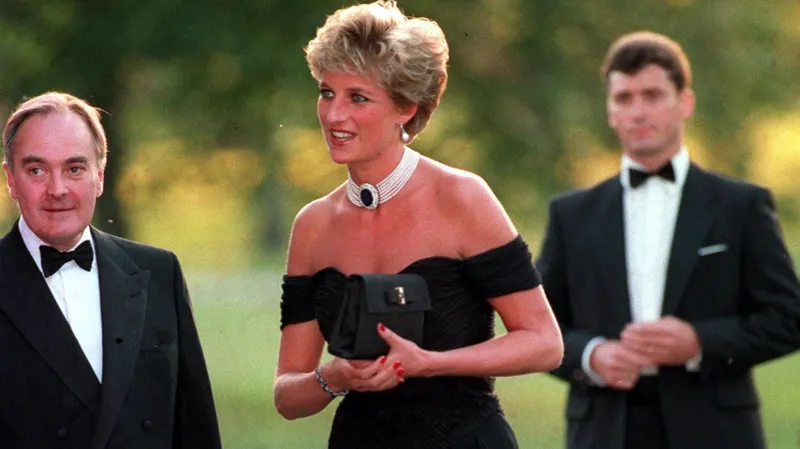
A dress worn by Princess Diana to a party in London hours after a documentary was televised in which the then-Prince Charles admitted to committing adultery during their marriage is going up for auction.
Her dramatic arrival at the Serpentine Gallery in 1994 in a custom-made black silk evening dress by designer Christina Stambolian became an iconic pop-culture moment.
The media dubbed her outfit the “revenge dress”.
Auction house Sotheby’s expects the dress to sell for up to £220,000 ($300,000) when it goes under the hammer on 9 December.
A press release from Sotheby’s said it is the first time the dress has been offered at auction since 1997, when the late princess sold 79 of her dresses to raise money for charities.
Morgane Halimi, Sotheby’s Global Head of Handbags and Fashion, said in a statement that Princess Diana “understood instinctively” that fashion can be a language in its own right.
“On her own terms, Princess Diana turned the dress into one of the most powerful messages she ever made, during one of the most scrutinised and emotionally charged episodes of her life,” Halimi said.
“She walked into a moment in which so much of her story was being told for her and, through what she chose to wear, reclaimed the narrative for herself.”

According to Sotheby’s, Anna Harvey, her stylist at the time, said Diana “wanted to look a million dollars”.
The princess made a last-minute wardrobe change for the fundraising dinner and chose the strapless evening dress by the Greek designer Christina Stambolian – which she accessorised with a royal jewel, a black clutch and black heels.
The vintage Jaguar XJ40 car that Diana arrived in at the event was sold at auction earlier this year for £66,250.
The revenge dress is expected to fetch a considerably higher price.
If it does, it will not be the first time an item from the princess’s wardrobe has sold for a significant sum.
Princess Diana’s sweater featuring a black sheep among rows of white ones was sold for £920,000 at an auction by Sotheby’s in New York in 2023.
[BBC]

A Pakistan Under-19 cricket team suddenly became the centre of focus when it was mistaken for a group of asylum seekers in Portsmouth. A group of protesters gathered outside the Marriott Hotel in Portsmouth after reports that asylum seekers were staying there. The situation had to be later diffused when it was ascertained that the hotel was hosting the Pakistan Under-19 team.
According to the Guardian, the situation became tense when a crowd gathered outside the Marriott hotel after reports that about 40 men who did not seem to be English arrived at the hotel. George Madgwick, a Reform councillor, called the hotel to mediate between the Pakistan Under-19 staff and the assembled crowd, following which the crowd dispersed.
“I spoke to the coach of the team, who was very understanding,” Madgwick told the Guardian. “I went out to the protesters and told them, ‘You’ve got it wrong guys, it’s a cricket club.’ They left within a couple of minutes. It was a massively unfortunate incident.
“From the perspective of the people of Portsmouth who are already on high alert, this was a coach from the same company which was turning up with about 40 foreign men.”
The ECB has been in touch with the Pakistan management following the incident and is reviewing security arrangements.
The Pakistan Under-19 team played a four-day game against England Under-19 in Arundel from September 2 to 5, which they lost by ten runs. The two teams faced off in a Youth ODI on September 9, with Pakistan winning by 177 runs. Pakistan’s senior men’s team are also playing the third and final Test against England at Edgbaston.
[Cricinfo]

Construction of Accident and Emergency unit at Mannar District General Hospital begins under President’s patronage

Special Cabinet Subcommittee and Officials’ Committee appointed to address El Niño Climate Impact meet

Showers about 75 mm are likely at some places in the Western, Sabaragamuwa, Central and Southern provinces

Brook, Buttler, Baker star as Sri Lanka slump to 119-run rout

Where is Gnanasara Thera?Police pass buck to court

Russian citizens in Lanka to vote in State Duma elections

‘Dates have the highest sugar content to fight Coronavirus’

Sunday Island 27 December – Headlines

#SundayIsland 17th December – Headlines

Sunday Island – 28th March

Sunday Island Headlines – 21 March

Sunday Island – 21st February – Headlines
-

 Sports6 days ago
DDS set to lose Test captaincy
-

 News6 days ago
Sri Lanka faces new grid challenge as rooftop solar surges: former CEB GM
-

 Latest News6 days ago
Shafali, Deepti power India into sixth T20 Asia Cup final
-

 News4 days ago
Gnanasara Thero absconding after SC ruling
-

 Latest News5 days ago
Sri Lanka thwart Fatima Sana challenge to secure Asia Cup final spot
-
 Features7 days ago
Lost for 90 years: Rare Goby resurfaces in Jaffna
-

 News5 days ago
Ammunition cache found in old Kandy bungalow
-

 Editorial6 days ago
A flight of fancy