
News
British Ayurveda Medical Council established in the UK

By Sujeeva Nivunhella in London
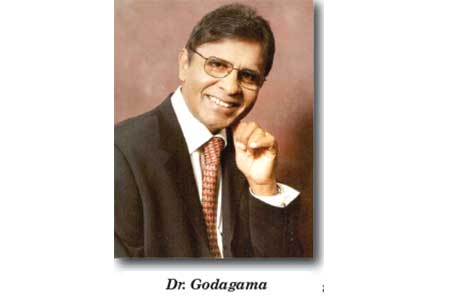
The untiring efforts of three Sri Lankan medical professionals saw the establishment of the British Ayurveda Medical Council in the United Kingdom recently.
Thanks to the initiative of Shantha Godagama, Mauroof Athique and Palitha Serasinghe, the project has now become a reality.
The Council has a ten-member expert advisory board chaired by Dr. Godagama, two professors, research scientists and three highly qualified Western medical specialists with a keen interest in Ayurveda.
Dr. Godagama said the British government set up three committees over the past 30 years, including a Parliamentary Select Committee on regulation of Ayurveda and the Prince of Wales Foundation of Integrated Health headed by Prince Charles himself, to draft a report to ascertain whether Ayurveda medicine can be included in the National Health Service.
The final government report submitted by Professor David Walker, Deputy Chief Medical Officer in the UK, highlighted the importance of a self-regulatory body to win public confidence and to provide safe and high quality service in the UK”, he said.
‘We are now one step closer to seeing Ayurveda in the National Health Service in the near future. There has been tremendous interest for Ayurveda treatment from the British public and more Western doctors are joining the College of Ayurveda as they are of the view that it is the way forward for the safe practice of medicine in treating diseases”, he further said.
He said that both the Sri Lankan and Indian High Commissions extended their support. He expressed his gratitude to Sri Lanka’s High Commissioner in London, Saroja Sirisena and the Trade Commissioner, Dr. Lakmini Mendis for their assistance.
Dr. Godagama is the founder president of the Ayurvedic Medical Association in the UK. He was the first-ever adviser on Ayurveda for the British government and worked for 15 years with the Medicines and Healthcare Regulatory Authority and was involved in licensing herbal medicinal products under new licensing law.
He has also worked closely with Prince Charles, who believes that Ayurveda can be a therapeutic modality available under the National Health Service soon.
Dr. Godagama has been awarded ‘Glory of India’ and ‘Bharat Gaurav Award’ as well as ‘Ayurveda Rattan’ from the House of Lords.
Dr. Athique, a graduate from the Colombo Ayurveda College, obtained postgraduate qualifications from Harvard University in the USA. Earlier, he worked as the Director of Nursing at University of Northampton.
Dr. Serasinghe has a postgraduate qualification from King’s College London and worked as a senior lecturer at Faculty of Ayurveda in Colombo.

By Shamindra Ferdinando
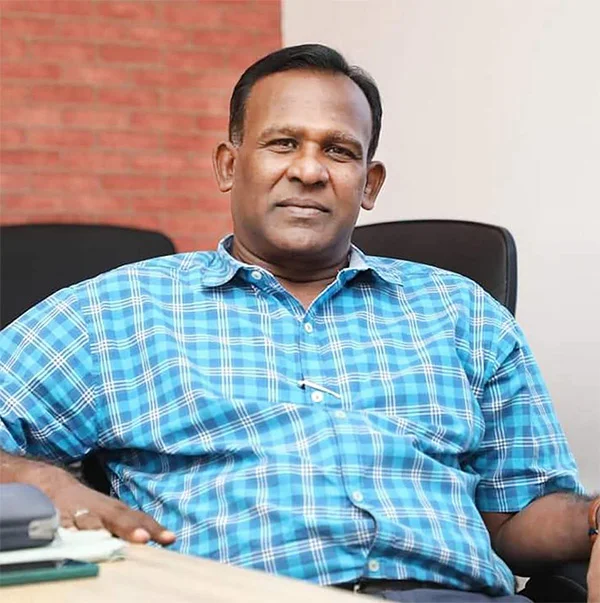
The use of low quality coal, over a period of time, had led to the developing crisis at the Lakvijaya Coal Power Plant (LVPP) at Norochcholai that compelled the boastful NPP government to implement power cuts, former Lanka Electricity Company (Private) Limited (LECO) Chairman Bandula Chandrasekera said yesterday.
The government imposed one-hour countrywide power cuts on 19 Oct.
Chandrasekera, now a consumer rights activist, warned that though the government declared the power cuts would be limited to three days, the situation could take a turn for the worse.
The top United Republican Front (URF) activist said so in response to the government’s claim that Saturday’s sudden drop in electricity generation at the country’s only coal-fired power plant hadn’t been caused by the quality issue of coal.
The former LEOCO Chief emphasised that the country was paying a very heavy price for the controversial procurement of low-quality coal for the 2025/2026 season.
“Procurement of low quality coal is not an allegation. It has been accepted by a seven-member committee, headed by K. L. R. C. Wijayasinghe, Additional Secretary, Energy Ministry, appointed by Parliament,” Chandrasekera said, pointing out that the government was trying to mislead the public into believing that the use of coal supplied by Trident Chemphar wasn’t the cause of the current power crisis.
The expert committee that investigated the coal scam had disclosed losses caused by substandard coal, Chandrasekera said, adding that the total losses/damages could be as much as Rs 20 bn.
Trouble erupted in Dec, 2025 when LVPP began using coal purchased from the new supplier, whose selection was challenged by the Auditor General in a special report submitted to Parliament, in April this year, he said.
Since the government entered into a deal with the Indian company, LVPP has so far received 19 ship loads of coal. An investigation conducted on the orders of the Public Utilities Commission of Sri Lanka (PUCSL) revealed that the use of low-quality coal had had a detrimental impact on the LVPP.
The Frontline Socialist Party (FSP) exposed the corrupt deal in Sept. 2025. The NPP run Parliament ignored the disclosure made by the JVP breakaway faction.
Chandrasekera said that the Committee asserted that it would cost approximately Rs 80 mn to restore the LVPP to the previous status. Responding to The Island queries, Chandrasekera emphasised the country couldn’t meet the power requirement unless the LVPP operates without hindrance. Those who had been, for whatever reason, switched to South African coal provided by the Indian supplier should be held accountable and punished, Chandrasekera said, recalling how the NPP parliamentary group defeated the no-confidence motion moved against the then Power Minister Kumara Jayakody, who later quit, as the enormity of the scam and its repercussions shook the government.
Chandrasekera said that the government couldn’t maintain services though the powers that be intended to meet the power deficit with the help of hydropower generated by the Victoria power station. The ex-official underscored the need to inquire into the failure of the authorities to implement the backup plan last Saturday. Had Victoria met the requirement, last Saturday’s countrywide power failure, that lasted from 11.43 am to 11 pm could have been averted, Chandrasekera said.
He also questioned the controversial government decision to disconnect solar power over the weekend as the absence of solar generation obviously aggravated the problem. Chandrasekera emphasised that the latest countrywide power outage exposed the government whose basic strategy was to blame everything on the Opposition.
“We sincerely hope the Presidential Commission inquiring into the coal scams also looks into the situation developing at LVPP due to the use of substandard coal. According to him, the loss caused by the recent outage was estimated to be around Rs 16 bn and the crisis could not be addressed by propaganda campaigns, especially on social media. But, if other factors, including the expenditure on hydro and thermal generation were taken into consideration, the losses could be as much as Rs 20 bn.
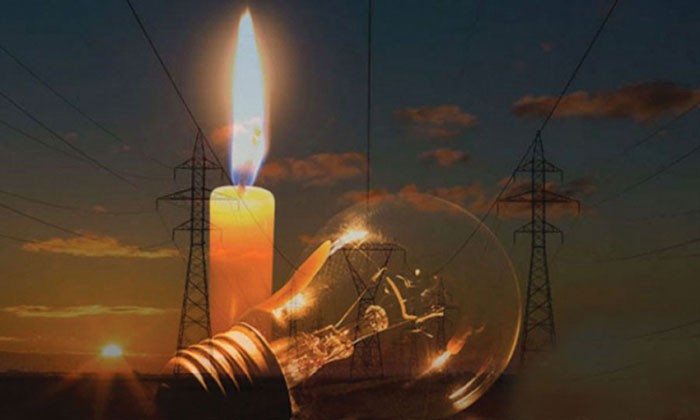
Power cuts continued across the country yesterday and are expected to continue today following the shutdown of all three generating units at the Lakvijaya Power Plant in Norochcholai.
The Public Utilities Commission of Sri Lanka (PUCSL) said approval had been granted on Monday (19) following a request by the National System Operator (NSO) to impose scheduled power cuts.
Accordingly, one-hour power cuts were scheduled between 4.30 p.m. and 9.00 p.m., with the country divided into four zones. Hospitals and locations providing essential services were exempted.
The three Norochcholai generating units remain out of operation following the countrywide power failure last Saturday, prompting the NSO to introduce daily power cuts to manage the available electricity supply.
NSO Chief Executive Officer Buddhika Samarasekara said the power cuts would be necessary yesterday and today (21).
By Shamindra Ferdinando
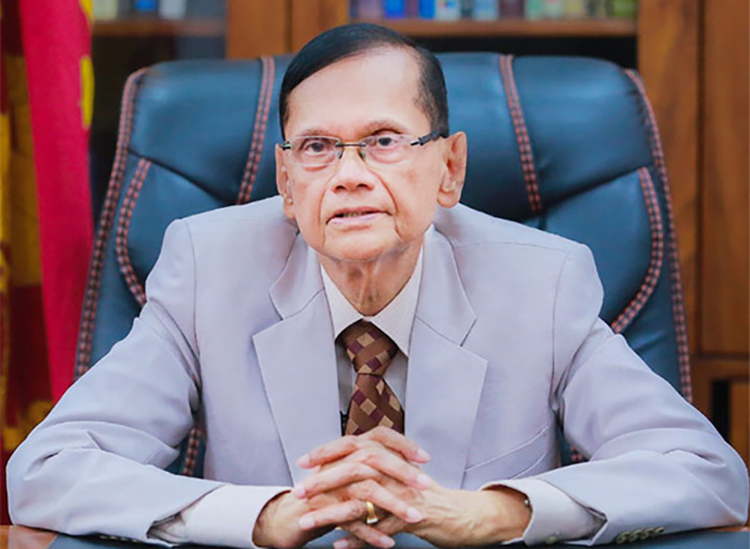
Prof. G. L. Peiris yesterday said he had not been concerned at all about being arrested when the Commission to Investigate Allegations of Bribery or Corruption (CIABOC) summoned him to record a statement regarding an ongoing investigation.
Addressing the media outside the CIABOC, the former External Affairs Minister emphasised that his family had never taken anything from people but contributed to their welfare. The internationally renowned academic said that he didn’t accept lucrative opportunities abroad but remained committed to do whatever possible for the public here.
The CIABOC questioned Prof. Peiris on the launch of the Shangri-La Hotel project here. The Convener of the Janathawadi Joint Opposition said that when the top management of the hotel got in touch with
him, he had brought the matter to the notice of the then President Mahinda Rajapaksa, who promptly gave the go ahead.
Shangri-La was opened in Nov. 2017 with the participation of the then President Maithripala Sirisena and Prime Minister Ranil Wickremesinghe.
Prof. Peiris said that he had been appointed External Affairs Minister nearly a year after the successful conclusion of the war against the LTTE in May 2009. Shangri-La, which owned over 100 hotels at that time, was keen to explore the possibility of opening a hotel here and the government had swiftly grabbed the opportunity. Referring to the opening of ITC Ratnadeepa, in late April 2024, Prof. Peiris explained the importance of foreign investment, particularly after the end of the 30-year war that caused massive devastation.
Responding to media queries, Prof. Peiris said that he strongly opposed efforts to silence political opponents but accepted the need to investigate waste, corruption and irregularities. “People shouldn’t be targeted over their political stand,” the ex-lawmaker said, adding that he as the Minister tasked with attracting such special investments worked in line with the overall government policy.

Showers above 100 mm are likely at some places in the Western, Sabaragamuwa, Central, North-western, Northern and Southern provinces and in Anuradhapura district.

Low-quality coal causes power cuts: Ex-LECO Chief

Power cuts continue

GL stresses importance of post-war Shangri-La investment after CIABOC questions him

Coal inquiry gets extension until 16 December

Dilshan, Hirupama named best athletes at All Island Schools Games Athletics Championships

‘Dates have the highest sugar content to fight Coronavirus’

Sunday Island 27 December – Headlines

#SundayIsland 17th December – Headlines

Sunday Island – 28th March

Sunday Island Headlines – 21 March

Sunday Island – 21st February – Headlines
-

 Features3 days ago
Kotahena:A Small Enclave, An Extraordinary Legacy
-
 News4 days ago
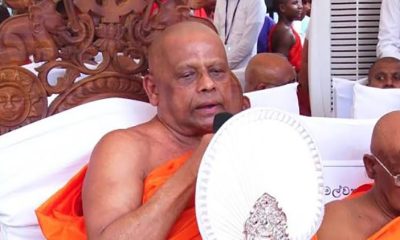
Asgiri Mahanayake calls for immediate release of Gnanasara Thera
-

 News3 days ago
Record 1,600 students take Russian Classical Ballet examination in Sri Lanka
-
 News6 days ago
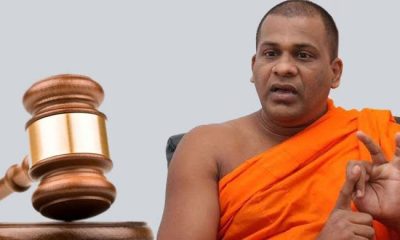
AC President recuses himself from hearing prison attire case pertaining to Gnanasara Thera
-
 News5 days ago
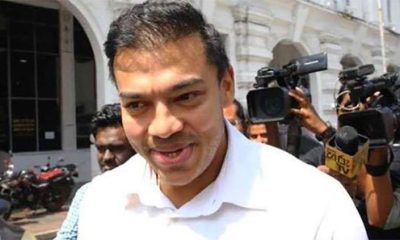
Naval officer testifies Yoshitha received Rs. 5.15 mn in salaries during SLN service
-
 News3 days ago
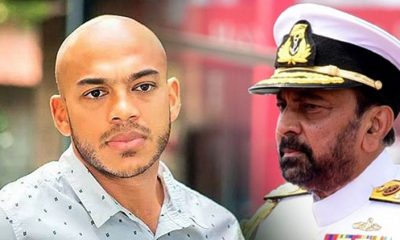
Karannagoda pushed for £24,536 for Yoshitha’s UK training, Court told
-

 Editorial5 days ago
Saving Anojan: Beyond Executioner’s Blade
-
 News6 days ago
CID informs Fort Magistrate’s Court investigation into money laundering case against Namal completed