
News
CEJ’s landmark legal battles reshape Sri Lanka’s environmental justice landscape

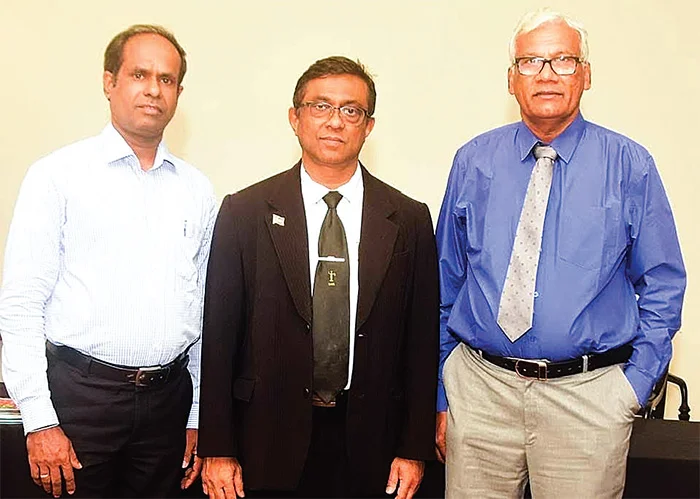
In a country where environmental destruction, political interference and weak enforcement have often overshadowed conservation efforts, the Centre for Environmental Justice (CEJ) has emerged as one of Sri Lanka’s most formidable legal defenders of nature.2
From the catastrophic MV X-Press Pearl Disaster to the destruction of the Wilpattu National Park ecosystem, CEJ has consistently used the courts to challenge environmental crimes, state negligence and corporate irresponsibility, securing several landmark judgments that have transformed the country’s environmental jurisprudence.
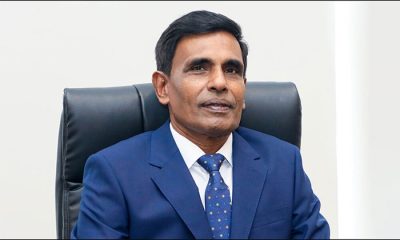
Speaking to The Island, CEJ Executive Director Dilena Pathragoda said these legal victories were not merely courtroom successes but historic interventions aimed at safeguarding the rights of future generations.
“Environmental litigation is not only about protecting forests, rivers or wildlife. It is fundamentally about protecting people, public health, livelihoods and the constitutional rights of future generations to live in a safe and healthy environment,” Pathragoda said.
Among the most consequential legal actions spearheaded by CEJ was the litigation surrounding the X-Press Pearl maritime disaster, regarded as Sri Lanka’s worst marine environmental catastrophe.
The Island, which was among the first newspapers to consistently highlight the gravity of the X-Press Pearl environmental disaster and its long-term ecological consequences, closely followed the legal battle that eventually resulted in a landmark compensation ruling.
The Singapore-flagged cargo vessel caught fire and sank off Sri Lanka’s western coast in 2021, releasing massive quantities of hazardous chemicals, microplastics and pollutants into the Indian Ocean, devastating marine ecosystems and fishing communities.
Pathragoda noted that the Supreme Court’s direction for compensation amounting to nearly USD 1 billion marked a turning point in Sri Lankan environmental law.
“For the first time, Sri Lanka robustly applied the internationally recognised ‘Polluter Pays Principle’ in a manner that sent a strong signal to multinational corporations and shipping operators that environmental destruction carries enormous legal and financial consequences,” he said.
Environmentalists say the ruling significantly strengthened accountability standards for transboundary pollution and maritime negligence.
Wilpattu judgment becomes watershed moment.
The CEJ-led litigation over the illegal clearing of forests adjoining Wilpattu National Park is widely regarded as one of the most powerful environmental rulings in South Asia.
The controversial clearing of the Marichchukaddi forest reserve for settlement purposes triggered widespread outrage among conservationists and scientists.
According to Pathragoda, the judgment established that politically motivated environmental destruction could not be justified under any circumstances.
“The court recognised that no authority, regardless of political power, has the right to destroy protected forests in violation of environmental laws,” he stressed.
In a landmark directive, the Court of Appeal ordered reforestation of the destroyed lands and held responsible state actors personally accountable for restoration efforts.
Legal analysts described the ruling as a major advancement in public trust doctrine and environmental accountability in Sri Lanka.
CEJ also played a central role in challenging controversial government attempts to legitimise the possession of illegally captured wild elephant calves through relaxed registration regulations.
The organisation argued that the gazette notification undermined wildlife protection laws and effectively rewarded wildlife traffickers.
“Sri Lanka’s elephants are part of our national heritage and ecological identity. Weakening protections for illegally captured elephants would have legitimised wildlife crime,” Pathragoda said.
The resulting court intervention became a significant legal safeguard for wildlife conservation and strengthened enforcement against illegal wildlife trade networks.
The deadly Meethotamulla Garbage Dump Collapse disaster also became a defining moment for environmental litigation in Sri Lanka.
CEJ had long warned authorities about the dangers posed by the uncontrolled garbage mountain in a densely populated residential area.
After the catastrophic collapse that killed dozens of residents, legal proceedings intensified scrutiny on failures in waste management governance.
Pathragoda said the tragedy demonstrated the devastating human cost of environmental negligence.
“Environmental justice is inseparable from social justice. Poor communities are often forced to bear the heaviest burden of pollution, waste and environmental mismanagement,” he observed.
The case helped reinforce the principle that improper waste disposal and environmental negligence can amount to violations of citizens’ fundamental rights.
CEJ also gained international attention through its legal challenge against the illegal importation of hazardous waste containers from the United Kingdom.
Hundreds of containers containing clinical and mixed waste had been brought into Sri Lanka in violation of international environmental conventions and domestic regulations.
The legal action ultimately compelled authorities to ensure the waste was returned to the country of origin.
“Sri Lanka cannot and must never become a dumping ground for toxic waste generated by wealthy nations,” Pathragoda asserted.
Environmental observers said the case strengthened Sri Lanka’s standing under the Basel Convention and reinforced national sovereignty in environmental governance.
Pathragoda believes Sri Lanka’s environmental litigation landscape is evolving rapidly, with courts increasingly willing to intervene where environmental harm threatens public welfare.
However, he warned that environmental destruction continues at an alarming pace due to weak enforcement, political patronage and short-term economic priorities.
“The real challenge is not the absence of laws. Sri Lanka already possesses many strong environmental statutes. The problem lies in implementation, political interference and the lack of accountability,” he said.
He added that CEJ would continue pursuing strategic litigation to protect forests, biodiversity, marine ecosystems and vulnerable communities.
“Every environmental case we file is ultimately about ensuring that future generations inherit a country that is still ecologically alive,” Pathragoda said.
He noted as climate risks intensify and ecological pressures mount, CEJ’s courtroom battles are increasingly being viewed not merely as legal contests, but as critical struggles over the environmental future of Sri Lanka itself.
By Ifham Nizam






The United States Navy’s USS Canberra (LCS 30) arrived at the port of Colombo for replenishment purposes on 12 Jun 26.
The visiting ship was welcomed by the Sri Lanka Navy
in compliance of naval traditions.
USS Canberra, a Littoral Combat Ship, is commanded by Commander J McLaughlin.

President Anura Kumara Dissanayake has instructed officials to complete work on the proposed Education Reform Policy Framework within one month.
The President issued these instructions during a discussion held on Wednesday (10 June) at the Presidential Secretariat on the education policy concept paper presented by the National Education Commission.
At the meeting, the Chairman of the National Education Commission stated that the current education reforms are being undertaken across several pillars: early childhood education, general education (primary, secondary and tertiary), higher education, vocational education, technological education, digital education and non-formal education.
Attention was also given to Sri Lanka’s education system to date, the various education reforms implemented over the years, and the social changes brought about by those reforms. The President instructed officials to review previous education reforms and to take into account the key lessons emerging from them when formulating the new education policy framework.
Members of the Education Commission noted that, since the establishment of the National Education Commission in 1991, education policies have been formulated from time to time. They pointed out that a significant portion of the 1997 policy had been applied to primary education.
It was further observed that although a policy was formulated in 2016 for general education, it was not implemented accordingly. Likewise, while an education policy was prepared in 2023, it was not adopted as the national education policy. Attention was also drawn to the fact that previous education reform efforts had often been based on programmes developed according to the functions of education-related institutions, rather than on a clearly established policy framework guiding educational change.
Describing the present moment as a significant opportunity, the President emphasised that education reforms should be implemented in a manner that does not disrupt the continuity of the existing education process. Rather than creating a separate policy framework and attempting to operate independently through it, reforms should be integrated carefully into the functioning education system.
The President stated that this represents a considerable challenge for the National Education Commission. He also noted that it would be inaccurate to conclude that either the previous education system or the current one is entirely successful or entirely unsuccessful.
He stressed the importance of carefully identifying both the strengths and weaknesses of the existing system. He further observed that it is not possible to determine in the short term whether an education reform is successful or unsuccessful, as its impact must be assessed over the long term through the changes it brings about in society. For this reason, he emphasised that education reforms require greater caution and consideration than many other types of reforms.
Discussions also focused on the need to conduct an in-depth review of anticipated future social challenges and to incorporate into the new policy framework the elements necessary for developing citizens suited to a changing society.
Special attention was given to the need for a policy framework to regulate all sectors of education that are currently not subject to proper regulation, as well as to the adverse consequences arising from the lack of regulation of private education.
The importance of conducting research into university education reform and the regulation of private universities was also discussed.
Among those present were Prime Minister Dr Harini Amarasuriya, Deputy Minister of Education and Higher Education Dr Madhura Seneviratne, Deputy Minister of Vocational Education Nalin Hewage, Secretary to the President Dr Nandika Sanath Kumanayake, Senior Additional Secretary to the President Kapila Janaka Bandara, Secretary to the Ministry of Education, Higher Education and Vocational Education Nalaka Kaluwewa, Chairman of the National Education Commission Professor A. Sarath Ananda, and other members of the National Education Commission.
(PMD)

The Cabinet of Ministers has approved the appointment of a Committee, chaired by Senior Presidential Advisor on Digital Economy Dr. Hans Wijayasuriya, to conduct a strategic review and restructuring of SriLankan Airlines.
The other members of the committee are as follows:
• Senior Presidential Economic Advisor Duminda Hulangamuwa
• Financial and corporate strategy expert Deshal De Mel
• Transaction and investment banking, mergers and acquisitions expert Dumith Fernando
• The Secretary to the Ministry of Finance or his Representative
• The Secretary to the Ministry of Transport, Highways and Urban Development / a representative of the Civil Aviation Authority
• The Chairman of SriLankan Airlines
• Legal experts with specialised knowledge in corporate, aviation and public law
• Aviation industry experts to be appointed
The Government has recognised the urgent priority of undertaking a comprehensive strategic review of SriLankan Airlines, taking into account the broader macroeconomic context.
The main objective of this exercise is to establish a financially sustainable and commercially efficient national carrier, while reducing the long-term fiscal burden on the Government.
Accordingly, it has been deemed appropriate to establish a dedicated committee to carry out the strategic review and restructuring process in collaboration with the International Finance Corporation (IFC), which is serving as the Transaction Advisor.
The committee will be responsible for:
• Conducting an independent review and assessment of the airline’s strategic direction and future course of action
• Recommending restructuring requirements and possible restructuring models
• Evaluating specific strategic options and identifying the most suitable course of action aligned with the Government’s overall objectives
• Providing oversight, guidance and support for the implementation of the selected strategy and execution framework determined by the Government
The committee will function for the duration of the strategic review and restructuring process, or until it is formally dissolved by the Government of Sri Lanka.
(PMD)

USS Canberra makes port call in Colombo

Complete the Proposed Education Reform Policy Framework Within One Month – President

Committee appointed for restructuring SriLankan Airlines

Kane Williamson retires from international cricket

Jailed South Korea ex-president gets 30 more years for sending drones into North

Holder, Joseph set up victory as West Indies go 1-0 up against Sri Lanka

‘Dates have the highest sugar content to fight Coronavirus’

Sunday Island 27 December – Headlines

#SundayIsland 17th December – Headlines

Sunday Island – 28th March

Sunday Island Headlines – 21 March

Sunday Island – 21st February – Headlines
-

 News6 days ago
Women’s T20 World Cup 2026 warm-up: Chamari Athapaththu’s 94 helps Sri Lanka beat Pakistan
-

 News6 days ago
Lankan-Canadian inducted to Toronto Sports Hall of Fame
-

 News7 days ago
Asst. Manager, security officer arrested over Rs 30 mn snatch at Horana PB branch
-

 Editorial5 days ago
Probe Sallay’s complaint
-
 News3 days ago
Local firms move millions of dollars overseas for phantom imports: Govt.
-

 Editorial6 days ago
Prez in the dock
-

 Features6 days ago
Entering MIT for my Ph.D program, coping with harsh Boston winter and breasting the tape
-

 News7 days ago
No blanket ban on musical performances; only those promoting LTTE