
Midweek Review
B’caloa Tigers’ 2004 shock revolt in retrospect


Pilleyan, a key element in that drama now arrested for political expediency?
The LTTE killed two Karuna loyalists on July 15, 2004 in the Batticaloa Prison. The dead included Satchi Master. The killer was an LTTEer serving a short sentence for jewellery theft and assault. The killings in the Batticaloa Prison caused anxiety among senior government officials. On Aug. 24, 2004, an LTTEer shot dead another Karuna loyalist, P. Jayakumar, in the Akkaraipattu Magistrate’s Court. A jail guard and a court clerk sustained minor injuries. The police arrested Jayakumar, along with another LTTE dissident, Saravanamuthu Shanthakumar, at a road block, at Akkaraipattu, on May 19th, 2004. They were in possession of a pistol, one hand grenade and 15 rounds of ammunition. Shanthakumar was killed on July 15, 2004 at the Batticaloa Prison along with Satchi Master.
Against the backdrop of one-time LTTEer Sivanesathurai Chandrakanthan, alias Pilleyan’s arrest on April 08, 2025 and subsequent detention under Prevention of Terrorism Act (PTA) over Eastern University Vice Chancellor Prof. S. Raveendranath’s disappearance on Dec. 15, 2006, whose life was actually under threat from the TIGERS several years after Karuna and Pilleyan broke away from it, various interested parties started commenting on the role played/atrocities perpetrated by Pilleyan and Vinayagamoorthy Muralitharan, aka Karuna Amman, during the conflict, and after.
Both Karuna and Pilleyan entered mainstream politics before the successful conclusion of the war in May 2009. Pilleyan is the current leader of TMVP (Tamil Makkal Viduthalai Pulikal).
In a way it is a pity that the police are now trying to pin Pilleyan for the disappearance of Prof Raveendranath, obviously to please the current political masters.
Comments included their role in LTTE terrorism and what they did after switching their allegiance to the government in March 2004. Let me stress that they daringly rebelled against the LTTE during Ranil Wickremesinghe’s tenure as the Prime Minister. The UNP has repeatedly claimed the credit for the unprecedented schism in what was considered a monolithic terror organisation and some asserted that the LTTE engineered Wickremesinghe’s defeat at the 2005 presidential election to avenge the catastrophic split.
Pilleyan’s arrest caused a political storm with his counsel Udaya Gammanpila alleging that an attempt was being made to compel his client to confess complicity in the 2019 Easter Sunday suicide attacks. Pivithuru Hela Urumaya (PHU) leader and former Minister Gammanpila is no stranger to controversy, but he has remained unscathed when it comes to his integrity.
In spite of vindictive attacks on him, Attorney-at-Law Gammanpila declared that nothing could be as ridiculous as accusing Pilleyan, who had been detained at the Batticaloa Prison for a period of five years (Oct. 11, 2015 to Nov. 24, 2020) of arranging National Thowheed Jaamaath (NTJ) to bomb churches and hotels on April 21, 2019. Having granted bail to Pilleyan and four others held in connection with the Christmas Day, 2005, assassination of TNA MP Joseph Pararajasingham on two personal sureties of Rs. 100,000/- each, the Batticaloa High Court acquitted and released them on January 13, 2021.
It would be pertinent to examine the devastating split caused by Karuna in March 2003 and its impact on the Eelam War IV (2006 August to May 2009).
Karuna’s move
Having received information that ‘Colonel’ Karuna decamped, the Kilinochchi-based leadership acted swiftly and decisively to neutralise the impending threat. The LTTE planned to take hold of both Karuna Amman, responsible for Ampara-Batticaloa sector, and his colleague, Sivasubramanium Varadanthan, aka ‘Colonel’ Paduman, in charge of the neighbouring Trincomalee District, to Kilinochchi. The Kilinochchi-based leadership, or Vanni leadership, wanted to ensure that those deployed under the command of Karuna and Paduman remaind loyal to the organisation. Both Karuna and Paduman had held the rank of ‘Colonel’ at that time, though Karuna was in the limelight due to his involvement in negotiations with the UNF government.
The Kilinochchi command cleverly used the Defence Ministry and SCOPP (Secretariat for Coordinating Peace Process) officials to arrange for an SLAF chopper to fly Karuna Amman, along with Paduman, to Kilinochchi. SCOPP records prove that on the authorisation of the Defence Ministry, it directed the SLAF to pick Paduman from Trincomalee and then touch down at a pre-arranged location in the Batticaloa District, on March 2, 2004, to take on board Karuna.
Fearing that he would have to face a firing squad in Kilinochchi, Karuna declined to join Paduman. Instead, he set in motion a strategy, which finally debilitated the LTTE’s conventional fighting capability. The writer disclosed the LTTE’s counter-move in a Sunday Island report headlined ‘Prabhakaran plotted Karuna capture’ in its March 28, 2004, edition.
Both Karuna and Paduman, at that time, confirmed the LTTE using SCOPP/ SLAF to arrange their transfer from the East to Kilinochchi.
The UNP and the Norwegians never bothered to raise the issue with the LTTE at that time. The Defence Ministry continued to provide chopper rides to the LTTE and did everything possible to appease the outfit, even at the expense of national security.
Norwegian peace facilitator and the Sri Lanka Monitoring Mission (SLMM), too, had been aware of the LTTE request for an SLAF chopper ride for top Tigers in the East. Had Karuna got into that chopper and ended up in a secret LTTE detention camp or executed, Eelam War IV would have taken a different course.
The Vanni leadership used Paduman, on several occasions, to counter reports of a debilitating split in the LTTE. The LTTE never allowed Paduman to leave the Vanni throughout Eelam War IV. Paduman surrendered on May 15, 2009, four days before troops killed LTTE leader Velupillai Prabhakaran, on the banks of the Nanthikadal lagoon.
Karuna caused the split just over a year after the LTTE quit the negotiating table. President CBK, PM Wickremesinghe, and the co-chairs of the peace process, agreed that the LTTE should be allowed to deal with the situation. They allowed the situation to develop into a bloody confrontation. They failed to realise that Karuna’s revolt caused irreparable damage to the organisation by dividing the LTTE’s fighting cadre on regional lines. The crisis denied the LTTE recruitment in the Batticaloa and Ampara sectors, while its operations in the Trincomalee District, too, experienced difficulties due to the detention of ‘Colonel’ Paduman, the senior man in charge of the area. ‘Colonel’ Paduman, too, was perceived as a threat due to his close association with Karuna.
Karuna acted swiftly to ensure his protection and that of the eastern cadres. The well-proven battlefield strategist felt that his security, as well as the safety of the Batticaloa fighting cadre, depended on an understanding with the Sri Lankan military. Karuna pushed for a separate agreement on the lines of the Norwegian arranged CFA between the GoSL and the LTTE in February 2002.
The Island dealt with Karuna’s move in an exclusive headlined ‘Rebel Karuna wants separate deal with government’ in the March 5, 2004 issue, which was based on information provided by Varathan, an aide to Karuna. The then Army Chief, Lieutenant General Lionel Balagalle and DIG Nimal Lewke confirmed what Varathan had to say on behalf of Karuna.
Karuna offered to negotiate a separate ceasefire in the Ampara-Batticaloa sector, though both the Norwegians and the government promptly rejected the move, while reiterating their commitment to the CFA. But, an influential section, within the establishment, supported Karuna’s move. Varathan alleged that a wave of killings in the Eastern Province, in the wake of the CFA, and a demand for 1,000 more cadres from the Batticaloa-Ampara sector for deployment in the Northern Province, too, had contributed to Karuna’s decision to break ranks.
Wobbling goverment
An unprecedented crisis caused by Karuna sent shock waves through the LTTE and its supporters. Among the affected parties were the TNA and the Tamil Diaspora. The LTTE struggled to contain the developing crisis. In spite of specific government orders issued to the Army not to intervene, at certain levels the military cooperated with Karuna.
Karuna wanted the Army to prevent a group of senior cadres, who had been under his overall command, from crossing the entry/exit point at Omanthai, north of Vavuniya, back to the Vanni. The LTTE dissident also urged the Army to facilitate an operation to help his men, deployed in the Northern Province, to return through Army lines on the night of March 3, 2004. The government prohibited the Army from supporting Karuna’s efforts, hence a group of senior cadres, including ‘Colonel” T. Ramesh and their families, crossed the entry/exit point. Immediately after their arrival in Kilinochchi, ‘Colonel’ Ramesh was declared as Karuna’s successor.
Undaunted by the government’s refusal to back his revolt against, what Karuna called, the treacherous Kilinochchi leadership, he ordered public protests in Batticaloa. The first of a series of protests was held at Kiran, Karuna’s home town, where a crowd of over 2,000 people gathered in support of Karuna. Some of them set fire to effigies of Prabhakaran and Ramesh, while Karuna reiterated his demand for a separate CFA with the government. Much to the glee of the LTTE and the Norwegians, the government rejected Karuna’s call for cooperation out of hand. But, the military continued to extend support to Karuna.
In spite of the LTTE’ pull-out from negotiations in April 2003, the government reiterated its commitment to a non-existent peace process thereby bending backwards to please the LTTE and the so-called peace facilitator with its own ultimate agenda coinciding with those of the LTTE.
The LTTE ordered the Tamil media not to provide space for the rebellious group. No one dared challenge the LTTE, though Karuna, too, exerted pressure on the media. Undergraduates from the Northern Province, studying at the Eastern University at Vantharamoolai ,returned to their villages amidst rising tension.
Regardless of the government directive that the military kept its distance from the rebel faction, an influential section of those in the military, who were earlier deployed in clandestine operations behind enemy lines, threw their weight behind the former LTTE field commander.
Batticaloa’s hostility towards the LTTE increased after an LTTE operative shot dead eight Karuna loyalists, including Kuheneshan, widely believed to be a high ranker among the renegade group, at Crystal Terrace housing scheme, Kottawa, on July 25, 2004. They were slain in their sleep
Batticaloa Tamils defied an LTTE directive prohibiting public participation at the funerals of the three Karuna loyalists killed at Kottawa. Several hundred people paid their last respects to Pakyam Amarasevan, alias Tehvan, of Main Street, Kommathurai, Chennkalady, Ponnathurai Thurainadan alias Ruban of the same address, and Kandiah Annandakumar of Kattankudy. The LTTE distributed leaflets warning the public of dire consequences if they attended, what they called, traitors’ funeral. The LTTE made an attempt to prevent public participation, having failed to dissuade families of the victims from bringing the bodies to Batticaloa. Families, living in military held areas, accepted the bodies, whereas those living in the LTTE-controlled region had no option but to accept the directive.
It would be important to examine the circumstances under which the LTTE hunted down those given refuge at the Crystal Terrace housing scheme. They had moved in on July 13, 2004, and were in the process of trying to obtain passports to leave the country. The police quoted a neighbour as having said he heard gunshots around 3.30 a.m. As people used to light crackers to scare monkeys away, he had not taken much notice, he said.
In fact, the first indication of the LTTE operation, the biggest directed against the Karuna faction in Colombo, since the March 2004 split, came to light after the military intercepted a conversation between two LTTE personnel. Although they discussed a successful hit in Colombo, there was no clue as regards the location. The conversation revealed that those involved in the operation had reached Karuna’s successor, ‘Colonel’ Thambirajah Ramesh based in the Batticaloa district. The Colombo police took about four hours to locate the scene of the massacre.
Impact on CFA
The crisis created by Karuna quickly engulfed the entire CFA process. Those trying to save the CFA soon realised that they were fighting a losing battle. They understood Karuna’s action had caused irreparable damage and nothing could resurrect the Norwegian initiative.
The SLMM (Norway led Sri Lanka monitoring mission) suspended the monitoring process in areas under Karuna’s control. Overnight, the Northern and Eastern Provinces were divided into three sectors, under the control of the GoSL, the LTTE and the breakaway LTTE faction. The Norwegians and the SLMM rejected Karuna’s overtures to have a separate CFA negotiated between the breakaway faction and the GoSL. Karuna also emphasised that the LTTE should recognise that the Batticaloa-Ampara sector was outside its purview. UNICEF and the UNHCR, too, pulled out of Karuna’s territory.
Today only a few remember the dicey situation the country experienced at thatime.
The SLMM also turned down an SLA request to arrange for a meeting between the Army and Karuna. In spite of the Army chief, Lt. Gen. Balagalle, who held the post of the Chief of Defence Staff, personally pushing for a meeting, which he felt could help ease tensions, the SLMM refused to comply. The LTTE insisted that there shouldn’t be any interaction whatsoever between the SLMM and the breakaway faction. Erik Solheim ruled out a Norwegian intervention, thereby effectively ending any sort of mediation effort.
In a desperate bid to settle the crisis, the UK stepped in. The UK sent its top diplomat in Colombo, Steven Evans, along with its Defence Attaché, Lt. Col. Mark Weldon, to find a way out.
Efforts to isolate Karuna failed. Premier Wickremesinghe compelled Ali Zarheer Moulana to resign his parliamentary seat after the disclosure of his role in facilitating Karuna to leave the Batticaloa district. Before that, the battlefield tactician quickly won over the confidence of the Tamil-speaking people in the region. He took advantage of the situation by offering to discuss long standing grievances of the public. Then General Officer Commanding (GoC) the Army’s 23 Division, headquartered at Welikanda, Brigadier Vajira Wijegunawardene, recalled how Karuna moved swiftly to consolidate his power in areas under his control. Karuna offered to discuss the forcible takeover of land by the LTTE in the east. Soon, the UNP and the TNA realised that the crisis was having a debilitating impact on their campaign for the April 2, 2004 parliamentary polls. In fact, Premier Wickremesinghe had to avoid Batticaloa during campaigning in the East as the Defence Ministry couldn’t guarantee his security.
Vanni move on East
Under the noses of the Norwegians, the LTTE moved cadres to beef up its strength in the Batticaloa District to take on Karuna. The SLMM and the government facilitated the transfer of LTTE cadres from the North to the East in the run-up to the parliamentary polls. The CFA permitted transfers, though there had been restrictions as regards the number of personnel. The LTTE overcame the problem by sending groups in small batches across Army controlled entry and exit points at Omanthai and Uliyankulam. Although the Army had managed to detect some of those entering the East illegally, it couldn’t thwart the LTTE plans. Then the LTTE humiliated the government by launching a series of sea landings on the night of April 9, 2004 to wipe out the breakaway group. The LTTE operation had got underway a few hours after the service commanders arrived at Trincomalee. In spite of the Defence portfolio being under her control, President Kumaratunga did nothing, while the Prime Minister and the Norwegians looked the other way. A confident LTTE leadership told the government that it intended to use sea routes to mount an operation targeting Karuna. The government was told to keep the Navy out of the LTTE’s way. The government gave in to LTTE demands. Following urgent consultations in Colombo between the military and the President, the top brass summoned a meeting at the Batticaloa Brigade Headquarters, where senior officers, in charge of the region, were told to keep out of the fight.
After Karuna’s decision to give up the fight on April 9, 2004, when the LTTE confronted his cadres on the banks of the Verugal River, many believed that Prabhakaran’s erstwhile friend wouldn’t survive.
Karuna’s decision has been influenced by the realisation that the sea borne assault was led by Batticaloa cadres, the majority of those who had fought under him. Had Karuna engaged them on the banks of the Verugal River, there would have been many casualties. Instead of fighting, Karuna ordered his men to leave the battlefield and return to their villages, while he fled Batticaloa with the help of UNP National List MP Ali Zaheer Moulana. Until Moulana acknowledged his role in Karuna’s escape, the UNP, a section of the medi, and even the Norwegians, blamed the Directorate of Military Intelligence (DMI) for helping Karuna escape. Once the UNP had established Moulana’s involvement, PM Wickremesinghe demanded his resignation. He swiftly complied. Moulana sought protection abroad. After years in the US, he returned to the country to pledge his allegiance to President Rajapaksa.
Karuna loyalists killed five LTTE cadres, including ‘Lt. Colonel’ Neelan, the deputy head of the Batticaloa District Intelligence outfit before fleeing the area. A furious Kilinochchi leadership vowed to hit back wherever Karuna and his top men took refuge.
A spate of killings undermined SLMM efforts to restore normalcy in the Batticaloa-Ampara sector, where unidentified gunmen killed 10 LTTE personnel, in three separate incidents on April 24, May 2 and May 6, 2004. The LTTE accused the DMI of carrying out the killings, a charge vehemently denied by the DMI. The LTTE hit back. An LTTE operative shot dead Lance Corporal Wasantha Liyanage. He was shot through the head inside a private bus approaching Batticaloa town on May 9, 2004. The bus was coming from Chenkaladi.
The LTTE struck again on May 19, 2004, outside the Batticaloa hospital. Reserve police constable, Dassanayake (32658) of police intelligence shot through his head in broad daylight. The gunman walked out of the nearby post office and shot the policeman before walking away.
In spite of a change of government in April, 2004, the UPFA’s response to the LTTE, too, remained the same.
But the military responded to the LTTE threat by stepping up clandestine action, particularly in the East. A growing relationship, mutually beneficial to the military and the breakaway LTTE faction, gradually undermined the LTTE in the Eastern Province. By the time Eelam War IV erupted in Aug 2006, the LTTE had suffered a debilitating setback in the East.
By Shamindra Ferdinando


CC in dilemma over filling impending vacancies
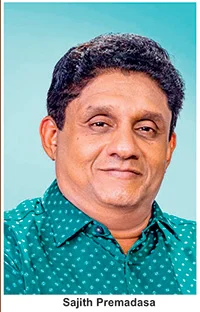
Sajith Premadasa
Amidst a simmering row over the controversial move to have Deshabandu Tennakoon as the IGP at the time of crucial presidential election, Opposition Leader Sajith Premadasa alleged: “The Speaker sent a letter to the President, recommending the appointment of Deshabandu Tennakoon as IGP. He distorted the Constitutional Council ruling by interpreting the two abstaining votes of civil society members as votes against Deshabandu and used his casting vote to recommend Deshabandu as the Constitutional Council decision. It is on the basis of the Speaker’s letter that the President made the appointment. The Speaker has blatantly violated the Constitution
.”
Speculation is rife about a possible attempt by the ruling National People’s Power (NPP) to take control of the 10-member Constitutional Council (CC). The only way to take command of the CC is to appoint those willing to pursue the NPP agenda as civil society representatives.
Against the backdrop of the NPP’s failure to obtain CC’s approval to finalise the appointment of the Auditor General, the government seems hell-bent on taking control of it. Civil society representatives, namely Dr. Prathap Ramanujam, Dr. (Mrs.) Dilkushi Anula Wijesundere and Dr. (Mrs.) Weligama Vidana Arachchige Dinesha Samararatne, whose tenure is coming to an end in January, blocked President Anura Kumara Dissanayake’s nominee receiving the AG’s position. They took a courageous stand in the greater interest of the nation.
Chulantha Wickramaratne, who served as AG for a period of six years, retired in April 2025. Following his retirement, President Anura Kumara Dissanayake first nominated H.T.P. Chandana, an audit officer at the Ceylon Petroleum Corporation. The CC rejected the nomination. Subsequently, President Dissanayake appointed the next senior-most official at the National Audit Office (NAO) Dharmapala Gammanpila, as Acting Auditor General for six months. Then, the President nominated Senior Deputy Auditor General L.S.I. Jayarathne to serve in an acting capacity, but her nomination, too, was also rejected.
Many an eyebrow was raised when the President nominated O.R. Rajasinghe, the Internal Audit Director of the Sri Lanka Army, for the top post. As a result, the vital position remains vacant since 07 December. Obviously the overzealous President does not take ‘No’ for an answer when filling key independent positions with his minions
The Bar Association of Sri Lanka (BASL) in a letter dated 22 December, addressed to President Dissanayake, who is the leader of the NPP and the JVP, Prime Minister Dr. Harini Amarasuriya, Speaker Dr. Jagath Wickremaratne and Opposition Leader Sajith Premadasa emphasised their collective responsibility in ensuring transparency in the appointment of civil society representatives.
Cabinet spokesperson and Health and Media Minister, Dr. Nalinda Jayatissa, is on record as having emphasised the urgent need to finalise the appointment. Minister Jayatissa alleged, at the post-Cabinet media briefing, that the President’s nominations had been rejected without giving explanation by certain members, including three representatives of civil society.
Parliament, on 18 January, 2023, approved the former Ministry Secretary Dr. Ramanujam, former Chairperson of the Sri Lanka Medical Association Dr. Wijesundere, and Dr. Samararatne of the University of Colombo as civil society representatives to the CC.
They were the first post-Aragalaya civil society members of the CC. The current CC was introduced by the 21 Amendment to the Constitution which was endorsed on 31st of October, 2022, during a time of grave uncertainty. UNP leader Ranil Wickremesinghe, who had been elected by the SLPP to complete the remainder of ousted President Gotabaya Rajapaksa’s five-year term, sought to manipulate the CC. Wickremesinghe received the SLPP’s backing though they fell out later.
During Wickremesinghe’s tenure as the President, civil society representatives earned the wrath of the then Rajapaksa-Wickremesinghe government by refusing to back Deshabandu Tennakoon’s appointment as the IGP. The then Speaker Mahinda Yapa Abeywardena was accused of manipulating CC’s ruling in respect of Deshabandu Tennakoon to suit Wickremesinghe’s agenda.
Amidst a simmering row over the controversial move to have Deshabandu Tennakoon as the IGP, at the time of crucial presidential election, Opposition Leader Sajith Premadasa alleged: “The Speaker sent a letter to the President, recommending the appointment of Deshabandu Tennakoon as IGP. He distorted the Constitutional Council ruling by interpreting the two abstaining votes of civil society members as votes against Deshabandu and used his casting vote to recommend Deshabandu as the Constitutional Council decision. It is on the basis of the Speaker’s letter that the President made the appointment. The Speaker has blatantly violated the Constitution.”
The NPP realises the urgent need to neutralise the CC. The composition of the CC does not give the Opposition an opportunity to challenge the government if the next three civil society representatives succumb to political pressure. The Speaker is the Chairman of the CC. The present composition of the Constitutional Council is as follows: Speaker (Dr) Jagath Wickramaratne, ex-officio, PM (Dr) Harini Amarasuriya, ex-officio, Leader of the Opposition Sajith Premadasa, ex-officio, Bimal Rathnayake, Aboobucker Athambawa, Ajith P. Perera, Sivagnanam Shritharan, Dr Prathap Ramanujam, Dr Dilkushi Anula Wijesundere and Dr Dinesha Samararatne.
In terms of Article 41E of the Constitution, the CC meets at least twice every month, and may meet as often as may be necessary.
The failure on the part of the NPP to take over Office of the AG must have compelled them to explore ways and means of somehow bringing CC under its influence. The end of the current civil society members’ term, has given the government a chance to fill the vacancies with henchmen.
BASL’s letters that dealt with the appointment of civil society representatives to the CC and the failure to appoint AG, both dated 22 December, paint a bleak picture of the NPP that throughout the presidential and parliamentary polls last year assured the country of a system change. The NPP’s strategy in respect of filling the AG’s vacancy and possible bid to manipulate the CC through the appointment of civil society representatives reminds us of the despicable manipulations undertaken by previous governments.
An appeal to goverment
BASL seems convinced that the NPP would make an attempt to appoint its own to the CC. BASL has urged the government to consult civil society and professional bodies, including them, regarding the forthcoming vacancies in the CC. It would be interesting to examine the NPP’s strategy as civil society, too, would face daunting challenges in choosing representatives.
Civil society representatives are nominated by the Speaker by agreement of the Prime Minister and the Leader of the Opposition.
If consensus cannot be reached swiftly, it would cause further political turmoil at a time the country is experiencing an unexpected burden of dealing with the post-Cyclone Ditwah recovery process.
The term of non-ex-officio members of the Council is three years from the date of appointment. In terms of the Constitution, the civil society representatives should be persons of eminence and integrity who have distinguished themselves in public or professional life and who are not members of any political party. Their nominations should be approved by Parliament.
In spite of the NPP having an absolute 2/3 majority in Parliament, the ruling party is under pressure. The composition of the CC is a big headache for NPP leaders struggling to cope up with rising dissent over a spate of wrongdoings and a plethora of broken promises. The furore over the inordinate delay in finalising AG’s appointment has made matters worse, particularly against the backdrop of the BASL, Transparency International Sri Lanka Chapter and Committee on Public Finance, taking a common stand.
Having been part of the clandestine regime change project in 2022; Western powers and India cannot turn a blind eye to what is going on. Some Colombo-based foreign envoys believe that there is no alternative to the NPP and the government should be given the opportunity to proceed with its action plan. The uncompromising stand taken by the NPP with regard to the appointment of permanent AG has exposed the ruling party.
In the wake of ongoing controversy over the appointment of the AG, the NPP’s integrity and its much-touted vow to tackle waste, corruption, irregularities and mismanagement seems hollow.
The government bigwigs must realise that appointment of those who campaigned for the party at the presidential and parliamentary polls caused deterioration of public confidence. The appointment of ex-top cops Sharnie Abeysekera and Ravi Seneviratne with black marks as Director, CID and Secretary to the Ministry of Public Security and Parliamentary Affairs, eroded public confidence in the NPP administration.
A vital role for CC
 The SLPP, reduced to just three lawmakers in the current Parliament, resented the CC. Having secured a near 2/3 majority in the House at the 2020 Parliamentary election, the SLPP made its move against the CC, in a strategy that was meant to strengthen President Gotabaya Rajapaksa’s hands at the expense of Parliament. Introduced in 2001 during Chandrika Bandaranaike Kumaratunga’s presidency, the 17th Amendment paved the way for the establishment of the CC. Those who wielded political power subjected the CC to critical changes through 18th, 19th and 20th amendments. Of them, perhaps, the 20th Amendment to the Constitution that had been passed in October 2020 is the worst. The SLPP replaced the CC with a Parliamentary Council. That project was meant to consolidate power in the Executive President, thereby allowing the appointment of key officials, like judges, the Attorney General, and heads of independent commissions.
People may have now forgotten the 20th Amendment removed civil society representatives from the so-called Parliamentary Council consisting of lawmakers who represented the interests of the government and the main Opposition. But such manipulations failed to neutralise the challenge (read Aragalaya) backed by external powers. The role played by the US and India in that project has been established and there cannot be any dispute over their intervention that forced Gotabaya Rajapaksa to flee the country.
Interestingly, Ranil Wickremesinghe, who had been picked by the SLPP to complete the remainder of Gotabaya Rajapaksa’s term, restored the CC through the passage of 21 Amendment on 31 October, 2022. Unfortunately, the NPP now wants to manipulate the CC by packing it with those willing to abide by its agenda.
It would be pertinent to mention that the 20th Amendment was aimed at neutralising dissent at any level. Those who formulated that piece of legislation went to the extent of proposing that the President could sack members appointed to the Parliamentary Council by the Prime Minister and the Opposition Leader without consulting anyone.
If not for the Aragalaya, the Parliamentary Council that didn’t serve any meaningful purpose could have paved the way for the President to fill all key positions with his nominees.
Recommendation of nominations to the President for the appointment of Chairpersons and Members of Commissions specified in the Schedule to Article 41B of the Constitution.
Commissions specified in the Schedule to Article 41B: The Election Commission, the Public Service Commission, the National Police Commission, the Audit Service Commission, the Human Rights Commission of Sri Lanka, the Commission to Investigate Allegations of Bribery or Corruption, the Finance Commission, the Delimitation Commission and the National Procurement Commission.
Approval/ Disapproval of recommendations by the President for the appointment to the Offices specified in the Schedule to Article 41C of the Constitution.
Offices specified in the Schedule to Article 41C: The Chief Justice and the Judges of the Supreme Court, the President and the Judges of the Court of Appeal, the Members of the Judicial Service Commission, other than the Chairman, the Attorney-General, the Governor of the Central Bank of Sri Lanka, the Auditor-General, the Inspector-General of Police, the Parliamentary Commissioner for Administration (Ombudsman) and the Secretary-General of Parliament.
NPP under pressure
In spite of having the executive presidency, a 2/3 majority in the legislature, and the bulk of Local Government authorities under its control, the NPP is under pressure. Their failure to muster sufficient support among the members of the Colombo Municipal Council (CMC) to pass its 2026 Budget underscored the gravity of the developing situation. The unexpected loss suffered at the CMC shook the ruling party.
But, the NPP faces a far bigger challenge in filling the AG’s vacancy as well as the new composition of the CC. If the NPP succeeds with its efforts to replace the current civil society representatives with rubber stamps, the ruling party may feel vindicated but such feelings are likely to be short-lived.
Having criticised the government over both contentious matters, the BASL may be forced to step up pressure on the government unless they can reach a consensus. It would be really interesting to know whether the government accepted the BASL’s request for consultations with the stakeholders. Unless consensus can be reached between the warring parties there is possibility of opening of a new front with the BASL and civil society being compelled to take a common stand against the government.
The developing scenario should be examined taking into consideration political parties and civil society confronting the government over the proposed Protection of the State from Terrorism Act (PSTA). Having promised to do away with the Prevention of Terrorism Act (PTA) in the run up to the presidential election, the NPP is trying to explain that it cannot do without anti-terrorism law. The civil society is deeply unhappy over the NPP’s change of heart.
The National Peace Council (NPP) that has been generally supportive and appreciative of the NPP’s efforts probably with the blessings of its benefactors in the West, too, has now found fault with the proposed PSTA. Dr. Jehan Perera, NPP’s Executive Director commented: “A preliminary review of the draft PSTA indicates that it retains core features of the PTA that have enabled serious abuse over decades. These include provisions permitting detention for up to two years without a person being charged before a court of law. In addition, the broad definition of terrorism under the draft law allows acts of dissent and civil disobedience to be labelled as terrorism, thereby permitting disproportionate and excessive responses by the state. Such provisions replicate the logic of the PTA rather than mark a clear break from it.”
Except the BASL, other professional bodies and political parties haven’t commented on the developing situation at the CC while taking into consideration the delay in appointing an AG. The issue at hand is whether the government intends to hold up AG’s appointment till the change of the CC’s composition in its favour. Whatever the specific reasons, a country that has suffered for want of accountability and transparency, enters 2026 without such an important person to guard against all types of financial shenanigans in the state.
All previous governments sought to influence the Office of the AG. The proposed establishment of NAO prompted the powers that be to undermine the effort. The Yahapalana administration diluted the National Audit Bill and what had been endorsed as National Audit Act, Nov. 19 of 2018 was definitely not the anti-corruption grouping originally proposed. That Act was amended this year but the Office of the AG remains vacant.
The NPP has caused itself immense harm by failing to reach consensus with the CC on filling the AG’s post. Unfortunately, the ruling party seems to be uninterested in addressing the issue expeditiously but is exploring the possibility of taking over control of the CC by stuffing it with civil society members favourable to the current ruling clique.
By Shamindra Ferdinando

‘Can Asians Think?’

I want to initiate this essay with several questions. That is, are we, in Sri Lanka and in our region, intellectually subservient to what is often referred to as the ‘West’? Specifically, can knowledge production in broad disciplinary areas such as social sciences and humanities be more creative, original and generated in response to local conditions and histories, particularly when it comes to practices such as formulating philosophy and theory as well as concepts and approaches? Why have we so far imported these from Western Europe and North America as has been the undisputed norm?
In exploring the responses and delving into this discussion, I will seek reference from the politics of the recently published book, Decolonial Keywords: South Asian Thoughts and Attitudes edited by Renny Thomas from the Department of Humanities and Social Sciences at the Indian Institute of Science Education and Research – Bhopal and me. The book was brought out by Delhi-based Tulika Publishers in December 2025.
Let me first unpack my anxiety over theory and philosophy, which I have talked about many times previously too. Any social science or humanities text we read here or elsewhere in South Asia invariably borrows concepts, theories and philosophical input generated mostly in Western Europe and North America. It almost appears as if our region is incapable of serious and abstract thinking. It is in this same context, but specifically with reference to India that Prathama Banerjee, Aditya Nigam and Rakesh Pandey have observed in their critical essay, ‘The Work of Theory Thinking across Traditions’ (2016), that for many “theory appears as a ready-made body of philosophical thought, produced in the West …” They argue, “the more theory-inclined among us simply pick the latest theory off-the-shelf and ‘apply’ it to our context, notwithstanding its provincial European origin, for we believe that ‘theory’ is by definition universal.”
Here, Banerjee et al make two important points. That is, there is an almost universal acceptability in the region that ‘theory’ is a kind of philosophical work that is exclusively produced in the West, followed by an almost blind and unreflective readiness among many of us to simply apply these ideas to local contexts. In doing so, they fail to take into serious consideration the initial temporal and historical contexts in which these bodies of knowledge were generated. However, theory or philosophy is not universal.
This knowledge is contextually linked to very specific social, political and historical conditions that allowed such knowledge to emanate in the first place. It therefore stands to reason that such knowledge cannot be applied haphazardly/ willy-nilly anywhere in the world without grave consequences. Of course, some ideas can be of universal validity as long as they are carefully placed in context. But to perceive theory or philosophy as all-weather universals is patently false even though this is the way they are often understood from universities to segments within society in general. This naiveté is part of the legacy of colonialism from which these disciplines as well as much of their theoretical and philosophical structures have been bequeathed to us.
It is in this context that I would like to discuss the politics our book, Decolonial Keywords: South Asian Thoughts and Attitudes entail. Here, thirty South Asian scholars from across disciplines in social sciences and humanities have come together to “discuss words and ideas from a variety of regional languages, ranging from Sinhala to Hebrew Malayalam” encapsulating “the region’s languages and its vast cultural landscape, crossing national borders.” To be more specific, these languages include Assamese, Arabic-Malayalam, Bengali, Hebrew Malayalam, Hindi, Nepali, Sanskrit, Sinhala, South Asian uses of English, Tamil-Arabic, Tamil, Urdu and concepts from indigenous languages of Nagaland and Arunachal Pradesh.
Each chapter, focuses on a selected word and “reiterates specific attitudes, ways of seeing and methods of doing that are embedded in the historical and contemporary experiences of the region” keeping in mind “the contexts of their production and how their meanings might have changed at different historical moments.”
In this exploration, the volume attempts to understand “if these words and concepts can infuse a certain intellectual rigour into reinventing social sciences and humanities in the region and beyond.” In short, what we have attempted is to offer a point of departure to a comprehensive and culturally, linguistically and politically inclusive effort at theory-building and conceptual fine-tuning based on South Asian experiences and histories. We assume these concepts from our region might be able to speak to the world in the same way schools of thought in politically dominant regions of the world have done so far to us. This is a matter of decolonizing our disciplines. But it is still not a claim for universality. After all, our main focus is to come up with a body of conceptual categories that might be useful in reading the region.
When Sri Lankan social sciences and humanities as well as the same disciplines elsewhere in the region thoughtlessly embrace knowledges imported in conditions of unequal power relations, it can never produce forums for discourse from which we can speak to the world with authority. In this book, Thomas and I have attempted, as an initial and self-conscious effort, to flip the script on theory-building and conceptualization in social sciences and humanities in South Asia in the region’s favour.
We are however mindful that this effort has its risks, intellectually speaking. That is, we are conscious this effort must be undertaken without succumbing to crude and parochial forms of nativism that are also politically powerful in the region including in Sri Lanka and India. This book presents an array of possibilities if we are serious about decolonizing our social sciences and humanities to infuse power into the discourses we generate and take them to the world instead of celebrating our parochiality like the proverbial frog in the well. Unfortunately, more often than not, we are trained to be intellectually subservient, and mere followers, not innovators and leaders bringing to mind the polemical title of Kishore Mahbubani’s 2002 book, Can Asians Think?
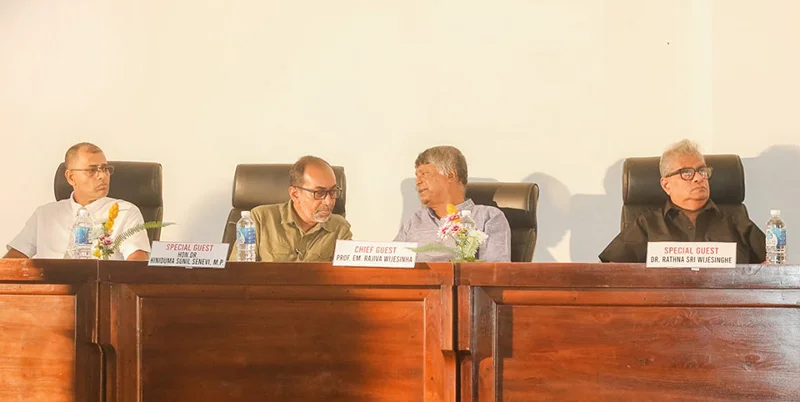
It is said that no man steps into the same river twice, for it is not the same river, and he is not the same man. These words came to mind upon reading Chandana Ruwan Jayanetti’s latest poetry collection, Poems from Galle, which inevitably invites comparison with his earlier work, particularly his first volume of poetry and prose, Reflections in Loneliness: A Collection of Poems and Prose (2015).
In this new collection, Jayanetti is demonstrably not the same poet he was a decade ago. His horizons have widened. his subject matter has diversified, and his thematic range has deepened. The earlier hallmarks of his work, including his empathetic attention to human experience, sensitivity to the natural world, and intimate, reflective tone, remain present. Yet they are now complemented by a stronger defiance, a more deliberate engagement with the political and the cosmic, and a broader mosaic of local and universal concerns. His poetic voice has evolved in scope, tonal range, and thematic ambition.
My own acquaintance with Jayanetti’s poetry dates back to our undergraduate days at Sabaragamuwa University of Sri Lanka, where we were classmates pursuing a BA in Languages (English Special). Even then, his work revealed precise observational skill coupled with profound sympathy for individuals. This early sensibility found fuller articulation in Reflections in Loneliness, a collection spanning nearly two decades of creative endeavor.
That inaugural volume traversed a wide thematic landscape: childhood memories; tender compassion toward humans and animals; tributes to the deserving; the joys and sorrows of young love; and reflections on Sri Lanka’s three-decade Northeast conflict, which concluded in 2009. Jayanetti’s verse, written with sincerity and empathy, moves fluidly from deeply personal to universally human. Moments of striking poignancy include the loss of his wife’s mother, the death of a young friend who marched unflinchingly to the warfront, and the bittersweet parting from a lover.
The prose section of Reflections in Loneliness offered a return to the rural simplicity of the 1970s and ’80s through the perspective of a schoolboy. Essays such as We Buy a Bicycle, Television Descends, The Village Goes to the Fair, Bathing Excursions and Hingurakanda evoke a bygone era with unvarnished authenticity. As literary critic Kamala Wijeratne noted, Jayanetti’s prose merited commendation for its perceptive and affectionate portrayal of rural life, written with the authority of lived experience. His meticulous attention to minute details revealed not only the flaws and frailties of human nature but also its loyalties and quiet virtues, articulated with unforced sympathy.
Consisting of 31 poems and five prose pieces, Reflections in Loneliness established Jayanetti as a writer of elegance, precision, and emotional depth. The current collection, however, confirms the Heraclitean and Buddhist insights: both the poet and his poetry have changed. The new work reflects an expansion from the personal to the cosmic, from the intimately local to the globally resonant, a testament to an artist in motion, carried forward by the ever-changing current of his creative life.
Jayanetti’s poetic corpus in the new book Poems from Galle, spanning thirty-five evocative works from They Heard the Cock Crow to A Birthday Celebration, reveals a profound and consistent artistic signature rooted in themes of humanity, nature, history, and social consciousness. Throughout these poems, Jayanetti demonstrates a distinctive voice that is simultaneously empathetic, contemplative, and alert to the complexities of his Sri Lankan heritage and the broader human condition. While maintaining a core of thematic and tonal consistency, each poem enriches this foundation by expanding into new dimensions of experience, whether personal, ecological, political, or historical.
A foundational element of Jayanetti’s poetry is the intimate relationship between humans and nature, frequently underscored by a deep ethical awareness. In poems like From a Herdman’s Life and My Neighbor, he gives voice to the quiet dignity of rural existence and animal companionship, portraying a symbiotic bond imbued with mutual care and respect. Similarly, Fallen Elephant and Inhumanity lament the cruelty inflicted upon majestic creatures, indicting human greed and violence. These poems articulate not only empathy for the natural world but also an implicit call for stewardship, threading a moral sensibility throughout the collection.
This concern extends to the socio-political sphere, as Jayanetti often situates his poems within the fraught realities of Sri Lanka’s history and struggles. Homage to Sir Henry Pedris honors a national martyr, while Confession of a Sri Lankan Cop exposes institutional corruption and personal integrity in tension. Hanuma Wannama and Gone Are They tackle political violence and social upheaval, reflecting the poet’s engagement with national trauma and collective memory. These works enrich the thematic landscape by connecting personal narrative to larger historical forces.

Jayanetti’s choice of subjects is remarkably diverse yet unified by a focus on lived experience—ranging from the intimate (To a Puppy That Departed, Benji) to the grand (Mekong, A Voyage). The poet’s attention to place, whether the Sri Lankan cityscape in City Morning and Evening from the College Terrace or the historic Ode to Galle Fort, anchors his work in locality while evoking universal themes of time, change, and belonging. Even poems centered on seemingly mundane moments, such as Staff Meeting or A Game, are elevated by the poet’s keen observational eye and capacity to find meaning in everyday rituals.
Moreover, Jayanetti often draws from historical and cultural memory, as seen in Ludowyk Remembered, Let Ho Chi Minh Guide You, and Rathna Sri Remembered, positioning his poetry as a dialogue between past and present. This choice expands his thematic range to include legacy, identity, and the power of remembrance, linking the individual to the collective consciousness.
Across the collection, Jayanetti’s tone is marked by a blend of gentle empathy and quiet strength. Poems such as A Companion Departed and To a Puppy That Departed convey tenderness and mourning with understated poignancy. His voice is intimate and accessible, inviting readers into personal reflections suffused with emotional depth.
Yet, this empathy is balanced by moments of stark realism and defiance.
In Corona and Hanuma Wannama, the tone shifts to urgent and accusatory, critiquing social injustice and political decay. A Ship Weeps mourns environmental devastation with an elegiac voice that is both sorrowful and admonitory. This tonal range reveals a poet capable of both consolation and confrontation, who embraces complexity rather than sentimentality.
While many poems explore specific moments or relationships, others invite contemplation on broader existential and cosmic themes. For instance, A Voyage and Mekong traverse spatial and temporal boundaries, evoking the interplay between human journeys and natural cycles. A Birthday Celebration reflects on legacy, learning, and the continuum of knowledge, blending personal homage with universal insight.
Even poems like A Bond and A Game gesture toward symbolic resonance, the former exploring interspecies loyalty as a metaphor for fidelity and duty, the latter invoking sport as a microcosm of life’s challenges and hopes. These works demonstrate Jayanetti’s ability to expand familiar motifs into metaphoric and philosophical territory, enriching his poetic landscape.
Jayanetti’s thirty-five poems in Poems from Galle collectively reveal a consistent and compelling artistic signature that intertwines compassionate engagement with nature and society, a profound sense of place, and an acute awareness of history and memory. His voice navigates seamlessly between moments of intimate reflection and urgent social commentary, creating a poetic landscape that resonates with both specificity and universality.
Each poem adds a distinct dimension to this mosaic. Historical and political awareness emerges strongly in poems like Let Ho Chi Minh Guide You and Homage to Sir Henry Pedris, where the sacrifices of national heroes and struggles for justice are evoked with reverence and clarity. Meanwhile, environmental consciousness is vividly articulated in works such as Abandoned Chena, Kottawa Forest, and Fallen Elephant, where the fragility of ecosystems and the human impact on nature are poignantly explored.
Jayanetti also delves deeply into themes of personal loss and companionship in poems like Benji, A Companion Departed, and In Memory of Brownie, tenderly capturing the bond between humans and animals. Poems like Confession of a Sri Lankan Cop and Hanuma Wannama offer raw social critique, revealing layers of political and moral complexity.
Through this interplay of historical, environmental, personal, and political themes, Jayanetti constructs a body of work that is distinctly Sri Lankan in its cultural and geographical grounding yet profoundly universal in its exploration of human experience. His poetry invites readers to reflect on the interconnected fates of humans, animals, and the natural world, urging a deeper awareness of our shared existence and responsibilities.
by Saman Indrajith

Machu Picchu train crash leaves one dead and dozens injured

I invite you to step into 2026 with renewed energy, hope, and determination – PM

Fairly heavy showers about 75 mm are likely at some places in the Central and Uva provinces and in Batticaloa and Ampara districts

National Audit Office reveals NHSL lapses

NPP’s CMC budget passed after four Opp. members switch allegiance

600MW hit to national grid as two Norochcholai units go offline

‘Dates have the highest sugar content to fight Coronavirus’

Sunday Island 27 December – Headlines

#SundayIsland 17th December – Headlines

Sunday Island – 28th March

Sunday Island Headlines – 21 March

Sunday Island – 21st February – Headlines
-
 News6 days ago
Street vendors banned from Kandy City
-

 Sports3 days ago
Gurusinha’s Boxing Day hundred celebrated in Melbourne
-

 News6 days ago
Lankan aircrew fly daring UN Medevac in hostile conditions in Africa
-
 News1 day ago
Leading the Nation’s Connectivity Recovery Amid Unprecedented Challenges
-

 Sports4 days ago
Time to close the Dickwella chapter
-

 Features6 days ago
Rethinking post-disaster urban planning: Lessons from Peradeniya
-

 Features2 days ago
It’s all over for Maxi Rozairo
-

 Opinion6 days ago
Are we reading the sky wrong?