
Opinion
Airline Pilots – salaries and income tax reforms

By Capt Gihan
A Fernando, MBA
Honorary Life Member, Air Line Pilots’ Guild of Sri Lanka (affiliated the International Federation of Air Line Pilot Associations)
Former Secretary, Air Ceylon Pilots’ Guild and Air Line Pilots’ Guild of Sri Lanka
Former Member Air Line Pilots’ Association Singapore
Life Member Organisations of Professional Associations (OPA)
It is no secret that Sri Lankan airline pilots engaged in international flying are highly paid and therefore in the country’s highest slab of income taxation. Their income is received direct from their employer. Their profession is strictly regulated and they cannot engage in private practice, unlike many other professions.In 1947 when Air Ceylon was formed, a DC-3 Dakota Captain’s maximum basic salary (without allowances) was Rs 800 per month. The Ceylon Air Line Pilots’ Association (CALPA) and later the Air Ceylon Pilots’ Guild (ACPG), as it was then known, tried but failed to negotiate for higher salaries. One Air Ceylon Chairman (who was known as ‘our man in Bonn’ at one time, and father of a present Member of Parliament) even asked how the Pilots’ Guild had the audacity to ask for salaries over and above what he was earning.
That status quo remained almost the same until 1977, when the Secretary of Defence, General Don Sepala Attygalle, declared that the Army Corporal who drives his car was earning almost the same wage as airline pilots, and increased pilots’ salaries all round by Rs. 1,600 per month.
Then in 1979, when Air Lanka was established, national pilot salaries underwent another increase with ‘per diem’ allowances matching international standards. The standard method of calculating these allowances is based on the crew duty time starting one hour before departure time, and finishing half an hour after landing. For want of a better method, traditionally there was a certain value added to breakfast, lunch and dinner; and if the crew member was on duty during those meal times, a ‘Meal Allowance’ was paid.
Additionally, if a night was spent overseas the crews were paid an ‘Overnight Allowance’. All allowances were the same for Technical (flight) and Cabin Crew, except for the ‘Overnight’ allowances where the Captain got a little extra to cover tips, porterage, etc., in local currency. In those days the overseas meal and overnight allowances were frugally saved by many Sri Lankan crew members and encashed into rupees in Colombo in order to supplement their take-home pay.
Even during Air Ceylon days, the Internal Auditor didn’t understand the concept of per diem payments based on meal times, and commented that crews were not entitled to meal allowances when flying as they were provided with meals on board. It took the Air Ceylon Pilots’ Guild quite an effort to counteract that notion.
Increasing flight crew salaries to present levels was the result of a long, hard struggle for the Airline Pilots’ Guild, as Air Lanka was truly ‘international’, with expatriate crew members on its payroll too. In the mixed (Sri Lankan and expatriate) crews, a ‘national’, or local, Captain earned far less than an expatriate First Officer or Flight Engineer, who also received free housing and children’s education fees as part of their remuneration packages.
Yet the Captain, whether a Sri Lankan or an expat’, was the most senior crew member in the aircraft. Further to regular appeals to Air Lanka Management, in due course the salaries were adjusted to a great extent and tied to the constantly appreciating US dollar, so as to eliminate the salary gap between nationals and expatriates. The Pilots’ Guild also managed to secure duty free car import/purchase permits for its members, in keeping with certain other professions at that time.
In accordance with the then Sri Lankan tax laws, while an expatriate’s salary was tax free, a national captain had to pay income tax amounting to around 40% of earnings. Again, after many appeals from the Pilots’ Guild, Air Lanka management agreed to pay flight crews’ income tax, which was then considered a perquisite by the Government Income Tax Department, and necessitated the airline management paying ‘tax-on-tax’. This was done to prevent pilots leaving the company for better jobs in other parts of the world.
So why is an airline pilot is paid so much?
Let me give you a few reasons. An airline pilot must undergo an annual medical examination up to the age of 40, and then regular biannual medicals until the age of 60. From then until age 65 additional blood tests and stress EKG tests are conducted. While pilots need not be as fit as astronauts, there cannot be any disqualifications either. Unfortunately, the limits of these tests are quite subjective and could be a source of worry and stress to individual pilots. Needless to say, pilots must practise self-discipline to maintain these medical standards.
The training regime to become a commercial pilot is long and extensive. There are as many as 14 theory exams to pass, along with numerous practical tests where competency has to be demonstrated to an examiner and recorded for licensing purposes. The pilot needs to qualify for: a ‘Type Rating’ to fly a particular type of aircraft; an Instrument Rating to enable himself/herself to fly solely with reference to instruments at night-time or in conditions of limited or non-existent visibility; a ‘Multi-engine Rating’ authorising him/her to fly an aircraft with more than one engine. They must also be current on Safety Equipment Procedures, which involve going down emergency slides into a pool or tank of water, and survival in case of a ditching at sea.
Even after obtaining the requisite licence and ratings and joining an airline, every six months a pilot must submit to a practical test conducted by a Civil Aviation Authority Sri Lanka (CAASL)-designated examiner in order to demonstrate continuing competency. Throughout his/her career, every year the pilot must also satisfy a company-designated ‘Line Examiner’ that he/she is up to date on all company procedures and instructions. The pilot could be failed and given re-enforcement/consolidation training at any time.
In contrast, not many vocations, including the medical profession, have such systems in place for rigorously and regularly monitoring and recording competency and proficiency. Sadly, such testing can be subjective by nature, and is sometimes used by airline companies the world over to force pilot employees to ‘fall in line’ and not rock the boat. But that’s another story.
The demand for qualified and experienced pilots around the world is high, especially as airlines are bouncing back after the pandemic. Therefore, Sri Lanka’s national carrier must find incentives in pay and conditions to keep experienced pilots within their fold. Losing experienced pilots to a ‘brain drain’ will affect the airline’s safety record in the long run. Airline Captains cannot be produced overnight. It takes at least six years on average for a good First Officer (FO) to become a Captain. That gives the FO experience to fly through all the seasons of spring, summer, autumn and winter weather, by day and night, at least six times under the watchful eye of an experienced Captain, before the FO goes out on his/her own. Not unlike a ‘House Officer’ in the medical profession, who learns what to do, as well as what not to, to enhance his/her ability to work with others in a ‘team’ environment.
Commercial airline pilot training is expensive, with ever-rising costs of equipment and fuel. Unless the trainee is sponsored by an airline, or has wealthy parents, many student pilots will incur debt. It is not unknown for some not so well-to-do parents to even mortgage their property to put their children through flight school. Yet at the end of it all one is still not sure of securing an airline job because even in the ranks of prospective flight cadets, many are called but only a few are chosen for further training by the airlines.
It is no secret that an airline pilot’s work is unique and different from a regular 9 to 5 job. Flying duties take pilots far from home, while they miss out on family events such as birthdays, weddings and funerals of near and dear ones. It is very hard on the pilot’s spouse as he/she has to be both father and mother, nursemaid, and chauffeur, especially when children fall ill. Airline pilots have to be mentally prepared for such events, and free of financial worries and stress that can cloud judgement and decision-making when performing flying duties and functions that are stressful in their own right. It must be remembered that apart from being responsible for hundreds of lives, an airline pilot is in charge of and responsible for airline assets costing hundreds of millions of dollars, leaving no margin for error; as distinct from a run-of-the-mill administration job which, according to some, allows for as much as a 50% error margin.
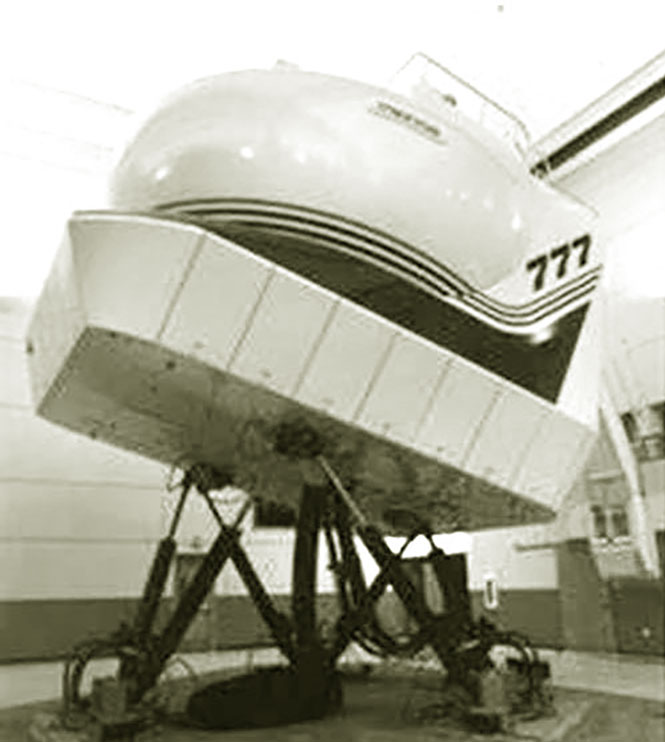
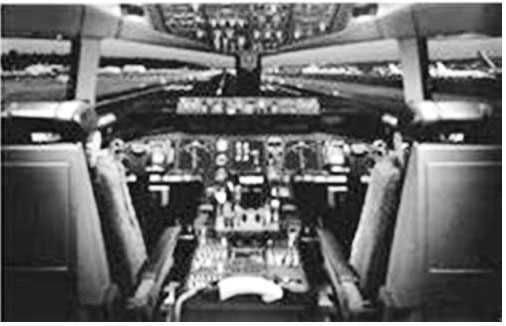
An airline pilot has to be trained and tested regularly in a flight simulator or an actual aircraft to safely handle emergency situations such as engine failures or fires on take-off, rejected take-offs, emergency landings with hydraulic failure, cabin pressure failure, and many other potentially perilous situations. A wrong decision will be very costly for the airline, and could even make the company go ‘belly up’.
There is a famous saying among aviators which is attributed to Jerome Lederer, the then President of the Flight Safety Foundation. He stated: “If you think that safety is expensive, try having an accident.”
That also brings to mind what Lee Kuan Yew, widely acknowledged as the ‘founding father’ of modern Singapore, said: “If you pay peanuts, you get monkeys.”
In 1776, the Scottish economist and moral philosopher Adam Smith wrote a book called ‘The Wealth of Nations’. In it he outlined five principles underlying why labour rates are different. They are still valid today. I quote:
“The Variation of Labour Rates
There are five major factors that explain why labour wages differ from one occupation to the next. To begin, labour rates differ depending on how simple or difficult the job is. A tailor, for example, is paid less than a weaver. His job is much easier. Weavers earn less than smiths. The most despised of all jobs, public executioner, is paid more than almost any other common profession in proportion to the amount of labour done.
Second, the ease and low cost of learning a new business, as well as the difficulty and cost of doing so, affect labour salaries.
Third, salaries in professions differ because some crafts have significantly more consistent employment than others.
Fourth, labour wages vary according to the amount of trust that must be placed in the workers. Goldsmiths and jewellers are always paid more than many other workers because they are entrusted with valuable materials.
Fifth, labour remuneration varies according to the likelihood or improbability of success. If 20 people apply for a job and only one is hired, the one hired is usually paid the sum of the salaries of the other 20.”
In addition, Smith states a few more home truths, such as:
“Give me what I want, and I’ll give you what you want.”
and
“A man must always be able to support himself through his job, and his earnings must be sufficient.”
Many airline administrators take Aviation Safety for granted. It does not happen automatically but with hard work put in by the people in the front line, such as pilots, engineers and mechanics. Unfortunately, aircraft can’t fly without pilots and engineers. In the love/hate relationship between the Sri Lankan Airline Pilots’ Guild and airline management, the usual cycle of events since inception is as follows.
The Board of Management appointed by the ‘powers that be’ consist of government cronies who confess to the airline employees that they know nothing about running the airline and ask for guidance. The unions, including the Pilots’ Guild, give them support and guidance. After a few months the Board members believe they have learned all they need to know, and try to ride roughshod over the unions while trying to control traditional behaviour despite really knowing nothing. It is a truism that ‘a little knowledge is a dangerous thing’. The pilots are considered ‘a necessary evil.’
Speaking for the pilots at the ‘pointy end’ of the aeroplane, they see the product of that ‘board management’ at its worst and best. The communication channels should be kept open with the Chairman and his Board of Directors. From what I gather, and in aviation terms, there is “a loss of com” between them.When the COVDI-19 pandemic began, the present Board of SriLankan Airlines unilaterally reduced pilots’ salaries by almost 50%, put a cap on the dollar conversion rate, and told pilots that if they didn’t like it that they could go look for jobs elsewhere. The Pilots’ Guild went to the Labour Commission, who discovered that the airline’s management had short-changed the pilots to the extent of Rupees 1.928 billion! It is obvious that management should not look at the bottom line only but follow a Safety Management System which ensures resilience.
Now other airlines are hiring again, and 130 Sri Lankan pilots have applied to convert (validate) their Sri Lankan ICAO (International Civil Aviation Organisation)-recognised Air Transport Pilots’ Licence (ATPL) in other countries to be able to work there. More than 40 local pilots are expected to leave for other reputed airlines by February 2023. If that occurs, it will become a national crisis. This attrition will in turn cause disruption of scheduled flights in the short term, or the airline might even cease operations in the long term. It has happened to other airlines. Sri Lanka is not and will not be immune. Yet, SriLankan Airlines’ Board of Directors seem to be blissfully oblivious of this fact.
With the proposed national Income Tax reforms, the quantum of income tax is going to be higher. Could the Board of Directors of SriLankan Airlines consider income tax payments and pay tax-on-tax where pilots are concerned, as has been done before? They can ill afford to hire expatriate pilots at ‘exorbitant’ dollar rates, as in the past. Or by ‘sitting on their hands’ would the Directors force national airline pilots to leave for greener pastures abroad, along with Sri Lankans in many other valued and respected professions?



Reference ,the Indian High Commissioner’s recent comments ( The Island, 9th Jan. ) on strong India-Sri Lanka relationship and the assistance granted on recovering from the financial collapse of Sri Lanka and yet again for cyclone recovery., Sri Lankans should express their thanks to India for standing up as a friendly neighbour.
On the Defence Cooperation agreement, the Indian High Commissioner’s assertion was that there was nothing beyond that which had been included in the text. But, dear High Commissioner, we Sri Lankans have burnt our fingers when we signed agreements with the European nations who invaded our country; they took our leaders around the Mulberry bush and made our nation pay a very high price by controlling our destiny for hundreds of years. When the Opposition parties in the Parliament requested the Sri Lankan government to reveal the contents of the Defence agreements signed with India as per the prevalent common practice, the government’s strange response was that India did not want them disclosed.
Even the terms of the one-sided infamous Indo-Sri Lanka agreement, signed in 1987, were disclosed to the public.
Mr. High Commissioner, we are not satisfied with your reply as we are weak, economically, and unable to clearly understand your “India’s Neighbourhood First and Mahasagar policies” . We need the details of the defence agreements signed with our government, early.
RANJITH SOYSA
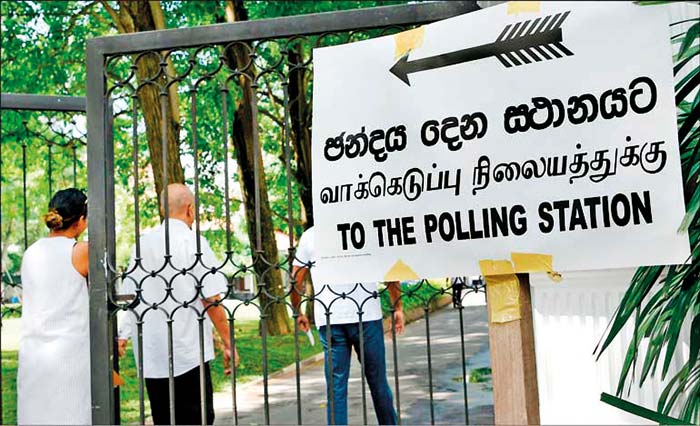
At every election—general or presidential—we do not truly vote, we simply outvote. We push out the incumbent and bring in another, whether recycled from the past or presented as “fresh.” The last time, we chose a newcomer who had spent years criticising others, conveniently ignoring the centuries of damage they inflicted during successive governments. Only now do we realise that governing is far more difficult than criticising.
There is a saying: “Even with elephants, you cannot bring back the wisdom that has passed.” But are we learning? Among our legislators, there have been individuals accused of murder, fraud, and countless illegal acts. True, the courts did not punish them—but are we so blind as to remain naive in the face of such allegations? These fraudsters and criminals, and any sane citizen living in this decade, cannot deny those realities.
Meanwhile, many of our compatriots abroad, living comfortably with their families, ignore these past crimes with blind devotion and campaign for different parties. For most of us, the wish during an election is not the welfare of the country, but simply to send our personal favourite to the council. The clearest example was the election of a teledrama actress—someone who did not even understand the Constitution—over experienced and honest politicians.
It is time to stop this bogus hero worship. Vote not for personalities, but for the country. Vote for integrity, for competence, and for the future we deserve.
Deshapriya Rajapaksha
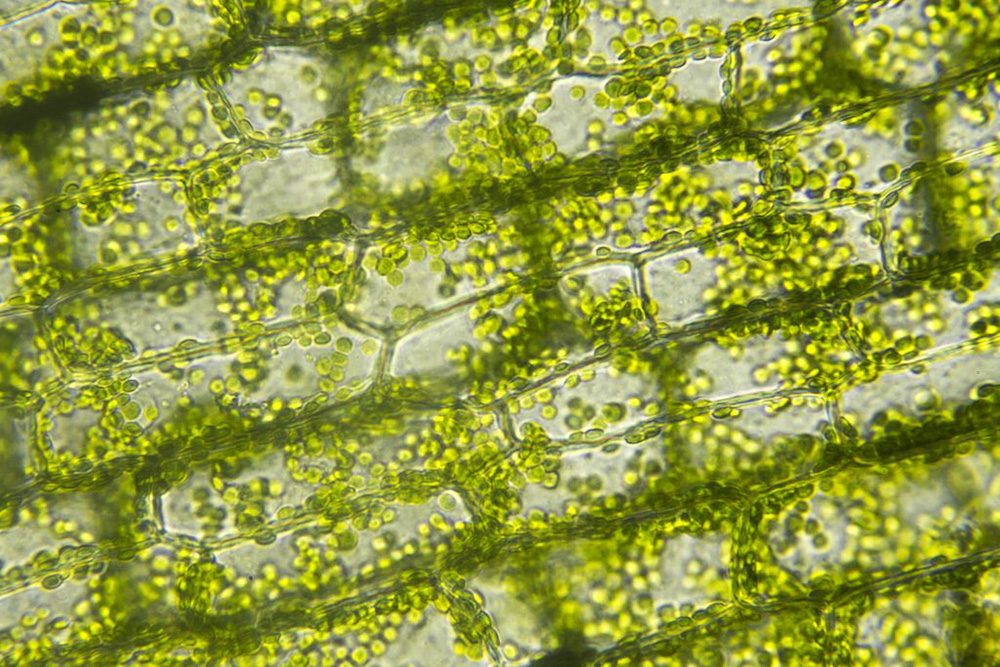
Chlorophyll is the green pigment found in plants, algae, and cyanobacteria. It is essential for photosynthesis, the process by which light energy is converted into chemical energy to sustain life on Earth. As it is green it reflects Green of the sunlight spectrum and absorbs its Red and Blue ranges. The energy in these rays are used to produce carbohydrates utilising water and carbon dioxide and releasing oxygen in the process. Thus, it performs, in this reaction, three functions essential for life on earth; it produces food and oxygen and removes carbon dioxide from the atmosphere to maintain equilibrium in our environment. It is one of the wonders of nature that are in peril today. It is essential for life on earth, at least for the present, as there are no suitable alternatives. While chlorophyll can be produced in a lab, it cannot be produced using simple, everyday chemicals in a straightforward process. The total synthesis of chlorophyll is an extremely complex multi-step organic chemistry process that requires specialized knowledge, advanced laboratory equipment, and numerous complex intermediary compounds and catalysts.
Chlorophyll probably evolved inside bacteria in water and migrated to land with plants that preceded animals who also evolved in water. Plants had to come on land first to oxygenate the atmosphere and make it possible for animals to follow. There was very little oxygen in the ocean or on the surface before chlorophyll carrying bacteria and algae started photosynthesis. Now 70% of our atmospheric oxygen is produced by sea phytoplankton and algae, hence the importance of the sea as a source of oxygen.
Chemically, chlorophyll is a porphyrin compound with a central magnesium (Mg²⁺) ion. Factors that affect its production and function are light intensity, availability of nutrients, especially nitrogen and magnesium, water supply and temperature. Availability of nutrients and temperature could be adversely affected due to sea pollution and global warming respectively.
Temperature range for optimum chlorophyll function is 25 – 35 C depending on the types of plants. Plants in temperate climates are adopted to function at lower temperatures and those in tropical regions prefer higher temperatures. Chlorophyll in most plants work most efficiently at 30 C. At lower temperatures it could slow down and become dormant. At temperatures above 40 C chlorophyll enzymes begin to denature and protein complexes can be damaged. Photosynthesis would decline sharply at these high temperatures.
Global warming therefore could affect chlorophyll function and threaten its very existence. Already there is a qualitative as well as quantitative decline of chlorophyll particularly in the sea. The last decade has been the hottest ten years and 2024 the hottest year since recording had started. The ocean absorbs 90% of the excess heat that reaches the Earth due to the greenhouse effect. Global warming has caused sea surface temperatures to rise significantly, leading to record-breaking temperatures in recent years (like 2023-2024), a faster warming rate (four times faster than 40 years ago), and more frequent, intense marine heatwaves, disrupting marine life and weather patterns. The ocean’s surface is heating up much faster, about four times quicker than in the late 1980s, with the last decade being the warmest on record. 2023 and 2024 saw unprecedented high sea surface temperatures, with some periods exceeding previous records by large margins, potentially becoming the new normal.
Half of the global sea surface has gradually changed in colour indicating chlorophyll decline (Frankie Adkins, 2024, Z Hong, 2025). Sea is blue in colour due to the absorption of Red of the sunlight spectrum by water and reflecting Blue. When the green chlorophyll of the phytoplankton is decreased the sea becomes bluer. Researchers from MIT and Georgia Tech found these color changes are global, affecting over half the ocean’s surface in the last two decades, and are consistent with climate model predictions. Sea phytoplankton and algae produce more than 70% of the atmospheric oxygen, replenishing what is consumed by animals. Danger to the life of these animals including humans due to decline of sea chlorophyll is obvious. Unless this trend is reversed there would be irreparable damage and irreversible changes in the ecosystems that involve chlorophyll function as a vital component.
The balance 30% of oxygen is supplied mainly by terrestrial plants which are lost due mainly to human action, either by felling and clearing or due to global warming. Since 2000, approximately 100 million hectares of forest area was lost globally by 2018 due to permanent deforestation. More recent estimates from the UN’s Food and Agriculture Organization (FAO) indicate that an estimated 420 million hectares of forest have been lost through deforestation since 1990, with a net loss of approximately 4.7 million hectares per year between 2010 and 2020 (accounting for forest gains by reforestation). From 2001 to 2024, there had been a total of 520 million hectares of tree cover loss globally. This figure includes both temporary loss (e.g., due to fires or logging where forests regrow) and permanent deforestation. Roughly 37% of tree cover loss since 2000 was likely permanent deforestation, resulting in conversion to non-forest land uses such as agriculture, mining, or urban development. Tropical forests account for the vast majority (nearly 94%) of permanent deforestation, largely driven by agricultural expansion. Limiting warming to 1.5°C significantly reduces risks, but without strong action, widespread plant loss and biodiversity decline are projected, making climate change a dominant threat to nature, notes the World Economic Forum. Tropical trees are Earth’s climate regulators—they cool the planet, store massive amounts of carbon, control rainfall, and stabilize global climate systems. Losing them would make climate change faster, hotter, and harder to reverse.
Another vital function of chlorophyll is carbon fixing. Carbon fixation by plants is crucial because it converts atmospheric carbon dioxide into organic compounds, forming the base of the food web, providing energy/building blocks for life, regulating Earth’s climate by removing greenhouse gases, and driving the global carbon cycle, making life as we know it possible. Plants use carbon fixation (photosynthesis) to create their own food (sugars), providing energy and organic matter that sustains all other life forms. By absorbing vast amounts of CO2 (a greenhouse gas) from the atmosphere, plants help control its concentration, mitigating global warming. Chlorophyll drives the Carbon Cycle, it’s the primary natural mechanism for moving inorganic carbon into the biosphere, making it available for all living organisms.
In essence, carbon fixation turns the air we breathe out (carbon dioxide) into the food we eat and the air we breathe in (oxygen), sustaining ecosystems and regulating our planet’s climate.
While land plants store much more total carbon in their biomass, marine plants (like phytoplankton) and algae fix nearly the same amount of carbon annually as all terrestrial plants combined, making the ocean a massive and highly efficient carbon sink, especially coastal ecosystems that sequester carbon far faster than forests. Coastal marine plants (mangroves, salt marshes, seagrasses) are extremely efficient carbon sequesters, absorbing carbon at rates up to 50 times faster than terrestrial forests.
If Chlorophyll decline, which is mainly due to human action driven by uncontrolled greed, is not arrested as soon as possible life on Earth would not be possible.
(Some information was obtained from Wikipedia)
by N. A. de S. Amaratunga ✍️

Showers in the Northern, North-central, Uva, Western, Eastern, Sabaragamuwa, North-western and Central provinces and Galle and Matara districts

Govt. extends ban on LTTE

Police obtain court order banning Wimal’s protest

Chinese Foreign Minister Wang Yi expresses optimism that Sri Lanka is on the right path to progres

India plans to restore northern regular train services to pre-Ditwah frequencies before traditional New Year 2026

Inauguration of first Bailey Bridge under Indian assistance package for post-Ditwah reconstruction

‘Dates have the highest sugar content to fight Coronavirus’

Sunday Island 27 December – Headlines

#SundayIsland 17th December – Headlines

Sunday Island – 28th March

Sunday Island Headlines – 21 March

Sunday Island – 21st February – Headlines
-

 News2 days ago
Sajith: Ashoka Chakra replaces Dharmachakra in Buddhism textbook
-

 Business2 days ago
Dialog and UnionPay International Join Forces to Elevate Sri Lanka’s Digital Payment Landscape
-

 Features2 days ago
The Paradox of Trump Power: Contested Authoritarian at Home, Uncontested Bully Abroad
-

 Features2 days ago
Subject:Whatever happened to (my) three million dollars?
-

 News2 days ago
Level I landslide early warnings issued to the Districts of Badulla, Kandy, Matale and Nuwara-Eliya extended
-

 News2 days ago
National Communication Programme for Child Health Promotion (SBCC) has been launched. – PM
-

 News2 days ago
65 withdrawn cases re-filed by Govt, PM tells Parliament
-

 Opinion4 days ago
The minstrel monk and Rafiki, the old mandrill in The Lion King – II