
Opinion
Dogs bark, but caravan moves on

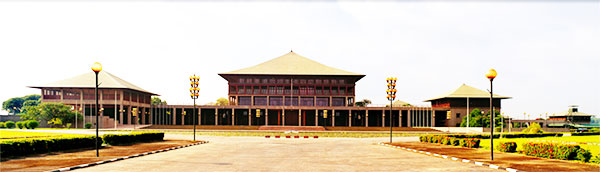
The Prorogation Message
Events fast changing keep boggling our minds making it difficult to establish their continuity. Each new scene is staged by the same players wearing different masks, and our vision gets encumbered with illusions confusing us again and again. Caravan moves on unimpeded, while we attempt to keep pace and contemporaneous with our present.
Collective responsibility: In the ongoing controversy around the Yugadanavi fiasco, the behaviour of some members of the Cabinet has given rise to a political quagmire, which the entire country is keenly watching. In the parliamentary system of government, with the Cabinet bound by collective responsibility, there are components they have to abide by. It is well recognised that the Ministers should have the opportunity to have free and frank discussions prior to the decision- making. The Cabinet practice is that such discussions, however, are confidential, and the details will be confined to the members of the Cabinet only. The other important principle is that once agreed, all Ministers are expected to abide by such decisions. They are left with no options other than to be with the government towing the line OR else resign from their portfolios. We are confronted with a slightly varied circumstance, in that those who counter the decision, claim that the first principle has not been followed or they are denied of that opportunity.
Authorities have maintained that Prime Ministers can apply the principle of collective responsibility more flexibly such as “overlooking media coverage which suggests there are ministerial disagreements or leaks of information.” But such discrepancies depend on the Prime Minister’s own strength and the constitutional power devolving on the PM. According to Article 45(1) it is the President who has the power to appoint from time to time, in consultation with the Prime Minister, where he considers such consultation to be necessary, Members of the Cabinet of Ministers.
According to 47(a), any member of the Cabinet of Ministers continues to function unless he “is removed by a writ under the hand of the President”.
Another matter relevant to this issue is the coalition nature of the Government. We are not aware of the mandatory conditions applicable to the parties in the coalition, sharing the ‘pohottuwa’ symbol for the election. For example, if there is an agreement for the Ministers to “argue freely in private’ but must maintain a united front when decisions have been reached at the Cabinet” , the parties to the dispute are now taking the position that no such decision has been taken.
Anyway, according to the constitution, the President can make the final decision under the powers to hire and fire.
In the British system of Parliament, historically, collective responsibility has also been relaxed during periods of coalition government. During the 2010-2015 Conservative-Liberal Democratic coalition, collective responsibility was set aside for certain party political issues, including the 2011 referendum on electoral reform. Perhaps the different political parties involved in the brawl surrounding the Yugadanavi MOU will have to be given a leeway to maintain their credibility with the voters on the declarations they publicly made during election time!
Finally, the Judiciary has to give a ruling on the issue. Parliament makes laws but the judiciary has to interpret and dispense justice even-handedly in the courts, and that the general public feel confident in the integrity and impartiality of the judiciary.
A Fistfull of Dollars:
The 1964 movie, Fistfull of Dollars, starring Clint Eastwood in the lead- role, was a box office hit. Today there is a Box Office break for another show awaiting the grand finale, starring Ajith Nivard C, the “Dollar Reserve Crisis’ ‘! It was Clint Eastwood’s maiden show, but Nivard C being a veteran actor having played the lead role during more serious highly critical periods, is eagerly watched by many during this performance, conjectured to be harder than ever before. But his confident disposition towards the outcome is dispelling all kinds of negativity and scepticism expressed by interested parties, as well as those ignorant of feasible alternatives in the case of a crisis.
Management of a crisis is both a Technique as well as an Art. For some it is a single-track approach in keeping with their blinkers (blinders worn by horses) on. But the time has come for all to look for ways and means beyond the traditional help refuge one is used to. The Panadol treatment may not be the best at certain times, and it is best to administer something slow but stronger as a lasting relief. People who are used to rapid pain killers do recommend and sometimes blame and accuse them for not taking such treatment. But those who are inclined to offer a cure and a sustained relief would look at other options, however hard and bitter they sound. Let us hope and look at Ajith Nivard C’s approach in this perspective.
Clint Eastwood had to use his master gun skill to control bandit Rojo and save his aggression, and now the policy makers have to face the attacks from Fitch Ratings, and Opposition politicos’ hell bound to propagate their ostensible National Interests. We can only watch and cheer, ‘come on- bat on’!
Prorogation of parliament:
In essence a prorogation of the parliament means the continuation of the parliament from one session to another. It is not a termination, although in its process some of the ongoing activities will be halted. It is effected under constitutional powers given to the President. Political history records many controversial prorogations, which were resorted to by those in power to avoid different kinds of issues in dispute. The most controversial one was the prorogation of Canada parliament in 2008 by prime Minister Stephen Harper, in view of a pending no-confidence motion against his minority government by the opposing parties. The prorogation provided an opportunity for the Harper govt to reach an agreement with the opposition, thereby helping Harper to continue in power.
Although there is no visible threat of such a nature for the Rajapaksa government, there are many things in the brewing that could manifest into major disputes. Thus, the prorogation provides breathing space for settlement of the dust and starting afresh. Any way the country needs a refreshed approach, and a new session with new thinking and approach. The product life of some of the items have long since come to a stagflation calling for course corrections. Hopefully the opportunity could be utilized to set the Gyro compass to distinguish between the true North and the magnetic north; because we witnessed the magnetic North directional sailing has attracted many iron filings of no use.
Let us hope that this prorogation is heading towards a meaningful transition.
COPE, COPA and COPF
: It is strongly commented that the prorogation of the parliament is a sinister move to change the Chairpersons of these committees. There is no doubt that these persons have played a praiseworthy role in these bodies. Well, according to their knowledge, understanding and experience it may be so. But these committees are mere name’s sake bodies, which have been talking about the subject areas coming under their purview, but without any useful service either to the Institutions they examine or to the Public at large. Why I state this is due to an obvious factor that nobody has been penalized or taken to task for the irresponsibility, highlighted and exposed at these so-called investigations or inquiries. We do not understand why they are termed investigations, because what they in effect do is to examine the Audit reports and confine their role of inquiring into the remarks and shortcomings pointed out in the reports.
Beyond the highly dramatic media shows they were recently converted into during the process of inquiry, no meaningful steps have been taken to either rectify or instigate charges against some of the awe-inspiring detections and revelations. In actual fact the COPE, COPA and COPF sessions are held much later, after the audit reports are released. Sometimes during the next year. In most cases the shortcomings discussed at these committees remain totally neglected by the respective organizations and institutions without any action being taken.
The so-called inquiry is confined to what is pinpointed in the Audit reports. The legislators little realize that the Audit function is a very limited examination, which does not probe in detail into the affairs of a SOE. The auditors go by the accounts presented to them and they are least concerned about the facts that remain unexposed in the accounts presented by those SOEs. The Auditors never go into the areas of broad public interest, such as the objective of the SOE, whether they have fulfilled those broad objectives, and to what extent they have deviated from the main purpose of establishment of such Public institutions. Sometimes they confine their comments to the profitability factor only, and thereby forgetting or disregarding how they have cooked up the figures to bloat profits through various unethical and unorthodox operations. Profits can be shown by various dubious means. In accounting they cook up figures, resort to window dressings, and bypass regulatory requirements stipulated in respect of the industries to show profits. In the annual accounts they hide several pitfalls and wrongful operations in order to show profits. None of the Committees are showing any interest in those, other than confining themselves to some adverse remarks if made by the Auditors. This is a pathetic situation.
Many SOEs are today purely and completely operating as white elephants, hiding many serious lapses in the eyes of the Committee Chairpersons, as well as members who are MPs with no better knowledge. If they want and are ready to debate any of these points we could devote some time with them for the sake of the future wellbeing of the country. I am certain they will find themselves ashamed of what they have been doing all this time, when we expose the reality behind many of those instances. The accumulating losses are a burden on the people, and the bogus profits too are equally bad and disastrous to the country’s economy.
State Banks, CPC, CEB, SriLankan Airlines, Water Board, Port Commission, CWE are simply white elephants turned precious profit centres, which can turn around the entire economic landscape of the country for the benefit of all ordinary citizens, who happen to be the highest tax payers in this country. Therefore, let us not talk about Utopian high expectations as an outcome of these parliamentary committees. We can see how best they have failed to deliver anything useful to the society, if we re-examine the reports they have gone through all these years, some with massive media propaganda.
Just to quote one example out of several, I invite the attention of the parliamentarians, especially the Opposition that is complaining about various sinister moves associated with the postponement of these committees, to look into the last completed COPE report on the People’s Bank. The revelations made were alarming and the strictures too were shocking. Nothing happened so far.
Therefore, we are fed up with ridiculous criticisms. People of this country want action and not empty critics.
TENNEKONE RUSIRIPALA



The special exhibition displaying original manuscripts relating to the Panadura Debate at Rankoth Vihara is welcome and, as Nishantha Peiris mentions (News, 30 Aug), the debate gained international interest following the publication of a book containing the speeches made in the debate. The credit for this must be given to John Capper, the then editor of the Ceylon Times. He published an account of each day’s proceedings in his paper and the full text of the speeches in a book entitled ‘Full Account of the Buddhist Controversy Held at Pantura in August 1873.
The preface of the book stated: ‘In the belief that an authentic account of the Controversy which took place at Pantura in August last, between a Buddhist Priest and two Ministers of the Protestant religion, will be read with interest by a large number of persons here and in Europe. I have produced the proceedings in the present form. The report has been revised by the respective disputants, so that it may be taken as a correct account of what passed’.
Capper’s book was picked up by J M Peebles who was in India, who then published an extended version in the United States. If an original copy of Capper’s book is available in Sri Lanka, it should be exhibited in the Rankoth exhibition.
Yours faithfully,
Dr R P Fernando,
19 Danetree Close,
Epsom UK
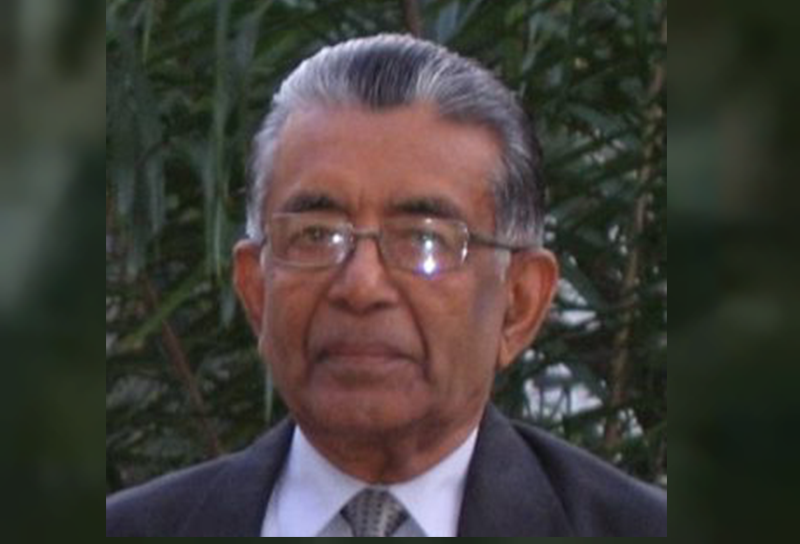
It is with a deep sense of sadness that I record the passing of Dr Upatissa Pethiyagoda, who died on 27 August 2026 at the age of 94. To many, he was a distinguished scientist, accomplished administrator, diplomat and public intellectual. To me, he was much more than that.
Dr Pethiyagoda was a proud product of Trinity College, Kandy. At a time when a first class in Botany was a rarity, he obtained one and subsequently pursued postgraduate studies in London. His scientific career reflected not only his knowledge but, more importantly, an enquiring and restless mind that was never satisfied with simply accepting what was known.
In the 1970s, he headed the Plant Physiology Department of the Tea Research Institute of Sri Lanka. He was part of a formidable team of scientists that included Drs R L de Silva, R L Wickramasinghe, P Sivapalan, Tilak Wettasinghe and W Danthanarayana. They were scientists who contributed enormously to the development of the tea industry in Sri Lanka, and Dr Pethiyagoda stood comfortably among them.
In 1978, he moved to the Coconut Research Institute as its Director. It was there that I had the privilege of working with him. Those years left a lasting impression on me.
Dr Pethiyagoda was, in every sense, a complete scientist. Although his formal specialisation was plant physiology, he was remarkably comfortable discussing almost anything scientific. What distinguished him was his curiosity. He questioned the science behind the ordinary things that most of us simply accepted. I remember his asking questions such as, why is an orange green in Sri Lanka? It was typical of him: an apparently simple observation would lead him to ask what lay behind it.
That curiosity never left him.
After his tenure at the CRI, he undertook an FAO assignment in the Middle East, working on the improvement of date palms. There he was exposed to agriculture under conditions of severe water scarcity. He pursued this further during a visit to Israel, learning about agronomic practices suited to such environments. Later, when he worked with the Mahaweli Authority, he was able to translate that knowledge into practice, introducing high-value horticultural crops to Systems B and C.
What impressed me was not merely that he acquired knowledge, but that he connected knowledge from one context to another and turned it into practical solutions. His enquiring mind and analytical ability enabled him to do this with remarkable effectiveness.
He was equally impressive as a communicator. Dr Pethiyagoda was an eloquent speaker, whether he was talking about science, agriculture, public policy or the everyday affairs of our country. His speeches were often laced with wit, humour and the occasional tongue-in-cheek remark. But beneath the humour was a very serious mind. He was forthright in his opinions and, importantly, he was not afraid to express them, whatever the possible repercussions.
His contributions to the media demonstrated this courage.
Writing about the travel to London by a former President, he observed:
“Where a person enjoys immunity by virtue of his position, this carries a reciprocal obligation to exercise an abundance of exemplary behaviour. In effect, immunity is best exercised, when the need to invoke it, is never allowed to arise.”
[Immunity Does Not Confer Impunity – Colombo Telegraph]
That was quintessential Pethiyagoda—precise, pointed and impossible to misunderstand.
He was equally outspoken about the government’s decision to ban inorganic fertiliser with ‘immediate effect’. He was deeply distressed by what he believed would be the consequences for farmers, particularly the poorer farming community. He would speak about it almost every day, driven not by political considerations but by his conviction that science and evidence had been disregarded.
In one of his writings on the subject, he remarked:
“What the ‘Vipathmaga’ caper taught us was that advice of sundry ‘Experts’ can be disastrous. Professors of Surgery, clergymen and Pediatricians are not the best equipped to advise on fertilisers, as much as a Soil Scientist should not prescribe treatment for a sick child.’ [Some Lessons That Can Be Learned Even From Disasters – Colombo Telegraph]
And in another article, his frustration was summed up in the memorable words:
“Stupidity, like History, has a way of repeating itself.”
[Unscrambling eggs – Colombo Telegraph]
These were not simply provocative statements. They reflected a scientist who believed deeply that public decisions, particularly those affecting agriculture and the livelihoods of farmers, should be based on evidence and sound scientific advice.
Perhaps, what I will remember most about Dr Pethiyagoda is that his curiosity survived almost to the very end of his life.
Very recently, he was still asking questions and pursuing ideas. He was interested in the possible genetic differences between the waraka and wela varieties of jak, because he wondered whether the wela variety might have commercial potential for cellulose extraction. He was disappointed that he could not find relevant scientific literature in Sri Lanka. More than the particular subject, what struck me was that at 94 he was still thinking about a scientific question, looking for evidence and wondering whether an apparently ordinary resource could have an important national application. He lamented the lack of interest among scientists and academics in such questions of national importance. That concern, too, was very much part of who he was.
Dr Pethiyagoda also served as President of the National Academy of Sciences, Sri Lanka. Unfortunately, he was unable to complete his term because he was appointed Ambassador to Italy, with representation at the Food and Agriculture Organization in Rome. Even in that role, he remained very much the scientist. I understand that he made a significant contribution to FAO discussions. As Ambassador, he also had the unenviable task of entertaining Sri Lankan Ministers of Agriculture who attended FAO sessions. I know from my own conversations with him that those informal dinners were not merely social occasions. He would discuss agricultural issues with the Ministers, and I have little doubt that his views—and the force with which he expressed them—sometimes influenced their thinking.
Looking back, what I admired most about Dr Pethiyagoda was not any particular position he held or any particular achievement. It was the way he thought.
He questioned.
He analysed.
He connected ideas.
He challenged conventional wisdom.
And he was willing to say what he believed to be true.
He also demonstrated that science should not remain confined to laboratories, research papers or academic institutions. For him, science was a way of looking at the world and, ultimately, a means of improving the lives of people.
It is perhaps ironic that, only a few months ago, he wrote about “The Cost of Dying”, as distinct from the “Cost of Living”. In that article, he reflected on the manner in which our mortal remains should be disposed of, observing: “I am in two minds regarding the manner in which the mortal remains are disposed of, ‘according to the will of the deceased’. But with the cessation of the breath, ownership or tenancy ceases.” Even in contemplating death, he brought his characteristic questioning mind to the subject. What particularly caught my attention, however, was his explanation of the Buddhist practice of holding dânes (almsgivings) for monks of the local temple in the seventh day and third month following a death. I had never really thought about the significance of this practice before. That, too, was typical of Dr Pethiyagoda: he could take something that we had accepted as ordinary and familiar and make us stop, think and see it differently.
His passing has created a colossal vacuum in Sri Lanka’s scientific community. People of his intellectual breadth, curiosity, courage and independence are rare. We may not always have agreed with everything he said, but we could never doubt that he had thought deeply about it and that he had the courage of his convictions.
For those of us who had the privilege of knowing him, there is sadness in his passing. But there is also gratitude—for having known such an extraordinary mind, for having learnt from him, and for having witnessed at close quarters his unwavering commitment to science and to the development of our country.
I shall remember Dr Pethiyagoda with great affection and immense respect.
Ranjith Mahindapala
Past President, National Academy of Sciences of Sri Lanka.
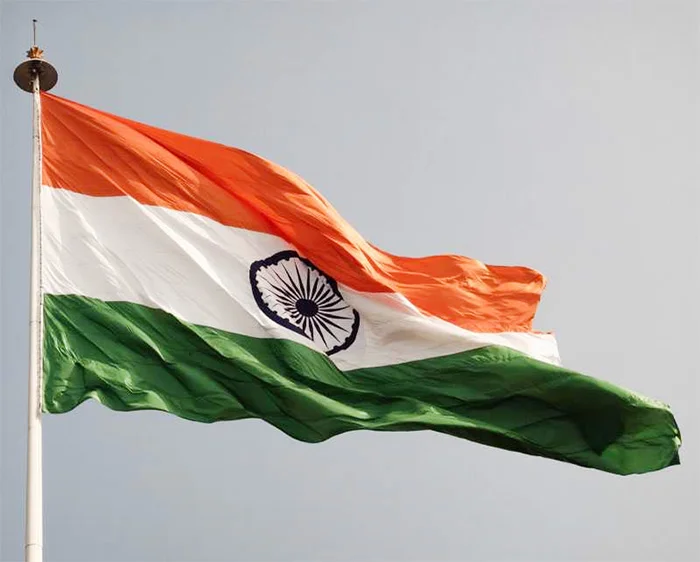
What India chooses to do with the strategic freedom it has built over eight decades may be the defining question of its next phase
 by Milinda Moragoda
In the emerging global economy, countries will increasingly seek multiple sources of energy, technology, capital, minerals and markets. India can contribute by helping create an open network rather than another exclusive bloc.
As India marks eight decades of Independence, its strategic position has changed almost beyond recognition. Yet the central question of strategic autonomy remains. What India chooses to do with the strategic freedom it has built over eight decades may be the defining question of its next phase.
India has spent the past decade expanding its strategic choices — deepening ties with the US, Europe and Japan while maintaining important ties with Russia and strengthening engagement with the Gulf, Africa and Southeast Asia. Australia and New Zealand are also becoming increasingly important partners in the wider Indo-Pacific. At the same time, India has sought a larger voice for the developing world in international institutions. Strategic autonomy has traditionally been understood in diplomatic terms: the ability to maintain freedom of action without being drawn into competing power blocs. In an increasingly interconnected world, however, that freedom will depend just as much on economic choices.
The objective should be strategic interdependence — building sufficiently diverse relationships that dependence on any one country or economic system does not become a vulnerability. India is unusually well placed to pursue this. Its geography connects the Gulf and wider West Asia, the manufacturing economies of Asia, Africa across the Indian Ocean and the Eurasian space extending through Russia. The opportunity, therefore, is to become a connector between economies increasingly fragmented by geopolitical competition.
India’s relationship with Japan is extending into advanced manufacturing, technology, energy, semiconductors and critical minerals. Its engagement with the US is deepening across technology, investment, advanced manufacturing, energy and strategic cooperation, while its engagement with Europe is becoming increasingly economic and technological. Its relationships with the Gulf are expanding beyond energy into investment and connectivity. Australia and New Zealand add an important southern dimension to its wider Indo-Pacific engagement, while Southeast Asia provides pathways into wider Asian production networks.
Russia remains an important part of this equation. India’s continuing engagement with Moscow, alongside its deepening relationships with Washington, Tokyo, Europe and the Gulf, demonstrates that strategic autonomy gives India the flexibility to maintain important relationships across geopolitical divides.
China inevitably occupies a special place in this landscape. India’s answer cannot be either excessive dependence or complete separation. It will require strengthening domestic capabilities, diversifying supply chains and building partnerships elsewhere, while retaining space for engagement where interests permit.
India possesses another asset that few countries can match: a large, globally active and influential diaspora. Yet the diaspora can also present challenges, as political currents within these communities do not always align with India’s interests and can occasionally create sensitivities in its relations with host countries. The greater opportunity lies in nurturing the economic, intellectual and cultural connections the diaspora can create, while respecting its diversity and independence. In the emerging global economy, countries will increasingly seek multiple sources of energy, technology, capital, minerals and markets. India can contribute by helping create an open network rather than another exclusive bloc.
Ports, shipping routes, energy corridors, digital infrastructure, supply chains and trade agreements increasingly shape strategic influence. India’s challenge is to bring these strands together without turning them into a closed sphere of influence.
India’s economic rise will be more sustainable if other countries see themselves as participants in its growth rather than simply as markets for it. The value for India lies in making these relationships complementary rather than choosing among them. India’s leadership of the Global South can now move beyond representation in international forums towards creating an international economic environment in which developing countries have greater choices. India’s own experience is relevant here. It has moved from a relatively closed economic model towards deeper global integration while retaining a strong emphasis on domestic capability. The lesson is that openness and strategic autonomy need not be contradictory.
As the G20 meets again in Miami in December, India can continue to argue that the Global South should not merely seek greater representation within existing institutions, but a greater stake in shaping the economic networks and institutions of the future. An economically integrated Indian Ocean could allow countries such as Sri Lanka, Bangladesh and the Maldives to participate more deeply in regional supply chains, logistics, energy, tourism, technology and services. Influence based on shared prosperity is more durable influence based on dependence. India’s strategic opportunity, therefore, lies in becoming one of the principal connectors of a changing world.
(Milinda Moragoda is founder of the Pathfinder Foundation, strategic affairs think tank, and can be contacted via email @milinda.org.)
Courtesy Hindustan Times

Shree Charani, Prema Rawat spin Pakistan out for 55 in one-sided contest

Sun directly overhead Bentota, Thiniyawala, Iththakanda, Udawalawe, and Kataragama about 12.08 noon t9day (06)

Showers above 75 mm are likely at some places in the Uva and Eastern provinces.

Tharanga creates history with Diamond League crown in Brussels

UN welcomes Lanka’s anti-graft drive, seeks end to impunity

Dispute which triggered listed company director being detained at BIA resolved

‘Dates have the highest sugar content to fight Coronavirus’

Sunday Island 27 December – Headlines

#SundayIsland 17th December – Headlines

Sunday Island – 28th March

Sunday Island Headlines – 21 March

Sunday Island – 21st February – Headlines
-

 Features6 days ago
When Sri Lankan stories find their own voice
-

 News6 days ago
BASL takes exception to Justice Ganepola being denied a place in SC
-

 News3 days ago
Denied of promotion to SC despite vacancies, justice Gurusinghe retires
-

 Latest News4 days ago
Grade 5 scholarship exam results released
-

 News3 days ago
22A: SC urged to suspend hearing, appoint full bench
-

 Midweek Review4 days ago
The local and global dynamics of Sri Lanka’s 22nd Amendment
-

 Business6 days ago
ADB-funded Thalaiyadi plant serves as blueprint for vulnerable dry zones in Sri Lanka
-

 News4 days ago
Ai-CHA expands Lankan footprint with new Negombo outlet