
Features
AFLATOXIN IN IMPORTED COCONUT OIL

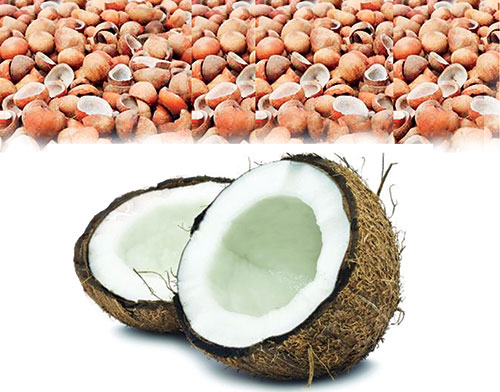
A SCIENTIFIC VIEW
BY Emeritus Professor Upali Samarajeewa
smrjee@gmail.com]
The public are bombarded with half truths on presence and release of imported aflatoxin-contaminated coconut oil to the market. When improperly dried copra is stored for many days a mold of yellow colour, which becomes moss green later, appears on the surface of the kernels, releasing aflatoxins deep into the coconut kernels. Once released into the kernel, the toxin remains unchanged till the kernel disintegrates. On expulsion of oil from such copra, 80% of the aflatoxin separates into the coconut oil. Aflatoxins were first detected in groundnuts in 1961, when turkey poults, fed with ground nuts, died in thousands, compelling the British to celebrate Christmas without the traditional roasted turkey on the dining table. The Scientist and his Assistant, who got exposed during discovery of the aflatoxins are reported to have died of colon cancer a few years later. In 1970, a consignment of copra from the Philippines was rejected by the USA sensitizing the Coconut Authorities in Sri Lanka too.
The issue today is that the consignments of coconut oil, imported from two or more countries by several importers, is supposed to be highly contaminated with aflatoxins. Aflatoxin can cause liver cancers in humans on long exposure through foods. The Sri Lankan society is still not sure whether a part of the consignment, under discussion, got released to the market, as the public are made to believe half-truths. The only solution to the problem lies in getting the market coconut oil tested for presence of aflatoxins. It may be worth testing a few ‘refined’ samples of oils, bottled, and marketed under the brand names of importers under scrutiny. When humans suffer from a serious sickness, they do not go to the usual family doctor, but the specialist on the particular disease. In Sri Lanka, there is only one laboratory accredited for testing aflatoxins in vegetable oils, which has been maintaining competency through continuous testing, surveillance, and research. This reliable testing capacity is with the Food Safety and Quality Assurance Laboratory of the Faculty of Veterinary Sciences at Peradeniya University. Our arguments and interpretations on various test reports from exporting countries, or from unaccredited laboratories in other Sri Lankan institutions, carry no sense in the light of this background. Some public media are excellent in fueling the flames with no scientific understanding. Institutions possess the expertise on protecting their own good names. Politicians listen to both sides and argue smartly in the august house with little scientific understanding. Scientific views are not obtained from the right persons or right places. The carnival continues. Public are not sure whether to celebrate the New Year with “kewum” or without.
When the Philippines copra consignments were rejected by the USA, in 1970, the Coconut Authority, in Sri Lanka, got sensitized immediately and arranged a three-year research assignment in the Faculty of Medicine, Peradeniya to examine the probable aflatoxin contaminations in Sri Lankan copra, coconut oil and poonac. The person employed under the assignment developed a test method for aflatoxins in coconut products, did a one-year survey visiting and collecting samples from each and every coconut oil mill in the country in three rounds examining copra, oil and poonac. The project understood the aflatoxin levels in the coconut products in Sri Lanka and the origins of contaminations. There were many other related academic research activities to strengthen the findings, such as toxic effects of aflatoxins on experimental and farm animals and effects of smoke drying of copra on aflatoxin accumulation. The project also clearly identified the poor manufacturing practices leading to the contamination problem and working out mechanisms to remove aflatoxins in coconut kernel products industrially. All the research were well recognized, internationally, through publications and patents. Good manufacturing practices were recommended to the industry. This enriched the Coconut Authority with new scientific information of the ground situation, remedial measures, and actions to be taken, arising from their investment for scientific research on aflatoxin related risks and appropriate levels of controls. The Coconut Authority continued to use this information for years and conducted regular training programmes, for the copra producers and oil millers regularly at grassroot level. It had the desired effects of reducing the concentrations of aflatoxins in coconut oil through commitment of an increased number of industrialists, to be within regulatory levels. More recent introduction of branding and bottling of coconut oils, was a mechanism to trace the origins of possible aflatoxin problems in the long run. Against this situation, releasing imported coconut oil in bulk with no mechanism to establish the origin or identity boils down to opening the gates exposing consumers to the invisible risk of aflatoxins, which would be felt in years to come.
Unlike other agricultural commodities, such as groundnuts and maize that gets contaminated with aflatoxins, consumers get exposed to higher and continuous health risks through coconut oil on a daily basis. Aflatoxin producing mold is visible in groundnuts and maize providing the choice for consumers to discard contaminated kernels. Aflatoxins in coconut oil is hidden, requires expensive sophisticated testing and could expose the consumers unaware of the risks.
Copra is produced in Sri Lanka using a scientifically designed kiln with natural mechanisms for uniform heating, removing the moisture with smoke, depositing a thin layer of antimicrobials on kernel surfaces, and finally reducing the moisture to safe levels of 8%. The kiln is described in global literature as “Ceylon Copra Kiln” – Credit to the research of Coconut Research Institute. The same cannot said of the copra production and the kilns used in the countries from which we have imported coconut oil recently. Naturally, a potential disaster was in the pipeline on importing coconut oil from such countries. It has exploded now.
The cure lies in chemically refining the contaminated coconut oil, which is already in our territories. Alkali used in chemical refining of edible oils converts the aflatoxin molecules to sodium derivatives, which are water soluble and washed away during the centrifugation process. There are no other short cuts to get rid of aflatoxins in coconut oil or in any other food. Any industrial process can possess weak points due to the way it is practiced. The final clearance on safety should be based on testing the chemically refined coconut oil for absence of aflatoxins. Sri Lankan scientists who have spent years of research and lived with the subject stand above everybody in this subject globally. They possess the knowledge and the knowhow. Unscientific advises from inadequately informed persons would not help in solving this national food safety problem. Once the imported crude coconut oil is refined and cleared as “free of aflatoxins”, the stocks could be exported recovering the dollars Sri Lanka has spent to import crude oils and even make profits. Let the businesses use science to make money for the country.
Unfortunately, Sri Lankan science has become an occult science with offering ‘Sudharshani paniya’ of unknown origin, Dhammilka peniya from kali-science, ‘Ravana paniya’ of “Dandumonara’ origin and arsenic-science of Natha Deviyo. The proponents have achieved their objectives at the expense of “literate” Sri Lankans. Let us not allow the aflatoxin issue of imported coconut oil to follow the same pathway, sidetracking the scientific knowledge available to the country.
The author has worked through this whole scientific process, which is internationally recognized. Sri Lanka has understood the problem. It knows the solutions. Who would come out with no vested interests aiming benefits for the common man?



 ‘Adapt, shrink or die’ – thus runs the warning issued by the Trump administration to UN humanitarian agencies with brute insensitivity in the wake of its recent decision to drastically reduce to $2bn its humanitarian aid to the UN system. This is a substantial climb down from the $17bn the US usually provided to the UN for its humanitarian operations.
Considering that the US has hitherto been the UN’s biggest aid provider, it need hardly be said that the US decision would pose a daunting challenge to the UN’s humanitarian operations around the world. This would indeed mean that, among other things, people living in poverty and stifling material hardships, in particularly the Southern hemisphere, could dramatically increase. Coming on top of the US decision to bring to an end USAID operations, the poor of the world could be said to have been left to their devices as a consequence of these morally insensitive policy rethinks of the Trump administration.
Earlier, the UN had warned that it would be compelled to reduce its aid programs in the face of ‘the deepest funding cuts ever.’ In fact the UN is on record as requesting the world for $23bn for its 2026 aid operations.
If this UN appeal happens to go unheeded, the possibilities are that the UN would not be in a position to uphold the status it has hitherto held as the world’s foremost humanitarian aid provider. It would not be incorrect to state that a substantial part of the rationale for the UN’s existence could come in for questioning if its humanitarian identity is thus eroded.
Inherent in these developments is a challenge for those sections of the international community that wish to stand up and be counted as humanists and the ‘Conscience of the World.’ A responsibility is cast on them to not only keep the UN system going but to also ensure its increased efficiency as a humanitarian aid provider to particularly the poorest of the poor.
It is unfortunate that the US is increasingly opting for a position of international isolation. Such a policy position was adopted by it in the decades leading to World War Two and the consequences for the world as a result for this policy posture were most disquieting. For instance, it opened the door to the flourishing of dictatorial regimes in the West, such as that led by Adolph Hitler in Germany, which nearly paved the way for the subjugation of a good part of Europe by the Nazis.
If the US had not intervened militarily in the war on the side of the Allies, the West would have faced the distressing prospect of coming under the sway of the Nazis and as a result earned indefinite political and military repression. By entering World War Two the US helped to ward off these bleak outcomes and indeed helped the major democracies of Western Europe to hold their own and thrive against fascism and dictatorial rule.
Republican administrations in the US in particular have not proved the greatest defenders of democratic rule the world over, but by helping to keep the international power balance in favour of democracy and fundamental human rights they could keep under a tight leash fascism and linked anti-democratic forces even in contemporary times. Russia’s invasion and continued occupation of parts of Ukraine reminds us starkly that the democracy versus fascism battle is far from over.
Right now, the US needs to remain on the side of the rest of the West very firmly, lest fascism enjoys another unfettered lease of life through the absence of countervailing and substantial military and political power.
However, by reducing its financial support for the UN and backing away from sustaining its humanitarian programs the world over the US could be laying the ground work for an aggravation of poverty in the South in particular and its accompaniments, such as, political repression, runaway social discontent and anarchy.
What should not go unnoticed by the US is the fact that peace and social stability in the South and the flourishing of the same conditions in the global North are symbiotically linked, although not so apparent at first blush. For instance, if illegal migration from the South to the US is a major problem for the US today, it is because poor countries are not receiving development assistance from the UN system to the required degree. Such deprivation on the part of the South leads to aggravating social discontent in the latter and consequences such as illegal migratory movements from South to North.
Accordingly, it will be in the North’s best interests to ensure that the South is not deprived of sustained development assistance since the latter is an essential condition for social contentment and stable governance, which factors in turn would guard against the emergence of phenomena such as illegal migration.
Meanwhile, democratic sections of the rest of the world in particular need to consider it a matter of conscience to ensure the sustenance and flourishing of the UN system. To be sure, the UN system is considerably flawed but at present it could be called the most equitable and fair among international development organizations and the most far-flung one. Without it world poverty would have proved unmanageable along with the ills that come along with it.
Dehumanizing poverty is an indictment on humanity. It stands to reason that the world community should rally round the UN and ensure its survival lest the abomination which is poverty flourishes. In this undertaking the world needs to stand united. Ambiguities on this score could be self-defeating for the world community.
For example, all groupings of countries that could demonstrate economic muscle need to figure prominently in this initiative. One such grouping is BRICS. Inasmuch as the US and the West should shrug aside Realpolitik considerations in this enterprise, the same goes for organizations such as BRICS.
The arrival at the above international consensus would be greatly facilitated by stepped up dialogue among states on the continued importance of the UN system. Fresh efforts to speed-up UN reform would prove major catalysts in bringing about these positive changes as well. Also requiring to be shunned is the blind pursuit of narrow national interests.

 Hi! Great to be back after my Christmas break.
Thought of starting this week with egg white.
Yes, eggs are brimming with nutrients beneficial for your overall health and wellness, but did you know that eggs, especially the whites, are excellent for your complexion?
OK, if you have no idea about how to use egg whites for your face, read on.
Egg White, Lemon, Honey:
Separate the yolk from the egg white and add about a teaspoon of freshly squeezed lemon juice and about one and a half teaspoons of organic honey. Whisk all the ingredients together until they are mixed well.
Apply this mixture to your face and allow it to rest for about 15 minutes before cleansing your face with a gentle face wash.
Don’t forget to apply your favourite moisturiser, after using this face mask, to help seal in all the goodness.
Egg White, Avocado:
In a clean mixing bowl, start by mashing the avocado, until it turns into a soft, lump-free paste, and then add the whites of one egg, a teaspoon of yoghurt and mix everything together until it looks like a creamy paste.
Apply this mixture all over your face and neck area, and leave it on for about 20 to 30 minutes before washing it off with cold water and a gentle face wash.
Egg White, Cucumber, Yoghurt:
In a bowl, add one egg white, one teaspoon each of yoghurt, fresh cucumber juice and organic honey. Mix all the ingredients together until it forms a thick paste.
Apply this paste all over your face and neck area and leave it on for at least 20 minutes and then gently rinse off this face mask with lukewarm water and immediately follow it up with a gentle and nourishing moisturiser.
Egg White, Aloe Vera, Castor Oil:
To the egg white, add about a teaspoon each of aloe vera gel and castor oil and then mix all the ingredients together and apply it all over your face and neck area in a thin, even layer.
Leave it on for about 20 minutes and wash it off with a gentle face wash and some cold water. Follow it up with your favourite moisturiser.

 Superlatives galore were used, especially on social media, to highlight R&B singer Ne-Yo’s trip to Sri Lanka: Global superstar Ne-Yo to perform live in Colombo this December; Ne-Yo concert puts Sri Lanka back on the global entertainment map; A global music sensation is coming to Sri Lanka … and there were lots more!
At an official press conference, held at a five-star venue, in Colombo, it was indicated that the gathering marked a defining moment for Sri Lanka’s entertainment industry as international R&B powerhouse and three-time Grammy Award winner Ne-Yo prepares to take the stage in Colombo this December.
What’s more, the occasion was graced by the presence of Sunil Kumara Gamage, Minister of Sports & Youth Affairs of Sri Lanka, and Professor Ruwan Ranasinghe, Deputy Minister of Tourism, alongside distinguished dignitaries, sponsors, and members of the media.

Shah Rukh Khan: Disappointed his fans in Sri Lanka
According to reports, the concert had received the official endorsement of the Sri Lanka Tourism Promotion Bureau, recognising it as a flagship initiative in developing the country’s concert economy by attracting fans, and media, from all over South Asia.

Nick Carter: His concert, too, was cancelled due to “Unforeseen circumstances
However, I had that strange feeling that this concert would not become a reality, keeping in mind what happened to Nick Carter’s Colombo concert – cancelled at the very last moment.
Carter issued a video message announcing he had to return to the USA due to “unforeseen circumstances” and a “family emergency”.
Though “unforeseen circumstances” was the official reason provided by Carter and the local organisers, there was speculation that low ticket sales may also have been a factor in the cancellation.
Well, “Unforeseen Circumstances” has cropped up again!
In a brief statement, via social media, the organisers of the Ne-Yo concert said the decision was taken due to “unforeseen circumstances and factors beyond their control.”
Ne-Yo, too, subsequently made an announcement, citing “Unforeseen circumstances.”
The public has a right to know what these “unforeseen circumstances” are, and who is to be blamed – the organisers or Ne-Yo!
Ne-Yo’s management certainly need to come out with the truth.
However, those who are aware of some of the happenings in the setup here put it down to poor ticket sales, mentioning that the tickets for the concert, and a meet-and-greet event, were exorbitantly high, considering that Ne-Yo is not a current mega star.
We also had a cancellation coming our way from Shah Rukh Khan, who was scheduled to visit Sri Lanka for the City of Dreams resort launch, and then this was received: “Unfortunately due to unforeseen personal reasons beyond his control, Mr. Khan is no longer able to attend.”
Referring to this kind of mess up, a leading showbiz personality said that it will only make people reluctant to buy their tickets, online.
“Tickets will go mostly at the gate and it will be very bad for the industry,” he added.

Zohran Mamdani sworn in as New York City mayor

In pictures: New Year welcomed around the world

Foreign warships commended for their assistance during weather disaster in Sri Lanka

Machu Picchu train crash leaves one dead and dozens injured

I invite you to step into 2026 with renewed energy, hope, and determination – PM

Fairly heavy showers about 75 mm are likely at some places in the Central and Uva provinces and in Batticaloa and Ampara districts

‘Dates have the highest sugar content to fight Coronavirus’

Sunday Island 27 December – Headlines

#SundayIsland 17th December – Headlines

Sunday Island – 28th March

Sunday Island Headlines – 21 March

Sunday Island – 21st February – Headlines
-
 News7 days ago
Street vendors banned from Kandy City
-

 Sports4 days ago
Gurusinha’s Boxing Day hundred celebrated in Melbourne
-

 News7 days ago
Lankan aircrew fly daring UN Medevac in hostile conditions in Africa
-
 News2 days ago
Leading the Nation’s Connectivity Recovery Amid Unprecedented Challenges
-

 Sports5 days ago
Time to close the Dickwella chapter
-

 Features3 days ago
It’s all over for Maxi Rozairo
-

 Features7 days ago
Rethinking post-disaster urban planning: Lessons from Peradeniya
-

 Opinion7 days ago
Are we reading the sky wrong?