
Opinion
A simple, immediate solution to potentially dangerous shortage of air traffic control officers

BY Capt. G A Fernando MBA
gafplane@sltnet.lk
RCyAF/ SLAF, Air Ceylon, AirLanka, SIA, Sri Lankan Airlines.
And CAASL
In a recent interview conducted by Chamuditha Samarawickrama of Truth with Chamuditha fame with Thisara Amarananda, President of the Sri Lanka Air Traffic Controllers’ Association (SLATCA), it was revealed that the existing cadre of Air Traffic Control Officers was dangerously low due to migration of senior Air Traffic Control Officers (ATCOs) seeking more lucrative jobs abroad.
There are only 80 ATCOs instead of the required 138. They currently work overtime to keep air traffic services going. If four more ATCOs leave, it will lead to cumulative fatigue which may eventually bring the services provided in Sri Lankan airspace to a halt.
As a possible consequence our airspace of over 60,000 square nautical miles will be carved out amongst adjoining or regional countries such as Indonesia, Australia, Maldives and India. Sri Lanka will lose valuable foreign exchange revenue amounting to an average of $35,000 per day, derived from payment by airlines for flying through Sri Lankan airspace. Sri Lanka in turn provides the carriers with flight monitoring and traffic Information, and search and rescue facilities.
An Air Traffic Controller’s job is unique, requiring a good standard of English and communication skills. While the job generally maintains a lower profile than most others in the eyes of the general public, the service is provided day in and day out 24/7. Maintaining the flow of aircraft in and out of airports and en route is essential to aviation safety. This is also why the work of Air Traffic Control is rated as one of the most stressful in the world (Montgomery, 2010).
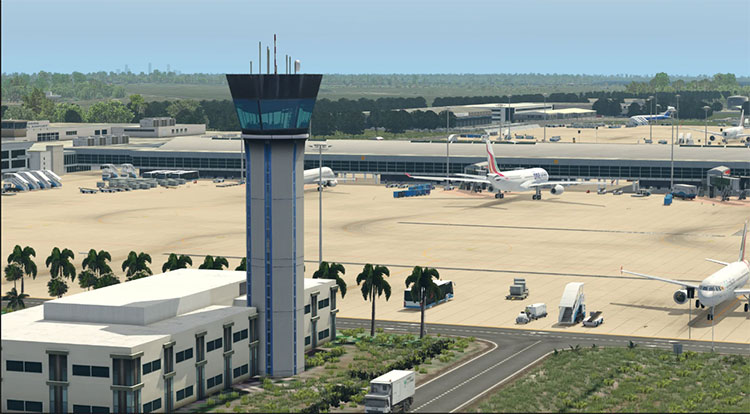
ATCOs function at three levels. (1) Aerodrome Controllers who use their eyes and ears while in the control tower of an airport up to an altitude of about 4,000 feet; (2) Approach Controllers who monitor and control air traffic on radar from 4,000 feet to 15,000 feet; and (3) Area Controllers (from Ratmalana) who control traffic above 15,000ft on radar and Controller Pilot Data Link Communications (CPDLC) when beyond line of sight. (Radar works on line-of-sight only.) It is obvious that a competent ATCO cannot be produced overnight.
The aviation environment is generally assumed, by the general public in particular, to be safe. The importance and significance of an ATCO’s job will only come into focus in the event of a high-profile incident or accident. In the past, all control and separation of air traffic was maintained by the use of headings and altitudes provided to the aircraft, known as ‘tactical radar vectoring’. With the introduction of new/future air navigation systems, separation of the majority of aircraft arrivals and departures at airports are looked after automatically. As a result, old skills of Air Traffic Controllers are lost and new skills have to be learnt. Separation and sequencing of aircraft could be done en route, long before their arrival at the destination airport. Because all aircraft are still not equipped with future air navigation systems, and the air traffic control systems are in the process of being modernised, the Air Traffic Controller enforces a ‘mixed mode’, i.e. controlling the old and the new, adding further stress to the conduct of the job.
The job of an Air Traffic Controller requires extensive training, knowledge, experience and skill, enabling the individual to ensure a safe, expeditious and orderly flow of air traffic with economy, collectively known as ‘Air Traffic Management’ (ATM). According to Costa (1996), there are six main ‘Stressors’ that affect the Job of Air Traffic Controllers: (1) Demand; (2) Operating Procedures; (3) Working times; (4) Working tools; (5) Working environment; and (6) Work Organisation.
(1) Demand: The number of aircraft under the purview of an Air Traffic Controller will constantly vary during a given duty period. The stress factor is directly proportional to this number. Accordingly, there will be highs and lows in the Air Traffic Controller’s workload during a given duty period. There could be unanticipated, nonessential traffic causing distractions, as well as unexpected events such as bad weather, medical and technical emergencies occurring in air traffic under their control.
(2) Standard Operating Procedures: Another stress factor is the need to operate within Standard Operating Procedures (SOP) required by the relevant organisations (Airport and Aviation Ltd and Civil Aviation Authority Sri Lanka) while striving to perform under constant, real-time pressure, sometimes creating the need to even bend the rules to get the work done. Working on the edge of maintaining control while realising the terrible consequences of a genuine human error adds to the anxiety and stress.
(3) Working Times: The working times could be any time of day or night and the Air Traffic Controller is expected to work at 100 percent efficiency (and nothing less) irrespective of the circadian (body clock) lows. Usually the job involves shift duties which sometimes lead to extended duty time to cover for an absent colleague. This adds to the stress. (Job and Home)
(4) Working Tools: The equipment an Air Traffic Controller has to work with, such as microphones, headsets, telephones, badly designed control panel layouts and radar display screens that may be old and outdated, is another source of stress. On the other hand, there is the need to become competent with futuristic technology for Communication, Navigation and Surveillance (CNS), including (CPDLC). The controllers need to regularly attend training courses and certification, to update themselves, thereby causing stress.
(5) Work Environment: Noise, light, temperature, ventilation, sitting posture, cafeteria and rest facilities, coupled with lack of seclusion from the distractions of the outside world, create stress for the Air Traffic Controller.
(6) The Work Organisation: Relationships with colleagues, salary, sometimes responsibility without authority. With the advent of Future Air Navigation Systems (FANS), there is a change of roles and responsibilities of the Air Traffic Controllers, and is bound to be stressful.
In Sri Lanka all ATCOs are University Mathematics graduates who had applied for the job as advertised in the Government Gazette. They had little or no knowledge of what the work involved. Therefore, they have to be orientated and trained ‘from scratch’. Unlike in the past in Sri Lanka, and the practice in other parts of the world, no qualified pilots were recruited to the job. The last pilot in the system retired in 2017.
Now, SriLankan Airlines has yet again advertised for Cadet Pilots and Junior First Officers. It is estimated that there are almost 200 eligible applicants. Unfortunately, many are called but only a few are selected. The selection process is not fool-proof, but considered to be the best under the circumstances.
Flight training is expensive. The requirement for eligibility is knowledge to sit and pass the Air Transport Pilots’ Licence (ATPL) theory examination and have enough flying experience and skill to be awarded a Commercial Pilots’ Licence and Instrument Rating (CPL/IR) with a twin-engine qualification endorsed on the licence. This will cost the student pilot in excess of Rs. 10 million, and take more than two years to accomplish. One has to be at least 17 years old to start basic flying training. Some go to the USA for training and exposure. Some foreign universities offer a pilot’s licence with a degree.
Unquestionably, parents undergo untold hardship to put their children through flight school. Some even get into debt and mortgage their only property. That’s the stark reality. It may not be wrong to say that most candidates are from middle class families where parents make many such sacrifices to be able to fund their children’s training for a so-called glamorous job which pays high salaries.
Airlines today have a good safety record, and although not acknowledged by the west, since 1947 Air Ceylon, Air Lanka and SriLankan Airlines have not lost a single passenger due to an air accident. All lives lost resulted from acts of terrorism. The ATCOs too, should be given due credit for the unseen and unsung role they have played and continue to play to maintain safe skies over Sri Lanka.
Due to a bottleneck in the pilot training process, SriLankan Airlines cannot recruit large numbers at once. Usually, recruitment occurs once approximately every 18 months. Those who are unsuccessful in joining the national carrier the first time have to spend three to five years applying over and over again before they find a slot in their chosen career, or become over-age. Meanwhile some become instructors in the many flying schools, or secure airline jobs abroad, while the rest (read: majority) simply give up their ambitions of becoming a pilot. There are many variables in the selection process, with an element of luck playing a large part.
Make no mistake, most young people who aren’t selected as cadets or Junior First Officers are bright, talented, enthusiastic and eager to work in the aviation industry. It is their passion that keeps them going. Unfortunately, they are not utilised in other aviation fields like Air Traffic Control. This valuable resource of qualified but inexperienced pilots, trained at great expense to their parents and the country (the latter in terms of foreign exchange for fuel, spares and equipment), isn’t recognised by either the Civil Aviation Authority Sri Lanka (CAASL) or Airport and Aviation Services Ltd (AASL).
Rather than recruiting personnel ‘off the street’ as it were, these young lads and lasses could enhance the ATCO cadre as Aerodrome Controllers. They have basic aviation sense and airmanship (common sense) and will need minimum training. That’s how it was in the Sixties and seventies. While it is likely that many will later move on to their chosen profession as airline pilots, there will be a few who will opt to stay as ATCOs, thereby enriching the competency levels of the aviation industry. It is a case of resource management. This is how it happens in most parts of the world.
Could this be the solution to the potentially dangerous problem in Sri Lanka?







Opinion
Why religion should remain separate from state power in Sri Lanka: Lessons from political history
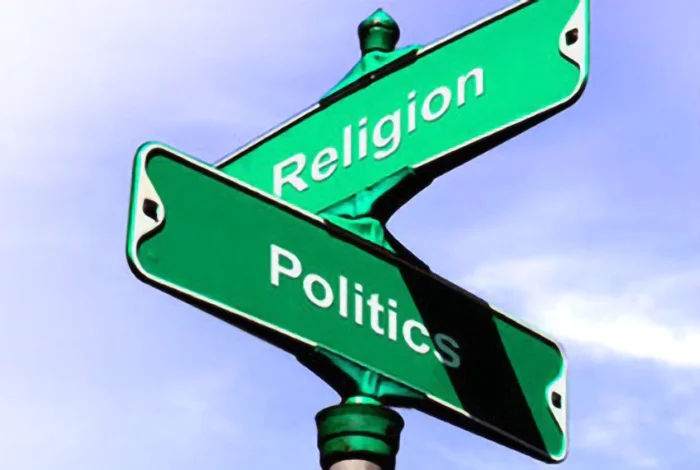
Religion has been an essential part of Sri Lankan society for more than two millennia, shaping culture, moral values, and social traditions. Buddhism in particular has played a foundational role in guiding ethical behaviour, promoting compassion, and encouraging social harmony. Yet Sri Lanka’s modern political history clearly shows that when religion becomes closely entangled with state power, both democracy and religion suffer. The politicisation of religion especially Buddhism has repeatedly contributed to ethnic division, weakened governance, and the erosion of moral authority. For these reasons, the separation of religion and the state is not only desirable but necessary for Sri Lanka’s long-term stability and democratic progress.
Sri Lanka’s post-independence political history provides early evidence of how religion became a political tool. The 1956 election, which brought S. W. R. D. Bandaranaike to power, is often remembered as a turning point where Sinhala-Buddhist nationalism was actively mobilised for political expedience. Buddhist monks played a visible role in political campaigning, framing political change as a religious and cultural revival. While this movement empowered the Sinhala-Buddhist majority, it also laid the foundation for ethnic exclusion, particularly through policies such as the “Sinhala Only Act.” Though framed as protecting national identity, these policies marginalised Tamil-speaking communities and contributed significantly to ethnic tensions that later escalated into civil conflict. This period demonstrates how religious symbolism, when fused with state power, can undermine social cohesion rather than strengthen it.
The increasing political involvement of Buddhist monks in later decades further illustrates the risks of this entanglement. In the early 2000s, the emergence of monk-led political parties such as the Jathika Hela Urumaya (JHU) marked a new phase in Sri Lankan politics. For the first time, monks entered Parliament as elected lawmakers, directly participating in legislation and governance. While their presence was justified as a moral corrective to corrupt politics, in practice it blurred the boundary between spiritual leadership and political power. Once monks became part of parliamentary debates, policy compromises, and political rivalries, they were no longer perceived as neutral moral guides. Instead, they became political actors subject to criticism, controversy, and public mistrust. This shift significantly weakened the traditional reverence associated with the Sangha.
Sri Lankan political history also shows how religion has been repeatedly used by political leaders to legitimise authority during times of crisis. Successive governments have sought the public endorsement of influential monks to strengthen their political image, particularly during elections or moments of instability. During the war, religious rhetoric was often used to frame the conflict in moral or civilisational terms, leaving little room for nuanced political solutions or reconciliation. This approach may have strengthened short-term political support, but it also deepened ethnic polarisation and made post-war reconciliation more difficult. The long-term consequences of this strategy are still visible in unresolved ethnic grievances and fragile national unity.
Another important historical example is the post-war period after 2009. Despite the conclusion of the war, Sri Lanka failed to achieve meaningful reconciliation or strong democratic reform. Instead, religious nationalism gained renewed political influence, often used to silence dissent and justify authoritarian governance. Smaller population groups such as Muslims and Christians in particular experienced growing insecurity as extremist groups operated with perceived political protection. The state’s failure to maintain religious neutrality during this period weakened public trust and damaged Sri Lanka’s international reputation. These developments show that privileging one religion in state power does not lead to stability or moral governance; rather, it creates fear, exclusion, and institutional decay.
The moral authority of religion itself has also suffered as a result of political entanglement. Traditionally, Buddhist monks were respected for their distance from worldly power, allowing them to speak truth to rulers without fear or favour. However, when monks publicly defend controversial political decisions, support corrupt leaders, or engage in aggressive nationalist rhetoric, they risk losing this moral independence. Sri Lankan political history demonstrates that once religious figures are seen as aligned with political power, public criticism of politicians easily extends to religion itself. This has contributed to growing disillusionment among younger generations, many of whom now view religious institutions as extensions of political authority rather than sources of ethical guidance.
The teachings of the Buddha offer a clear contrast to this historical trend. The Buddha advised rulers on ethical governance but never sought political authority or state power. His independence allowed him to critique injustice and moral failure without compromise. Sri Lanka’s political experience shows that abandoning this principle has harmed both religion and governance. When monks act as political agents, they lose the freedom to challenge power, and religion becomes vulnerable to political failure and public resentment.
Sri Lanka’s multi-religious social structure nurtures divisive, if not separatist, sentiments. While Buddhism holds a special historical place, the modern state governs citizens of many faiths. Political history shows that when the state appears aligned with one religion, minority communities feel excluded, regardless of constitutional guarantees. This sense of exclusion has repeatedly weakened national unity and contributed to long-term conflict. A secular state does not reject religion; rather, it protects all religions by maintaining neutrality and ensuring equal citizenship.
Sri Lankan political history clearly demonstrates that the fusion of religion and state power has not produced good governance, social harmony, or moral leadership. Instead, it has intensified ethnic divisions, weakened democratic institutions, and damaged the spiritual credibility of religion itself. Separating religion from the state is not an attack on Buddhism or Sri Lankan tradition. On the contrary, it is a necessary step to preserve the dignity of religion and strengthen democratic governance. By maintaining a clear boundary between spiritual authority and political power, Sri Lanka can move toward a more inclusive, stable, and just society one where religion remains a source of moral wisdom rather than a tool of political control.
In present-day Sri Lanka, the dangers of mixing religion with state power are more visible than ever. Despite decades of experience showing the negative consequences of politicised religion, religious authority continues to be invoked to justify political decisions, silence criticism, and legitimise those in power. During recent economic and political crises, political leaders have frequently appeared alongside prominent religious figures to project moral legitimacy, even when governance failures, corruption, and mismanagement were evident. This pattern reflects a continued reliance on religious symbolism to mask political weakness rather than a genuine commitment to ethical governance.
The 2022 economic collapse offers a powerful contemporary example. As ordinary citizens faced shortages of fuel, food, and medicine, public anger was directed toward political leadership and state institutions. However, instead of allowing religion to act as an independent moral force that could hold power accountable, sections of the religious establishment appeared closely aligned with political elites. This alignment weakened religion’s ability to speak truthfully on behalf of the suffering population. When religion stands too close to power, it loses its capacity to challenge injustice, corruption, and abuse precisely when society needs moral leadership the most.
At the same time, younger generations in Sri Lanka are increasingly questioning both political authority and religious institutions. Many young people perceive religious leaders as participants in political power structures rather than as independent ethical voices. This growing scepticism is not a rejection of spirituality, but a response to the visible politicisation of religion. If this trend continues, Sri Lanka risks long-term damage not only to democratic trust but also to religious life itself.
The present moment therefore demands a critical reassessment. A clear separation between religion and the state would allow religious institutions to reclaim moral independence and restore public confidence. It would also strengthen democracy by ensuring that policy decisions are guided by evidence, accountability, and inclusive dialogue rather than religious pressure or nationalist rhetoric. Sri Lanka’s recent history shows that political legitimacy cannot be built on religious symbolism alone. Only transparent governance, social justice, and equal citizenship can restore stability and public trust.
Ultimately, the future of Sri Lanka depends on learning from both its past and present. Protecting religion from political misuse is not a threat to national identity; it is a necessary condition for ethical leadership, democratic renewal, and social harmony in a deeply diverse society.
by Milinda Mayadunna
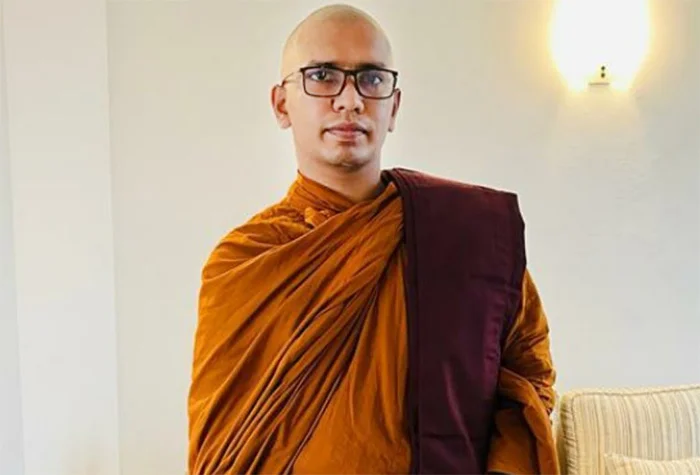
Judging by some recent events, starting with the injudicious pronouncement in Jaffna by President Anura Kumara Dissanayake and subsequent statements by some senior ministers, the government tends to appease minorities at the expense of the majority. Ill-treatment of some Buddhist monks by the police continues to arouse controversy, and it looks as if the government used the police to handle matters that are best left to the judiciary. Sangadasa Akurugoda concludes his well-reasoned opinion piece “Appeasement of separatists” (The island, 13 February) as follows:
“It is unfortunate that the President of a country considers ‘national pride and patriotism’, a trait that every citizen should have, as ‘racism’. Although the President is repeating it like a mantra that he will not tolerate ‘racism’ or ‘extremism’ we have never heard him saying that he will not tolerate ‘separatism or terrorism’.”
It is hard to disagree with Akurugoda. Perhaps, the President may be excused for his reluctance to refer to terrorism as he leads a movement that unleashed terror twice, but his reluctance to condemn separatism is puzzling. Although most political commentators consider the President’s comment that ‘Buddhist go to Jaffna to spread hate’ to be callous, the head of an NGO heaped praise on the President for saying so!
As I pointed out in a previous article, puppet-masters outside seem to be pulling the strings (A puppet show? The Island, 23 January) and the President’s reluctance to condemn separatism whilst accusing Buddhists of spreading hatred by going to Jaffna makes one wonder who these puppeteers are.
Another incident that raises serious concern was reported from a Buddhist Temple in Trincomalee. The police removed a Buddha statue and allegedly assaulted Buddhist priests. Mysteriously, the police brought back the statue the following day, giving an absurd excuse; they claimed they had removed it to ensure its safety. No inquiry into police action was instituted but several Bhikkhus and dayakayas were remanded for a long period.
Having seen a front-page banner headline “Sivuru gelawenakam pahara dunna” (“We were beaten till the robes fell”) in the January 13th edition of the Sunday Divaina, I watched on YouTube the press briefing at the headquarters of the All-Ceylon Buddhist Association. I can well imagine the agony those who were remanded went through.
Ven. Balangoda Kassapa’s description of the way he and the others, held on remand, were treated raises many issues. Whether they committed a transgression should be decided by the judiciary. Given the well-known judicial dictum, ‘innocent until proven guilty’, the harassment they faced cannot be justified under any circumstances.
Ven. Kassapa exposed the high-handed actions of the police. This has come as no surprise as it is increasingly becoming apparent as they are no longer ‘Sri Lanka Police’; they have become the ‘NPP police’. This is an issue often editorially highlighted by The Island. How can one expect the police to be impartial when two key posts are held by officers brought out of retirement as a reward for canvassing for the NPP. It was surprising to learn that the suspects could not be granted bail due to objections raised by the police.
Ven. Kassapa said the head of the remand prison where he and others were held had threatened him.
However, there was a ray of hope. Those who cry out for reconciliation fail to recognise that reconciliation is a much-misused term, as some separatists masquerading as peacemakers campaign for reconciliation! They overlook the fact that it is already there as demonstrated by the behaviour of Tamil and Muslim inmates in the remand prison, where Ven. Kassapa and others were kept.
Non-Buddhist prisoners looked after the needs of the Bhikkhus though the prison chief refused even to provide meals according to Vinaya rules! In sharp contrast, during a case against a Sri Lankan Bhikkhu accused of child molestation in the UK, the presiding judge made sure the proceedings were paused for lunch at the proper time.
I have written against Bhikkhus taking to politics, but some of the issues raised by Ven. Kassapa must not be ignored. He alleges that the real reason behind the conflict was that the government was planning to allocate the land belonging to the Vihara to an Indian businessman for the construction of a hotel. This can be easily clarified by the government, provided there is no hidden agenda.
It is no secret that this government is controlled by India. Even ‘Tilvin Ayya’, who studied the module on ‘Indian Expansionism’ under Rohana Wijeweera, has mended fences with India. He led a JVP delegation to India recently. Several MoUs or pacts signed with India are kept under wraps.
Unfortunately, the government’s mishandling of this issue is being exploited by other interested parties, and this may turn out to be a far bigger problem.
It is high time the government stopped harassing the majority in the name of reconciliation, a term exploited by separatists to achieve their goals!
By Dr Upul Wijayawardhana
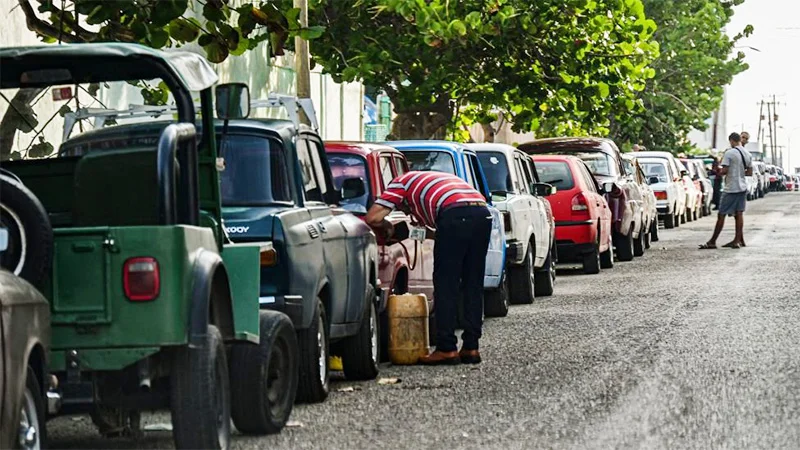
Cuba, a firm friend in need for Sri Lanka and the world, is undergoing an unprecedented crisis, not of natural causes, but one imposed by human design. It’s being starved of energy, which is almost as essential as water and air for human survival today. A complete and total embargo of oil in today’s world can only spell fatal, existential disaster, coming on top of the US economic blockade of decades.
The UN Secretary General’s spokesman has expressed the Secretary General’s concern at the “humanitarian situation in Cuba” and warned that it could “worsen, if not collapse, if its oil needs go unmet”.
Cubans are experiencing long hours without electricity, including in its hospitals and laboratories which provided much needed medicines and vaccines for the world when they were most needed. Cuba which relies heavily on tourism has had to warn airlines that they have run out of jet-fuel and will not be able to provide refueling.
Cuba is being denied oil, because it is being ridiculously designated as a “sponsor of terrorism” posing a threat to the United States, the richest, most powerful country with the most sophisticated military in the history of the world.
On the 29th of January 2026, the President of the United States issued an executive order declaring that the policies, practices and actions of the Cuban Government pose an “unusual and extraordinary threat… to the national security and foreign policy of the United States” and that there is “national emergency with respect to that threat”, and formally imposed what the Russian Foreign Ministry called an “energy blockade” on Cuba.
Responding within days to the US President’s executive order seeking to prevent the provision of oil to Cuba from any country, the Independent Experts of the United Nations Human Rights Council (UNHRC) strongly condemned the act stating that “the fuel blockade on Cuba is a serious violation of international law and a grave threat to a democratic and equitable international order,” and that it is “an extreme form of unilateral economic coercion with extraterritorial effects, through which the United States seeks to exert coercion on the sovereign state of Cuba and compel other sovereign third States to alter their lawful commercial relations, under threat of punitive trade measures”.
They warn that the resulting shortages “may amount to the collective punishment of civilians, raising serious concerns under international human rights law”. They advocate against the “normalization of unilateral economic coercion” which undermines the international legal order and the multilateral institutions.
https://www.ohchr.org/en/press-releases/2026/02/un-experts-condemn-us-executive-order-imposing-fuel-blockade-cuba
Global Concern – Will Colombo add its voice?
The Group of G77 and China which has 134 countries issued a special communique in New York stating that “these measures are contrary to the purposes and principles of the Charter of the United Nations and international law, and undermine multilateralism, international economic cooperation and the rules-based, non-discriminatory, open, fair and equitable multilateral trading system with the World Trade Organization at its core.”
The Non-Aligned Movement also issued a communique expressing its “deep concern” at the “new extreme measures aimed at further tightening the economic, commercial and financial embargo imposed against the Republic of Cuba, including actions intended to obstruct the supply of oil to the country and to sanction third States that maintain legitimate commercial relations with Cuba.”
Sri Lanka is a member of both these groups. These two statements also speak for the Sri Lankan state, as well as all other members of these groups.
However, there has been no statement so far from Colombo expressing concern. One hopes that there will be one soon. One also hopes that this administration’s rightward turn in economics doesn’t also extend to abandoning all sense of decency towards those friends who stood by Sri Lanka when it needed them. This would not bode well for us, when we need help from our friends again.
The Sri Lankan parliament has a Cuba-Sri Lanka Friendship Association. Its President is Minister Sunil Kumara Gamage who was elected to this position for the Tenth Parliament. I hope the parliamentary friendship extends to at least expressing concern and solidarity with the Cuban people and an appeal for the immediate end to this extreme measure which has had such distressing impact on Cuba and its people.
Countries like Vietnam, Russia, China, Namibia and South Africa have already issued statements.
South Africa’s ruling African National Congress (ANC) has issued its own statement, strongly condemning this measure, calling it a “direct assault on the Cuban people” and a “deliberate economic sabotage and strangulation”. They call for “the immediate lifting of the fuel blockade and the trade embargo” calling on “the progressive forces and countries of the world, committed to progressive internationalism, peace, and prosperity, to join the ANC in solidarity against imperialist and colonialist aggression and to take further concrete actions in solidarity with Cuba.”
Before the JVP revealed itself in power to have metamorphosed into something other than its self-description before it was elected to government, with ubiquitous Che Guevara images and quotes at its rallies and party conventions, one would have expected something at least half-way as supportive from it. However, with new glimpses and insights into its trajectory in its current incarnation, one doesn’t really know the contours of its foreign policy aspirations, preferences and fears, which have caused an about-turn in all their previous pronouncements and predilections.
On a recent TV interview, a former Foreign Secretary and Ambassador/PR of Sri Lanka to the UN in New York praised the current President’s foreign policy speech, citing its lack of ideology, non-commitment to concepts such as “non-alignment” or “neutrality” and its rejection of ‘balancing’ as beneficial to Sri Lanka’s “national interest” which he went on to define open-endedly and vaguely as “what the Sri Lankan people expect”.
While this statement captures the unprecedented opacity and indeterminate nature of the President’s foreign policy stance, it is difficult to predict what this administration stands for, supports and thinks is best for our country, the world and our region.
Despite this extreme flexibility the administration has given itself, one still hopes that a statement of concern and an appeal for a reversal of the harsh measures imposed on a friendly country and long term ally at the receiving end of a foreign executive order that violates international law, could surely be accommodated within the new, indeterminate, non-template.
FSP, Socialist Alliance stay true
Issuing a statement on February 1st, the Frontline Socialist Party (FSP), the JVP breakaway, was the first to condemn and denounce the new escalation. It said in its statement that this “decision which seeks to criminalize and punish sovereign states for engaging in lawful trade with Cuba -particularly in relation to fuel supplies- represents an act of economic warfare and blatant imperialist coercion.” The FSP urged all progressive movements to “raise their voices against this criminal blockade and reject the normalization of economic aggression and collective punishment.”
The Executive Committee of the Socialist Alliance of Sri Lanka comprising the Communist Party of Sri Lanka, Lanka Sama Samaja Party, Democratic Left Front and Sri Lanka Mahajana Party, wasted no time in condemning what it called the “escalation of the decades-long criminal blockade” against Cuba by the United States. It said that the energy embargo has transformed “an inhuman blockade into a total siege” which it says seeks to “provoke economic collapse and forcible regime change”.
https://island.lk/socialist-alliance-calls-on-govt-to-take-immediate-and-principled-action-in-defence-of-cuba
In its strongly worded message issued by its General Secretary, Dr. G. Weerasinghe, the alliance calls on the government to demonstrate “principled courage” and to publicly condemn the “economic siege” at all international forums including the UN. It also asks the government to co-sponsor the UNGA resolution demanding an end to the US blockade, which seems unlikely at this stage of the administration’s rightward evolution.
The Socialist Alliance concludes by saying that “Silence in the face of such blatant coercion is complicity” and that this “imperialist strategy” threatens the sovereignty of all independent nations. However prescient these words may be, the government has yet to prove that terms such as “sovereignty” and “independence” are a relevant part of its present-day lexicon.
Cuba Flotilla
The plight of the people of Cuba under the energy blockade has moved those inspired by the Global Sumud Flotilla which sailed to Palestine with aid, to initiate a similar humanitarian project for Cuba. An alliance of progressive groups has announced their intention to sail to Cuba next month carrying aid for Cubans. It is called the “Nuestra América Flotilla” (https://nuestraamericaflotilla.org/).
While Mexico and China have already sent aid, the organisers recognise the need for more. David Adler, who helped organise the Sumud Flotilla is also helping the Cuba flotilla. This effort has been endorsed by the Brazilian activist who came into prominence and gained global popularity during the Sumud flotilla, Thiago Avila.
The organizers hope that this month’s successful Mexican and Chinese aid deliveries to Cuba may indicate that unlike in the case of the Sumud Flotilla to Occupied Palestine, the aid flotilla to Cuba will reach the people of Cuba without interception.
Shape of the emerging world order
At the on-going Munich Security Conference, the German Chancellor announced that the Rules-Based-Order has ended. With Europe dealing with the real threat of the forcible annexation of Greenland by the United State, their longtime ally, it is no wonder that he declared the end of the old order.
At the same venue, Alexandria Ocasio-Cortez (AOC), Congresswoman representing New York, questioned whether the Rules-Based-Order ever existed, when the rules seem to apply only to some. Characteristically clear-sighted and forthright, the progressive US Democrat said exceptions to the rules were carved out in the world to suit the US and when that happens too often, those exceptions become the rule. She asked if we have actually been living in a “pre-Rules Based Order”, rather than one that had already been established.
Regarding the January oil blockade of Cuba, AOC issued a statement saying that the world is entering an “era of depravity”.
The UN has long advocated against Unilateral Coercive Action, which threatens countries with trade sanctions, financial restrictions, asset freezes and blockades without authorization by the United Nations system. These have also been referred to as “private justice”, which brings home the chilling nature of these measures.
Are these ruptures with even the bare minimum of predictable behaviour in international relations, the birth-pangs of a new era emerging in a world almost incomprehensible in its behaviour towards states and peoples, starting with the genocide in Occupied Palestine? The nightmares have not yet reached their peak, only signaled their downward spiral. With enormous US aircraft carriers circling Iran, what would the fate of that country and the region and perhaps the world be, in a few weeks?
Cuba is under siege right at this moment of danger. An exemplary country which helped the world when it faced grave danger such as the time of Covid 19, Cuba and the selfless Cuban people are now in dire need.
Cuba has never hesitated to help Sri Lanka, and could be relied on unconditionally for support and solidarity at multilateral forums. Sri Lankan medical students have had the benefit of training in Cuba and Cuban medicines and vaccines have served the world, as have their doctors. And now, as Cuban Ambassador Maria del Carmen Herrera Caseiro, who as a skillful young diplomat in Geneva in 2007-2009 was helpful to Sri Lanka’s successful fightback at the UNHRC, said at the UNESCO this month, the new blockade will “directly impact Cuban education, science and the communication sectors”.
Sri Lanka has consistently voted against the decades-long economic blockade of Cuba by the United States, whichever administration was in power. This recent escalation to a full embargo of fuel supplies to this small island struggling against an already severe economic blockade, requires a response from all those who have benefited from its generosity including Colombo, and every effort to prevent a humanitarian crisis on that island.
[Sanja de Silva Jayatilleka is author of ‘Mission Impossible Geneva: Sri Lanka’s Counter-Hegemonic Asymmetric Diplomacy at the UN Human Rights Council’, Vijitha Yapa, Colombo 2017.]
Sanja de Silva Jayatilleka

Ambassador of Switzerland to Sri Lanka pays courtesy call on PM

Suspected carbon-monoxide leak kills at least 30 miners in Nigeria, witnesses say

Eight skiers found dead after California avalanche

Advisory for low pressure area in the Southwest Bay of Bengal to the south-east of Sri Lanka

Showers will occur at times in the Northern , North-central, Central, Uva and Eastern provinces and in Hambantota district

Canada concerned about delay in holding PC polls

‘Dates have the highest sugar content to fight Coronavirus’

Sunday Island 27 December – Headlines

#SundayIsland 17th December – Headlines

Sunday Island – 28th March

Sunday Island Headlines – 21 March

Sunday Island – 21st February – Headlines
-
 Life style4 days ago
Marriot new GM Suranga
-

 Business3 days ago
Ministry of Brands to launch Sri Lanka’s first off-price retail destination
-
 Features4 days ago
Monks’ march, in America and Sri Lanka
-
 Features4 days ago
The Rise of Takaichi
-
 Features4 days ago
Wetlands of Sri Lanka:
-
 News4 days ago
Thailand to recruit 10,000 Lankans under new labour pact
-
 News4 days ago
Massive Sangha confab to address alleged injustices against monks
-
 News2 days ago
IMF MD here